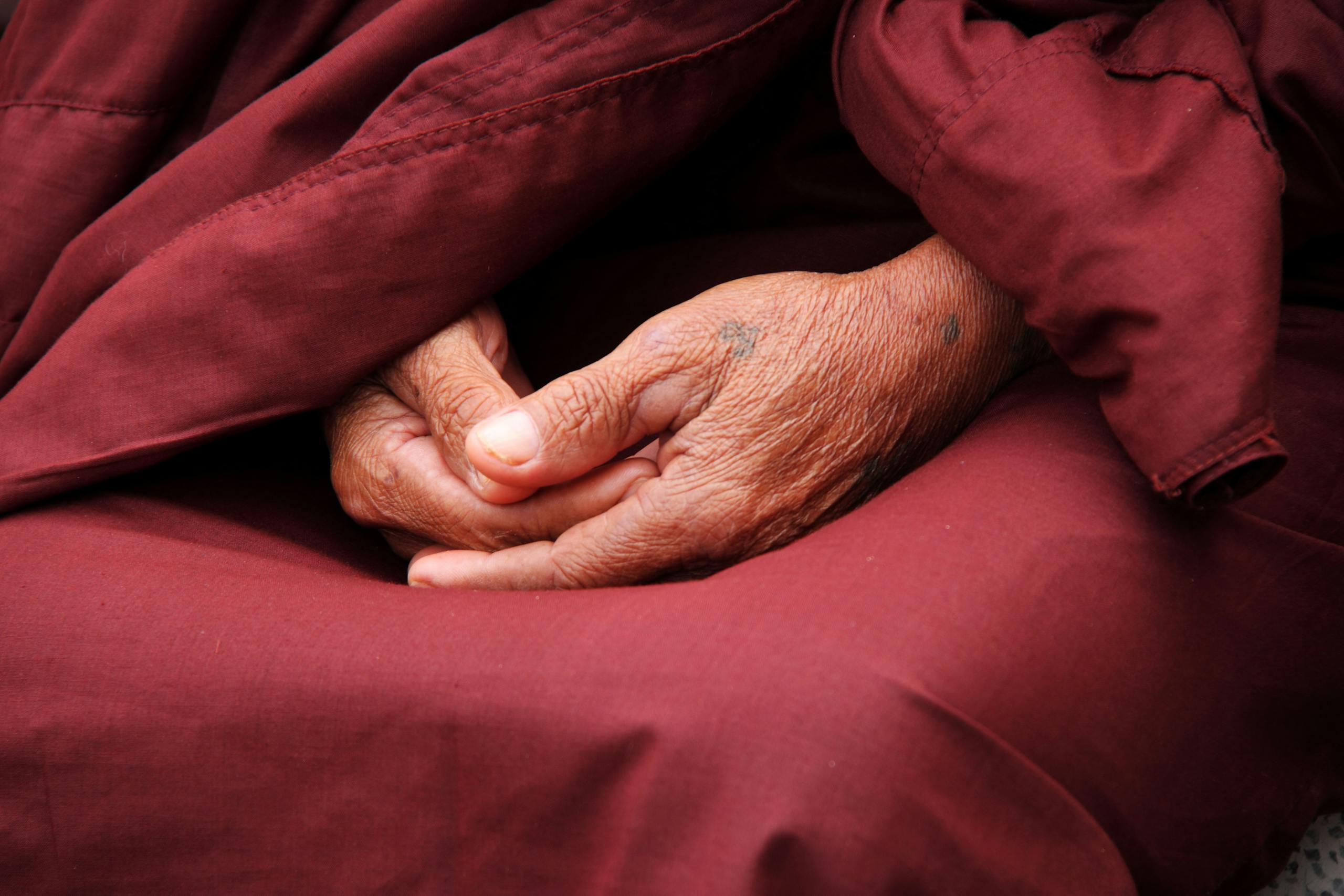
An INFP prayer isn’t a religious ritual. It’s the quiet, internal conversation an INFP has with themselves, with meaning, with something larger than the noise of daily life. It’s the moment this personality type stops performing for the world and starts listening to what’s actually true inside them.
For INFPs, that kind of honest inner dialogue isn’t optional. It’s survival. And understanding why can change how you relate to your own emotional life entirely.

I’ve spent time around a lot of different personality types across my years running advertising agencies. Creative directors who could fill a room with energy. Account managers who thrived on constant contact. And then there were the quiet ones, the ones who would disappear into a corner after a big client meeting and come back an hour later with something brilliant that nobody else had thought of. I didn’t fully understand those people until I started understanding myself better. If you’re still figuring out where you fall on the personality spectrum, our free MBTI personality test is a solid place to start.
Our INFP Personality Type hub covers the full landscape of what it means to live and lead as an INFP, but the spiritual and emotional interior of this type deserves its own conversation. Because what an INFP carries internally is genuinely unlike what most other types experience.
What Does It Mean for an INFP to “Pray”?
Before anything else, let’s be clear about what we mean. INFP prayer doesn’t require a specific faith tradition, a church, or even a belief in God. What it requires is the thing INFPs are most naturally wired for: turning inward with complete honesty.
The INFP cognitive function stack begins with dominant Introverted Feeling (Fi). Fi is not about broadcasting emotion outward or reading the emotional temperature of a room. It’s a deeply personal, internal value system that evaluates everything through an almost sacred sense of authenticity. When an INFP prays, in whatever form that takes, they are essentially doing what Fi does naturally: measuring experience against what feels genuinely true.
That could look like journaling at 11pm when everyone else is asleep. It could look like sitting in a car after work for twenty minutes before going inside. It could look like an actual prayer said quietly or written in a notebook. The form varies. The function is the same: creating space for the inner life to speak without interruption.
What’s worth noting is that this isn’t escapism. The INFP’s auxiliary function is Extraverted Intuition (Ne), which constantly generates possibilities, connections, and alternative meanings from the outside world. Fi and Ne working together create a person who is simultaneously deeply rooted in personal values and endlessly curious about what those values mean in a changing world. Prayer, for an INFP, is often where those two functions meet and negotiate.
Why INFPs Feel a Spiritual Pull That Others Don’t Always Understand
Spend enough time around INFPs and you’ll notice something. They’re often drawn to questions that don’t have clean answers. Questions about meaning, purpose, suffering, beauty, and what makes a life worth living. This isn’t moodiness or overthinking, even though it can look like both from the outside.
It’s the natural output of a dominant Fi that refuses to accept surface-level explanations. INFPs need things to mean something. When life feels arbitrary or hollow, it registers as something close to physical pain for this type. That’s not dramatic. It’s just how their inner architecture works.
Psychological research on personality and emotional processing suggests that people with strong internal value systems tend to experience meaning-making as a core psychological need, not a preference. For INFPs, the search for meaning isn’t something they choose to engage in. It happens whether they want it to or not.
This is why many INFPs feel a pull toward spiritual practice even when they’re skeptical of organized religion. The ritual isn’t the point. The honest conversation with something deeper than daily routine is the point. Whether that something is God, the universe, their own conscience, or simply the act of writing truthfully in a journal, the need is real.

I remember a creative writer on my team years ago who would sometimes send me emails at 2am. Not frantic ones. Thoughtful ones. She’d be working through a campaign concept, but the emails were really about something bigger: whether the work was honest, whether it respected the audience, whether we were contributing something worth contributing. At the time I thought she was overcomplicating things. Looking back, she was doing exactly what her personality type does. She was praying, in her own way, about the ethics of her work. And she was almost always right.
What the INFP Actually Needs From Their Inner Life
One thing that gets missed in conversations about INFPs is that their emotional depth isn’t just a feature of who they are. It’s a demand. The inner life of an INFP requires regular tending. When it doesn’t get that attention, things start to go sideways.
Without regular space for reflection, INFPs can become emotionally flooded. The feelings don’t go away just because there’s no time to process them. They stack. And when they stack long enough, they either implode quietly or explode in ways that surprise everyone, including the INFP themselves. This is part of why INFPs take conflict so personally, something worth reading about if you recognize this pattern in yourself or someone you care about.
The INFP’s tertiary function is Introverted Sensing (Si), which connects present experience to past impressions and stored emotional memory. This means that when an INFP is hurt, they’re often not just responding to what happened today. They’re also feeling the echo of every similar moment they’ve ever experienced. A prayer practice, a journaling habit, a quiet ritual of reflection, these aren’t luxuries for INFPs. They’re the maintenance that keeps the emotional system from overloading.
What INFPs need from their inner life, specifically, tends to fall into a few consistent categories. They need to feel that their values are intact. They need to process emotion without judgment. They need to reconnect with a sense of purpose when daily life has worn it thin. And they need to feel that who they are, at the core, is enough.
That last one is the hardest. Many INFPs carry a persistent, low-level sense that they’re too much and not enough at the same time. Too sensitive, too idealistic, too slow to decide. And yet somehow still falling short of the person they feel they should be. A genuine prayer practice, whatever form it takes, can be the place where that self-criticism gets examined honestly instead of just endured.
How INFP Prayer Differs From INFJ Spirituality
INFPs and INFJs are often grouped together because they share a preference for introversion, intuition, and feeling. But their inner experiences are meaningfully different, and that difference shows up in how they approach spiritual or reflective practice.
The INFJ leads with Introverted Intuition (Ni) as their dominant function, which creates a very different kind of inner life. Where the INFP is anchored in personal values and authenticity (Fi), the INFJ is anchored in pattern recognition and convergent insight (Ni). The INFJ’s spiritual experience tends to feel more like receiving, like insight arriving from somewhere beyond conscious thought. The INFP’s tends to feel more like wrestling, like holding a value up to the light and turning it over until it reveals something true.
INFJs also carry their own complicated relationship with inner conflict. Their tendency to keep peace at significant personal cost is something I’ve written about separately, and the hidden cost of that peacekeeping deserves real attention. But for INFPs, the struggle is slightly different. Where INFJs often suppress conflict to protect harmony, INFPs suppress it because conflict feels like a direct attack on who they are as a person.
That’s why having hard conversations as an INFP requires a specific kind of preparation. The inner dialogue that happens before a difficult conversation, the mental rehearsal, the value-checking, the emotional steeling, that’s prayer too. It’s the INFP making sure they can show up as themselves even when the situation is threatening.

INFJs, by contrast, tend to use their reflective practice to synthesize meaning across a wider field. They’re often less focused on personal authenticity and more focused on understanding how things connect. The INFJ’s quiet influence often comes from exactly that synthesis, from seeing patterns others miss and communicating them with precision. The INFP’s influence comes from something different: the courage to be completely honest about what they feel, even when it’s uncomfortable.
What Gets in the Way of the INFP’s Inner Life
Knowing you need something and actually getting it are two different problems. INFPs often know they need quiet, reflection, and space for their inner life. What they struggle with is protecting that space in a world that doesn’t always value it.
One of the biggest obstacles is the INFP’s inferior function: Extraverted Thinking (Te). Te is the function that handles external structure, efficiency, and measurable output. Because it’s the inferior function, it tends to be underdeveloped and can show up in unhealthy ways under stress. When an INFP is overwhelmed, Te can push them toward either rigid self-criticism (you’re not being productive enough, you’re not organized enough, you’re failing) or a complete collapse of structure where nothing gets done at all.
Either extreme makes the reflective practice harder to maintain. Self-criticism makes quiet reflection feel like another opportunity to feel bad about themselves. A collapse of structure means the journaling habit, the morning ritual, the evening walk, all of it falls away precisely when it’s most needed.
There’s also the social pressure that many INFPs feel to explain or justify their need for solitude. Personality research, including work accessible through Frontiers in Psychology, has explored how introverted individuals often face implicit social expectations to be more outwardly engaged, which can create friction for people whose processing genuinely requires internal space. For INFPs, that friction is especially costly because their reflective practice isn’t just a preference. It’s how they stay emotionally coherent.
I’ve seen this play out in professional settings more times than I can count. The INFP on a team who goes quiet after a difficult meeting isn’t being difficult. They’re doing the internal work that will eventually produce something worth having. The problem is that most workplaces are designed to reward visible processing, not invisible processing. That gap is real, and it costs INFPs a lot of energy to manage.
The Role of Empathy in INFP Spiritual Life
INFPs are often described as deeply empathetic, and that’s accurate in a specific way. Their Fi-dominant processing means they have a finely tuned sense of what feels authentic versus what feels false, in themselves and in others. They pick up on emotional undercurrents not because they’re reading the room the way an Fe-user might, but because they’re constantly comparing what they observe to their internal sense of what’s true.
It’s worth being precise here. Empathy, as Psychology Today describes it, involves understanding and sharing the feelings of another. INFPs do this, but through a specific lens: they imagine themselves into another person’s experience and feel it against their own values. That’s different from the way an INFJ’s auxiliary Fe attunes to group emotional dynamics. Both are forms of empathy, but they operate differently.
This matters for understanding INFP prayer because their empathy is both a gift and a weight. INFPs often absorb the suffering of others in a way that feels personal. They can’t easily separate “I care about your pain” from “your pain is now also my pain.” Without a regular practice of returning to themselves, that absorption becomes exhausting. Prayer, reflection, solitude, these are the ways an INFP finds their way back to their own center after being pulled outward by the world’s suffering.
There’s a reason many INFPs are drawn to causes, to advocacy, to creative work that speaks for those who can’t speak for themselves. Their empathy is directional. It moves them toward meaning and action. But that same quality requires them to regularly ask: what do I actually feel, separate from what I’ve absorbed from everyone around me? That question is, in its own way, a prayer.

When the Inner Life Becomes a Hiding Place
There’s a shadow side to all of this that INFPs need to be honest about. The same interior richness that makes them capable of profound reflection can also become a place to hide. When the outside world feels too harsh, too inauthentic, or too demanding, the INFP’s inner life can become a refuge that slowly turns into a retreat.
This is different from healthy solitude. Healthy solitude restores. Avoidant withdrawal protects, but at the cost of connection, growth, and eventually, the values the INFP holds most dear. An INFP who has retreated too far inward often knows it. They feel the gap between who they want to be and what they’re actually doing. They feel the relationships going quiet. They feel the creative work drying up.
One signal that the inner life has tipped from restoration to avoidance is the quality of the reflection itself. Healthy INFP prayer, whatever form it takes, tends to produce clarity, renewed energy, and a sense of reconnection with values. Avoidant rumination tends to produce loops, the same fears and grievances cycling without resolution.
This is where the INFP’s relationship with conflict becomes relevant. INFPs who avoid difficult conversations long enough often find that the unresolved tension takes up residence in their inner life, crowding out the genuine reflection they need. Learning to engage with conflict honestly, without losing their sense of self in the process, is one of the most important skills an INFP can develop. Understanding how other introverted types handle conflict, including the INFJ’s tendency toward the door slam, can offer useful contrast for INFPs figuring out their own patterns.
There’s also the matter of communication. INFPs sometimes struggle to articulate what’s happening internally, not because they lack words, but because the inner experience feels too complex or too vulnerable to translate accurately. That struggle can lead to misunderstandings that compound over time. Awareness of how introverted feelers can inadvertently communicate in ways that create distance is worth exploring, even for INFPs reading about their INFJ counterparts, because the dynamics have meaningful overlap.
Practical Forms of INFP Prayer That Actually Work
Let’s get specific, because the abstract is easy and the practical is where most people get stuck.
For INFPs who do hold religious beliefs, traditional prayer can be genuinely meaningful, but it tends to work best when it’s honest rather than performative. INFPs have a finely tuned radar for inauthenticity, and that includes their own. A rote prayer said without genuine engagement will feel hollow to an INFP in a way it might not for other types. What works better is prayer that allows for doubt, for questions, for the full complexity of what the INFP actually feels rather than what they think they should feel.
For INFPs who are secular or spiritually agnostic, the functional equivalent of prayer tends to take a few reliable forms. Journaling is probably the most common, and for good reason. Writing by hand, specifically, tends to slow the Ne enough to let Fi speak clearly. success doesn’t mean produce something polished. The goal is to be honest on the page in a way that’s hard to be anywhere else.
Time in nature works for many INFPs in a way that’s hard to explain but easy to recognize. There’s something about being in an environment that doesn’t require anything of you, that doesn’t evaluate or judge or need a response, that allows the INFP’s inner life to decompress. Some psychological frameworks, including research on attention restoration, suggest that natural environments reduce cognitive fatigue in ways that support deeper reflective processing. For INFPs, that’s not a minor benefit. It’s often the difference between feeling like themselves and feeling like a depleted version of themselves.
Creative practice also functions as prayer for many INFPs. Writing fiction, making music, painting, any creative act that requires genuine emotional investment can become a form of honest dialogue with the inner self. The creation becomes the prayer. The finished work becomes the answer.
One thing I’ve noticed in my own practice, and I’m an INTJ, not an INFP, but I’ve developed my own version of this over the years, is that the ritual matters as much as the content. Having a consistent time, a consistent place, a consistent entry point into reflection, these things signal to the nervous system that it’s safe to go inward. For INFPs especially, who can feel perpetually on guard in a world that doesn’t always make space for depth, that signal is significant.
What Happens When INFPs Stop Listening to Themselves
The cost of an INFP who has lost touch with their inner life is worth naming plainly. It’s not just personal unhappiness, though that’s real. It’s a kind of ethical drift. Because the INFP’s values are so central to how they function, losing access to those values means losing access to their compass. Decisions start to feel arbitrary. Relationships start to feel performative. The creative work, if they do creative work, loses its honesty.
Many INFPs describe this state as feeling like they’re playing a character of themselves rather than being themselves. They’re going through the motions, saying the right things, showing up where they’re supposed to show up, but something essential is missing. That missing thing is usually the regular practice of honest inner dialogue.
There’s also a relational cost. INFPs who are disconnected from their own inner life often become harder to reach emotionally, which is ironic given how emotionally rich they are at their best. They may become more reactive, more easily hurt, more likely to interpret neutral events as personal slights. Understanding the difference between reactive emotional responses and grounded emotional engagement is something both INFPs and INFJs benefit from examining, because the two can look similar from the outside but come from very different places internally.
The path back is usually simple, even when it doesn’t feel simple. It starts with one honest moment. One journal entry that doesn’t perform. One walk without a podcast. One prayer, said or written or simply felt, that doesn’t pretend to have answers but asks the questions that have been waiting.

The INFP’s Gift to the Rest of Us
I want to end this section with something I genuinely believe, having worked alongside many different personality types across two decades of agency life. The INFP who has done the inner work, who maintains a regular practice of honest reflection, who has learned to hear their own values clearly even when the world is loud, is one of the most quietly powerful people in any room.
They’re not powerful in the way that gets noticed immediately. They don’t command attention or drive agendas. But they have a quality that’s genuinely rare: they can tell the difference between what’s true and what’s merely convenient. In a business environment full of people who have learned to say what’s expected, that quality is extraordinary. In a personal relationship, it’s irreplaceable.
The INFP’s prayer practice, whatever form it takes, is what makes that quality available. Without it, the Fi-dominant clarity that is their greatest strength gets clouded by unprocessed emotion, accumulated hurt, and the slow erosion of contact with their own values. With it, they become the person who says the thing everyone else was afraid to say, and says it with a gentleness that makes it possible to hear.
Healthy conflict engagement is part of this too. An INFP who has done their inner work doesn’t avoid hard conversations. They approach them with a kind of grounded honesty that makes them genuinely productive. That’s a skill, and it’s one that develops through exactly the kind of reflective practice we’ve been talking about throughout this piece.
The psychological literature on emotional regulation consistently points to reflective practices as central to long-term emotional health. For INFPs, this isn’t a clinical intervention. It’s a return to what they were always designed to do: listen deeply, feel honestly, and speak from a place of genuine conviction.
If you want to go deeper into what makes INFPs tick across every area of life, our complete INFP Personality Type resource hub is the place to continue. Everything from relationships to career to emotional patterns is covered there.
About the Author
Keith Lacy is an introvert who’s learned to embrace his true self later in life. After 20 years in advertising and marketing leadership, including running agencies and managing Fortune 500 accounts, Keith now channels his experience into helping fellow introverts understand their strengths and build fulfilling careers. As an INTJ, he brings analytical depth and authentic perspective to every article, drawing from both professional expertise and personal growth.
Frequently Asked Questions
What is an INFP prayer?
An INFP prayer is any honest, inward-facing practice that allows an INFP to reconnect with their core values and process their emotional experience without external pressure. It may take the form of traditional religious prayer, journaling, meditation, time in nature, or creative expression. What defines it isn’t the format but the quality of honesty it requires. For INFPs, whose dominant function is Introverted Feeling (Fi), this kind of genuine inner dialogue is a psychological necessity, not a luxury.
Are INFPs more spiritual than other personality types?
INFPs are not inherently more spiritual in a religious sense, but they do tend to be drawn to questions of meaning, purpose, and authenticity more persistently than many other types. This is a function of their dominant Fi, which evaluates experience through a deeply personal value system and consistently asks whether things are true, meaningful, and aligned with what matters. That orientation naturally leads many INFPs toward spiritual or philosophical inquiry, even when they hold no formal religious beliefs. The drive is toward depth and honesty, not necessarily toward any specific tradition.
How does an INFP’s inner life differ from an INFJ’s?
The difference lies in their dominant cognitive functions. INFPs lead with Introverted Feeling (Fi), which anchors their inner life in personal values and a search for authenticity. INFJs lead with Introverted Intuition (Ni), which anchors their inner life in pattern recognition and convergent insight. The INFP’s reflective experience tends to feel like wrestling with values and feelings until something honest emerges. The INFJ’s tends to feel more like receiving insight that arrives whole. Both types have rich inner lives, but they’re organized around fundamentally different cognitive priorities.
What happens to an INFP who neglects their inner life?
An INFP who consistently neglects their inner life tends to experience a gradual disconnection from their own values, which is deeply disorienting for this type. They may become more reactive emotionally, more easily hurt by small things, and more prone to feeling like they’re performing a version of themselves rather than genuinely being themselves. Creative work often suffers. Relationships can feel hollow. The inferior function, Extraverted Thinking (Te), may emerge in unhealthy ways as either rigid self-criticism or a complete collapse of personal structure. Regular reflective practice is what keeps the INFP emotionally coherent and aligned with who they actually are.
Can an INFP prayer practice help with conflict?
Yes, significantly. INFPs tend to experience conflict as a threat to their sense of self, which makes it easy to either avoid difficult conversations entirely or to become overwhelmed by them. A regular reflective practice helps an INFP clarify what they actually feel and value before entering a difficult conversation, which reduces reactivity and increases their ability to stay grounded. The inner preparation that happens through journaling, meditation, or honest self-reflection is often what makes the difference between an INFP who loses themselves in conflict and one who can engage honestly without abandoning their values or the relationship.