Android apps for introverts work best when they reduce friction rather than add noise. The right apps protect your mental space, support deep thinking, and help you communicate on your own terms, without forcing you into the performative, always-on patterns that drain quiet personalities fastest.
After two decades running advertising agencies, I spent a lot of time staring at my phone the wrong way. Every notification was a demand. Every app seemed designed for someone who wanted more stimulation, not less. It took me longer than I’d like to admit to realize that my Android device could be configured to work with my wiring instead of against it. What I found changed how I move through the day.

If you’re exploring the broader landscape of tools built around how introverts actually think and recharge, our Introvert Tools & Products hub covers everything from analog methods to digital systems, and this article fits squarely into that picture.
Why Do Most Apps Feel Wrong for Introverts?
Most apps are engineered around engagement metrics. More time in the app equals more revenue, which means designers build for compulsion, not calm. Notifications, streaks, social feeds, red badges, all of it is calibrated to pull your attention outward and keep it there.
What drains your social battery?
Not all social exhaustion is the same. Our free quiz identifies your specific drain pattern and gives you personalised recharging strategies.
Find Your Drain PatternUnder 2 minutes · 8 questions · Free
That model works reasonably well for someone who recharges through social stimulation. For those of us who recharge through solitude and internal processing, it’s genuinely exhausting. I noticed this pattern early in my agency years when I’d hand my phone to an assistant during client pitches just so I could think clearly. The device itself had become a source of ambient anxiety.
What introverts tend to need from their phones is almost the opposite of what most apps deliver. We want depth over breadth. Focused output over constant input. Quiet tools that support reflection, writing, planning, and communication without demanding that we perform enthusiasm we don’t feel.
The good news, and there is genuinely good news here, is that Android’s open ecosystem means you have real options. You can build a phone environment that respects your cognitive style. The apps below are ones I’ve either used personally or evaluated carefully against the specific needs of quieter, more internally driven personalities.
Worth noting: many highly sensitive people face an amplified version of this problem. Overstimulation from apps isn’t just inconvenient, it’s genuinely depleting. If that resonates, the HSP mental health toolkit covers a broader range of tools worth exploring alongside these.
What Are the Best Android Apps for Focused, Deep Thinking?
Introverts do their best thinking in protected mental space. Apps that support that kind of depth tend to share a few qualities: minimal interface design, offline functionality, and no social layer pushing you to share what you’re working on.
Obsidian
Obsidian is a note-taking and knowledge management app that stores everything locally on your device. No cloud sync required, no account needed, no social features. You write in plain markdown, and the app builds a visual graph of how your notes connect to each other over time.
For an INTJ like me, this is close to how my mind actually works. Ideas don’t exist in isolation. They connect, branch, and reference each other in ways that a linear notes app can’t capture. When I was building strategy frameworks for Fortune 500 clients, I kept physical notebooks full of cross-referenced ideas. Obsidian is essentially that, but searchable and portable.
The learning curve is real. Obsidian rewards people who enjoy building their own systems, which happens to describe a lot of introverts. If you’re someone who thinks carefully about how you organize information, this app will feel like it was made for you.
Notion
Notion takes a different approach. Where Obsidian is minimal and local, Notion is flexible and cloud-based. You can build databases, wikis, project trackers, and personal dashboards all within a single workspace.
What makes Notion work for introverts specifically is the ability to design your own information environment from scratch. You’re not forced into someone else’s workflow. I used a version of Notion for client reporting during my agency years, and the thing I appreciated most was that it let me think in structure before I had to communicate anything to anyone. That internal organization step matters enormously to people who process before they speak.
Forest
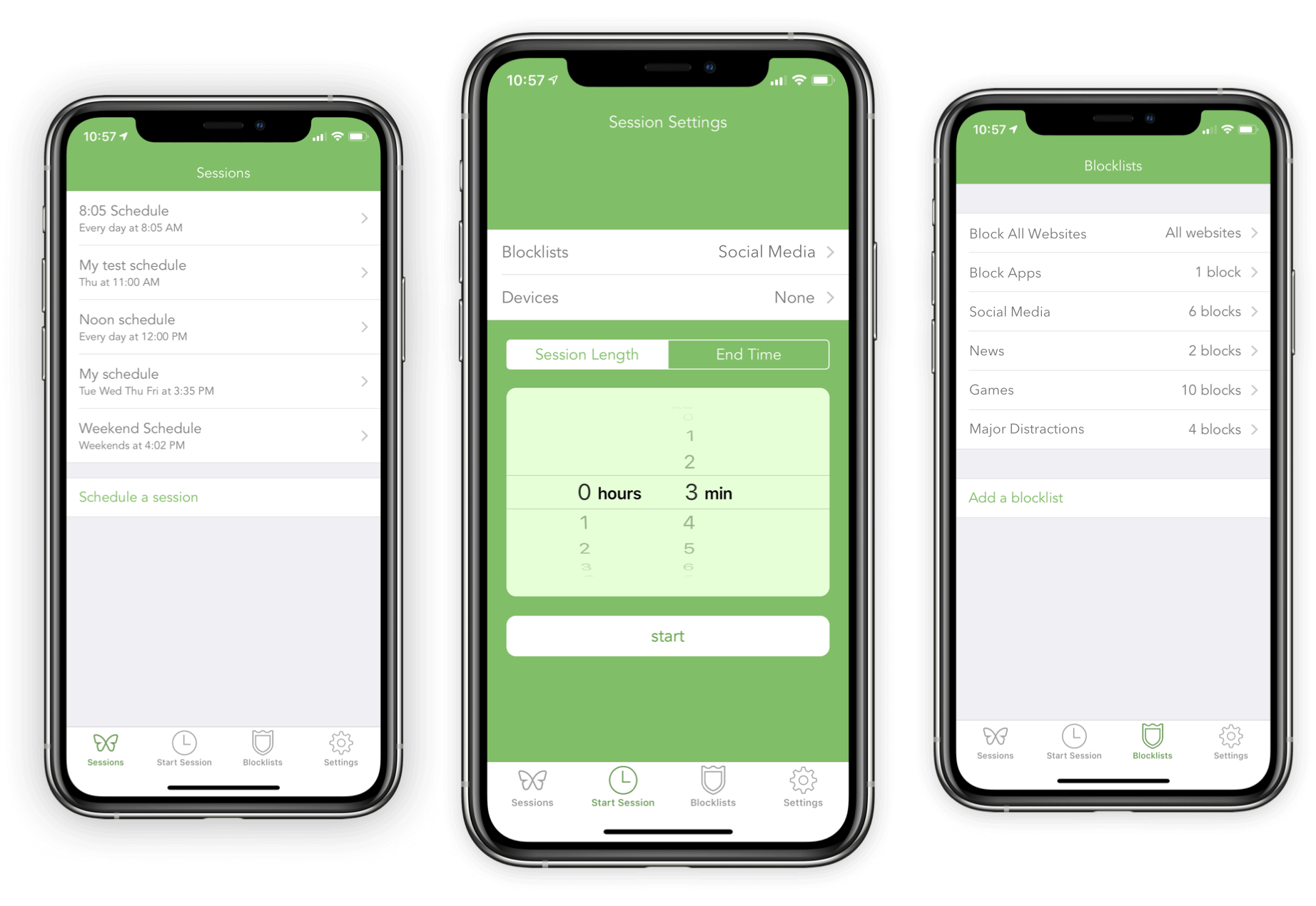
Forest is a focus timer that plants a virtual tree when you commit to staying off your phone. Leave the app and the tree dies. It sounds simple because it is, and that simplicity is exactly the point.
Introverts often find deep work easier to access than extroverts do, but that doesn’t mean digital distraction isn’t a problem. Forest creates a gentle visual commitment device that supports the kind of sustained, uninterrupted thinking that introverts do best. There’s also a real-world component: coins you earn in the app can fund actual tree planting through a partner organization, which adds a layer of meaning that resonates with people who care about purpose over performance.

Which Android Apps Help Introverts Process Emotions and Reflect?
One of the most consistent patterns I’ve noticed in my own life, and in conversations with other introverts, is that we tend to process emotion through reflection rather than expression. We need time and space to work through what we’re feeling before we’re ready to talk about it, if we ever are. Apps that support that internal processing are genuinely valuable.
Reflection and journaling as a practice has been one of the most consistently useful tools in my own life, and the right app can make that practice more sustainable on days when sitting down with a physical notebook feels like too much friction.
Day One (Android via Web App)
Day One is primarily an iOS app, but its web version is fully functional on Android and worth mentioning because the experience is genuinely excellent. It’s a private journaling app with end-to-end encryption, clean design, and features like on-this-day memories that surface past entries without any social sharing pressure.
Privacy matters here. Many introverts are reluctant to journal digitally because of legitimate concerns about who might read what they write. Day One’s encryption addresses that directly.
Reflectly
Reflectly is an AI-guided journaling app that asks you questions rather than leaving you with a blank page. For introverts who want to reflect but sometimes struggle to find an entry point, the guided prompts are genuinely helpful. The app tracks mood over time and surfaces patterns, which appeals to the kind of analytical self-awareness that many introverts bring to their inner lives.
There’s a broader conversation worth having about what makes digital journaling work for people who think deeply. The journaling apps that actually help with processing piece goes into more detail on that question if you want to compare options before committing to one.
Daylio
Daylio takes a micro-journaling approach. Instead of writing paragraphs, you log your mood and select activities from customizable icons. It takes about thirty seconds per entry, which means you’ll actually do it consistently.
What I find compelling about Daylio is what it does with that data over time. The app generates charts and patterns that show you how different activities, social situations, sleep patterns, and work types correlate with your mood. For someone who prefers to understand themselves through observation rather than conversation, that kind of data-driven self-knowledge is valuable. There’s something almost scientific about it, which appeals to the more analytical introvert personality.
What Apps Help Introverts Manage Communication Without Burning Out?
Communication is where introverts most often feel the gap between how they work best and what the world expects. Most communication tools are designed for speed and volume. Introverts tend to prefer depth and deliberation. Finding apps that support thoughtful, intentional communication rather than reactive, constant messaging makes a real difference.
I spent years running client relationships at my agencies, and the most exhausting part was never the strategy work. It was the volume of shallow, reactive communication that accumulated around it. Every Slack ping, every “quick call,” every email that demanded an immediate response. The cognitive cost of that constant context-switching is something Psychology Today’s coverage of introvert communication styles captures well: introverts are wired for depth, and shallow high-frequency communication is genuinely tiring in a way that’s hard to explain to people who find it energizing.
Signal
Signal is an encrypted messaging app that does exactly one thing: private, secure messaging and calls. No stories, no status updates, no algorithmic feed, no read receipts by default. You can set messages to disappear automatically, which removes the low-level anxiety of knowing your words are stored permanently somewhere.
For introverts who find social media messaging exhausting partly because of its performative quality, Signal’s stripped-down design is a relief. You’re just communicating with people you’ve chosen to communicate with, on your own timeline.
Loom
Loom lets you record short video or screen-share messages and send them asynchronously. For introverts who find real-time video calls draining but want to communicate with warmth and nuance, Loom is a genuinely useful middle ground.
I started using async video communication during the remote work years and found it transformed how I managed client relationships. You can think carefully about what you want to say, record it when you’re ready, and the other person can watch it when they have focused attention. No one is performing spontaneity for each other. The interaction is more considered on both sides, which tends to produce better outcomes anyway.
Google Keep
Google Keep isn’t a communication app in the traditional sense, but it serves a communication function that introverts often need: capturing thoughts before they’re ready to share them. Voice memos, quick notes, checklists, all stored in a simple, searchable format.
Many introverts process best when they can externalize a thought first, sit with it, refine it, and then decide whether and how to communicate it. Google Keep supports that pre-communication thinking stage without adding any friction.
Are There Android Apps That Help Introverts Manage Sensory Overwhelm?
Sensory environment matters more to introverts than most people realize, and for highly sensitive people, it can be the difference between a productive day and a completely depleted one. Sound is often the biggest variable. Open offices, coffee shops, public transit, all of it creates a kind of auditory chaos that makes deep thinking nearly impossible.
Sound sensitivity is something worth taking seriously. The HSP noise sensitivity guide has a thorough breakdown of tools and strategies, but at the app level, there are some strong Android options worth knowing about.
Endel
Endel generates personalized soundscapes in real time, adapting to your activity, time of day, and heart rate if you have a connected wearable. The science behind sound and cognition is complex, but the practical experience is straightforward: Endel creates an auditory environment that reduces distraction without demanding your attention.
What distinguishes Endel from a simple white noise app is the adaptive quality. The soundscape shifts as your context shifts, which means it stays in the background rather than becoming its own distraction. For deep work sessions, I’ve found it more effective than music with lyrics or silence in noisy environments.
Brain.fm
Brain.fm takes a similar approach with a stronger emphasis on functional music designed specifically for focus, relaxation, or sleep. The audio is engineered to support specific cognitive states rather than simply being pleasant to listen to.
Whether you prefer Endel or Brain.fm often comes down to aesthetic preference. Endel tends toward more ambient, naturalistic sounds. Brain.fm leans more toward structured musical patterns. Both are worth trying, and both offer Android apps with free trial periods.
Do Not Disturb Scheduling
This one isn’t an app but a native Android feature worth treating as one: scheduled Do Not Disturb. Android’s DND system lets you define exactly which notifications break through, which contacts can reach you, and when. You can schedule it to activate automatically during your deep work hours, your wind-down time, or any other period you want to protect.
Setting up a proper DND schedule was one of the single most impactful phone changes I made. The ambient awareness of potential notifications, even when you’re not looking at your phone, creates a low-level cognitive load that accumulates over a day. Removing that entirely for defined periods is simpler and more effective than most apps.
What Productivity Apps Actually Work for Introverts?
Most productivity systems are built around visible output and social accountability. Stand-up meetings, shared progress trackers, public goal boards. All of that can work for extroverts who are energized by external accountability. Many introverts find it creates performance anxiety rather than motivation.
The question of why so many productivity tools actually drain quiet personalities rather than support them is worth examining carefully. There’s a full breakdown in the productivity apps for introverts piece that gets into the structural reasons behind this mismatch.
Todoist
Todoist is a task management app that’s powerful enough to handle complex projects but clean enough not to overwhelm you with its own interface. You can organize tasks by project, priority, and due date, add labels and filters, and view your workload in multiple ways.
What makes Todoist work for introverts specifically is the ability to do all your planning privately before any work begins. I’ve always been someone who needs to map the full terrain of a project before I start executing on any part of it. Todoist supports that kind of comprehensive upfront planning without requiring you to share anything until you’re ready.
Structured
Structured is a visual daily planner that lays your tasks out on a timeline. You can see at a glance how your day is organized, where the gaps are, and how much buffer you have between commitments. For introverts who need to plan recovery time between social or high-stimulation activities, the visual timeline format is genuinely useful.
I’ve started thinking about calendar management very differently over the past few years. It’s not just about fitting tasks in, it’s about protecting the quality of attention available for each task. Seeing your day as a timeline rather than a list helps you notice when you’ve accidentally scheduled four back-to-back calls with no processing time between them.
Toggl Track
Toggl Track is a time-tracking app that shows you exactly where your hours go. For introverts who suspect that a significant portion of their day is being consumed by low-value, high-stimulation activities, the data Toggl provides can be clarifying.
When I ran my agency, I tracked time religiously for client billing. What I didn’t track was the hidden cost of context-switching and reactive communication on my actual output. Toggl makes that visible. Seeing in concrete numbers that you spent three hours in meetings and forty-five minutes on actual deep work is the kind of evidence that motivates real change.
How Can Introverts Use Their Android to Protect Mental Energy?
Beyond specific apps, there’s a broader question of how to configure your Android device to support introvert energy rather than deplete it. The phone itself is a tool, and tools can be set up well or poorly for the person using them.
A few configurations that have made a meaningful difference in my own experience:
Grayscale mode is available in Android’s accessibility settings and turns your screen black and white. Color is one of the primary ways apps capture attention. Removing it makes the phone significantly less compelling to pick up reflexively, which is exactly the point.
App timers, available through Digital Wellbeing on most Android devices, let you set daily limits on specific apps. When the limit is reached, the app icon grays out. You can override it, but the friction is enough to make you pause and ask whether you actually want to.
Notification batching is something Android supports through its notification channels system. Rather than allowing every app to interrupt you the moment something happens, you can configure most apps to deliver notifications in batches at times you choose. The psychological shift from reactive to scheduled notification checking is significant for people who find constant interruption genuinely draining.
There’s an interesting dimension to all of this that connects to how introverts process information more broadly. The way we engage with digital tools mirrors how we engage with the world: we prefer depth over breadth, signal over noise, and intentional engagement over reactive response. The apps and configurations that honor those preferences tend to produce better work and better wellbeing. The ones that don’t tend to produce exactly the kind of fragmented, overstimulated mental state that introverts find hardest to recover from.
Some of the most interesting work in this space touches on how digital environments affect cognitive load and emotional regulation. A piece published in Frontiers in Psychology examined how personality traits interact with digital technology use in ways that have real implications for how we design our digital lives. The broader picture from that kind of research supports what many introverts already know intuitively: not all digital environments are created equal, and the ones that demand constant social performance are the hardest on quieter personalities.
The mental health implications of chronic overstimulation are worth taking seriously. Research published in PubMed Central has explored how sustained cognitive load affects wellbeing over time, which is relevant context for anyone trying to build a more sustainable relationship with their phone. And a separate PubMed Central study on personality and digital behavior offers additional perspective on why individual differences in how we respond to technology deserve more attention than they typically get.

What Should Introverts Look for When Choosing Any New App?
Rather than building an ever-longer list of specific app recommendations, it’s more useful to develop a filter for evaluating any new app you’re considering. A few questions worth asking before you add something to your phone:
Does it have a social layer? Apps with built-in sharing, public profiles, or community features often create subtle pressure to perform or compare. If the social layer is optional and easy to ignore, that’s fine. If it’s central to the experience, it’s worth thinking carefully about whether that fits how you work.
Does it send notifications by default? Any app that pushes notifications without your explicit opt-in is treating your attention as a resource it’s entitled to. That’s a design philosophy worth noticing. You can always turn notifications off, but the fact that they’re on by default tells you something about the app’s priorities.
Does it support offline use? Apps that work without an internet connection tend to be more focused and less distracting. They also tend to respect your data more, since there’s less incentive to harvest it for advertising purposes.
Does it have a clear, single purpose? Multi-feature apps that try to do everything often end up doing nothing particularly well. More importantly, they create decision fatigue every time you open them. Apps with a clear, specific function are easier to use intentionally and harder to get lost in.
Does it respect your time? Gamification features like streaks, badges, and leaderboards are designed to make you feel obligated to keep using the app. Some people find that motivating. Many introverts find it coercive. Pay attention to whether an app is trying to serve you or retain you. Those are different things.
The broader toolkit for introverts extends well beyond apps, of course. If you want to see how digital tools fit alongside other resources designed around introvert strengths, the full Introvert Tools & Products hub is a good place to continue that exploration.
One area that often gets overlooked in these conversations is the overlap between introversion and the broader digital tools landscape. The introvert apps and digital tools overview takes a wider lens to this question, looking at how different categories of tools map onto the specific ways introverts process and engage. And if you’re thinking about how all of this connects to professional productivity, the Rasmussen College piece on marketing for introverts offers some useful framing on how introvert strengths translate into professional contexts where communication and visibility matter.
The phone you carry is a reflection of the mental environment you’re choosing to inhabit. For introverts, getting that environment right isn’t a luxury. It’s a meaningful part of how you protect the internal space that makes your best thinking possible.
Running on empty?
Five drain profiles, each with specific triggers, warning signs, and a recharging playbook.
Take the Free QuizUnder 2 minutes · 8 questions · Free
About the Author
Keith Lacy is an introvert who’s learned to embrace his true self later in life. After 20 years in advertising and marketing leadership, including running agencies and managing Fortune 500 accounts, Keith now channels his experience into helping fellow introverts understand their strengths and build fulfilling careers. As an INTJ, he brings analytical depth and authentic perspective to every article, drawing from both professional expertise and personal growth.
Frequently Asked Questions
What makes an Android app good for introverts specifically?
Apps that work well for introverts tend to share a few qualities: minimal interface design, limited or optional social features, offline functionality, and a clear single purpose. The best apps for introverts reduce friction and ambient noise rather than adding stimulation. They support deep thinking, private reflection, and intentional communication without demanding constant engagement or public performance.
Are there free Android apps that work well for introverts?
Yes. Several strong options are free or offer generous free tiers. Google Keep, Daylio (free version), Signal, Toggl Track, and Android’s built-in Do Not Disturb scheduling are all free to use. Forest and Brain.fm have free trial periods. Obsidian is free for personal use on a single device. You don’t need to spend money to meaningfully improve your phone environment.
How can I reduce phone-related overstimulation as an introvert?
Start with your phone’s built-in settings before adding new apps. Schedule Do Not Disturb windows during your deep work and wind-down hours. Turn on grayscale mode to reduce the visual pull of your screen. Set app timers through Digital Wellbeing to create friction around high-distraction apps. Then layer in focused tools like Forest for work sessions and Endel or Brain.fm for auditory environment control. The combination of system-level changes and targeted apps tends to be more effective than apps alone.
Can Android apps actually help with introvert burnout?
Apps can support recovery from introvert burnout but won’t resolve it on their own. Where they help most is in preventing the accumulation of small energy drains: constant notifications, reactive communication patterns, and the ambient anxiety of an always-on device. Journaling apps like Reflectly or Daylio can support emotional processing. Sound apps like Endel can create a more restorative auditory environment. Productivity apps like Structured can help you protect recovery time in your schedule. Used thoughtfully, these tools reduce the daily friction that contributes to burnout over time.
Should introverts use fewer apps or more specialized apps?
Fewer, more intentional apps almost always serve introverts better than a large collection of tools. Every app on your phone represents a potential claim on your attention, even when you’re not using it. A small number of high-quality apps that you’ve chosen deliberately for specific purposes creates a much cleaner mental environment than a phone full of options you might use someday. The goal is a device that feels like a tool you’re in control of, not a system that’s managing you.