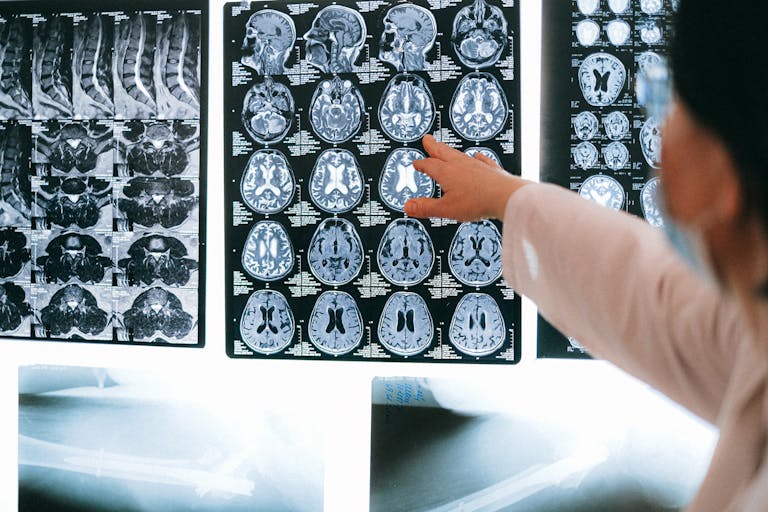

Twice-exceptional introverts are people who are both intellectually gifted and living with a learning difference, sensory sensitivity, or neurodevelopmental condition like ADHD or dyslexia. The combination creates a paradox: exceptional strengths that coexist with real challenges, often leaving these individuals feeling neither gifted enough nor challenged enough to receive the support they actually need.

My first real encounter with this concept wasn’t in a psychology textbook. It was in a conference room in Chicago, watching a junior copywriter on my team absolutely dismantle a creative brief in ways I hadn’t seen in years, then completely fall apart when asked to present that same thinking to a client. She was brilliant and struggling at the same time, and the agency had no framework for what to do with that combination. Neither did I, honestly. Not yet.
That experience stayed with me, partly because I recognized something in her that I’d been quietly carrying myself for years without a name for it.
What Does It Actually Mean to Be Twice-Exceptional?
The term “twice-exceptional,” often shortened to 2e, describes individuals who show high intellectual ability alongside a disability or neurodivergent condition. According to the National Association for Gifted Children, twice-exceptional learners are frequently misidentified or overlooked entirely because their gifts can mask their challenges, and their challenges can obscure their gifts.
What’s your personality type?
Take our free 40-question assessment and get a detailed personality profile with dimension breakdowns, context analysis, and personalised insights.
Discover Your Type8-12 minutes · 40 questions · Free
Common pairings include giftedness with ADHD, giftedness with dyslexia, giftedness with autism spectrum traits, and giftedness with anxiety disorders. The introversion layer adds even more complexity. An introverted 2e person tends to process all of this internally, often spending enormous energy managing both their exceptional capabilities and their real limitations before anyone else in the room even notices something is happening.
For years, I operated in advertising environments where the loudest voice in the room was assumed to be the sharpest mind. That assumption cost a lot of talented people their confidence, and it cost agencies some of their best thinking.
Why Do Gifted Introverts Often Feel More Exhausted Than Celebrated?
There’s a particular kind of fatigue that comes with being very good at something that also costs you a great deal to do. I’ve felt it after long client presentations where I performed well by every external measure, then needed an entire weekend to recover. The performance was real. So was the cost.
For twice-exceptional introverts, that dynamic is amplified significantly. A 2022 review published through the National Institutes of Health noted that gifted individuals with co-occurring neurodevelopmental conditions frequently experience heightened emotional intensity and sensory sensitivity, both of which compound the energy demands of everyday social and professional environments.
What this means in practice: a 2e introvert might produce genuinely exceptional work while simultaneously burning through cognitive and emotional reserves at a rate that looks invisible from the outside. Colleagues see the output. They don’t see what it takes to generate it.
At one agency I ran, I had a strategist who consistently delivered the most insightful competitive analyses I’d ever seen. She also called in sick more than anyone else on the team. My instinct at the time was to question her commitment. Looking back, I understand she was managing something much more complex than a calendar problem. Her brain was working harder than most, in more directions at once, and the standard five-day work week wasn’t designed with that kind of processing in mind.

How Does Introversion Interact With Being Twice-Exceptional?
Introversion and twice-exceptionality share some overlapping territory, particularly around sensory sensitivity and the need for processing time. But they’re distinct experiences that interact in specific ways worth understanding separately.
Introverts gain energy through solitude and internal reflection. Twice-exceptional individuals often require extended processing time not just to recover, but to actually do their best cognitive work. When these two traits combine, the person may appear to be underperforming in environments that reward speed, visibility, and verbal fluency, even when their actual thinking is running several layers deeper than what’s visible.
The American Psychological Association has written extensively about the ways neurodivergent individuals are assessed and supported in educational and workplace contexts. One consistent finding: standard evaluation frameworks tend to measure performance in ways that favor extroverted, neurotypical processing styles, which means twice-exceptional introverts are routinely underestimated.
I watched this play out repeatedly in pitch meetings. My most analytically gifted team members were often the quietest in the room. Clients sometimes mistook their silence for disengagement. What was actually happening was deep, rapid synthesis happening in real time, but because it wasn’t being narrated out loud, it didn’t register as intelligence in the room’s social economy.
What Are the Specific Strengths of Twice-Exceptional Introverts?
Twice-exceptional introverts tend to bring a particular combination of capabilities that, when recognized and supported, can be genuinely remarkable. Pattern recognition at a systemic level is one of the most consistent strengths. So is the ability to hold complexity without rushing toward premature conclusions.
Creative problem-solving in 2e individuals often operates through non-linear pathways. Where a neurotypical thinker might move from A to B to C in a predictable sequence, a twice-exceptional mind might arrive at Z through a route no one else considered, because they were processing connections that weren’t obvious to anyone else in the room.
Deep focus is another consistent strength. Many 2e introverts can achieve states of concentration that produce extraordinary output, provided the environment supports that kind of sustained attention. The challenge is that most professional environments are structured around interruption, collaboration, and constant context-switching, which are conditions that actively work against this strength.
As someone who spent over two decades in advertising, I built entire creative departments around the assumption that the best ideas came from constant group brainstorming. It took me years to recognize that my quietest contributors were often doing their most valuable thinking between those sessions, not during them. Changing that assumption changed the quality of our work.

Why Do Twice-Exceptional Introverts Struggle to Get Support?
One of the cruelest aspects of being twice-exceptional is that your gifts can actively prevent you from receiving help. If you test well, produce strong work, or demonstrate high verbal intelligence in certain contexts, the systems around you tend to conclude that you’re fine. The places where you’re genuinely struggling get attributed to attitude, effort, or motivation rather than neurology.
A 2021 article in Psychology Today described this as the “masking paradox,” where twice-exceptional individuals develop sophisticated compensatory strategies that hide their challenges so effectively that they become invisible to the support structures designed to help them. The compensation itself becomes exhausting, and that exhaustion often gets misread as burnout from overwork rather than from the ongoing effort of functioning in systems that weren’t built for how their minds work.
There’s also a social dimension to this. Twice-exceptional introverts often learn early that expressing difficulty draws the wrong kind of attention. In school environments, admitting you’re struggling when you’re also clearly bright can invite skepticism rather than support. In professional environments, the same dynamic applies. I’ve seen talented people spend years performing competence they didn’t feel, because the alternative seemed worse.
At one point in my career, I was managing a major retail account while quietly struggling with what I now recognize as significant anxiety around certain kinds of social performance. I was good at the work. I was also running on empty in ways I didn’t have language for. My solution was to work harder and sleep less, which is not a solution. It’s a delay.
How Do Twice-Exceptional Introverts Experience Burnout Differently?
Burnout in twice-exceptional introverts tends to arrive differently than it does in the general population. Because these individuals have often spent years developing compensatory strategies, the warning signs can be subtle and internally experienced long before they become visible to anyone else.
The World Health Organization classifies burnout as a syndrome resulting from chronic workplace stress that hasn’t been managed effectively, characterized by exhaustion, increased mental distance from work, and reduced professional efficacy. For twice-exceptional introverts, all three of those markers can be present while the person continues to produce work that looks, from the outside, completely functional.
What tends to happen is a kind of internal erosion. The creative connections that once came easily start to feel forced. The pattern recognition that made someone exceptional begins to feel like static rather than signal. The ability to sustain deep focus shortens. And because the external performance hasn’t visibly collapsed yet, the person often pushes harder rather than stepping back, which accelerates the erosion rather than reversing it.
Recovery from this kind of burnout also tends to take longer. Standard advice around rest and recovery doesn’t always account for the specific cognitive and sensory demands that twice-exceptional individuals are managing. What looks like adequate rest from the outside may not be sufficient for a nervous system that processes at a higher intensity across more channels simultaneously.

What Environments Actually Support Twice-Exceptional Introverts?
The environments that allow twice-exceptional introverts to do their best work tend to share a few consistent characteristics. Autonomy over how and when work gets done matters enormously. So does the presence of meaningful complexity, because 2e individuals often disengage from work that doesn’t engage their full capacity.
Psychological safety is particularly critical. A 2019 Harvard Business Review analysis found that teams with high psychological safety produced more innovative work and showed greater resilience under pressure. For twice-exceptional individuals, psychological safety isn’t just a nice-to-have. It’s the condition under which their actual capabilities become accessible to the people around them.
Clear structure combined with flexibility sounds like a contradiction, but it’s actually what twice-exceptional introverts often need most. Structure reduces the cognitive load of managing ambiguity, freeing up processing capacity for the actual work. Flexibility allows them to work in the rhythms that support their particular kind of concentration rather than fighting against a schedule built for a different kind of brain.
Late in my agency career, I started building in what I called “closed door mornings” for certain team members, a protected block of time with no meetings, no Slack, no interruption. The productivity increase was measurable. More importantly, the quality of thinking that came out of those sessions was noticeably different from what we produced in our standard open-plan, always-available culture. It wasn’t a radical intervention. It was just giving certain people the conditions their minds actually required.
How Can Twice-Exceptional Introverts Advocate for Themselves at Work?
Self-advocacy for twice-exceptional introverts is complicated by the same masking dynamics that make getting support difficult in the first place. If you’ve spent years appearing to manage well, telling someone you’re not managing well can feel both vulnerable and unconvincing.
One practical starting point is shifting the conversation from deficits to conditions. Instead of explaining what you can’t do, describe what conditions produce your best work. Most managers respond more constructively to “I do my best strategic thinking in the morning before the day gets fragmented” than to “I have trouble concentrating in open-plan environments.” The information is similar. The framing is completely different.
Documentation helps, too. Twice-exceptional individuals often benefit from formal assessments that provide language and legitimacy for what they’re experiencing. The Centers for Disease Control and Prevention offers resources on ADHD and neurodevelopmental conditions that can be useful starting points for understanding your own profile more clearly before trying to explain it to others.
Finding allies matters as well. One mentor in my career, a creative director who had clearly navigated some of these dynamics himself, gave me permission to stop performing extroversion in environments where it was costing me more than it was contributing. That single conversation shifted how I thought about my own leadership style in ways that took years to fully work through but started with someone simply saying: your way of working is valid.
If you’re exploring how introversion shapes your professional experience more broadly, consider examining the full range of workplace dynamics that introverts handle, from communication styles to leadership approaches to managing energy in demanding environments.

What Does Thriving Actually Look Like for Twice-Exceptional Introverts?
Thriving for a twice-exceptional introvert doesn’t look like the absence of challenge. It looks like being in environments where your particular combination of strengths and challenges is understood well enough that you’re not constantly spending energy compensating for the gap between how you work and how the world expects you to work.
It looks like doing work that engages your full capacity without requiring you to perform a version of yourself that isn’t real. It looks like having enough autonomy and structural support that the cognitive overhead of managing your environment doesn’t crowd out the actual thinking you’re capable of.
For many twice-exceptional introverts, thriving also involves a degree of self-knowledge that takes time to develop. Understanding your own processing patterns, your energy rhythms, your specific sensory sensitivities, and your particular combination of strengths is work that doesn’t happen automatically. It requires the same quality of attention you might bring to any complex problem, turned inward.
What I’ve come to believe, after years of working with and alongside people who fit this description, is that twice-exceptional introverts often have the most to offer in environments that are willing to meet them partway. The capacity is genuinely exceptional. What it needs is conditions worthy of it.
More perspectives on introvert strengths, identity, and professional experience can be found throughout our content, where we cover these themes in depth.
About the Author
Keith Lacy is an introvert who’s learned to embrace his true self later in life. After 20 years in advertising and marketing leadership, including running agencies and managing Fortune 500 accounts, Keith now channels his experience into helping fellow introverts understand their strengths and build fulfilling careers. As an INTJ, he brings analytical depth and authentic perspective to every article, drawing from both professional expertise and personal growth.
Frequently Asked Questions
What is a twice-exceptional introvert?
A twice-exceptional introvert is someone who is both intellectually gifted and living with a neurodivergent condition or learning difference such as ADHD, dyslexia, or autism spectrum traits, while also having an introverted personality. The combination creates a distinctive profile where exceptional cognitive strengths coexist with real challenges, and the introversion adds an additional layer of internal processing and energy management that shapes how both the gifts and the challenges are experienced.
Why do twice-exceptional introverts often go undiagnosed or unsupported?
Twice-exceptional individuals frequently go unidentified because their intellectual gifts can compensate for or mask their challenges in ways that make them appear to be functioning adequately. In school and work environments, if someone is producing strong results in some areas, the assumption tends to be that any difficulties they’re experiencing are motivational rather than neurological. This masking effect, combined with the introvert tendency to process challenges internally rather than expressing them openly, means that many 2e introverts spend years without the support they genuinely need.
How does introversion affect the experience of being twice-exceptional?
Introversion shapes the twice-exceptional experience in several significant ways. Introverts process information deeply and internally, which can amplify both the strengths and the challenges associated with 2e profiles. The need for solitude and recovery time that introverts naturally have is often intensified for twice-exceptional individuals, who are managing higher sensory and cognitive loads. Introversion can also make self-advocacy more difficult, since the tendency is to manage challenges quietly rather than seeking visible support.
What work environments are best suited to twice-exceptional introverts?
Twice-exceptional introverts tend to perform best in environments that offer meaningful autonomy, protected time for deep focus, clear structure without rigid micromanagement, and genuine psychological safety. Work that engages their full cognitive capacity matters, since 2e individuals often disengage from tasks that don’t challenge them adequately. Flexibility around when and how work gets done is also significant, as it allows them to work in the rhythms that support their particular processing style rather than constantly adapting to conditions built for a different kind of brain.
How can twice-exceptional introverts manage burnout more effectively?
Managing burnout as a twice-exceptional introvert starts with recognizing that standard recovery approaches may not be sufficient for the specific cognitive and sensory demands involved. Effective strategies include building in regular protected recovery time before burnout accumulates rather than after it arrives, identifying the specific environmental conditions that accelerate depletion versus those that restore capacity, and developing enough self-knowledge to recognize early warning signs internally before they become visible externally. Professional support from therapists or coaches familiar with neurodivergent profiles can also provide frameworks that generic burnout advice doesn’t address.