
Neurodivergent introverts at work face a compounding challenge: they process the world differently on two distinct levels at once. Introversion shapes how they gain and spend energy, while neurodivergence shapes how their brains receive, filter, and respond to information. Together, these traits create a work experience that most colleagues and managers never fully see or understand.
That gap between what’s happening internally and what others observe is where most of the friction lives.

I spent more than two decades running advertising agencies before I fully understood my own wiring. As an INTJ who also processes the world with an intensity that most open-plan offices weren’t designed for, I kept bumping into the same wall. I could deliver exceptional strategy, manage complex client relationships, and lead teams through high-pressure campaigns. Yet in certain environments, I’d walk out of a three-hour brainstorm feeling hollowed out in a way that a good night’s sleep couldn’t fix. I thought something was wrong with me. What was actually happening was that I was burning energy on two separate tracks simultaneously, managing my introversion while also managing the sensory and cognitive load that comes with a brain that doesn’t process stimulation the way most offices assume you will.
If any part of that sounds familiar, this article is for you.
What Does It Actually Mean to Be Both Neurodivergent and Introverted?
Neurodivergence is an umbrella term covering brain-based differences including ADHD, autism spectrum conditions, dyslexia, dyspraxia, sensory processing differences, and related traits. Introversion describes a personality orientation where internal processing takes priority and social interaction costs energy rather than generating it. These are separate things, but they overlap more often than most people realize.
What’s your personality type?
Take our free 40-question assessment and get a detailed personality profile with dimension breakdowns, context analysis, and personalised insights.
Discover Your Type8-12 minutes · 40 questions · Free
A 2020 review published through the National Institute of Mental Health highlighted the significant co-occurrence of sensory sensitivity and social withdrawal across multiple neurodevelopmental profiles, which means many people carrying a neurodivergent diagnosis also lean strongly introverted by temperament. The brain that processes sensory input intensely is often the same brain that needs extended quiet time to recover from a noisy, socially demanding workday.
What makes this combination particularly invisible at work is that neither trait looks like a problem from the outside, at least not obviously. You show up. You contribute. You meet your deadlines. Yet underneath, you’re running a constant background process that your colleagues aren’t running, filtering excess input, managing sensory thresholds, translating your internal experience into the communication style the room expects, and doing all of it while also being the person who needs more recovery time than anyone around you seems to need.
Why Do Neurodivergent Introverts Burn Out Faster in Traditional Workplaces?
Open-plan offices were designed around an extroverted, neurotypical ideal. The assumption baked into that layout is that spontaneous interaction generates creativity, that visibility equals engagement, and that the ability to tolerate noise and constant interruption is a neutral baseline rather than a specific cognitive style.
For someone who is both introverted and neurodivergent, that environment isn’t neutral. It’s actively expensive.
At one of my agencies, we moved into a beautiful open-floor creative space. Glass walls, communal tables, no private offices except for the conference rooms. The team loved it. I genuinely tried to love it. What I noticed instead was that my best strategic thinking, the kind that had built the agency’s reputation with Fortune 500 clients, started happening exclusively before 7 AM and after 6 PM. During the actual workday, in that space, I was managing the environment rather than doing the work. I could see it happening in real time. I just didn’t have the language for it yet.
The American Psychological Association has documented how chronic sensory overload contributes to cognitive fatigue, reduced working memory, and increased anxiety, all of which compound over time into the kind of burnout that doesn’t respond to a long weekend. For neurodivergent introverts, this isn’t an occasional bad day. It’s the structural reality of working in environments that weren’t built with their neurology in mind.

What Strengths Do Neurodivergent Introverts Bring to the Workplace?
Here’s where I want to spend some real time, because the narrative around neurodivergent introverts at work tends to focus almost entirely on accommodation and challenge. That framing misses something significant.
The same brain that struggles in a loud open-plan meeting is often the brain that catches the strategic inconsistency everyone else missed. The same person who needs processing time before responding in a group setting is often the person whose response, when it comes, is the most considered and accurate one in the room. The traits that create friction in certain environments are frequently the same traits that create exceptional value in others.
Pattern recognition is one of the most consistent strengths I’ve observed. When you process information deeply rather than quickly, you tend to see connections that faster processors skip over. In my agency work, some of the most valuable insights we brought to clients came from the team members who said the least in brainstorms but handed me a two-page memo afterward that reframed the entire problem. Those people were almost always introverted, often neurodivergent, and consistently underestimated by the room.
Hyperfocus is another trait worth naming directly. Many people with ADHD or autism experience periods of intense, sustained concentration on problems that genuinely interest them. In the right context, that capacity for deep work produces output that’s qualitatively different from what distributed attention generates. A 2022 analysis published in Harvard Business Review noted that organizations increasingly need employees capable of complex, non-routine cognitive work, exactly the kind of sustained analytical thinking that neurodivergent introverts often do exceptionally well.
Attention to detail, sensitivity to interpersonal dynamics, comfort with independent work, and a tendency to think before speaking are all traits that show up consistently in this group. None of them are liabilities. They’re assets that most workplaces haven’t learned to deploy correctly.
How Does Masking Affect Neurodivergent Introverts at Work?
Masking is the process of suppressing or camouflaging natural responses in order to appear more neurotypical or more extroverted in social and professional settings. It’s exhausting in a way that’s genuinely difficult to explain to someone who doesn’t do it.
I masked for most of my career. Not consciously, at first. I learned early that the leadership behaviors being rewarded in my industry looked extroverted: commanding the room, projecting confidence in real time, generating enthusiasm in group settings, appearing energized by the very interactions that cost me the most. So I learned to perform those things. I got good at it. I built a successful agency doing it.
What I didn’t account for was the cumulative cost. Every hour spent performing extroversion while managing sensory overload and processing social information at a depth most people don’t require was an hour drawing from a reserve that wasn’t being replenished. By my mid-forties, I was functionally running on empty in ways that didn’t show up in my work output but absolutely showed up in my health, my relationships, and my capacity for the kind of reflective thinking that had always been my actual competitive advantage.
The Mayo Clinic has written extensively about the physical consequences of chronic stress and social performance anxiety, including disrupted sleep, immune suppression, and cardiovascular effects. For neurodivergent introverts who mask consistently over years, those aren’t abstract risks. They’re a predictable outcome of asking a brain to run in a mode it wasn’t designed for, indefinitely.

What Workplace Accommodations Actually Help?
Accommodation is a word that makes some people uncomfortable, as if asking for conditions that allow you to do your best work is somehow a concession rather than good management. I’ve come to see it differently. Giving someone the environment where their actual capabilities can show up isn’t accommodation in the diminishing sense. It’s just effective leadership.
The accommodations that make the most practical difference for neurodivergent introverts tend to cluster around a few categories.
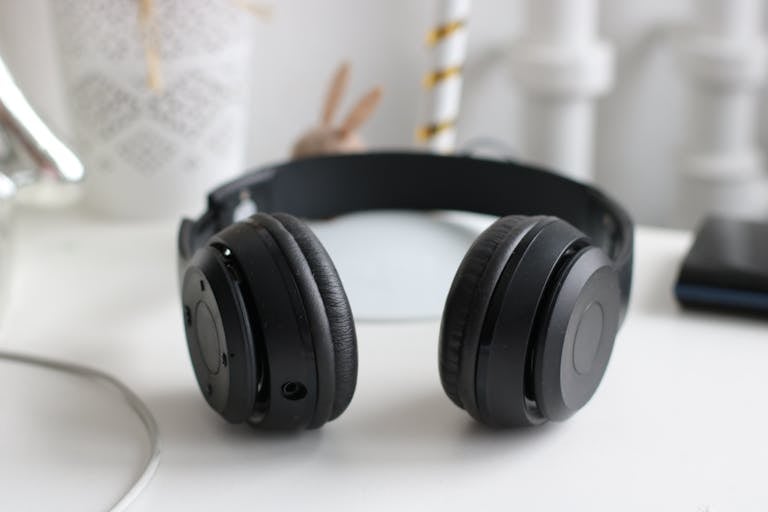
Quiet and controlled work environments matter enormously. Access to a private or semi-private space, noise-canceling headphones as an accepted norm, or the ability to work remotely on days requiring deep concentration can change the entire quality of someone’s output. This isn’t about preference. It’s about giving a brain the conditions it needs to function at its actual capacity.
Advance notice and written communication help with processing time. Many neurodivergent introverts produce their best thinking when they’ve had time to process information before being asked to respond. Sending meeting agendas in advance, following up verbal conversations with written summaries, and allowing time for written responses rather than only real-time verbal answers removes artificial barriers to contribution.
Flexible scheduling acknowledges that cognitive performance isn’t uniform across a standard nine-to-five window. Some people with ADHD or sensory processing differences have peak focus windows that don’t align with conventional business hours. When output matters more than presence, flexibility produces better results for everyone.
The Centers for Disease Control and Prevention notes that workplace mental health support and flexible work arrangements are associated with reduced absenteeism and higher productivity across a range of employee populations, including those with neurodevelopmental differences. The business case for accommodation isn’t just ethical. It’s measurable.
How Should Neurodivergent Introverts Approach Self-Advocacy at Work?
Self-advocacy is one of the most complicated parts of being neurodivergent in a professional setting. Disclosing a diagnosis, asking for accommodations, or even just explaining why you work differently carries real risk in many workplace cultures. I won’t pretend otherwise.
What I’ve found, both personally and in watching others, is that framing matters more than most people realize. There’s a significant difference between “I have ADHD and I struggle with open offices” and “I do my best analytical work in low-distraction environments, and consider this that produces for the team.” The second framing is honest, it’s practical, and it centers the outcome rather than the diagnosis.
You don’t owe anyone a medical history. You do have a legitimate interest in working in conditions that allow you to contribute at your actual level. Those two things can coexist.
Building a track record before making requests also helps. When I started protecting my deep work hours more deliberately, I didn’t announce it as a neurodivergent accommodation. I just started producing better strategic work during those hours and letting the output speak. By the time I was more explicit about what I needed, I had years of evidence that my way of working produced results. That made the conversation much easier.
Psychology Today has published useful frameworks on self-advocacy and workplace disclosure for neurodivergent adults, including how to assess organizational culture before deciding how much to share and with whom. The decision is personal, and it should be made with clear eyes about the specific environment you’re in.

What Communication Strategies Work Best for This Personality Type?
One of the most consistent patterns I’ve noticed in neurodivergent introverts is the gap between internal processing and external expression. The thinking is often sophisticated and detailed. Getting it out in real time, in the format the room expects, is where things break down.
Written communication is frequently where this group excels. Emails, memos, structured documents, and written proposals allow the kind of careful, layered thinking that’s difficult to reproduce in a fast-moving verbal exchange. If you’re a neurodivergent introvert who feels like you’re never saying what you actually mean in meetings, it’s worth asking whether the medium, not the message, is the problem.
I made a deliberate shift in my agency toward what I called “thinking on paper first.” Before major client presentations, I’d write out my actual position in full, not as a script, but as a way of crystallizing what I genuinely thought before I had to say it in a room. The presentations got sharper. My confidence in them went up. And I stopped leaving important conversations feeling like I’d left the best part of my thinking behind.
Structured one-on-one conversations are often more productive than group settings for this personality type. The dynamic of a large group, with its competing voices, rapid topic shifts, and social performance expectations, works against the processing style of most neurodivergent introverts. Seeking out bilateral conversations where possible, and contributing to groups through written channels when the format allows, isn’t avoidance. It’s strategic communication.
The World Health Organization’s work on mental health in the workplace emphasizes that inclusive communication practices benefit not just neurodivergent employees but overall team effectiveness, because diverse communication styles tend to surface better information when the structure accommodates them.
How Can Managers Better Support Neurodivergent Introverts on Their Teams?
Most managers who struggle to support neurodivergent introverts aren’t doing so from indifference. They’re working from a mental model of what good performance looks like that was built around a different cognitive profile. Changing that model doesn’t require a complete overhaul of how a team operates. It requires a few deliberate adjustments.
Evaluate output, not presence. The neurodivergent introvert who produces exceptional work while being quieter in meetings and needing more recovery time between intense interactions is delivering value. Measuring that value by meeting participation or visible enthusiasm misses what’s actually happening.
Create multiple channels for contribution. Not everyone thinks best out loud. Offering written pre-meeting input, async feedback options, and structured one-on-one check-ins alongside group meetings gives more people a genuine path to contribute at their actual level.
Ask, rather than assume. One of the most powerful things a manager ever said to me was “What does your best work environment look like?” Nobody had asked me that directly before. The question itself signaled that the answer mattered, and it opened a conversation that changed how I structured my own leadership for the rest of my career.
Recognize that slow communication isn’t uncertain communication. A person who takes time to respond, who asks for a day to think before answering a complex question, or who follows up a verbal conversation with a written summary isn’t being evasive. They’re being thorough. That’s a different thing entirely, and treating it as the asset it actually is changes the dynamic significantly.

What Does a Sustainable Career Look Like for Neurodivergent Introverts?
Sustainable, for this group, means something specific. It means a career structure that allows genuine contribution without requiring constant performance of a cognitive style that doesn’t fit. It means environments where deep work is valued, where communication can happen in formats that allow real thinking, and where recovery time is built in rather than treated as weakness.
That doesn’t mean only remote work, or only solo roles, or only technical careers. Neurodivergent introverts succeed across a wide range of fields, including leadership, creative work, research, strategy, education, and counseling. What they share in those successes is usually some version of the same thing: a role that plays to depth over speed, a work structure that respects their processing style, and an environment where their actual output is what gets measured.
The most important shift I made in my own career wasn’t changing what I did. It was changing how I structured the conditions around what I did. Protecting deep work time, choosing communication formats that matched my processing style, building teams that valued written thinking alongside verbal performance, and being honest with myself about what environments cost me too much. Those adjustments didn’t make me less effective as a leader. They made me considerably more effective, and they made the work sustainable in a way it hadn’t been before.
A 2021 study cited by the National Institute of Mental Health found that person-environment fit, the degree to which a person’s cognitive and emotional style matches their work context, is one of the strongest predictors of long-term occupational wellbeing. That’s not a soft finding. It’s a structural one, and it has practical implications for how neurodivergent introverts approach career decisions.
Explore more resources on introvert strengths and career development in our complete Ordinary Introvert hub.
About the Author
Keith Lacy is an introvert who’s learned to embrace his true self later in life. After 20 years in advertising and marketing leadership, including running agencies and managing Fortune 500 accounts, Keith now channels his experience into helping fellow introverts understand their strengths and build fulfilling careers. As an INTJ, he brings analytical depth and authentic perspective to every article, drawing from both professional expertise and personal growth.
Frequently Asked Questions
Can someone be both neurodivergent and introverted at the same time?
Yes, and it’s more common than most people realize. Neurodivergence refers to brain-based differences in how information is processed, while introversion describes a personality orientation toward internal processing and energy recovery through solitude. These are distinct traits, but they frequently co-occur. Many people with ADHD, autism, sensory processing differences, or dyslexia also identify strongly as introverted, meaning they experience both dimensions simultaneously in their daily work and social lives.
Why do neurodivergent introverts often struggle more in open-plan offices?
Open-plan environments generate high levels of ambient noise, visual distraction, and unpredictable social interaction, all of which are particularly costly for people who process sensory input intensely and who need quiet conditions for deep cognitive work. Neurodivergent introverts are managing two separate energy drains in those environments: the introvert’s need for recovery from social stimulation, and the neurodivergent brain’s heightened sensitivity to sensory and cognitive overload. The combination accelerates fatigue and reduces the quality of complex thinking significantly.
What are the greatest professional strengths of neurodivergent introverts?
Pattern recognition, deep analytical thinking, hyperfocus on complex problems, careful attention to detail, and strong written communication are among the most consistent strengths in this group. Neurodivergent introverts often produce their best work in conditions that allow sustained concentration, and the quality of that work frequently exceeds what faster, more distributed processing generates. Their tendency to think before speaking also means their contributions, when they come, tend to be more considered and accurate than those produced under pressure for immediate verbal response.
Should neurodivergent introverts disclose their diagnosis at work?
Disclosure is a personal decision that depends heavily on the specific workplace culture, the relationship with a given manager, and what accommodations are being sought. There is no universal right answer. Some people find that disclosure opens productive conversations about support and flexibility. Others find that framing their needs in terms of work style and output, rather than diagnosis, achieves the same practical result without the risks that disclosure can carry in less supportive environments. Assessing the culture honestly before deciding how much to share is a reasonable first step.
What communication approaches work best for neurodivergent introverts in professional settings?
Written communication is frequently the strongest channel for neurodivergent introverts, because it allows the processing time and careful construction that verbal real-time exchange doesn’t. Strategies that tend to work well include requesting meeting agendas in advance, following up verbal conversations with written summaries, contributing to group discussions through written channels when the format allows, and structuring one-on-one conversations rather than relying primarily on group settings for important exchanges. The goal is to find formats that match the actual processing style rather than forcing real-time performance in every context.