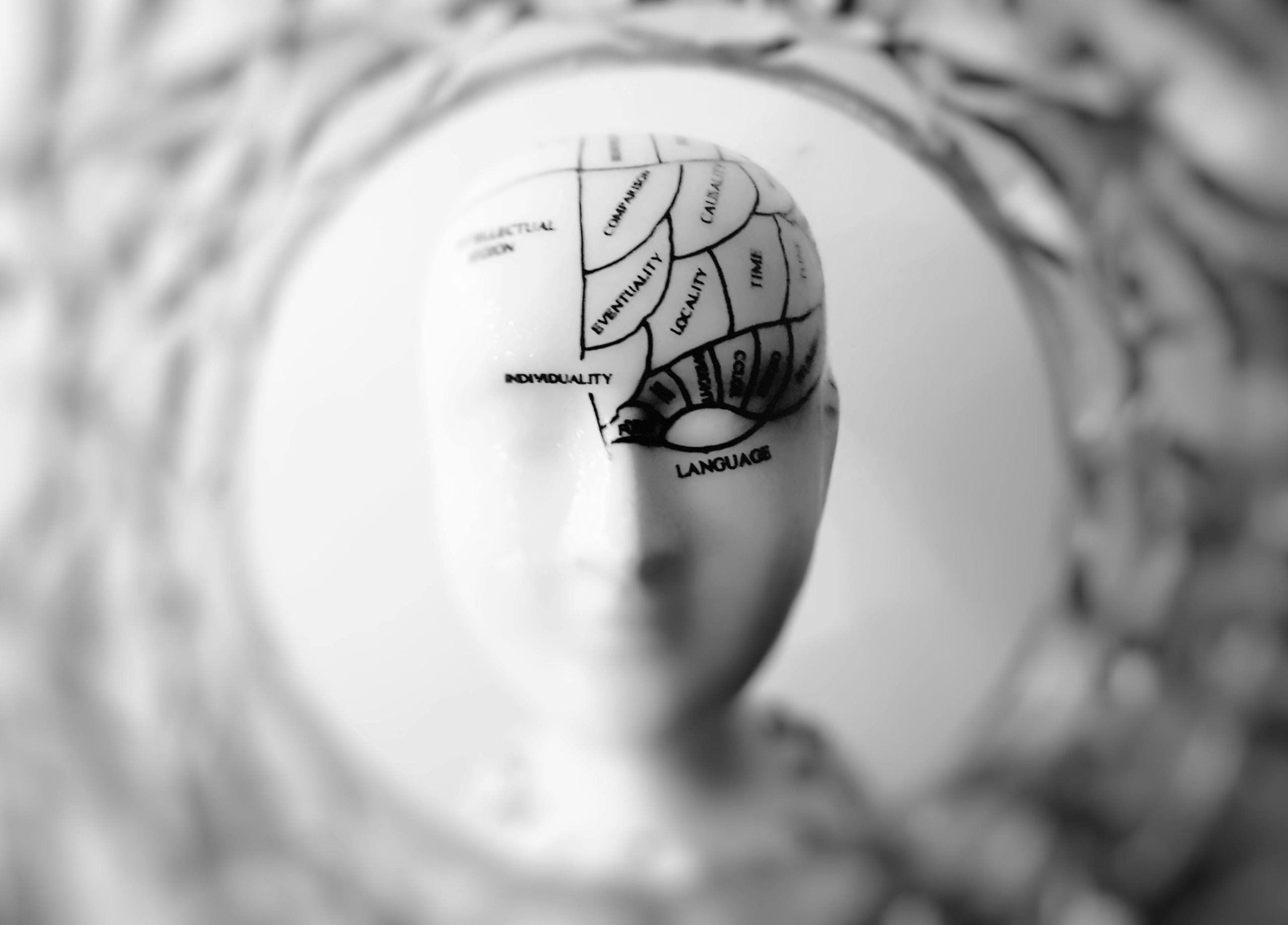
A self-awareness synonym isn’t just a thesaurus entry. Words like self-knowledge, introspection, reflexivity, and metacognition each describe a slightly different facet of the same core ability: understanding your own thoughts, emotions, motivations, and behaviors clearly enough to act with intention rather than impulse. For introverts, this capacity often runs deep, shaped by years of quiet observation and inward reflection that most people never fully develop.
Self-awareness sits at the intersection of emotional intelligence and identity. Whether you call it self-insight, inner clarity, or psychological self-knowledge, what matters is that it functions as the foundation beneath every meaningful relationship, career decision, and moment of personal growth you’ll ever experience.

Self-awareness isn’t one single thing. It’s a constellation of related capacities, and introverts tend to access several of them more naturally than they realize. If you’ve ever spent an hour replaying a conversation in your head, analyzing why you said what you said and what you actually meant, you were practicing something psychologists call metacognitive monitoring. That’s a self-awareness synonym with clinical weight, and it’s something many introverts do instinctively.
Our Introvert Social Skills and Human Behavior hub covers the full range of how introverts process, communicate, and connect with the world around them. Self-awareness threads through all of it, because understanding yourself is what makes every social skill actually work.
What Are the Real Synonyms for Self-Awareness?
Language shapes how we understand ourselves. When I started reading more seriously about personality psychology during a particularly rough stretch of agency life, I kept encountering the same idea dressed in different academic clothes. Self-awareness, introspection, reflexivity, metacognition, self-knowledge, psychological mindedness, inner attunement. Each term pointed at something slightly different, and understanding those differences changed how I thought about my own inner life.
What’s your personality type?
Take our free 40-question assessment and get a detailed personality profile with dimension breakdowns, context analysis, and personalised insights.
Discover Your Type8-12 minutes · 40 questions · Free
Here’s how these terms actually differ in practice:
Introspection
Introspection is the act of examining your own mental states. It’s the process, not the result. When you sit with a feeling and ask yourself where it came from, that’s introspection. Introverts tend to do this constantly, sometimes productively, sometimes in spiraling loops that psychologists call rumination. The difference between healthy introspection and rumination is whether the examination produces insight or just more anxiety. Healthline’s coverage of introversion and social anxiety makes this distinction worth understanding, because many introverts confuse the discomfort of social situations with evidence that something is wrong with them.
Self-Knowledge
Self-knowledge is what you accumulate through introspection over time. It’s the settled understanding of your values, your triggers, your strengths, and the patterns that keep showing up in your life. An introvert who knows they need two hours alone after a major client presentation isn’t just “recovering.” They’re applying self-knowledge to manage their energy intelligently. I spent years in agency leadership without this kind of self-knowledge, burning through reserves I didn’t know I had, wondering why I felt hollowed out by work I genuinely loved.
Metacognition
Metacognition means thinking about your own thinking. It’s the ability to step outside your own mental process and observe it. Research published through PubMed Central on cognitive self-regulation highlights how metacognitive awareness supports better decision-making across high-stakes environments. In my experience running agency teams, the people who could catch their own cognitive biases mid-process, who could notice when they were making a decision from fear versus from strategy, consistently outperformed those who couldn’t. Many of them were introverts.
Reflexivity
Reflexivity goes one level deeper than metacognition. It’s the awareness of how your own perspective shapes what you perceive. A reflexive thinker doesn’t just notice their thoughts. They notice how their history, identity, and assumptions color the lens through which they see everything. This is a capacity that shows up strongly in personality types built for depth, and it’s part of why reading about the INFJ personality type can feel so resonant for introverts who experience the world through layers of meaning and interpretation.
Emotional Intelligence and Self-Regulation
Emotional intelligence, specifically the self-awareness component, is the ability to recognize your emotions as they happen and understand their influence on your behavior. Self-regulation is what you do with that recognition. These two capacities work together, and they’re closely tied to what the American Psychological Association defines as introversion: a personality orientation toward internal states rather than external stimulation. That inward orientation, when developed intentionally, becomes a genuine advantage.

Why Do Introverts Tend to Have a Natural Advantage Here?
Not every introvert is automatically self-aware. I’ve met deeply introverted people who were remarkably blind to their own patterns. But the architecture of introversion, the preference for inner processing, the tendency to observe before acting, the comfort with solitude, creates conditions where self-awareness can develop more readily than it might in someone who processes everything externally.
There’s a reason that many of the world’s most reflective thinkers, writers, therapists, and strategists describe themselves as introverted. Depth of processing isn’t incidental to their work. It’s central to it. Psychology Today’s exploration of the introvert advantage touches on exactly this: the capacity for sustained internal focus produces insights that surface-level processing simply can’t reach.
At my agency, I noticed something consistent over two decades. When we were working through a genuinely complex strategic problem, the extroverted members of my team were invaluable for generating energy and momentum. But the introverts on the team were the ones who came back the next morning with the observation that changed everything. They’d processed overnight. They’d noticed the thing everyone else had talked past.
That’s self-awareness applied outward. When you understand your own processing style deeply enough, you can use it as a tool rather than apologizing for it.
How Does Self-Awareness Actually Show Up in Social Situations?
This is where theory meets real life, and where many introverts either flourish or get stuck. Self-knowledge without application is just interesting self-reflection. The point is to use what you know about yourself to engage more effectively with the world around you.
One of the clearest examples I can give comes from a period when I was managing a large account for a Fortune 500 consumer goods brand. The client contact was loud, fast-talking, and loved brainstorming sessions where ideas got thrown around and debated in real time. My instinct was to hang back, process, and come back with something polished. His instinct was to interpret silence as disengagement. We were both operating from our own self-awareness, but we hadn’t yet developed awareness of each other’s styles.
Once I understood the dynamic clearly, I started doing something simple: I’d offer one early, rough idea in the room, just to signal presence and engagement, then bring my more developed thinking afterward. That small adjustment, born directly from self-awareness, changed the entire relationship. It also taught me that social effectiveness for introverts isn’t about becoming someone else. It’s about understanding yourself well enough to adapt strategically without losing yourself in the process.
This kind of situational self-awareness also matters enormously in conflict. Knowing your own conflict style, understanding whether you tend to withdraw, deflect, or over-explain when you feel cornered, gives you genuine options. Introvert conflict resolution works best when it’s grounded in this kind of self-knowledge, because you can’t choose a better response if you don’t first see your habitual one clearly.

What Gets in the Way of Genuine Self-Awareness?
Self-awareness has a shadow side. And for introverts, the shadow tends to take a specific shape.
Confusing Self-Analysis with Self-Knowledge
Many introverts are extraordinarily good at analyzing themselves. They can describe their patterns, name their tendencies, and articulate their emotional responses with impressive precision. What’s harder is actually changing based on that analysis. Self-knowledge isn’t the same as self-analysis. Analysis is the examination. Knowledge is the integration that allows you to act differently. I spent years analyzing why I struggled with certain leadership dynamics without ever actually shifting my behavior. The analysis felt productive. It wasn’t, not until I started connecting the insight to action.
People-Pleasing as a Distortion of Self-Perception
Many introverts develop people-pleasing habits as a social survival strategy. The problem is that chronic people-pleasing distorts your self-perception over time. When you habitually suppress your preferences to manage other people’s comfort, you lose track of what you actually think and feel. Recovering from people-pleasing is, in a very real sense, a self-awareness project. You’re not just changing a behavior. You’re excavating the authentic self that got buried under years of accommodation.
The Blind Spots That Come with Depth
Depth of processing creates genuine insight, but it also creates blind spots. When you’re highly attuned to your inner world, you can sometimes miss the signals coming from outside it. I had a period at my agency where I was so focused on the internal strategic logic of a campaign that I missed clear signals from my team that the execution was falling apart. My inner clarity was real. My situational awareness was lagging. Real self-awareness includes awareness of how you land on others, not just how you experience yourself internally. PubMed Central’s work on interpersonal perception reflects how self-perception and social perception are related but distinct capacities, and developing both matters.
Fear of What You Might Find
Genuine introspection takes courage. Some people avoid it not because they lack the capacity but because they’re afraid of what honest self-examination might reveal. This is especially true for introverts who’ve spent years performing extroversion, because looking clearly at yourself means acknowledging how much energy that performance cost. Harvard’s perspective on introvert social engagement offers a useful frame here: success doesn’t mean change your fundamental nature but to understand it clearly enough to work with it.
How Does Knowing Your Personality Type Deepen Self-Awareness?
Personality frameworks like MBTI aren’t meant to box you in. Used well, they function as structured mirrors, giving you language for patterns you’ve always sensed but never quite named. When I first encountered the INTJ profile in any real depth, the recognition wasn’t comfortable. It was clarifying in the way that good feedback is clarifying: slightly uncomfortable, but undeniably useful.
Understanding that I lead with introverted intuition and support it with extraverted thinking explained so much about how I processed information, why I found certain leadership styles exhausting, and why I consistently needed more alone time than my peers seemed to. That wasn’t weakness. It was architecture. And once I understood the architecture, I could work with it instead of against it.
If you haven’t explored your own type in depth, our free MBTI personality test is a solid starting point. It won’t tell you everything about yourself, but it gives you a structured framework for reflection that many people find genuinely useful.
Personality typing also helps you understand the self-awareness styles of others. As an INTJ managing a team, I worked with people across the spectrum. My INFJ team members, for example, had a form of self-awareness that was deeply empathic and interpersonally attuned in ways mine wasn’t. They absorbed the emotional temperature of a room in ways I had to consciously work to notice. My ENTP colleagues processed self-awareness externally, through debate and dialogue, while mine was almost entirely internal. Neither approach was superior. Both had blind spots.

Self-Awareness in Action: Communication, Connection, and Confidence
Self-awareness without application stays theoretical. The real measure of it is whether it changes how you show up in the world, particularly in the moments that feel hardest.
Speaking Up When It Matters
One of the most consistent struggles I hear from introverts is the difficulty of speaking up in high-stakes situations, especially when the room is dominated by louder, more assertive personalities. Self-awareness is what makes this possible to change. Not by making you louder, but by helping you understand exactly what’s happening in those moments: the physical sensations of anxiety, the thought patterns that tell you your contribution isn’t worth offering, the habitual withdrawal that feels like caution but functions like silence.
When you know your own pattern clearly, you can interrupt it. Speaking up to people who intimidate you becomes a different kind of challenge once you’ve separated the actual threat from the perceived one, and that separation requires exactly the kind of honest self-examination that self-awareness makes possible.
Small Talk as a Self-Awareness Test
Many introverts have a complicated relationship with small talk. They find it draining, sometimes pointless, and occasionally excruciating. But self-awareness reveals something interesting about that resistance: it’s rarely about the small talk itself. It’s about what small talk represents, a social context where the rules feel arbitrary, the depth is limited, and the authentic self feels hard to access.
Once you understand your own resistance clearly, small talk becomes less threatening. You’re not failing at connection. You’re operating in a mode that doesn’t suit your natural style. That distinction matters. Introverts often excel at small talk once they stop fighting the format and start using it as a bridge to something more substantive. That shift is a self-awareness move, not a personality change.
There’s also something worth noting about how introverts use conversation differently once they’re past the surface. The way many introverts connect, through careful listening, genuine curiosity, and the willingness to go deeper when the moment allows, is itself a form of applied self-awareness. Knowing what kind of connection you actually need, and pursuing it intentionally, is a sophisticated social skill. How introverts really connect often looks quieter than extrovert connection, but it tends to run considerably deeper.
The Self-Awareness That Builds Real Confidence
Confidence that comes from external validation is fragile. It depends on the room agreeing with you. Self-awareness builds a different kind of confidence, one grounded in genuine self-knowledge. When you know your values clearly, understand your strengths honestly, and have examined your limitations without defensiveness, you don’t need the room to validate you. You can walk into a difficult conversation, a high-stakes presentation, or an uncomfortable social situation with something steadier than bravado.
I remember pitching a major campaign to a client who was notoriously difficult to read. My extroverted account director wanted us to come in loud and enthusiastic, matching the energy she thought the client wanted. My instinct was different. I knew from prior conversations that this client valued precision over performance. I trusted that self-knowledge, we pitched with quiet confidence and structured clarity, and we won the account. That wasn’t luck. It was self-awareness applied strategically.
How Do You Actually Develop Self-Awareness Over Time?
Self-awareness isn’t a destination. It’s a practice. And like most meaningful practices, it develops through consistency rather than intensity.
Reflective Writing
Journaling has a reputation for being soft or self-indulgent that I think undersells what it actually does. Writing forces you to externalize your internal world, and in doing so, it reveals patterns that stay invisible when they remain purely internal. I kept a work journal for most of my agency years, not a diary, but a running record of decisions, reactions, and observations. Looking back over months of entries, I could see my own patterns with a clarity that in-the-moment reflection never produced.
Seeking Honest Feedback
Self-awareness has an internal component and an external one. The internal component is introspection. The external component is feedback, specifically the kind that’s honest enough to be useful. Research in personality and social psychology consistently points to the gap between how we perceive ourselves and how we’re perceived by others. Closing that gap requires seeking feedback from people who will tell you the truth, and being genuinely open to what you hear rather than defending against it.
Pausing Before Reacting
The gap between stimulus and response is where self-awareness lives. Introverts often have a natural advantage here because they tend to process before acting. But that advantage only materializes if you use the pause consciously rather than filling it with anxiety. When something triggers a strong reaction in you, the self-aware move is to notice the reaction before acting on it. What emotion is this? Where is it coming from? Is my interpretation of this situation accurate? Those questions are self-awareness in real time.
Engaging with Frameworks That Illuminate Your Patterns
Personality frameworks, therapeutic modalities, and psychological models all serve the same basic function: they give you language and structure for patterns that might otherwise stay murky. MBTI, attachment theory, the Enneagram, cognitive behavioral frameworks, these aren’t substitutes for self-knowledge, but they can accelerate it by giving you a map. The map isn’t the territory, but a good map makes the territory easier to move through.

Self-Awareness as a Lifelong Orientation, Not a Finished Product
I’m considerably more self-aware now than I was at thirty-five. I’m also aware that I have significant blind spots I haven’t identified yet, because that’s the nature of blind spots. success doesn’t mean achieve perfect self-knowledge. It’s to maintain a genuine orientation toward honest self-examination, to stay curious about yourself with the same rigor you might apply to any other complex subject you care about.
For introverts, this orientation often comes naturally. The challenge is channeling it productively rather than letting it collapse into rumination or self-criticism. Self-awareness in its healthiest form is neither self-congratulatory nor self-punishing. It’s clear-eyed, compassionate, and genuinely useful.
Whatever synonym you prefer, whether introspection, self-knowledge, metacognition, or inner attunement, the underlying capacity is one of the most valuable things you can develop as a human being. And if you’re an introvert who’s spent years turning inward, you may already be further along than you think. The work is to trust what you find there, and to use it.
There’s much more to explore about how introverts process, connect, and communicate. Our full Introvert Social Skills and Human Behavior hub brings together the complete picture, from conflict and conversation to confidence and connection.
Curious about your personality type?
Our free MBTI assessment goes beyond the four letters. Get a full breakdown of your scores, see how your type shows up at work and in relationships.
Take the Free Test8-12 minutes · 40 questions · Free
About the Author
Keith Lacy is an introvert who’s learned to embrace his true self later in life. After 20 years in advertising and marketing leadership, including running agencies and managing Fortune 500 accounts, Keith now channels his experience into helping fellow introverts understand their strengths and build fulfilling careers. As an INTJ, he brings analytical depth and authentic perspective to every article, drawing from both professional expertise and personal growth.
Frequently Asked Questions
What is the best synonym for self-awareness?
The most accurate synonym depends on the context you’re working in. Introspection refers to the active process of examining your own thoughts and feelings. Self-knowledge describes the accumulated understanding that builds over time. Metacognition is used in psychological and educational contexts to describe thinking about your own thinking. Reflexivity captures the deeper awareness of how your perspective shapes your perceptions. In everyday conversation, inner clarity or self-understanding work well as accessible alternatives. Each word carries a slightly different shade of meaning, but all point toward the same core capacity: honest, sustained attention to your own inner world.
Are introverts naturally more self-aware than extroverts?
Not automatically, but the architecture of introversion creates favorable conditions for self-awareness to develop. Introverts tend to process internally, prefer depth over breadth in their thinking, and spend more time in solitude where reflection can happen naturally. These tendencies make introspection more accessible. That said, self-awareness requires intentional practice regardless of personality type. Some introverts are highly self-analytical but still carry significant blind spots, particularly about how they’re perceived by others. Extroverts can develop equally strong self-awareness through external feedback and dialogue. The introvert advantage is in the natural inclination toward internal processing, not in guaranteed outcomes.
What is the difference between self-awareness and self-consciousness?
Self-awareness is a clear, relatively neutral understanding of your own thoughts, emotions, and behaviors. It’s observational and useful. Self-consciousness, in its common usage, refers to an uncomfortable preoccupation with how you appear to others, often accompanied by anxiety or inhibition. Self-consciousness is self-awareness that has been distorted by social fear. Many introverts experience both, and the distinction matters because self-awareness is something to cultivate, while excessive self-consciousness is something to work through. The goal is to develop the former without amplifying the latter, which requires learning to observe yourself with curiosity rather than judgment.
How does self-awareness improve social skills for introverts?
Self-awareness improves social skills by giving you accurate information about your own patterns, so you can make intentional choices rather than defaulting to habitual reactions. When you know that you tend to withdraw in large groups, you can decide whether withdrawal serves you in a given situation or whether a small adjustment, like initiating one genuine conversation, would serve you better. When you understand your conflict style, you can choose responses that reflect your values rather than your anxiety. Self-awareness also helps you recognize when social discomfort is meaningful information versus when it’s simply the normal friction of engaging outside your comfort zone. That distinction is genuinely useful in building more effective and satisfying social interactions.
Can self-awareness be developed, or is it a fixed trait?
Self-awareness is absolutely developable. While some people have natural inclinations toward introspection, the capacity itself grows through consistent practice. Reflective writing, honest feedback from trusted people, therapy, mindfulness practices, and engagement with personality frameworks all contribute to its development over time. What tends to deepen self-awareness most reliably is the combination of internal reflection and external input, using both your own observations and other people’s honest perceptions to build a more complete picture. The people who develop the strongest self-awareness are usually those who stay genuinely curious about themselves across decades, not those who had the most insight at the start.