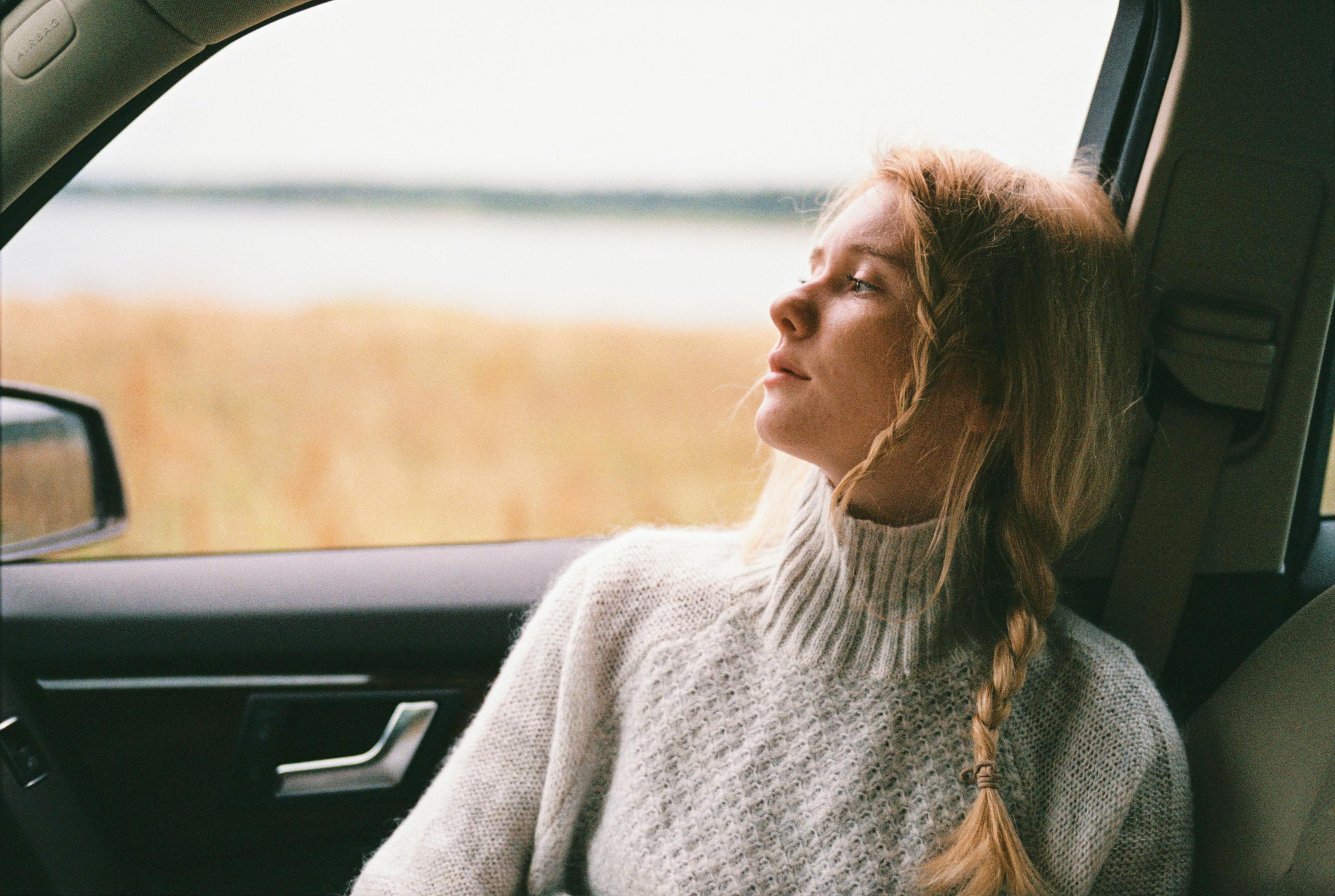
Solo travel in the USA offers introverts something most group trips never can: the freedom to move at your own pace, process what you’re seeing without explaining yourself, and return home knowing yourself a little better than when you left. It’s not about being antisocial. It’s about giving your inner world the room it actually needs.
My first solo road trip happened almost by accident. A client meeting in Santa Fe fell through at the last minute, and instead of booking the next flight home to Chicago, I kept the rental car and drove north toward Taos. No agenda. No team to check in with. No one waiting on a status update. Just high desert light and the kind of quiet that feels earned. That weekend changed how I think about what travel is actually for.
Solo travel across the United States has a particular texture for introverts. The country is enormous and varied enough that you can spend a week in near-total solitude without leaving the continental states, or you can drop yourself into a city and disappear into its rhythms without anyone requiring anything from you socially. Both are valid. Both are restorative in ways that matter.
Solo travel is one of those experiences that sits squarely within the larger territory of life transitions and major changes. Whether you’re recovering from burnout, recalibrating after a career shift, or simply trying to reconnect with who you are outside of your roles and responsibilities, a solo trip can be the catalyst that makes everything else clearer. Our Life Transitions and Major Changes hub covers this broader territory if you’re working through something bigger alongside your travel plans.

What Makes Solo Travel Different When You’re Wired for Depth?
There’s a version of solo travel that looks like freedom from obligation. You eat when you’re hungry, sleep when you’re tired, and stop wherever catches your eye. That’s real, and it matters. Yet for someone who processes the world the way most introverts do, there’s a deeper layer at work.
What drains your social battery?
Not all social exhaustion is the same. Our free quiz identifies your specific drain pattern and gives you personalised recharging strategies.
Find Your Drain PatternUnder 2 minutes · 8 questions · Free
When I ran my agency, I spent years managing the sensory and social load of open-plan offices, back-to-back client calls, and team dinners that ran past ten. I got good at it. I built systems that let me function well in that environment. Yet I noticed something: the weeks I traveled alone for work, even just an overnight to meet a client, I came back sharper. Not because I’d rested, exactly, but because I’d had uninterrupted time to actually think. My mind had processed the backlog.
That’s the thing about being wired for depth. You’re constantly taking in more than you’re outputting. You notice the mood shift in a room before anyone names it. You catch the subtext in a conversation and file it away to examine later. You absorb. And without dedicated time to process all of that input, it accumulates. Solo travel creates the conditions for that processing to happen naturally, without forcing it.
This connects to something worth reading if you haven’t already: the research on how sensitivity changes across a lifespan. Many introverts find that their capacity for deep processing actually sharpens with age, which means the restorative value of solo travel can increase over time rather than diminish. What felt indulgent at thirty can feel essential at forty-five.
Solo travel in the USA, specifically, offers a kind of permission structure that’s hard to replicate internationally. There’s no language barrier requiring constant cognitive effort, no currency conversion adding friction to every decision, no jet lag eating into your recovery time. You can direct all of that freed-up mental bandwidth toward the actual experience of being somewhere new and being alone with your thoughts.
How Does Your MBTI Type Shape What You Actually Need From a Solo Trip?
Not all introverts need the same thing from travel. That sounds obvious, but it’s worth sitting with. An INFP traveling solo is going to be drawn toward different experiences than an INTJ, and both will have different thresholds for stimulation, spontaneity, and structure than an ISFJ or an INTP.
As an INTJ, my instinct on a solo trip is to build a loose framework and then operate within it. I’ll identify three or four things I genuinely want to see or do, leave the rest open, and trust that the structure will prevent decision fatigue without boxing me in. That approach worked well when I traveled for agency business. I’d extend a client trip by a day, sketch out a rough itinerary the night before, and then actually enjoy the flexibility I’d created for myself.
I once had a creative director on my team, an INFP, who traveled completely differently. She’d book a flight and a first-night hotel and leave everything else deliberately unplanned. The openness was the point for her. She needed the feeling of possibility. I’d have found that exhausting. She’d have found my approach suffocating. Both of us were doing it right for our types.
Understanding your type before you plan a solo trip can prevent a lot of unnecessary friction. If you’re an ISTJ, you might want more structure than you think is “allowed” on a solo adventure. Give yourself permission to plan thoroughly. If you’re an ENFP traveling solo for the first time, you might need to build in more solitude than feels natural, because the freedom of solo travel can paradoxically lead to over-scheduling social encounters that drain rather than restore.
A good starting point for this kind of self-knowledge is thinking through how your type shapes your broader decisions, not just travel ones. The framework in this MBTI life planning guide is genuinely useful for understanding how your type’s preferences show up across major choices, including how you travel and what you need to feel restored when you return.

Where in the USA Actually Delivers the Kind of Quiet That Restores?
The United States has an almost embarrassing range of environments that work beautifully for introverted solo travel. The challenge isn’t finding them. It’s knowing what kind of quiet you’re actually looking for, because not all quiet is the same.
There’s natural quiet, the kind you find in places like the Boundary Waters in northern Minnesota, the Olympic Peninsula in Washington, or the Ozark National Forest in Arkansas. These are places where the absence of human noise is the point. You go to hear water and wind and your own breathing. The cellular dead zones aren’t a bug, they’re a feature.
Then tconsider this I’d call urban quiet, which is different but equally real. Cities like Savannah, Georgia, or Asheville, North Carolina, or Taos, New Mexico, have a particular quality where you can be surrounded by people and architecture and history without feeling assaulted by it. The pace is slower, the streets are walkable, and there’s enough cultural density to feed a curious mind without requiring constant social output.
My personal preference, shaped by years of high-stimulation work environments, runs toward the natural variety. After a particularly grueling agency pitch season one year, I drove the Pacific Coast Highway from San Francisco to Big Sur over three days. I stopped when I wanted to, ate at whatever looked good, and spent one full afternoon sitting on a cliff above the ocean doing absolutely nothing. No phone. No notebook. No agenda. I came back to the office with ideas I hadn’t been able to access in months. The stillness had done something that no productivity system could replicate.
Some specific regions worth considering for introverted solo travel in the USA include the Four Corners area of the Southwest, where you can spend days in canyon country with minimal crowds outside of peak season. The Upper Peninsula of Michigan offers extraordinary solitude along Lake Superior’s shoreline. The Finger Lakes region of New York combines natural beauty with small-town infrastructure that makes solo travel genuinely comfortable. Vermont in late September, after the leaf-peepers have gone home, is one of the quietest and most beautiful places I’ve ever been.
National parks deserve mention, though with a caveat. Places like Yellowstone and Yosemite in peak summer are genuinely overwhelming, even for extroverts. The same parks in shoulder season, particularly late September through early November or March through April, offer a completely different experience. The crowds thin dramatically, the light changes, and you can actually hear yourself think on a trail that would be shoulder-to-shoulder in July.
What Does Solo Travel Actually Do to Your Relationship With Yourself?
This is the question most travel articles skip past, and it’s the one that matters most for introverts specifically.
When you travel alone, you lose the social scaffolding that normally structures your sense of self. There’s no one to perform for, no role to fill, no relationship dynamic to maintain. You’re just you, in a new place, with your own company. For many introverts, this is profoundly clarifying. For some, it’s initially uncomfortable in ways that are worth paying attention to.
I spent a long stretch of my career performing a version of leadership that didn’t quite fit. I was good at it. I’d studied how effective extroverted leaders operated and built a credible imitation. Yet solo travel, particularly a ten-day trip I took through the American Southwest after selling my first agency, showed me the gap between who I was performing and who I actually was. Without an audience, I defaulted to my actual preferences. I ate alone and loved it. I drove in silence for hours and felt genuinely content. I turned down an invitation to join a group tour and felt relief rather than guilt.
That experience of being alone without being lonely is something many introverts describe but struggle to access in their regular lives. There’s always someone who needs something, always a role to fill. Solo travel strips that away. What’s left is often surprising, sometimes uncomfortable, and consistently valuable.
The psychological literature on solitude and wellbeing supports this, though the nuance matters. Solitude that’s chosen and comfortable operates very differently from loneliness, which is involuntary and painful. Research published in PubMed Central has examined how voluntary solitude can support emotional regulation and self-reflection in ways that social environments often prevent. Solo travel, at its best, is chosen solitude in motion.
There’s also something to be said about the quality of the conversations you do have while traveling alone. Without a companion to default to, you’re more likely to have genuine exchanges with strangers, the kind of brief, honest conversations that Psychology Today has written about as being particularly nourishing for introverts who find small talk draining but meaningful connection energizing. A twenty-minute conversation with a local at a coffee shop in a town you’re passing through can be more memorable than an entire weekend of obligatory socializing at home.
How Do You Protect Your Energy When Solo Travel Gets Unexpectedly Social?
Solo travel doesn’t guarantee solitude. Hostels, group tours, popular trails, and small-town diners all have their own social gravity. Part of traveling well as an introvert is knowing how to engage when you want to and protect your energy when you need to, without apologizing for either.
One thing I learned from years of managing client relationships is that you can be warm and engaged in brief interactions without committing to extended social investment. A smile, a genuine question, a few minutes of real conversation, and then a natural exit. That skill, which I’d developed out of professional necessity, turned out to be exactly what I needed in travel situations where someone wanted more connection than I had bandwidth for.
Practically speaking, a few things make a real difference. Booking accommodations with private rooms, even if you’re staying somewhere social like a boutique hotel with a communal lounge, gives you a guaranteed retreat. Traveling with noise-canceling headphones is less about the music and more about the signal they send, a polite but clear indication that you’re in your own world. Having a book or a journal visible serves a similar function.
Timing matters enormously. Visiting popular sites at opening time or in the last hour before closing dramatically reduces the social load. Eating at off-peak hours, either early or late, means quieter restaurants and more attentive service. These aren’t antisocial strategies. They’re energy management, and they make the difference between coming home restored and coming home depleted.
There’s a deeper dimension here too. Many introverts, particularly those who grew up in environments where solitude was treated as a problem to be solved, carry some residual guilt about wanting to be alone. Solo travel can surface that guilt in interesting ways. You’re in a beautiful place, and part of you feels like you should be sharing it with someone. That feeling is worth examining rather than acting on. Making peace with solitude is its own work, and solo travel is one of the most effective environments in which to do it.
What Practical Logistics Actually Matter for Introverted Solo Travelers?
Most solo travel advice focuses on safety and logistics in ways that aren’t particularly specific to introversion. Worth covering here are the logistics that actually affect your experience as someone who processes the world the way introverts do.
Transportation choice matters more than most people realize. Driving your own car or a rental gives you complete control over pace, stops, and silence. You can pull over when something catches your eye without negotiating with anyone. You can listen to exactly what you want, or nothing at all. Train travel offers a different kind of freedom, particularly on longer routes like the California Zephyr or the Coast Starlight, where the scenery is extraordinary and the social expectation is minimal. You have your own seat, your own window, and no one expects you to be entertaining.
Flying is the most efficient but the most socially loaded option. Airports are genuinely exhausting environments, high stimulation, unpredictable delays, forced proximity to strangers. If you’re flying as part of a solo trip, building in buffer time on either end, arriving somewhere with enough margin to decompress before you need to engage with your destination, makes a meaningful difference.
Accommodation choice is worth more thought than most travelers give it. Hotels offer privacy and predictability. Vacation rentals, particularly houses or apartments in residential neighborhoods, offer something closer to the feeling of actually living somewhere rather than visiting it. That slower, more embedded experience tends to suit introverts well. You can cook your own meals, sit on a porch, watch a neighborhood wake up in the morning, and feel genuinely present in a place rather than passing through it.
One logistical note that matters specifically for introverts: plan your first and last days of any trip with extra margin. Arrival days are high-stimulation and often disorienting. Departure days carry their own cognitive load. Building in a buffer on each end, even just an extra hour or two of unscheduled time, prevents the kind of rushed transitions that can color the whole trip negatively.
Staying connected to your own needs across a trip also requires some intentional attention. Work published in PubMed Central on self-regulation and emotional wellbeing points to the importance of recognizing your own depletion signals before they become overwhelming. On a solo trip, there’s no one else to notice when you’re running low. You have to catch it yourself and respond accordingly, which might mean canceling a plan, taking a long nap in the middle of the afternoon, or simply sitting somewhere quiet for an hour before making any decisions.

How Does Solo Travel Connect to Burnout Recovery and Deeper Renewal?
Burnout is a word that gets used loosely, but the experience it describes is specific and serious. It’s not just tiredness. It’s a depletion that goes deeper than sleep can fix, a disconnection from meaning and motivation that accumulates over months or years of operating beyond your natural capacity.
I’ve been there twice. Once in my early thirties, after a particularly brutal agency growth period that involved eighteen-month pitch cycles, staff turnover, and a client relationship that had become genuinely toxic. And once in my mid-forties, more quietly, when I realized I’d been running on professional momentum rather than genuine engagement for longer than I wanted to admit.
Both times, travel played a role in the recovery. Not as a cure, but as a catalyst. Getting out of the environment where the depletion had accumulated created enough distance to see it clearly. The second time, a week alone in coastal Maine in October, I spent three days barely speaking to anyone and came back with a clarity about what I actually wanted from my work that I hadn’t been able to access at home.
There’s something about physical distance from your ordinary context that allows a different kind of thinking. Your brain isn’t handling familiar cues and habitual patterns. Everything is slightly new, which keeps you present in a way that’s hard to manufacture at home. For introverts who do a lot of their processing internally, that shift in environment can discover thinking that’s been stuck for a long time.
This is also where the connection to sensitivity matters. Many introverts, particularly those who identify as highly sensitive, carry a significant amount of accumulated input that they haven’t fully processed. A solo trip creates the conditions for that processing to happen, sometimes in ways that are emotionally intense. It’s not uncommon to feel unexpectedly emotional on a solo trip, not because anything is wrong, but because you’ve finally given yourself the space to feel things you’ve been managing rather than experiencing. Understanding how sensitivity operates across different life stages, explored thoughtfully in this piece on deep listening and sensitive development, can help you interpret those moments rather than be confused by them.
Solo travel in the USA is accessible enough that it doesn’t require a major life disruption to attempt. A long weekend in a national forest, a solo road trip to a region you’ve never visited, a week in a small city you’ve always been curious about. These are real options, not fantasies. And for introverts who’ve been operating in high-demand environments for a long time, they’re not luxuries. They’re maintenance.
What Do You Actually Bring Home From a Solo Trip?
The souvenirs aren’t the point. What introverts tend to bring home from solo travel is harder to photograph but more durable than anything you’d put on a shelf.
There’s a recalibration that happens when you’ve spent real time in your own company. You remember what you actually enjoy, separate from what you enjoy performing enjoyment of. You remember what bores you, what energizes you, what you think about when no one’s watching. That self-knowledge is genuinely useful when you return to the relational complexity of ordinary life.
I’ve noticed, across multiple solo trips over the years, that I come back with a clearer sense of what I want to say yes to and what I want to decline. The boundaries feel less effortful because I’ve had time to reconnect with what actually matters to me. That clarity doesn’t last forever, it gets worn down by the accumulation of daily demands, but it’s real while it’s there, and it’s renewable.
There’s also something that happens with creative thinking on solo trips that’s worth naming. Some of my best strategic ideas from my agency years came during or immediately after periods of solitary travel. Not because I was trying to solve problems, but because I’d stopped trying. The mind, given genuine rest and novel input, makes connections that focused effort often prevents. Frontiers in Psychology has published work on how restorative environments affect cognitive function, and the findings align with what many introverts experience intuitively: stepping away from the problem is often the most direct path to solving it.
Solo travel also tends to build a particular kind of quiet confidence. You handled the logistics. You navigated the unfamiliar. You spent time alone without falling apart or needing rescue. That experience of self-sufficiency, even in small doses, has a cumulative effect on how you carry yourself in other areas of life.

Solo travel is one piece of a larger picture. If you’re at a crossroads in your life, whether that’s a career change, a relationship shift, or simply a growing sense that something needs to be different, the broader collection of resources in our Life Transitions and Major Changes hub might offer the context and support to help you think it through.
Running on empty?
Five drain profiles, each with specific triggers, warning signs, and a recharging playbook.
Take the Free QuizUnder 2 minutes · 8 questions · Free
About the Author
Keith Lacy is an introvert who’s learned to embrace his true self later in life. After 20 years in advertising and marketing leadership, including running agencies and managing Fortune 500 accounts, Keith now channels his experience into helping fellow introverts understand their strengths and build fulfilling careers. As an INTJ, he brings analytical depth and authentic perspective to every article, drawing from both professional expertise and personal growth.
Frequently Asked Questions
Is solo travel in the USA a good option for introverts who’ve never traveled alone before?
Yes, and the USA is particularly well-suited for a first solo experience. The absence of language barriers, the reliable infrastructure, and the sheer variety of environments mean you can calibrate the experience to your exact comfort level. Start with a destination that genuinely interests you, book accommodations with private space, and give yourself permission to change plans as you go. The first trip is mostly about learning what you actually need, and that knowledge compounds with every subsequent trip.
How do I handle the social pressure to explain why I’m traveling alone?
Most people won’t ask, and those who do are usually expressing curiosity rather than judgment. A simple, confident answer works well: you enjoy the freedom to set your own pace. That’s true, it’s complete, and it doesn’t invite debate. Over time, most solo travelers find that the question stops feeling loaded. Traveling alone is increasingly common and widely accepted, particularly in the USA where solo road trips and independent travel have a long cultural history.
What are the best types of destinations in the USA for introverts seeking restoration?
Natural environments with low crowd density tend to be most restorative: national forests, coastal areas in shoulder season, mountain regions, and desert landscapes. Small cities with walkable historic districts, like Savannah, Asheville, or Santa Fe, offer cultural richness without the sensory overload of major metros. The best destination is the one that matches what kind of quiet you’re actually seeking. Natural solitude and urban anonymity are both valid, and they restore different things.
How long does a solo trip need to be to feel genuinely restorative?
That depends on how depleted you are going in and how efficiently you can decompress. Many introverts find that the first day or two of a solo trip is spent shedding the residue of ordinary life, the mental to-do lists, the social obligations, the ambient noise of regular responsibilities. The actual restoration tends to begin on day three or four. A long weekend can be meaningful, but a trip of five to seven days gives you enough time to genuinely arrive somewhere internally, not just geographically.
What should I do if I feel lonely rather than restored during a solo trip?
Loneliness during solo travel is real and worth taking seriously rather than pushing through. A few things help: changing your environment, even a short walk or a move to a different cafe, can shift your mental state significantly. Allowing yourself a brief social interaction, a conversation with a local, a phone call with someone you trust, can address the loneliness without derailing the solitude. It’s also worth asking whether the loneliness is pointing toward something you need to examine rather than escape. Solo travel has a way of surfacing feelings that deserve attention, and that’s not a failure of the trip. It’s part of what the trip is for.