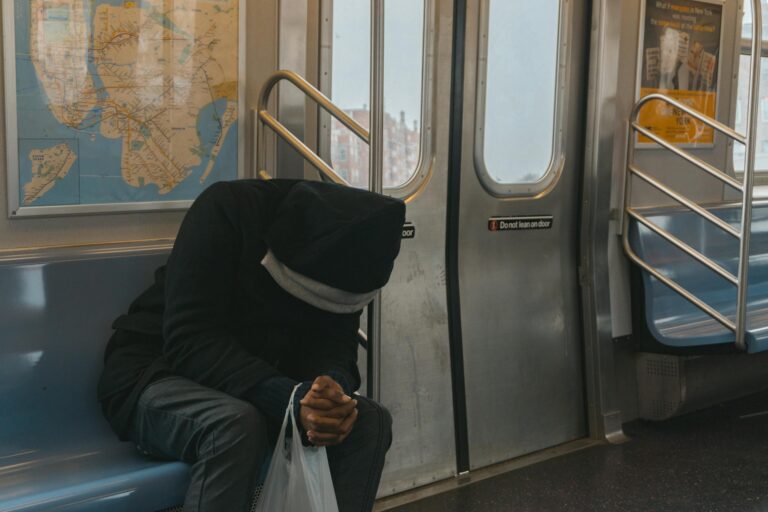
Your social battery isn’t a metaphor. It’s a measurable neurological reality, and understanding what actually depletes it can change how you structure your entire life.
Social battery describes the finite reservoir of mental and emotional energy that gets consumed during social interaction. For people wired toward introversion, this reservoir drains faster in stimulating environments and replenishes during solitude and quiet. The science behind this process involves dopamine sensitivity, cortisol response, and the way certain nervous systems process sensory input differently than others.

Early in my advertising career, I thought the exhaustion I felt after client presentations was weakness. Everyone else seemed to walk out of those rooms energized, laughing, making plans for dinner. I walked out calculating how many hours until I could be alone. It took me years to understand that what I was experiencing wasn’t a character flaw. It was biology.
What Is the Social Battery, Really?
The phrase gets used casually, but the underlying mechanism is grounded in real neuroscience. Introversion is associated with heightened sensitivity in the brain’s arousal systems. A 2012 study published in the journal Cognitive, Affective, and Behavioral Neuroscience found that introverts show greater baseline cortical arousal than extroverts, which means their nervous systems are already operating closer to their optimal stimulation threshold before a single social interaction begins.
What’s your personality type?
Take our free 40-question assessment and get a detailed personality profile with dimension breakdowns, context analysis, and personalised insights.
Discover Your Type8-12 minutes · 40 questions · Free
Add a crowded meeting room, competing conversations, fluorescent lights, and the social performance of professional small talk, and that threshold gets crossed fast. The brain isn’t malfunctioning. It’s responding exactly as it’s designed to, processing more information per stimulus than an extroverted brain typically would.
The American Psychological Association has documented the neurological differences between introverted and extroverted processing styles for decades. You can explore their foundational work on personality and brain function at the APA’s website. What matters practically is this: when your nervous system processes social input more deeply, it also spends more energy doing so.
At my agency, we had a client who insisted on weekly all-hands calls that ran ninety minutes, followed by breakout sessions, followed by an informal debrief over lunch. By the time I got back to my office, I was useless. Not tired in a way coffee could fix. Useless in a way that only three hours of quiet work could repair. My team thought I was antisocial. I was actually just empty.
Why Do Some Social Situations Drain You Faster Than Others?
Not all social interaction costs the same amount of energy. This is something most people don’t realize, and it explains why an introvert can spend four hours in a deep one-on-one conversation and feel fine, then spend forty-five minutes at a networking event and need to sleep for a day.
The variables that accelerate drain include:
- Surface-level interaction with no meaningful exchange
- High ambient noise and sensory stimulation
- Social performance pressure (being “on” for an audience)
- Uncertainty about social rules or expectations
- Emotional labor, particularly managing others’ emotional states
- Frequent context-switching between different people or topics
Depth of connection matters enormously. A 2010 study from the University of Arizona found that people who engaged in more substantive conversations reported higher wellbeing than those who spent more time in small talk. For introverts especially, shallow interaction is expensive. You spend energy without gaining the sense of connection that makes social effort feel worthwhile.
Running a mid-size agency meant I was constantly in situations that combined every drain accelerator on that list. New business pitches involved performing confidence for strangers, managing my team’s nerves alongside my own, and then fielding questions I hadn’t anticipated, all under fluorescent lights in a conference room I’d never been in before. Those days didn’t just drain me. They hollowed me out.

What Does the Science Say About Why Introverts Recharge Alone?
The dopamine connection is central to understanding this. Extroverts tend to have a more active dopamine reward system, meaning they get a stronger neurochemical payoff from social stimulation. Introverts, by contrast, are more sensitive to dopamine and often reach overstimulation faster. The brain essentially signals “enough” sooner.
Solitude allows the nervous system to return to baseline. It’s not that introverts dislike people. It’s that their brains need time to process and integrate everything that accumulated during social exposure. The National Institutes of Health has published research on how the default mode network, the brain’s internal processing system, is more active in introverts during rest. That quiet time isn’t passive. It’s active neurological recovery.
You can find NIH’s broader research on personality neuroscience at the NIH website. The short version: solitude isn’t a preference for introverts. It’s a physiological requirement.
I figured this out empirically long before I understood the science. My best strategic thinking always happened alone, usually early in the morning before anyone else arrived at the office. Not because I was more disciplined than my colleagues, but because my brain was genuinely clearer when it wasn’t simultaneously managing social input. I used to apologize for this. Now I protect it.
How Does Emotional Labor Factor Into Social Battery Drain?
Emotional labor is one of the most underestimated contributors to social battery depletion. The concept, originally developed by sociologist Arlie Hochschild, describes the work of managing your expressed emotions to meet the expectations of a situation. In professional settings, this often means performing enthusiasm you don’t feel, suppressing frustration that’s legitimate, or calibrating your affect to match a room’s energy.
For introverts who already process emotion deeply and internally, emotional labor adds a compounding cost. You’re not just managing the social interaction. You’re simultaneously managing the gap between what you feel and what you’re showing. That gap requires energy.
Psychology Today has covered this phenomenon extensively in the context of introvert-specific workplace challenges. Their library of articles on introversion and emotional regulation is worth exploring at Psychology Today’s website. What I’ve found in my own experience is that the emotional labor cost is highest when the performance required is furthest from your natural state.
There was a period in my agency years when I was managing a difficult client relationship while simultaneously trying to keep my team motivated through a rough patch. Every client call required me to project optimism I wasn’t feeling. Every team meeting required me to perform confidence I was quietly questioning. I was doing two jobs simultaneously, the actual work and the emotional performance of the actual work. By the end of those months, I was running on empty in a way that took weeks to recover from.

Are There Physical Signs Your Social Battery Is Depleted?
Yes, and they’re worth knowing. Social battery depletion isn’t purely psychological. It manifests physically, and recognizing the signals early gives you the chance to respond before you hit the wall completely.
Common physical indicators include:
- Tension in the shoulders, neck, or jaw
- A dull headache that builds through the day
- Sensitivity to sound or light that wasn’t present earlier
- Difficulty concentrating on simple tasks
- A flattening of emotional responsiveness, feeling numb rather than present
- Irritability that seems disproportionate to its trigger
The Mayo Clinic’s research on stress response is relevant here. Chronic overstimulation activates the body’s stress systems in ways that produce real physiological effects. You can explore their work on stress and the nervous system at the Mayo Clinic’s website. What this means practically is that ignoring your social battery signals isn’t just uncomfortable. Over time, it creates a stress load that compounds.
My personal signal is the jaw. When my social battery gets critically low, I notice I’ve been clenching without realizing it. My shoulders follow. By the time I’m actively aware of the tension, I’ve usually been depleted for an hour or more. Learning to catch the earlier, subtler signals, a slight flatness in my thinking, a reduced tolerance for interruption, changed how I managed my energy in high-demand seasons.
How Can You Recharge Your Social Battery More Effectively?
Recovery isn’t just about being alone. It’s about the quality of the alone time. Scrolling through social media while technically by yourself doesn’t recharge an introvert’s battery the way genuine solitude does. The brain is still processing social information, still comparing, still responding to emotional cues, just through a screen instead of a room.
Effective recharge tends to involve activities that allow the default mode network to do its integration work without new social input competing for attention. Some people find this in physical movement. Others find it in creative work, reading, cooking, or simply sitting quietly. The common thread is low social stimulation combined with something that lets the mind process rather than perform.
A 2014 study from the University of Rochester found that time in natural environments significantly reduced stress hormones and improved cognitive function. For introverts managing social battery depletion, even brief time outdoors without social demands can accelerate recovery. Harvard Business Review has also documented how strategic solitude improves decision-making and creative output, findings that align with what many introverts discover intuitively. Their research library is available at the HBR website.
After particularly demanding client weeks, I developed a Friday afternoon ritual that became non-negotiable. No calls after 2 PM. No team check-ins. Just quiet work, ideally writing or strategic planning, the kind of thinking that felt like mine rather than responsive to someone else’s agenda. My team initially read this as unavailability. What it actually was, was the thing that made me functional and clear-headed for the following week.

Does Social Battery Drain Differently for Introverts Than for Highly Sensitive People?
This is a question worth sitting with, because introversion and high sensitivity are related but distinct traits. Introversion describes a preference for lower-stimulation environments and internal processing. High sensitivity, or what researcher Elaine Aron calls Sensory Processing Sensitivity, describes a nervous system that processes all stimuli more deeply, including sensory input, emotional cues, and subtle environmental details.
Roughly 70% of highly sensitive people are introverts, but 30% are extroverts. And many introverts don’t identify as highly sensitive. The overlap means that for some people, social battery drain involves an additional layer: not just the energy cost of social processing, but the cumulative weight of processing everything more intensely across the board.
If you’re both introverted and highly sensitive, a busy restaurant isn’t just socially demanding. The ambient noise, the competing conversations, the visual stimulation, and the social expectations of the dinner all compound together. The drain is faster and the recovery takes longer. Understanding which traits you’re working with helps you design recovery strategies that actually match your nervous system’s specific needs.
I’ve come to understand that I sit somewhere in this overlap. Certain environments that other people describe as mildly stimulating register for me as genuinely overwhelming. Open-plan offices were particularly difficult. The constant background noise, the unpredictability of interruption, the visual movement in my peripheral vision, all of it cost me attention and energy I needed for actual work. It wasn’t sensitivity as a weakness. It was sensitivity as a signal worth listening to.
How Do You Manage Social Battery in Professional Environments That Weren’t Designed for Introverts?
Most professional environments were designed by extroverts, for extroverts. Open offices, back-to-back meetings, collaborative brainstorming sessions, mandatory team lunches. The assumption baked into these structures is that social stimulation is neutral or positive, that more interaction produces better outcomes.
The evidence doesn’t support that assumption. A 2010 study in the journal Psychological Science found that groups that allowed for individual thinking time before discussion produced more creative output than groups that jumped straight to collaboration. Susan Cain’s work, drawing on decades of psychological research, has made this case extensively. The structure of most workplaces costs introverts disproportionately, and it costs organizations the quality of introverted thinking.
Practical strategies that actually help:
- Block time on your calendar before high-demand interactions so you arrive with a fuller battery
- Build recovery time into your schedule immediately after draining events, not as a luxury but as a functional requirement
- Identify which meetings genuinely require your presence and which ones you can contribute to asynchronously
- Create physical or temporal boundaries that signal to others when you’re in focused work mode
- Have honest conversations with managers or teams about how you do your best work
That last one is harder than it sounds. Asking for what you need in a professional environment that treats extroversion as the default requires a clarity about your own value that takes time to develop. What helped me was framing it in terms of output rather than preference. Not “I need quiet time because I’m introverted” but “my best strategic thinking happens in focused blocks, and consider this that produces for the agency.” The conversation shifted when I stopped apologizing for how I work and started demonstrating what it delivers.

What Happens When You Consistently Ignore Your Social Battery?
Chronic depletion has consequences that go beyond tiredness. When introverts consistently operate past their social energy limits without adequate recovery, the effects accumulate in ways that affect health, relationships, and cognitive function.
A 2019 study published in the Journal of Personality and Social Psychology found that acting against your personality traits consistently, what researchers call “personality suppression,” was associated with lower wellbeing and higher rates of burnout. For introverts who spend years performing extroversion in professional environments, this isn’t an abstract finding. It’s a description of what many of them have lived.
The World Health Organization has formally recognized burnout as an occupational phenomenon linked to chronic unmanaged stress. Their framework for understanding workplace wellbeing is accessible at the WHO’s website. What matters here is that social battery depletion, when it becomes a chronic condition rather than a temporary state, isn’t just uncomfortable. It’s a health issue.
There was a stretch in my late thirties when I was running the agency through a period of rapid growth and simultaneously managing a demanding personal situation. I had no recovery time. Every week was back-to-back demands, and I kept telling myself I’d rest when things slowed down. Things didn’t slow down. And by the time I recognized what was happening, I was in a kind of functional exhaustion that affected my judgment, my relationships with my team, and my ability to think clearly about strategy. It took months to come back from that. Understanding the social battery science earlier would have helped me protect myself before I got there.
If you want to go deeper on how introversion shapes your energy, your relationships, and your professional life, the Ordinary Introvert hub covers all of it with the same grounded, practical perspective you’ll find here.
About the Author
Keith Lacy is an introvert who’s learned to embrace his true self later in life. After 20 years in advertising and marketing leadership, including running agencies and managing Fortune 500 accounts, Keith now channels his experience into helping fellow introverts understand their strengths and build fulfilling careers. As an INTJ, he brings analytical depth and authentic perspective to every article, drawing from both professional expertise and personal growth.
Frequently Asked Questions
What exactly is a social battery and is it scientifically real?
Social battery refers to the finite mental and emotional energy consumed during social interaction. It’s grounded in real neuroscience: introverts show higher baseline cortical arousal, greater dopamine sensitivity, and more active default mode network processing during rest. These biological differences mean social interaction genuinely costs more energy for introverts, and solitude is required for neurological recovery, not just preferred.
Why do some social situations drain introverts faster than others?
The drain rate depends on several factors: the depth of interaction (small talk costs more than meaningful conversation), the level of sensory stimulation in the environment, the degree of social performance required, and the amount of emotional labor involved. Networking events and large group settings combine multiple drain accelerators simultaneously, which is why they’re disproportionately exhausting compared to one-on-one conversations.
What are the most effective ways to recharge a depleted social battery?
Effective recharge requires genuine solitude with low social stimulation, not just physical aloneness. Scrolling social media doesn’t qualify because the brain continues processing social information. Activities that work well include time in natural environments (shown to reduce cortisol in multiple studies), creative or focused solo work, physical movement without social demands, and quiet reading. The quality of the recovery time matters more than the quantity.
What happens to your health if you chronically ignore your social battery?
Chronic depletion without adequate recovery leads to outcomes that go well beyond tiredness. A 2019 study in the Journal of Personality and Social Psychology linked consistent personality suppression (acting against your introverted nature) to lower wellbeing and higher burnout rates. The WHO has recognized burnout as a formal occupational phenomenon. Long-term effects can include impaired judgment, relationship strain, reduced cognitive function, and compounding stress-related health issues.
How is social battery drain different for highly sensitive people compared to introverts?
Introversion and high sensitivity (Sensory Processing Sensitivity) are related but distinct. Introversion describes a preference for lower-stimulation environments. High sensitivity describes deeper processing of all stimuli, including sensory input, emotional cues, and environmental details. About 70% of highly sensitive people are introverts, but the traits don’t always overlap. People who are both introverted and highly sensitive experience compounding drain: social demands plus heightened sensory processing create faster depletion and require longer recovery windows.