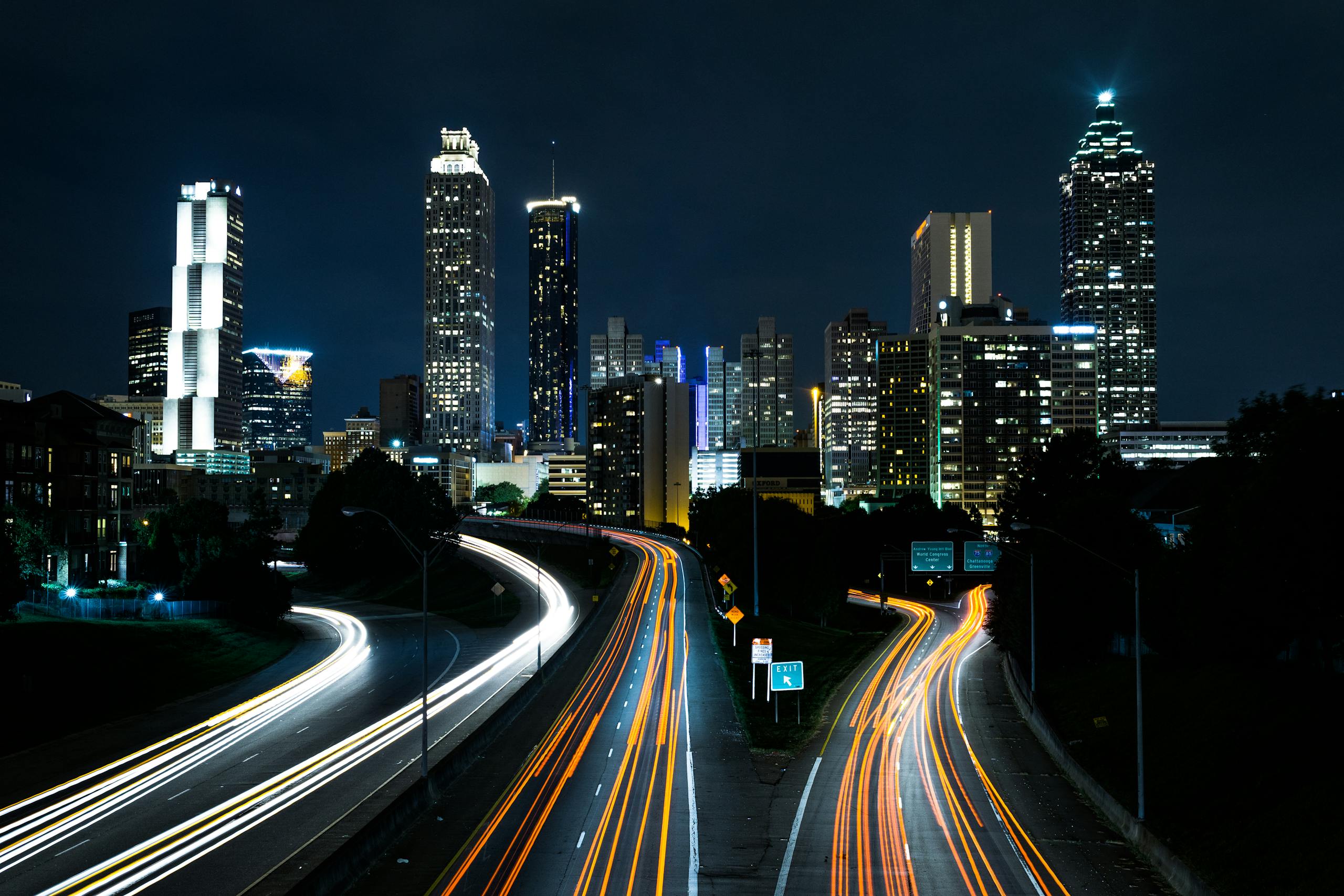
Lone Elm Interchange K-10, where Kansas Highway 10 meets Lone Elm Road in Johnson County, is the kind of place most people pass through without a second thought. Commuters merge, exit, and accelerate onward. But for introverts who know how to read a landscape, an interchange like this one tells a quieter story, about thresholds, about the particular peace of open midwestern sky, and about what it means to pause between destinations rather than race toward them.
If you’ve ever pulled off a highway and felt your shoulders drop two inches, you already understand what I’m talking about.

There’s a broader conversation happening on this site about how introverts move through major changes in their lives. Our Life Transitions and Major Changes hub explores the full range of that experience, from career pivots to identity shifts to the quieter, slower transformations that don’t announce themselves. The Lone Elm area fits into that conversation in a way I didn’t expect when I first started thinking about it.
What Does an Interchange Have to Do With Introversion?
Bear with me here, because this is going to sound strange at first.
What drains your social battery?
Not all social exhaustion is the same. Our free quiz identifies your specific drain pattern and gives you personalised recharging strategies.
Find Your Drain PatternUnder 2 minutes · 8 questions · Free
An interchange is, by definition, a place of transition. You’re leaving one road and joining another. You’re between things. And for introverts, that liminal space, the moment between where you were and where you’re going, is often where the most honest thinking happens.
I spent more than two decades running advertising agencies. Some of the most clarifying moments I had during that period didn’t happen in boardrooms or creative reviews. They happened in cars, on drives between client meetings, when the noise of the office faded and my mind could finally do what it does best: process slowly, without interruption. The K-10 corridor in Johnson County, Kansas, has that quality. It’s not dramatic. It’s not trying to impress you. It’s just open, flat, and quiet enough to think.
That kind of environment matters more to introverts than most people realize. Work published in PMC points to meaningful differences in how introverts and extroverts respond to external stimulation, with introverts generally reaching their optimal arousal threshold at lower levels of environmental input. A wide Kansas sky and a two-lane road aren’t just aesthetically appealing. They’re neurologically compatible with how many of us are wired.
Why Does the K-10 Corridor Feel Different From Other Suburban Edges?
Johnson County gets talked about mostly in real estate terms. Good schools, suburban growth, proximity to Kansas City. The K-10 corridor, stretching west from I-435 through Lenexa, Olathe, and out toward Gardner, is often framed as a development zone, warehouses going up, subdivisions spreading into former farmland, logistics hubs multiplying near the interchange points.
But if you drive it early on a weekday morning, or on a gray Sunday in November, something else comes through. The land hasn’t been entirely absorbed yet. There are still stretches where you can see for miles. The Lone Elm area in particular, near the intersection of K-10 and Lone Elm Road, sits at an edge where the suburban grid hasn’t fully closed in. There’s a quality of incompleteness that, for an introvert, reads as possibility rather than neglect.
I’ve always been drawn to edges. Not the dramatic kind, not cliff faces or coastlines, but the quiet kind. The place where a parking lot ends and a field begins. The last block before a town dissolves into county road. Something about standing at a threshold, looking outward, activates a part of my thinking that gets crowded out in denser environments.
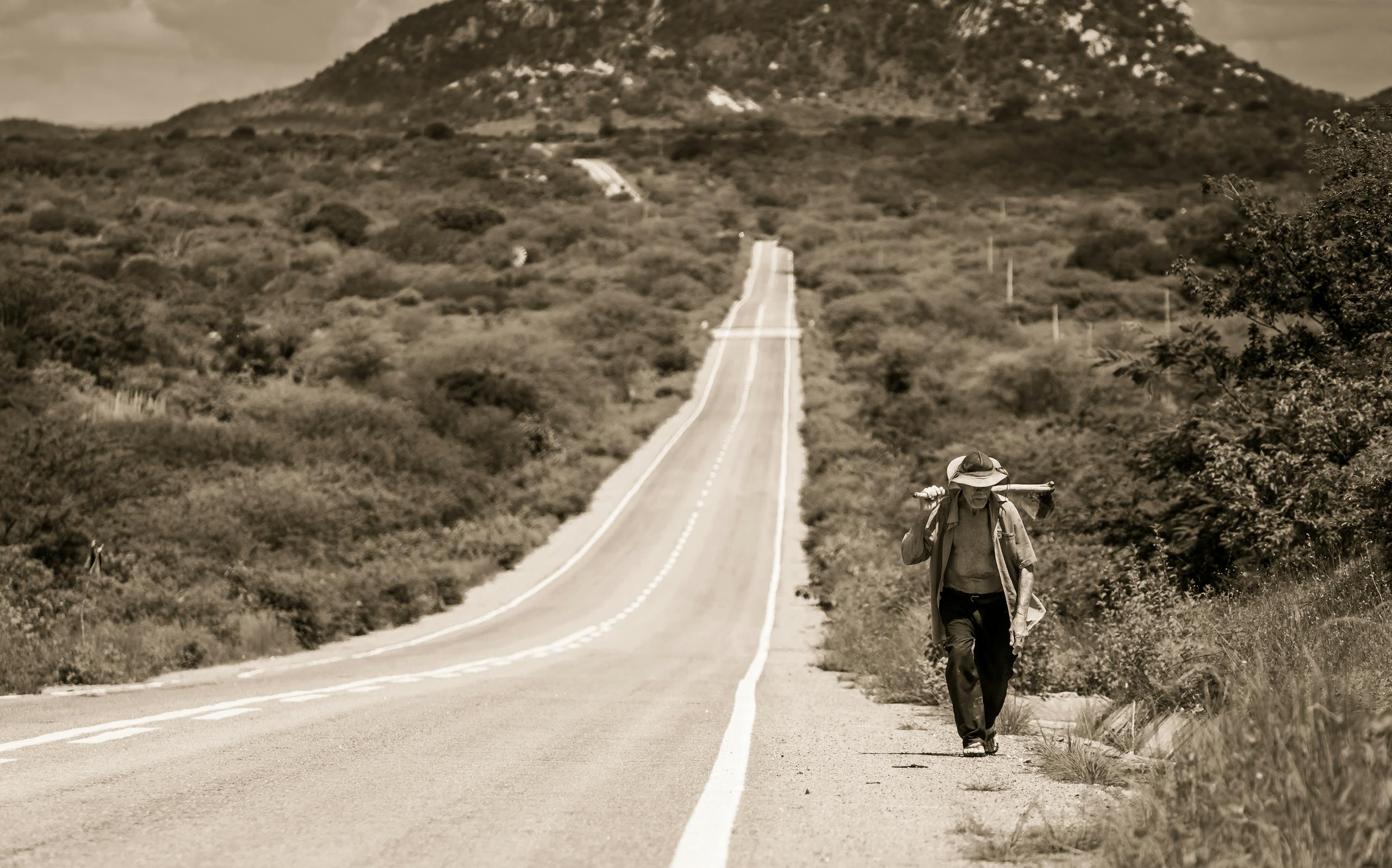
When I was managing a team of about thirty people at my agency, I had a creative director who would take long lunch drives on the days before major presentations. Everyone else was grinding through revisions. She was driving. At the time, some people on the team didn’t understand it. I did. She came back sharper every time. The drive wasn’t avoidance. It was preparation. The kind of preparation that only works in open space.
How Does Place Shape the Way Introverts Process Change?
There’s a reason certain places become anchors during difficult periods in our lives. Not because they’re beautiful, necessarily, but because they’re consistent. They don’t ask anything of us. They receive us without expectation.
For introverts moving through significant life transitions, finding a physical anchor point can be surprisingly stabilizing. Not a therapist’s office (though that has its place), not a friend’s kitchen table (though that too), but a place that exists outside of social obligation. A place you can go to alone and leave alone and not have to explain yourself to anyone.
The K-10 and Lone Elm Road area is that kind of place for some people in the greater Kansas City region. It’s accessible without being crowded. It’s functional without being sterile. You can sit in a parking lot off Lone Elm Road and watch the sky change for twenty minutes and feel, genuinely, like you’ve been somewhere.
This connects to something I’ve written about elsewhere on this site. The practice of embracing solitude as a deliberate choice rather than a consolation prize changes how you experience being alone entirely. Once you stop treating solitude as something to apologize for, you start being able to use it. Places like the Lone Elm interchange become tools rather than retreats.
What Happens When Introverts Stop Moving and Actually Arrive Somewhere?
One of the things I’ve noticed, in myself and in the introverts I’ve worked with over the years, is that we often have a complicated relationship with arrival. We’re good at preparation. We’re good at anticipation. We’re sometimes less comfortable with the moment of actually being somewhere, especially somewhere new, because arrival usually involves other people, social navigation, the performance of being present.
A place like the Lone Elm interchange sidesteps that entirely. There’s no arrival performance required. You don’t check in anywhere. Nobody greets you. You pull off the highway, you exist in a space for a while, and then you leave. The interaction is entirely between you and the landscape.
That might sound like a small thing. It isn’t. Psychology Today has written about how introverts consistently gravitate toward depth over breadth in their interactions, preferring fewer, more meaningful exchanges to constant surface-level contact. The same principle applies to places. A single location that you return to repeatedly, that you understand well, that holds your attention without demanding your performance, can offer more than a dozen novelty destinations.

My own version of this, during the years I was running my agency, was a particular stretch of highway between our main office and a client’s facility about forty minutes away. I drove it so many times I knew every overpass, every exit, every point where the skyline shifted. That repetition wasn’t boring. It was grounding. The familiarity freed up mental space. I did some of my best strategic thinking on that drive, not because I was trying to think, but because the environment had become quiet enough that thinking could happen on its own.
How Does Personality Type Shape What You Need From Physical Space?
As an INTJ, I’ve always been acutely aware of how my environment affects my output. Not in a precious way, but in a practical one. Certain spaces make me more effective. Others drain me before I’ve done anything. Learning to recognize the difference, and to make deliberate choices accordingly, was one of the more useful things I did during my agency years.
Open-plan offices were fashionable for most of my career. I understood the rationale. Collaboration, spontaneous exchange, visibility. As someone responsible for managing creative teams, I could see the appeal for certain personality types. The extroverts on my staff genuinely thrived in that environment. They fed off the ambient energy. For the INTJs, INTPs, and INFJs on my team, it was a different story. They produced their best work before everyone else arrived or after everyone else left.
Physical space and personality type are deeply intertwined, and this is something worth thinking about deliberately rather than leaving to chance. The way your MBTI type shapes your preferences, including your spatial preferences, shows up across every major life decision. If you’re working through a significant transition and wondering why certain environments feel supportive while others feel exhausting, that’s worth examining. MBTI-informed life planning offers a framework for understanding how your type shapes not just career choices but the full texture of how you want to live.
For introverts specifically, the K-10 and Lone Elm area offers something that dense urban environments rarely do: room to think without stimulation competing for your attention. The interchange itself is functional infrastructure. But the land around it, the flat horizon, the wide sky, the relative quiet of roads that haven’t yet been widened to accommodate more traffic, creates conditions where an introvert’s natural processing style can operate without friction.
What Is It About Open Midwestern Landscapes That Resonates With Deeper Thinkers?
There’s a cultural tendency to romanticize dramatic landscapes. Mountains, coastlines, dense forests. Those places get the poems and the photographs and the travel magazine covers. The flat middle of the country gets overlooked, or worse, condescended to.
But I’d argue that flat landscapes offer something that dramatic ones don’t: they require you to bring your own interiority. A mountain does the emotional work for you. It’s already sublime. A flat Kansas horizon gives you nothing to react to. You have to generate your own meaning. For people who live primarily in their inner world, that’s not a deficit. It’s an invitation.
Highly sensitive people, in particular, often find that quieter, less visually complex environments allow them to engage more fully with their own perceptions rather than being overwhelmed by external input. The way sensitivity develops and changes over a lifetime is something worth understanding if you’re trying to figure out why certain environments feel right at certain ages and wrong at others. How sensitivity shifts across a lifespan is a genuinely useful lens for understanding your changing relationship to place.

I grew up in a place with a lot of visual noise. Dense neighborhoods, constant activity, streets that were always doing something. I thought for years that I was simply bad at relaxing, that my restlessness was a character flaw. It took me until my late thirties to understand that I wasn’t bad at relaxing. I was bad at relaxing in environments that weren’t designed for people like me. Put me somewhere open and quiet, with a long sight line and minimal social obligation, and I settle almost immediately. The restlessness was never mine. It was the environment’s.
How Can a Place Like Lone Elm Become Part of Your Regular Practice?
I want to be specific here, because I think there’s a tendency to talk about restorative places in vague, aspirational terms that don’t actually help anyone do anything differently.
If you live in the greater Kansas City area, the K-10 and Lone Elm Road intersection is genuinely accessible. It’s not a destination in the conventional sense. You’re not going to find a visitor center or a trailhead with a map. What you will find is a functional interchange surrounded by enough open land that you can pull off, exist for a while, and feel the particular quality of space that this part of Johnson County offers.
The practice I’d suggest is simple. Drive out there with no agenda other than to be there. No podcast. No phone calls. No destination beyond the interchange itself. Give yourself twenty or thirty minutes of genuine quiet. Notice what your mind does when it isn’t being managed.
For introverts who work in high-demand environments, this kind of deliberate, low-stimulation time isn’t a luxury. It’s maintenance. The same way you’d charge a battery. Research in environmental psychology has consistently found that exposure to low-stimulation natural environments supports cognitive restoration, the process by which attention and executive function recover after periods of sustained demand. The K-10 corridor, with its combination of open sky and functional quiet, fits that profile well.
One thing I started doing in my agency years, once I understood this about myself, was scheduling what I called “dead time” before major client presentations. Not prep time. Not review time. Just time with no task attached. Often I’d drive. Sometimes I’d sit in a parking lot somewhere quiet. My team thought I was eccentric. My clients never knew the difference, except that I showed up to those meetings sharper than I had any right to be after weeks of intense work.
What Can the Lone Elm Area Teach Us About Listening to Ourselves?
There’s a kind of listening that happens in quiet places that doesn’t happen anywhere else. Not listening for anything specific. Just listening. Letting your own thoughts surface without immediately evaluating or directing them.
This is something I’ve come to think of as one of the core skills of introversion, and one of the most undervalued. We live in a culture that rewards quick responses, visible processing, and immediate articulation. Introverts often process more slowly and more thoroughly, and that processing frequently needs space and quiet to complete itself. Cutting it short, by filling every moment with input, doesn’t make the processing faster. It just makes it incomplete.
The best advisors and mentors I’ve encountered in my career had this quality. They listened before they spoke. They let silence do work. Interestingly, this is something that shows up in academic and counseling contexts too. The way highly sensitive advisors use deep listening to support students is a useful model for understanding how genuine attentiveness, the kind that requires quiet and patience, produces better outcomes than rapid-response approaches. The same principle applies to how we listen to ourselves.
A place like the Lone Elm interchange, unremarkable by most measures, becomes remarkable when you use it as a space for that kind of listening. You’re not there to experience the place. You’re there to experience yourself, in a context where the environment isn’t competing for your attention.

I’ve had more clarity about major decisions in places like this than in any conference room, any strategy session, any facilitated offsite. Not because the place provided answers, but because it provided conditions. Quiet enough to hear the question clearly. Open enough that the answer had room to form.
That’s what I’d want anyone reading this to take away. You don’t need a dramatic landscape. You don’t need a destination with cultural cachet. You need a place that fits your nervous system, that asks nothing of you, and that you can return to reliably. For some people in the Kansas City area, the Lone Elm interchange is that place. For others, it’ll be something different. The point isn’t the specific location. The point is knowing that you need it, and giving yourself permission to go.
If you’re in the middle of a significant life change and finding it hard to hear yourself through the noise, there’s more to explore on this topic. The full Life Transitions and Major Changes hub covers the wide range of ways introverts move through upheaval, growth, and reinvention, with honesty about what’s hard and what actually helps.
Running on empty?
Five drain profiles, each with specific triggers, warning signs, and a recharging playbook.
Take the Free QuizUnder 2 minutes · 8 questions · Free
About the Author
Keith Lacy is an introvert who’s learned to embrace his true self later in life. After 20 years in advertising and marketing leadership, including running agencies and managing Fortune 500 accounts, Keith now channels his experience into helping fellow introverts understand their strengths and build fulfilling careers. As an INTJ, he brings analytical depth and authentic perspective to every article, drawing from both professional expertise and personal growth.
Frequently Asked Questions
What is the Lone Elm Interchange K-10?
The Lone Elm Interchange K-10 is the intersection of Kansas Highway 10 and Lone Elm Road in Johnson County, Kansas. It sits along the K-10 corridor west of the Kansas City metro area, in a part of Johnson County that still retains some of the open, flat character of the surrounding prairie landscape. While it functions primarily as a commuter and logistics corridor, the area around the interchange offers the kind of low-stimulation, open environment that many introverts find restorative.
Why do introverts often prefer open, low-stimulation environments?
Many introverts reach their optimal mental state at lower levels of external stimulation than extroverts do. Dense, noisy, or socially demanding environments can deplete an introvert’s energy more quickly, while quieter, more open spaces allow for the kind of slow, thorough internal processing that introverts tend to do naturally. Open midwestern landscapes like those along the K-10 corridor offer wide sight lines and minimal sensory competition, which many introverts experience as genuinely restorative rather than simply boring.
How can a specific place support an introvert through a major life transition?
During significant life changes, having a reliable physical anchor point can provide stability that social or professional environments don’t always offer. A place that asks nothing of you socially, that you can visit alone without explanation, and that consistently offers quiet and space becomes a kind of thinking ground. Many introverts find that returning repeatedly to a familiar, low-stimulation place helps them process change more completely than they can in environments full of competing demands. The Lone Elm area serves this function for some people in the Kansas City region.
Is the K-10 corridor in Johnson County worth visiting for non-commuters?
It depends entirely on what you’re looking for. If you want dramatic scenery or conventional tourist attractions, the K-10 corridor isn’t going to deliver that. What it does offer is accessibility, a genuine sense of open space that’s becoming harder to find as suburban development expands, and the particular quality of flat midwestern landscape that rewards people who are willing to generate their own interiority rather than waiting for the environment to do it for them. For introverts who value quiet drives and open horizons, it’s worth the trip.
How does personality type affect what kind of environment feels restorative?
Personality type shapes environmental preferences in significant ways. Introverts generally find that lower-stimulation environments support better thinking and more complete recovery after periods of social or cognitive demand. Highly sensitive individuals often find that visually complex or acoustically busy environments are harder to be in for extended periods. Your MBTI type, your level of sensitivity, and your personal history with different kinds of spaces all influence which environments feel supportive and which feel draining. Understanding those preferences deliberately, rather than discovering them by accident, allows you to make better choices about where you spend your restorative time.