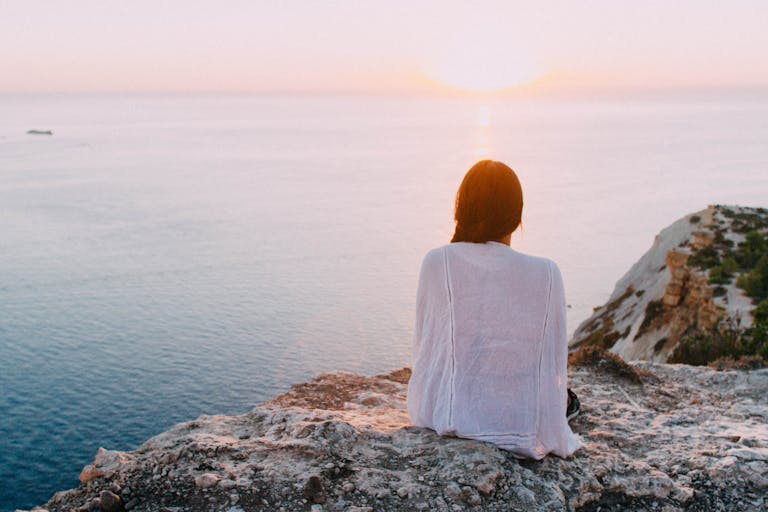
Lone Wolf Creek RV Village isn’t just a campground. For introverts who’ve spent years apologizing for needing space, it represents something more fundamental: the idea that solitude isn’t a flaw to fix, but a legitimate way of being in the world. Places like this exist because some people genuinely recharge in quiet, and that preference runs deeper than mood or circumstance.
At its core, the appeal of a destination like Lone Wolf Creek RV Village reflects what introversion actually is: a neurological orientation toward inner experience, where solitude restores rather than depletes. Understanding that distinction matters far more than most people realize.
My own relationship with solitude took decades to make sense. Running advertising agencies meant I was constantly surrounded by people: clients, creative teams, account managers, vendors. The work demanded presence, energy, and the appearance of enthusiasm even when I was running on empty. What I didn’t understand for most of those years was that my craving for quiet wasn’t weakness. It was biology. And places that honor that craving, whether a creek-side campsite or a closed office door, aren’t escapes from life. They’re part of how some of us actually live it.
If you’re curious how introversion fits into the broader landscape of personality, our Introversion vs Other Traits hub examines the full spectrum, from the science of energy to how introversion intersects with anxiety, neurodivergence, and social behavior. What we’re exploring here adds a specific layer: what the pull toward solitary spaces tells us about introvert identity.
Why Do Introverts Crave Solitary Spaces So Deeply?
There’s a reason the phrase “lone wolf” resonates with so many introverts. It captures something real about how we experience the world, not as antisocial creatures who dislike people, but as individuals who process life most clearly when external noise quiets down. The appeal of a place like Lone Wolf Creek RV Village speaks to that directly.
What’s your introvert superpower?
Every introvert has a quiet strength others overlook. Our free quiz identifies yours and shows you how to leverage it in your career and relationships.
Discover Your Superpower2-3 minutes · 10 questions · Free
Introversion, as a personality trait, centers on how people gain and lose energy. Introverts tend to find extended social interaction draining and recover through time alone or in low-stimulation environments. This isn’t shyness, and it isn’t misanthropy. It’s a preference wired into how the nervous system processes stimulation. Some people find a crowded party energizing. Others find a quiet campsite beside a creek restorative in ways that no amount of socializing can replicate.
Worth noting here: the desire to retreat from people isn’t always introversion. Sometimes it signals something more complicated. If the pull toward isolation feels less like preference and more like fear, it’s worth examining whether introversion and social anxiety are actually different things, because they are, and the distinction shapes how you respond to each.
For me, the craving for solitary spaces became impossible to ignore during a particularly brutal new business pitch season. We were chasing three major accounts simultaneously, which meant weeks of back-to-back presentations, client dinners, and internal strategy sessions. By Friday evening I wasn’t tired in the ordinary sense. I was hollowed out. My wife at the time suggested a weekend camping trip, and I remember the almost physical relief of pulling into a campsite where the only sound was wind through pine trees. I didn’t need to perform. I didn’t need to read anyone’s body language or calibrate my energy to a room. I just needed to exist quietly, and that was enough to restore something essential.
Is the “Lone Wolf” Label Fair to Introverts?
The lone wolf metaphor is complicated. On one hand, it captures something genuine about introvert experience: the preference for working independently, the comfort with one’s own company, the tendency to observe before engaging. On the other hand, it can tip into caricature, painting introverts as fundamentally disconnected or even cold.
Most introverts I know, including myself, care deeply about connection. We just prefer it in smaller doses and at greater depth. Psychology Today has written compellingly about why introverts often crave deeper conversations rather than surface-level socializing, and that observation matches my experience precisely. I could sit through a three-hour client dinner making small talk and feel completely depleted. But a genuine one-on-one conversation about something that actually mattered? That felt different. Sometimes energizing, even.
The lone wolf framing becomes problematic when it slides into the territory of “I don’t like people.” That’s worth examining carefully, because there’s a meaningful difference between introversion and something closer to misanthropy. If you’ve ever caught yourself thinking that way, exploring whether it’s misanthropy or introversion can clarify a lot about what you’re actually experiencing and what, if anything, needs to shift.
What I’ve observed in my own life is that the lone wolf tendency, when it’s healthy, is really about selectivity. Introverts aren’t avoiding connection. They’re filtering for quality. A campsite in a quiet valley isn’t a rejection of humanity. It’s a recalibration that makes genuine connection possible again afterward.
What Does Solitude Actually Do for the Introvert Brain?
Solitude isn’t empty time. For introverts, it’s often the most productive mental state available. When external demands quiet down, the mind doesn’t go blank. It processes. It synthesizes. It makes connections between things that seemed unrelated when the noise was too loud to hear them.
Some of my best strategic thinking happened not in conference rooms but in the car afterward, or on a walk the following morning. The ideas that won pitches and shaped campaigns rarely arrived during the meeting. They surfaced later, in the quiet. I eventually stopped apologizing for that and started building it into my workflow deliberately. Solitude wasn’t a luxury. It was where the actual thinking happened.
There’s a body of psychological research suggesting that solitude supports creativity, self-regulation, and emotional processing. Work published in PubMed Central points to the role of quiet internal states in supporting reflective cognition, the kind of thinking that goes beyond surface-level problem-solving into deeper pattern recognition. For introverts, this isn’t abstract. It’s lived experience.
That said, solitude affects people differently depending on more than just introversion. Personality intersects with other traits in ways that shape how restorative or destabilizing alone time feels. For someone managing both ADHD and introversion, for instance, solitude can be genuinely complicated: craved for the quiet it promises, yet hard to sustain when the mind won’t settle. These intersections matter, and they’re worth understanding rather than glossing over.

How Does Nature Fit Into the Introvert Equation?
There’s something specific about natural environments, not just quiet spaces generally, that seems to resonate with introverts in particular. The appeal of a place like Lone Wolf Creek RV Village isn’t only about the absence of people. It’s about the presence of something else: trees, water, open sky, the kind of sensory environment that engages attention gently rather than demanding it aggressively.
Psychologists sometimes describe this as “soft fascination,” a state where the environment holds attention without requiring effortful concentration. A creek does this naturally. So does a campfire, or the particular quality of light through leaves in the late afternoon. For introverts who’ve spent their days managing constant demands on their attention, this kind of environment isn’t passive. It’s actively restorative.
Research indexed in PubMed Central has examined how natural environments affect psychological recovery from stress, with findings that support what many introverts already know intuitively: time in nature tends to reduce mental fatigue and restore directed attention capacity. Introverts may benefit from this particularly acutely, given how much directed attention social performance requires.
I noticed this pattern clearly during a period when I was managing a major account transition. We’d lost a significant client, and I was simultaneously trying to hold the team together and rebuild the pipeline. The pressure was relentless. A long weekend at a state park campground, nothing fancy, just a tent and a creek, reset something in me that two weeks of early nights and good meals hadn’t touched. The natural environment did something that rest alone couldn’t.
Can Introversion Change, or Is the Need for Solitude Fixed?
One of the more interesting questions in personality psychology is whether introversion is a permanent fixture or something that shifts over time and circumstance. Many introverts have had the experience of functioning more extrovertedly in certain contexts, a high-stakes presentation, a social event they genuinely enjoyed, and wondered whether they’re “really” introverted after all.
The short answer is that introversion as a trait tends to be relatively stable, but how it expresses itself varies considerably based on context, practice, and life stage. The distinction between introversion as a trait versus a state is genuinely useful here, and it reframes what “change” actually means. You might become more socially skilled, more comfortable in certain environments, more capable of sustained extroverted behavior. But the underlying preference for solitude as a restorative experience tends to persist.
My own experience confirms this. Over twenty years in agency leadership, I became genuinely good at the social dimensions of the work: client relationships, team dynamics, public presentations. I wasn’t performing introversion in those moments. I was doing something real. But the need to recharge alone never went away. If anything, the more I pushed into extroverted territory professionally, the more deliberately I had to protect time for solitude. The balance shifted, but the underlying orientation stayed consistent.
This is worth remembering when you encounter the suggestion that introversion is something to overcome. Developing social skills and maintaining your need for solitude aren’t in conflict. They coexist, and managing both intentionally is part of what it means to build a life that actually fits you.
How Do You Know If Your Need for Solitude Is Introversion or Something Else?
This is a question worth sitting with honestly. Not every preference for solitude is introversion. Sometimes withdrawal signals depression. Sometimes it reflects anxiety so persistent that social situations feel genuinely threatening rather than simply tiring. Sometimes it connects to neurodevelopmental traits that shape how the brain processes social information.
The overlap between introversion and autism spectrum traits, for instance, is real and often misunderstood. Both can involve preference for routine, sensitivity to sensory input, and social exhaustion. But the underlying mechanisms differ significantly. Understanding what introversion and autism actually share, and where they diverge, matters if you’re trying to understand your own experience accurately rather than just finding a label that fits loosely.
From an INTJ perspective, I’ve spent a fair amount of time analyzing my own patterns. The solitude I craved during my agency years wasn’t avoidance. It wasn’t fear. It was a genuine preference for processing internally rather than externally, and it produced better outcomes when I honored it. That’s the introvert signature: solitude as fuel, not shelter.
Contrast that with periods when I withdrew not because I needed to recharge but because a situation felt overwhelming in a way that didn’t resolve with rest. Those episodes felt different, more like hiding than restoring. Learning to distinguish between the two took time, and it required more honest self-examination than I was initially willing to do.

What Does a Place Like Lone Wolf Creek RV Village Offer That Ordinary Rest Doesn’t?
There’s a difference between being alone and being in a context designed for solitude. Most introverts know this distinction viscerally. You can be physically alone in an apartment and still feel the ambient pressure of the world: notifications, obligations, the low hum of urban noise. A campsite removes that layer in a way that’s hard to replicate otherwise.
Lone Wolf Creek RV Village, as a destination, represents a particular kind of intentional withdrawal. RV communities generally attract people who’ve made a deliberate choice to simplify their relationship with space and place. There’s a self-selection happening: the people who end up in spots like this tend to value quiet, prefer natural settings, and have made peace with their own company. For introverts, that’s a rare and genuinely comfortable social environment, one where the default expectation is space rather than engagement.
What I find compelling about this is that it reframes solitude as a design choice rather than a personality deficiency. A place called “Lone Wolf Creek” isn’t apologizing for attracting people who need space. It’s naming something real and building around it. That’s a more honest acknowledgment of introvert needs than most professional environments manage.
The advertising world I worked in was built almost entirely around extrovert assumptions: open-plan offices, brainstorming sessions, after-work client entertainment, the constant performance of enthusiasm. A campsite beside a creek is the structural opposite of that, and the contrast illuminates something important. Environments shape behavior, and introverts thrive in environments that match their actual operating preferences rather than requiring constant adaptation to someone else’s.
How Should Introverts Think About Building Solitude Into Their Lives Intentionally?
The mistake I made for most of my career was treating solitude as something I’d get around to eventually, after the pitch was won, after the quarter closed, after the team crisis resolved. It was always deferred. And the cumulative cost of that deferral was significant: diminished creativity, shorter patience, a persistent sense of running behind myself.
What changed was treating solitude as a non-negotiable input rather than an optional reward. Not dramatically, not by retreating from professional obligations, but by protecting specific time that was genuinely mine. Early mornings before the office world activated. Walks without a podcast. Weekends where the agenda was intentionally light. These weren’t indulgences. They were operational requirements for doing the work well.
For introverts in demanding careers, this reframe matters enormously. Frontiers in Psychology has published work on personality and workplace performance that supports the idea that trait-environment fit, how well your environment matches your personality, significantly affects both wellbeing and output. Introverts who build solitude into their structure perform better, not worse, than those who try to sustain constant social engagement.
A destination like Lone Wolf Creek RV Village is one version of this: a deliberate, extended immersion in the kind of environment that genuinely restores introvert capacity. But the principle scales down. A quiet hour in the morning. A lunch break spent alone rather than in the break room. A commute without noise. The form matters less than the intention behind it.

What the Lone Wolf Metaphor Gets Right About Introvert Strength
Strip away the slightly melodramatic connotations and the lone wolf metaphor captures something genuinely accurate about how many introverts operate at their best. Wolves in that mode aren’t lost. They’re not broken pack animals. They’re moving through the world with a particular kind of self-sufficiency that doesn’t require constant external validation to function.
That self-sufficiency is a real introvert strength, and it’s one that professional environments consistently undervalue because it doesn’t perform visibly. An extrovert’s enthusiasm is legible in real time. An introvert’s depth of processing, careful judgment, and capacity for independent work often only becomes visible in outcomes, not process. That’s a presentation problem, not a capability problem.
Some of the most capable people I worked with over two decades were introverts who’d learned to stop apologizing for how they operated. A creative director I managed for several years was deeply introverted, someone who needed significant alone time to produce her best work and who was genuinely uncomfortable in large group ideation sessions. She was also the most consistently excellent creative thinker in the agency. Once I stopped scheduling her into every brainstorm and started protecting her working conditions instead, her output became remarkable. The lone wolf, given the right terrain, produces.
There’s also something worth saying about the negotiation dimension of this. Introverts often underestimate their capacity to advocate for their own needs in professional contexts. Harvard’s Program on Negotiation has examined whether introverts are at a disadvantage in negotiation settings, and the findings are more nuanced than the stereotype suggests. The same qualities that make introverts effective in solitude, careful listening, deliberate thinking, comfort with silence, can be genuine assets in the right negotiation context.
And when conflict does arise, which it will in any professional environment, the introvert’s tendency toward internal processing before responding can be a significant advantage. Psychology Today’s framework for introvert-extrovert conflict resolution acknowledges this directly: introverts often need time to process before engaging productively, and building that into conflict resolution approaches produces better outcomes for everyone involved.
The lone wolf, in other words, isn’t a liability. It’s a different operating system, one that requires different conditions to run well. Lone Wolf Creek RV Village, as a name and a concept, honors that. And for introverts who’ve spent years trying to run their particular operating system on someone else’s power supply, that kind of acknowledgment carries more weight than it might seem.
If you want to explore more of the territory where introversion meets personality science, social behavior, and identity, the Introversion vs Other Traits hub covers the full range, from how introversion compares to related traits to how it shapes everything from career choices to relationship patterns.
Know your quiet strength?
Six superpower types, each with career implications and curated reading to develop your specific strength further.
Take the Free Quiz2-3 minutes · 10 questions · Free
About the Author
Keith Lacy is an introvert who’s learned to embrace his true self later in life. After 20 years in advertising and marketing leadership, including running agencies and managing Fortune 500 accounts, Keith now channels his experience into helping fellow introverts understand their strengths and build fulfilling careers. As an INTJ, he brings analytical depth and authentic perspective to every article, drawing from both professional expertise and personal growth.
Frequently Asked Questions
What makes a place like Lone Wolf Creek RV Village appealing to introverts?
The appeal centers on what such places structurally provide: low-stimulation natural environments, physical distance from social obligations, and a cultural default toward space rather than engagement. Introverts recharge through solitude, and campground settings in natural areas offer that in a sustained, immersive way that’s difficult to replicate in ordinary daily life. The name itself signals something: a destination built around the idea of comfortable solitude rather than constant social activity.
Is preferring solitude the same thing as being antisocial?
No, and the distinction matters. Antisocial behavior involves hostility toward or disregard for others. Introversion involves a preference for less frequent or less intense social interaction as a matter of energy management, not attitude. Most introverts value connection genuinely. They simply find extended social engagement tiring in a way that extroverts typically don’t, and they recover through time alone rather than through more social activity. Preferring a quiet campsite to a crowded party doesn’t indicate dislike of people. It indicates a particular kind of nervous system.
Can introverts change their need for solitude over time?
The underlying trait tends to remain stable, though how it expresses itself can shift considerably with practice, context, and life stage. Introverts can develop strong social skills and function effectively in highly social environments. What typically doesn’t change is the need to recharge through solitude afterward. The trait persists even as the behavior becomes more flexible. Someone who was a deeply introverted child may become a confident public speaker as an adult while still needing significant alone time to recover from sustained social performance.
How do I know if my need for solitude is healthy introversion or something I should address?
Healthy introversion feels restorative. You seek solitude because it genuinely recharges you, and afterward you’re more capable of engaging with the world, not less. When withdrawal starts feeling more like avoidance, when solitude doesn’t restore but simply delays anxiety, or when the desire to be alone is accompanied by persistent low mood or fear, those are signals worth taking seriously. The difference between introversion and social anxiety, or introversion and depression, matters practically because each calls for a different response. Honest self-examination, and sometimes professional support, helps clarify which is actually operating.
Why do introverts often feel more themselves in natural settings than in social environments?
Natural environments tend to engage attention gently rather than demanding it aggressively. There’s no social performance required, no reading of body language or calibrating of responses. The sensory input, water, wind, light through trees, is complex enough to hold attention without being overwhelming. For introverts whose energy is frequently consumed by the demands of social environments, this represents a genuine respite. The self that emerges in those conditions isn’t a diminished version. It’s often the most integrated and clear-headed version, the one that does the best thinking and makes the most honest decisions.