
The best corporate wellness apps for burnout prevention work by making self-care frictionless enough that you’ll actually use them, even on the days you feel too depleted to try. For introverts especially, these tools offer something rare in workplace wellness culture: private, self-directed support that doesn’t require explaining yourself to a colleague or sitting through a group meditation session in the break room.
Not every app earns its place on your phone. Some are glorified to-do lists dressed up in calming colors. Others genuinely change how you relate to stress, energy, and the slow erosion that happens when you’ve been running on empty for too long. After two decades in advertising, I’ve watched burnout dismantle talented people who thought they were just “pushing through a rough patch.” I’ve been that person. What follows is an honest look at what’s actually worth your attention.
If you want a broader foundation before picking an app, our Burnout and Stress Management hub covers the full landscape of recovery, prevention, and the personality-specific patterns that make burnout so persistent for introverts. Consider this article a practical companion to that deeper work.

Why Do Introverts Experience Burnout Differently Than Their Colleagues?
Burnout isn’t just exhaustion. It’s a particular kind of depletion that comes from sustained overextension, and for introverts, the triggers are often invisible to everyone around them. Open offices, back-to-back video calls, mandatory team lunches, the relentless expectation to be “on” and engaged at all times. None of these things look like a crisis from the outside. They look like a normal Tuesday.
What’s your personality type?
Take our free 40-question assessment and get a detailed personality profile with dimension breakdowns, context analysis, and personalised insights.
Discover Your Type8-12 minutes · 40 questions · Free
Running an advertising agency meant I lived inside exactly that kind of environment for years. Client presentations, new business pitches, agency-wide all-hands meetings, creative reviews with fifteen people crowded around a conference table offering opinions simultaneously. My extroverted colleagues seemed to draw energy from all of it. I was quietly calculating how many hours until I could sit alone and think.
What I didn’t understand early on was that this energy differential compounds over time. It’s not that any single meeting breaks you. It’s that the cumulative drain, without adequate recovery built into your schedule, creates a deficit you can’t sleep off. Psychology Today’s exploration of the introvert energy equation puts language to something many of us feel but struggle to articulate to managers or HR departments.
Corporate wellness apps, when they’re designed well, address this by giving introverts a private channel for self-regulation. No group check-ins. No sharing circles. Just you, your phone, and a structured way to process what’s happening internally before it becomes a full breakdown.
That said, apps are tools, not solutions. My piece on introvert stress management strategies that actually work goes deeper into the underlying approaches that make any digital tool more effective. Worth reading alongside this one.
What Makes a Corporate Wellness App Actually Useful for Burnout Prevention?
Most wellness apps promise everything and deliver a pleasant distraction. The ones worth recommending share a few specific qualities that matter for sustained burnout prevention rather than momentary relief.
First, they meet you where you are energetically. An app that requires fifteen minutes of guided group reflection before you can access anything useful is already asking too much of someone who’s depleted. The best tools have a low entry barrier: a two-minute breathing exercise, a quick mood log, a single prompt. You can go deeper when you have the capacity, and you can do the minimum when you don’t.
Second, they build longitudinal awareness. Burnout rarely announces itself. It creeps in through patterns, a gradual flattening of enthusiasm, increasing irritability, the slow disappearance of things that used to matter. Apps that track mood, sleep, and energy over weeks and months give you data that your own fatigued brain can’t generate reliably. That pattern recognition is genuinely valuable.
Third, they offer evidence-informed techniques rather than wellness theater. Breathing protocols grounded in how the nervous system actually works. Cognitive reframing exercises rooted in established psychological frameworks. Sleep hygiene guidance that goes beyond “try to relax.” The American Psychological Association’s overview of relaxation techniques provides a useful benchmark for what genuinely moves the needle on stress physiology.

Which Apps Are Actually Worth Downloading?
I want to be straightforward here: I’m not going to rank apps by star rating or pretend I have access to proprietary corporate licensing data. What I can offer is a practical framework for evaluating the major categories, with honest commentary on what each type of tool does well and where it falls short for introverts specifically.
Mindfulness and Meditation Apps
Headspace and Calm are the two most widely deployed in corporate wellness programs, and for good reason. Both offer structured meditation courses, sleep content, and quick breathing exercises that require no prior experience. For introverts, the self-paced, private nature of these tools is a genuine fit. You’re not performing wellness for anyone. You’re just sitting with your own mind for a few minutes.
Calm’s sleep stories and soundscapes have a loyal following among people who struggle to wind down after high-stimulation workdays. Headspace’s “SOS” sessions, short exercises designed for moments of acute stress, are particularly useful for the kind of sudden overwhelm that can hit during a difficult client call or an unexpected conflict in a team meeting.
Where these apps fall short: they’re excellent at managing acute stress but less effective at addressing the structural conditions that cause burnout. Meditating for ten minutes after a twelve-hour day of people-intensive work is helpful, but it doesn’t change the conditions that made the day exhausting. The app is a pressure valve, not a repair.
Mood Tracking and Mental Health Apps
Daylio, Woebot, and similar mood-tracking tools occupy a different category. They’re less about relaxation and more about self-awareness. Daylio’s quick emoji-based logging takes under thirty seconds and builds a data picture of your emotional patterns over time. For an INTJ like me, that kind of structured self-observation feels natural. You’re essentially auditing your own internal state.
Woebot takes a slightly different approach, using conversational AI to guide users through cognitive behavioral techniques. It’s not therapy, and it doesn’t pretend to be, but for mild to moderate stress and early-stage burnout, it provides a low-barrier way to examine thought patterns that might be amplifying exhaustion. PubMed Central has published research on digital mental health interventions that contextualizes why these conversational tools can be effective for certain populations.
The limitation with mood trackers is that awareness without action doesn’t prevent burnout. Knowing you’ve been rating your energy at a 3 out of 10 for three weeks is useful information, but only if you’re also changing something in response to it.
Corporate-Specific Wellness Platforms
Platforms like Lyra Health, Spring Health, and Headspace for Work are designed specifically for employer deployment. They typically combine EAP (Employee Assistance Program) services with digital self-help tools, giving employees access to both self-directed content and professional support when needed.
For introverts handling corporate environments, the appeal of these platforms is the continuum they offer. You can start with a five-minute breathing exercise and, if you realize you need more support, access a licensed therapist without having to go through a separate enrollment process. That low-friction path to professional help matters when you’re already depleted and the idea of making phone calls and filling out intake forms feels impossible.
One honest caveat: some of these platforms are purchased by employers who also have access to aggregate usage data. For introverts who are already cautious about workplace visibility, it’s worth understanding your company’s privacy policy before logging anything you wouldn’t want a HR department to see in aggregate form.
Sleep and Recovery Apps
Sleep is where burnout does its most insidious damage. When you’re chronically exhausted, sleep quality degrades, which deepens exhaustion, which further degrades sleep. Apps like Sleep Cycle, Oura (paired with its ring), and even the sleep features within Calm or Headspace address this cycle directly.
Sleep Cycle’s movement-based analysis of sleep stages gives you actionable data about whether you’re actually recovering overnight, not just lying in bed for eight hours. For people in high-pressure corporate roles, this distinction matters enormously. I spent years thinking I was getting adequate sleep because I was in bed by eleven. What I wasn’t tracking was that I was waking at two AM running through client scenarios and not returning to deep sleep until nearly five.
The connection between sleep disruption and burnout progression is well-documented. Research published in PubMed Central on stress and sleep physiology helps explain why recovery feels so elusive when the sleep deficit compounds week over week.
Breathwork and Somatic Apps
Apps like Othership, Breathwrk, and the breathing features embedded in Apple Watch and Garmin devices address burnout through the nervous system directly. The logic is straightforward: controlled breathing activates the parasympathetic nervous system, which counteracts the chronic sympathetic activation (the fight-or-flight response) that sustained stress produces.
The University of Rochester Medical Center’s 5-4-3-2-1 grounding technique is a related approach that some of these apps incorporate, helping users move out of anxiety spirals through sensory anchoring. For introverts who tend to get caught in internal loops of rumination, somatic tools like these can interrupt the cycle more effectively than purely cognitive approaches.

How Do Personality Type Differences Affect Which App Features Actually Help?
Not every wellness feature lands the same way across personality types, and corporate wellness programs often ignore this entirely. I’ve sat through enough “wellness initiatives” at agencies to know that what energizes one person can feel intrusive or performative to another.
As an INTJ, I respond well to data-driven features. Give me a graph of my sleep quality over thirty days, and I’ll find that genuinely motivating. Ask me to share my “wellness wins” in a team Slack channel, and I’ll immediately disengage. The best apps understand that self-directed, private engagement produces better outcomes for people who are wired toward internal processing.
Managing a large agency team meant I worked alongside people across the personality spectrum. The INFJs on my creative team often needed apps that helped them process emotional residue from client feedback, tools that gave language to what they were feeling rather than just techniques for calming down. The more action-oriented extroverts on my account management side tended to gravitate toward gamified wellness apps with streaks and challenges. Neither approach is wrong. They’re just different.
My article on burnout prevention strategies by personality type breaks this down in much more detail. If you’re trying to choose an app for yourself or recommend one for a team, understanding these differences first will save you a lot of frustrated trial-and-error.
Worth noting: ambiverts face a particular challenge here. They often assume they can handle the social demands of extroverted wellness formats because they sometimes enjoy social engagement. That assumption can backfire. Ambivert burnout has its own specific pattern, and the apps that work best for ambiverts are usually those that offer flexibility across both social and solitary modes.
Can an App Actually Prevent Burnout, or Does It Just Manage Symptoms?
This is the question I wish someone had asked me directly back when I was leading my second agency and running on caffeine and the conviction that I just needed to “get through Q4.” Apps can genuinely help with burnout prevention, but only within a specific set of conditions.
They work when burnout is still in its early stages, when the warning signs are present but the full collapse hasn’t happened yet. They work when you’re using them consistently rather than reaching for them only in crisis. And they work best when they’re paired with actual structural changes to how you work, not used as a substitute for those changes.
What apps cannot do is fix a toxic work environment, compensate for chronic understaffing, or replace the boundaries that prevent overextension in the first place. Setting work boundaries that actually hold after burnout is a different kind of work than any app can do for you. It requires clarity about your limits, the language to communicate them, and the organizational context that allows them to be respected.
There’s also the question of what happens when burnout has already become entrenched. Chronic burnout, the kind where recovery never quite arrives, operates differently than acute burnout. At that stage, apps can still be part of the picture, but they’re supporting a recovery process that needs much more than digital tools to actually take hold.
A useful framework from Frontiers in Psychology on workplace stress and digital intervention suggests that the most effective digital wellness tools are those that complement rather than replace professional support and organizational change. That framing has stayed with me because it’s honest about what technology can and can’t do in this space.

What Does a Realistic App-Based Burnout Prevention Routine Actually Look Like?
Practical routines beat aspirational ones every time. I’ve tried the elaborate wellness protocols that require forty-five minutes of morning ritual before you’ve answered a single email. They don’t survive contact with a real workday. What follows is what has actually worked for me and for introverts I’ve spoken with who’ve built sustainable practices around these tools.
Morning: A two-to-three minute breathing exercise before opening any device. Breathwrk or the Calm breathing feature. The goal isn’t enlightenment. It’s giving your nervous system a baseline before the day’s demands start layering in. This single habit, done consistently, does more than an occasional thirty-minute meditation.
Midday: A thirty-second mood log in Daylio. Not a journal entry, just a quick emotional snapshot. Over time, this builds the pattern awareness that helps you catch burnout before it catches you. I started noticing that my energy ratings dropped consistently on days with more than three consecutive meetings. That data changed how I structured my calendar.
End of workday: A deliberate transition ritual. This is where apps like Headspace’s “focus” or “wind down” content earn their place. The transition from work mode to personal mode is particularly difficult for introverts who tend to carry work in their heads long after they’ve closed the laptop. A five-minute guided session that explicitly marks the end of the workday creates a psychological boundary that helps.
Before sleep: Sleep Cycle running passively, plus whatever wind-down content helps you disengage from the day’s mental residue. For me, it’s usually an audiobook or ambient sound rather than guided meditation, but what matters is consistency. The same pre-sleep routine signals your nervous system that recovery time is beginning.
None of this is revolutionary. What makes it work is the compounding effect of small, consistent inputs over time. Academic research on workplace wellness interventions consistently points to consistency as the variable that separates effective programs from ones that produce short-term results and then fade.
What Should You Do If You’re Already Past Prevention and Into Recovery?
Apps are less useful here, but they’re not useless. If you’re in active burnout recovery, the most important thing is to understand what your specific type actually needs during that process, because the standard advice often misses the mark for introverts.
My piece on burnout recovery by personality type addresses this directly. What an INTJ needs during recovery looks quite different from what an ENFP or an ISFJ needs, and following generic recovery advice can actually slow the process if it’s pushing you toward activities that drain rather than restore.
During my own most significant burnout episode, about eight years into running my first agency, I made the mistake of treating recovery like a project. I optimized my sleep, I downloaded every wellness app that came recommended, I read books on resilience. What I didn’t do was actually rest. There’s a meaningful difference between managing your recovery and allowing it. Apps can support the former. Only you can do the latter.
If you’re using apps during recovery, simpler is better. One mood tracker. One breathing tool. Nothing that requires significant cognitive engagement or decision-making. Your depleted nervous system doesn’t need more inputs to process. It needs fewer.
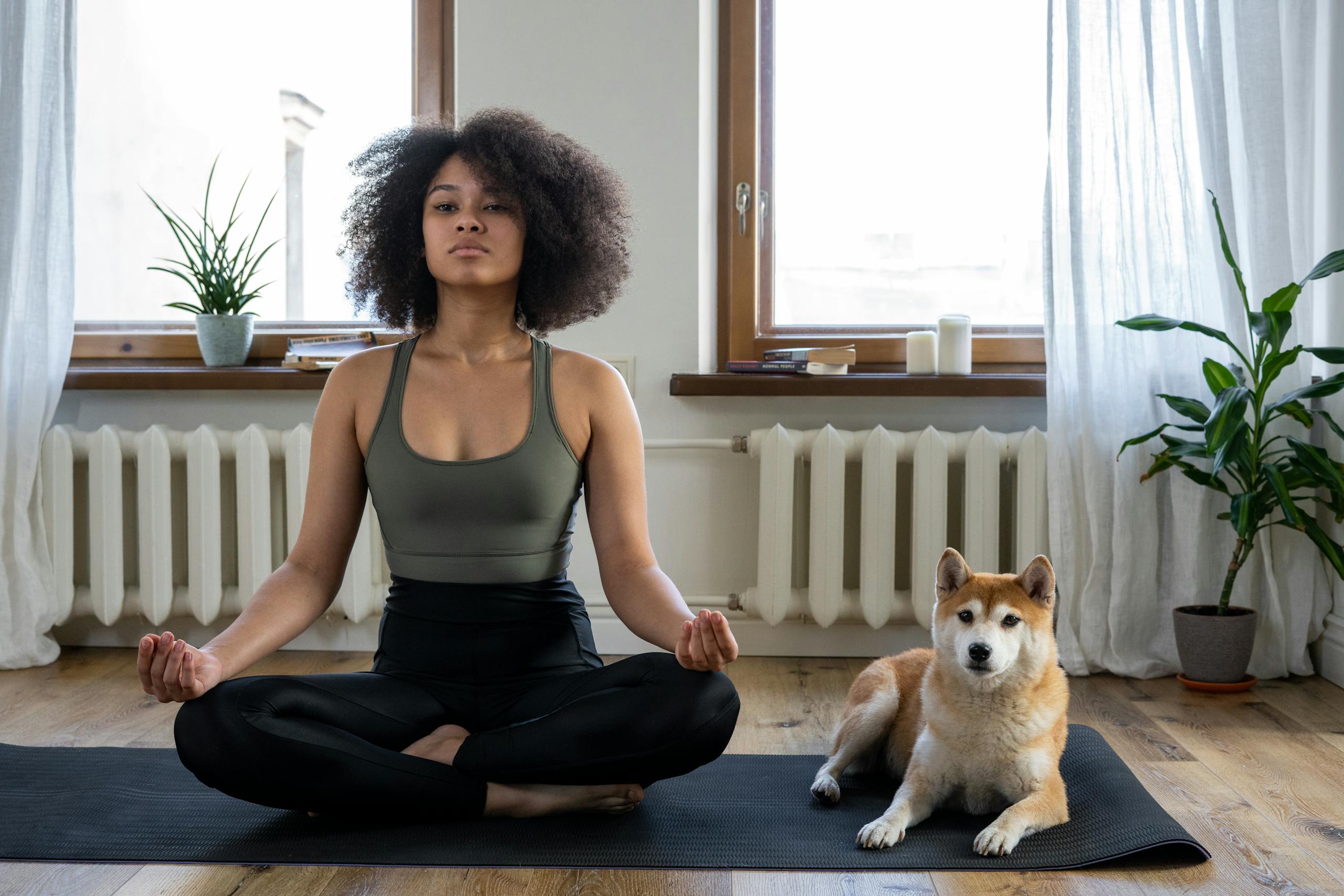
If you’ve found this article useful and want to go further, the full range of burnout resources, from early prevention through chronic recovery, lives in our Burnout and Stress Management hub. There’s a lot there that can help you build a more complete picture of what you’re dealing with and what actually works.
Curious about your personality type?
Our free MBTI assessment goes beyond the four letters. Get a full breakdown of your scores, see how your type shows up at work and in relationships.
Take the Free Test8-12 minutes · 40 questions · Free
About the Author
Keith Lacy is an introvert who’s learned to embrace his true self later in life. After 20 years in advertising and marketing leadership, including running agencies and managing Fortune 500 accounts, Keith now channels his experience into helping fellow introverts understand their strengths and build fulfilling careers. As an INTJ, he brings analytical depth and authentic perspective to every article, drawing from both professional expertise and personal growth.
Frequently Asked Questions
Are corporate wellness apps actually effective for preventing burnout?
Corporate wellness apps can be genuinely effective for burnout prevention when used consistently and as part of a broader approach that includes structural changes to workload and boundaries. Apps that offer mood tracking, breathing exercises, and sleep monitoring help users catch early warning signs and regulate their nervous systems before depletion becomes entrenched. They work best in the early stages of burnout risk, not as a substitute for addressing the conditions that cause it.
Which type of wellness app is best suited for introverts dealing with work stress?
Introverts tend to respond best to private, self-directed apps that don’t require social sharing or group participation. Mood tracking apps like Daylio, meditation tools like Headspace or Calm, and breathing apps like Breathwrk offer the kind of solitary, internally-focused experience that fits how introverts naturally process stress. Apps with gamified social features or team challenges often feel performative and create additional energy drain rather than relief.
Can a wellness app replace therapy or professional mental health support for burnout?
No. Wellness apps are self-help tools, not clinical interventions. For mild stress and early-stage burnout risk, they can provide meaningful support. For moderate to severe burnout, especially chronic burnout that has persisted over months or years, professional support from a therapist or psychologist is important and apps should be considered supplementary at best. Corporate platforms like Lyra Health and Spring Health are useful precisely because they offer a path from self-directed tools to professional care within a single system.
How long does it take for a wellness app routine to produce noticeable results?
Most people report noticing a difference in their baseline stress levels within two to four weeks of consistent daily use, though individual results vary significantly based on the severity of existing burnout, the consistency of use, and whether other stressors are being addressed simultaneously. Mood tracking apps often produce the earliest visible benefit because they create awareness of patterns that were previously invisible, even before the patterns themselves change. Breathing and meditation tools typically require four to six weeks of regular practice before the nervous system regulation effects become reliable.
Do employers have access to the data I enter into corporate wellness apps?
This depends entirely on the platform and your employer’s specific contract. Most reputable corporate wellness platforms like Lyra Health and Spring Health explicitly protect individual user data and only share aggregate, anonymized information with employers. That said, privacy policies vary, and it’s worth reading your platform’s terms before logging sensitive personal information. When in doubt, consumer apps like Headspace or Calm that you download independently and pay for yourself offer the clearest privacy protections because your employer has no contractual relationship with the provider.