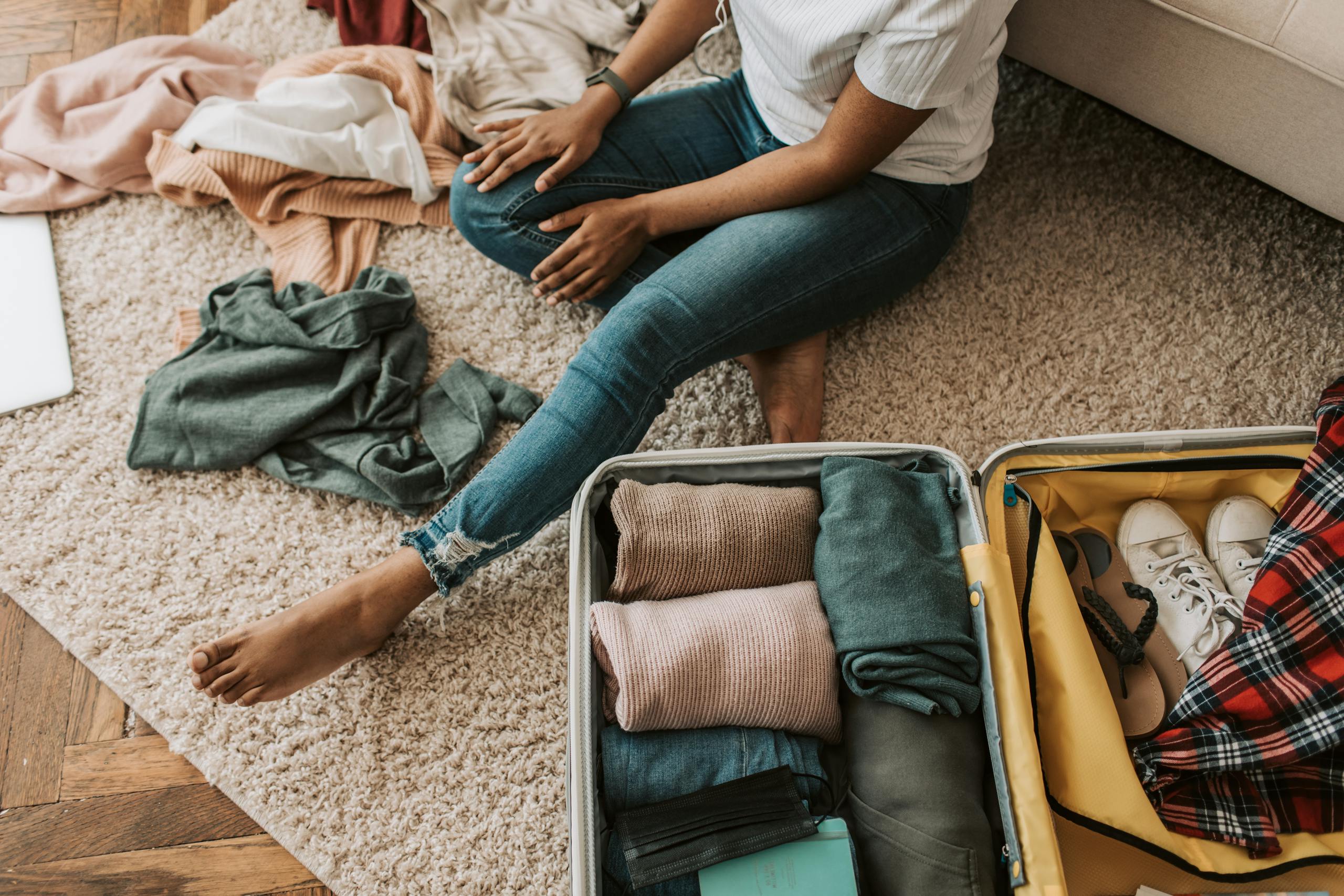
Last minute travel deals for solo travelers exist in abundance, but finding ones that actually work for someone who needs quiet, space, and a degree of predictability takes a different kind of search strategy. fortunatelyn’t about luck. It’s about knowing where to look, what to skip, and how to build a booking approach that fits the way your brain actually works.
Most advice on last minute travel assumes you’re the type who thrives on spontaneity and can roll with anything. Some of us aren’t wired that way, and that’s not a flaw to work around. It’s information to work with.
Solo travel, especially the kind booked close to departure, sits at an interesting intersection of freedom and friction. Getting the friction part right changes everything about the experience that follows.
This kind of decision, choosing to travel alone and booking late, often happens during a period of real personal change. If you’re in the middle of one of those stretches, our Life Transitions and Major Changes hub covers the broader terrain of how introverts handle upheaval, reinvention, and the quieter forms of growth that don’t always get named.

Why Do Introverts Actually Struggle With Last Minute Booking?
There’s a version of this question that gets answered dismissively. “You’re just anxious. Book the trip.” But the friction introverts feel around last minute travel deals isn’t anxiety dressed up as preference. It runs deeper than that.
What’s your personality type?
Take our free 40-question assessment and get a detailed personality profile with dimension breakdowns, context analysis, and personalised insights.
Discover Your Type8-12 minutes · 40 questions · Free
My mind works by building models. When I was running an agency and a client would call with a last minute pitch request, I didn’t just feel stressed. I felt the specific discomfort of being asked to perform without the internal architecture I’d built for that kind of work. The output might have looked fine from the outside. Inside, I was operating without the scaffolding I relied on.
Last minute travel triggers something similar. It’s not the unknown destination that’s the problem. It’s the compressed window for processing what that destination actually requires of you. Will the accommodation be loud? Will there be a kitchen, or will every meal require social navigation? What’s the transit situation at 11 PM when your flight lands?
These aren’t neurotic questions. They’re the operational details that determine whether a trip restores you or depletes you. Introverts process energy differently, and research published in PubMed Central on personality and physiological arousal points to real neurological differences in how introverted brains respond to stimulation. Knowing that, it makes complete sense that the planning phase carries weight.
The solution isn’t to become someone who doesn’t care about these details. It’s to build a system that answers them fast enough to take advantage of genuine deals before they disappear.
What Platforms Actually Surface the Best Last Minute Deals?
Not all deal platforms are built the same, and some are far more useful for solo travelers than others. The ones that show prices per person based on double occupancy are actively working against you. Solo supplements, the extra charge hotels add because you’re not splitting a room, can erase a deal entirely.
A few categories worth knowing:
Flight search engines with flexible date tools. Google Flights has a calendar view and a price grid that lets you scan an entire month at once. For last minute deals specifically, the “Explore” feature lets you search without a destination, which is genuinely useful if your priority is cost and you’re open about where you end up. Hopper tracks price patterns and sends alerts when fares drop below historical averages for a given route.
Hotel apps with same-day pricing. HotelTonight was built specifically for this. It surfaces rooms that hotels need to fill that night or within the next week, and it filters by neighborhood and vibe, which matters more than most apps acknowledge. You can sort by “Quiet” or “Charming” rather than just star rating. That’s not a small thing when you’re trying to assess whether a place will let you actually decompress.
Vacation rental platforms with last minute discounts. Many Airbnb and Vrbo hosts set automatic discounts for bookings made within a week of arrival. You can filter for these in search settings. The advantage here, beyond price, is the structure of the accommodation itself. A private apartment with a kitchen means you control your own rhythm in a way that a hotel room rarely allows.
Package deal aggregators. Sites like Scott’s Cheap Flights (now Going) and Secret Flying aggregate error fares and flash sales. These require the most flexibility because the deals are specific and time-sensitive, but for someone willing to move on short notice, they can produce genuinely remarkable prices on international routes.
The platform matters less than having a clear filter in your head before you start searching. Knowing your non-negotiables, private bathroom, reliable Wi-Fi, walkable neighborhood, quiet building, cuts the decision time dramatically and keeps you from getting lost in options that look attractive but won’t actually serve you.

How Do You Build a Personal Filter That Speeds Up the Decision?
Speed is the variable that makes last minute deals viable or not. If it takes you three days to decide whether a deal is right for you, most deals will be gone. The answer isn’t to decide faster by caring less. It’s to do the deciding work in advance.
Think of it as building a personal travel profile that you update once and reference every time. It covers four categories:
Energy requirements. What does your accommodation need to provide? Private space is usually non-negotiable for introverts, but the specifics vary. Some people need a balcony or outdoor access. Others need complete blackout curtains and silence. Some need a kitchen to avoid the daily social overhead of restaurants. Get specific about what you actually need versus what you’re willing to compromise on for the right price.
Destination type. City, coast, mountains, small town. Each has a different stimulation profile. I’ve found that cities are fine for me in small doses when I have a home base that’s genuinely quiet, but they drain me fast if the accommodation itself is noisy or the neighborhood is high-traffic. Coastal and mountain destinations tend to offer more natural decompression built into the environment.
Trip length sweet spot. Shorter trips often work better with last minute booking because there’s less to coordinate. A three or four day trip has a simpler logistics footprint than two weeks. Knowing your preferred trip length narrows the search immediately.
Hard limits. These are the things that would make a trip genuinely bad regardless of price. For me, that includes shared bathrooms in unfamiliar places, open-plan dormitory-style accommodation, and destinations that require significant social interaction to access basic needs. Knowing your hard limits means you can disqualify options instantly rather than spending mental energy evaluating them.
This connects to something I’ve written about separately, the way your personality type shapes major decisions at a structural level. If you want to think through how your MBTI type influences the way you approach planning and risk, this piece on MBTI life planning and how your type shapes every major decision goes into that in depth.
What Does Timing Actually Look Like for Last Minute Deals?
The phrase “last minute” covers a wider range than most people realize. There are actually two distinct windows, and they work differently.
The two-to-four week window. This is where the best combination of price and availability tends to exist. Airlines and hotels are starting to feel real pressure to fill remaining inventory, but there are still enough options that you’re not choosing between whatever’s left. For solo travelers, this window is often the most practical because it gives you enough time to handle logistics, visas if needed, any required vaccinations, and the mental preparation that makes a trip actually restorative rather than just technically accomplished.
The zero-to-seven day window. This is true last minute, and the deals here can be extraordinary, but the tradeoffs are real. Flight options are limited, accommodation choices narrow, and the compressed timeline means less mental preparation. Some introverts find this window energizing because the decision is essentially made for them by circumstance. Others find it genuinely stressful in ways that undermine the trip before it starts. Know which camp you’re in.
Day of the week matters more than most booking guides acknowledge. For flights, Tuesday and Wednesday departures tend to carry lower prices than weekend travel. For hotel bookings, Sunday through Thursday nights at business hotels often drop significantly because those properties are built around weekday corporate travel and have excess inventory on weekends. Resort-style properties tend to work the opposite way.
One pattern I’ve noticed from years of corporate travel, booking flights for client meetings across time zones, is that the pricing logic of airlines is genuinely counterintuitive. A flight that looks expensive on Monday might drop Thursday for the same departure. Setting a price alert and waiting two or three days, even within a last minute window, can make a meaningful difference.

How Do You Protect Your Energy When the Trip Itself Is Unstructured?
Last minute booking by definition means less pre-planned structure. For someone who processes the world deeply and quietly, that can feel like arriving without a map. The trick is building structure into the parts you can control, and releasing the parts you can’t.
What I’ve found works, both from my own travel and from watching how the introverts on my agency teams handled travel-heavy client work, is the concept of anchor points. You don’t need a minute-by-minute itinerary. You need two or three fixed points in each day that give your nervous system something to organize around.
An anchor point might be a specific coffee shop you’ve identified in advance where you’ll spend the first hour of each morning. It might be a confirmed dinner reservation on the first night so you’re not making that decision when you’re already tired from travel. It might be a specific museum or neighborhood you’ve decided you’ll visit on day two, so that day has a shape even if the rest is open.
This approach lets you preserve the spontaneity that makes last minute travel interesting, the unplanned walk that turns into something memorable, the local recommendation you’d never have found in a guidebook, while keeping the underlying structure that makes a trip sustainable for someone who processes the world at depth.
There’s a related concept worth considering here. Highly sensitive people, a trait that overlaps significantly with introversion, often find that their sensitivity actually deepens over time in ways that require updated strategies. This piece on how HSP sensitivity changes across a lifetime is worth reading if you find that your travel needs have shifted as you’ve gotten older. Mine certainly have.
The unstructured nature of last minute travel can also be a genuine gift if you approach it right. When you haven’t had six weeks to build expectations about a place, you arrive more open. That openness, the kind that comes from not having a Pinterest board full of what the trip is “supposed” to look like, can produce some of the most authentic travel experiences available.
What Should You Actually Pack for a Trip Booked Under Pressure?
Packing for last minute travel is its own skill set, and it’s one that rewards introverts who’ve thought about it in advance. The goal is a bag that works for multiple destination types without requiring you to make a hundred micro-decisions while you’re already in a compressed booking window.
A few principles that have served me well:
Build a permanent packing list and keep it updated. Not a list you recreate each time, but a master document that reflects exactly what you need for a three-to-five day trip in warm weather and a separate version for cold weather. When a deal comes up, you consult the list, not your memory. This removes an entire category of decision fatigue from the process.
Keep your toiletry bag pre-packed. This sounds almost too simple, but having a dedicated travel toiletry kit that lives in your bag between trips, stocked with travel-sized versions of everything you use, removes one of the most time-consuming parts of last minute packing. You grab it and go.
Pack for the person you actually are, not the person you imagine being on vacation. I spent years packing books I never read and workout clothes I never wore because I had an aspirational image of what a good traveler did. Solo travel stripped that away. Now I pack one novel I’m genuinely in the middle of, comfortable clothes for walking, and one slightly nicer option in case I want it. That’s it.
Include your recharge tools. Noise-canceling headphones are non-negotiable for me. A journal. A small speaker if music helps you decompress in a new space. These aren’t luxuries. They’re the infrastructure of recovery, and they’re worth the weight.
The broader principle here connects to something I’ve found true across many areas of introvert life: the more clearly you understand what you actually need, as opposed to what you think you should need, the more efficiently you can provide it for yourself. This piece on embracing solitude and what changes when you stop fighting it gets at that distinction in a way I find genuinely useful to return to.

How Do You Handle the Social Friction of Traveling Alone on Short Notice?
There’s a particular kind of social friction that comes with solo travel that doesn’t get talked about enough. It’s not the loneliness that gets all the attention in travel writing. It’s the constant low-level social negotiation that solo travel requires, and the way that negotiation gets amplified when you haven’t had time to mentally prepare.
Checking in alone. Eating alone in restaurants that aren’t designed for it. Asking for directions. Dealing with tour operators or transportation staff who assume you’re meeting someone. None of these are catastrophic. But they accumulate, and for someone who processes social interaction at depth, that accumulation is real.
A few approaches that reduce the friction without eliminating the experience:
Eat at the bar. Counter seating at restaurants is genuinely designed for solo diners in a way that table seating isn’t. You’re not occupying a two-top that a host wishes were available for a couple. You’re in your natural position. Many solo travelers find that bar seating also produces the best conversations, the kind that happen because someone is genuinely curious rather than obligated.
Use apps that answer questions you’d otherwise have to ask people. Google Maps for transit. Google Translate for menus. The hotel app for checkout time. Every question you can answer without a social exchange is energy preserved for the interactions that actually matter to you.
Give yourself explicit permission to decline. Tour groups, hostel activities, organized social events at your accommodation. These are optional. Always. You don’t owe anyone an explanation for choosing the quiet afternoon over the group excursion. This sounds obvious, but many introverts need to hear it stated plainly before they actually act on it.
What I’ve found, both from my own travel and from conversations with people I’ve mentored over the years, is that the social confidence to do solo travel well isn’t really about being more extroverted. It’s about being more clearly yourself. The introverts I know who travel most comfortably alone are the ones who’ve done the internal work of understanding what they need and stopped apologizing for it.
That kind of self-knowledge develops in layers, and it often deepens through experiences that push you into unfamiliar territory. Interestingly, some of the best models for that kind of deep, patient listening and self-understanding come from unexpected places. This piece on HSP academic advisors and how deep listening changes student outcomes explores that quality of attention in a different context, but the underlying principle translates directly to how introverts learn to attend to their own needs.
What Are the Hidden Costs That Erode Last Minute Deals?
A deal that looks compelling at the headline price can become significantly less compelling once you account for the full cost of the trip. This is where careful thinking before you book pays off in a concrete way.
Solo supplements are the most common culprit. Many tour operators and some hotels charge single travelers a premium that can add 30 to 50 percent to the base price. Always check whether the price shown assumes double occupancy and what the actual solo rate is before you get excited about a number.
Baggage fees on budget airlines can turn a cheap fare into a moderate one. Know whether your preferred carry-on fits the airline’s dimensions and weight limits before you book. On some budget carriers, a checked bag can cost as much as the base fare itself.
Transportation from the airport matters more than most booking guides acknowledge. A cheap hotel in a location that requires a 45-minute taxi ride from the airport adds cost and, more importantly for introverts, adds a significant energy overhead to arrival day. Proximity to transit or the ability to walk from the airport to your accommodation is worth paying for.
Meal costs vary dramatically by destination and neighborhood. A deal to a city where eating out is expensive can cost more in daily food than a slightly pricier trip to a place where you can eat well for very little. If you’re booking accommodation with a kitchen, factor in the realistic cost of groceries in that destination.
Travel insurance is worth including in your calculation, especially for last minute trips where you’ve had less time to verify the reliability of your accommodation or transportation. A policy that covers trip interruption and medical emergencies is a small cost relative to the exposure it covers, and there’s meaningful evidence linking travel-related stress to health impacts, particularly for people who are already sensitive to environmental and social stimulation. Removing financial uncertainty from the equation is one fewer thing your nervous system has to carry.

How Do You Make the Most of Wherever You Land?
There’s a version of solo travel that’s about checking destinations off a list. That’s not what I’m talking about, and I suspect it’s not what you’re after either.
The kind of travel that actually changes something in you, that gives you perspective you couldn’t have found at home, tends to happen when you’re present in a place rather than performing a version of travel for some imagined audience. Last minute trips, paradoxically, can be better for this than heavily planned ones. You arrive with fewer fixed expectations, which means you’re more available to what’s actually there.
What I’ve found most valuable about solo travel, especially the trips I’ve taken during periods of real transition in my career and personal life, is the way it creates a kind of forced clarity. When you’re alone in an unfamiliar place, the noise of your ordinary life drops away. The things that were bothering you before you left either clarify into something you can actually address, or reveal themselves as smaller than they seemed.
That’s not magic. It’s what happens when a mind that processes deeply finally gets the space to do what it does naturally, without the constant interruption of obligation and familiarity. Psychology Today’s work on why introverts need deeper conversations touches on this need for meaningful engagement over surface-level interaction, and travel, done solo and done intentionally, can be one of the most effective ways to access that depth.
My practical advice for making the most of wherever you land on short notice: choose one thing per day that you’re genuinely curious about, not obligated to see. Let everything else be optional. Walk without a destination for at least an hour. Eat something you’ve never eaten before. Sit in a public space and watch rather than participate. These aren’t tourist activities. They’re the things that actually leave a mark.
And when the trip is over, give yourself the transition time you need before re-entering your ordinary life. A buffer day at home, even half a day, makes a significant difference in how well you integrate what you experienced rather than having it immediately buried under the demands waiting for you.
Solo travel, especially the last minute kind, fits naturally into a broader conversation about how introverts handle change, reinvention, and the quieter forms of growth that don’t always get recognized. You’ll find more on that across the articles in our Life Transitions and Major Changes hub, which covers everything from career pivots to the internal work of becoming more fully yourself.
Curious about your personality type?
Our free MBTI assessment goes beyond the four letters. Get a full breakdown of your scores, see how your type shows up at work and in relationships.
Take the Free Test8-12 minutes · 40 questions · Free
About the Author
Keith Lacy is an introvert who’s learned to embrace his true self later in life. After 20 years in advertising and marketing leadership, including running agencies and managing Fortune 500 accounts, Keith now channels his experience into helping fellow introverts understand their strengths and build fulfilling careers. As an INTJ, he brings analytical depth and authentic perspective to every article, drawing from both professional expertise and personal growth.
Frequently Asked Questions
Are last minute travel deals actually worth it for solo travelers who need to plan carefully?
Yes, with the right preparation done in advance. The secret is separating the work of knowing yourself from the work of booking the trip. If you’ve already defined your non-negotiables, your energy requirements, and your hard limits, the actual booking process becomes much faster. Last minute deals work well for solo travelers who’ve done that internal preparation beforehand, so when a deal appears, the evaluation is quick rather than overwhelming.
Which types of accommodation offer the best last minute value for solo introverts?
Private vacation rentals with kitchens tend to offer the best combination of value and introvert-friendly structure. They eliminate the solo supplement problem common with hotels, provide private space for genuine decompression, and reduce the daily social overhead of eating every meal in restaurants. Same-day hotel apps like HotelTonight are worth checking for urban destinations, particularly for business hotels on weekend nights when rates drop significantly due to lower corporate demand.
How far in advance should an introvert book to get good deals without too much uncertainty?
The two-to-four week window tends to be the sweet spot. Prices are genuinely lower than peak booking periods, enough inventory remains that you’re not choosing between whatever’s left, and there’s still enough time for the mental preparation that makes a trip restorative rather than depleting. The zero-to-seven day window can produce remarkable prices but works better for introverts who’ve traveled solo enough to feel genuinely comfortable with minimal preparation time.
What are the most common hidden costs that erode last minute solo travel deals?
Solo supplements on hotel and tour pricing are the most significant, sometimes adding 30 to 50 percent to a base price that assumed double occupancy. Baggage fees on budget airlines can rival the cost of the base fare itself. Airport transportation in cities where your accommodation is far from transit adds both cost and energy overhead. Factoring in the realistic daily cost of meals at your destination, which varies enormously by city and neighborhood, completes the picture of what a deal actually costs.
How do introverts manage energy on trips booked with little time to mentally prepare?
The anchor point approach works well here. Rather than a detailed itinerary, identify two or three fixed points in each day that give your nervous system something to organize around. A confirmed dinner reservation on arrival night, a specific coffee shop for morning hours, one planned activity per day. Everything else stays open. This preserves the spontaneity that makes last minute travel interesting while providing enough structure to prevent the decision fatigue that accumulates when every hour is unplanned. Packing your recharge tools, noise-canceling headphones, a journal, familiar comfort items, matters more on these trips than on heavily planned ones.