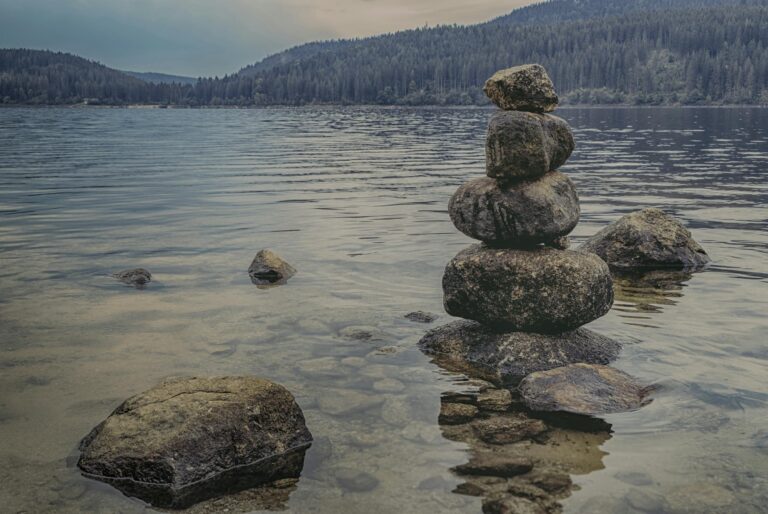
Solo travel to Greece offers introverts something most group tours never could: the rare permission to move at the pace of your own mind. Ancient ruins, island ferries, and quiet harbor cafes create the conditions where deep internal processing actually feels like the point, not a problem to overcome. Greece rewards the traveler who wants to sit with something longer than a selfie allows.
What I’ve come to understand, after years of forcing myself into extroverted modes of experiencing the world, is that certain places don’t just welcome solitude. They demand it. Greece is one of those places. The silence inside the Parthenon at 8 AM before the crowds arrive, the particular stillness of a Santorini alley at dusk, the way a taverna owner in a small Peloponnese village will sit with you for twenty minutes without needing to fill the air with words. These aren’t accidental. They’re invitations.
Solo travel to Greece, for an introvert, isn’t just a vacation. It’s a form of reckoning.
This kind of trip sits squarely in the territory of major life transitions, those moments when you choose to step outside your ordinary context and see what remains. Our Life Transitions and Major Changes hub explores the full range of those crossroads moments, and solo travel to a place like Greece adds a dimension that few other experiences can match: you’re not just changing your geography, you’re changing your relationship with your own company.

Why Does Greece Feel Different From Other Solo Destinations?
I’ve worked with clients across Europe, and I’ve traveled to a fair number of cities for pitches, presentations, and the kind of agency work that puts you in a conference room in Frankfurt one week and a production studio in Amsterdam the next. That kind of travel is depleting in a very specific way. You’re present in a place but never actually there.
What drains your social battery?
Not all social exhaustion is the same. Our free quiz identifies your specific drain pattern and gives you personalised recharging strategies.
Find Your Drain PatternUnder 2 minutes · 8 questions · Free
Greece hit differently the first time I went alone. There’s a texture to Greek time that resists the kind of efficiency-obsessed scheduling that used to dominate my calendar. Nobody is rushing you through your meal. The ferry from Athens to Hydra runs when it runs. The monastery at Meteora doesn’t care that you have a 2 PM check-in somewhere else. That friction, which would have maddened a younger, more performance-oriented version of me, turned out to be exactly what my INTJ brain needed.
Greece forces a different kind of attention. The landscape is ancient in a way that makes your own timeline feel appropriately small. When you’re standing at Delphi and you realize people have been standing in that same spot asking the same unanswerable questions for over two thousand years, something loosens in you. The pressure to optimize the trip evaporates.
For introverts specifically, that loosening is significant. Many of us carry a constant, low-grade tension around whether we’re experiencing things correctly, whether we’re engaging enough, whether our preference for sitting quietly with a view constitutes “wasting” the trip. Greece dissolves that anxiety. Sitting quietly with a view is, in fact, the whole point.
There’s also the matter of Greek hospitality, which is warm without being intrusive. A shopkeeper in Nafplio might invite you to try something, share a brief story about the town, and then leave you entirely to your own thoughts. That calibration, genuine warmth without social obligation, is a gift to the introvert traveler.
What Does Traveling Alone Actually Reveal About You?
One of the strangest things about leading an advertising agency for two decades was how rarely I was ever truly alone with my own thinking. Even my private moments had an audience in my head: clients I needed to anticipate, team members I needed to manage, pitches I needed to sharpen. My internal life was, in a sense, always performing for someone.
Solo travel strips that away. On a week-long trip through the Peloponnese a few years back, I remember sitting in a small restaurant in Monemvasia, a medieval fortress town built into a rock jutting out of the sea. I had no meetings the next day. No one knew exactly where I was. My phone had one bar of signal. And for the first time in what felt like years, my mind went completely quiet.
What filled that quiet was interesting. Not anxiety, as I’d half-expected. Not the restless itch for stimulation that I used to mistake for productivity. What came up was clarity. About what I actually valued. About which parts of my professional identity I’d constructed for external approval versus which parts were genuinely mine. About the kind of work I wanted to do and the kind I’d been doing out of inertia.
That experience resonates with something I’ve explored in writing about embracing solitude and what changes when you stop fighting it. There’s a difference between solitude you endure and solitude you inhabit. Greece, for me, was the first time I truly inhabited it.
What solo travel reveals depends on how honest you’re willing to be with yourself during it. Some people fill every moment with podcasts and Instagram stories, essentially recreating the noise of home in a more photogenic setting. That’s fine, but it’s not what I’m talking about. What I mean is the kind of travel where you let the gaps stay gaps. Where you don’t immediately reach for your phone when the ferry is delayed. Where you let yourself be bored, or sad, or unexpectedly moved by something you can’t quite name.
Those are the moments that teach you something.

How Does Your Personality Type Shape the Way You Experience Greece?
As an INTJ, my experience of travel is heavily filtered through meaning-making. I’m not primarily drawn to novelty for its own sake. What I want is to understand something more deeply than I did before I arrived. Greece, with its layered history and its philosophical weight, is almost absurdly well-suited to that orientation.
But I’ve watched people with different personality types move through Greece in completely different ways, and each approach reveals something true. I once brought a small group of agency creatives on a working retreat to Crete, a mix of personality types that made for fascinating observations. One of my team members, an INFP, spent an entire afternoon in a tiny Byzantine church in Rethymno, barely speaking, just absorbing. She came out of that experience with three pages of notes that became the conceptual foundation for a campaign we were developing. Her processing was entirely internal, entirely emotional, and entirely valid.
Another team member, an extroverted ENFP, had a completely different experience of the same trip. She was energized by the markets, the spontaneous conversations with locals, the chaotic beauty of a busy harbor. She was exhausted by the long stretches of quiet that the rest of us found restorative.
What I took from watching those two people experience the same place so differently was that Greece doesn’t have one face. It has as many faces as you need it to have. The introverted traveler can find profound solitude in the ruins at Olympia on a weekday morning. The more extroverted traveler can find connection and energy in the social density of Mykonos or Thessaloniki’s bar district. The country accommodates a wide range of needs.
That said, the particular qualities of Greek culture, its philosophical tradition, its comfort with silence and contemplation, its emphasis on depth of relationship over breadth of social contact, do seem to align naturally with introverted values. Psychology Today’s writing on why introverts crave deeper conversations captures something I recognized immediately in Greek social culture: the preference for one meaningful exchange over ten surface-level ones.
How your personality type shapes what you need from major experiences is something worth thinking about before you book anything. The framework I’ve found most useful for that kind of self-assessment is explored in detail in this piece on MBTI life planning and how your type shapes every major decision. Understanding your type before you travel doesn’t constrain the experience, it helps you design one that actually works for who you are.
Which Parts of Greece Speak Most Directly to the Introverted Mind?
Not all of Greece is equally suited to the solo introvert. Mykonos in August is a different planet from the Mani Peninsula in October. Part of what makes solo travel to Greece so rewarding is the range of experiences available, and the degree to which you can curate your own version of the country.
A few places I’d point toward specifically:
The Mani Peninsula in the southern Peloponnese is one of the most dramatically quiet places I’ve ever been. The landscape is stark, almost lunar, with stone towers and Byzantine chapels tucked into hillsides. The villages are small and the pace is genuinely slow. There’s no performance here, no tourism infrastructure designed to keep you entertained. You have to bring your own interior life, and that’s exactly the point.
Hydra is a car-free island about two hours from Athens by ferry. Donkeys carry luggage. The harbor is beautiful but not overwhelming. Once you walk ten minutes from the port, you can find yourself entirely alone on a path above the sea. Hydra has attracted writers and artists for decades, and you can feel why. It has the quality of a place that actively supports concentration.
Nafplio, the first capital of modern Greece, is a small city with a disproportionate amount of beauty and history. It’s walkable, not crowded, and has the kind of atmospheric old town where you can spend an entire morning getting lost without any particular destination. The Palamidi fortress above the city offers a view that seems to reorganize your sense of scale in a useful way.
Meteora deserves its own category. The monasteries built into the tops of enormous rock formations in central Greece are among the most extraordinary things I’ve ever seen. Going early in the morning, before the tour buses arrive, is essential. In that window, the silence is almost physical. Whatever you believe spiritually, something about standing in a monastery perched on a rock pillar above a valley tends to quiet the noise in your head.
Thessaloniki is Greece’s second city and is often overlooked in favor of Athens, which is a mistake. It has a more intimate scale, an extraordinary food culture, and a Byzantine history that Athens doesn’t share. The city has a university energy that keeps it intellectually alive without being overwhelming. For the introvert who wants urban texture without Athenian intensity, Thessaloniki is worth serious consideration.

How Do You Manage the Social Demands of Solo Travel When You’re Introverted?
There’s a persistent myth that solo travel is inherently lonely, and a related myth that introverts are naturally immune to loneliness. Neither is true. Solo travel has its own social texture, and managing that texture well is actually one of the more interesting challenges of traveling alone as an introvert.
What I’ve found is that the social demands of solo travel are actually quite manageable once you stop trying to replicate group travel dynamics. In a group, there’s an implicit obligation to be present and engaged with your companions almost continuously. Solo travel removes that obligation entirely. Every social interaction becomes voluntary, which paradoxically makes them more enjoyable.
A brief conversation with a museum guide in Athens about a specific artifact can be genuinely satisfying in a way that an evening of enforced group socializing rarely is. A twenty-minute exchange with a boat captain on a ferry from Piraeus, talking about the changes he’s seen in Greek tourism over thirty years, can stay with you for weeks. These interactions have the depth that introverts tend to find energizing rather than draining, because they’re chosen and bounded.
The key challenge is managing the moments when loneliness does surface, and it will. There’s a particular quality of loneliness that arrives at dinner in a beautiful place when you wish you had someone to share it with. I’ve felt it. Most solo travelers have. What I’ve learned is that fighting it makes it worse. Sitting with it, acknowledging it, and letting it pass tends to work better than immediately reaching for your phone to manufacture connection.
There’s interesting work on how sensitivity and emotional processing change across a lifetime that speaks to this. The piece on HSP development across the lifespan and how sensitivity changes explores how many highly sensitive people actually become better at managing intense emotional experiences as they mature, not by becoming less sensitive, but by developing more nuanced relationships with their own inner states. Solo travel accelerates that development in ways that staying home simply doesn’t.
Practically speaking, a few things help. Choosing accommodations with common areas, a good hotel lobby, a guesthouse with a shared breakfast table, gives you optional social contact without requiring it. Learning a handful of Greek phrases earns you a quality of warmth from locals that English-only travelers rarely experience. And building in deliberate recovery time after any high-stimulation day, a museum, a busy market, a long ferry with crowds, keeps you from accumulating a deficit that turns the whole trip sour.
What Does Greece Ask of You That Other Destinations Don’t?
Greece asks you to slow down in a way that isn’t always comfortable. It asks you to accept imperfect logistics with something approaching equanimity. Ferries run late. Restaurants open when they open. The afternoon siesta is real and it will affect your plans. For someone who spent twenty years running agencies on tight deadlines and tighter budgets, that initial friction was genuinely uncomfortable.
What I eventually understood was that the discomfort was the lesson. My INTJ tendency to plan, systematize, and optimize was being gently but firmly refused by the entire country. And in that refusal was an invitation to experience something I’d been avoiding: the present moment, unscheduled and unoptimized.
Greece also asks you to engage with scale in a way that’s philosophically unsettling in the best possible sense. The weight of history in that country is not decorative. Standing at the site where Socrates walked and taught, or in the theater at Epidaurus where acoustics so perfect that you can hear a coin drop from the top row, or at the oracle site at Delphi where generations of people came to ask questions they couldn’t answer alone, you’re confronted with the continuity of human struggle and human questioning in a way that’s hard to dismiss.
That confrontation is, I’d argue, particularly valuable for introverts who have spent years inside their own heads. It contextualizes your internal life without diminishing it. Your questions matter. Your inner world has weight. And you are not the first person to stand somewhere beautiful, feel something complicated, and wonder what it means.
There’s a quality of attention that Greece demands that I’ve seen described in research on how environment affects cognitive processing. A study published in Frontiers in Psychology examined how environmental factors shape psychological wellbeing and attention, findings that resonate with what I experienced in Greece: when your surroundings are genuinely beautiful and historically resonant, your attention shifts from internal rumination toward something more expansive. That shift tends to be restorative rather than depleting.

How Does Solo Travel to Greece Connect to Broader Self-Understanding?
There’s a version of solo travel that’s purely recreational, and there’s nothing wrong with that. But for many introverts, solo travel, especially to a place as layered as Greece, becomes something more. It becomes a form of self-study.
I’ve noticed this pattern in conversations with other introverts who’ve traveled alone. They don’t primarily talk about what they saw. They talk about what they thought about. What they figured out. What they let go of. The external experience is the container; the internal experience is the content.
For me, the trip I took to the Peloponnese in my early fifties was the first time I seriously examined the gap between the professional identity I’d constructed and the person I actually was. Running agencies had required me to perform a version of leadership that was louder, more socially dominant, and more extroverted than anything that came naturally to me. I’d gotten good at the performance. But it had cost something.
Sitting alone in Monemvasia with no agenda and no audience, I had to face that cost honestly. That reckoning wasn’t comfortable. But it was necessary, and Greece gave me the space to have it.
That kind of deep self-examination connects to something I think about in the context of highly sensitive people and the way their inner lives develop over time. The work of advisors and mentors who practice deep, attentive listening, as explored in this piece on HSP academic advisors and the power of deep listening, points to something relevant here: sometimes the most important thing isn’t advice or information. It’s the quality of attention, whether from another person or from a place, that creates the conditions for genuine insight.
Greece, at its best, pays that kind of attention to you. It holds you without demanding anything in return. And in that holding, you tend to find things you didn’t know you were looking for.
The connection between travel and identity is also worth examining through the lens of psychological research on restoration and attention. Work published through PubMed Central on restorative environments suggests that natural and historically rich settings genuinely support cognitive restoration in ways that ordinary environments don’t. For introverts who tend to run high on internal processing, that restoration isn’t a luxury. It’s a functional necessity.
Additional research available through PubMed Central’s work on solitude and wellbeing supports what many introverts know intuitively: chosen solitude, the kind you seek rather than endure, has measurable positive effects on psychological health. Solo travel to a place like Greece is perhaps the most intentional form of chosen solitude available.
What Should You Actually Do Differently on a Solo Trip to Greece?
After everything I’ve said about the philosophical dimensions of solo travel to Greece, let me be practical for a moment. Because the internal experience I’ve described doesn’t happen automatically. It requires some deliberate choices about how you structure the trip.
Leave more space than you think you need. The instinct when planning a trip to Greece is to fill every day with sites and islands and experiences, because there’s so much available. Resist that instinct. The most meaningful moments I’ve had in Greece happened in the unscheduled gaps, not on the itinerary. Build in full days with no agenda. Let yourself wander.
Stay longer in fewer places. The introvert’s travel instinct, in my experience, is to go deep rather than wide. A week in one region of Greece will give you more than a week hopping between five islands. You need time to let a place settle into you. That takes longer than a day trip allows.
Choose accommodations that support solitude. Small family-run guesthouses in quieter towns tend to offer the combination of warmth and privacy that introverts find ideal. You’re not invisible, but you’re not obligated to perform sociability either. The owner might bring you coffee in the morning and leave you entirely alone for the rest of the day. That’s a gift.
Visit major sites at non-peak times. The Acropolis at 8 AM when it opens, or late afternoon on a weekday, is a completely different experience from the midday crush. Delphi, Olympia, Mycenae, all of these sites have quiet windows if you’re willing to plan around them. Those windows are when the place actually speaks to you.
Bring something to read that connects to where you are. I’ve traveled with Mary Renault’s novels about ancient Greece, with Patrick Leigh Fermor’s writing about the Mani, with translations of the pre-Socratics. Reading about a place while you’re in it creates a kind of layered attention that’s deeply satisfying to the introverted mind. The text and the landscape illuminate each other.
And finally: don’t document everything. Some of the most important moments I’ve had in Greece were ones I didn’t photograph, didn’t post, didn’t share. They existed only in my own experience, and they’re still with me in a way that the documented moments sometimes aren’t. The introvert’s gift for deep internal processing is most available when the camera is put away.

Solo travel to Greece is one of many meaningful ways introverts process major life transitions and find clarity about who they are and what they want. If this kind of reflective, experience-based approach to change resonates with you, the full range of those themes lives in our Life Transitions and Major Changes hub.
Running on empty?
Five drain profiles, each with specific triggers, warning signs, and a recharging playbook.
Take the Free QuizUnder 2 minutes · 8 questions · Free
About the Author
Keith Lacy is an introvert who’s learned to embrace his true self later in life. After 20 years in advertising and marketing leadership, including running agencies and managing Fortune 500 accounts, Keith now channels his experience into helping fellow introverts understand their strengths and build fulfilling careers. As an INTJ, he brings analytical depth and authentic perspective to every article, drawing from both professional expertise and personal growth.
Frequently Asked Questions
Is Greece a good destination for introverts traveling alone?
Greece is exceptionally well-suited to solo introvert travel, particularly if you move beyond the most tourist-dense areas. The country’s philosophical tradition, its cultural comfort with quiet and contemplation, and its range of deeply atmospheric, historically rich sites create conditions where solitude feels purposeful rather than isolating. Regions like the Mani Peninsula, islands like Hydra, and smaller cities like Nafplio offer the combination of beauty and genuine quiet that introverts tend to find restorative.
How do you handle loneliness during solo travel in Greece?
Loneliness surfaces for most solo travelers at some point, regardless of personality type. What tends to help is accepting it rather than immediately filling the space with distraction. Greek culture offers natural, low-pressure social contact through its hospitality traditions, brief exchanges with shopkeepers, taverna owners, or fellow travelers that have depth without obligation. Choosing accommodations with optional communal spaces, like guesthouses with shared breakfast areas, also provides social texture without requiring sustained performance.
Which Greek destinations are best for a first solo trip?
For a first solo trip, Athens combined with the Peloponnese region offers an excellent balance of accessibility and depth. Athens has strong infrastructure for independent travelers and world-class historical sites. The Peloponnese, reachable by bus or rental car, offers quieter towns like Nafplio and dramatic sites like Mycenae and Epidaurus without overwhelming crowds. Hydra is an ideal island for first-time solo travelers who want island beauty without the logistical complexity of more remote destinations.
How long should an introvert plan for a solo trip to Greece?
Ten days to two weeks is the range that tends to work best. Shorter trips don’t allow enough time to decompress from travel stress and settle into the slower pace that makes Greece so rewarding. Longer trips are possible and often deeply satisfying, but two weeks gives you enough time to go deep in two or three regions without the exhaustion of constant movement. The principle of staying longer in fewer places applies especially strongly to introvert travelers, who tend to need time to absorb a place before it gives up its best qualities.
What do introverts tend to gain from solo travel to Greece that they can’t get from group travel?
Solo travel removes the social obligation that makes group travel depleting for introverts. Every interaction becomes chosen rather than obligatory, which paradoxically makes those interactions more meaningful. More significantly, solo travel to a place as historically and philosophically rich as Greece creates conditions for the kind of deep internal processing that introverts do naturally but rarely have space for in ordinary life. Many introverts report that solo travel to Greece prompted significant clarity about values, priorities, and identity in ways that group travel, with its continuous social demands, simply doesn’t allow.