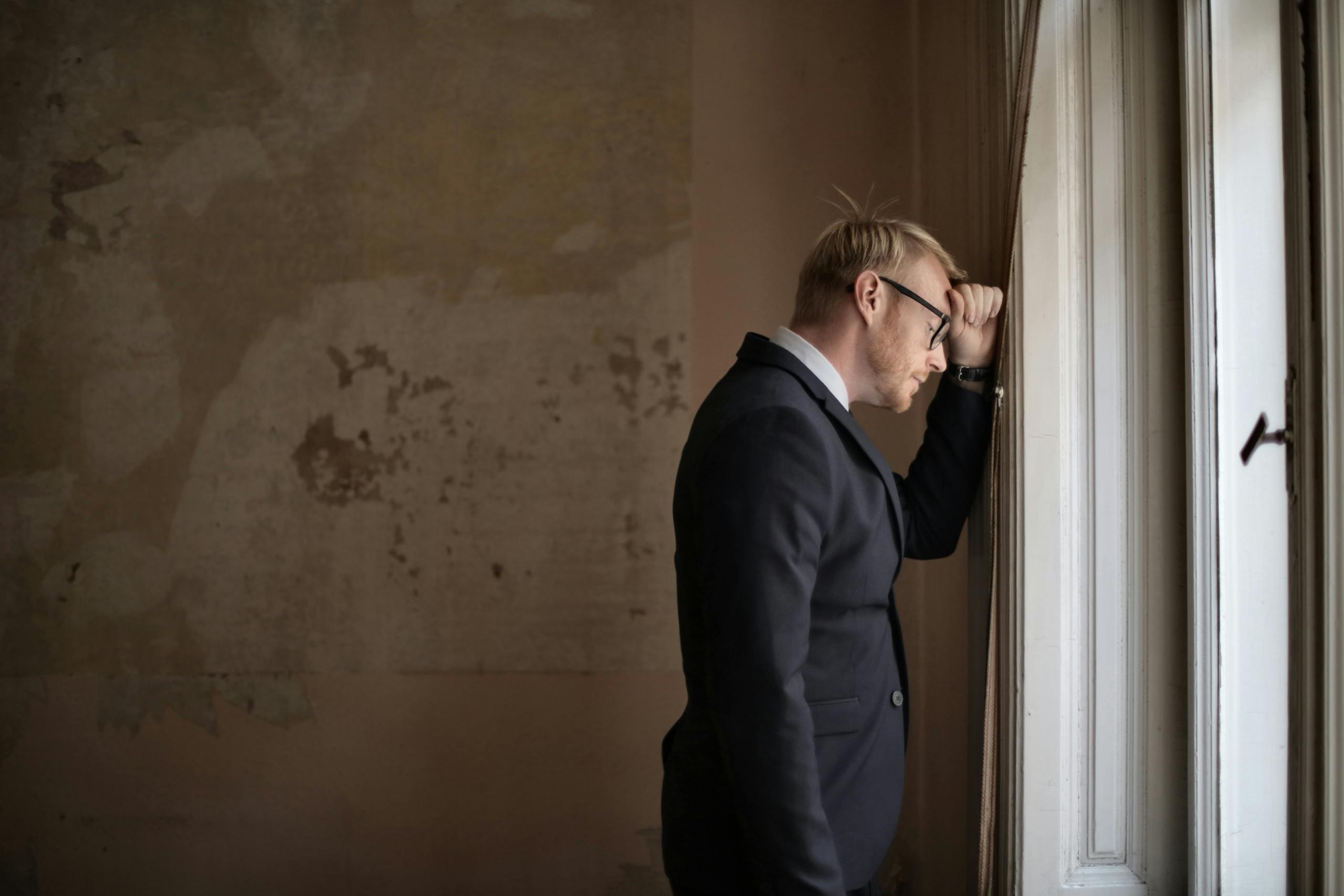

Calling in sick due to burnout is legitimate, even when it doesn’t feel that way. Burnout is a state of physical and emotional exhaustion that impairs your ability to function, and taking a sick day to address it is not weakness or avoidance. It’s one of the few concrete actions you can take before the situation becomes harder to reverse.
That said, calling in is only the beginning. What you do with that time, and what you do after, matters enormously. And for introverts especially, the decision to call in often arrives wrapped in guilt, second-guessing, and a quiet dread that rest alone won’t fix whatever is actually wrong.

There’s a lot more to unpack here than a simple yes-or-no answer. If you want the broader picture on how stress and burnout intersect for introverts across every stage of work life, our Burnout and Stress Management hub covers it thoroughly. But this article focuses specifically on the moment before you pick up the phone, what’s actually happening in your body and mind, and how to use that day off in a way that actually moves the needle.
Is Burnout a Valid Reason to Call in Sick?
Yes. Full stop. Burnout is recognized by the World Health Organization as an occupational phenomenon with measurable symptoms including chronic exhaustion, mental distance from your work, and reduced professional effectiveness. It’s not a mood. It’s not laziness. And it doesn’t require a fever to count.
What’s your personality type?
Take our free 40-question assessment and get a detailed personality profile with dimension breakdowns, context analysis, and personalised insights.
Discover Your Type8-12 minutes · 40 questions · Free
What makes this hard for introverts, in my experience, is that we tend to be quiet sufferers. We internalize. We analyze. We convince ourselves that what we’re feeling is a personal failing rather than a physiological and psychological response to prolonged overextension. I did this for years while running my agency. I could push through client crises, pitch marathons, and 60-hour weeks because I told myself that’s what leadership required. What I didn’t recognize was that each of those pushes was costing me something I wasn’t tracking.
The cost showed up eventually. Not in a dramatic collapse, but in a slow erosion. I stopped caring about the work I used to love. Meetings that once felt manageable started feeling unbearable. My thinking, which had always been one of my strongest assets as an INTJ, got foggy. That fog is real. It’s one of burnout’s most disorienting symptoms, and it’s a signal that your system needs more than a weekend.
A review published in PubMed Central examining occupational burnout found consistent links between burnout and impaired cognitive function, including reduced attention, memory difficulties, and slower processing speed. These aren’t soft complaints. They’re measurable changes in how your brain operates. Calling in sick when you’re experiencing them isn’t a luxury. It’s a practical response to a functional problem.
Why Introverts Struggle to Give Themselves Permission
There’s a particular kind of guilt that comes with calling in sick for burnout when you’re an introvert. It’s layered. On top is the standard professional guilt, the worry about letting people down, leaving gaps, appearing unreliable. Beneath that is something more specific to how we’re wired: the fear that our need for rest will be misread as weakness, disengagement, or an inability to handle pressure.
Introverts already expend significant energy in most workplace environments. Constant collaboration, open offices, back-to-back meetings, the social performance that comes with being “on” all day. As Psychology Today has explored, introversion is fundamentally about energy: social interaction depletes us in ways it doesn’t deplete extroverts, and we require solitude to restore ourselves. When that restoration never comes, burnout isn’t a surprise. It’s arithmetic.

What I’ve noticed in myself, and in the introverted employees I managed over the years, is that we often reach burnout quietly. No dramatic breakdown. No visible distress signal. We just slowly stop functioning at our best and assume we’re the problem. One of my account directors, an INFJ who was exceptional at her job, came to me one afternoon looking hollowed out. She’d been managing three major client relationships simultaneously through a period of significant agency growth, absorbing every piece of client anxiety along the way. She wasn’t going to ask for a day off. She was going to keep going until something broke. I told her to take two days. She looked genuinely confused, as if the option hadn’t occurred to her.
That confusion is real. Many introverts have internalized the message that needing rest is something to hide, not something to address. Giving yourself permission to call in sick due to burnout requires overriding a deeply conditioned response. It also requires trusting that rest is productive, not passive.
What Does Burnout Actually Feel Like Before You Call In?
The morning you finally decide to call in sick due to burnout usually isn’t the first morning you’ve felt it. It’s the morning you can no longer talk yourself out of it. That distinction matters, because understanding the pattern helps you catch it earlier next time.
Burnout doesn’t announce itself with a single loud symptom. It accumulates. You might notice that tasks that once felt energizing now feel like wading through concrete. Your patience with colleagues gets thinner. You start dreading Sunday evenings with a specific kind of dread that goes beyond normal work reluctance. Sleep stops being restorative, even when you get enough of it. Small frustrations hit with disproportionate force.
For introverts, there are some additional signals worth watching. When I’m approaching burnout, my need for solitude stops feeling like a preference and starts feeling desperate. My ability to engage in even brief social exchanges, the kind I normally handle without much effort, starts to feel genuinely impossible. My internal monologue, which is usually analytical and forward-thinking, becomes repetitive and self-critical. Nothing gets resolved in my head. It just cycles.
If those signals are familiar, the article on introvert stress and what actually works goes deeper into what’s happening beneath the surface and how to respond before you hit the wall. It’s worth reading before the situation becomes urgent, not after.
The physical dimension is also real. Chronic burnout has been associated with elevated cortisol, disrupted sleep architecture, and immune suppression. A study published in PubMed Central examining the physiological correlates of burnout found measurable hormonal and inflammatory changes in people experiencing prolonged work-related exhaustion. Your body isn’t being dramatic. It’s responding to something real.
How Do You Actually Call In Without Oversharing or Lying?
This is where a lot of people get stuck. Calling in sick for burnout feels different from calling in with a stomach bug or a fever. There’s no clean, socially acceptable shorthand for it. And introverts, who tend to be private and hate the idea of being misunderstood, often find themselves either oversharing in an attempt to justify the call, or defaulting to a vague excuse that leaves them feeling dishonest.
You don’t owe your employer a detailed explanation of your mental state. “I’m not well and need to take a sick day” is complete and accurate. Burnout is a health condition. Taking a day to address it is a sick day. You don’t need to elaborate beyond that unless you want to.
If you’re in a workplace where mental health is openly supported, you might choose to be more specific. That’s a personal call based on your environment and your relationship with your manager. What I’d caution against is either extreme: the guilt-driven over-explanation that turns a simple message into an apology, or the vague non-answer that leaves you feeling worse about the whole thing.
Keep it brief. Keep it factual. Send it early so your team can adjust. Then close your laptop.

What Should You Actually Do With a Burnout Sick Day?
A burnout sick day used poorly can leave you feeling worse than if you’d gone in. Spending eight hours scrolling, ruminating, or half-working from your couch doesn’t constitute recovery. It’s a different venue for the same exhaustion.
What actually helps is intentional disengagement. That means not checking email. Not reviewing the project you’re worried about. Not mentally rehearsing difficult conversations. It means giving your nervous system genuine permission to downshift.
For introverts, restorative rest looks different than it might for extroverts. Solitude is genuinely therapeutic for us, not just pleasant. A quiet morning with no agenda, a walk without headphones, an afternoon reading something that has nothing to do with work: these aren’t indulgences. They’re the specific inputs our nervous systems need to start recovering.
Grounding techniques can also help when your mind won’t slow down. The 5-4-3-2-1 technique from the University of Rochester Medical Center is a simple sensory exercise that interrupts anxiety loops by anchoring attention to the present. On days when my mind was running hard on work problems even when I wasn’t at work, this kind of structured redirection helped more than I expected it to.
The American Psychological Association also outlines relaxation techniques that address the physiological component of stress, including progressive muscle relaxation and diaphragmatic breathing. These aren’t abstract wellness concepts. They’re practical tools for moving your body out of a sustained stress response.
One thing I’ve learned from my own burnout episodes: the day off is not the fix. It’s the pause that makes the fix possible. What you do in the days and weeks following matters more than the single day of rest. That’s where the harder work begins.
What Happens If One Day Isn’t Enough?
Sometimes it isn’t. And recognizing that early is important.
If you’ve taken a sick day and returned to work feeling essentially the same, that’s information. It means the burnout isn’t surface-level fatigue that a day of rest can resolve. It means something in your work structure, your boundaries, or your relationship to the job itself needs to change. A single day can provide temporary relief, but it can’t address a systemic problem.
This is where people often cycle, taking a day here and there, feeling slightly better, going back, burning out again. That pattern is worth naming because it’s a sign of something deeper. The article on chronic burnout and why recovery never really comes addresses this cycle directly. If you recognize yourself in it, that piece will be worth your time.
There’s also the question of what type you are and how that shapes your recovery needs. An INTJ like me recovers differently than an ambivert who can toggle between social and solitary modes. The particular burnout pattern ambiverts face is its own complicated thing, where the ability to function in both modes can mask how depleted they actually are until the crash is significant. Knowing your type changes how you approach recovery, not just how you describe the problem.

What Needs to Change When You Go Back?
Going back to the same conditions that produced the burnout, without changing anything, is a setup for a repeat. This is the part most people skip because it requires confronting uncomfortable truths about workload, workplace culture, or personal patterns that have been hard to address.
Boundaries are the most common gap. Not the abstract idea of boundaries, but specific, structural changes to how you work. When you respond to emails. Whether you take a real lunch. How many back-to-back meetings you accept in a day. These aren’t small adjustments. For introverts, they can be the difference between sustainable work and gradual deterioration. The article on work boundaries that actually stick post-burnout gets into the specifics of making these changes in a way that holds, not just in the first week back but over time.
There’s also the question of what the burnout was trying to tell you. I don’t mean that in a mystical sense. I mean that burnout often surfaces in the areas where there’s the biggest mismatch between how you’re working and how you’re actually wired. For me, the burnout that hit hardest in my agency years was directly connected to how much of my energy I was spending performing extroversion: leading with high-energy presentations, doing the social circuit at industry events, managing a team culture that rewarded visibility over depth. None of that was authentic to how I operate. And the cost of the performance was enormous.
Returning to work after burnout is an opportunity to make that alignment better, not just to restore the status quo. The type-specific guide to returning to work after burnout is a useful resource for thinking through what that actually looks like in practice, depending on how you’re wired.
Prevention matters too, and it looks different depending on your type. What an INTJ needs to prevent burnout is structurally different from what an ENFP or an ISFJ needs. If you haven’t thought through your specific vulnerability points, the burnout prevention guide by personality type is worth working through before the next crisis, not after it.
One thing I’ve come to believe after years of managing people and managing myself: burnout prevention isn’t about being tougher or more efficient. It’s about being more honest. Honest about what drains you. Honest about what you need. Honest about the gap between the work environment you’re in and the one where you’d actually thrive.
The Guilt That Follows You Home
Even after you’ve made the call, sent the message, and closed your laptop, the guilt often doesn’t leave. It sits with you through the morning. It finds you in the afternoon when you’re starting to feel a little better and immediately questions whether you were really sick enough to justify this.
That guilt is worth examining, because it reveals something about how you’ve been trained to think about your own limits. Many introverts, particularly those who’ve spent years in high-pressure professional environments, have internalized a standard of productivity that leaves no room for human variability. Every day is supposed to be a full-output day. Any deviation is a failure.
That standard is not only unrealistic. It’s actively harmful. Research published in Frontiers in Psychology examining workplace wellbeing found that self-compassion is a meaningful factor in recovery from occupational stress, and that people who respond to their own struggles with criticism rather than understanding tend to experience longer and more severe burnout episodes. The guilt isn’t motivating you. It’s prolonging the problem.
There’s also a broader cultural issue worth naming. Workplaces, particularly in advertising and corporate environments, often treat relentlessness as a virtue. I built my agency in that culture. I rewarded it, probably without fully realizing it. Looking back, I can see the cost it imposed on the people who worked for me, and on myself. The ability to recognize your limits and act on them isn’t a weakness in the system. It’s the system working correctly.
Calling in sick due to burnout is an act of self-awareness. It means you noticed what was happening before it got worse. That’s not something to feel guilty about. That’s something to build on.

If you’re working through burnout at any stage, from the early warning signs to full recovery, the complete Burnout and Stress Management hub has resources organized by where you are in the process. You don’t have to figure this out from scratch.
About the Author
Keith Lacy is an introvert who’s learned to embrace his true self later in life. After 20 years in advertising and marketing leadership, including running agencies and managing Fortune 500 accounts, Keith now channels his experience into helping fellow introverts understand their strengths and build fulfilling careers. As an INTJ, he brings analytical depth and authentic perspective to every article, drawing from both professional expertise and personal growth.
Frequently Asked Questions
Is it okay to call in sick for burnout even if I’m not physically ill?
Yes. Burnout is a recognized occupational condition with real physical and cognitive symptoms, including exhaustion, impaired concentration, and reduced functioning. You don’t need a fever to justify a sick day. If burnout is affecting your ability to work effectively, taking time off is an appropriate and legitimate response.
What should I say when calling in sick due to burnout?
Keep it simple and accurate. Saying “I’m not well and need to take a sick day” is complete and truthful. You’re not obligated to explain the specifics of your mental or emotional state. If your workplace has a supportive culture around mental health, you might choose to be more specific, but that’s a personal decision based on your environment and comfort level.
How should introverts spend a burnout sick day?
Introverts recover through solitude and genuine disengagement, not passive scrolling or half-working from home. A restorative day might include unstructured quiet time, a walk without headphones, reading something unrelated to work, or practicing grounding techniques that interrupt anxiety loops. The goal is giving your nervous system real permission to slow down, not just changing your location.
What if one sick day isn’t enough to recover from burnout?
One day rarely resolves significant burnout. If you return to work feeling essentially unchanged, that’s a signal the burnout is deeper than surface fatigue and that something structural needs to change, whether that’s your workload, your boundaries, or your relationship to the job itself. Repeating the cycle of brief rest followed by return to the same conditions is a pattern worth addressing directly rather than managing indefinitely.
How do I stop feeling guilty about calling in sick for burnout?
The guilt is real, but it’s not accurate. It reflects internalized expectations about relentless productivity, not a fair assessment of your situation. Burnout is a health condition, and treating it is responsible, not indulgent. Self-compassion in response to your own struggles tends to support faster recovery, while self-criticism tends to extend it. Calling in sick when you need to is the system working correctly, not breaking down.