Dealing with shyness means working through the fear and discomfort that arise in social situations, not eliminating a personality trait. Shyness is rooted in anxiety about judgment and rejection, and it can be managed with the right strategies, self-awareness, and patience. Unlike introversion, which is simply a preference for quieter, less stimulating environments, shyness is a response to perceived social threat that often fades as confidence grows.
Plenty of introverts are not shy at all. And plenty of extroverts are. That distinction matters enormously if you want to stop feeling held back in social situations and start building the kind of presence that reflects who you actually are.
My own path with this was messier than I expected. I ran advertising agencies for over two decades, managing teams, pitching Fortune 500 clients, and standing in front of rooms full of skeptical executives. From the outside, I probably looked confident. On the inside, I was often working against a deep, quiet dread that I was about to be found out, dismissed, or judged. I mistook that anxiety for introversion for years, and that confusion cost me a lot of energy I could have spent differently.

Before we get into what actually helps, it’s worth grounding this in a broader conversation. Our Introversion vs Other Traits hub explores how introversion intersects with shyness, anxiety, and other traits that often get lumped together. That context shapes everything I’m about to share.
Why Do So Many People Confuse Shyness With Introversion?
The confusion is understandable. Both introverts and shy people can seem quiet, reserved, or reluctant to jump into conversations. But the reasons behind those behaviors are completely different.
What’s your introvert superpower?
Every introvert has a quiet strength others overlook. Our free quiz identifies yours and shows you how to leverage it in your career and relationships.
Discover Your Superpower2-3 minutes · 10 questions · Free
An introvert who declines a party invitation is preserving energy. A shy person who declines the same invitation might genuinely want to go but feels too afraid of what might happen there. One is a preference. The other is a fear. Treating them as the same thing leads to advice that misses the point entirely.
I watched this play out constantly in my agency years. I had a copywriter on one of my teams who was quiet in meetings, rarely volunteered opinions, and seemed to disappear into the background during client presentations. I assumed she was introverted and designed around that, giving her solo work and written feedback channels. What I eventually realized, after a candid conversation over coffee, was that she desperately wanted to speak up. She had ideas she was proud of. She was terrified of saying something wrong in front of the client. That was shyness, not introversion, and she needed something entirely different from what I’d been offering.
The psychological distinction is meaningful. Introversion describes where you get your energy. Shyness describes an emotional response to social evaluation. You can be introverted and confident. You can be extroverted and paralyzed by self-consciousness. The two axes are independent, even though they frequently overlap in the same person.
That overlap is worth examining carefully, especially because shyness can sometimes shade into something more clinically significant. Introversion vs Social Anxiety: Medical Facts That Change Everything draws a precise line between the quiet preferences of introverts and the fear-based avoidance patterns of social anxiety disorder. If your shyness feels less like discomfort and more like dread, that article is worth reading before you continue here.
What Is Shyness Actually Doing in Your Nervous System?
Shyness isn’t a character flaw. It’s a threat response. Your nervous system has learned, through experience or temperament or both, that social situations carry risk. The risk of embarrassment. The risk of rejection. The risk of being seen as incompetent or unlikable. When that threat signal fires, your body responds accordingly: heart rate rises, thoughts race, and the instinct to withdraw kicks in hard.
What makes shyness so frustrating is that the threat is often not real in any objective sense. You’re not actually in danger at a networking event or a team meeting. Yet your nervous system doesn’t always distinguish between social threat and physical threat, and it responds with the same protective urgency either way.
There’s a meaningful body of work on how behavioral inhibition in childhood, a tendency to withdraw from unfamiliar people and situations, can develop into shyness in adolescence and adulthood. A review published in PubMed Central examines the biological underpinnings of behavioral inhibition and its relationship to anxiety, offering a useful frame for understanding why some people are wired toward social caution from a young age.
Knowing this doesn’t automatically fix anything. But it does reframe the problem. You’re not broken. Your nervous system developed a protective pattern that made sense at some point, and now that pattern is misfiring in contexts where it isn’t useful. That’s a workable problem.

How Do You Actually Start Dealing With Shyness Day to Day?
The most honest answer is: gradually, and with a lot of deliberate practice. There’s no switch to flip. What works is a combination of exposure, reframing, and building small wins that accumulate into genuine confidence over time.
Start With Situations Where the Stakes Feel Lower
Exposure therapy, in its clinical form, works by gradually increasing contact with feared situations until the anxiety response decreases. You don’t need a therapist to apply a version of this logic to everyday shyness. Start with social situations where the consequences of awkwardness feel genuinely small. A brief exchange with a barista. A comment in an online forum you respect. A question asked at the end of a presentation when everyone else is packing up.
These moments build something important: evidence that social interaction doesn’t end in catastrophe. Your nervous system updates its threat model based on experience, and small positive experiences compound over time.
Early in my career, before I had any authority to hide behind, I used to force myself to ask one question in every client meeting. Just one. It didn’t matter how smart the question was. The point was to interrupt the silence that shyness wanted me to maintain, to prove to myself that speaking up didn’t cause the room to collapse. It sounds almost too simple. It worked anyway.
Reframe What You’re Actually Afraid Of
Much of the suffering in shyness comes from catastrophizing. You imagine saying something awkward and picture everyone in the room silently judging you for the rest of the interaction. That mental movie is almost never accurate. Most people are too preoccupied with their own self-presentation to scrutinize yours as closely as you fear.
A more useful question to carry into social situations is not “what if I say something wrong?” but “what’s the most likely actual outcome here?” The most likely outcome is that the conversation goes reasonably well, both parties move on, and nobody replays your words on the drive home. Anchoring to that realistic baseline doesn’t eliminate anxiety, but it does reduce the emotional amplification that makes shyness feel so overwhelming.
One of the things that helped me most was something a mentor said during a particularly rough new business pitch period. He told me that clients weren’t evaluating me, they were evaluating whether I could solve their problem. Shifting from “am I being judged?” to “am I being useful?” changed the whole texture of those interactions. The fear didn’t vanish, but it stopped being the loudest thing in the room.
Prepare More Than You Think You Need To
Shy people often feel most confident when they’ve done their homework. Preparation doesn’t just give you things to say. It reduces the cognitive load of the interaction itself, which frees up mental bandwidth to actually be present instead of running worst-case scenarios in the background.
Before any high-stakes social situation, whether it’s a job interview, a networking event, or a difficult conversation with a colleague, spend time thinking through what you actually want to communicate. Not scripting it word for word, but identifying your two or three core points and a few questions you’re genuinely curious about. Curiosity is a powerful antidote to shyness because it redirects attention outward, toward the other person, away from your own internal monitoring.
This connects to something Psychology Today explores around the value of depth in conversation: people who prefer meaningful exchanges often find small talk exhausting not because they’re antisocial but because it doesn’t give them enough to work with. Preparing genuine questions gives shy introverts a way into conversations that feels authentic rather than performative.
Does Shyness Overlap With Other Traits That Complicate Things?
Yes, and this is where things get genuinely complex. Shyness rarely shows up in isolation. It often coexists with other traits and conditions that shape how it presents and what kind of support actually helps.
For some people, what looks like shyness is actually a feature of how they process sensory and social information at a neurological level. Introversion vs Autism: What Nobody Tells You examines how social withdrawal in autistic individuals can be misread as shyness or introversion, when the underlying experience and the appropriate responses are quite different. Getting that distinction right matters for how you approach your own patterns or support someone else through theirs.
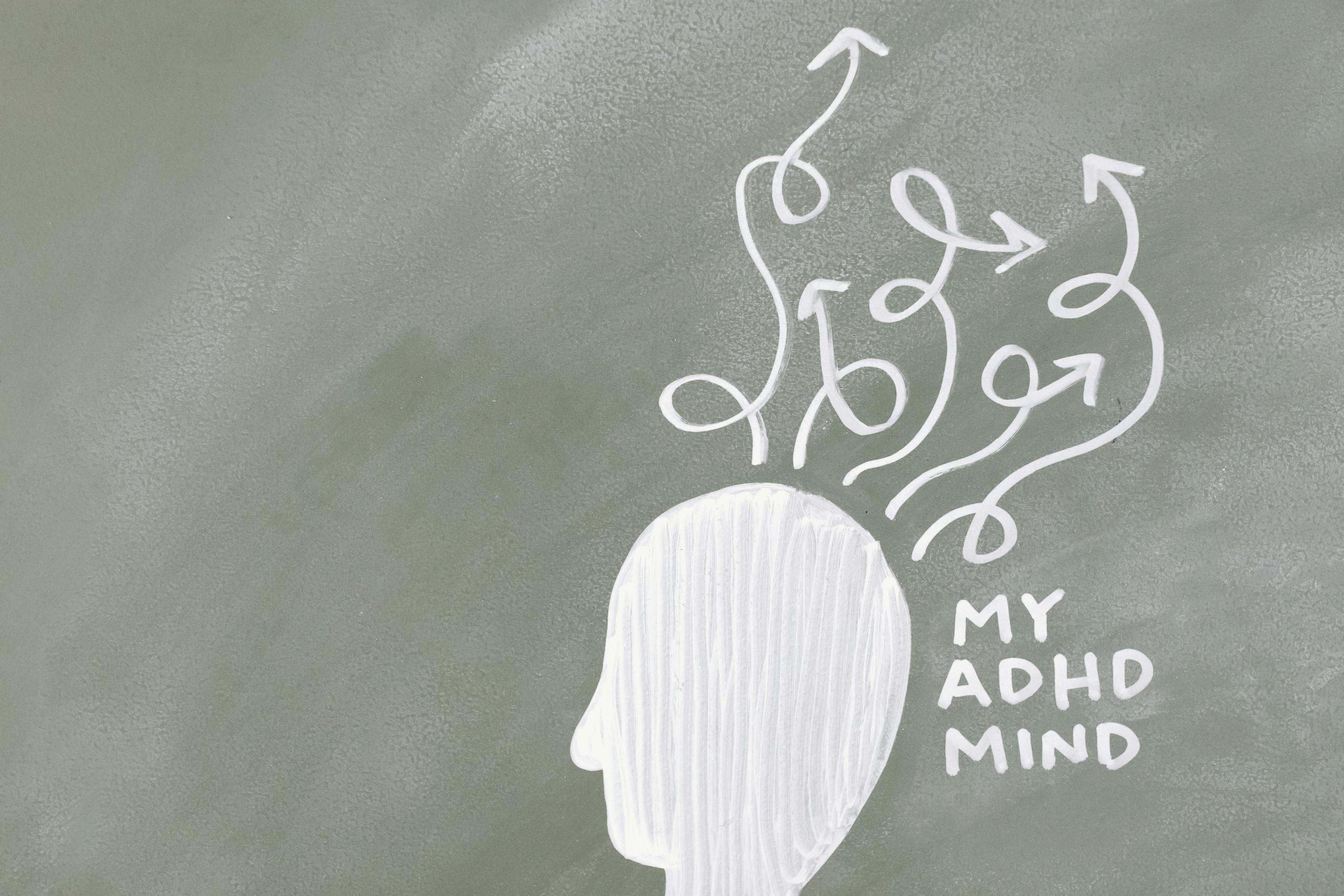
There’s also a meaningful intersection with ADHD. Executive function challenges, impulsivity, and difficulty reading social cues can all create social friction that gets labeled as shyness from the outside. ADHD and Introversion: Double Challenge, handling Two Misunderstood Traits gets into how these traits interact and why treating them as a single problem produces strategies that don’t quite fit.
And then there’s the question of whether introversion itself is as fixed as we tend to assume. Introversion: Why You Can Actually Change (Sometimes) examines the trait-versus-state distinction in personality research, which has direct relevance here. Shyness, because it’s anxiety-based rather than temperament-based, tends to be more malleable than introversion. That’s actually encouraging. It means the work you put into dealing with shyness can produce real change in a way that trying to become an extrovert simply won’t.
What About the Social Situations That Still Feel Impossible?
Some situations are genuinely harder than others, and pretending otherwise doesn’t help anyone. Large networking events, cold introductions, conflict conversations, being put on the spot in meetings: these are the moments where shyness tends to spike hardest, and where generic advice about “just putting yourself out there” falls completely flat.
A few things that actually helped me in those high-difficulty situations:
Arriving early. This sounds counterintuitive, but walking into a half-empty room and having a few low-stakes conversations before the crowd arrives is significantly easier than walking into a full room and trying to break into existing groups. Early arrival also gives you a chance to orient yourself physically, which reduces the sensory overwhelm that can amplify shyness in crowded spaces.
Giving yourself a defined exit. Knowing that you can leave after an hour, or after you’ve spoken to three people, removes the open-ended dread that makes large social events feel like endurance tests. Shy people often avoid events entirely because they can’t see the end of them. A clear boundary makes entry possible.
Finding one person to be genuinely curious about. Not working the room. Not collecting contacts. Just finding one person and having a real conversation. That shift from performance to connection is where shyness tends to dissolve, because you stop monitoring yourself and start actually being present with another human being.
In professional settings specifically, the ability to manage conflict conversations is where shyness does the most damage. Shy people often avoid necessary confrontations because the social discomfort feels too costly. Psychology Today’s four-step conflict resolution framework for introverts and extroverts offers a structured approach that reduces the ambiguity of those conversations, which is exactly what shy people need. Structure makes the unknown known, and the unknown is what shyness fears most.

When Does Shyness Become Something You Should Get Professional Help For?
There’s a spectrum here, and being honest about where you fall on it matters. Mild social discomfort that fades once you warm up is common, manageable with the kind of self-directed strategies I’ve described, and not a clinical concern. Persistent, intense fear of social situations that causes you to avoid them in ways that significantly affect your work, relationships, or quality of life is a different matter entirely.
Social anxiety disorder is a recognized clinical condition, distinct from shyness in its severity and its neurological profile. Research published in PubMed Central on social anxiety examines the cognitive and biological mechanisms involved, which helps explain why cognitive behavioral therapy and, in some cases, medication produce results that willpower alone cannot. If your shyness feels more like a wall than a speed bump, that’s worth discussing with a mental health professional.
There’s no shame in that. I spent years treating what was probably mild social anxiety as a personal failing rather than a workable psychological pattern. Getting clearer about the nature of the problem, even without formal treatment, changed how I approached it. Naming things accurately gives you more options, not fewer.
Can Shyness Coexist With Genuine Social Frustration or Even Misanthropy?
This is a question I’ve sat with more than I expected to. After years of forcing myself into social situations that didn’t come naturally, I noticed something uncomfortable: a growing irritability with people in general. Not fear exactly, but a kind of exhausted resentment. I wasn’t sure whether I was shy, introverted, or just tired of pretending to enjoy interactions I found draining.
It turns out this is more common than people admit. I Don’t Like People: Is It Misanthropy or Just Introversion? examines how prolonged social strain, especially when you’ve been masking your true nature for years, can start to look like a generalized dislike of people. Often it isn’t. Often it’s depletion masquerading as disdain. Recognizing that distinction is part of dealing with shyness honestly, because the solution to depletion is rest and authenticity, not more forced exposure.
What I’ve found, both personally and in conversations with other introverts who’ve worked through shyness, is that as the fear diminishes, the irritability often does too. When you stop spending so much energy on threat monitoring and self-protection, you have more genuine warmth available for the people you do choose to spend time with. The misanthropic feeling was a symptom, not a character trait.
What Does Long-Term Progress With Shyness Actually Look Like?
Dealing with shyness over the long term isn’t a straight line. It’s more like a gradual raising of your baseline. You’ll still have moments of self-consciousness and social discomfort. What changes is how quickly you recover from them, how often they stop you entirely, and how much space they take up in your mental life.
Progress also tends to be domain-specific. You might become genuinely confident in professional settings while still feeling shy at parties. You might handle one-on-one conversations with ease while large groups still spike your anxiety. That’s not failure. That’s a realistic picture of how this works. You don’t need to become equally comfortable everywhere. You need to become comfortable enough in the situations that matter most to you.
By the time I was running my second agency, the shyness that had plagued my early career had mostly shifted. Not because I’d become extroverted, I hadn’t, but because I’d accumulated enough evidence that I could handle social situations competently. The threat model had updated. What remained was a preference for depth over breadth in my interactions, a genuine desire for quieter environments after intense social stretches, and an occasional flash of self-consciousness in genuinely high-stakes moments. That’s introversion with a little residual shyness. Manageable. Mine.
For introverts specifically, there’s a useful parallel in professional contexts. Rasmussen University’s look at marketing strategies for introverts illustrates how introverted professionals can build presence and credibility through approaches that align with their natural strengths rather than requiring them to perform extroversion. The same principle applies to shyness: working with your wiring rather than against it produces more durable results than forcing yourself into molds that don’t fit.
There’s also a broader question worth sitting with as you do this work: what kind of social life do you actually want? Not the one you think you should want, or the one that would look most impressive to others, but the one that genuinely sustains you. Shyness often gets treated as a problem to solve so you can become more socially active. Sometimes that’s right. Sometimes the real work is getting clear on what you actually value in human connection, and building toward that instead. Frontiers in Psychology’s work on social motivation and well-being touches on exactly this: the quality and alignment of social engagement matters more than the quantity.
If you want to keep exploring how introversion intersects with traits like shyness, anxiety, and social behavior, the full Introversion vs Other Traits hub is where all of these threads come together.
Know your quiet strength?
Six superpower types, each with career implications and curated reading to develop your specific strength further.
Take the Free Quiz2-3 minutes · 10 questions · Free
About the Author
Keith Lacy is an introvert who’s learned to embrace his true self later in life. After 20 years in advertising and marketing leadership, including running agencies and managing Fortune 500 accounts, Keith now channels his experience into helping fellow introverts understand their strengths and build fulfilling careers. As an INTJ, he brings analytical depth and authentic perspective to every article, drawing from both professional expertise and personal growth.
Frequently Asked Questions
Is shyness the same as introversion?
No. Introversion is a preference for quieter, less stimulating environments and describes where you get your energy. Shyness is a fear-based response to social evaluation and the possibility of judgment or rejection. An introvert can be confident and socially at ease. A shy person, whether introverted or extroverted, experiences anxiety in social situations that introversion alone doesn’t explain. The two traits often overlap, but they have different causes and respond to different kinds of support.
Can shyness be overcome completely?
For most people, shyness doesn’t disappear entirely, but it does become significantly more manageable with deliberate practice and self-awareness. Progress tends to be domain-specific and gradual. Many people who describe themselves as shy in early adulthood find that by their thirties and forties, the shyness has faded to a mild occasional discomfort rather than a constant obstacle. success doesn’t mean erase all social anxiety but to reduce its frequency and intensity enough that it stops limiting your choices.
What’s the difference between shyness and social anxiety disorder?
Shyness is a common personality trait involving discomfort in social situations, particularly unfamiliar ones. Social anxiety disorder is a clinical condition characterized by intense, persistent fear of social situations that causes significant distress and functional impairment. Someone with social anxiety disorder may avoid situations entirely, experience physical symptoms like sweating or trembling, and find that the fear is disproportionate and difficult to control even when they recognize it as such. If your shyness consistently prevents you from doing things that matter to you, speaking with a mental health professional is worth considering.
How do you deal with shyness at work?
Start by identifying the specific situations at work where shyness is most costly for you, whether that’s speaking up in meetings, initiating conversations with senior colleagues, or handling conflict discussions. Prepare thoroughly before those situations to reduce the cognitive load of the interaction itself. Build small wins by contributing in lower-stakes contexts first, such as asking questions at the end of meetings or sharing ideas in writing before voicing them aloud. Over time, those small wins accumulate into a revised self-assessment that makes higher-stakes situations feel less threatening.
Does shyness get better with age?
For many people, yes. Accumulated social experience provides evidence that contradicts the catastrophic thinking that fuels shyness, and that evidence tends to build naturally over time. Greater self-knowledge, clearer personal values, and reduced concern for others’ approval all tend to increase with age in ways that reduce social anxiety. That said, shyness doesn’t automatically improve without some intentional engagement with the patterns behind it. Age helps most when it’s accompanied by reflection and a willingness to keep showing up in situations that feel uncomfortable.