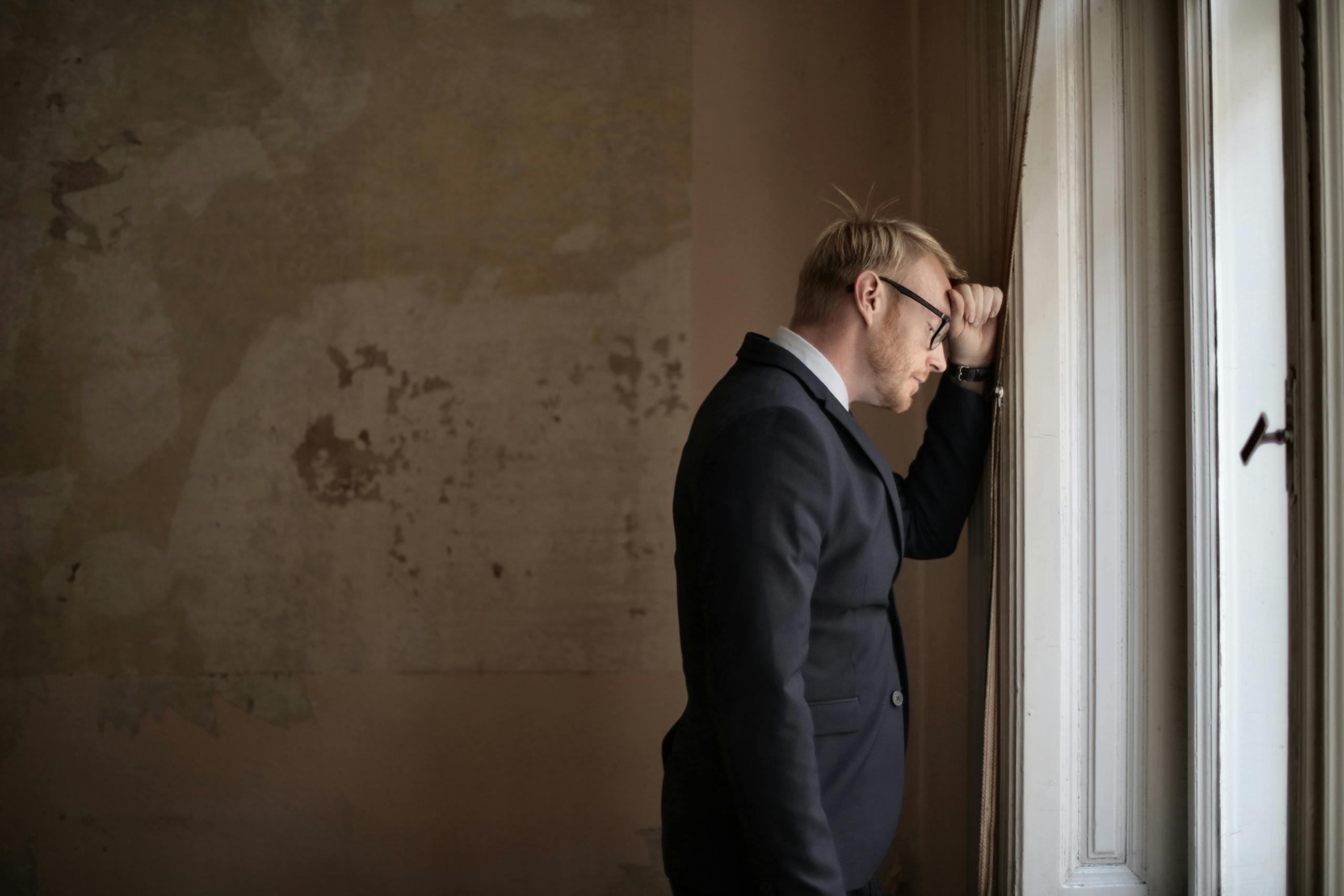
Preventing teacher burnout means recognizing it before it hollows you out completely. For introverted teachers especially, the daily demands of classroom life, constant social performance, emotional labor, and almost zero recovery time, create a specific kind of exhaustion that looks like personal failure but is actually a structural problem.
Many introverted educators arrive at burnout not because they’re bad teachers, but because they’re exceptional ones who gave everything without ever refilling. What follows is a practical, honest look at how that happens and what actually helps.
I’ve spent most of my career in advertising, not education. But I’ve watched the same pattern play out across industries: introverts who care deeply about their work push past every reasonable limit, convinced that needing rest means something is wrong with them. It doesn’t. Our full Burnout & Stress Management hub covers the broader landscape of this problem, but the teaching context adds layers that deserve their own honest examination.
Why Are Introverted Teachers So Vulnerable to Burnout?
Teaching is, at its core, a profession built for extroverts on the surface. You’re “on” for six or seven hours straight. You manage a room of people who need your attention simultaneously. You perform enthusiasm, patience, and authority, sometimes all in the same minute. Then you go to a staff meeting. Then a parent calls.
What drains your social battery?
Not all social exhaustion is the same. Our free quiz identifies your specific drain pattern and gives you personalised recharging strategies.
Find Your Drain PatternUnder 2 minutes · 8 questions · Free
For introverts, social interaction doesn’t energize, it costs. That’s not a flaw or a weakness. Psychology Today’s exploration of introversion and the energy equation describes it plainly: introverts expend energy through social engagement rather than gaining it. Every lesson delivered, every student question fielded, every hallway conversation with a colleague draws from a finite reserve that genuinely needs time to replenish.
The school environment rarely accounts for this. There’s no quiet room built into the schedule. Lunch is often a social obligation. Planning periods get swallowed by meetings. By the time an introverted teacher gets home, they’re so depleted that basic functioning feels like an achievement, let alone grading, planning, or doing anything restorative.
I ran agencies for over twenty years. At my worst, I was managing forty people, presenting to Fortune 500 clients three times a week, and hosting internal brainstorming sessions that felt like being asked to sprint with ankle weights on. I understood intellectually that I was good at my job. What I couldn’t understand was why I felt like I was drowning. Nobody told me that the structure of the work itself was fighting against how my brain processes the world. Introverted teachers face the same blind spot, except the stakes include other people’s children.
What Does Teacher Burnout Actually Look Like From the Inside?
Burnout doesn’t announce itself cleanly. It seeps in. Most introverted teachers I’ve spoken with describe a gradual dimming, where the work they once found meaningful starts feeling mechanical, where students who used to spark curiosity now feel like demands, where Sunday evenings become a source of dread rather than gentle preparation.
The emotional exhaustion comes first. You stop finding the funny moments funny. Patience that used to feel natural now requires conscious effort. You notice yourself going through motions during lessons that once genuinely excited you.
Then comes depersonalization. This one is harder to admit. You start mentally distancing yourself from students, from colleagues, from the whole enterprise. It’s a protective mechanism, not a character flaw. Your nervous system is trying to preserve what little energy remains by reducing emotional investment.
Finally, there’s the erosion of personal accomplishment. Even when you do something well, it doesn’t register. The internal feedback loop that used to tell you “that lesson worked, that student got it, you made a difference today” goes quiet. Research published in PubMed Central identifies this three-part pattern as the core structure of occupational burnout, and it tracks closely with what educators describe when they’re honest about how they feel.
What makes this particularly dangerous for introverted teachers is that the depersonalization stage often gets misread as introversion itself. “I just need more alone time,” they tell themselves. “I’ve always been like this.” But there’s a meaningful difference between a healthy introvert who recharges through solitude and someone in the early stages of chronic burnout where recovery never fully arrives. One is a personality trait. The other is a warning sign.

How Does the School Environment Specifically Drain Introverted Educators?
There are structural features of most school environments that work against introverted teachers in ways that aren’t always obvious until you name them directly.
Open-plan teacher workrooms. Mandatory collaborative planning sessions that prioritize group energy over quiet thinking. Professional development days built around activities and discussion rather than reflection and reading. Evaluation systems that reward visible enthusiasm over deep preparation. Parent communication expectations that assume availability at almost any hour.
None of these things are malicious. Most were designed with good intentions. But they were designed without introverts in mind, and introverted teachers pay the price in accumulated depletion.
I once managed a team of creatives at my agency that included several people I’d now recognize as introverts, though we didn’t use that language much then. One of them, a brilliant strategist, kept getting passed over for promotions because she didn’t “show enough enthusiasm in meetings.” What she actually did was think more carefully than anyone else in the room before speaking. Her contributions were consistently the most insightful. But the environment rewarded performance over substance, and she eventually left. I’ve thought about that a lot since then. Schools do the same thing to teachers who process quietly, prepare thoroughly, and teach with depth rather than spectacle.
The small talk dimension adds another layer. Psychology Today’s piece on the weight of small talk for introverts captures something real: even brief, casual social exchanges carry a cognitive and emotional cost for introverted people that most extroverts simply don’t experience. Multiply that by thirty student interactions before 9 AM and you start to understand why introverted teachers arrive at their planning period already tired.
What Prevention Strategies Actually Work for Introverted Teachers?
Prevention is a better word than management here, because by the time you’re managing burnout, you’re already behind. What actually works is building recovery into the structure of your days before the depletion becomes critical.
The first principle is protecting transition time. Introverts need deliberate buffer between high-stimulation activities. If you have back-to-back classes with no break, that’s a structural problem worth solving even if it requires some creative scheduling. Five minutes of genuine quiet between a demanding class and a parent meeting isn’t luxury, it’s maintenance. Think of it the way you’d think about not running a car engine indefinitely without ever letting it cool.
The second principle is being honest about what your social obligations actually are versus what you’ve assumed they must be. Many introverted teachers attend every optional staff gathering, every after-school event, every informal lunch because they fear being seen as unfriendly or uncommitted. Some of those obligations are real. Many are self-imposed. Distinguishing between them is one of the most practical things you can do. Setting work boundaries that actually hold after burnout covers this in more depth, and the principles apply whether you’re in a classroom or a conference room.
The third principle involves physical recovery practices. Not in a vague wellness sense, but in a specific, neurological one. The American Psychological Association’s overview of relaxation techniques documents how deliberate physical practices, including controlled breathing, progressive muscle relaxation, and mindfulness, produce measurable changes in stress response. For introverted teachers, these aren’t optional extras. They’re part of the operational infrastructure of doing the job sustainably.
I developed my own version of this during particularly brutal client pitch seasons. I’d block thirty minutes before any major presentation where I sat alone, no phone, no email, no conversation. My team thought I was reviewing notes. I was actually just letting my nervous system settle. It made a real difference in how I performed and how I felt afterward. Introverted teachers can do something similar, even if the window is smaller.
The fourth principle is recognizing your own early warning signals before they become emergencies. Most people in burnout look back and realize the signs were visible much earlier than they acknowledged them. Practical strategies for managing introvert stress can help you build that self-awareness before you’re deep in the hole.

Does Personality Type Actually Matter When It Comes to Teacher Burnout?
Yes, and more specifically than most burnout conversations acknowledge. Different personality types burn out for different reasons, at different rates, and through different mechanisms. An extroverted teacher who’s isolated in a remote teaching assignment faces different pressures than an introverted teacher who’s overscheduled with group work and collaborative planning. Treating burnout as a single universal experience misses this entirely.
For introverted teachers, the core burnout driver is almost always chronic overstimulation without adequate recovery. The work demands more social energy than the environment allows them to replenish. Over time, this creates a deficit that compounds. Each day starts with less than the day before.
For some personality types, burnout comes from feeling disconnected from meaning. For others, it’s the absence of autonomy or the presence of constant conflict. Understanding what each personality type actually needs to prevent burnout can help you identify which specific pressures are most dangerous for your wiring, rather than applying generic advice that may not fit.
What I’ve observed, both in my own experience and in watching the people I managed over the years, is that introverts tend to be the last to ask for help and the first to assume that struggling means something is wrong with them personally. One of my former creative directors, a deeply introverted INFJ, absorbed the emotional weight of every client relationship, every team conflict, every difficult brief. He was extraordinarily good at his job. He was also perpetually exhausted. When I finally asked him directly how he was doing, not in a performance review sense but genuinely, he looked genuinely surprised that the question was being asked. He’d assumed the exhaustion was just the cost of caring. It wasn’t. It was a signal he’d been ignoring for months.
Teachers do this constantly. They absorb the emotional weight of thirty families, the anxiety of standardized testing, the grief of students going through difficult things, and they carry it home. Introverted teachers often carry it more deeply because they process experience internally rather than externalizing and releasing it.
A 2024 study published in Frontiers in Psychology examining occupational burnout found that emotional labor, particularly the effort required to manage and perform emotions that differ from what you’re actually feeling, is a significant contributor to burnout across helping professions. For introverted teachers who are performing extroverted energy all day, this is a compounding factor that deserves serious attention.
What Role Do Classroom Design and Teaching Style Play?
More than most people realize. The way a teacher structures their classroom and approaches instruction can either work with their introversion or constantly against it.
Introverted teachers often excel at creating learning environments that value depth over volume, written reflection over spontaneous discussion, independent thinking over group consensus. These aren’t compromises, they’re genuine pedagogical strengths. Students who are themselves introverted, and there are many, often thrive in these environments in ways they don’t in classrooms optimized for extroverted participation.
Where introverted teachers get into trouble is when they feel pressure to perform a teaching style that doesn’t fit them. The high-energy, constantly-moving, call-and-response model of instruction that gets celebrated in many professional development circles is not the only effective model. It’s just the most visible one.
A teacher who structures lessons around independent reading, written responses, and small-group discussion rather than whole-class performance isn’t doing less. They’re doing something different, and often something that serves a wider range of learners. But if that teacher is receiving feedback that they need to “show more energy” or “get students more engaged visibly,” they may start overriding their natural strengths to match an external standard that doesn’t fit them. That override is exhausting and in the end unsustainable.
Academic research on teacher burnout consistently points to the mismatch between teacher values and institutional demands as a primary driver of exhaustion. When who you are and what the job asks you to be are in constant tension, burnout isn’t a possibility. It’s a trajectory.

How Do You Recover If Burnout Has Already Set In?
Recovery is real, but it’s slower than most people want it to be and more structural than most advice acknowledges. Taking a long weekend helps briefly. Taking a full summer off helps more. But if you return to the same conditions that caused the burnout without changing anything, the relief is temporary.
Genuine recovery requires three things working together: physical restoration, structural change, and a shift in how you relate to your own needs.
Physical restoration means sleep, actual movement, and time in environments that feel genuinely restorative rather than just less demanding. For many introverts, that means time alone in quiet spaces, time in nature, time doing something absorbing that doesn’t require social performance. The 5-4-3-2-1 grounding technique from the University of Rochester Medical Center is a practical tool for interrupting the anxiety spiral that often accompanies burnout, particularly during the acute phase when your nervous system is still running on high alert even when the immediate stressor is removed.
Structural change means looking honestly at what in your work environment needs to be different, and then actually changing it rather than just enduring it. That might mean renegotiating which meetings you attend. It might mean being honest with an administrator about what you need in terms of planning time. It might mean redesigning your classroom schedule to build in recovery windows. What each personality type actually needs when returning to work after burnout offers specific, type-aware guidance for this phase.
The shift in how you relate to your own needs is the hardest part. Many introverted teachers have internalized the idea that needing quiet, needing recovery time, needing boundaries around their energy is somehow selfish or professionally inadequate. It’s not. It’s accurate self-knowledge, and acting on it is what makes sustainable teaching possible.
One thing worth noting: if you’re in the position where you’re not sure whether you’re experiencing regular exhaustion or something deeper, it’s worth reading about how pushing too hard in either direction creates burnout. Sometimes the most depleted people are those who’ve been trying to be everything to everyone, introverted enough to be sensitive, extroverted enough to meet demands, and human enough to care deeply, without ever giving themselves permission to just be one thing consistently.
I went through my own version of this in my mid-forties. I’d spent two decades building a career that looked successful from the outside while feeling increasingly hollow from the inside. The exhaustion wasn’t from working hard. It was from working against myself. What changed things wasn’t a vacation or a promotion. It was finally understanding that my introversion wasn’t a problem to manage around. It was information about how I actually function best. Teachers who reach that same understanding earlier than I did have a real advantage.
A foundational study in PubMed Central on stress and recovery makes the case that psychological detachment from work during off-hours is one of the strongest predictors of sustained wellbeing in demanding professions. For introverted teachers, this isn’t just good advice. It’s a survival skill.

If preventing teacher burnout is something you’re actively working through, the full range of resources in our Burnout & Stress Management hub covers everything from early warning signs to long-term recovery, with content that takes introvert wiring seriously rather than treating it as a footnote.
Running on empty?
Five drain profiles, each with specific triggers, warning signs, and a recharging playbook.
Take the Free QuizUnder 2 minutes · 8 questions · Free
About the Author
Keith Lacy is an introvert who’s learned to embrace his true self later in life. After 20 years in advertising and marketing leadership, including running agencies and managing Fortune 500 accounts, Keith now channels his experience into helping fellow introverts understand their strengths and build fulfilling careers. As an INTJ, he brings analytical depth and authentic perspective to every article, drawing from both professional expertise and personal growth.
Frequently Asked Questions
Are introverted teachers more likely to experience burnout than extroverted teachers?
Not necessarily more likely, but often more vulnerable to a specific kind of burnout driven by chronic overstimulation. Teaching requires sustained social performance, and introverts expend energy through social interaction rather than gaining it. Without adequate recovery time built into the structure of the day, that energy deficit compounds over weeks and months. Extroverted teachers face burnout too, often from isolation, lack of collaboration, or disconnection from meaning, but the mechanism is different. Recognizing which type of burnout risk applies to your wiring helps you target prevention more precisely.
What are the earliest signs of burnout that introverted teachers should watch for?
The earliest signs are often subtle: a growing reluctance to engage with students beyond what’s strictly required, a flattening of the emotional response to work that used to feel meaningful, increased irritability during transitions between activities, and a sense of dreading Monday that starts appearing on Thursday or Friday. Many introverted teachers also notice a change in their capacity for solitude, where alone time stops feeling restorative and starts feeling numb. That shift, from recharging through quiet to simply going blank, is a meaningful early signal worth taking seriously.
Can an introverted teacher build a sustainable career in education without burning out?
Yes, and many do. Sustainability comes from aligning your teaching style with your actual strengths rather than performing an extroverted model of instruction, building genuine recovery time into daily and weekly rhythms, setting boundaries around optional social obligations, and developing honest self-awareness about your own early warning signs. Introverted teachers who embrace their natural tendencies toward depth, preparation, and reflective practice often build careers that are both effective and genuinely fulfilling. The ones who struggle most are those who spend years trying to teach like someone they’re not.
How much recovery time do introverted teachers actually need between demanding activities?
There’s no universal answer because introversion exists on a spectrum and individual circumstances vary. That said, most introverted teachers benefit from at least a few minutes of genuine quiet between high-stimulation activities, even something as simple as two minutes alone before a parent meeting or a brief walk down an empty hallway between classes. what matters is that the recovery time be genuinely quiet and undemanding, not just a transition between one social obligation and another. Over the course of a week, introverted teachers typically need at least one full day with minimal social demands to maintain baseline functioning.
What should an introverted teacher do if they’re already in burnout and can’t take extended time off?
Start with the smallest structural changes you can make immediately: protecting your lunch break as genuine recovery time rather than a social or administrative period, reducing optional commitments by even one per week, and building a brief transition ritual at the end of each school day before you engage with home responsibilities. Physical grounding practices, including controlled breathing and deliberate movement, can help interrupt the stress response in real time. Longer term, an honest conversation with a trusted administrator about workload or scheduling may be necessary. Burnout that’s already present doesn’t resolve through willpower alone. It requires actual changes to the conditions that caused it.