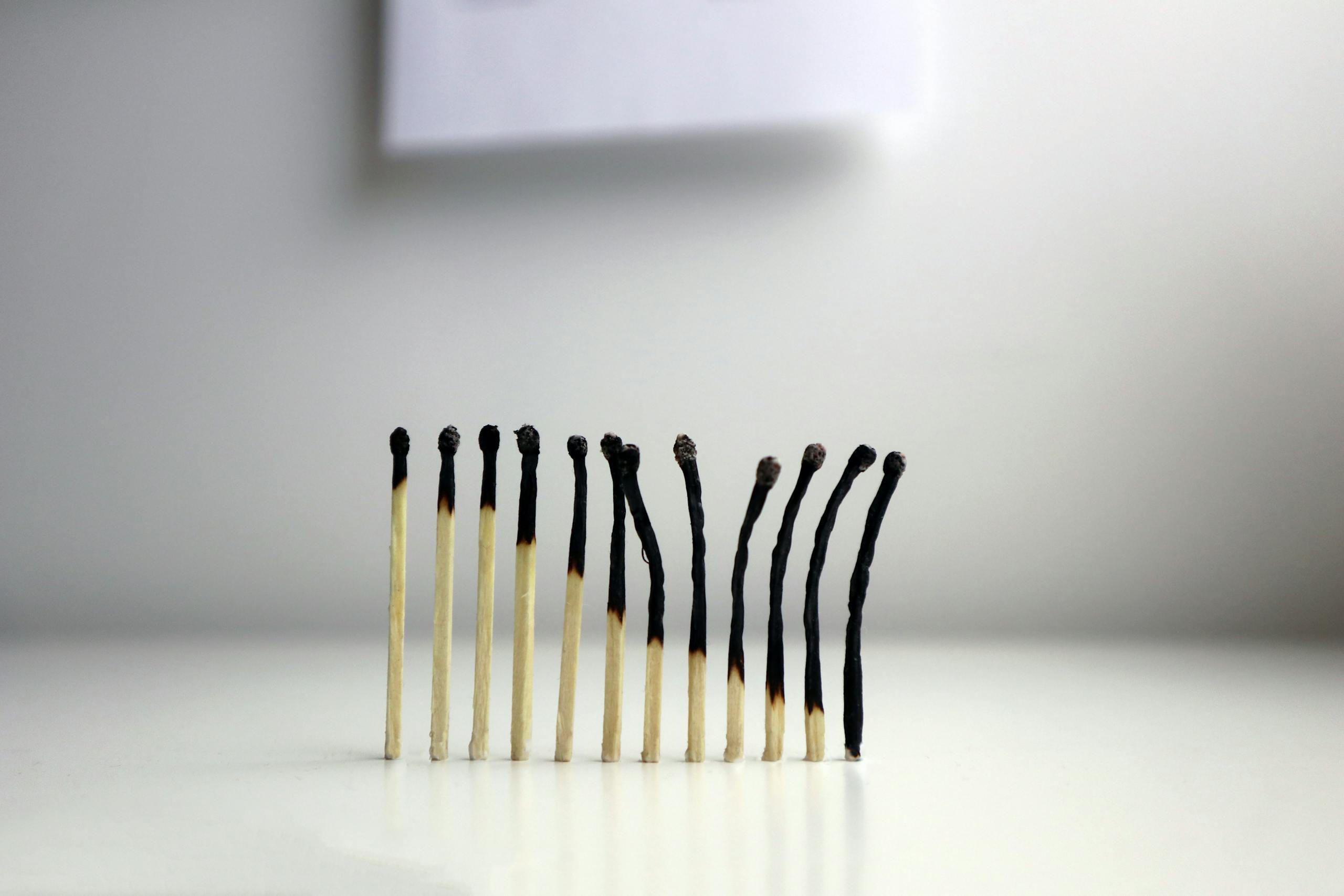
Recovering from burnout doesn’t announce itself with a dramatic moment of clarity. For most people, and especially for introverts, the signs you are recovering from burnout arrive quietly, almost imperceptibly, like light returning to a room you’d forgotten could be bright. You notice small things first: a flicker of curiosity about a project, a morning where the exhaustion feels slightly less crushing, a conversation that doesn’t cost you everything afterward.
Those small signals matter more than most people realize. Burnout recovery is not a straight line, and recognizing where you are on that path is genuinely useful, not just reassuring. Knowing the signs helps you pace yourself, protect what’s fragile, and stop second-guessing whether any of this is actually working.

Everything I cover in this article connects to a broader set of resources I’ve built around this topic. Our Burnout & Stress Management hub covers the full spectrum, from prevention to chronic patterns to type-specific recovery, and it’s worth bookmarking if you’re in the middle of this process right now.
Why Is Burnout Recovery So Hard to Recognize?
Part of the problem is that we’ve been conditioned to expect recovery to feel like something obvious. We picture a turning point, a moment where everything clicks back into place. That’s rarely how it works, and for introverts especially, the process tends to be interior and gradual in ways that are easy to dismiss.
What drains your social battery?
Not all social exhaustion is the same. Our free quiz identifies your specific drain pattern and gives you personalised recharging strategies.
Find Your Drain PatternUnder 2 minutes · 8 questions · Free
There was a period in my late thirties, after running a mid-size advertising agency through a brutal stretch of client losses and team turnover, where I genuinely didn’t know I was burned out. I thought I was just tired. I thought everyone felt that way. The work was still getting done, the clients were still being served, and from the outside nothing looked broken. But internally, I had gone completely flat. No enthusiasm, no creative energy, no real investment in outcomes I’d spent years building toward.
What I didn’t understand then was that burnout for introverts often looks like competent, functional emptiness. You keep performing because the systems are in place, but there’s no one really driving. Recovery, when it finally came, didn’t feel like a return to energy. It felt like slowly becoming interested in things again, which is a subtle distinction but a real one.
That’s worth naming, because many people in recovery spend months convinced they’re not actually getting better, simply because they haven’t hit some imagined threshold of “feeling good.” Research published in PubMed Central on occupational burnout suggests that recovery timelines vary significantly based on individual factors, and that subjective wellbeing often lags behind actual neurological and physiological restoration. In plain terms: you may be healing before you feel healed.
What Are the Early Signs You Are Recovering From Burnout?
Early recovery signs tend to be small and easily overlooked. They don’t feel like progress because they don’t feel like much of anything. But they are worth paying attention to.
Sleep Starts to Feel Restorative Again
One of the clearest early markers is a shift in sleep quality. During burnout, many people sleep but don’t rest. You wake up as tired as when you went to bed, or you lie awake with a low hum of dread that has no specific object. When recovery begins, sleep starts to do its actual job. You wake up and there’s a brief window, even just a few minutes, where you feel like yourself before the day’s weight settles back in. That window gradually gets longer.
I noticed this during my own recovery. For months I had been waking at 3 AM with my mind already running through client problems, staffing decisions, budget gaps. Then one week, I slept through. Not every night, but enough to notice. It felt almost suspicious, like I must have forgotten something important. I hadn’t. My nervous system was just beginning to release its grip.
Small Pleasures Start Registering Again
Burnout has a flattening effect on experience. Things that used to bring satisfaction, a good meal, a walk outside, a piece of music you love, stop landing. Not because you’ve changed your preferences, but because the emotional register that processes pleasure has gone quiet.
One of the earliest signs of recovery is when those small things start to register again. You notice the coffee tastes good. You laugh at something and it feels genuine rather than performed. These moments are easy to dismiss as trivial, but they’re actually significant data points. The emotional system is coming back online.

Curiosity Returns in Small Doses
Burnout kills curiosity. When you’re depleted, your brain conserves energy by narrowing focus to what’s necessary and nothing more. Reading for pleasure stops. Creative thinking stops. You lose the capacity to wonder about things that aren’t directly in front of you.
When curiosity starts returning, even in small doses, that’s a meaningful sign. You find yourself reading an article all the way through instead of scanning it. You get interested in a problem at work, not because you have to be, but because something about it genuinely catches your attention. For me, it was noticing that I had started sketching out ideas in my notebook again, not for any specific project, just because something had sparked. That hadn’t happened in over a year.
How Does Recovery Feel Different for Introverts Specifically?
Introvert burnout has its own texture, and recovery from it follows a slightly different pattern than what you’ll find in generic burnout literature. Most of that literature is written with extroverts in mind, or at least without distinguishing between the two.
For introverts, the energy economy works differently. As Psychology Today has explored in their writing on introversion and the energy equation, introverts draw energy from solitude and internal processing, and social interaction, even pleasant interaction, draws from that reserve. Burnout for introverts often involves a complete depletion of that internal reserve, not just from overwork, but from sustained social and environmental demands that never let the tank refill.
Recovery, then, involves more than rest in the generic sense. It requires genuine solitude. Not just being alone, but being alone without obligation, without the background noise of things you should be doing. That kind of space is harder to find and easier to underestimate.
During the years I ran agencies, I managed teams where several people were clear introverts, INFJs, INTPs, ISFJs, each with their own version of this depletion pattern. What I noticed across all of them was that conventional “recovery” advice, take a vacation, socialize more, get out of your head, often made things worse. The INFJs on my team would come back from a group trip more exhausted than before they left. The recovery that actually worked was quieter and more personal than anything a wellness program would prescribe.
If you’re working through what your specific type actually needs to heal, the article on burnout recovery by personality type goes into this in real depth and is worth reading alongside this one.
What Are the Mid-Stage Signs That Recovery Is Taking Hold?
Once the early signs appear, there’s usually a middle phase that feels uneven and sometimes discouraging. You have good days and then crash days. You feel almost normal and then something tips you back into exhaustion. This is not a sign that recovery has stalled. It’s actually a sign that it’s progressing.
Your Capacity for Decision-Making Improves
Burnout creates a kind of decision fatigue that goes beyond normal tiredness. Even small choices, what to eat, how to respond to an email, whether to accept a meeting, feel disproportionately heavy. The cognitive load of each decision seems inflated, and the result is either paralysis or impulsive choices you later regret.
As recovery takes hold, decision-making gets lighter. Not effortless, but proportionate again. You can weigh options without it feeling like lifting something heavy. You trust your own judgment in a way that burnout had quietly eroded. For an INTJ like me, this was particularly noticeable because strategic thinking is usually where I feel most at home. When burnout stripped that away, it felt like losing something fundamental. Getting it back was unmistakable.
Social Interaction Becomes Selectively Tolerable Again
During deep burnout, social interaction of almost any kind can feel like an imposition. Even people you love and want to be around can feel like too much. This isn’t a personality flaw or a sign that something is wrong with your relationships. It’s a symptom of a depleted nervous system.
Mid-stage recovery often brings a shift where certain kinds of social interaction start to feel manageable again, specifically the kinds that are low-demand and genuinely nourishing. A one-on-one conversation with someone you trust. A quiet dinner. A phone call you actually want to make. You’re not suddenly craving group events or networking, but the complete social withdrawal begins to ease.
This is worth distinguishing from the exhausting performance that Psychology Today describes in their piece on small talk as an introvert. The social interactions that feel sustainable in recovery tend to be substantive and chosen, not obligatory. That distinction matters enormously.

You Begin Caring About the Future Again
One of the quieter casualties of burnout is forward-thinking. When you’re fully depleted, the future contracts. You stop making plans, stop imagining possibilities, stop caring about outcomes beyond the immediate. It’s not pessimism exactly, more like the horizon has disappeared and you’re only managing what’s directly in front of you.
When you start thinking about the future again, even in small ways, that’s a real signal. You find yourself considering a trip you might take. You think about a project you’d like to start. You have an opinion about where you want to be in a year. These aren’t grand plans. They’re just evidence that your brain has enough energy to extend beyond the present moment, which burnout had made impossible.
Understanding what actually caused the burnout in the first place is part of what makes recovery stick. The article on burnout prevention strategies by personality type is useful here, not just as a future-facing resource, but as a way to understand the patterns that led you here.
What Are the Signs That Recovery Is Becoming Sustainable?
Later-stage recovery looks different from early or mid-stage, and it’s worth naming what those signs look like so you can recognize them rather than wondering if you’re imagining progress.
You Can Handle Stress Without Immediate Collapse
One of the clearest markers of sustainable recovery is a restored capacity to handle stress without falling apart. During burnout, your stress tolerance is essentially zero. Any additional demand, even a minor one, can tip you into overwhelm. As recovery solidifies, that tolerance rebuilds.
This doesn’t mean you become immune to stress or that the old patterns don’t resurface. It means you have some buffer again. A difficult meeting doesn’t ruin the entire week. A setback at work is frustrating but manageable. You can feel the stress, process it, and continue functioning, which burnout had made impossible.
Having concrete tools for managing stress as an introvert matters here. The strategies covered in this piece on introvert stress management are practical and specific, and they’re worth revisiting as your capacity to actually use them returns.
Work Starts to Feel Meaningful Again, at Least Some of the Time
Burnout strips work of meaning. You can still do the work, often quite well from the outside, but the internal sense of purpose or satisfaction is gone. You’re executing tasks rather than contributing to something. The work feels like a transaction at best and a drain at worst.
Late-stage recovery brings back a sense of meaning, not uniformly and not all at once, but in pockets. A project that actually interests you. A problem you’re genuinely glad you solved. A moment where you remember why you chose this work in the first place. Those moments are worth noting. They’re not flukes. They’re evidence that the emotional investment that burnout had depleted is returning.
I remember the first time, after my worst burnout period, that I felt genuinely proud of a campaign we’d built. Not relieved that it was done. Not satisfied that the client was happy. Actually proud, the way I used to feel in the early years of running the agency. It was a small thing, a regional healthcare client, nothing that would make an industry list. But it mattered to me in a way that had been absent for a long time, and I recognized it as something worth paying attention to.
Your Boundaries Start to Feel Natural Rather Than Effortful
Early in recovery, setting limits often feels like an act of will. You have to consciously remind yourself that you’re allowed to say no, that protecting your energy is legitimate, that not every request deserves an immediate yes. It takes effort because the old patterns are still running in the background.
As recovery deepens, something shifts. The limits you’ve been working to establish start to feel less like rules you’re enforcing and more like natural expressions of how you want to live and work. You don’t have to talk yourself into declining a meeting that would drain you. You just decline it, without the accompanying guilt spiral.
This is one of the most important long-term changes to watch for, because sustainable limits are what prevent the cycle from repeating. The piece on work boundaries that actually stick after burnout goes into the mechanics of this in detail, and it’s particularly relevant once you’re in this later stage of recovery.

What If Recovery Feels Like It’s Not Actually Happening?
Some people go through the motions of recovery and find that nothing really changes. They rest, they set limits, they make lifestyle adjustments, and yet the exhaustion persists, the flatness persists, the sense of depletion doesn’t lift. This is worth taking seriously rather than pushing through.
There’s a pattern that’s worth understanding here. Chronic burnout, where recovery never fully arrives, is a distinct condition from acute burnout, and it often involves systemic factors that individual coping strategies can’t address on their own. If you’ve been in recovery mode for a long time without meaningful progress, that article is worth reading carefully.
It’s also worth considering whether the environment you’re recovering in is actually conducive to recovery. Returning to the same conditions that caused the burnout, without meaningful changes to workload, culture, or expectations, makes genuine recovery very difficult. You can do everything right individually and still not heal if the external conditions remain unchanged.
A 2024 paper published in Frontiers in Psychology examining burnout and recovery factors found that workplace conditions play a significant role in whether recovery actually takes hold, a finding that aligns with what many people experience but rarely hear validated. Your effort matters, and so does the environment you’re putting that effort into.
For those who identify as ambiverts, the recovery pattern can be particularly confusing. The pull toward social engagement competes with the need for withdrawal, and neither fully satisfies. The piece on ambivert burnout and why pushing in either direction can backfire addresses this dynamic specifically and may be useful if you find yourself caught between those two pulls.
How Do You Support Recovery Without Rushing It?
One of the hardest things about burnout recovery, especially for high-achieving introverts who are used to solving problems efficiently, is accepting that this process has its own timeline and can’t be optimized into a faster version of itself.
I spent the first few months of my recovery trying to manage it like a project. I read everything I could find, made plans, tracked my sleep, scheduled recovery activities. And while some of that was useful, a lot of it was just my INTJ tendency to impose structure on something that needed to be allowed rather than managed. Recovery requires a kind of surrender that doesn’t come naturally to people who are used to being in control.
What actually helped was simpler than I expected. Long walks without a destination. Reading fiction instead of business books. Spending time with one or two people who didn’t need anything from me. Letting weekends be genuinely unscheduled. These aren’t revolutionary interventions. They’re just conditions under which a depleted nervous system can actually repair itself.
The physiological side of this is real. Research from PubMed Central on the stress response and nervous system regulation makes clear that chronic stress creates measurable physiological changes, and that recovery involves actual biological restoration, not just attitude adjustment. Giving your body and brain the conditions they need to repair is not indulgence. It’s the work.
Simple grounding techniques can also help regulate the nervous system during this process. The University of Rochester Medical Center’s 5-4-3-2-1 grounding technique is one approach that many people find useful for managing the anxiety that often accompanies burnout recovery, particularly in moments when the mind starts spiraling into worst-case thinking.
Relaxation practices more broadly have a strong evidence base for supporting stress recovery. The American Psychological Association’s overview of relaxation techniques is a solid starting point if you’re looking to build a sustainable practice rather than just grabbing whatever seems popular.

What Does Fully Recovered Actually Look Like?
“Fully recovered” is a phrase worth being careful with, because it can set up an expectation of returning to some pre-burnout baseline that may not have been sustainable in the first place. For many people, burnout is a signal that the previous way of operating wasn’t actually working, even if it looked functional from the outside.
What recovery actually produces, at its best, is not a return to the old version of yourself. It’s a version of yourself with better self-knowledge, clearer limits, and a more honest relationship with your own capacity. You know what depletes you. You know what restores you. You’ve built at least some structures that protect those things.
That doesn’t mean you won’t face hard periods again. It means you’ll recognize the warning signs earlier and respond to them faster. The goal isn’t immunity from burnout. It’s a shorter distance between depletion and recovery, and a life structured in ways that reduce the frequency of hitting that wall in the first place.
After my own worst burnout, I came out of it with a fundamentally different relationship to my work and to the people around me. I stopped treating every client demand as equally urgent. I built in actual recovery time between major projects rather than rolling immediately into the next thing. I got honest with myself about which parts of the agency work genuinely energized me and which parts I’d been white-knuckling through for years. Some of those realizations were uncomfortable. All of them were useful.
There’s more to explore on all of this. The complete Burnout & Stress Management hub brings together everything I’ve written on this topic, from early warning signs to type-specific patterns to long-term prevention, and it’s a useful resource to return to as your recovery continues to unfold.
Running on empty?
Five drain profiles, each with specific triggers, warning signs, and a recharging playbook.
Take the Free QuizUnder 2 minutes · 8 questions · Free
About the Author
Keith Lacy is an introvert who’s learned to embrace his true self later in life. After 20 years in advertising and marketing leadership, including running agencies and managing Fortune 500 accounts, Keith now channels his experience into helping fellow introverts understand their strengths and build fulfilling careers. As an INTJ, he brings analytical depth and authentic perspective to every article, drawing from both professional expertise and personal growth.
Frequently Asked Questions
How long does burnout recovery typically take?
Recovery timelines vary widely depending on the severity of the burnout, the conditions available for recovery, and individual factors. Mild burnout may resolve over weeks with meaningful rest and reduced demands. More severe or chronic burnout can take months or longer, particularly if the environment that caused it hasn’t changed. The most honest answer is that recovery takes as long as it takes, and trying to accelerate it beyond what the nervous system can sustain often extends the timeline rather than shortening it.
What are the first signs you are recovering from burnout?
The earliest signs tend to be subtle: sleep that feels more restorative, small pleasures that start registering again, brief moments of genuine curiosity or interest. You may notice that the constant low-level dread begins to ease, or that you wake up without your mind immediately running worst-case scenarios. These signals are easy to dismiss as minor, but they’re meaningful early indicators that the recovery process is underway.
Is it normal to feel worse before feeling better during burnout recovery?
Yes, and this is one of the most commonly misunderstood aspects of burnout recovery. When you finally stop pushing and allow yourself to rest, the full weight of the depletion often becomes more visible rather than less. You may feel more exhausted, more emotional, or more disconnected in the early stages of recovery than you did while still in burnout mode. This is not a sign that things are getting worse. It’s often a sign that your system is finally safe enough to acknowledge how depleted it actually became.
How do introverts recover from burnout differently than extroverts?
Introverts recover primarily through solitude, reduced social demands, and internal processing time. What restores an introvert tends to look quiet and unscheduled from the outside. Extroverts, by contrast, often recover through social engagement and external stimulation. Generic burnout advice frequently defaults to extroverted recovery strategies, like group activities, social support networks, and getting out more, which can actually slow recovery for introverts. The most effective recovery for introverts involves protecting genuine alone time and reducing the social and environmental demands that depleted the energy reserve in the first place.
Can you fully recover from burnout and return to your previous capacity?
Many people do return to full capacity after burnout, and some find that recovery leaves them with better self-awareness and stronger limits than they had before. That said, returning to the exact pre-burnout baseline isn’t always the right goal, particularly if that baseline involved unsustainable patterns. Full recovery is better understood as regaining your capacity to engage meaningfully with work and life, while building in the structures and self-knowledge that reduce the likelihood of the same depletion recurring. The goal is sustainable functioning, not just restoration of the old way of operating.