
Being a homebody is not a sign of depression. Preferring your couch to a crowded bar, choosing a quiet evening over a loud party, feeling genuinely restored by solitude rather than drained by it, these are traits that describe a large portion of the introvert population. That said, there are moments when what looks like a love of home is actually something heavier pulling you inward, and knowing the difference matters more than most people realize.
The honest answer is that being a homebody and experiencing depression can coexist, overlap, or have nothing to do with each other. What separates them is not where you spend your time but how you feel while you’re there.

If you’ve ever wondered whether your preference for staying in crosses a line into something more serious, you’re asking exactly the right question. Our Depression & Low Mood hub covers this territory from multiple angles, and this article is one piece of a larger conversation about what mental health actually looks like for people wired toward quiet, depth, and solitude.
What Does It Actually Mean to Be a Homebody?
I’ve been a homebody my entire adult life. During my agency years, I’d wrap up a client presentation in front of a room full of executives, field a dozen questions with confidence, and then spend the entire drive home looking forward to one thing: the silence of my own front door closing behind me.
What drains your social battery?
Not all social exhaustion is the same. Our free quiz identifies your specific drain pattern and gives you personalised recharging strategies.
Find Your Drain PatternUnder 2 minutes · 8 questions · Free
My team used to joke that I disappeared after events. They weren’t wrong. While everyone else headed to the bar down the street, I was already mentally in my home office, decompressing with a notepad and a strong cup of coffee. At the time, I felt vaguely guilty about it, like I was failing some unspoken leadership requirement to be endlessly social. It took years to understand that what I was doing wasn’t antisocial. It was essential maintenance for how my brain operates.
A homebody, in the truest sense, is someone who finds genuine comfort and restoration in domestic spaces. Not someone who stays home because they’re afraid, not someone who cancels plans because they feel hopeless, but someone who genuinely prefers the texture of home life over the noise of constant social engagement. Psychology Today’s introvert research has long established that introverts aren’t avoiding people out of fear or dysfunction. They’re managing their energy in a way that makes sense for their nervous system.
That distinction matters enormously when we start asking whether staying home is a red flag.
How Do You Tell the Difference Between Introversion and Depression?
This is the question I wish someone had handed me a clear answer to about fifteen years ago. Because there was a period during a particularly brutal agency restructuring when I thought I was just being introverted. Turns out, I was also quietly depressed, and I didn’t recognize it because it looked so much like my normal baseline.
Introversion is about energy. Depression is about mood, motivation, and meaning. When I was simply being introverted, staying home felt like a reward. When I was depressed, staying home felt like the only option because everything else felt impossible or pointless. Same behavior on the surface. Completely different internal experience.
The article I point people to most often on this topic is Introversion vs Depression: What Nobody Actually Tells You, because it addresses exactly this overlap without oversimplifying it. The short version: introverts who are healthy feel energized by their alone time. Introverts who are depressed often feel exhausted by everything, including the solitude they used to love.
A few markers worth paying attention to:
- Staying home because it feels good versus staying home because going out feels unbearable
- Enjoying your own company versus feeling numb or empty in it
- Choosing solitude versus feeling incapable of connection
- Resting and recharging versus sleeping too much without feeling rested
- Declining invitations because you have better plans versus declining because you can’t imagine caring about anything
None of these are diagnostic. But they’re honest questions worth sitting with.
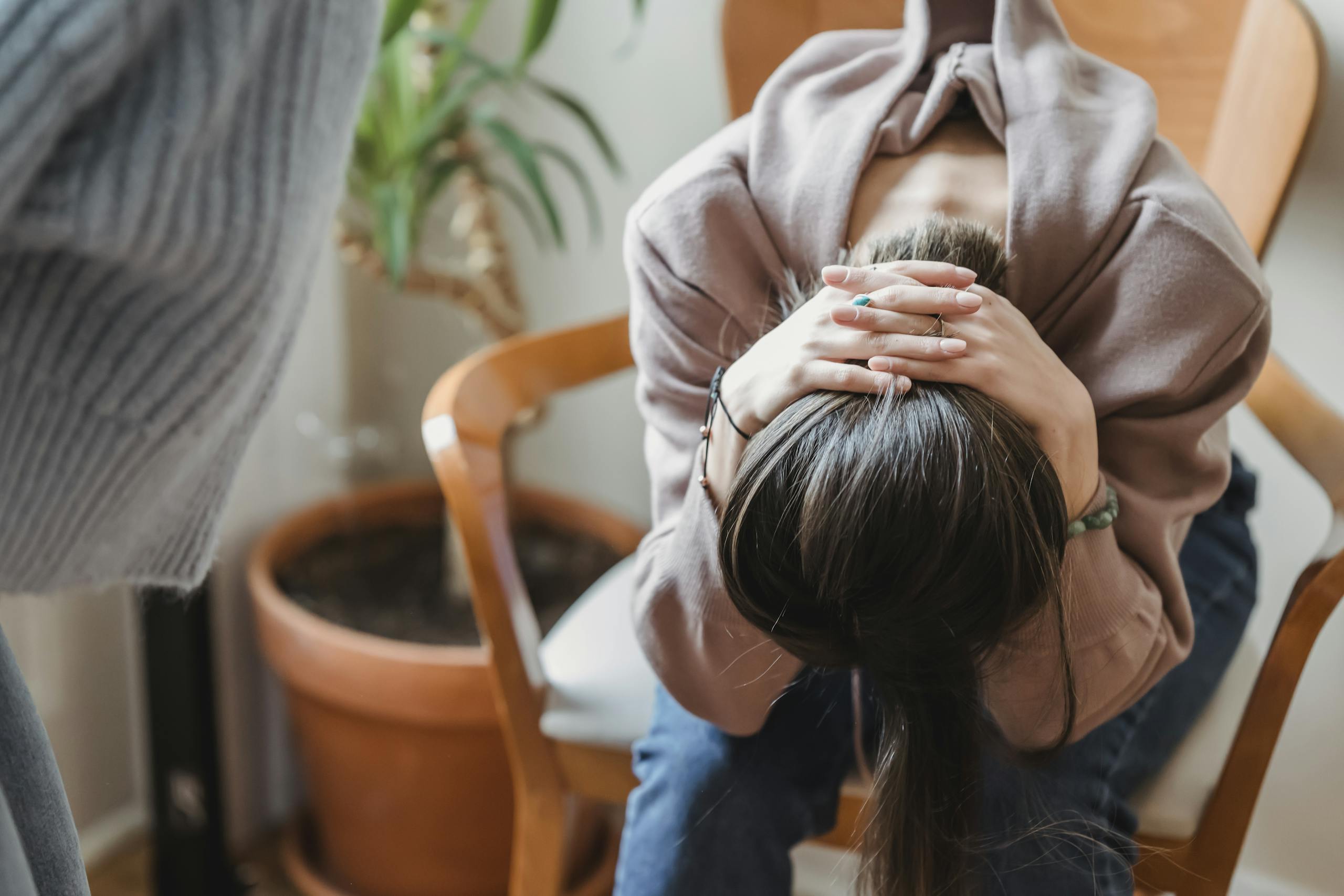
When Does Staying Home Become a Warning Sign?
There’s a version of staying home that is deeply healthy. And there’s a version that quietly signals something is wrong. The tricky part is that they can look identical from the outside, and sometimes from the inside too.
Depression doesn’t always announce itself with obvious sadness. For many introverts, it shows up as a kind of gray flatness. Things that used to interest you stop mattering. Activities you genuinely enjoyed at home, reading, cooking, creative projects, start feeling hollow or too effortful. You’re home, but you’re not really present in it.
The clinical overview of major depressive disorder from the National Library of Medicine describes this loss of interest or pleasure as one of the core diagnostic features. It’s called anhedonia, and it’s one of the clearest signals that what you’re experiencing isn’t introversion or a preference for home. It’s something that warrants attention.
Other warning signs that staying home may be depression rather than personality:
- You’ve stopped doing the things you used to love doing at home
- Your home feels like a hiding place rather than a sanctuary
- You feel guilty or ashamed about not going out, even when you didn’t want to go out before
- Weeks pass and you realize you haven’t spoken to anyone you care about
- You’re not enjoying your solitude, you’re just enduring time
- Physical symptoms have crept in: disrupted sleep, changes in appetite, persistent fatigue
One thing I noticed during my own low period was that I stopped reading. For someone who processes the world through books and long-form thinking, that was significant. My home was still my preferred space, but I was just sitting in it, not inhabiting it. That difference, between being in a space and actually living in it, is worth noticing.
Does the Introvert Brain Make Depression Harder to Spot?
Genuinely, yes. And I think this is one of the most underappreciated aspects of introvert mental health.
Introverts tend to be internal processors. We think before we speak, we sit with emotions before we express them, and we often have a high tolerance for being alone with difficult feelings. That’s a strength in many contexts. In the context of depression, it can mean we spend a long time alone with something that’s getting worse without realizing how bad it’s gotten.
I managed a team for years that included several strong introverts. When one of my most capable account directors started declining team lunches and working late every night, I initially read it as focus and dedication. It took a candid one-on-one conversation months later to understand that she had been struggling with depression for most of that period. Her introversion had provided perfect cover, including to herself.
There’s also the overthinking factor. Introverts, particularly analytical types, tend toward rumination. We replay conversations, examine our decisions from every angle, and spend significant mental energy processing experiences long after they’ve passed. When depression enters the picture, that tendency can intensify into a loop that feeds itself. If you recognize that pattern in yourself, the piece on overthinking and depression is worth reading carefully. It addresses how to interrupt that cycle rather than just endure it.
A broader look at how introversion and depression interact, including the ways they mask each other, is covered in Introvert Depression: What’s Normal vs What’s Not? That article helped me articulate something I’d felt but couldn’t quite name for years.

What About Social Withdrawal Specifically?
Social withdrawal is one of the most commonly cited symptoms of depression, and it’s also one of the most commonly misread signals in introverts. Because we withdraw regularly. It’s part of how we function.
The difference is in the quality and motivation of that withdrawal. Healthy introvert withdrawal is intentional and restorative. You choose it, you feel better for it, and you return to the world when you’re ready. Depressive withdrawal is often involuntary in a different way. It feels less like choosing solitude and more like being unable to bridge the gap between yourself and other people.
A paper published in PMC examining social behavior and mood disorders found that withdrawal in depression is often accompanied by negative affect and reduced motivation, rather than the neutral or positive experience of chosen solitude. That distinction between withdrawal that feels restorative and withdrawal that feels like sinking is worth holding onto.
There’s also the question of what happens when you do eventually engage. After genuine introvert recharging, social interaction feels manageable again, even enjoyable. After depressive withdrawal, engaging often still feels hard, or you feel worse afterward rather than better. Your energy doesn’t return the way it used to.
One of the more specific personality types I’ve seen struggle with this distinction is the ISTJ. Their natural tendency toward structure and self-reliance can make depression look like competent self-management for a very long time. The piece on ISTJ depression addresses exactly why structure alone isn’t enough when your brain is working against you.
Can Being a Homebody Actually Protect Your Mental Health?
I want to make sure this article doesn’t leave you feeling like your preference for home is something to be suspicious of. Because for a lot of introverts, the home environment is genuinely protective.
When I was running my agency through a particularly chaotic growth period, my home was the one place where I could think clearly. Not because I was hiding from the world, but because the sensory and social noise of the office made it nearly impossible for my brain to do its best work. Coming home wasn’t avoidance. It was how I stayed functional.
There’s meaningful evidence that environments matter for mental health. A PMC study on environmental factors and wellbeing points to the role that controllable, low-stimulation environments play in stress regulation. For introverts, home often represents exactly that: a space where stimulation is manageable, energy is preserved, and genuine recovery is possible.
The American Psychological Association’s framework on resilience also emphasizes the importance of having environments and routines that support emotional regulation. For many introverts, a strong home base is part of that foundation, not a symptom of dysfunction.
So yes, being a homebody can protect your mental health. The caveat is that it only works that way when you’re using that space actively, when you’re genuinely resting, creating, connecting with people you care about on your own terms, and engaging with life in ways that feel meaningful to you.
What If You Work From Home? How Does That Change Things?
Remote work added a whole new layer to this conversation. When your home is also your office, the boundaries between healthy solitude and problematic isolation can blur in ways that are genuinely hard to track.
After I transitioned out of agency leadership and started working independently, I found myself going entire weeks without leaving the house in any meaningful way. At first, it felt like the introvert dream. No commute, no open-plan office noise, no impromptu meetings. Over time, I noticed something shifting. The days started blending together. My motivation for projects I cared about started dropping. I was home, but I wasn’t thriving in it the way I expected.
What I was experiencing was a slow erosion of structure and contrast. Home only feels restorative when there’s something to recover from. When everything happens in the same space, that contrast disappears, and with it, some of the meaning that makes home feel like a sanctuary in the first place.
If you’re working from home and noticing that your mood has been consistently flat, that your motivation has dropped, or that the line between “working from home” and “hiding at home” has gotten hard to find, the article on working from home with depression offers practical, honest guidance on what actually helps in that specific situation.
What Should You Do If You Think It Might Be More Than Introversion?
Start by getting honest with yourself about duration and pattern. A few low weeks after a hard stretch at work is different from a persistent gray fog that’s been sitting over you for months. One cancelled social obligation is different from a complete retreat from connection over an extended period.
A useful framework from the National Institute of Mental Health is to look at whether symptoms are interfering with your ability to function in areas that matter to you. That’s a more useful measure than whether you feel “sad enough” to qualify for concern. Depression in introverts often doesn’t look like dramatic sadness. It looks like flatness, disconnection, and a quiet loss of the things that used to make your life feel worthwhile.
Some concrete things worth considering:
- Talk to your doctor, especially if physical symptoms like sleep disruption or fatigue are present
- Consider speaking with a therapist who understands introversion and won’t pathologize your need for solitude
- Track your mood for two to three weeks, not to diagnose yourself, but to see whether there’s a pattern you’ve been minimizing
- Re-engage with one small thing you used to enjoy at home and notice whether it brings any genuine pleasure
- Reach out to one person you trust, even briefly, and pay attention to how that feels
If you’re at the stage of weighing what kind of support might help, the guide on depression treatment approaches covers the range of options honestly, without pushing you toward any single answer. It’s a good reference point if you’re trying to figure out where to start.
One thing I’d add from personal experience: asking for help felt like a contradiction of everything I thought being a self-sufficient, analytical INTJ was supposed to mean. It took me longer than it should have to accept that getting support wasn’t a failure of self-reliance. It was the most rational decision I could make given what I was dealing with. That reframe helped me actually follow through.
How Do You Protect Your Mental Health as a Homebody Introvert?
success doesn’t mean become someone who loves parties and packed schedules. That’s not health for an introvert. That’s just a different kind of exhaustion.
What actually supports mental health for homebodies is building a home life that’s genuinely alive. That means having things you look forward to, even small ones. It means maintaining at least a few connections that feel meaningful, even if they’re low-frequency. It means having some structure to your days so that time doesn’t just dissolve. And it means staying curious about your own internal state rather than assuming everything is fine because you’re comfortable.
A graduate research paper on introversion and wellbeing highlights that introverts tend to thrive when their environments align with their processing style, but that alignment alone isn’t sufficient for mental health. Meaning, engagement, and connection still matter. They just look different for us than they do for extroverts.
During my agency years, I built what I privately called “recovery architecture” into my week. Sunday evenings were sacred. No work, no social obligations, just whatever I actually wanted to do. That boundary wasn’t laziness. It was what allowed me to show up fully for everything else. The introverts on my team who seemed most resilient over time were the ones who had similar structures, deliberate spaces where they could exist on their own terms without apology.
Protecting your mental health as a homebody is less about changing where you spend your time and more about being intentional about how you spend it. Passive consumption of screens for hours isn’t the same as genuine rest. Avoiding all human contact for weeks isn’t the same as healthy solitude. The quality of your time at home matters as much as the quantity of it.

If any of this has resonated and you want to go deeper on the intersection of introversion and mental health, the full range of articles in our Depression & Low Mood hub is a good place to continue. There’s a lot more to this conversation than any single article can hold.
Running on empty?
Five drain profiles, each with specific triggers, warning signs, and a recharging playbook.
Take the Free QuizUnder 2 minutes · 8 questions · Free
About the Author
Keith Lacy is an introvert who’s learned to embrace his true self later in life. After 20 years in advertising and marketing leadership, including running agencies and managing Fortune 500 accounts, Keith now channels his experience into helping fellow introverts understand their strengths and build fulfilling careers. As an INTJ, he brings analytical depth and authentic perspective to every article, drawing from both professional expertise and personal growth.
Frequently Asked Questions
Is being a homebody a sign of depression?
Not on its own. Preferring home environments, choosing solitude over socializing, and finding genuine restoration in quiet domestic life are all consistent with introversion rather than depression. The distinction lies in how you feel while you’re home. If your time at home feels restorative, meaningful, and chosen, that’s a healthy introvert pattern. If it feels like the only option because everything else feels impossible, empty, or pointless, that warrants a closer look. Depression often shows up not as dramatic sadness but as a flat loss of interest in things that used to matter, including the things you used to enjoy at home.
Can introverts develop depression without realizing it?
Yes, and it’s more common than people acknowledge. Because introverts are already comfortable with solitude and internal processing, the early signs of depression can blend seamlessly into what looks like normal introvert behavior. Withdrawing socially, spending more time alone, and declining invitations are all things introverts do regularly. When depression is present, those same behaviors continue, but the internal experience shifts. The solitude stops feeling restorative. The alone time starts feeling heavy. Many introverts spend months in that state before recognizing it as something beyond their baseline personality.
What’s the difference between introvert social withdrawal and depressive isolation?
Introvert social withdrawal is intentional and typically followed by a return to engagement. You step back, recharge, and come back to the world when you’re ready. Depressive isolation feels less like a choice and more like an inability to bridge the gap between yourself and other people. After healthy introvert recharging, social interaction feels manageable again. After depressive withdrawal, engaging often still feels hard or hollow. Another marker is affect: healthy withdrawal tends to feel neutral or positive. Depressive withdrawal is often accompanied by guilt, numbness, or a sense that connection doesn’t feel worth the effort anymore.
Can working from home make depression worse for introverts?
It can, particularly when the boundaries between rest and isolation disappear. Remote work removes the contrast that makes home feel like a sanctuary. When everything happens in the same space, the restorative quality of being home can erode over time. Without structure, variety, or a reason to leave, days blend together, motivation drops, and what started as an introvert-friendly setup can quietly become an environment that reinforces depressive patterns. Introverts who work from home benefit from deliberately building contrast into their days, whether that’s a morning walk, a scheduled change of scenery, or clear boundaries between work hours and genuine rest.
When should a homebody introvert seek professional support?
A useful threshold is whether your current state is interfering with things that matter to you. If you’ve lost interest in activities you used to genuinely enjoy, if your sleep or appetite has changed significantly, if weeks are passing without meaningful connection, or if you feel persistently flat or hopeless rather than simply quiet and content, those are signals worth taking seriously. You don’t need to reach a crisis point to seek support. Speaking with a doctor or therapist who understands introversion, and won’t treat your preference for solitude as a symptom in itself, is a reasonable step whenever your baseline has shifted in ways that concern you.