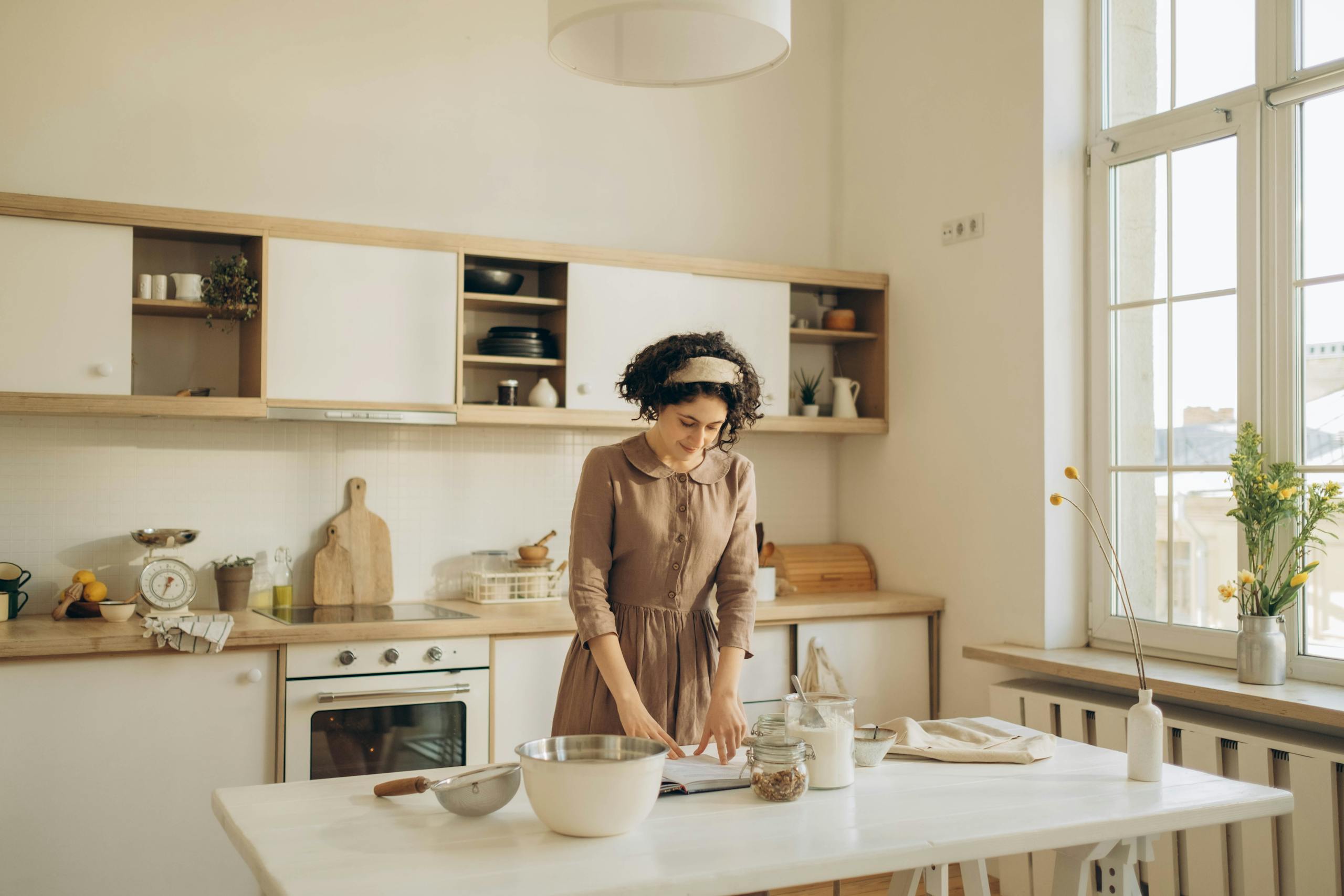
A homebody is someone who finds genuine comfort, restoration, and meaning in spending time at home, preferring familiar surroundings over frequent social outings. It has nothing to do with being antisocial, fearful, or lacking ambition. Being a homebody is a deeply personal orientation toward where and how you recharge, and for many introverts, it reflects something fundamental about how they process the world.
Most people assume the word carries a negative charge, like something is missing from the person who prefers their couch to a crowded bar. But that framing gets it completely backwards. Homebodies are not avoiding life. They are choosing a particular quality of it.
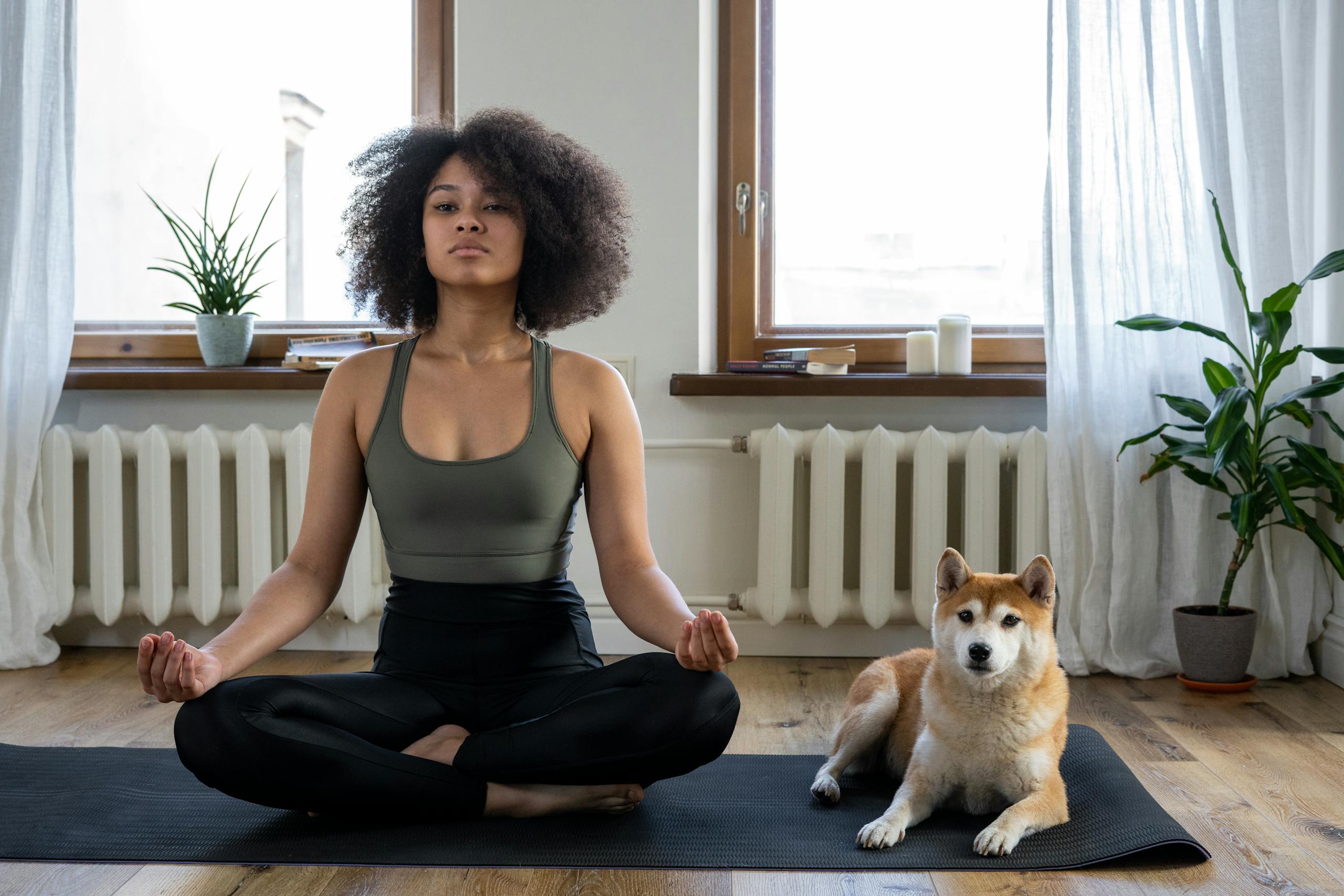
There is a lot more to explore in this space than a single definition can hold. Our Introvert Home Environment hub covers the full range of how introverts relate to their living spaces, from designing restorative rooms to building routines that actually stick. This article focuses on something more foundational: what being a homebody really means, where the concept comes from, and why so many introverts feel seen when they finally encounter this word.
Where Does the Word “Homebody” Actually Come From?
The word itself has been in the English language since at least the mid-1800s. It was used to describe someone who stayed close to home, someone whose domestic sphere was their preferred territory. Back then, it was not particularly charged with judgment. It was simply descriptive.
What drains your social battery?
Not all social exhaustion is the same. Our free quiz identifies your specific drain pattern and gives you personalised recharging strategies.
Find Your Drain PatternUnder 2 minutes · 8 questions · Free
Somewhere along the way, the word picked up a slightly apologetic quality. By the twentieth century, as mobility and social performance became markers of success, staying home started to feel like a retreat from ambition. The homebody became someone who could not keep up, rather than someone who had made a deliberate choice.
That shift matters because it shaped how a lot of introverts internalized their own preferences. I spent years doing exactly that. Running advertising agencies meant constant client dinners, industry events, and pitches that required me to perform an extroverted confidence I did not naturally possess. When I got home at the end of those days, I did not want to turn around and go back out. My team thought I was being antisocial. I thought I was failing at some unspoken requirement of leadership. Neither of us had the vocabulary to describe what was actually happening, which was that I was an INTJ who needed his home environment to function at full capacity.
The word “homebody” would have helped. Not because labels solve problems, but because they give you a framework for understanding your own experience without shame attached.
Is Being a Homebody the Same Thing as Being Introverted?
Close, but not identical. Introversion is a personality orientation describing where you direct your attention and how you restore your energy. Introverts typically recharge through solitude or low-stimulation environments rather than through social activity. Being a homebody is a behavioral pattern, a preference for spending time at home, that often grows out of that introversion.
An extrovert can be a homebody. Someone who loves people and gets energy from social interaction might still prefer hosting friends at home to going out. Conversely, some introverts travel extensively and feel deeply at home in motion. The categories overlap significantly, but they are not interchangeable.
What they share is this: both resist the cultural assumption that more external activity equals a richer life. A Psychology Today piece on why introverts need deeper conversations captures something relevant here. When you are wired for depth over breadth, the quality of your environment matters more than the quantity of places you visit. Home becomes the place where depth is possible.

What Does Being a Homebody Actually Feel Like From the Inside?
People who have not experienced it often imagine homebodies as passive, waiting for life to happen. The actual experience is almost the opposite. Home, for someone wired this way, is where life becomes most vivid.
My most productive thinking has never happened in a conference room. It happened in my home office at six in the morning, before anyone else was awake, when I could hear myself think. Some of the most creative work I did for clients came from those quiet hours, not from the brainstorming sessions with sticky notes on walls. The agency environment was where I executed. Home was where I actually thought.
That distinction, execution versus genuine thought, is something many homebodies recognize immediately. Home is not where they hide from the world. It is where they engage with it most honestly.
There is also a sensory dimension to this. Many people who identify strongly as homebodies are also highly sensitive to their environment. Noise levels, lighting, the texture of a space, all of these register more acutely than they might for someone less attuned. For those who identify as highly sensitive people, or HSPs, home becomes even more critical as a regulated environment. The connection between HSP minimalism and simplifying for sensitive souls speaks directly to this: when the outside world is overwhelming, the home environment becomes something you actively curate, not just inhabit.
Being a homebody, then, is not about passivity. It is about intentionality. About knowing what conditions allow you to be your fullest self, and choosing them without apology.
Why Has the Homebody Identity Gained So Much Cultural Momentum Recently?
Something shifted in the last decade, and it accelerated sharply around 2020. The homebody identity went from mildly embarrassing admission to something people wore as a badge. Social media filled with cozy corner aesthetics, reading nook setups, and “staying in is the new going out” declarations.
Part of this is generational. Younger generations have pushed back against hustle culture and the idea that constant busyness signals worth. Staying home and investing in your personal space became a form of self-care rather than a failure of ambition.
Part of it is also the pandemic, which forced almost everyone to reckon with their relationship to home. People who had never thought of themselves as homebodies discovered that they actually liked being there. People who already identified that way found their preferences suddenly validated by circumstance.
There is something worth examining in that validation, though. The homebody identity should not require a global crisis to feel legitimate. The work of accepting this orientation, for those of us who spent years apologizing for it, is internal. It is about recognizing that your preference for home is not a symptom of something wrong. It is a feature of how you are built.
Research published in PubMed Central on environment and psychological wellbeing points to how significantly our surroundings shape our mental and emotional states. For people already oriented toward home, this is not surprising. The home environment has always been doing psychological work, whether or not we named it.

What Separates a Homebody From Someone Who Is Just Avoiding the World?
This is the question that comes up most often, and it deserves a direct answer. The difference is orientation, not behavior. Two people can both spend most of their time at home. One is a homebody. The other might be struggling with anxiety, depression, or avoidance. The external behavior looks identical. The internal experience is completely different.
A homebody chooses home from a place of preference. They are not declining invitations because they are afraid. They are declining because they genuinely prefer what home offers. They feel content there, not trapped. They could go out. They just do not particularly want to.
Someone in avoidance mode feels relief when they cancel plans, but it is the relief of escaping something threatening, not the contentment of choosing something good. The anxiety does not dissipate once they are home. It often follows them.
I have seen this distinction play out in my own life. There were periods, especially during high-stress agency years, when I stayed home not because I wanted to but because I was depleted to the point of shutdown. That was not homebody contentment. That was burnout. The difference mattered enormously for how I needed to respond. Burnout required intervention. My natural homebody tendencies, once I recognized them as such, required acceptance.
A relevant piece from PubMed Central on social isolation and mental health draws a useful distinction between voluntary solitude and involuntary isolation. Homebodies are practicing something closer to the former. They are making a choice that aligns with their nature. That alignment is what makes it restorative rather than depleting.
How Do Homebodies Actually Spend Their Time?
One of the persistent misconceptions about homebodies is that they are simply doing nothing. Staring at walls. Waiting for life to resume. The reality tends to be the opposite. Homebodies are often among the most engaged, curious, and creatively productive people around. They have just redirected that energy inward.
Reading is a common anchor. Not as an escape, necessarily, but as a form of active engagement with ideas. The homebody book as a concept has its own genre now, literature written for and about people who find depth at home rather than in constant motion.
Creative projects thrive in home environments. Writing, cooking, drawing, building, tending plants, learning instruments. These are not consolation prizes for people who cannot get out. They are the actual substance of a life well-lived for someone oriented this way.
Connection happens too, often in ways that suit introverts better than crowded social settings. Online communities have become genuinely meaningful spaces for people who prefer depth over breadth in their relationships. Chat rooms for introverts represent one facet of this, spaces where the social interaction happens on terms that work for people who need to think before they speak and who find written communication more natural than real-time performance.
The point is that a homebody’s time at home is not empty. It is full of exactly the things that matter most to them, chosen deliberately, without the background noise of social obligation.

Can You Be a Homebody and Still Have a Fulfilling Career and Social Life?
Yes, and the assumption that you cannot is one of the more damaging myths surrounding this identity. Being a homebody does not mean being a hermit. It means having a strong preference for home as your primary restorative base. What you build from that base can be as ambitious, connected, and engaged as any life organized around external activity.
I ran agencies. I managed teams of thirty or forty people. I presented to boardrooms at Fortune 500 companies. None of that contradicts being a homebody. What it required was that I protect my home environment fiercely, because that was where I recovered the capacity to do all of it.
The introverts I have most admired over the years, whether they were on my teams or across the table from me in client meetings, shared a similar pattern. They did excellent work. They contributed meaningfully. They also had very clear limits around their personal time and space, and those limits were not weaknesses. They were the conditions that made the excellent work possible.
A piece from Frontiers in Psychology on introversion and performance offers useful context here. Introversion does not predict lower achievement. It predicts a different relationship to the conditions that enable achievement. For homebodies, those conditions are rooted in the home environment.
Socially, the same logic applies. Homebodies tend to have fewer but deeper relationships. They invest meaningfully in the connections they do maintain. Their social life may look sparse from the outside, but from the inside it is often rich in exactly the quality that matters most to them.
What Makes a Home Feel Right for a Homebody?
Not all home environments are created equal, and a homebody who has not thought intentionally about their space will not automatically experience it as restorative. The environment has to be designed, consciously or not, to support the kind of inner life that homebodies are trying to protect.
Comfort matters in a specific way. Not luxury necessarily, but a quality of physical ease that allows the mind to relax. Lighting is significant. Soft, warm light reads differently to a sensitive nervous system than harsh overhead fluorescence. Sound management matters. Temperature. The presence of things that carry personal meaning, books, objects, art, plants, anything that signals to the nervous system that this space belongs to you.
Clutter, on the other hand, tends to work against the homebody’s goals. When the environment is visually chaotic, the mind often mirrors that chaos. Many introverts who have explored minimalism report that simplifying their space did not make it feel emptier. It made it feel more like theirs.
Thinking about what to add to a space is part of this too. Thoughtful objects, chosen for how they feel rather than how they look in a photo, make a real difference. The right gifts for homebodies tend to follow this logic: things that enhance the sensory experience of being home, that add warmth or texture or quiet pleasure to daily life.
The deeper point is that a homebody’s relationship with their space is active, not passive. They are not just occupying it. They are tending it, shaping it, returning to it with intention. That relationship is itself a form of self-knowledge.
How Do You Explain Being a Homebody to People Who Do Not Get It?
This is a genuinely practical challenge. Family members who interpret your preference for staying home as rejection. Friends who read every declined invitation as evidence that something is wrong. Colleagues who assume that because you do not come to every after-work event, you are not a team player.
The most effective approach I have found, both personally and in watching others handle it, is to explain what you are moving toward rather than what you are moving away from. “I need to recharge” sounds defensive. “I’m genuinely looking forward to a quiet evening at home” sounds like a person who knows themselves.
There is also value in being specific about what home gives you. Not just rest, but the particular kind of thinking or creating or connecting that only happens there. When people understand that your home time is productive in ways that matter to you, it is harder for them to frame it as avoidance.
That said, not everyone will understand, and that is acceptable. Some relationships require more negotiation than others around this. A Psychology Today article on introvert-extrovert conflict resolution offers a practical framework for those conversations, particularly when the homebody preference creates friction with someone who has the opposite orientation.
What you are not obligated to do is apologize for who you are. The homebody identity is not a phase you will grow out of or a problem you need to solve. It is a legitimate way of being in the world, and the people worth keeping close will eventually come to respect it, even if they do not share it.

Is the Homebody Identity Something to Embrace or Something to Work Through?
Both questions assume the same starting point: that your orientation toward home is a problem requiring a response. What if it is neither something to celebrate performatively nor something to fix, but simply something to understand accurately?
My experience, and I suspect this resonates with a lot of people reading this, is that the work is not about changing the preference. It is about separating the preference from the shame that got attached to it somewhere along the way. Once you do that, the identity stops being a source of internal conflict and becomes something much more useful: information about yourself.
That information tells you what environments bring out your best thinking. It tells you how much social activity you can sustain before you need to recover. It tells you what to protect when life gets demanding and what to prioritize when you have a choice. That is not a limitation. That is self-knowledge, and self-knowledge is one of the most practical things a person can possess.
I spent a long time in advertising trying to be the kind of leader who thrived on constant external stimulation. Networking events, client entertainment, team happy hours. I was present for all of it, but I was running on fumes by the end of most weeks. The version of me that understood and accepted the homebody orientation was a better leader, not because I stopped showing up, but because I stopped treating my home time as something to apologize for and started treating it as the foundation everything else was built on.
That shift did not happen overnight. But it started with understanding what the word actually meant, and recognizing that it described me accurately, without the negative charge I had always assumed came with it.
There is much more to explore across all the dimensions of how introverts relate to their homes and the spaces they build for themselves. Our complete Introvert Home Environment hub brings together resources on everything from sensory design to daily routines, all through the lens of what actually works for people wired this way.
Running on empty?
Five drain profiles, each with specific triggers, warning signs, and a recharging playbook.
Take the Free QuizUnder 2 minutes · 8 questions · Free
About the Author
Keith Lacy is an introvert who’s learned to embrace his true self later in life. After 20 years in advertising and marketing leadership, including running agencies and managing Fortune 500 accounts, Keith now channels his experience into helping fellow introverts understand their strengths and build fulfilling careers. As an INTJ, he brings analytical depth and authentic perspective to every article, drawing from both professional expertise and personal growth.
Frequently Asked Questions
What is the actual definition of a homebody?
A homebody is a person who genuinely prefers spending time at home over frequent social outings or travel. The preference is rooted in finding comfort, restoration, and meaning in familiar domestic surroundings. It is a voluntary orientation, not a symptom of social anxiety or avoidance, and it reflects a deeper pattern in how certain people recharge and engage with their inner lives.
Are all introverts homebodies?
Not necessarily. Introversion describes how a person restores their energy, typically through solitude or low-stimulation environments. Being a homebody describes a behavioral preference for home as the primary space for that restoration. Many introverts are also homebodies, but some introverts recharge through travel, nature, or other quiet environments outside the home. The overlap is significant, yet the two are distinct orientations.
Is being a homebody a sign of depression or social anxiety?
Not on its own. The difference lies in the internal experience. A homebody chooses home from a place of genuine preference and feels content there. Someone struggling with depression or anxiety may stay home because the outside world feels threatening or overwhelming, and the relief they feel is temporary rather than restorative. If staying home feels like escape from something frightening rather than movement toward something good, that distinction is worth exploring with a professional.
Can a homebody have a successful career and active social life?
Absolutely. Being a homebody means you prioritize home as your restorative base, not that you withdraw from professional or social life entirely. Many homebodies have demanding careers and meaningful relationships. What distinguishes them is that they protect their home time intentionally, because that time is what makes sustained engagement with the outside world possible. The home is the foundation, not a retreat from ambition.
How do you make your home work better if you identify as a homebody?
Start with the sensory basics: lighting, sound levels, temperature, and visual clutter. Homebodies tend to be more attuned to their environment than average, so small adjustments often make a meaningful difference. Beyond that, the goal is to fill the space with things that carry personal meaning and support the activities you find most restorative, whether that is reading, creating, thinking, or simply being still. A home that reflects who you actually are tends to feel more restorative than one assembled from external expectations.