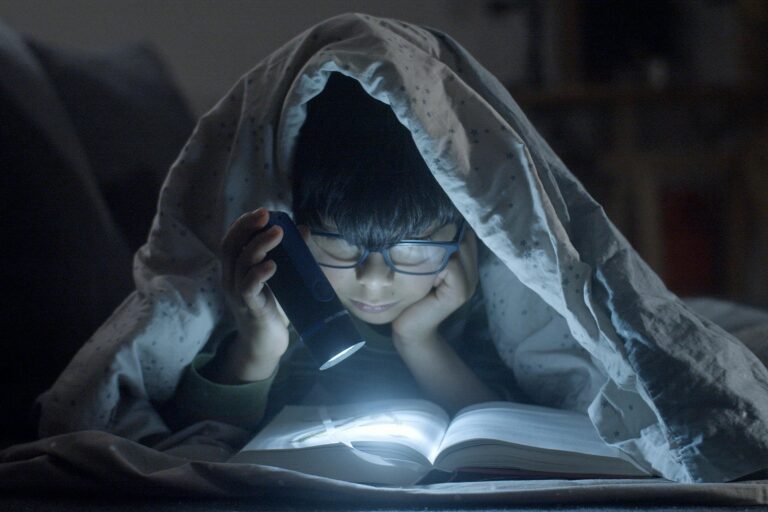
Love shyness is a specific, persistent pattern where someone deeply wants romantic connection but feels paralyzed by anxiety, self-consciousness, or fear when actually pursuing it. It goes beyond ordinary nervousness, sitting somewhere between shyness and social anxiety, and it shapes how a person approaches attraction, dating, and emotional vulnerability in ways that can feel confusing even to the person experiencing it.
Many introverts recognize this pattern without having a name for it. The wanting is real. The longing is real. What keeps getting in the way is the gap between internal feeling and outward expression, a gap that can widen over years if it goes unexamined.
There’s a broader conversation happening in our Introvert Dating and Attraction hub about how introverts experience romance differently, from how attraction builds slowly to how emotional expression often runs deeper than it appears on the surface. Love shyness fits squarely into that conversation, because it’s rarely about a lack of feeling. It’s about what happens between feeling and action.
What Does Love Shyness Actually Feel Like From the Inside?
Describing love shyness to someone who hasn’t experienced it is genuinely difficult. From the outside, it can look like disinterest, aloofness, or even arrogance. From the inside, it feels more like standing behind glass, watching something you want but unable to reach through.
What’s your personality type?
Take our free 40-question assessment and get a detailed personality profile with dimension breakdowns, context analysis, and personalised insights.
Discover Your Type8-12 minutes · 40 questions · Free
I ran advertising agencies for over two decades. My whole professional life involved presenting, pitching, persuading. I could walk into a room of Fortune 500 executives and make a confident case for a multi-million dollar campaign without breaking a sweat. And yet, for much of my earlier life, the idea of expressing genuine romantic interest to someone I actually cared about felt like a completely different kind of exposure, one I wasn’t equipped to handle with the same composure.
That asymmetry confused me for years. Professional confidence and personal vulnerability operate on entirely different circuits. Being capable in one domain doesn’t automatically transfer to the other, especially when you’re wired to process emotion internally and reveal it slowly.
People who experience love shyness often describe a few consistent features. There’s the anticipatory anxiety, the dread that builds before any potential romantic interaction. There’s the internal monologue that runs on overdrive, analyzing what to say, how it might land, what it would mean if it went wrong. And there’s the aftermath, the replaying of every moment after the fact, cataloguing what was said versus what was meant.
What makes this particularly relevant to introverts is that many of these features overlap with how introverts naturally process social experience. The difference is one of intensity and focus. An introvert might replay a conversation; someone with love shyness replays the conversation specifically through the lens of romantic adequacy and fear of rejection.
Is Love Shyness the Same as Introversion?
No, and conflating the two does a disservice to both. Introversion describes where you draw energy from and how you prefer to process the world. Love shyness describes a specific anxiety pattern around romantic pursuit. Many introverts are not love shy at all. They’re simply more deliberate and selective about who they open up to, and they move at a slower pace toward intimacy.
That said, the two can coexist and frequently do. An introvert who also carries love shyness faces a compounded challenge. Their natural tendency toward internal processing means emotional experiences get examined thoroughly before being expressed. When love shyness is layered on top, that examination becomes a kind of trap, where the fear of getting it wrong prevents expression from happening at all.
There’s also an important distinction from social anxiety more broadly. Psychology Today’s exploration of the romantic introvert points out that introverts can be socially capable and even charming in the right contexts. Love shyness tends to be more domain-specific, activated most strongly in romantic contexts rather than social ones generally.
Some people experience love shyness alongside highly sensitive person traits. The overlap makes sense: both involve heightened emotional processing and a tendency to feel things more intensely than average. If you recognize yourself in that combination, the HSP Relationships dating guide covers how that sensitivity shapes romantic experience in specific, practical ways.
Where Does Love Shyness Come From?
This is where it gets genuinely complex, because love shyness doesn’t have a single origin. For some people, it traces back to early experiences of rejection or humiliation around romantic interest. The emotional memory of that experience becomes a warning system, one that fires even when the current situation is entirely different from the original one.
For others, it develops more gradually from a pattern of overthinking and self-monitoring. Each avoided interaction reinforces the avoidance, and over time the gap between wanting and acting grows wider. There’s a useful body of work on how chronic self-focus can amplify social anxiety, and this research published through PubMed Central examines how self-focused attention patterns contribute to social anxiety more broadly, a framework that applies well here.
There’s also a temperament component worth acknowledging. Some people are simply wired with a more reactive nervous system when it comes to social evaluation. That’s not a flaw or a disorder. It’s a variation in how the brain weights threat and reward in interpersonal contexts. For someone with this wiring, the potential cost of romantic rejection can feel disproportionately large compared to the potential gain of connection.
Early in my agency career, I managed a creative director who was extraordinarily talented but almost completely unable to advocate for his own ideas in client meetings. He’d present work brilliantly when I was in the room, but the moment a client pushed back, he’d fold immediately, not because he agreed with the feedback, but because conflict felt unbearable to him. That same pattern showed up in how he described his personal life. The fear of someone’s disapproval had become so central to his operating system that it constrained him in every domain where approval was at stake.
Love shyness often works similarly. It’s not always about romance specifically. It’s about what romantic rejection represents to the person experiencing it, and that representation is shaped by a lifetime of accumulated experience and temperament.
How Love Shyness Shows Up in Introvert Relationship Patterns
One of the most common patterns I hear from introverts who identify with love shyness is a tendency toward what I’d call strategic proximity. They find ways to be near the person they’re attracted to without ever creating a moment of explicit romantic declaration. They become excellent friends. They show up consistently. They demonstrate care through action rather than words. And then they wait, hoping the other person will somehow read the subtext and make the first move.
This connects directly to something worth examining in how introverts fall in love. The patterns introverts follow when falling in love often involve a slow build of emotional investment before any outward expression. For someone who is also love shy, that slow build can extend indefinitely because the internal threshold for “safe enough to express” keeps moving.
Another common pattern is idealization from a distance. Someone who is love shy may develop deep feelings for a person they haven’t actually spent much time with, because the imagined relationship carries none of the risk of the real one. The fantasy is safe. The actual conversation is not. This creates a painful dynamic where the emotional investment is real but completely disconnected from any actual relational progress.
Introverts also tend to express affection through specific, often non-verbal channels, which can make love shyness harder to detect from the outside. Understanding how introverts show affection through their love language helps clarify why someone can feel deeply connected and yet appear emotionally unavailable to the person they care about.
There’s also a particular challenge that arises when two people with love shyness are drawn to each other. Both may be waiting for the other to signal safety. Both may be interpreting the other’s hesitation as disinterest. The dynamic can stall indefinitely, with both people feeling something real and neither finding a way to say so. The experience of two introverts falling in love has its own distinct texture, and when love shyness is present in both partners, the communication challenges multiply.
The Role of Fear in Keeping Love Shyness in Place
Fear is the engine here, but it’s worth being specific about what kind of fear. It’s rarely a simple fear of rejection in the abstract. More often, it’s a fear of what rejection would confirm about the person experiencing it. There’s a deeply personal story underneath the avoidance, one that says something like: if they say no, it means I’m not enough. Or: if I express this and it goes badly, I’ll lose the connection I already have. Or: I don’t know how to be in a relationship, and if I try, that inadequacy will become visible.
Those stories are understandable. They’re also, in most cases, not accurate. But they’re powerful because they operate below the level of conscious reasoning. You can know intellectually that rejection doesn’t define your worth and still feel in your body like it does.
One of the things I’ve found genuinely useful, both personally and in watching others work through this, is separating the fear from the story it’s attached to. The fear is a signal. It doesn’t have to be a verdict. A PubMed Central review on emotion regulation and social behavior offers relevant context on how the stories we attach to emotional signals shape our behavioral responses, and why changing the story can shift the response even when the underlying emotion remains.
What I’ve also noticed is that love shyness tends to be self-reinforcing in a specific way. Each time the fear wins and the expression doesn’t happen, the fear gets a small confirmation that the avoidance was correct. The person didn’t reject you because you never gave them the chance. That feels like safety, but it’s actually just a postponed reckoning.
Can Online Dating Change the Equation for Love-Shy Introverts?
For many love-shy introverts, digital communication offers something genuinely valuable: a buffer between feeling and expression. Typing a message allows for more deliberate construction of what you want to say. The absence of real-time social pressure removes some of the physical anxiety that face-to-face interaction triggers. And the asynchronous nature of messaging gives both people time to process before responding.
Truity’s analysis of introverts and online dating explores this dynamic honestly, noting both the genuine advantages and the ways digital communication can become another avoidance strategy if it never leads to real-world connection. That tension is worth sitting with. Online dating can be a bridge or a comfortable substitute for the bridge, depending on how you use it.
What I’ve seen in my own observations is that love-shy introverts often do well in the early stages of online dating, where the communication is text-based and there’s time to be thoughtful. The challenge tends to arrive at the transition point, when moving from messaging to an actual date requires the same kind of direct expression that feels threatening in person.
The solution isn’t to avoid that transition indefinitely. It’s to recognize that the anxiety at that point is predictable and doesn’t mean something is wrong. It means you’re doing something that matters to you, and that’s exactly when the nervous system gets loud.
What Actually Helps: Moving From Awareness to Action
Something I want to be honest about here: there’s no clean fix for love shyness. It’s not a problem you solve once and move past. It’s a pattern you gradually change through repeated small acts of courage, each one building a slightly different relationship with the fear.
What that looks like in practice varies by person. For some, it starts with getting clearer on what they actually feel before trying to express it. The process of understanding and working through introvert love feelings matters here, because you can’t communicate something you haven’t yet made sense of internally. Many love-shy introverts rush to the expression problem without first addressing the clarity problem.
For others, the work is about tolerating discomfort in lower-stakes situations first. Not practicing on the person you care most about, but building a general capacity to sit with social vulnerability without immediately retreating. This might mean being more direct in everyday conversations, expressing preferences, disagreeing respectfully, asking for what you need in non-romantic contexts. Each of those small acts trains the nervous system to tolerate the feeling of being seen.
I spent years in agency environments where the culture rewarded confident extroverted performance. I watched myself adapt to that culture in professional settings while remaining completely guarded in personal ones. What eventually shifted wasn’t a sudden burst of confidence. It was a slow accumulation of evidence that vulnerability didn’t destroy me. That evidence came from small moments, not grand gestures.
There’s also something worth saying about the role of conflict in love-shy relationships. People who fear romantic rejection often fear relational conflict just as much, because both feel like potential evidence that they’re unwanted or inadequate. Learning to work through disagreement without it feeling catastrophic is genuinely part of the work. The approach to conflict that works for highly sensitive people offers some useful frameworks here, particularly around how to stay present during disagreement without shutting down or escalating.

When Love Shyness Has Been Present for a Long Time
One of the harder conversations around love shyness involves what happens when the pattern has been in place for years or decades. At a certain point, avoidance stops feeling like avoidance and starts feeling like identity. “I’m just not someone who does relationships” becomes a story that protects against the risk of trying, but it also forecloses on something real.
I’ve met people in their forties and fifties who carry this pattern and have constructed entire lives around it. Not unhappy lives necessarily, but lives with a particular kind of absence in them. The longing didn’t go away. It just got quieter as the years passed, which is a different thing from being resolved.
Psychology Today’s guide to dating an introvert touches on the importance of patience and the willingness to create space for someone to open up at their own pace. That’s genuinely useful advice for partners of love-shy introverts. What it doesn’t address is the internal work that the love-shy person themselves needs to do, which is where most of the real change happens.
There’s also a body of academic work worth acknowledging here. Research from Loyola University Chicago has examined love shyness as a distinct construct, separate from general shyness, with particular relevance to how it affects men’s willingness to initiate romantic relationships. The findings suggest that love shyness involves a specific kind of self-concept around romantic competence, not just general social anxiety, which has implications for how it’s best addressed.
The path forward for someone with longstanding love shyness usually involves some combination of honest self-examination, gradual behavioral change, and in many cases, professional support. That’s not a weakness. It’s an acknowledgment that some patterns are too deeply embedded to shift through willpower alone.
What Partners and Potential Partners Should Understand
If you’re drawn to someone who seems love shy, a few things are worth holding onto. Their hesitation is almost certainly not about you. It predates you and runs deeper than any single interaction. Pushing them to move faster than they’re able to will generally make things worse, not better. What tends to help is consistency, predictability, and a demonstrated track record of not punishing vulnerability when it does appear.
That said, being endlessly patient with someone who never takes any steps forward isn’t sustainable either. There’s a difference between giving someone space to move at their own pace and waiting indefinitely for movement that isn’t coming. At some point, the love-shy person has to be willing to do the work, even if that work is uncomfortable. A partner can create conditions that make it easier. They can’t do it for them.
What I’ve observed in relationships where one person carries significant love shyness is that the dynamic works best when both people can name what’s happening. When the love-shy person can say something like “I feel this strongly and I’m also genuinely scared,” that honesty itself becomes a form of intimacy. It’s not the same as acting without fear, but it’s a meaningful step toward connection.
Healthline’s piece on introvert and extrovert myths makes an important point that’s relevant here: introversion and emotional unavailability are not the same thing. Many introverts are deeply emotionally available once they feel safe. Love shyness can obscure that availability, making an emotionally rich person appear distant or uninterested when they’re actually neither.
There’s much more on how introverts build and sustain romantic connection in our complete Introvert Dating and Attraction hub, including practical perspectives on everything from first dates to long-term partnership dynamics.
Curious about your personality type?
Our free MBTI assessment goes beyond the four letters. Get a full breakdown of your scores, see how your type shows up at work and in relationships.
Take the Free Test8-12 minutes · 40 questions · Free
About the Author
Keith Lacy is an introvert who’s learned to embrace his true self later in life. After 20 years in advertising and marketing leadership, including running agencies and managing Fortune 500 accounts, Keith now channels his experience into helping fellow introverts understand their strengths and build fulfilling careers. As an INTJ, he brings analytical depth and authentic perspective to every article, drawing from both professional expertise and personal growth.
Frequently Asked Questions
Is love shyness a recognized psychological condition?
Love shyness is not a formal clinical diagnosis in the way that social anxiety disorder is, but it has been studied as a distinct psychological construct. It describes a persistent pattern of anxiety specifically around romantic pursuit, separate from general shyness or social anxiety. Some researchers have examined it as its own phenomenon with particular features around self-concept and romantic competence. Many people who experience it find that it overlaps with but is not identical to other recognized patterns like attachment anxiety or social anxiety disorder.
Can introverts overcome love shyness on their own?
Some introverts do make meaningful progress with love shyness through self-reflection, gradual behavioral change, and building tolerance for vulnerability in lower-stakes situations. That said, when the pattern is deeply embedded or has been present for many years, working with a therapist who understands anxiety and relational patterns can accelerate the process significantly. There’s no single right answer here. What matters is honest assessment of whether self-directed work is producing actual change, or whether it’s becoming another form of comfortable avoidance.
How is love shyness different from just being selective about relationships?
Selectivity is a deliberate preference based on values and compatibility. Love shyness is an anxiety-driven pattern that interferes with pursuing connection even when the person genuinely wants it. The clearest distinction is internal experience: a selective person feels at peace with their choices, while a love-shy person typically feels frustrated, stuck, or sad about the gap between what they want and what they’re able to do. If the avoidance feels like a relief from anxiety rather than a genuine preference, it’s more likely love shyness than selectivity.
Does love shyness affect men and women differently?
Early research on love shyness focused predominantly on men, partly because cultural expectations around romantic initiation have historically placed more pressure on men to make the first move. That asymmetry means love shyness may carry different social consequences depending on gender, since someone who is expected to initiate but cannot faces a different set of obstacles than someone who can more easily wait for initiation. That said, love shyness is not exclusive to any gender, and the internal experience of wanting connection while feeling unable to pursue it is recognizable across all genders.
What’s the first practical step for someone who recognizes love shyness in themselves?
The most useful first step is usually getting specific about what the fear is actually about, not “rejection” as a general concept, but the particular story that rejection would confirm. Is it a story about being fundamentally unlovable? About not knowing how to be in a relationship? About being too much or not enough in some specific way? Naming that story with precision makes it possible to examine whether it’s actually true, and to start gathering evidence that contradicts it. That internal clarity work tends to precede any meaningful behavioral change.