Emotional intelligence versus IQ sits at the center of one of the most debated questions in psychology and leadership: which matters more for real-world success? IQ measures cognitive ability, how quickly you process information, solve problems, and retain knowledge. Emotional intelligence measures something harder to quantify, your ability to recognize, understand, and manage emotions in yourself and others. Both matter, but they operate in entirely different arenas of human experience.
What surprises most people is how often emotional intelligence outperforms raw cognitive ability in the contexts that shape careers and relationships. A high IQ can get you in the room. What keeps you there, and what makes people want to follow you, tends to be something else entirely.
I spent more than two decades running advertising agencies, managing creative teams, pitching Fortune 500 clients, and building organizations from the inside out. My IQ got me through strategy decks and competitive analysis. My emotional intelligence, or the lack of it in my early years, determined almost everything else. And as an INTJ who spent a long time misreading my own emotional landscape, I have a lot to say about why this distinction matters so much more than most people realize.

Before we go further, if you’re exploring how your personality type shapes the way you process emotion and connect with others, our Introvert Social Skills and Human Behavior hub covers the full range of these themes. It’s a good place to build context for what we’re examining here.
What Is the Actual Difference Between Emotional Intelligence and IQ?
IQ, or intelligence quotient, has been measured and studied for over a century. It captures a specific cluster of cognitive abilities: logical reasoning, verbal comprehension, spatial processing, and working memory. It’s a useful predictor of academic performance and certain types of problem-solving. The National Institutes of Health notes that cognitive ability remains one of the most studied constructs in psychological science, with meaningful links to educational and occupational outcomes.
What’s your personality type?
Take our free 40-question assessment and get a detailed personality profile with dimension breakdowns, context analysis, and personalised insights.
Discover Your Type8-12 minutes · 40 questions · Free
Emotional intelligence, often abbreviated as EQ or EI, is a more recent framework. Psychologists Peter Salovey and John Mayer introduced the formal model in 1990, describing it as the ability to perceive, use, understand, and manage emotions. Daniel Goleman later brought the concept to a mainstream audience with his work in the mid-1990s, expanding it into a framework that included self-awareness, self-regulation, motivation, empathy, and social skill.
The critical distinction is this: IQ tells you how well someone can process information. Emotional intelligence tells you how well someone can process people, including themselves. One is about cognitive horsepower. The other is about relational wisdom. And in most of the environments that define a career, relational wisdom is what separates good from exceptional.
Many introverts, myself included, have wrestled with the assumption that quietness signals low emotional intelligence. That’s a misread. Introversion is about energy and stimulation preferences, not emotional depth. In fact, the internal processing that characterizes introverted thinking often produces a richer emotional awareness than people give us credit for. If you want to develop the social expression of that awareness, improving social skills as an introvert is a practical starting point.
Can High IQ Actually Work Against You in Leadership?
Yes. And I’ve seen it happen more times than I can count.
Early in my agency career, I hired a strategist who was genuinely one of the sharpest people I’d ever worked with. His analytical ability was remarkable. He could dismantle a brief, identify gaps in a competitive landscape, and construct arguments that were almost impossible to refute. But he couldn’t read a room. He couldn’t tell when a client was disengaging emotionally, even as their body language screamed it. He’d push a point past the moment it landed, not because he was arrogant, but because he was so focused on the logic that he missed the human signals entirely.
We lost a significant account partly because of a presentation he led. The client’s concern wasn’t the strategy. It was that they didn’t feel heard. No amount of intellectual rigor compensated for that.
High cognitive ability without emotional calibration can produce what some psychologists call “brilliant jerk” dynamics: people who are right but unpleasant to be around, who win arguments but lose relationships. In leadership roles, this creates a particular kind of damage. Teams stop bringing real problems forward. Clients manage around the person rather than through them. The organization pays a quiet, ongoing tax for the emotional gap.
The introvert advantage in leadership, as Psychology Today frames it, often comes from exactly the qualities that emotional intelligence requires: careful observation, deliberate response, and a tendency to think before speaking. These aren’t limitations. They’re assets, when you know how to use them.

Why Do Introverts Often Have a Natural Edge in Emotional Intelligence?
This question matters to me personally, because for years I didn’t believe it was true of me.
As an INTJ, my dominant cognitive functions are introverted intuition and extraverted thinking. I’m wired to process internally, build mental models, and reach conclusions through pattern recognition rather than emotional resonance. For a long time, I interpreted that as evidence that I was emotionally limited. I watched colleagues who led with warmth and assumed they had something I lacked.
What I eventually understood is that emotional intelligence isn’t about being expressive or warm by default. It’s about accuracy: accurately reading your own emotional state, accurately reading others, and choosing responses that serve the situation. Introverts, because of their tendency toward internal processing, often develop a finely tuned emotional radar. We notice what’s unspoken. We pick up on shifts in tone and body language. We sit with discomfort long enough to understand it rather than immediately reacting to it.
The challenge for many introverts isn’t perceiving emotion. It’s expressing and translating that perception into connection. That’s a skill worth building. Becoming a better conversationalist as an introvert is one concrete way to close that gap between what you notice and what you’re able to communicate.
The American Psychological Association defines introversion as a personality orientation characterized by a preference for the internal world of thoughts and feelings. That orientation, when paired with emotional awareness, creates something genuinely powerful: the capacity for deep, attentive connection that doesn’t burn through your energy reserves the way constant social performance does.
How Does Self-Awareness Connect Emotional Intelligence and Cognitive Ability?
Self-awareness is the foundation of emotional intelligence. Without it, neither IQ nor EQ operates at full capacity. You can be analytically brilliant and still make consistently poor decisions if you don’t understand the emotional filters distorting your thinking. You can be socially perceptive and still sabotage relationships if you’re blind to your own patterns.
I’ve written about this in other contexts, but the most significant professional growth I experienced came not from learning new skills, but from developing a clearer picture of how I was operating emotionally. I had a habit, particularly under pressure, of retreating into analysis when what the situation called for was presence. A client would raise a concern and I’d respond with data. What they needed was acknowledgment. My IQ was firing. My EQ was offline.
Practices that build self-awareness tend to have compounding returns. Meditation and self-awareness work together in ways that are particularly valuable for introverts, because they deepen the internal processing we already do naturally and add intentionality to it. Rather than just noticing your emotional state, you begin to understand its origins and its effects on your behavior.
There’s also a cognitive dimension to self-awareness that doesn’t get discussed enough. Knowing how your mind works, understanding your cognitive strengths and blind spots, is itself a form of intelligence. People who are aware of their own reasoning patterns are better equipped to question their assumptions, seek disconfirming evidence, and avoid the overconfidence that high IQ can sometimes produce.
If you’re curious about where your natural strengths and tendencies lie, our free MBTI personality test can give you a useful framework for understanding your own cognitive and emotional wiring.
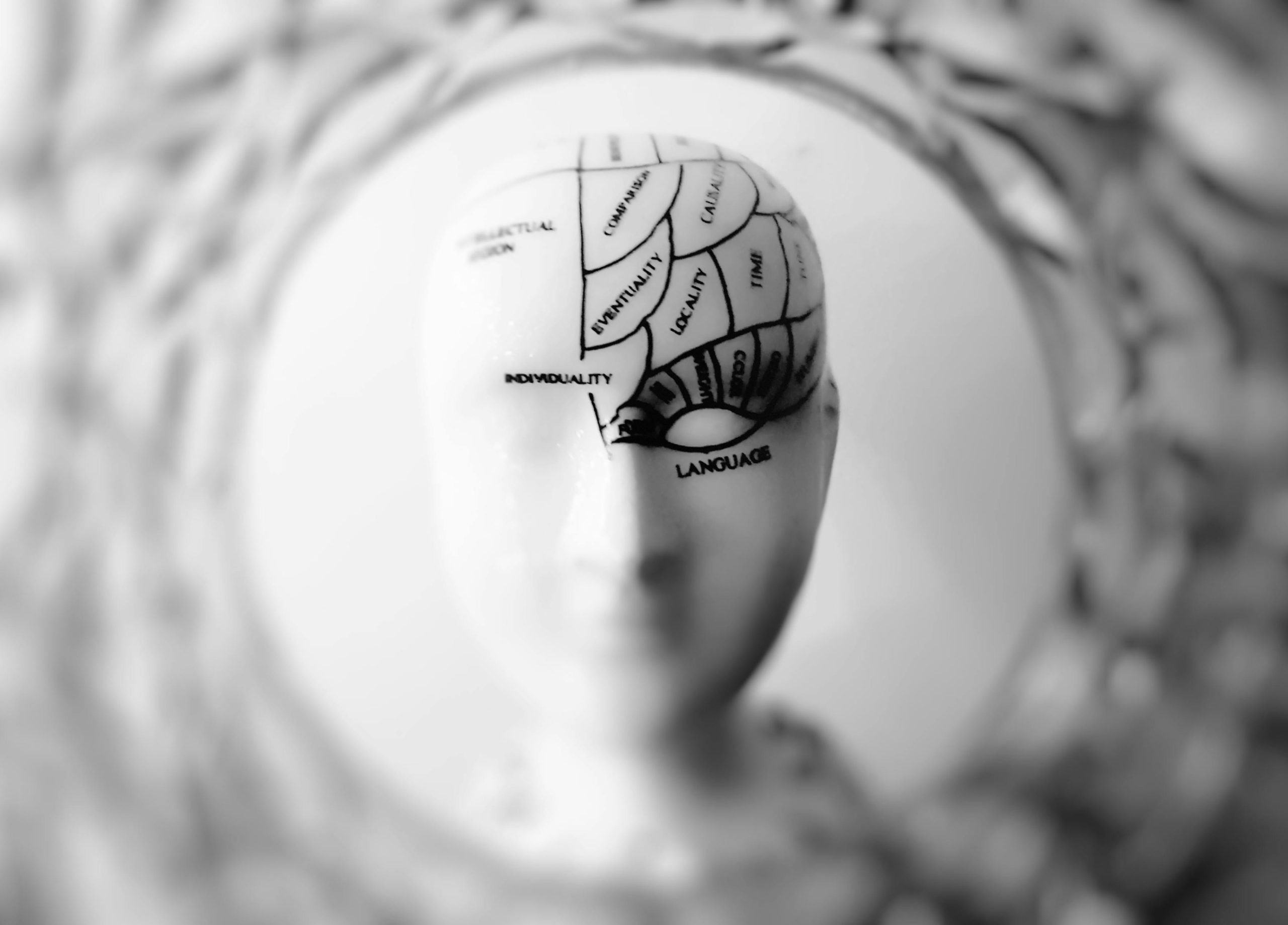
What Happens When Overthinking Hijacks Your Emotional Intelligence?
Here’s something I wish someone had told me earlier: a high IQ without emotional regulation doesn’t just underperform. It can actively work against you by feeding overthinking loops that exhaust your capacity for clear perception.
Introverts with strong analytical minds are particularly susceptible to this. We process deeply, which is a genuine strength. But deep processing without emotional grounding can spiral into rumination. You replay a conversation twenty times, analyzing every word, but you’re not getting closer to clarity. You’re just generating more noise.
I’ve been there. After a difficult client meeting early in my career, I spent two days mentally reconstructing every exchange, trying to identify exactly where things went wrong. By the time I’d finished, I had a beautifully detailed analysis of a problem I could no longer do anything about. What I’d missed was the simple emotional reality: the client felt dismissed, and what they needed from me was a phone call and a genuine apology, not a postmortem.
Overthinking is one of the most common ways cognitive ability and emotional intelligence fall out of sync. If this pattern is familiar, overthinking therapy approaches offer some practical frameworks for interrupting those loops before they consume your emotional bandwidth.
The connection between overthinking and emotional pain runs deep. Some of the most difficult overthinking patterns emerge after personal betrayal or loss, when the analytical mind tries to make sense of something that resists logical explanation. If you’ve experienced that particular kind of spiral, working through overthinking after betrayal addresses the emotional dimension that pure cognitive processing can’t reach on its own.
Can Emotional Intelligence Be Developed, or Are You Born With It?
This is one of the most common questions I hear, and the answer matters enormously for how you approach your own development.
IQ is largely stable after early childhood. The cognitive architecture you’re working with in adulthood is, in most respects, the architecture you’ll always have. You can improve specific skills, expand your knowledge base, and become more efficient in how you apply your intelligence. But the underlying processing capacity doesn’t change dramatically.
Emotional intelligence is different. The components of EQ, particularly self-awareness, empathy, and emotional regulation, are genuinely learnable. They develop through experience, reflection, and intentional practice. Neurological research published in PubMed Central supports the idea that emotional processing capacities are shaped by experience and can be strengthened through deliberate effort. The brain’s plasticity means that the circuits involved in emotional regulation remain responsive to training well into adulthood.
What this means practically is that emotional intelligence is less a fixed trait and more a set of skills with a learning curve. Some people start with more natural aptitude. Others develop it through hard experience. But almost everyone can improve, and the improvements compound over time in ways that pure cognitive ability doesn’t.
I’ve watched this happen on my own teams. One of the most emotionally intelligent leaders I ever managed started out as someone who struggled to read the room. She was technically excellent, deeply introverted, and initially uncomfortable with the interpersonal dimensions of her role. Over several years, through deliberate effort and a willingness to sit with discomfort, she developed a quality of presence that made her genuinely irreplaceable. Her IQ didn’t change. Her EQ grew substantially.

How Does Emotional Intelligence Shape the Way Introverts Build Relationships?
Introverts tend to build fewer, deeper relationships rather than broad social networks. This is often framed as a limitation, but it’s actually a direct expression of high emotional intelligence in action.
Depth requires attunement. To build a genuinely close relationship, you have to be able to track another person’s emotional state over time, notice what matters to them, respond to what they don’t say as much as what they do, and offer presence rather than performance. These are emotionally intelligent behaviors, and introverts often practice them more consistently than their extroverted counterparts precisely because they’re not spreading their relational energy across dozens of surface-level connections.
As Psychology Today explores in its research on introvert friendships, introverts often prioritize quality of connection over quantity, which tends to produce relationships characterized by mutual trust and genuine understanding.
That said, emotional intelligence also requires a degree of social engagement that can feel effortful for introverts. The perception side of EQ, noticing emotional signals in others, comes naturally to many of us. The expression side, communicating empathy, warmth, and care in ways others can receive, requires energy and practice. This is where developing emotional intelligence as a speaker or communicator becomes relevant, particularly for introverts in leadership or client-facing roles.
The Harvard Health guide to introvert social engagement offers a useful reframe: success doesn’t mean become more extroverted. It’s to find sustainable ways to connect that don’t require you to abandon your natural wiring. Emotional intelligence supports that goal because it gives you more precise tools for connection, tools that work with your temperament rather than against it.
What Does the Research Actually Say About EQ and Career Success?
The honest answer is that the relationship between emotional intelligence and career outcomes is real but nuanced. EQ predicts performance most strongly in roles that involve significant interpersonal demands: leadership, sales, client management, team collaboration, and conflict resolution. In highly technical roles where independent work dominates, cognitive ability tends to be a stronger predictor.
What’s interesting is the interaction between the two. People with both high cognitive ability and high emotional intelligence tend to outperform those with either alone. IQ provides the analytical foundation. EQ determines how effectively that intelligence gets applied in real-world contexts, where other people’s reactions, motivations, and emotional states are constant variables.
Research on social cognition from PubMed Central highlights how the ability to understand others’ mental and emotional states, what psychologists call theory of mind, is a distinct cognitive capacity that operates alongside but separately from general intelligence. You can be excellent at logical reasoning and still struggle to model what another person is thinking or feeling. That gap is where emotional intelligence does its most important work.
In my agency years, the pattern was consistent. The people who advanced fastest weren’t always the sharpest strategists or the most technically skilled creatives. They were the ones who could manage up and down simultaneously, who knew how to read a client’s unspoken concerns, who could give feedback in ways that motivated rather than deflated. Emotional intelligence was the differentiator, even when nobody was calling it that.
It’s also worth noting what Healthline’s analysis of introversion and social anxiety points out: introversion and emotional difficulty aren’t the same thing. Many introverts are emotionally sophisticated. The quietness is about energy, not about emotional capacity. Conflating the two is one of the most persistent misreadings of introverted personality.

Where Do You Go From Here?
The question of emotional intelligence versus IQ isn’t really a competition. They’re different tools for different problems. What matters is understanding which one is actually required in the situations you face most often, and being honest about where your gaps are.
For introverts, the work is usually less about developing emotional perception and more about expressing and applying what you already notice. You likely have more emotional intelligence than you’ve been given credit for. The question is whether you’ve built the practices and skills to make it visible in ways that matter to the people around you.
That starts with self-awareness. It continues with deliberate practice in the specific areas where you feel least confident. And it deepens when you stop measuring your emotional intelligence against an extroverted standard and start recognizing the particular form it takes in a mind wired the way yours is.
I spent years believing my INTJ wiring made me emotionally limited. What I eventually found is that it made me emotionally precise. Those aren’t the same thing, and the distinction changed how I led, how I connected, and how I understood myself.
There’s much more to explore on this topic. Our complete Introvert Social Skills and Human Behavior hub brings together resources on connection, communication, self-awareness, and the emotional dimensions of introvert experience. It’s a strong next step if this article opened questions you want to keep examining.
Curious about your personality type?
Our free MBTI assessment goes beyond the four letters. Get a full breakdown of your scores, see how your type shows up at work and in relationships.
Take the Free Test8-12 minutes · 40 questions · Free
About the Author
Keith Lacy is an introvert who’s learned to embrace his true self later in life. After 20 years in advertising and marketing leadership, including running agencies and managing Fortune 500 accounts, Keith now channels his experience into helping fellow introverts understand their strengths and build fulfilling careers. As an INTJ, he brings analytical depth and authentic perspective to every article, drawing from both professional expertise and personal growth.
Frequently Asked Questions
Is emotional intelligence more important than IQ for success?
It depends on the context. In roles that require significant interpersonal skill, leadership, client management, and team collaboration, emotional intelligence tends to be a stronger predictor of sustained success than cognitive ability alone. In highly technical or analytical roles, IQ plays a larger part. People who develop both tend to perform best across the widest range of situations, because cognitive ability provides the analytical foundation while emotional intelligence determines how effectively that ability gets applied in real-world, people-centered environments.
Can introverts have high emotional intelligence?
Absolutely, and many do. Introversion describes an energy and stimulation preference, not an emotional capacity. Introverts often develop strong emotional perception precisely because of their tendency toward internal processing and careful observation. The more common challenge for introverts isn’t perceiving emotion but expressing it in ways others can clearly receive. That’s a learnable skill, and many introverts find that developing their communication and conversational abilities closes that gap significantly.
Can you improve your emotional intelligence as an adult?
Yes. Unlike IQ, which remains largely stable after early development, emotional intelligence is genuinely trainable throughout adulthood. The components of EQ, including self-awareness, empathy, and emotional regulation, respond to deliberate practice and reflective experience. Practices like mindfulness, therapy, journaling, and intentional relationship-building all contribute to EQ development over time. The improvements tend to compound, meaning the gains you make early create a foundation that supports further growth.
What is the relationship between overthinking and emotional intelligence?
Overthinking and emotional intelligence can work against each other when analytical processing runs ahead of emotional grounding. High cognitive ability without emotional regulation can produce rumination loops where you analyze a situation repeatedly without reaching clarity or resolution. Emotional intelligence, particularly the self-regulation component, helps interrupt those loops by bringing awareness to the emotional state driving the overthinking. Building this awareness, through practices like meditation or therapy, tends to make the analytical mind more useful rather than less, because it’s no longer spinning in emotional static.
How does knowing your MBTI type relate to emotional intelligence?
Understanding your MBTI type gives you a map of your natural cognitive and emotional tendencies, which is a useful starting point for developing self-awareness. Different types have different default strengths and blind spots in emotional intelligence. An INTJ, for example, may naturally excel at perceiving patterns in emotional dynamics but need more deliberate effort in expressing empathy. An INFJ might be highly attuned to others’ emotions but struggle with setting emotional boundaries. Knowing your type doesn’t define your EQ ceiling, but it helps you identify where to focus your development efforts most productively.