
The best way to increase your emotional intelligence is through deliberate self-reflection, consistent practice in real relationships, and honest observation of how your emotions shape your behavior. EQ isn’t a fixed trait you either have or don’t. It’s a set of skills, and like any skill, it responds to focused attention over time.
What surprises most people is that introverts often have a natural head start. The same internal wiring that makes us want to think before we speak, notice undercurrents in a room, and process experiences deeply, those tendencies are the raw material of high emotional intelligence. The work isn’t starting from scratch. It’s learning to use what’s already there.
I spent over two decades running advertising agencies, managing creative teams, and sitting across from Fortune 500 clients who needed more than strategy. They needed someone who could read the room, manage tension, and hold space for complexity. I didn’t always do that well. But every time I failed at it, I understood something new about how emotions, mine and everyone else’s, were running the show.

If you’re exploring the broader landscape of how introverts connect, communicate, and build meaningful relationships, our Introvert Social Skills and Human Behavior hub covers the full range of topics that shape how we show up in the world. Emotional intelligence sits right at the center of that conversation.
What Does Emotional Intelligence Actually Mean?
Emotional intelligence, commonly referred to as EQ, is the ability to recognize, understand, manage, and use emotions effectively, both your own and those of the people around you. The concept was popularized in the 1990s and has since become a cornerstone of leadership development, relationship psychology, and personal growth.
What’s your personality type?
Take our free 40-question assessment and get a detailed personality profile with dimension breakdowns, context analysis, and personalised insights.
Discover Your Type8-12 minutes · 40 questions · Free
Most frameworks break EQ into four or five core components. Self-awareness comes first: knowing what you’re feeling and why. Self-regulation follows: managing those feelings rather than being controlled by them. Then comes social awareness, the ability to read others accurately. And finally, relationship management, using all of that to build trust, handle conflict, and communicate with intention.
What’s worth noting is that none of these components require you to be outgoing. They don’t require you to dominate a room or perform enthusiasm you don’t feel. Psychology Today has written about the introvert advantage in leadership, pointing out that the very qualities introverts tend to develop, careful listening, deep processing, measured responses, align closely with what high EQ actually looks like in practice.
That realization changed something for me. I had spent years thinking EQ was about being more expressive, more emotionally available in the way extroverts seemed to be. What I eventually understood was that expression isn’t the same as intelligence. Feeling deeply and processing carefully can be just as emotionally sophisticated as wearing your heart on your sleeve.
Why Do Introverts Have a Natural Foundation for EQ?
Introverts tend to spend a lot of time inside their own heads. That can look like overthinking from the outside, and sometimes it is. Yet that same internal orientation also means we’re often more attuned to subtle emotional signals, more practiced at examining our own reactions, and more comfortable sitting with complexity rather than rushing toward easy answers.
The American Psychological Association defines introversion as an orientation toward one’s inner world of thoughts and feelings, rather than the external environment. That inward focus is a genuine asset when you’re trying to build self-awareness, which is the foundational layer of emotional intelligence.
Early in my agency career, I managed a team of twelve people across creative, strategy, and account management. The extroverts on my team were better at working the room during client presentations. They were energized by it. I watched them and tried to match that energy for years, with mixed results at best. What I was slower to notice was that I was consistently better at the quieter work: reading when a client was genuinely satisfied versus politely tolerating something, sensing when a team member was struggling before they said so, knowing which relationships needed repair before they broke.
That’s EQ at work. It just didn’t look like what I thought EQ was supposed to look like.

How Do You Build Self-Awareness as the Starting Point?
Self-awareness is where every meaningful increase in EQ begins. Without it, you’re reacting to emotions without understanding them. You’re making decisions driven by feelings you haven’t examined. You’re reading other people through a lens distorted by your own unprocessed experience.
Building self-awareness takes honest observation. Not judgment, just observation. What triggered that irritation in the meeting? Why did that comment from a colleague land harder than it probably should have? What does it feel like in your body when you’re anxious versus when you’re genuinely excited? These aren’t abstract questions. They’re the kind of granular self-knowledge that makes emotional intelligence practical.
One of the most reliable paths I’ve found to this kind of clarity is a consistent meditation practice. The connection between meditation and self-awareness is well-documented, and in my own experience, even ten quiet minutes in the morning changed how I moved through the rest of the day. Not because I became calmer in some abstract sense, but because I started noticing the gap between stimulus and response. That gap is where emotional intelligence actually lives.
Journaling works similarly. Writing down what you felt during a difficult interaction, and then asking yourself why, builds the same muscle over time. You start to see patterns. You start to recognize your triggers. And once you can see them clearly, you have a real choice about how to respond to them.
Personality frameworks can also accelerate this process. Knowing your type gives you a map of your default tendencies. As an INTJ, I know I’m wired to prioritize logic over emotional expression, to trust systems over feelings, and to prefer independence over collaboration. That’s not a flaw. Yet it does mean I have to consciously work to stay connected to the emotional dimension of situations that my default mode wants to reduce to a problem to be solved. If you haven’t yet identified your type, take our free MBTI test as a starting point for understanding your own emotional wiring.
What Does Self-Regulation Look Like in Real Life?
Self-regulation is the ability to manage your emotional responses rather than be managed by them. It doesn’t mean suppressing what you feel. It means having enough space between the feeling and the reaction to make a conscious choice.
This is an area where many introverts already have more practice than they realize. We tend to think before we speak. We tend to process internally before externalizing. Those habits are forms of self-regulation, even when they don’t feel deliberate.
The challenge shows up at the edges. In high-stakes situations, when we’re overstimulated or emotionally flooded, the processing slows down or shuts off entirely. I’ve sat in client meetings where something went sideways and felt myself go cold and analytical in a way that probably read as indifferent. That wasn’t indifference. It was my nervous system defaulting to a mode that felt safe. Recognizing that pattern took time.
Practical self-regulation techniques that actually work include naming the emotion as you feel it (research in affective neuroscience suggests that labeling emotions reduces their intensity), building in pauses before responding in charged conversations, and developing a physical awareness of what stress or anger or anxiety feels like in your body before it reaches the point of overflow. The National Institutes of Health has published extensively on emotion regulation strategies and their neurological basis, confirming that these aren’t just soft skills. They’re trainable capacities with measurable effects.
One thing worth addressing directly: if you find yourself caught in cycles of rumination or anxiety that interfere with your ability to regulate emotionally, that’s worth taking seriously. Overthinking therapy can be a meaningful resource for breaking those cycles, because unmanaged overthinking and emotional regulation are closely connected. You can’t regulate what you can’t stop spinning.

How Do You Develop Social Awareness Without Draining Yourself?
Social awareness is the outward-facing dimension of EQ. It’s the ability to read what’s happening emotionally in a room, to understand what other people are feeling, and to sense the unspoken dynamics that shape every interaction.
Many introverts are naturally observant in exactly this way. We watch. We listen more than we talk. We pick up on things that louder people in the room miss entirely. The problem is that extended social observation is also exhausting, and when we’re drained, our social awareness drops sharply.
Sustainable social awareness means building it in ways that fit your energy. One approach is to focus deeply on fewer interactions rather than trying to track everything in a crowded environment. In agency life, I learned that I was far more socially attuned in a one-on-one conversation than in a group meeting. So I made more time for one-on-ones. That wasn’t a workaround. It was an honest assessment of where my EQ actually operated best.
Empathy is the core of social awareness, and it’s worth distinguishing between two forms. Cognitive empathy is the ability to understand what someone else is thinking or feeling intellectually. Affective empathy is feeling it alongside them. Introverts often excel at cognitive empathy, sometimes at the cost of affective empathy, which can make us seem analytically perceptive but emotionally distant. Recognizing that gap is itself an act of social awareness.
Harvard Health has written thoughtfully about how introverts can engage socially in ways that work with their nature rather than against it, noting that meaningful connection doesn’t require volume or frequency. It requires presence. That distinction matters enormously when you’re trying to build EQ without burning out in the process.
What Role Does Communication Play in Emotional Intelligence?
You can have high self-awareness, solid self-regulation, and genuine empathy, and still struggle to translate all of that into effective communication. EQ without communication skills is like having a great internal compass but no way to share where you’re pointing.
For introverts, this is often the most visible gap. We process deeply but sometimes express poorly, not because we lack emotional intelligence, but because we haven’t developed the habits that make our internal experience legible to others. Working on that gap is worth the effort.
Active listening is probably the most underrated communication skill in the EQ toolkit. It’s not just hearing words. It’s tracking emotional tone, noticing what’s being left out, and responding to the full message rather than just the surface content. Introverts are often naturally inclined toward this kind of listening, yet it’s worth making it conscious and deliberate. Our guide on becoming a better conversationalist as an introvert goes into this in practical depth, and I’d recommend it as a companion to everything in this article.
Expressing emotions clearly and appropriately is the other side of this. One thing I had to learn, slowly and sometimes painfully, was that naming what I was experiencing in a conversation didn’t make me weak or unprofessional. It made me more trustworthy. When I could say to a client, “I’m genuinely concerned about the direction this is heading, and here’s why,” rather than retreating into pure analysis, the relationship deepened. They trusted me more, not less.
Building these habits takes practice in low-stakes situations first. Broader social skill development is its own area of work, and our resource on how to improve social skills as an introvert offers a grounded framework for doing that without pretending to be someone you’re not.

How Does Emotional Intelligence Apply to Difficult Situations?
EQ isn’t just useful when things are going well. Its real value shows up under pressure: in conflict, in betrayal, in grief, in the moments when your emotions are loudest and your rational mind wants to either take over completely or shut down entirely.
Conflict is the most common testing ground. High EQ in conflict doesn’t mean staying perfectly calm or never feeling hurt or angry. It means being able to hold your emotional experience without letting it dictate your behavior. It means staying curious about the other person’s perspective even when you’re convinced they’re wrong. It means knowing when you need to step away and process before continuing a conversation.
Betrayal is a harder test. When someone you trusted violates that trust, whether in a personal relationship or a professional one, the emotional response can be overwhelming. The overthinking that follows can become its own form of suffering. Our piece on how to stop overthinking after being cheated on addresses this specifically, and the principles apply beyond romantic betrayal to any situation where trust has been broken and your mind won’t stop replaying it. EQ in these moments means finding a way to process the emotion without being consumed by it.
I managed a senior account director once who I had trusted completely. He took a client relationship with him when he left, in a way that wasn’t entirely ethical. The anger I felt was real and justified. What I had to work through was the difference between processing that anger honestly and letting it color every future relationship I had with talented people on my team. That distinction, between feeling something fully and letting it define your future behavior, is one of the clearest expressions of emotional intelligence I know.
Published findings in cognitive and affective neuroscience support the idea that emotional regulation and social cognition are deeply interconnected, meaning that how well you manage your own emotions directly affects how accurately you perceive others. When you’re flooded, your social awareness drops. When you’re regulated, it sharpens. That’s not just intuitive. It reflects how the brain actually works.
Can EQ Be Developed Through Formal Learning and Feedback?
Yes, and this is one of the most encouraging things about emotional intelligence as a construct. Unlike certain cognitive capacities that are largely fixed, EQ is genuinely responsive to effort, practice, and feedback.
Formal development can take many shapes. Executive coaching is one of the most effective, because a skilled coach can reflect back what you can’t see yourself. I worked with a coach for two years in my mid-forties, after a particularly difficult period in my agency where I had managed a major client loss poorly. Not the loss itself, but the way I handled the aftermath internally and with my team. The coaching helped me see patterns I had been blind to for years.
Workshops and professional development programs focused on EQ can be useful, particularly those that include 360-degree feedback from colleagues and direct reports. Hearing how others experience your emotional presence is uncomfortable and valuable in equal measure. National Institutes of Health resources on interpersonal effectiveness highlight how feedback-based learning accelerates skill development in ways that self-study alone cannot replicate.
There’s also a growing field of speakers and educators who focus specifically on emotional intelligence in professional contexts. An emotional intelligence speaker can bring these concepts to life in ways that resonate differently than reading about them, especially if you’re trying to build EQ awareness across a team or organization.
Therapy is another avenue, and an underrated one. Not because developing EQ requires being in crisis, but because a good therapist can help you examine the emotional patterns that formed long before your professional life began. Most of what drives our emotional reactions in adulthood has roots that go back much further than we realize.
What Are the Most Common Obstacles to Growing Your EQ?
Knowing the obstacles is half the work. Several patterns consistently get in the way of EQ development, and they’re worth naming directly.
Defensiveness is probably the most common. When someone gives you feedback about how your emotional behavior affected them, the instinct to explain, justify, or deflect is powerful. High EQ requires tolerating that discomfort long enough to actually hear what’s being said. That’s genuinely hard, and it doesn’t get easier just because you know it’s important.
Confusing emotional suppression with emotional regulation is another trap. Suppression means pushing feelings down and pretending they’re not there. Regulation means acknowledging them and choosing how to respond. They look similar from the outside, but they have very different effects on your health and your relationships over time. Healthline’s work on introversion and anxiety touches on this distinction, noting that what looks like calm composure can sometimes mask significant internal distress.
Chronic overthinking is a third obstacle. When your mind won’t stop analyzing an interaction, replaying what you said and what they said and what you should have said, you’re not building emotional intelligence. You’re burning energy that could go toward actual growth. The loop needs to be interrupted before it can be examined usefully.
Finally, isolation. EQ develops in relationship. You can do all the internal work you want, and it matters, but without regular contact with other people, including people who challenge you and frustrate you and see you differently than you see yourself, you don’t have the friction that actually builds the skill.
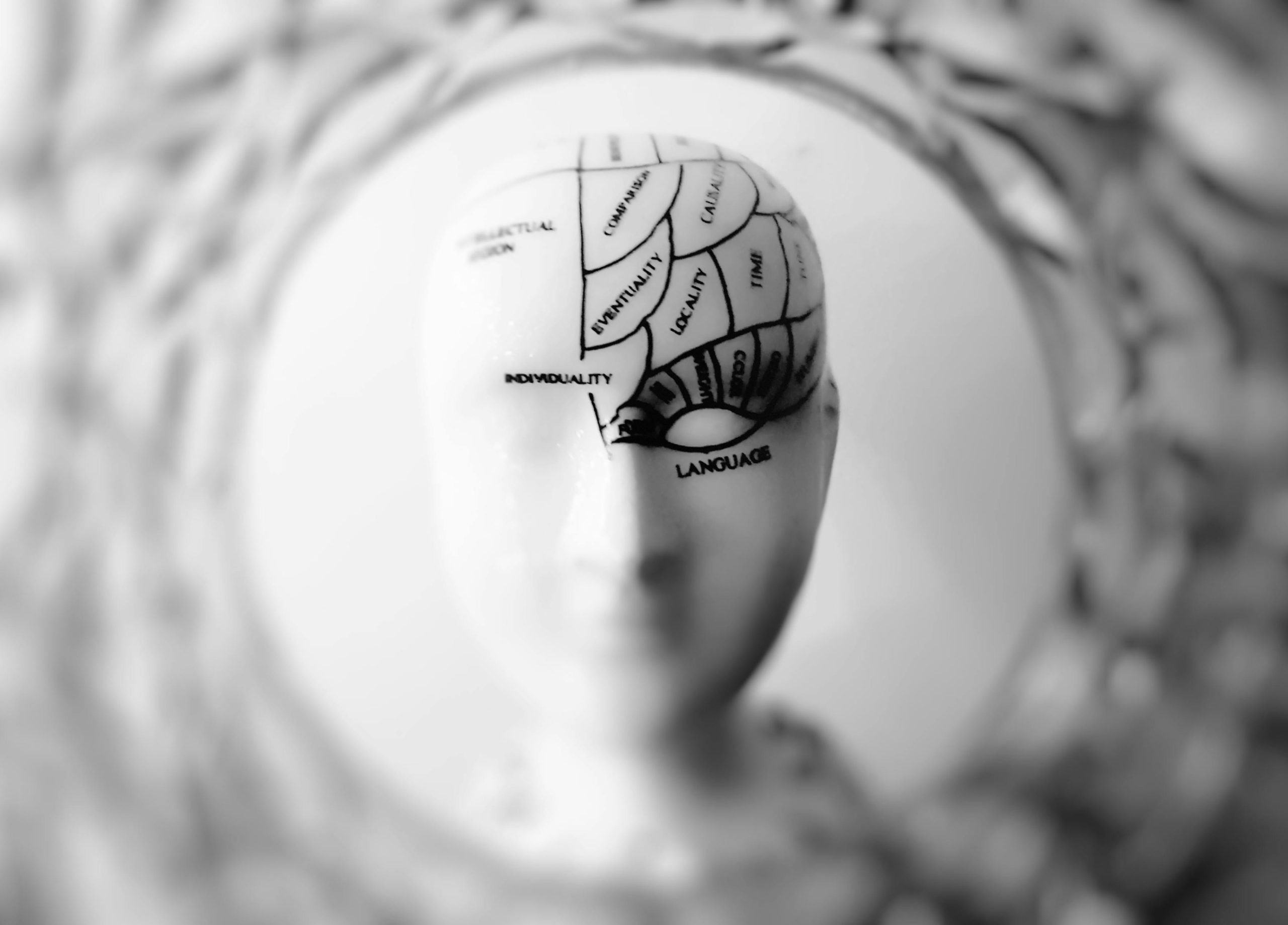
What Does a High-EQ Introvert Actually Look Like?
I want to close the main content here with a concrete picture, because I think the abstract version of this topic can make EQ feel like something you either achieve or don’t.
A high-EQ introvert isn’t someone who has become more extroverted. They haven’t learned to love networking or started thriving in large group settings. What’s changed is the quality of their presence in the interactions they do have. They listen with more intention. They respond with more accuracy. They can name what they’re feeling without being overwhelmed by it. They can sit with someone else’s distress without needing to fix it immediately or distance themselves from it.
In professional terms, this looks like the leader who asks the question no one else thought to ask. The colleague who notices when someone is struggling before it becomes a crisis. The manager who can have a hard conversation without it becoming a confrontation. The consultant who reads what a client actually needs rather than just what they asked for.
I’ve watched introverts on my teams grow into this. I’ve also watched myself grow into it, imperfectly and over a long time. The growth doesn’t announce itself. It shows up quietly, in smaller reactions, in better questions, in relationships that hold up under pressure in ways they didn’t before.
That’s the version of EQ worth building toward. Not a performance of emotional availability, but a genuine deepening of your capacity to understand and connect. It suits who we actually are.
There’s much more to explore at the intersection of introvert psychology and human behavior. Our full Introvert Social Skills and Human Behavior hub brings together everything from communication strategies to self-awareness practices, all written specifically for people wired the way we are.
Curious about your personality type?
Our free MBTI assessment goes beyond the four letters. Get a full breakdown of your scores, see how your type shows up at work and in relationships.
Take the Free Test8-12 minutes · 40 questions · Free
About the Author
Keith Lacy is an introvert who’s learned to embrace his true self later in life. After 20 years in advertising and marketing leadership, including running agencies and managing Fortune 500 accounts, Keith now channels his experience into helping fellow introverts understand their strengths and build fulfilling careers. As an INTJ, he brings analytical depth and authentic perspective to every article, drawing from both professional expertise and personal growth.
Frequently Asked Questions
Can introverts have higher emotional intelligence than extroverts?
Yes. EQ is not correlated with extraversion or introversion. Introverts often have a natural inclination toward self-reflection and careful observation, both of which are foundational to emotional intelligence. The advantage isn’t automatic, but the raw material is often already there. What introverts sometimes need to develop more deliberately is the expressive side of EQ, communicating emotions clearly and building rapport in ways that translate their internal awareness into visible connection.
How long does it take to meaningfully improve your EQ?
There’s no universal timeline. Most people who work on EQ consistently, through self-reflection, feedback, and practiced application in real relationships, notice meaningful shifts within six to twelve months. Deeper changes in ingrained emotional patterns can take years. The pace depends heavily on how honestly you’re examining yourself, how much feedback you’re seeking and actually hearing, and how regularly you’re applying what you’re learning in real situations rather than just thinking about it.
What is the single most important component of emotional intelligence to develop first?
Self-awareness is the foundation everything else rests on. Without an honest understanding of your own emotional patterns, triggers, and default responses, you can’t regulate effectively, read others accurately, or manage relationships well. Starting with self-awareness, through journaling, meditation, therapy, or honest feedback from trusted people, gives you the base from which all other EQ development becomes possible.
Is emotional intelligence the same as being empathetic?
Empathy is one component of emotional intelligence, but not the whole picture. EQ also includes self-awareness, the ability to regulate your own emotions, and the practical capacity to manage relationships effectively. Someone can be highly empathetic but still struggle with self-regulation or communication, which limits their overall emotional intelligence. Conversely, someone can have strong self-awareness and regulation skills but need to develop their empathy more deliberately. All four dimensions work together.
How does emotional intelligence affect career success for introverts?
Significantly. High EQ enables introverts to build trust with colleagues and clients, manage conflict without avoidance, and communicate their ideas in ways that land with different personality types. In leadership roles specifically, emotional intelligence often matters more than technical expertise at senior levels. Introverts with high EQ tend to be particularly effective in roles that require deep listening, careful judgment, and the ability to hold space for complexity, which describes a wide range of meaningful careers.