An introvert mom is a mother whose energy is restored through solitude and quiet reflection rather than social interaction, which means she often experiences the relentless togetherness of parenting as genuinely depleting, even when she loves her children deeply. She is not broken, cold, or selfish. She is simply wired differently, and that wiring shapes everything from how she connects with her kids to how she recovers at the end of a long day. Understanding this distinction is the first step toward parenting with confidence instead of guilt.
What strikes me most about introvert moms, having spent years working alongside and observing introverted colleagues and now writing about personality deeply, is how often they mistake their wiring for a flaw. They see other mothers thriving in playgroup chaos and assume something is wrong with them. Nothing is wrong. Something is actually very right, and it often goes unrecognized for years.

If you want to explore the fuller picture of how introverted personalities show up across family life, our Introvert Family Dynamics and Parenting hub covers everything from raising sensitive children to managing relationships with extroverted partners. This article focuses on something specific: the quiet, layered experience of being an introvert mom and what that identity actually means for how you parent, connect, and sustain yourself.
What Does It Actually Mean to Be an Introvert Mom?
Being an introvert mom is not about being shy, withdrawn, or uninterested in your children. Introversion is a neurological orientation toward internal processing. It means your brain draws energy from inner reflection rather than external stimulation. Parenting, by its very nature, is one of the most externally stimulating experiences a human being can have, which is why introvert moms often feel a specific kind of exhaustion that is hard to name out loud without feeling guilty about it.
What’s your personality type?
Take our free 40-question assessment and get a detailed personality profile with dimension breakdowns, context analysis, and personalised insights.
Discover Your Type8-12 minutes · 40 questions · Free
I ran advertising agencies for over two decades. My days were built around client calls, team meetings, presentations, and the constant hum of open-plan offices. As an INTJ, I found ways to function in that environment, but I always knew the cost. Every hour of high-stimulation social performance required recovery time I rarely gave myself. I watched many of the women on my teams, especially those who were mothers, carry that same invisible weight. They were competent, creative, and deeply engaged. They were also quietly running on fumes in ways their extroverted colleagues never seemed to notice.
The National Institutes of Health has noted that introversion has roots in early temperament, suggesting this is not a learned behavior or a phase to be outgrown. For introvert moms, this means the need for quiet is not a preference to be overridden with enough willpower. It is a fundamental aspect of how their nervous systems function.
What makes this particularly complex is that motherhood rarely offers an opt-out from stimulation. Children need presence, responsiveness, and engagement. Introvert moms give all of that, often with tremendous depth and attentiveness. The challenge is that they give it from a tank that empties faster than the world around them tends to acknowledge.
How Does an Introvert Mom’s Parenting Style Actually Look?
One thing I have observed consistently, both in my own reflective tendencies as an INTJ and in the introverted parents I have written about and spoken with, is that introvert moms tend to parent with unusual depth. They notice things. They pick up on the subtle shift in their child’s mood before anyone else does. They remember the small detail their child mentioned three weeks ago about a friend at school. They create environments that feel calm and considered rather than chaotic and reactive.
This kind of attentive, low-stimulation parenting style has real value. Children raised in quieter, more reflective home environments often develop strong emotional vocabulary and a comfort with solitude that serves them well later in life. The research published in PubMed Central on parenting sensitivity supports the idea that attuned, responsive parenting, the kind introvert moms often excel at, contributes meaningfully to healthy child development.
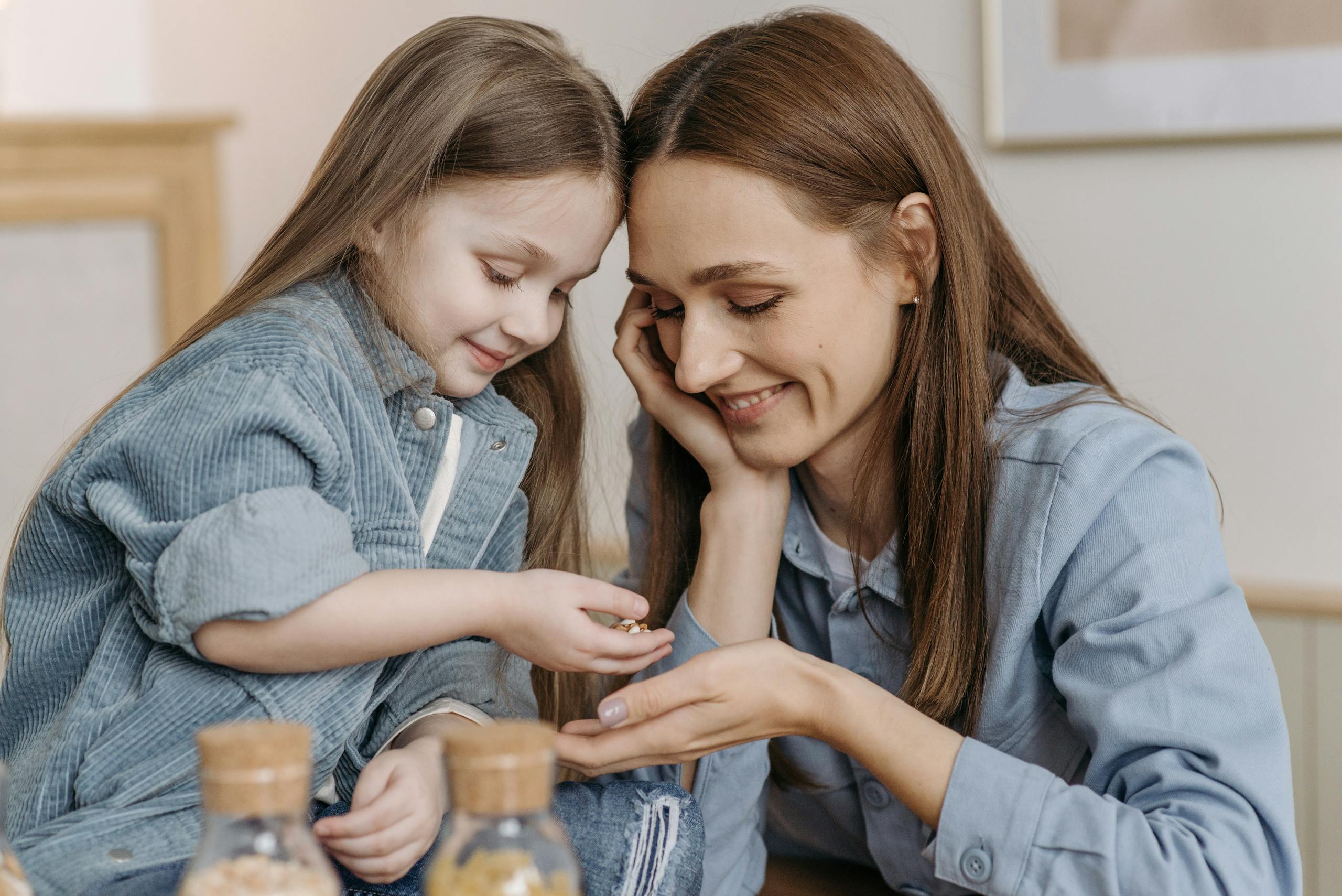
Introvert moms also tend to be exceptional at one-on-one connection. While large family gatherings or birthday parties with twenty children running through the house can genuinely drain them, a quiet afternoon with one child doing something focused, building something, reading together, or having a real conversation, is where they often shine brightest. They are not performing engagement. They are actually present in a way that children feel and remember.
That said, the parenting style of an introvert mom can sometimes be misread by the outside world. Other parents at school pickup may perceive her as aloof. Teachers may wonder why she does not volunteer for every event. Extended family may push her to be more socially available. What looks like distance from the outside is often careful conservation of energy from the inside. Understanding your own personality profile matters here. If you have never formally examined your traits, a printable personality profile test can be a useful starting point for naming what you already intuitively know about yourself.
Where Does the Guilt Come From, and Why Is It So Persistent?
There is a particular kind of guilt that seems to attach itself specifically to introvert moms, and it is worth examining carefully because it is rooted in a cultural story that has never been entirely accurate.
The cultural image of the ideal mother is, at its core, an extroverted image. She is energized by her children’s activity. She loves hosting playdates. She thrives at school fundraisers. She is always available, always warm, always on. When an introvert mom compares herself to this image, she will almost always find herself lacking, not because she is a worse mother, but because she is a different kind of person being measured against a standard built for someone else entirely.
I spent years in advertising trying to perform extroverted leadership. I attended every networking event, led every room, projected confidence in ways that cost me enormous energy. At some point I had to ask myself who I was actually performing for, and whether the performance was serving anyone well. Introvert moms face a version of this same question every day. Performing extroverted motherhood is not only exhausting, it often gets in the way of the genuine, quieter connection that is actually their greatest strength.
The guilt also tends to compound when children are highly social or extroverted. An introvert mom raising an extroverted child can feel like she is perpetually failing to match her child’s energy, when what she is actually doing is modeling something valuable: that it is possible to love someone deeply and still need time to yourself. That is not a lesson most children learn early enough.
It is worth noting that some introvert moms also carry traits associated with high sensitivity. If you find that you are not only drained by social noise but also deeply affected by sensory input, emotional atmospheres, and the suffering of others, you may want to explore the specific experience of HSP parenting and what it means to raise children as a highly sensitive parent. The overlap between introversion and high sensitivity is real, and the challenges are distinct enough to deserve their own attention.
How Does Personality Type Shape the Introvert Mom Experience?
Not all introvert moms are the same. An INTJ mom and an INFP mom both need solitude to recharge, but they experience the emotional demands of parenting very differently. The INTJ mom may find it easier to set boundaries but harder to sit with her child’s messy emotional processing without wanting to fix it. The INFP mom may be deeply attuned to her child’s inner world but struggle to maintain the structure and routine that children also need.
As an INTJ, I can say honestly that the emotional labor of sustained relational presence is not my default mode. When I managed teams at the agency, I watched the INFJs and ISFJs on my staff absorb the emotional climate of the entire office. They were extraordinary at it, and it cost them in ways I did not always see until it was too late. Introvert moms with feeling-dominant types carry that same absorption into their parenting, which means their depletion often has an emotional dimension that goes beyond simple overstimulation.

If you want a broader view of your personality architecture beyond the introvert-extrovert axis, taking the Big Five personality traits test can give you a more granular picture. The Big Five measures openness, conscientiousness, extraversion, agreeableness, and neuroticism, and understanding where you fall on each dimension can help explain patterns in your parenting that MBTI alone may not fully capture.
Some introvert moms also find that their social experiences carry an additional layer of complexity. Social anxiety and introversion are not the same thing, but they do sometimes coexist. If your discomfort in social parenting situations feels less like tiredness and more like dread or fear, that is worth distinguishing. The experience of social anxiety in teenagers is well-documented, and many adults realize in retrospect that their own social anxiety began in adolescence and was never properly addressed. Parenting can sometimes resurface those old patterns in unexpected ways.
The Psychology Today overview of family dynamics is worth reading for any parent trying to understand how individual personality traits ripple through an entire family system. Your introversion does not exist in isolation. It interacts with your partner’s personality, your children’s temperaments, and the relational patterns your family has built over time.
What Are the Quiet Strengths That Introvert Moms Often Overlook?
Every article about introvert moms eventually gets around to the challenges. I want to spend real time on the strengths, because they are substantial and they tend to be invisible in a culture that celebrates louder, more visible forms of engagement.
Introvert moms listen in a way that most people never experience from another person. Not polite listening, where someone is waiting for their turn to speak. Actual listening, where the other person feels genuinely heard and considered. Children who grow up with a parent who truly listens to them develop a sense of self-worth that is hard to manufacture through any other means. They learn that their inner world matters, that their thoughts are worth taking seriously, and that silence in a relationship is not the absence of connection but sometimes its deepest form.
Introvert moms also tend to create homes with a quality of intentionality that is rare. Because they are naturally oriented toward inner experience rather than external performance, they are less likely to fill their homes with busyness for its own sake. They are more likely to create rituals, quiet traditions, and spaces where a child can actually think. In an age of relentless stimulation, that is a genuine gift.
There is also the matter of modeling. An introvert mom who is honest about her need for solitude, who says clearly and without shame that she needs an hour of quiet to feel like herself again, is teaching her children something profound about self-knowledge and self-respect. She is showing them that taking care of your own inner life is not selfish. It is responsible. That lesson is harder to teach than almost anything else.
At the agency, the most effective leaders I observed were not always the most charismatic ones. They were often the ones who thought carefully before speaking, who created psychological safety through consistency rather than performance, and who understood that their team’s trust was built in quiet moments as much as in big presentations. Introvert moms operate from this same orientation, and their children tend to feel it even when they cannot articulate it.

How Can an Introvert Mom Build a Life That Actually Fits Her?
Building a life that fits your wiring as an introvert mom is less about grand restructuring and more about accumulated small decisions that add up to something sustainable. It starts with permission, the kind you give yourself, not the kind you wait for someone else to grant.
One of the most powerful shifts I made in my own life was moving from apologizing for my need for solitude to treating it as a non-negotiable operating condition. At the agency, I stopped scheduling back-to-back meetings and started protecting what I privately called “processing time.” My team initially wondered what I was doing. Over time, they noticed that I came to decisions with more clarity and to conversations with more genuine presence. The solitude was not a withdrawal from my responsibilities. It was what made me capable of meeting them.
Introvert moms can apply this same logic to family life. Protecting even twenty minutes of genuine solitude each day is not a luxury. It is maintenance. Some introvert moms find this in early mornings before the house wakes up. Others find it in the car after school drop-off. The specific form matters less than the consistency and the refusal to feel guilty about it.
Communication with partners and older children is also worth addressing directly. Many introvert moms never explain their wiring to the people they live with, which means their need for quiet gets interpreted as moodiness, withdrawal, or disengagement. A straightforward conversation, framed not as a complaint but as useful information about how you function, can change the relational dynamic significantly. “I need thirty minutes of quiet when I get home before I can be fully present” is not a rejection. It is a roadmap.
It is also worth examining whether your social discomfort in parenting contexts is purely introversion or whether there is something else present. Some introvert moms find that their difficulty with school events, parent groups, or social gatherings is tied to deeper patterns around how they come across to others. If you have ever wondered whether your quietness is being misread as unfriendliness, taking the likeable person test can offer some useful perspective on how your social presence lands with others, not to change who you are, but to understand the gap between your intentions and others’ perceptions.
For those who want to go deeper into their psychological profile, including understanding patterns around anxiety, mood, and social functioning that may be affecting their experience of parenting, the Minnesota Multiphasic Personality Inventory test online is a comprehensive tool worth exploring. It is not a casual quiz. It is a thorough psychological assessment that can surface patterns you may not have had language for before.
What Happens When an Introvert Mom Raises an Introverted Child?
There is something quietly beautiful about an introvert mom recognizing her own wiring in her child. The shared need for quiet, the preference for depth over breadth in friendships, the way both of them can spend an afternoon reading in the same room without speaking and feel completely connected. These moments of resonance are real and meaningful.
Yet even this combination comes with its own complexity. An introvert mom raising an introverted child may find that neither of them naturally initiates the social contact that both of them actually need in small doses. The household can become a comfortable but slightly sealed-off world, one where the outside feels increasingly effortful rather than simply optional.
The research on temperament and social development suggests that children benefit from gentle exposure to social environments even when their natural preference is for solitude. An introvert mom is actually well-positioned to support this, because she understands the cost of overstimulation and can help her child manage social situations without pushing them past their genuine limits. The goal is not to turn an introverted child into an extroverted one. It is to give them enough social fluency to move through the world with confidence.
There is also the question of what an introvert mom models for her introverted child about self-acceptance. A mother who has made peace with her own wiring, who does not apologize for needing quiet, who talks openly about what recharges her and what depletes her, gives her introverted child a map for their own self-understanding. That map is worth more than any amount of forced socialization.

One area that introvert moms of introverted teenagers should watch carefully is the line between healthy introversion and social withdrawal rooted in anxiety. An introverted teenager who avoids all social situations, feels intense dread before ordinary interactions, or is experiencing significant distress around peer relationships may be dealing with something beyond their natural temperament. Understanding the distinction matters, and the resources around social anxiety disorder in teenagers can help parents identify when professional support might be warranted.
What Does Self-Acceptance Actually Look Like for an Introvert Mom?
Self-acceptance for an introvert mom does not arrive as a single moment of clarity. It accumulates in small acts of choosing yourself honestly over performing a version of yourself that exhausts you.
It looks like declining the fourth birthday party of the month without guilt. It looks like building a morning routine that includes silence before anyone else is awake. It looks like telling your child, when they are old enough to understand, that you love them completely and you also need quiet time, and that both of those things are true at once.
At the agency, I eventually stopped explaining my introversion as a limitation and started framing it as a feature. I was the leader who thought before speaking, who wrote thorough briefs because I processed best in writing, who built teams that could execute without constant supervision because I had no interest in micromanaging. Those were not compromises. They were advantages that I had spent years treating as weaknesses.
Introvert moms have a version of this same reframe available to them. The quietness, the depth, the attentiveness, the ability to hold space without filling it with noise, these are not lesser forms of motherhood. They are particular forms of it, and the children who grow up inside them often carry something steady and self-aware that is genuinely rare.
If you are still in the early stages of understanding your own personality, exploring how rare or common your personality type actually is can sometimes be grounding. Knowing that your wiring is real, documented, and shared by a meaningful portion of the population takes some of the isolation out of the experience.
The American Psychological Association’s resources on trauma are also worth acknowledging here, because some introvert moms carry not just their natural temperament but also earlier experiences that shaped how they relate to noise, demands, and emotional overwhelm. Separating what is introversion from what is a stress response built from earlier pain is work worth doing, ideally with a therapist who understands both.
There is a fuller collection of perspectives on introversion in family life waiting for you. The Introvert Family Dynamics and Parenting hub brings together articles on everything from raising introverted children to managing the dynamics of mixed-personality households. If this article resonated with you, that hub is a natural next place to explore.
Curious about your personality type?
Our free MBTI assessment goes beyond the four letters. Get a full breakdown of your scores, see how your type shows up at work and in relationships.
Take the Free Test8-12 minutes · 40 questions · Free
About the Author
Keith Lacy is an introvert who’s learned to embrace his true self later in life. After 20 years in advertising and marketing leadership, including running agencies and managing Fortune 500 accounts, Keith now channels his experience into helping fellow introverts understand their strengths and build fulfilling careers. As an INTJ, he brings analytical depth and authentic perspective to every article, drawing from both professional expertise and personal growth.
Frequently Asked Questions
Is it normal for an introvert mom to feel drained by her own children?
Yes, and it is more common than most introvert moms realize. Feeling depleted by the constant presence and demands of children does not mean you love them less. It means your nervous system requires solitude to recover from stimulation, and parenting is one of the most consistently stimulating environments a person can inhabit. The depletion is real and physiological, not a reflection of your character or your commitment as a mother.
Can an introvert mom be a good mother to an extroverted child?
Absolutely. An introvert mom raising an extroverted child will face some genuine friction around energy levels and social appetite, but she also offers her extroverted child something valuable: a model of calm, a counterweight to constant stimulation, and a relationship where depth matters as much as activity. The mismatch in wiring is manageable with honest communication and mutual respect for different needs. Many extroverted children raised by introvert moms develop an unusually strong capacity for self-reflection.
How is an introvert mom different from a mom with depression or social anxiety?
Introversion is a stable personality trait characterized by a preference for low-stimulation environments and internal processing. Depression involves persistent low mood, loss of interest, and functional impairment. Social anxiety involves significant fear and distress around social situations. These can coexist with introversion, but they are distinct. An introvert mom who feels content in her quiet moments and genuinely enjoys her children, even when she also needs time away from them, is likely experiencing normal introversion. A mom who feels persistently hopeless, avoids all social contact out of fear, or cannot function in daily life may benefit from professional support.
What are the most practical ways an introvert mom can protect her energy?
The most effective strategies tend to be small and consistent rather than large and occasional. Building even fifteen to twenty minutes of genuine solitude into each day, whether early morning, during nap time, or after bedtime, creates a baseline of recovery. Communicating your needs clearly to your partner or older children reduces the energy cost of managing others’ expectations. Saying no to social commitments that do not genuinely matter to you preserves capacity for the ones that do. Treating your quiet time as a non-negotiable rather than a reward you have to earn changes the entire dynamic.
Does being an introvert mom affect how children develop?
Parenting style matters more than personality type in most developmental research. Introvert moms who are warm, responsive, and attuned to their children’s needs tend to raise children who are emotionally secure, regardless of how much social activity the household generates. The attentiveness and depth that many introvert moms bring to their parenting can actively support healthy development. What matters most is not the volume of engagement but its quality, and introvert moms often excel precisely where quality counts most.