
A teen social anxiety mentor is an adult who provides consistent, low-pressure support to help adolescents build confidence and social skills at their own pace. Unlike therapy, mentoring focuses on real-world connection rather than clinical treatment, offering a steady relationship where a teenager can practice being seen without the fear of judgment.
What makes mentoring so effective for anxious teens is the element of genuine understanding. When the adult in the room has lived experience with social anxiety, shyness, or introversion, something shifts. The teenager stops performing and starts breathing.

If you’re a parent trying to support a struggling teenager, or an introvert wondering whether you have something real to offer a young person, this article is for you. Parenting and mentoring an anxious teen draws on many of the same emotional muscles. You can explore the broader landscape of how introverted adults support their kids and teens in our Introvert Family Dynamics and Parenting hub, which covers everything from sensory sensitivity to communication styles across generations.
Why Do Teens With Social Anxiety Need a Mentor, Not Just a Therapist?
Therapy is valuable. I want to be clear about that upfront. The National Institute of Mental Health recognizes social anxiety disorder as a significant and treatable condition, and professional support is often essential. But therapy happens in an office, with a structured agenda, for fifty minutes a week. Life happens everywhere else.
What’s your personality type?
Take our free 40-question assessment and get a detailed personality profile with dimension breakdowns, context analysis, and personalised insights.
Discover Your Type8-12 minutes · 40 questions · Free
A mentor fills the space between sessions. They’re the person who texts back when a teen is dreading Monday morning. They’re the adult who shows up to watch a school play and says nothing about how nervous the kid looked, because they remember what that felt like. They offer continuity, not clinical distance.
I think about what I needed at fifteen. I was the quiet kid who observed everything and said almost nothing in groups. I processed conversations hours after they happened, replaying what I should have said. No one called it social anxiety back then. Adults just called me reserved, or serious, or too much in my own head. What I needed wasn’t someone to fix me. I needed someone to show me that being wired this way could actually work.
Decades later, running an advertising agency, I watched junior staff members who reminded me of that teenager. The ones who sat quietly in brainstorms and then sent me the best ideas by email at 10 PM. The ones who avoided the team happy hour but stayed late to get the work exactly right. I recognized something in them that I’d spent years learning to recognize in myself.
That recognition is what a mentor offers. Not a diagnosis. Not a treatment plan. A mirror that reflects back something other than inadequacy.
What Does Social Anxiety Actually Look Like in Teenagers?
Social anxiety in teenagers doesn’t always look like what people expect. It’s not always the kid hiding in the corner at prom. Sometimes it’s the overachiever who volunteers for every project so she can control the outcome and avoid the unpredictability of group work. Sometimes it’s the class clown who uses humor as a wall. Sometimes it’s the athlete who performs brilliantly in practice but freezes during games when the stands fill up.
The common thread is a persistent, often disproportionate fear of being evaluated negatively by others. Teens with social anxiety disorder frequently experience physical symptoms too, including racing heartbeat, flushing, sweating, or nausea before social situations. The anticipation of an event is often worse than the event itself.

What’s worth understanding is that introversion and social anxiety are not the same thing, even though they often travel together. An introverted teen may prefer solitude and find large social gatherings draining without feeling afraid of them. A teen with social anxiety may desperately want connection but feel paralyzed by the fear of saying the wrong thing. The overlap creates confusion for parents, teachers, and the teenagers themselves.
One of the most useful things a mentor can do early on is help a teenager understand their own wiring. Personality assessments can be surprisingly clarifying for adolescents who feel like something is simply wrong with them. Something like a personality profile test can open a conversation about why they experience the world differently, without framing that difference as a defect.
Understanding your own personality is not a cure for anxiety. But it can be a starting point for self-compassion, which matters more than most people realize in recovery from anxiety.
What Qualities Make Someone an Effective Teen Social Anxiety Mentor?
Not everyone is suited to mentor an anxious teenager, and that’s worth saying plainly. Good intentions don’t automatically translate into good mentoring. Some of the most well-meaning adults inadvertently make things worse by pushing too hard, moving too fast, or trying to solve what they should simply be witnessing.
The qualities that matter most are patience, consistency, and genuine curiosity about the teenager as a person. An effective mentor doesn’t have an agenda about who the teen should become. They’re interested in who the teen already is.
Lived experience with anxiety, introversion, or social difficulty is a significant asset, though not a strict requirement. What matters is the ability to remember what it felt like to be young and unsure and afraid of saying the wrong thing. Empathy rooted in memory is different from empathy rooted in theory.
I’ve worked with enough people over the years to know that the most effective leaders, coaches, and mentors are the ones who can hold space without filling it. Early in my agency career, I was the type of manager who came in with answers. I thought that was what leadership looked like. Over time, I learned that the more powerful move was to ask better questions and then actually wait for the response. Anxious teenagers need that kind of waiting. They’re still forming their thoughts. They need the silence to feel safe rather than like a test.
A mentor also needs to understand their own personality well enough to avoid projecting it onto the teenager. The Big Five personality traits test can be a useful self-assessment tool for adults considering a mentoring role. Knowing your own levels of extraversion, agreeableness, and neuroticism helps you recognize where your natural tendencies might create friction with an anxious teen’s needs.
How Do You Build Trust With a Teenager Who Is Afraid to Be Seen?
Trust with an anxious teenager is built slowly and lost quickly. That asymmetry is important to accept before you begin.
The first few interactions should ask almost nothing of the teenager socially. Low-stakes shared activities work better than conversation-focused meetings. Working on something together, whether that’s a project, a walk, a game, or even just watching something, removes the pressure of sustained eye contact and the expectation of witty responses. The relationship has a chance to form in the background while attention is on something else.
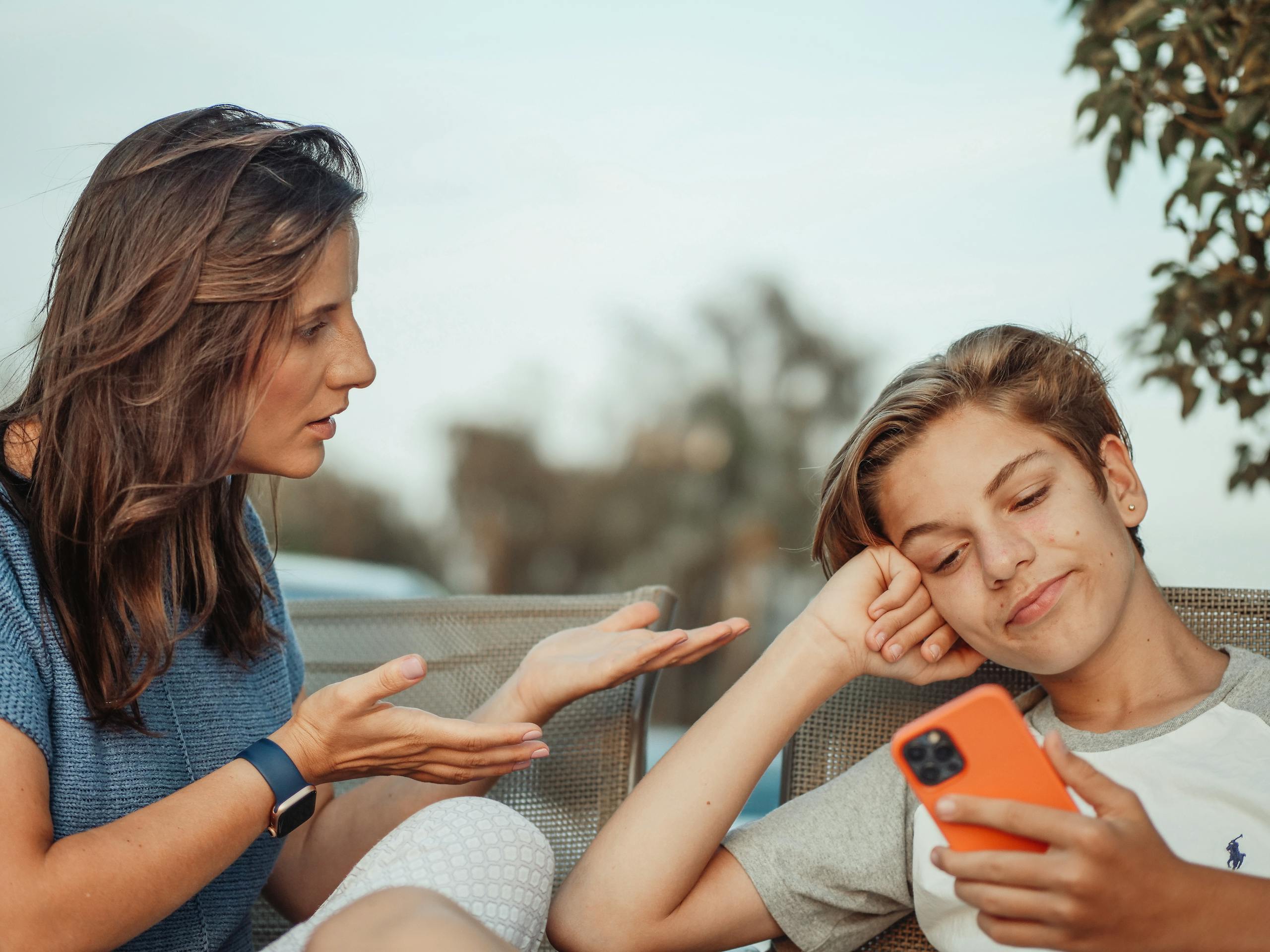
Consistency matters more than intensity. Showing up reliably, even briefly, does more for trust than one long emotional conversation. Anxious teenagers are watching for evidence that the adult in their life will disappear when things get complicated. Every time you show up as promised, you’re providing counter-evidence to that fear.
Vulnerability from the mentor is also a powerful trust-builder, used carefully. Sharing your own experience of feeling out of place, of saying the wrong thing, of dreading a social situation, signals to the teenager that they’re not uniquely broken. It normalizes the experience without minimizing it. There’s a difference between sharing and performing vulnerability, though. The story you tell should serve the teenager, not your own need to be seen as relatable.
One thing worth noting: Psychology Today has written about how socializing drains introverts differently than extroverts, which is relevant here. If you’re an introverted mentor, you may find that even a one-hour session with a teenager requires recovery time afterward. That’s not a character flaw. Build that awareness into how you structure your mentoring so you show up present rather than depleted.
How Can Highly Sensitive Parents Become Better Mentors to Anxious Teens?
Parents are often the first and most important mentors in a teenager’s life, even when the relationship is complicated. Highly sensitive parents in particular bring both gifts and challenges to this role.
The gift is attunement. A highly sensitive parent often notices the subtle signs of distress before a teenager can articulate them. They pick up on the slight change in tone, the way a teenager goes quiet at dinner, the way they avoid a certain topic. That attunement, when it doesn’t tip into anxiety itself, is genuinely valuable.
The challenge is that highly sensitive parents can absorb their child’s anxiety and amplify it. If you visibly tense up every time your teenager seems uncomfortable, they learn that their discomfort is alarming, which makes the discomfort worse. The goal is to be present without being reactive. That’s easier said than done, and it’s something worth working on intentionally.
If you’re a sensitive parent trying to support an anxious teen, the resource on HSP parenting and raising children as a highly sensitive parent is worth reading carefully. It addresses the specific emotional dynamics that come up when a sensitive adult is parenting a child who may have inherited similar traits.
One thing I’ve observed across years of managing people: the adults who were most effective at developing anxious or introverted team members were the ones who had done their own internal work. They weren’t projecting their unresolved fears onto the younger person. They were genuinely present. That same principle applies to parenting and mentoring teenagers.
What Practical Strategies Help Teens Manage Social Anxiety Over Time?
A mentor isn’t a therapist, but that doesn’t mean mentoring is passive. There are concrete, evidence-informed approaches that non-clinical mentors can use to help teenagers build confidence and reduce avoidance over time.
Graduated exposure is one of the most effective frameworks available. The idea is simple: you help the teenager identify situations that cause anxiety and then work through them in order of difficulty, starting with the least threatening. A teenager who is afraid of speaking in class might start by answering one question per week, then two, then volunteering for a small group presentation. Each small success builds evidence against the belief that social situations are catastrophic.
Cognitive behavioral therapy techniques are the clinical gold standard for social anxiety, and many of the underlying concepts translate well to mentoring conversations. Helping a teenager notice when their thoughts are catastrophizing (“everyone will laugh at me”) and gently introducing alternative interpretations (“some people might not even notice”) is something a thoughtful mentor can do in everyday conversation.
Social skills practice in low-stakes environments is another practical tool. Role-playing conversations, practicing introductions, or debriefing after a social situation without judgment gives teenagers a chance to process and prepare. The mentor’s role here is to be a safe rehearsal space, not a critic.
It’s also worth helping teenagers understand what “likeable” actually means, because anxious teens often have wildly distorted beliefs about how they’re perceived. Taking something like the likeable person test together can open a conversation about the gap between how they think they come across and how they actually present to others. That gap is almost always smaller than the teenager believes.

Celebrating small wins explicitly is something mentors often underestimate. Anxious teenagers are hyperaware of their failures and often blind to their progress. Naming the progress out loud, specifically and without exaggeration, helps rewire that attention. “You made eye contact with the cashier and said thank you. That might seem small to someone else, but I know what that cost you, and I noticed it” is more meaningful than “you’re doing great.”
When Does Social Anxiety in Teens Require Professional Support?
Mentoring is not a substitute for clinical care when clinical care is what’s needed. Knowing the difference is part of being a responsible mentor.
Some signals that a teenager needs professional support beyond mentoring include: anxiety that is interfering significantly with school attendance or academic performance, complete withdrawal from social relationships, physical symptoms that are frequent and severe, expressions of hopelessness or self-harm, and anxiety that has persisted for six months or more without improvement.
A mentor who notices these signs should not try to manage them alone. The appropriate response is to gently encourage the teenager and their family toward professional evaluation, while continuing to offer the relational support that mentoring provides. The two are not mutually exclusive. In fact, mentoring can significantly enhance the effectiveness of therapy by providing real-world support between sessions.
For parents who are trying to understand the full picture of what their teenager might be experiencing, more comprehensive psychological assessments exist. The Minnesota Multiphasic Personality Inventory is one of the more thorough clinical tools used by professionals to assess a range of psychological concerns, including anxiety. Understanding what these assessments measure can help parents have more informed conversations with mental health providers.
What I’ve found, both in my own experience and in watching others, is that the people who recover most fully from anxiety are the ones who have both professional support and strong relational anchors. The therapy gives them tools. The mentor gives them a reason to use them.
How Does Introversion Intersect With Teen Social Anxiety in Ways That Matter?
There’s a meaningful body of thinking on how introversion and anxiety interact, and a mentor who understands the distinction can provide far more targeted support than one who conflates the two.
Introversion is a temperament, a preference for internal processing and a tendency to find social stimulation draining rather than energizing. Research from Cornell University suggests that differences in brain chemistry play a role in how extroverts and introverts respond to stimulation, which helps explain why this trait is relatively stable across a lifetime. Social anxiety, by contrast, is a fear-based response that causes distress and often leads to avoidance. An introverted teenager who prefers one-on-one conversations and needs quiet time after school is not necessarily anxious. A teenager who skips school to avoid a presentation and lies awake dreading lunch period probably is.
The overlap matters because well-intentioned adults sometimes push introverted teenagers to “come out of their shell” in ways that are genuinely unhelpful. Introversion doesn’t need to be fixed. Anxiety does need to be addressed, because left unmanaged, it tends to narrow a person’s world rather than expand it.
A mentor who is themselves introverted can model something powerful: a full, engaged, connected life that doesn’t require performing extroversion. That model is often more persuasive than any amount of advice. When I eventually stopped trying to run my agencies the way I thought a CEO was supposed to behave and started leading in ways that actually suited my wiring, something shifted in how my team responded to me. The quieter, more deliberate version of leadership I settled into turned out to be more effective, not less. That’s the story an anxious introverted teenager needs to hear.
Anxiety research also points to genetic and neurological factors that influence social fear responses. Work published in PubMed Central examining the neurobiology of social anxiety helps contextualize why some teenagers are simply more susceptible to these fear responses than others. Sharing this kind of framing with a teenager, carefully and age-appropriately, can reduce the shame they carry. It’s not weakness. It’s wiring that can be worked with.
What Should a Mentoring Relationship Actually Look Like Week to Week?
One of the most common questions I hear from adults who want to help anxious teenagers is a practical one: what do we actually do together?
The answer is less structured than most people expect. Effective mentoring for anxious teens doesn’t require a curriculum or a session plan. What it requires is regularity, presence, and a willingness to follow the teenager’s lead on pace and topic.
A weekly or biweekly check-in, even a short one, builds the consistency that anxious teenagers need. It can be a walk, a shared meal, a car ride, or a video call. The format matters less than the reliability. Some weeks the conversation will go deep. Other weeks it will stay completely surface-level, and that’s fine. The relationship holds even when the conversation doesn’t.

Goal-setting can be useful, but only when the teenager is ready for it and when the goals come from them rather than the mentor. Pushing goals too early can make mentoring feel like another performance to fail at. Goals work best when they emerge from conversation: “What’s one thing you want to feel less afraid of by the end of the year?” That question, asked at the right moment in a trusting relationship, can open something real.
Mentors should also be aware of their own limits. You are not a therapist, a parent, or a crisis counselor. Your role is to be a consistent, caring adult presence. That role is significant and worth taking seriously, but it has boundaries. Knowing when to step back and encourage professional support is part of doing the job well.
Recent work on adolescent social anxiety, including studies examining intervention outcomes in teenagers and research on cognitive approaches to adolescent anxiety, consistently points to the importance of supportive relationships alongside clinical treatment. A mentor is not a replacement for that treatment. A mentor is part of the ecosystem that makes treatment stick.
And sometimes, the most important thing a mentor does is simply refuse to give up on a teenager who has given up on themselves. That persistence, quiet and consistent, is its own form of intervention.
If you’re building your understanding of how personality and family dynamics shape a teenager’s emotional world, the full range of resources in our Introvert Family Dynamics and Parenting hub offers perspectives from HSP parenting to communication across personality types.
Curious about your personality type?
Our free MBTI assessment goes beyond the four letters. Get a full breakdown of your scores, see how your type shows up at work and in relationships.
Take the Free Test8-12 minutes · 40 questions · Free
About the Author
Keith Lacy is an introvert who’s learned to embrace his true self later in life. After 20 years in advertising and marketing leadership, including running agencies and managing Fortune 500 accounts, Keith now channels his experience into helping fellow introverts understand their strengths and build fulfilling careers. As an INTJ, he brings analytical depth and authentic perspective to every article, drawing from both professional expertise and personal growth.
Frequently Asked Questions
What is the difference between a teen social anxiety mentor and a therapist?
A teen social anxiety mentor is a consistent, caring adult who provides relational support, models healthy social engagement, and helps a teenager build confidence through real-world connection. A therapist provides clinical assessment and evidence-based treatment for anxiety disorders. Mentoring complements therapy by offering support between sessions and in everyday contexts, but it does not replace professional mental health care when that care is needed.
Can an introverted adult be an effective mentor for a teen with social anxiety?
Yes, and in many cases an introverted adult is particularly well-suited for this role. Someone who has personally experienced social discomfort, the preference for depth over breadth in relationships, or the exhaustion of social performance brings genuine empathy to the mentoring relationship. what matters is that the mentor has done enough of their own internal work to offer presence rather than projection, and to model a full life that doesn’t require performing extroversion.
How long does it take to build trust with an anxious teenager?
Trust with an anxious teenager builds slowly and requires consistent, low-pressure contact over weeks or months. There is no fixed timeline. Some teenagers open up relatively quickly when they feel genuinely seen. Others need many months of reliable presence before they begin to lower their guard. The mentor’s job is to show up consistently without demanding emotional reciprocity on any particular timeline. Trust is earned through behavior over time, not through a single meaningful conversation.
What should I do if I think a teenager I’m mentoring needs professional help?
If you observe signs that go beyond typical social anxiety, such as significant school avoidance, complete withdrawal from relationships, expressions of hopelessness, or anxiety that has persisted for six months or more without improvement, the appropriate response is to gently encourage the teenager and their family toward a professional evaluation. You can continue your mentoring relationship while professional support is in place. The two approaches work well together, and your continued presence may actually help the teenager engage more fully with clinical treatment.
Is social anxiety in teenagers related to introversion?
Social anxiety and introversion often appear together but are fundamentally different things. Introversion is a temperament characterized by a preference for internal processing and a tendency to find social stimulation draining. Social anxiety is a fear-based response that causes distress and leads to avoidance. An introverted teenager is not automatically anxious, and a teenager with social anxiety is not automatically introverted. Understanding the distinction helps mentors and parents avoid pushing introverted teenagers to change their temperament while still addressing genuine anxiety that limits their wellbeing.