Social media authenticity sounds like a gift to introverts. Finally, a space to express your real self without the noise of a crowded room. Yet for many of us, the pressure to perform “realness” online has become its own kind of exhausting performance, one that leaves us feeling more hollow than connected.
The problems with social media authenticity run deeper than most people admit. Platforms reward consistency, visibility, and emotional disclosure, all qualities that conflict directly with how introverts actually process their inner lives. What gets labeled “authentic” online is often just a more polished version of the same performance we were already trying to escape.
I spent more than two decades running advertising agencies, and I can tell you exactly how the authenticity machine works. We built entire campaigns around manufactured vulnerability. Brands would pay us to make their messaging feel “real,” which usually meant scripted confessions, carefully lit behind-the-scenes footage, and emotional hooks designed by a committee. I watched that same logic migrate from brand strategy into personal social media behavior, and it troubled me deeply. Because introverts, especially those of us still figuring out who we actually are, are particularly vulnerable to that machinery.
If you’re working through your own relationship with solitude, self-care, and the kind of recharging that actually restores you, our Solitude, Self-Care & Recharging hub covers the full landscape of what genuine rest and recovery looks like for introverts, far beyond anything a social media post could capture.
Why Does “Authentic” Online Feel So Inauthentic to Introverts?
There’s a contradiction baked into social media authenticity that most people glide past. Platforms are architecturally designed to reward public disclosure. Algorithms favor content that generates fast emotional reactions, which means the most “authentic” posts are often the ones most carefully calibrated to provoke a response. Vulnerability becomes a content strategy. Honesty becomes a hook.
What drains your social battery?
Not all social exhaustion is the same. Our free quiz identifies your specific drain pattern and gives you personalised recharging strategies.
Find Your Drain PatternUnder 2 minutes · 8 questions · Free
For introverts, this creates a specific kind of friction. We tend to process our inner lives slowly, privately, and in layers. An insight that feels genuinely mine might take weeks of quiet reflection to fully form. Posting it while it’s still forming, while it’s still raw and unprocessed, doesn’t feel authentic. It feels like handing someone a half-finished thought and watching them react to it before I’ve even decided what it means.
The American Psychological Association defines introversion as a personality orientation characterized by a preference for the inner world of thoughts and feelings over the outer world of people and activities. That orientation matters here. When authenticity requires constant outward expression, it fundamentally misaligns with how introverts actually experience and integrate their own reality.
I remember a period when I was managing a large account for a national consumer brand and my agency was under pressure to develop a more “authentic” social presence for the client. My team, most of them extroverts who thrived on spontaneous expression, kept pushing for raw, unfiltered content. I kept asking what we were actually trying to say. Those were two completely different questions, and the gap between them is exactly where the authenticity problem lives.
What Does the Pressure to Perform Authenticity Actually Cost Introverts?
There’s a real psychological cost to performing a version of yourself that doesn’t match your internal experience. It’s not dramatic, it’s cumulative. A quiet drain that builds over time and shows up as fatigue, disconnection, or a vague sense that something is off.
For introverts who are also highly sensitive, that cost is amplified. The emotional processing that comes with reading hundreds of reactions to something personal you shared, the monitoring, the second-guessing, the comparison to others who seem to do this effortlessly, it adds up. Understanding what happens to your nervous system when you don’t protect your inner reserves is important context here. What happens when introverts don’t get alone time is a real physiological and psychological question, not just a preference.
Social media authenticity culture often asks introverts to compress their natural processing cycle. Instead of sitting with an experience until it crystallizes into something true, we’re encouraged to share it while it’s still happening. That’s not authenticity for us. That’s overstimulation dressed up as openness.

A review published in PubMed Central examining social media use and psychological wellbeing found consistent associations between passive social media consumption and lower self-esteem and higher rates of social comparison. For introverts already inclined toward rich inner comparison and self-reflection, passive scrolling through curated authenticity performances can quietly corrode the very self-knowledge we rely on.
I’ve watched this happen to people I care about. One of the most talented copywriters I ever employed was a deeply introverted woman who had a gift for precise, emotionally resonant language. She started a personal blog that was genuinely extraordinary, slow and thoughtful and full of earned insight. Then she moved to Instagram. Within a year, her writing had shifted entirely. It was faster, more reactive, more surface-level. She told me once that she couldn’t tell anymore whether she was writing for herself or for the algorithm. That’s the authenticity trap in plain language.
How Does Social Media Authenticity Conflict With Introverts’ Need for Solitude?
Genuine authenticity, the kind that actually reflects who you are, requires time alone with yourself. It requires the kind of quiet that lets you hear your own thoughts without the interference of other people’s reactions. Social media is structurally opposed to that process.
Even the act of composing a post pulls you into a relational frame. You’re always, at least partially, imagining an audience. That audience shapes what you say, how you say it, and what you leave out. For introverts, who do their most authentic thinking in the absence of social observation, that imagined audience is a form of intrusion. It changes the quality of the inner work.
The essential need for alone time isn’t about isolation. It’s about creating conditions where your inner life can actually develop without constant external pressure. Social media authenticity culture treats solitude as the raw material you mine for content, rather than as a restorative practice with its own integrity.
There’s something worth sitting with in what Harvard Business Review has written about the necessity of quiet time for high-functioning people. The argument is that reflection isn’t a luxury. It’s a cognitive requirement. For introverts, that’s not a productivity tip. It’s a description of how we actually work. When social media colonizes that reflective space, we don’t just lose rest. We lose the conditions under which we become ourselves.
As an INTJ, my inner world has always been where my best thinking happens. I don’t arrive at clarity through conversation. I arrive at it through extended, uninterrupted internal processing. When I was running agencies and managing multiple client relationships simultaneously, the pressure to be visible and responsive was relentless. I learned to protect certain hours of the day as genuinely mine, not for productivity, but for the kind of slow reflection that kept me grounded in what I actually thought. Social media, by design, makes that protection harder.
Is the “Authentic Self” Social Media Wants Even Real?
Here’s a question worth sitting with: whose definition of authenticity are we actually working from?
The version social media rewards tends to be emotionally legible, visually appealing, narratively coherent, and consistently on-brand. It’s a self that performs its own depth in ways that are immediately readable to strangers. That’s a very specific and narrow version of what a person can be.
Introverts often have rich, complex inner lives that don’t translate cleanly into that format. Our most genuine moments might be private, subtle, or difficult to articulate in ways that generate engagement. The aspects of ourselves we value most, our capacity for deep observation, our comfort with ambiguity, our preference for meaning over performance, are precisely the qualities that social media’s authenticity economy tends to flatten or ignore.

There’s interesting work emerging on how we construct identity in digital spaces. A study published in Nature examining online self-presentation and psychological wellbeing found that the gap between a person’s online and offline self-concept is associated with lower wellbeing outcomes. For introverts who feel pressure to present a more extroverted, expressive, or emotionally open version of themselves online, that gap can be significant and quietly costly.
The mental health meme culture that has exploded on platforms like Instagram and TikTok is a useful case study here. Psychology Today’s analysis of mental health memes points out that while this content can normalize certain experiences, it also risks reducing complex psychological realities to shareable formats, which can actually impede the deeper processing that genuine self-understanding requires. That’s the authenticity paradox in concentrated form.
I’ve thought about this a lot in the context of my own INTJ wiring. INTJs tend to build a strong internal model of who they are and how they think. We’re not particularly interested in performing that model for external validation. When I eventually started writing publicly about introversion, I had to make a deliberate choice: write for the algorithm, or write for the person who needs to hear something true. Those are genuinely different orientations, and they produce genuinely different content.
How Do Highly Sensitive Introverts Experience Social Media Authenticity Differently?
Not all introverts experience social media the same way. Those who are also highly sensitive people face a compounded set of challenges that deserve specific attention.
Highly sensitive people process sensory and emotional information more deeply than average. On social media, that means every comment, every reaction, every absence of reaction carries more weight. The feedback loop that most people scroll past without much thought can become genuinely overwhelming for someone whose nervous system is wired to notice and process everything.
The pressure to be authentic online for highly sensitive introverts often becomes a pressure to manage their own deep reactivity in public, in real time, while appearing grounded and genuine. That’s an enormous ask. Building sustainable HSP self-care practices often means creating deliberate boundaries around social media consumption and contribution, not as a form of avoidance, but as a form of honest self-preservation.
Sleep is one of the first casualties when social media authenticity pressure builds. The mental rehearsal of what you’ve shared, the monitoring of responses, the planning of what to share next, all of it bleeds into the hours that should be recovery time. HSP sleep and recovery strategies often address this directly, because the nervous system needs genuine downtime that social media, almost by design, prevents.
One of the most effective resets I’ve found, and one I’ve heard from many introverts in conversations over the years, is time in nature. There’s something about natural environments that resets the social monitoring that social media activates. The healing power of nature for HSPs isn’t metaphorical. It’s a genuine shift in nervous system state that creates space for the kind of authentic self-connection that no platform can replicate.
What Does Genuine Introvert Authenticity Actually Look Like?
Authentic expression for introverts doesn’t have to mean public expression. That’s a conflation that social media culture has made so pervasive that it’s easy to forget it’s a conflation at all.
Genuine authenticity for an introvert might look like a private journal that no one ever reads. It might look like a single honest conversation with one person who knows you well. It might look like the kind of creative work you do slowly, in private, and share only when it’s genuinely ready. None of these are less authentic for being private. In many ways, they’re more authentic, precisely because they haven’t been shaped by the anticipation of a public reaction.
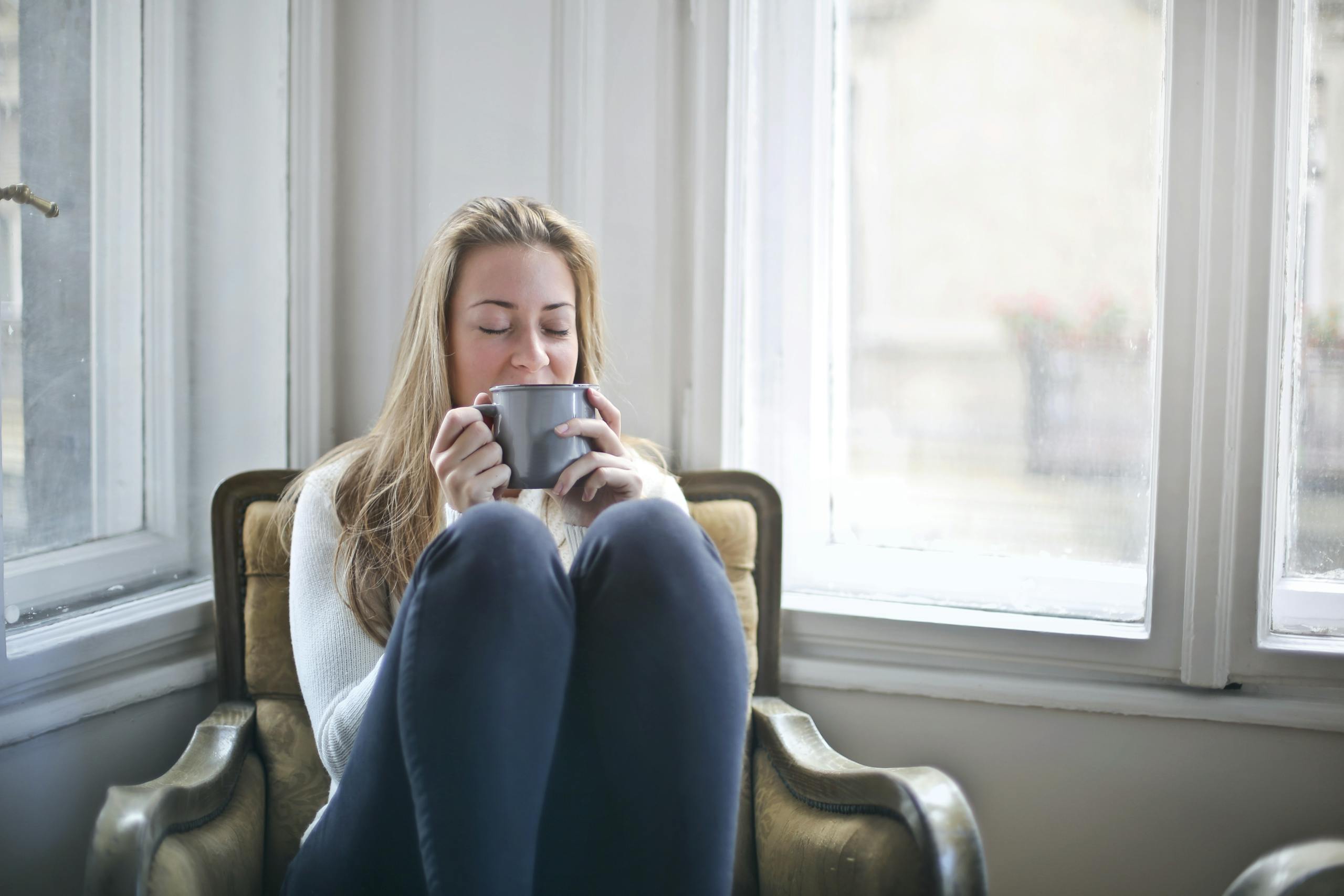
There’s compelling support for the idea that solitude itself is a creative and self-clarifying practice. Berkeley’s Greater Good Science Center has explored how solitude supports creativity and self-discovery, noting that time alone, genuinely alone without digital interruption, allows for the kind of associative thinking that produces original insight. For introverts, that’s not a surprising finding. It’s a description of how we’ve always worked best.
What changes when you stop trying to perform authenticity and start actually practicing it is subtle at first. You notice that your thoughts feel more like yours. You’re less reactive to what other people think because you haven’t invited their reaction into your inner process. The self you’re building in private becomes sturdier, less dependent on external confirmation.
That’s a different kind of self-care than the kind social media promotes. It’s quieter, less photogenic, and harder to quantify. But it’s the kind that actually holds.
Can Introverts Use Social Media Without Losing Themselves?
Yes, but it requires a specific kind of intentionality that doesn’t come naturally in spaces designed to maximize engagement.
The introverts I’ve seen use social media well tend to share from a place of completion rather than process. They’ve already done the inner work. They’ve already arrived at the insight, the reflection, the perspective. What they post is a finished thought, not a live emotional event. That distinction matters enormously. It’s the difference between sharing yourself and performing yourself.
There’s also real value in being selective about what you consume, not just what you produce. Psychology Today’s writing on the introvert advantage in leadership contexts points out that introverts tend to be more deliberate and less reactive decision-makers, a quality that translates directly to how we can approach social media when we choose to. The feed doesn’t have to be something that happens to you. It can be something you engage with on your own terms.
That said, the structural incentives of platforms push hard against that kind of deliberate engagement. Algorithms reward frequency, reactivity, and emotional volume. Being thoughtful and selective puts you at a systematic disadvantage in terms of reach and visibility. For introverts who use social media professionally, that tension is real and worth naming honestly rather than pretending it doesn’t exist.
In my agency years, I had to make peace with the fact that my natural communication style, careful, considered, and slow to react, wasn’t optimized for social media performance. I could either adapt my style to fit the medium or find other channels where depth was an asset rather than a liability. That’s a choice every introvert eventually has to make, and there’s no universally right answer. But making it consciously is better than letting the platform make it for you.
The research emerging on social media and wellbeing consistently points in a similar direction. A recent PubMed Central study examining digital media use and psychological health found that intentional, bounded engagement with social media was associated with significantly better wellbeing outcomes than habitual or passive use. Intention, it turns out, is protective. For introverts, that framing is worth holding onto.
October is Self-Care Awareness Month, and it’s a good moment to ask honestly whether the way you’re using social media is actually caring for you or quietly costing you. That question deserves more than a surface-level answer.
What I’ve come to believe, after years of watching both brand and personal authenticity get manufactured and monetized, is that the most genuinely authentic thing an introvert can do online is to share less, more carefully, from a place of real inner clarity. Not because that’s a better content strategy, though it often is, but because it honors the way your mind actually works. Slow, deep, and private first.
The world doesn’t need more performed vulnerability. It needs more genuine thought. And genuine thought, for most introverts, happens in the quiet before the post, not in the posting itself.
If this conversation about authenticity, solitude, and self-care resonates with you, there’s much more to explore in our complete Solitude, Self-Care & Recharging hub, where we cover everything from daily practices to the deeper science of why introverts recharge the way we do.
Running on empty?
Five drain profiles, each with specific triggers, warning signs, and a recharging playbook.
Take the Free QuizUnder 2 minutes · 8 questions · Free
About the Author
Keith Lacy is an introvert who’s learned to embrace his true self later in life. After 20 years in advertising and marketing leadership, including running agencies and managing Fortune 500 accounts, Keith now channels his experience into helping fellow introverts understand their strengths and build fulfilling careers. As an INTJ, he brings analytical depth and authentic perspective to every article, drawing from both professional expertise and personal growth.
Frequently Asked Questions
Why do introverts struggle more with social media authenticity than extroverts?
Introverts process their inner lives slowly and privately, often needing extended reflection before they arrive at genuine insight. Social media rewards fast, frequent, emotionally visible sharing, which runs counter to how introverts actually develop their most authentic thoughts. The result is a mismatch between the platform’s incentive structure and the introvert’s natural processing style, which can produce a sense of performing a version of yourself rather than actually expressing who you are.
Is it possible to be genuinely authentic on social media as an introvert?
Yes, but it requires deliberate boundaries around how and when you engage. Introverts who find social media sustainable tend to share from a place of completion, meaning they’ve already processed an experience privately before sharing it publicly. Posting a finished thought rather than a live emotional process is a meaningful distinction that protects both authenticity and inner equilibrium.
How does social media affect introverts’ need for solitude?
Social media creates a persistent relational frame, meaning even when you’re alone, you’re partly imagining an audience. For introverts, whose most genuine thinking happens in the absence of social observation, that imagined audience can disrupt the quality of solitude. True recharging requires spaces where your inner life develops without external pressure, and social media, by design, makes those spaces harder to maintain.
What are the signs that social media is draining rather than supporting an introvert’s wellbeing?
Common signs include feeling more self-conscious or uncertain about your own thoughts after scrolling, difficulty sleeping because of mental rehearsal of posts or reactions, a growing sense that your online voice doesn’t sound like you, and fatigue that isn’t explained by physical activity. These are signals that the social monitoring social media activates is consuming energy that should be going toward genuine rest and self-connection.
What does healthy social media use look like for a highly sensitive introvert?
Healthy use for a highly sensitive introvert typically involves time-bounded engagement rather than open-ended scrolling, clear intentions before opening any platform, and regular periods of complete digital disconnection. Many HSPs find that replacing passive consumption with intentional creation, and protecting early morning and pre-sleep hours from social media entirely, significantly reduces the nervous system load that platforms can generate.