
Furnished apartments for digital nomads with remote-work setups are fully equipped living spaces that include furniture, utilities, and dedicated workspace infrastructure, allowing location-independent workers to move in and be productive within hours. For introverts making this choice, the right furnished apartment isn’t just about convenience. It’s about finding a space that genuinely supports deep focus, personal restoration, and the kind of quiet that lets a reflective mind actually do its best work.
Most advice about furnished apartments for digital nomads focuses on WiFi speeds and proximity to coworking spaces. Those things matter, but they’re almost never the whole picture, especially if you’re wired the way I am.

There’s a broader conversation happening about how introverts design their lives around space and environment. Our Introvert Home Environment hub covers that territory thoroughly, and furnished apartments for digital nomads sit right at the intersection of all those themes: how we restore, how we work, and how the physical spaces we inhabit either drain or sustain us.
Why Does the “Furnished” Part Matter So Much More to Introverts?
Anyone who’s moved into an unfurnished apartment knows the chaos of those first few weeks. You’re eating on the floor, hunting for a lamp, making three trips to a big-box store, and managing a dozen small decisions every day that chip away at your focus. For an extrovert, that chaos might feel like an adventure. For me, it felt like cognitive torture.
What drains your social battery?
Not all social exhaustion is the same. Our free quiz identifies your specific drain pattern and gives you personalised recharging strategies.
Find Your Drain PatternUnder 2 minutes · 8 questions · Free
My mind processes the world through layers of observation and quiet analysis. I notice things, file them away, connect them later. That process requires a certain baseline of environmental calm. When my surroundings are in disarray, that internal processing gets crowded out by noise. I spent years running advertising agencies and managing client relationships across time zones, and one thing I learned early was that my best strategic thinking happened in spaces that were already settled. The moment I had to think about my environment, I stopped thinking clearly about everything else.
Furnished apartments solve that problem in a specific way. You walk in, and the space is already functional. You don’t have to make decisions about where the couch goes or whether you need a dish rack. That cognitive bandwidth stays available for actual work, which matters enormously when your work depends on sustained, uninterrupted thinking.
There’s a concept in the HSP (Highly Sensitive Person) community that maps onto this perfectly. The idea of simplifying your environment to reduce sensory and decision-making load is central to approaches like HSP minimalism, and furnished apartments, when chosen carefully, can embody that principle from day one. You’re not accumulating stuff. You’re stepping into a space that already has what you need and nothing more.
What Should an Introvert Actually Look for in a Furnished Apartment?
Plenty of furnished apartment listings check the basic boxes: bed, couch, kitchen table, maybe a desk. But “furnished” covers an enormous range, and for introverts doing serious remote work, the details matter in ways that standard checklists don’t capture.
The Workspace Configuration
A “desk” in a furnished apartment listing could mean a wobbly Ikea table wedged into a corner, or it could mean a proper ergonomic setup with good lighting and enough surface area to spread out. Before I commit to any space, I ask for photos specifically of the workspace, not the living room or bedroom. I want to see where I’ll actually spend six to eight hours a day.
Equally important: where is that workspace positioned relative to the rest of the apartment? During my agency years, I noticed that my most productive employees, particularly the ones who did deep analytical or creative work, consistently gravitated toward workspaces that faced walls or windows rather than open rooms. There’s a reason for that. Facing an open space means your peripheral vision is constantly scanning for movement and input. Facing a wall or a view gives your brain permission to go inward.
If the desk faces the front door or a busy common area, that’s a problem worth flagging before you sign anything.
Acoustic Privacy
Sound is the variable that furnished apartment listings almost never address honestly. I’ve stayed in beautifully photographed apartments where the walls were so thin I could hear my neighbor’s phone conversations. That kind of ambient noise doesn’t just irritate me. It genuinely fragments my concentration in ways that take hours to recover from.
Ask specific questions: What floor is the unit on? Is it a corner unit? Are there shared walls with other units or common areas? What’s the building’s policy on quiet hours? These aren’t fussy questions. They’re practical ones that determine whether you’ll be able to work effectively.
Top-floor units and corner units consistently perform better acoustically. Ground-floor units near entrances are almost always the worst. If you can visit in person before committing, do it during the hours you’d normally be working.
The Couch and Restoration Space
This one sounds frivolous until you think about what introverts actually need from a home. We don’t just sleep and work. We restore. We decompress. We process. And a lot of that happens horizontally, on a couch, with a book or a podcast or nothing at all.
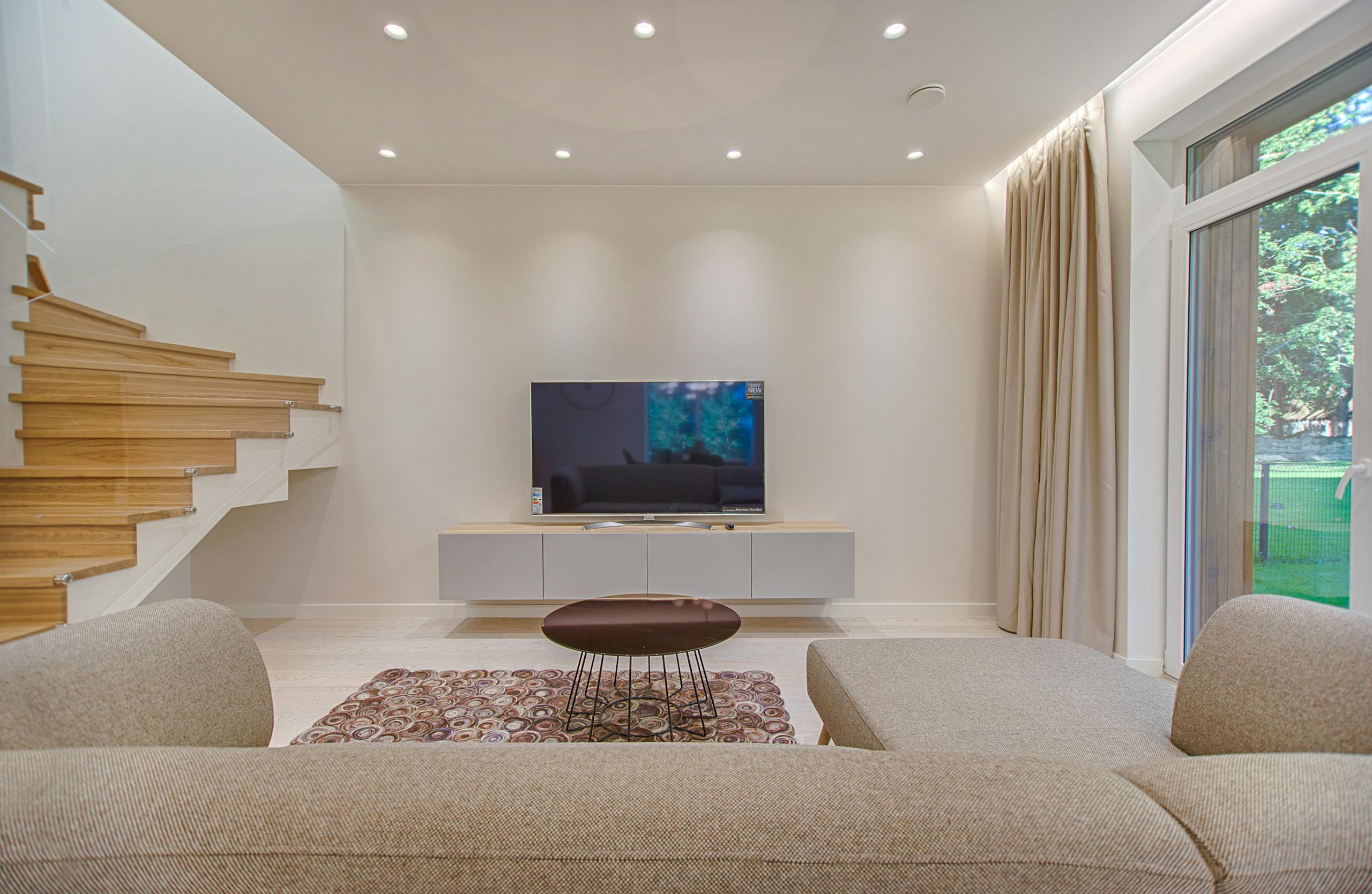
The quality of that couch matters more than most people admit. There’s an entire philosophy around what makes a great homebody couch, and it applies directly to furnished apartment selection. A couch that’s too firm, too shallow, or positioned awkwardly relative to the TV or windows isn’t just uncomfortable. It subtly undermines the restoration that introverts genuinely need to function well the next day.
How Do You Evaluate the Remote-Work Infrastructure Before Committing?
The WiFi speed listed in a furnished apartment ad is almost always the theoretical maximum under ideal conditions. What you actually experience depends on how many units share the connection, what time of day you’re working, and how the building’s network is configured. I’ve learned to treat WiFi claims the way I treat client promises in new business pitches: optimistic until proven otherwise.
Ask the host or property manager for a speed test screenshot taken during peak hours, typically 9 AM to 12 PM on a weekday. If they can’t or won’t provide that, factor it into your risk assessment. Better yet, check whether the apartment has a wired ethernet option. A hardwired connection is almost always more stable than WiFi, and for video calls or large file transfers, the difference is significant.
Beyond connectivity, think about backup options. Is there a cafe within walking distance with reliable WiFi? A library? A coworking space? Having one solid backup isn’t paranoia. It’s the kind of contingency planning that introverts tend to do naturally, and in this context, it’s genuinely useful.
Power infrastructure matters too, especially if you’re working internationally. Voltage converters, outlet configurations, and the number of available outlets in the workspace area are worth verifying. Running a laptop, monitor, external drive, and phone charger simultaneously off a single power strip plugged into an adapter is a fire hazard and a frustration.
What Makes a Furnished Apartment Feel Like Home for an Introvert?
There’s a version of digital nomad life that’s all surface: new cities, new cafes, new experiences. I understand the appeal intellectually. But I’ve never been wired for it. My internal world is rich enough that I don’t need constant external novelty. What I need is a base that feels genuinely settled, a place where I can stop performing and just exist.
That quality is hard to quantify, but you notice it immediately when it’s present or absent. It has something to do with light. Natural light in the morning, warmer artificial light in the evening. It has something to do with the ratio of open space to enclosed space. Apartments that feel cavernous or institutional rarely feel restorative, regardless of how well-furnished they are.
It also has something to do with what I’d call “personal territory.” Even in a furnished apartment, you need a few square feet that feel genuinely yours. A desk you’ve arranged the way you want it. A corner of the couch that becomes your reading spot. A kitchen counter where your coffee setup lives. These small acts of claiming space are how introverts establish psychological safety in a new environment.
One thing I’ve started doing when evaluating furnished apartments: I look at whether there’s room to add a few personal items without the space feeling cluttered. A book or two. A small plant. Maybe a framed photo. The best furnished apartments leave enough visual breathing room that you can make them feel inhabited without overwhelming the existing setup. If every surface is already covered with decorative objects, that’s a sign the space won’t adapt to you.
If you’re the kind of person who finds comfort in building a personal library or surrounding yourself with meaningful objects, it’s worth reading up on what makes a homebody book collection feel intentional rather than just accumulated. The same principles apply to how you curate a temporary living space.

How Do Introverts Handle the Social Dynamics of Furnished Apartment Living?
Furnished apartments come in a range of configurations, from entirely private units to coliving setups with shared common areas. That distinction matters enormously for introverts, and it’s worth being honest with yourself about where you fall on that spectrum before you commit.
Coliving arrangements are marketed heavily to digital nomads, and for some people they work beautifully. The built-in social infrastructure removes the friction of meeting people in a new city. For extroverts and ambiverts, that’s a genuine benefit. For introverts who need significant time alone to function well, it can become a slow drain. You come home after a full day of video calls and focused work, and the common area is full of people who want to connect. The social pressure isn’t aggressive. It’s ambient. And ambient pressure is often harder to resist than direct pressure.
I ran into this dynamic during a particularly intense stretch of new business pitches about twelve years into running my agency. We’d moved the team into a shared creative space to foster collaboration, and it was genuinely good for certain people on the team. But I watched two of my most talented strategists quietly deteriorate over six weeks. They weren’t antisocial. They were introverts who needed more silence than that environment provided. I moved them back to private offices and their output recovered almost immediately.
The same principle applies to where you choose to live. A private furnished apartment with a clear boundary between your space and the world will almost always serve introverts better than a coliving setup, even if the coliving option is cheaper or more conveniently located.
That said, the social isolation of being a digital nomad in an unfamiliar city is real, and it’s worth addressing deliberately rather than letting it compound. Many introverts find that online spaces designed for introverts provide a low-pressure way to maintain social connection without the energy cost of in-person interaction. That kind of intentional digital community can be a meaningful supplement to the limited social contact that comes with nomadic life.
What Should You Pack to Upgrade a Furnished Apartment’s Remote-Work Setup?
Even the best furnished apartment rarely has everything you need for serious remote work. fortunately that a small number of targeted additions can make an enormous difference, and most of them are portable enough to become part of your standard travel kit.
An external monitor is the single highest-impact addition for most knowledge workers. Working on a laptop screen alone for eight hours is genuinely fatiguing, and the cognitive load of constantly switching between windows compounds over days and weeks. A lightweight portable monitor that connects via USB-C fits in most backpacks and transforms any furnished apartment desk into a functional dual-screen setup.
A quality external keyboard and mouse matter more than people expect. The ergonomics of laptop keyboards are designed for portability, not sustained use. After a few weeks of heavy typing, the difference between a proper mechanical keyboard and a laptop keyboard shows up in your wrists and your concentration. This isn’t luxury. It’s maintenance.
Noise-canceling headphones are non-negotiable for introverts in furnished apartments. Even in quiet buildings, there’s ambient noise: HVAC systems, street traffic, neighboring units. Good headphones create a personal acoustic environment that makes deep work possible regardless of what’s happening outside. They’re also a clear social signal when you’re on calls or in focus mode, which matters in any shared living situation.
Beyond the technical setup, a few comfort items can meaningfully improve how restorative your time in the apartment feels. If you’re someone who gives thoughtful attention to how your space feels, the kind of items covered in a homebody gift guide offer a useful framework for thinking about what’s worth carrying versus what you can source locally. A weighted blanket, a specific tea, a small speaker for ambient sound: these aren’t indulgences. They’re tools for maintaining the kind of environmental quality that lets introverts actually recover.
Similarly, if you’re building out a travel kit or thinking about what to invest in before a longer nomadic stretch, the items covered in gifts for homebodies translate surprisingly well to furnished apartment living. The overlap between “what makes a homebody comfortable” and “what makes an introverted digital nomad functional” is larger than most people realize.
How Do You Evaluate a City or Neighborhood Before Choosing a Furnished Apartment?
The apartment itself is only part of the equation. The neighborhood it sits in shapes your daily experience in ways that compound over weeks and months. Introverts tend to be highly attuned to environmental stimulation, which means a neighborhood that feels exciting on a weekend visit can feel overwhelming as a daily reality.
There’s a body of thinking in psychology and neuroscience around how environmental stimulation affects different personality types. Psychology Today’s coverage of how introverts process their environment points to something most introverts already know intuitively: we’re not antisocial, we’re stimulus-sensitive. A neighborhood with constant foot traffic, loud bars, and unpredictable street noise isn’t just annoying. It’s cognitively taxing in a way that accumulates.
What to look for instead: residential neighborhoods with good walkability but lower commercial density. Access to green space, a park, a waterfront, or even a quiet residential street, is worth more than proximity to nightlife. A good grocery store and a reliable cafe within walking distance covers most practical needs without requiring you to constantly move through high-stimulation environments.
Transit access matters too, but in a specific way. Being near a major transit hub sounds convenient, but those areas tend to be loud and congested. Being a ten-minute walk from a transit hub, with quiet streets in between, is often the better configuration.
I’ve found that introverts who’ve done multiple nomadic stints tend to develop a very specific instinct for neighborhoods. They stop chasing the “cool” areas and start looking for the quiet, functional ones. The ones where you can take a walk at 7 AM without passing a construction site or a bar cleanup crew. The ones where the coffee shop has reliable WiFi and doesn’t blast music. That instinct is worth trusting.
What Are the Psychological Benefits of a Well-Chosen Furnished Apartment?
There’s a reason introverts often describe their home as a sanctuary. It’s not just comfort. It’s the place where the performance stops. Where you don’t have to manage how you’re coming across or calibrate your energy to the room. A well-chosen furnished apartment can provide that sanctuary quality even temporarily, and the psychological benefits are real.
Cognitive restoration is a genuine phenomenon. Moving through high-stimulation environments depletes attentional resources, and quiet, low-stimulation spaces help restore them. Research published in PubMed Central on environmental psychology supports the idea that restorative environments share specific characteristics: a sense of being away, a quality of fascination that doesn’t demand active attention, coherence, and compatibility with your needs. A well-furnished apartment in a quiet neighborhood can check all of those boxes.
For introverts specifically, the ability to control your environment is closely tied to psychological wellbeing. Walden University’s overview of introvert strengths highlights the capacity for deep focus and independent work as genuine cognitive advantages, but those advantages only manifest when the environment supports them. A poorly chosen furnished apartment doesn’t just inconvenience you. It actively undermines the cognitive strengths that make you effective.
I watched this play out with myself during a particularly difficult stretch about eight years into running my agency. I was traveling constantly for client work, staying in hotels and short-term rentals that were chosen for convenience rather than fit. My thinking got shallow. My strategic instincts dulled. I assumed it was burnout. It was partly burnout, but it was also the cumulative effect of living in spaces that never let me fully decompress. When I started being more deliberate about accommodation choices, something shifted in how I was thinking. The quality of my work in client meetings improved noticeably within a few weeks.
That experience changed how I think about environment as a professional tool rather than a personal preference. Introverts who do serious remote work aren’t being precious when they prioritize their living space. They’re being strategic.
There’s also something worth noting about the relationship between introversion and depth of processing. Psychology Today’s exploration of introvert cognitive patterns touches on the tendency toward careful, thorough analysis before acting, which is a genuine strength in complex professional environments. That kind of processing requires mental space. A furnished apartment that provides genuine quiet and visual calm isn’t a luxury. It’s infrastructure.

How Do You Negotiate Better Terms on a Furnished Apartment?
Most digital nomads accept furnished apartment listings at face value. Price is the price. Terms are the terms. That’s often a mistake, particularly for longer stays.
Landlords and property managers in the furnished apartment market are generally more flexible than they appear, especially for stays of a month or longer. The cost of vacancy, cleaning, and relisting is significant. A reliable tenant who commits to sixty or ninety days is worth a meaningful discount over a succession of two-week bookings. That leverage is real, and introverts are often well-positioned to use it effectively.
Thoughtful preparation before a negotiation conversation consistently outperforms improvisation. Harvard’s Program on Negotiation emphasizes the value of knowing your alternatives and understanding what the other party values before entering any negotiation. In furnished apartment terms, that means knowing comparable listings in the area, understanding the property’s vacancy history if possible, and being clear about what you’re offering: reliability, length of stay, and low maintenance as a tenant.
Beyond price, there are often other terms worth negotiating: earlier check-in or later checkout, permission to rearrange furniture for a better workspace configuration, inclusion of a parking spot, or clarification on utility caps. These conversations are easier to have before you commit than after.
One thing I’ve noticed about introverts in negotiation contexts: we often do the analytical preparation thoroughly but hesitate at the moment of actually asking. We’ve thought through the argument carefully, but the act of stating it out loud feels presumptuous. That hesitation is worth pushing through. A clear, direct request delivered calmly is almost always received better than we expect.
What Does a Sustainable Digital Nomad Rhythm Look Like for Introverts?
The most common mistake introverted digital nomads make isn’t choosing the wrong apartment. It’s choosing the wrong pace. Moving every two to three weeks sounds exciting in theory. In practice, it means you’re constantly in the cognitive overhead of new environments: new grocery stores, new routines, new ambient sounds to filter. That overhead compounds, and for introverts who need settled environments to do deep work, it becomes genuinely unsustainable.
A rhythm that works better for most introverts: stays of six to twelve weeks in each location, with a clear intention for what you’ll accomplish in each place. That length of time is enough to develop genuine familiarity with your neighborhood, establish routines that support your work, and actually experience a place rather than just passing through it. It’s also enough time to recover from the energy cost of moving before you do it again.
Within that rhythm, the furnished apartment becomes genuinely restorative rather than just functional. You have a couch that feels like yours. A coffee routine that’s automatic. A walk you take when you need to think. Those small anchors aren’t trivial. They’re the infrastructure of psychological stability for people who process the world as deeply as most introverts do.
The digital nomad lifestyle is often sold as freedom from place. For introverts, that framing misses something important. We don’t want freedom from place. We want the freedom to choose our place carefully, inhabit it fully, and leave when we’re ready rather than when external pressure forces us out. That’s a meaningful distinction, and it shapes every decision from which city to which apartment to how long to stay.
If you’re building out your thinking about how environment shapes the introvert experience more broadly, there’s a wealth of connected territory in the Introvert Home Environment hub, covering everything from sensory design to the psychology of personal space.
Running on empty?
Five drain profiles, each with specific triggers, warning signs, and a recharging playbook.
Take the Free QuizUnder 2 minutes · 8 questions · Free
About the Author
Keith Lacy is an introvert who’s learned to embrace his true self later in life. After 20 years in advertising and marketing leadership, including running agencies and managing Fortune 500 accounts, Keith now channels his experience into helping fellow introverts understand their strengths and build fulfilling careers. As an INTJ, he brings analytical depth and authentic perspective to every article, drawing from both professional expertise and personal growth.
Frequently Asked Questions
Are furnished apartments worth the higher cost for introverted digital nomads?
For most introverted remote workers, yes. The premium over an unfurnished rental covers not just furniture but the cognitive and emotional cost of setup. Introverts who need settled, functional environments to do deep work typically recover the cost difference in productivity within the first week or two. The real calculation isn’t monthly rent. It’s total cognitive overhead, and furnished apartments minimize that overhead significantly.
What’s the minimum WiFi speed an introvert digital nomad should accept in a furnished apartment?
For most remote work involving video calls and cloud-based tools, a consistent 25 Mbps download and 10 Mbps upload is a workable floor. If your work involves large file transfers or frequent high-definition video conferencing, aim for 50 Mbps or higher. More important than the listed speed is consistency. Ask for a speed test screenshot taken during peak hours, and verify whether a wired ethernet connection is available as a backup to WiFi.
How should introverts handle the social dynamics of furnished apartment buildings?
Prioritize private units over coliving arrangements wherever possible. In buildings with shared amenities, establish clear patterns early: use common areas at lower-traffic times, be friendly but not obligating in hallway interactions, and don’t feel pressured to participate in organized social events if they don’t appeal to you. Most furnished apartment buildings have a mix of residents with varying social preferences, and a polite but boundaried approach is almost always respected.
Can you negotiate the terms of a furnished apartment rental as a digital nomad?
Yes, and more often than most people realize. Landlords and property managers prefer reliable longer-term tenants over frequent turnover. Committing to sixty or ninety days gives you genuine negotiating leverage on both price and terms. Come prepared with knowledge of comparable listings in the area, be clear about what you’re offering as a tenant, and make specific requests rather than vague ones. Direct, calm requests are almost always received better than expected.
What’s the ideal length of stay in a furnished apartment for an introverted digital nomad?
Most introverted digital nomads find that stays of six to twelve weeks strike the best balance between variety and stability. Shorter stays mean constant environmental adjustment, which depletes the cognitive resources introverts need for deep work. Longer stays allow genuine familiarity with a neighborhood, established routines, and real psychological restoration between moves. The two-to-three week rhythm common in nomad circles tends to work poorly for introverts who need settled environments to function at their best.