
Shunya meditation is a contemplative practice rooted in ancient Indian philosophy that cultivates a state of inner emptiness, stillness, and pure awareness. Unlike breath-focused or visualization techniques, shunya asks you to release all mental content and rest in the spacious quiet beneath thought itself. For introverts who already live close to their inner world, this practice can feel less like learning something new and more like finally arriving somewhere familiar.
My first real encounter with shunya wasn’t in a meditation studio. It happened in a conference room in Chicago, after a brutal client presentation that had gone sideways. Everyone else filed out to debrief over drinks. I stayed behind, sat in the silence, and felt something I couldn’t name at the time. That quality of open, undisturbed awareness. I didn’t have a word for it then. Shunya gave me one later.

Mental health for introverts is a topic I care about deeply, and shunya meditation sits right at the center of it. If you want to explore the broader landscape of what supports introvert wellbeing, our Introvert Mental Health Hub covers everything from anxiety and sensory overload to emotional processing and identity, all through an introvert lens.
What Is Shunya Meditation and Where Does It Come From?
The word “shunya” comes from Sanskrit and translates roughly as “zero,” “void,” or “emptiness.” In Hindu and Buddhist philosophy, shunya doesn’t mean nothingness in a bleak or nihilistic sense. It points toward a fullness that exists when the mind stops grasping. Think of it as the silence between notes that makes music possible, or the space inside a cup that makes it useful.
What drains your social battery?
Not all social exhaustion is the same. Our free quiz identifies your specific drain pattern and gives you personalised recharging strategies.
Find Your Drain PatternUnder 2 minutes · 8 questions · Free
The concept appears across multiple traditions. In Advaita Vedanta, shunya relates to the dissolution of the ego-self into pure consciousness. In certain schools of Buddhism, sunyata (the Sanskrit cognate) describes the empty, interdependent nature of all phenomena. In tantric and yogic traditions, shunya is sometimes called the “great void,” a state of awareness that precedes and underlies all thought and perception.
As a practice, shunya meditation typically involves sitting quietly, releasing identification with thoughts as they arise, and resting in the awareness that remains. You’re not suppressing thoughts or forcing calm. You’re noticing the space in which thoughts appear, and choosing to rest there instead of following every mental thread. Some teachers describe it as becoming the sky rather than the clouds.
What strikes me about this framing is how naturally it maps onto the introvert experience. Many of us already spend significant time observing our own minds from a slight remove, watching thoughts move through us without always acting on them. Shunya meditation formalizes and deepens that capacity. It gives it a name, a structure, and a purpose.
Why Does Shunya Meditation Resonate So Deeply With Introverts?
There’s a particular quality to how introverts process the world. We filter experience through layers of internal observation before we respond. We notice subtleties that others move past. We process meaning slowly and thoroughly, often returning to an experience hours or days later to extract something we missed in the moment.
Running an advertising agency for two decades, I managed teams of talented, loud, fast-moving people. The extroverts on my team processed out loud, in real time, in the hallway between meetings. I processed in the margins, in the quiet after everyone left, in the long drives home where I’d replay a client conversation and finally understand what had actually happened. That internal processing style isn’t a deficiency. It’s a different relationship with awareness itself.
Shunya meditation speaks directly to that relationship. Where many popular meditation techniques ask you to focus outward on breath, sound, or sensation, shunya asks you to turn attention toward the awareness that’s doing the noticing. That inward orientation is native territory for most introverts. We’ve been living there our whole lives. We just haven’t always had a practice that honors it.
Many introverts also carry a persistent low-level exhaustion from spending their days in environments calibrated for extroverted engagement. Open offices, back-to-back meetings, constant digital interruption. By the time evening comes, the nervous system is frayed. Shunya meditation offers something different from relaxation techniques that simply replace one stimulus with another. It offers genuine emptiness, a quality of rest that goes deeper than sleep.

Highly sensitive introverts in particular often find that standard mindfulness practices, while helpful, don’t fully address the intensity of their inner experience. When you’re someone who processes sensory input and emotional data at high volume, learning to rest in the void beneath that input can be genuinely life-changing. If you’ve struggled with what’s sometimes called HSP overwhelm and sensory overload, shunya’s emphasis on releasing rather than managing stimulation may offer a different kind of relief.
How Does Shunya Meditation Actually Work in Practice?
The mechanics of shunya meditation are deceptively simple. You sit comfortably, close your eyes, and allow your attention to settle. As thoughts arise, you notice them without engagement and gently return to the open, undirected awareness beneath them. No mantra, no visualization, no counting. Just presence meeting itself.
Most teachers recommend beginning with short sessions, ten to fifteen minutes, and extending gradually as the practice deepens. The early stages often feel frustrating. The mind, accustomed to having a task, keeps reaching for something to hold onto. This is normal. The practice isn’t about achieving blankness. It’s about repeatedly choosing to return to the open ground of awareness rather than following the mind’s habitual pull toward content.
Some practitioners use a soft inner gaze directed slightly downward, sometimes called “shunya drishti,” to help anchor attention without focusing on a specific object. Others simply rest with eyes closed and allow the field of awareness to expand naturally. There’s no single correct posture, though an upright seated position generally supports alertness without tension.
One distinction worth understanding: shunya meditation isn’t the same as dissociation or zoning out. The quality of awareness in a genuine shunya state is actually heightened, clear and present, not foggy or withdrawn. You’re not escaping your experience. You’re meeting it from a place of greater spaciousness. That distinction matters, especially for introverts who sometimes use solitude as avoidance rather than restoration.
There’s also a somatic dimension to the practice that doesn’t get discussed enough. As mental grasping releases, the body often follows. Shoulders drop. Breathing slows. The jaw unclenches. The connection between contemplative practice and the autonomic nervous system is well-documented, and shunya’s capacity to shift the body out of low-grade vigilance makes it particularly valuable for those of us who carry tension as a baseline state.
What Does Shunya Meditation Do for Anxiety and Mental Overload?
Anxiety, at its core, is the mind’s refusal to rest in uncertainty. It reaches forward into imagined futures or backward into replayed pasts, generating narratives of threat that feel urgent and real. For introverts, who process information deeply and tend toward thorough internal analysis, anxiety can become a kind of runaway processing loop. The mind keeps working the problem long after the problem has been adequately addressed.
I know that loop intimately. During the years I was managing agency growth, pitching new business, and handling the constant unpredictability of client relationships, my mind rarely stopped. I’d wake at 3 AM with fully formed arguments for presentations that weren’t happening for two weeks. Not because I was anxious in a clinical sense, but because my mind had no off switch. It processed continuously, whether I asked it to or not.
Shunya meditation doesn’t try to fix or redirect that processing tendency. It offers something more fundamental: a direct experience of the awareness that exists before processing begins. When you’ve genuinely touched that stillness, even briefly, the mind’s compulsive activity becomes easier to observe without being swept away by it. You develop what some teachers call “witness consciousness,” the capacity to watch your own thinking without being fully identified with it.
For those dealing with anxiety that goes beyond ordinary mental busyness, it’s worth understanding the full picture. The National Institute of Mental Health’s resources on generalized anxiety disorder are a useful starting point for understanding when anxiety has crossed into clinical territory that benefits from professional support alongside any contemplative practice. Shunya meditation is a complement to that support, not a replacement for it.
Introverts who also identify as highly sensitive often find that anxiety and emotional intensity are tightly linked. The same nervous system that makes you perceptive and empathic can also make you vulnerable to overwhelm. Understanding the relationship between HSP anxiety and effective coping strategies can help you approach shunya meditation as one tool in a broader, more integrated approach to nervous system regulation.

How Does Shunya Meditation Support Emotional Processing?
Introverts don’t just think deeply. We feel deeply. Emotions don’t pass through us quickly. They settle, layer, and require time and space to be fully understood. I’ve watched this in myself across decades of professional life. A difficult conversation with a client wouldn’t fully land until hours later, when I was alone and the emotional weight of it could finally surface without interference.
Shunya meditation creates the conditions for that kind of deep emotional processing to happen more consciously and more completely. When you sit in open awareness without an agenda, emotions that have been held at bay often rise naturally. Not as crises to be managed, but as information to be received. The practice teaches you to hold emotional experience with the same spacious, non-reactive quality that you bring to thoughts.
This is particularly relevant for introverts who have learned to suppress or delay emotional responses in professional settings. Many of us developed sophisticated strategies for appearing unaffected during meetings, presentations, or difficult conversations, only to carry the emotional residue home and process it alone, sometimes incompletely. Shunya offers a container for that incomplete processing to finish.
There’s a broader framework worth exploring here. The experience of HSP emotional processing and feeling deeply maps closely onto what shunya meditation addresses at its core: how do you honor the full intensity of your inner experience without being overwhelmed by it? The practice doesn’t dull emotional sensitivity. It gives sensitivity somewhere to land.
One thing I’ve noticed in my own practice is that shunya creates a kind of emotional afterglow. Not euphoria, but a quiet settling. After a genuine shunya session, emotions that felt tangled often feel clarified. Not resolved in the sense of being fixed, but understood in a way that makes them easier to carry. The relationship between contemplative practices and emotional regulation has received increasing attention in psychological research, and the mechanisms align well with what practitioners describe subjectively.
Can Shunya Meditation Help With the Weight of Empathy?
One of the less-discussed costs of being an introverted, perceptive person in a leadership role is the weight of accumulated empathy. When you pay close attention to people, you absorb more than most. Their stress, their frustration, their unspoken anxieties. Over time, that absorption can become its own form of exhaustion.
I managed a team of twenty-plus people at the peak of my agency years. I noticed things about their emotional states that they hadn’t consciously registered themselves. A creative director’s subtle shift in energy before a presentation. An account manager’s forced cheerfulness that meant something was wrong at home. I held all of that information, processed it, and tried to respond to it thoughtfully. It was genuinely draining in ways that were hard to explain to anyone who didn’t share that perceptual style.
Empathy, especially at high intensity, is what some describe as a double-edged quality. The same capacity that makes you a sensitive, effective leader or collaborator can leave you depleted and porous if you don’t have ways to discharge what you’ve absorbed. The article on HSP empathy as a double-edged experience explores this tension in depth, and it’s a tension that shunya meditation addresses in a specific way.
Practicing shunya regularly develops what you might call energetic discernment. As you learn to rest in your own awareness rather than continuously reaching outward, you become more skilled at distinguishing your own emotional state from what you’ve absorbed from others. The void isn’t cold or disconnected. It’s actually a place of clear, boundaried presence. You can feel with others without losing yourself in the feeling.
What About Perfectionism and the Inner Critic?
Many introverts carry a particularly demanding inner critic. The same depth of processing that generates insight also generates relentless self-evaluation. We replay conversations looking for what we should have said differently. We review our work for flaws that others never noticed. We hold ourselves to standards that feel less like ambition and more like punishment.
In my agency years, this showed up as an inability to call anything finished. Every campaign, every pitch deck, every strategy document felt like it needed one more pass. My creative team would have something ready to present and I’d spend the night before reworking the narrative structure, not because it was inadequate, but because my inner critic couldn’t locate the threshold between “good enough” and “perfect.” That’s a painful place to live.
Shunya meditation doesn’t silence the inner critic through positive self-talk or counter-argument. It does something more fundamental. By repeatedly returning to the awareness beneath thought, you develop a lived, experiential understanding that you are not your thoughts. The critic’s voice is a pattern in awareness, not the truth of who you are. That shift, from identifying with the voice to witnessing it, changes your relationship with perfectionism in ways that cognitive strategies alone rarely achieve.
If perfectionism is a persistent challenge, the deeper exploration in HSP perfectionism and breaking the high standards trap offers context that pairs well with a shunya practice. The two work together: the article helps you understand the pattern intellectually, while the meditation gives you a direct experience of the space beyond it.

How Does Shunya Meditation Help After Rejection or Criticism?
Rejection lands differently when you’re someone who processes deeply. A critical comment in a performance review that a colleague might shrug off in an hour can stay with an introvert for days, cycling through layers of interpretation and self-questioning. This isn’t weakness. It’s the cost of caring and paying attention. But it’s a cost that compounds if you don’t have effective ways to process and release it.
One of the most difficult moments in my professional life came when a long-term client, a Fortune 500 brand we’d served for seven years, moved their account to a competitor. The relationship had been close, genuinely collaborative, and losing it felt like a personal failure even though the decision was driven by factors entirely outside our control. I processed that loss for months, quietly and thoroughly, in the way that introverts do.
What helped wasn’t talking it through, though that had its place. What helped was sitting with it in stillness until the emotional charge gradually released and what remained was something clearer and more useful: perspective. Shunya meditation accelerated that process. By creating space for the pain without dramatizing it or suppressing it, the practice allowed the experience to complete itself naturally.
The process of HSP rejection and healing describes this kind of deep, slow recovery with real nuance. Shunya meditation supports that recovery not by speeding it up artificially, but by giving it the quality of spacious, non-judgmental attention that deep healing actually requires.
There’s also something worth noting about resilience here. The American Psychological Association’s framework on resilience emphasizes that recovery from adversity isn’t about bouncing back quickly. It’s about developing the internal resources to adapt over time. Shunya meditation builds exactly those resources, not through positive thinking, but through a deepening relationship with your own awareness as a stable, unshakeable ground.
What Does the Neuroscience Say About Emptiness-Based Meditation?
The science of meditation has expanded considerably over the past two decades, and while most formal research has focused on focused-attention practices like mindfulness-based stress reduction, open-monitoring and non-directive practices (which include shunya-style approaches) have received growing attention.
Non-directive meditation, which involves releasing control of mental content rather than directing attention to a specific object, appears to engage the brain’s default mode network differently than focused-attention practices. Some researchers suggest this may be why non-directive approaches are particularly effective for processing emotional material and reducing rumination, two things that matter enormously to introverts who tend toward deep, repetitive processing.
The relationship between contemplative practice and stress physiology is also relevant. Research published through the National Library of Medicine has examined how meditation practices influence cortisol levels and the body’s stress response systems, findings that have practical implications for anyone using meditation as part of a mental health strategy.
What I find more compelling than any specific finding, though, is the convergence between contemplative traditions that developed shunya independently across centuries and the emerging neuroscientific picture of what open, non-directive awareness does to the brain. The traditions got there first. The science is catching up.
It’s also worth noting that academic work examining introversion and inner experience consistently points toward the introvert’s natural orientation toward internal processing as a genuine cognitive strength, not a limitation to be overcome. Shunya meditation doesn’t fight that orientation. It refines it.
How Do You Build a Shunya Practice That Actually Sticks?
Consistency matters more than duration, especially at the beginning. Ten minutes of genuine shunya practice every morning will do more for you than an occasional forty-five-minute session when you feel motivated. The practice needs repetition to build the neural pathways and the felt sense of returning to stillness that makes it increasingly accessible over time.
Find a time and place where you won’t be interrupted. This sounds obvious, but it’s worth being deliberate about. The quality of your environment matters, particularly if you’re someone who picks up on ambient stimulation. A quiet room, consistent lighting, and a comfortable seated position all support the practice without becoming rigid prerequisites.
Begin each session with a few minutes of slower breathing to settle the nervous system before attempting to rest in open awareness. You’re not trying to manufacture stillness. You’re creating conditions where stillness can arise naturally. There’s a difference, and learning to feel that difference is part of the practice itself.
When thoughts arise, and they will, resist the impulse to evaluate whether you’re “doing it right.” That evaluation is itself just another thought. Notice it, release it, return to open awareness. The returning is the practice. Every time you notice you’ve been pulled away and come back to stillness, you’ve done exactly what shunya asks of you.
Some practitioners find it helpful to anchor the practice with a brief intention at the start, something as simple as “I rest in open awareness.” Not as a mantra to repeat, but as an orientation to establish. Others prefer pure silence from the first moment. Both approaches work. What matters is that you show up regularly and allow the practice to develop at its own pace.
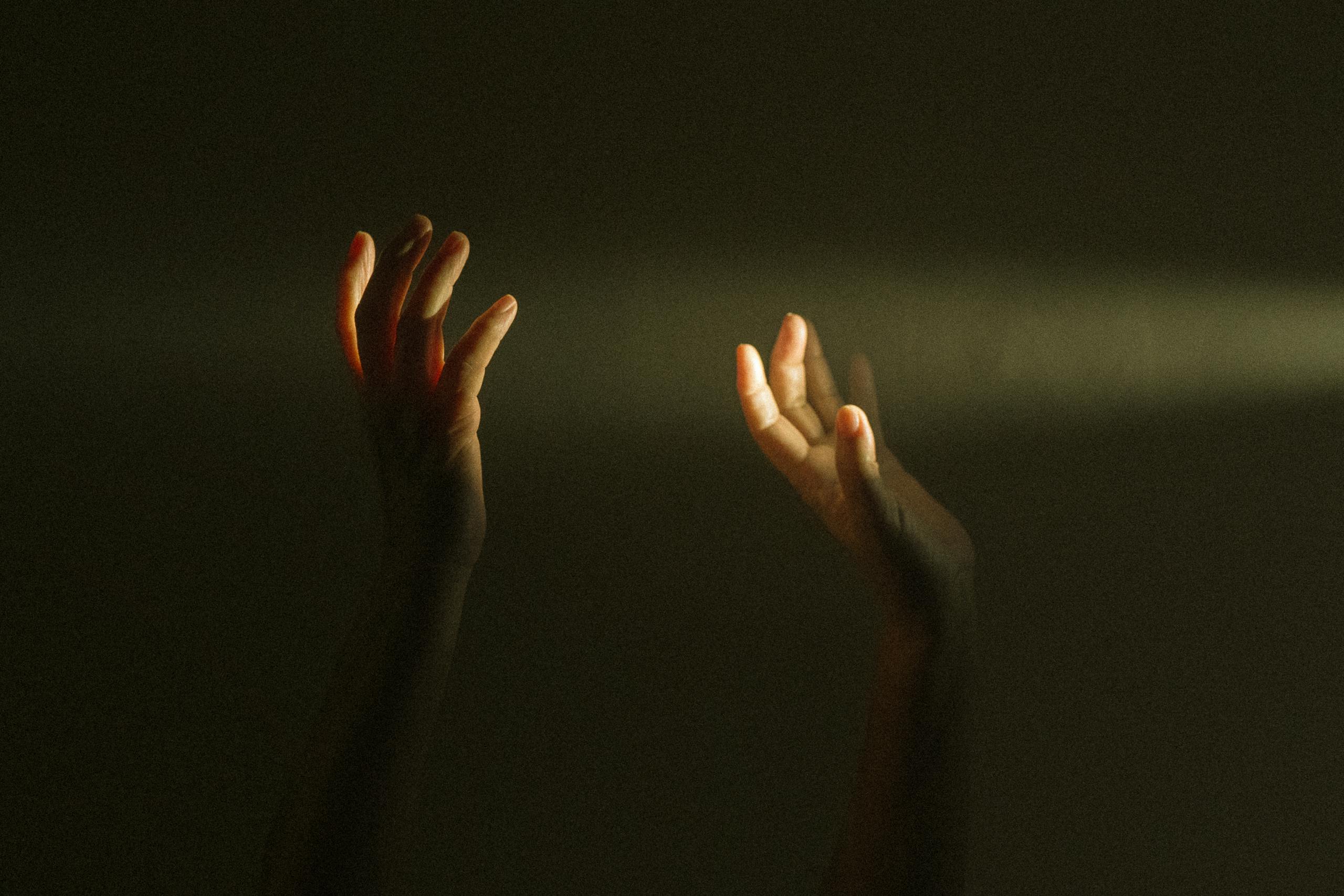
One thing I’d add from my own experience: don’t expect shunya to look the same every day. Some sessions feel genuinely spacious and clear. Others feel like wrestling with a very loud, very opinionated mind. Both are valid. The practice isn’t measured by the quality of any single session. It’s measured by what gradually shifts in your baseline relationship with your own awareness over weeks and months.
The Psychology Today introvert’s corner has long explored how introverts relate differently to solitude and inner experience, and building a shunya practice is one of the most direct expressions of that relationship. You’re not retreating from the world. You’re developing a more stable, more spacious relationship with yourself that makes re-entering the world more sustainable.
If you’re looking for more support across the full range of introvert mental health topics, the Introvert Mental Health Hub brings together articles on anxiety, emotional processing, sensory sensitivity, and more, all written from the inside of the introvert experience.
Running on empty?
Five drain profiles, each with specific triggers, warning signs, and a recharging playbook.
Take the Free QuizUnder 2 minutes · 8 questions · Free
About the Author
Keith Lacy is an introvert who’s learned to embrace his true self later in life. After 20 years in advertising and marketing leadership, including running agencies and managing Fortune 500 accounts, Keith now channels his experience into helping fellow introverts understand their strengths and build fulfilling careers. As an INTJ, he brings analytical depth and authentic perspective to every article, drawing from both professional expertise and personal growth.
Frequently Asked Questions
Is shunya meditation suitable for beginners with no meditation experience?
Yes, shunya meditation can be practiced by complete beginners, though some people find it easier to approach after having some familiarity with basic breath awareness practices. The core instruction is simple: sit quietly, allow thoughts to arise without engaging them, and rest in the open awareness beneath mental activity. Starting with ten-minute sessions and extending gradually as comfort develops is a practical approach for anyone new to contemplative practice.
How is shunya meditation different from standard mindfulness meditation?
Standard mindfulness meditation typically involves directing attention to a specific anchor, most commonly the breath, and returning to that anchor when the mind wanders. Shunya meditation releases the anchor entirely and rests in undirected, open awareness. Where mindfulness trains focused attention, shunya cultivates what’s sometimes called “choiceless awareness,” a state of alert, spacious presence that isn’t directed toward any particular object. Both practices are valuable, but they develop different qualities of mind.
Can shunya meditation help with introvert burnout and energy depletion?
Many introverts find shunya meditation particularly effective for recovery from burnout because it offers a quality of rest that goes beyond ordinary relaxation. By releasing mental activity rather than redirecting it, shunya allows the nervous system to genuinely discharge accumulated stimulation. Regular practice can help establish a more stable baseline energy level, reducing the depth of depletion that follows intensive social or professional engagement. It works best as part of a broader approach to managing energy, including adequate solitude, sleep, and boundary-setting.
How long does it take to experience the benefits of shunya meditation?
Most practitioners notice some shift in their relationship with mental busyness within the first two to four weeks of consistent daily practice. Deeper benefits, including greater emotional clarity, reduced reactivity, and a more stable sense of inner ground, typically develop over several months of regular practice. Consistency matters far more than session length. Ten minutes daily will produce more noticeable results than occasional longer sessions, especially in the early stages of building the practice.
Is shunya meditation a religious practice, and do you need to adopt specific beliefs to practice it?
Shunya meditation has roots in Hindu and Buddhist philosophical traditions, but the practice itself doesn’t require adopting any specific religious beliefs or worldview. Many practitioners approach it as a purely secular technique for cultivating mental spaciousness and emotional regulation. The philosophical framework can enrich the practice for those who find it meaningful, but the core instruction, sitting in open, undirected awareness, is accessible and beneficial regardless of your spiritual or philosophical background.