
Samatha meditation, rooted in Buddhist practice, is a method of cultivating calm abiding through focused concentration on a single object, most often the breath. Unlike practices that involve analyzing thoughts or emotions, samatha asks you to settle the mind completely, allowing mental chatter to dissolve into a state of deep, stable stillness. For introverts who already live much of their lives turned inward, this practice can feel less like learning something new and more like finally being given permission to do what comes naturally.
My own relationship with stillness was complicated for a long time. Running advertising agencies for two decades, I was surrounded by noise, deadlines, client demands, and the constant pressure to project energy I didn’t always have. My mind was always moving, but rarely in a direction I’d chosen. Samatha meditation changed that. It gave me a way to be quiet on purpose, and that distinction matters more than it sounds.
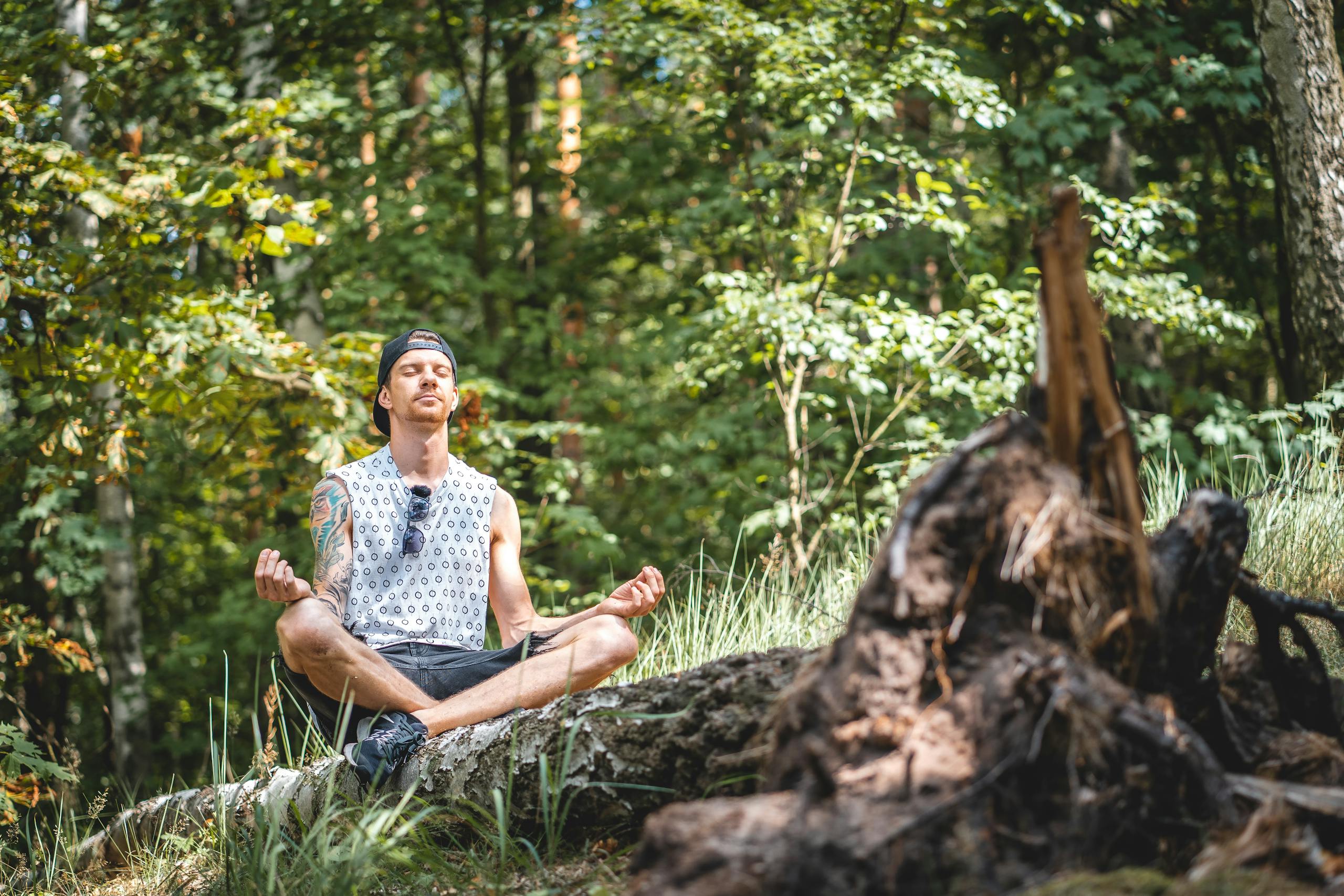
Mental health for introverts is a layered topic, and stillness practices like samatha sit right at the center of it. Our Introvert Mental Health Hub covers a wide range of approaches to inner wellbeing, from managing overwhelm to processing emotion, and samatha meditation deserves its own place in that conversation because of what it specifically offers to minds wired for depth and reflection.
What Exactly Is Samatha Meditation in Buddhist Tradition?
Samatha is a Pali word that translates roughly as “tranquility” or “calm abiding.” In Theravada Buddhism, it represents one half of a paired practice, the other being vipassana, or insight meditation. Where vipassana encourages you to observe the nature of experience clearly, samatha asks you to stop the mind’s restless movement and rest in stillness. The two are considered complementary, but samatha comes first in many traditional lineages because a calm mind is better equipped to see clearly.
What drains your social battery?
Not all social exhaustion is the same. Our free quiz identifies your specific drain pattern and gives you personalised recharging strategies.
Find Your Drain PatternUnder 2 minutes · 8 questions · Free
The practice itself is deceptively simple. You choose an object of meditation, the breath at the nostrils is the most common, and you return your attention to it continuously. Every time the mind wanders, you bring it back. Over time, with consistent practice, the wandering decreases. The mind becomes like a still pool rather than a choppy sea. Buddhist teachers describe deepening states of absorption called jhanas, which represent progressively refined levels of concentration and peace.
What strikes me about this framework is how honest it is about the difficulty. Buddhist texts don’t pretend the mind cooperates easily. They describe the untrained mind as a wild elephant, or a monkey swinging from branch to branch. That description resonated with me deeply during my agency years. My mind was excellent at processing complex problems, but it was terrible at stopping. Samatha offered a structured, patient method for addressing exactly that.
Why Does Samatha Feel So Natural to Introverted Minds?
There’s something about the architecture of introversion that aligns with what samatha asks of you. Introverts tend to process experience internally, filtering meaning through layers of observation before responding to the world. We notice subtleties. We sit with questions rather than rushing toward answers. We find social noise exhausting partly because our nervous systems are already doing so much internal work.
Samatha doesn’t ask you to stop being that kind of person. It asks you to take that natural inward orientation and give it a single, stable point of focus. Instead of the mind moving through dozens of internal observations simultaneously, it rests on one. The breath. The sensation of air at the nostrils. The slight rise and fall of the chest. For introverts, this feels less like suppression and more like organization.
I noticed this when I first started sitting consistently. The practice didn’t feel foreign the way some social rituals had always felt foreign to me. It felt like coming home to a quieter version of my own mind. The challenge wasn’t the inward orientation. The challenge was the discipline of staying with one thing when my mind wanted to process everything at once.
Many introverts who are also highly sensitive people find that the world generates more input than they can comfortably process. If you recognize yourself in the experience of HSP overwhelm and sensory overload, samatha offers something genuinely valuable: a daily practice of deliberately reducing the volume of incoming stimulation and training the nervous system to rest rather than react.

How Does Samatha Meditation Actually Affect the Mind and Body?
The physiological effects of focused concentration practices are well-documented. Sustained attention on a neutral object like the breath activates the parasympathetic nervous system, shifting the body out of fight-or-flight and into a state of rest and restoration. Heart rate slows. Cortisol levels drop. Muscle tension eases. These aren’t mystical claims. They’re measurable biological responses to a specific kind of mental activity.
Published research in PMC on meditation and attention regulation points to meaningful changes in how the brain processes distraction after sustained concentration practice. The prefrontal cortex, which governs focused attention, shows increased activity in experienced meditators. The default mode network, associated with mind-wandering and rumination, becomes easier to quiet.
For introverts who tend toward rumination, that last point matters enormously. Rumination isn’t the same as reflection. Reflection is purposeful, moving toward understanding. Rumination is circular, replaying the same thoughts without resolution. Samatha doesn’t eliminate reflection, it gives you the capacity to step out of rumination when you choose to. That’s a meaningful distinction for anyone who has spent hours mentally replaying a difficult conversation or a decision that didn’t go well.
I remember a period during my agency years when I was managing a particularly difficult client relationship. A Fortune 500 account that represented significant revenue was in jeopardy, and I found myself lying awake replaying every meeting, every email, every strategic misstep. My mind was working hard but going nowhere useful. What I needed wasn’t more analysis. I needed the ability to stop. Samatha, had I understood it then, would have been exactly the right tool.
Anxiety is another area where samatha practice has demonstrated real value. The National Institute of Mental Health’s overview of generalized anxiety describes a pattern of persistent, difficult-to-control worry that interferes with daily functioning. Samatha doesn’t treat anxiety in a clinical sense, but the practice of repeatedly returning a wandering mind to a stable anchor builds a capacity for self-regulation that many people find genuinely helpful alongside other approaches. If you’ve explored HSP anxiety and coping strategies, you’ll recognize how much of that anxiety stems from an overactive internal processing system that never quite gets to rest.
What Are the Core Techniques Within Samatha Practice?
Most people encounter samatha through breath awareness, and that’s a perfectly complete practice on its own. You sit comfortably, close your eyes, and place your attention at the point where breath enters and exits the body. When the mind moves, you notice that it has moved and return your attention to the breath. That’s the entire practice. Its simplicity is not a limitation. It’s the point.
Traditional Buddhist texts describe additional samatha objects beyond the breath. Kasina practices use visual objects, a colored disk, a flame, a body of water, as concentration anchors. Metta, or loving-kindness meditation, uses the cultivation of warm goodwill as its focus and is sometimes classified as a samatha practice because of its capacity to produce states of deep, settled calm. Body-based practices, such as focusing on the sensations at a single point of physical contact, also fall within the samatha category.
What these techniques share is the principle of unified attention. The mind is brought to rest on one thing, and every time it moves away, it’s gently returned. There’s no judgment in that return. No frustration is required, though frustration will certainly arise. The practice is simply to notice and return, notice and return, as many times as necessary.
For introverts who process emotion deeply, this repetitive, non-judgmental returning can itself become a kind of emotional education. Many of us have spent years being hard on ourselves for how we feel or how long we feel it. The samatha instruction to notice without judgment and return without criticism offers a different model. It’s worth noting that HSP emotional processing shares some of this territory, and the two areas of practice can reinforce each other meaningfully.

How Does Samatha Relate to Emotional Regulation for Introverts?
One of the less-discussed benefits of samatha practice is what it does for emotional regulation over time. When you spend regular periods training the mind to settle rather than react, that capacity begins to bleed into daily life. Situations that once triggered immediate emotional responses start to feel more spacious. There’s a small but perceptible gap between stimulus and reaction, and in that gap, choice becomes possible.
This isn’t emotional suppression. Samatha doesn’t ask you to stop feeling. It builds the capacity to feel without being immediately swept away. For introverts who already experience emotion with considerable intensity, that distinction is significant. Feeling deeply is a genuine strength. Being controlled by those feelings, or exhausted by their intensity, is where the difficulty lies.
I managed a creative director at one of my agencies who was an INFJ, and watching her absorb the emotional atmosphere of every client meeting was both impressive and painful. She picked up on everything: the client’s unspoken frustration, the tension between account managers, the subtext in every comment. Her emotional intelligence was extraordinary. But she left those meetings depleted in a way that took her days to recover from. A practice like samatha, which builds the capacity to be present without being overwhelmed, might have changed that equation for her.
Empathy, in particular, is an area where samatha practice offers something useful. Many introverts and highly sensitive people experience empathy as a double-edged quality, a gift that also carries a cost. The calm abiding cultivated through samatha creates a kind of inner stability that allows you to remain present with others’ experiences without losing your own footing. You can feel with someone without dissolving into their emotional state.
A broader look at the neurological basis for this kind of emotional regulation appears in this PMC review on mindfulness-based interventions and emotional processing, which examines how sustained attention practices affect the brain’s capacity to modulate emotional reactivity. The mechanisms are complex, but the practical outcome is consistent with what long-term meditators report: a greater sense of choice in how they respond to emotional experience.
What Does Samatha Offer That Other Meditation Styles Don’t?
There are many forms of meditation, and they’re not all doing the same thing. Vipassana asks you to observe the changing nature of experience. Zen practice uses koans or just sitting. Transcendental meditation uses mantras. Loving-kindness practices cultivate specific emotional states. Each has its place, and none is universally superior.
Samatha’s specific contribution is depth of concentration. The practice aims at something the Buddhist tradition calls one-pointedness: the mind resting so completely on its object that distractions simply don’t arise. Most practitioners never reach the deepest jhana states described in traditional texts, but even modest progress along this path produces a quality of mental calm that’s difficult to find elsewhere.
For introverts who struggle with perfectionism, there’s an important caveat here. The goal in samatha is not to achieve perfect stillness on any given sitting. The practice is the returning, not the arriving. A session in which the mind wanders a hundred times and returns a hundred times is a successful session. Nothing has gone wrong. HSP perfectionism can make this genuinely difficult to accept, but samatha practice, done consistently, tends to soften that self-critical edge over time precisely because the instruction is so clear: notice, return, without judgment.
The academic literature on concentration-based meditation, including this University of Northern Iowa study on meditative states, distinguishes samatha from other practices in terms of its specific neurological and psychological targets. Where insight practices aim at changing how you understand experience, samatha aims at changing the quality of attention itself. That’s a different intervention, and for many people, it’s the more foundational one.

How Do You Build a Sustainable Samatha Practice as an Introvert?
Sustainability matters more than intensity. A five-minute daily practice maintained consistently for months will produce more meaningful change than an hour-long session done once a week when motivation peaks. The mind learns through repetition, and samatha is no different from any other skill in that regard.
Start with a fixed time and a fixed location. Introverts often have particular spaces in their homes that feel genuinely restorative, places where the sensory environment is manageable and the likelihood of interruption is low. Treating that space as a dedicated practice area, even if it’s just a corner of a bedroom with a cushion, creates a physical anchor that supports the mental one.
Begin with ten to fifteen minutes. Sit comfortably, close your eyes, and bring your attention to the breath at the nostrils. Notice the sensation of air entering and leaving. When the mind moves, which it will, notice that it has moved and return your attention to the breath. That’s the complete instruction. Everything else is elaboration.
Over weeks and months, extend the sitting time gradually. Twenty minutes, then thirty, then forty-five. Many experienced practitioners sit for an hour daily, but that’s a destination, not a starting point. The quality of attention matters far more than the duration, especially early on.
Introverts often find it helpful to approach samatha with the same methodical consistency they bring to other meaningful pursuits. I’ve always been better at systems than at spontaneity, which is a fairly classic INTJ quality. Building samatha into a morning routine, before email, before news, before the day’s demands arrive, gave it the structural support it needed to become a genuine habit rather than an occasional experiment.
The clinical overview of mindfulness and meditation from the National Library of Medicine notes that consistency and intention are among the strongest predictors of benefit from meditation practice. The specific technique matters less than the regularity of engagement. That’s encouraging for beginners who worry about doing it correctly.
Can Samatha Practice Help With the Introvert Experience of Rejection and Social Pain?
Social pain is real pain. Rejection, exclusion, and the sense of being misunderstood activate some of the same neural pathways as physical discomfort, and introverts are not immune to those experiences simply because we prefer smaller social circles. If anything, the depth with which we process interpersonal experience can make rejection feel more acute, more lasting, and more difficult to set down.
Samatha doesn’t eliminate the sting of rejection. It doesn’t promise that. What it builds is the capacity to be with difficult experience without immediately needing to escape it, analyze it to death, or let it define your sense of self. The same returning practice that trains you to come back to the breath when distracted also trains you to come back to your own stability when emotional pain pulls you away from it.
There was a period in my career when I lost a major account I’d worked on for years, a Fortune 500 client whose business represented both significant revenue and, honestly, a piece of my professional identity. The rejection wasn’t just financial. It felt personal in a way I wasn’t fully prepared for. Looking back, what I needed was exactly what samatha develops: the ability to feel the loss fully without letting it collapse into a story about my own inadequacy. The process of healing from rejection is something many highly sensitive people struggle with, and a grounded meditation practice can be one of the most reliable supports available.
The APA’s work on resilience as a psychological construct emphasizes that resilience is not a fixed trait but a capacity that can be built through consistent practice and the cultivation of inner resources. Samatha meditation is precisely the kind of inner resource-building that supports this kind of resilience over time.
What Are the Common Obstacles in Samatha Practice and How Do You Meet Them?
The Buddhist tradition is refreshingly candid about the obstacles to meditation. Traditional texts describe five specific hindrances that arise in samatha practice: sensual desire, ill will, sloth and torpor, restlessness and worry, and doubt. These aren’t failures. They’re expected visitors. The practice is learning to recognize them as hindrances and return to the object of meditation rather than following them.
Restlessness is probably the most common obstacle for introverts who are also high-achievers. The mind trained to solve problems and generate insights doesn’t sit still easily. It wants to be useful. In samatha, usefulness looks like returning to the breath, but the mind often doesn’t believe that. It generates compelling reasons to think about something else. Recognizing this pattern, labeling it as restlessness rather than as important thinking, and returning to the breath is the practice itself.
Drowsiness is the other major obstacle, particularly for people who are chronically under-slept or who sit at times when the body is naturally inclined toward rest. The traditional remedies include meditating with eyes slightly open, adjusting posture to be more upright, or practicing at a different time of day. None of these are failures. They’re practical adjustments.
Doubt, the fifth hindrance, is particularly relevant for analytically-minded introverts. The questioning mind wants evidence before committing. It asks whether this is actually working, whether the time spent is justified, whether a different technique might be better. Samatha doesn’t ask you to silence those questions permanently. It asks you to notice them arising, recognize them as doubt, and return to the breath. The evidence, such as it is, accumulates through experience rather than through argument.

How Does Samatha Fit Into a Broader Mental Health Practice for Introverts?
Samatha is not a replacement for therapy, medication where appropriate, or other evidence-based mental health support. It’s a complementary practice, one that builds specific capacities that support overall wellbeing. The calm and stability it develops can make therapy more productive, because you arrive with greater access to your own experience rather than being overwhelmed by it. It can make social situations less draining, because you carry more inner steadiness into them.
For introverts who are also highly sensitive, the combination of samatha practice with an understanding of their own emotional and sensory landscape can be genuinely powerful. Knowing that you process deeply, that you feel intensely, and that your nervous system needs more recovery time than average, and then having a daily practice specifically designed to provide that recovery, creates a kind of self-care architecture that’s both sustainable and meaningful.
One thing I’ve observed in myself over years of practice is that samatha has made me a better observer of my own internal states. As an INTJ, I was already inclined toward self-analysis, but there’s a difference between analyzing your internal states and being able to simply notice them without immediately constructing a theory about them. Samatha developed that second capacity, and it changed the quality of my self-knowledge in ways that purely intellectual reflection hadn’t.
The practice also has an interesting relationship with perfectionism. Many introverts hold themselves to exacting standards, in their work, in their relationships, in their self-understanding. The Ohio State University research on perfectionism highlights how high standards, while often productive, can become a source of significant psychological strain. Samatha, with its consistent instruction to return without judgment, models a different relationship with imperfection. You don’t meditate perfectly. You meditate consistently, and that’s entirely sufficient.
If you’re building a comprehensive approach to your mental health as an introvert, the resources in our Introvert Mental Health Hub offer a wide range of perspectives and practices that work alongside samatha and other contemplative approaches.
Running on empty?
Five drain profiles, each with specific triggers, warning signs, and a recharging playbook.
Take the Free QuizUnder 2 minutes · 8 questions · Free
About the Author
Keith Lacy is an introvert who’s learned to embrace his true self later in life. After 20 years in advertising and marketing leadership, including running agencies and managing Fortune 500 accounts, Keith now channels his experience into helping fellow introverts understand their strengths and build fulfilling careers. As an INTJ, he brings analytical depth and authentic perspective to every article, drawing from both professional expertise and personal growth.
Frequently Asked Questions
What is the difference between samatha and vipassana meditation?
Samatha focuses on developing calm concentration by resting the mind on a single object, most commonly the breath. Vipassana, or insight meditation, uses that concentrated attention to observe the impermanent, unsatisfying, and selfless nature of experience. In traditional Buddhist practice, samatha is often cultivated first because a calm, concentrated mind is better equipped for the deep observation that vipassana requires. Many practitioners weave elements of both into their practice over time.
How long does it take to see benefits from samatha meditation?
Many practitioners notice subtle shifts in mental calm and emotional steadiness within a few weeks of consistent daily practice, even with sessions as short as ten to fifteen minutes. Deeper benefits, such as reduced rumination, greater emotional regulation, and a more stable sense of inner calm, typically develop over months of regular practice. The key variable is consistency rather than duration. A short daily practice maintained over months produces more meaningful change than occasional longer sessions.
Do you need to be Buddhist to practice samatha meditation?
No. Samatha is a technique rooted in Buddhist tradition, but the practice itself doesn’t require any religious belief or affiliation. Many people practice samatha as a secular mental health tool, drawing on its concentration-building methods without engaging with its religious or philosophical context. That said, exploring the Buddhist framework in which it developed can add depth and context for those who are curious about the broader tradition.
Is samatha meditation suitable for people with anxiety?
Samatha can be a helpful complementary practice for people who experience anxiety, as it trains the nervous system to rest and builds the capacity to observe anxious thoughts without being immediately swept into them. That said, it’s not a clinical treatment and shouldn’t replace professional support for significant anxiety disorders. Some people with trauma histories find that concentrated inward attention initially increases discomfort, and in those cases, working with a qualified meditation teacher or therapist is advisable before establishing an independent practice.
What is the best time of day to practice samatha meditation?
Early morning is often recommended because the mind is typically less cluttered with the day’s demands and the body hasn’t yet accumulated the fatigue that can make afternoon or evening practice drowsy. That said, the best time is whichever time you can maintain consistently. Some introverts find that a brief samatha practice in the early evening helps them decompress after social or professional demands. Experimenting with timing and observing which sessions feel most productive is a reasonable approach, especially in the early months of practice.