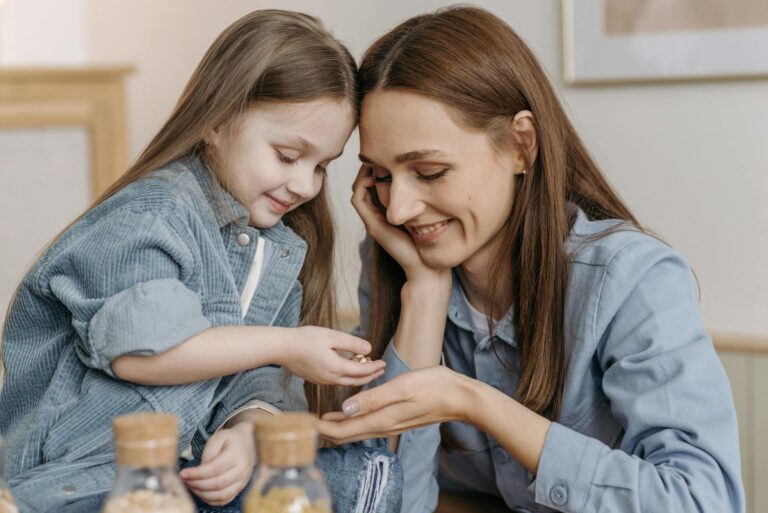
To love is to be vulnerable. That sentence sounds simple, almost obvious, yet most of us spend enormous energy building walls precisely where openness is required. For introverts especially, vulnerability in love isn’t just emotionally difficult, it cuts against the grain of how we’re wired: we process internally, we guard our inner world carefully, and we’ve often learned that showing too much of ourselves leads to misunderstanding or exhaustion.
And yet, without that exposure, without letting another person genuinely see you, love stays at arm’s length. It becomes performance rather than connection.

Much of what I write about on Ordinary Introvert starts from my own stumbling. I ran advertising agencies for over two decades, managed teams of creatives and strategists, pitched Fortune 500 brands in rooms full of loud, confident people. I was reasonably good at projecting competence. What I was far less skilled at, for most of that time, was letting anyone close enough to see the uncertainty underneath. That’s not just a professional problem. It followed me home.
If you’re working through what intimacy actually looks like as an introvert, the Introvert Dating and Attraction hub covers the full landscape, from first impressions to long-term partnership. This article sits inside that larger conversation, focused on the piece that I think matters most and gets talked about least: what it actually costs us to stay closed, and what becomes possible when we choose otherwise.
Why Do Introverts Struggle With Vulnerability in Love?
Vulnerability requires something introverts spend most of their lives protecting: the inner world. We’re observers by nature. We watch, we analyze, we sit with our feelings before we express them, sometimes for so long that the moment has passed. That inner life is rich and real, but it’s also private. Sharing it feels like handing someone a map to territory we’ve never shown anyone.
Career Coaching for Introverts
One-on-one career strategy sessions with Keith Lacy. 20 years of Fortune 500 leadership as an introvert, now helping others build careers that work with their wiring.
Learn More50-minute Zoom session · $175
There’s a specific fear that runs underneath this, one I’ve felt personally. It isn’t just the fear of rejection, though that’s real enough. It’s the fear of being seen fully and found wanting. When you’re someone who thinks deeply, who cares about meaning, who has built an elaborate interior architecture, the possibility that someone might look at all of it and shrug feels catastrophic. So we hedge. We show a little, wait to see what happens, then show a little more, or retreat entirely.
What I’ve come to understand, slowly and sometimes painfully, is that this hedging doesn’t protect us from hurt. It just guarantees a different kind of loneliness.
Psychologist Brené Brown’s work on shame and vulnerability has shaped a lot of popular thinking on this subject. Her core argument, that vulnerability is not weakness but the birthplace of genuine connection, resonates particularly with introverts because we tend to conflate emotional exposure with loss of control. Attachment research published in PubMed Central points to how early relational experiences shape our tolerance for intimacy, and for many introverts, those early experiences taught us that being too visible was risky.
What Does Introvert Vulnerability Actually Look Like?
Here’s where I want to push back gently on a common framing. Vulnerability doesn’t require grand emotional declarations or tearful confessions. That model of openness is, frankly, an extroverted one. It assumes that authentic connection happens out loud, in the moment, with full emotional visibility.
Introverts tend to show vulnerability differently. We share through writing, through carefully chosen words delivered at the right moment, through acts of service that communicate what we can’t quite say aloud. Understanding this distinction matters enormously in relationships. If your partner is waiting for you to open up the way they would, and you’re expressing depth in the ways that feel natural to you, you’re both likely to feel unseen.
I think about a senior copywriter I managed at the agency, an INFJ who was extraordinarily talented and almost completely unreadable to the rest of the team. He never raised his voice in brainstorms. He rarely offered opinions in group settings. But he would leave handwritten notes on people’s desks when they’d done something he admired. He’d stay late to help a junior writer revise a pitch, never mentioning it to anyone. That was his vulnerability, his care made visible in the only way that felt safe to him. His partner, as he told me once over coffee, had taken years to recognize it as love rather than distance.
Understanding the specific ways introverts express affection is worth examining closely. The article on how introverts show love through their unique love language captures this well, and it changed how I thought about my own patterns of giving and withholding.

How Does the Fear of Exposure Shape Introvert Relationships?
Spend enough time guarding your inner world and it starts to feel like the only safe option. You develop sophisticated ways to seem present while staying protected. You ask good questions. You listen well. You give just enough of yourself to maintain connection without ever quite crossing the threshold into genuine exposure.
I did this in professional relationships for years, and I did it in personal ones too. At the agency, I was known as someone who was perceptive and calm under pressure. What I was actually doing was processing everything internally and revealing almost nothing. My team found me hard to read. My closest colleagues, people I genuinely liked and respected, told me years later that they’d never been sure where they stood with me. That wasn’t the leader I wanted to be. And it definitely wasn’t the partner I wanted to be at home.
The patterns that develop when introverts fall in love are worth understanding in detail. The relationship patterns that emerge when introverts fall in love often include this exact dynamic: deep feeling that goes unexpressed, connection that feels real internally but doesn’t always register externally. The person on the other side of that equation can start to feel like they’re loving someone who isn’t fully there.
Psychology Today’s profile of the romantic introvert describes this tension well, noting that introverts often feel love deeply but express it in ways their partners don’t always recognize. That gap between interior experience and external expression is where many introvert relationships quietly break down.
What Makes Vulnerability Feel Safer for Introverts?
Safety, for introverts, is almost always about control of the environment. We open up when we’re not rushed, when we’re not performing for an audience, when we trust that what we share won’t be used against us or mishandled. This isn’t weakness. It’s actually a fairly intelligent approach to emotional risk. The problem is that we sometimes apply these standards so stringently that no environment ever feels quite safe enough.
What changed things for me, personally, was recognizing that I was waiting for a guarantee that doesn’t exist. No relationship comes with an assurance that your openness won’t eventually hurt you. Vulnerability is, by definition, the willingness to proceed without that guarantee. That realization didn’t make it easy. It just made the alternative, staying sealed off, look less like safety and more like a slow withdrawal from my own life.
Practically speaking, introverts tend to find vulnerability more accessible in certain conditions. One-on-one conversations rather than group settings. Written communication where there’s time to think. Quiet evenings rather than charged social moments. Recognizing these conditions and deliberately creating them in your relationship isn’t avoidance, it’s self-knowledge in service of connection.
Neuroscience research on emotional processing suggests that introverts tend to engage longer, more complex internal processing pathways when handling emotional information. That’s not a flaw in the system. It means we need more time and less noise to access what we actually feel, and that’s worth building into how we approach intimacy.

How Does Vulnerability Work When Both Partners Are Introverts?
Two introverts in love can create something genuinely beautiful: a relationship built on depth, mutual respect for solitude, and the kind of quiet understanding that doesn’t require constant verbal maintenance. It can also create a relationship where both people are waiting for the other to go first, where vulnerability gets deferred indefinitely because neither person is pushing for it.
I’ve watched this happen with couples I know well. Both people care deeply. Both people are protecting themselves in the same ways. And so the relationship settles into a comfortable but somewhat sealed dynamic where real intimacy never quite takes root. There’s warmth, there’s companionship, there’s shared silence that feels good. But the actual exposure, the letting yourself be seen, keeps getting postponed.
The specific dynamics of what happens when two introverts fall in love are more complex than they first appear. The strengths are real. So are the particular blind spots, and the tendency to mistake comfortable distance for deep connection is one of them.
16Personalities explores the hidden tensions in introvert-introvert relationships, including the way shared tendencies toward withdrawal can compound over time. Two people avoiding vulnerability together isn’t intimacy. It’s a very polite form of loneliness.
What Role Does Sensitivity Play in Introvert Vulnerability?
Many introverts, though not all, also identify as highly sensitive people. That overlap matters here because HSPs experience emotional vulnerability at a different register. The fear of being seen isn’t just about privacy, it’s about the intensity of what might happen if things go wrong. When you feel things deeply, the prospect of being hurt deeply is genuinely daunting.
One of the INFJs on my creative team years ago described it this way: “I don’t have a filter between what I feel and how much I feel it.” She wasn’t exaggerating. When she was hurt, she was devastated. When she was connected, she was luminous. That intensity made her brilliant at her work and terrifying to herself in relationships. She’d developed elaborate systems for staying slightly detached, always keeping a small reserve of emotional distance as insurance against catastrophe.
What she was managing, I came to understand, was the HSP’s particular version of the vulnerability problem. The complete guide to HSP relationships and dating addresses this specifically, offering a framework for building intimacy that accounts for the heightened sensitivity rather than trying to override it.
Sensitivity also shapes how we handle the inevitable friction that comes with closeness. When you feel things intensely, conflict in a relationship doesn’t just feel uncomfortable. It can feel threatening to the entire foundation. Learning to stay present through disagreement, rather than retreating into protective silence, is one of the harder skills for sensitive introverts to build. The approach to working through conflict peacefully as an HSP offers practical ground for that work.

How Do You Actually Begin Opening Up When It Doesn’t Come Naturally?
There’s no clean answer here, and I’m suspicious of anyone who offers one. What I can offer is what’s worked for me and what I’ve watched work for others.
Start smaller than you think you need to. Vulnerability doesn’t have to begin with the deepest, most frightening truth you carry. It can begin with something real but manageable: admitting you’re nervous about something, sharing a disappointment you’d normally process alone, telling your partner what you actually need instead of waiting to see if they’ll figure it out. These small acts of disclosure build a track record. They show you, incrementally, that opening up doesn’t always end in damage.
At the agency, I started doing something similar in leadership. Instead of always projecting certainty, I began occasionally saying “I don’t know yet” or “I’m still working through this” in team meetings. The first few times felt genuinely uncomfortable. Then something shifted. My team started being more honest with me. The culture got less performative. People stopped pretending to have answers they didn’t have. That small change in my own openness had a ripple effect I hadn’t anticipated.
The same principle applies in intimate relationships. Your willingness to be slightly more visible, slightly more honest about what’s happening inside you, often creates permission for your partner to do the same. Vulnerability tends to be contagious in the best possible way.
What also helps is understanding your own emotional patterns well enough to name them in the moment. Many introverts struggle with vulnerability not because they don’t feel things but because they haven’t developed the vocabulary or the habit of translating internal experience into shared language. Understanding how introverts experience and express love feelings is part of building that capacity, recognizing your patterns before you can share them.
What Does Vulnerability Require That We Often Resist?
Timing that isn’t entirely on our terms. That’s the hard one.
Introverts are comfortable with vulnerability when we’ve chosen it deliberately, prepared for it, and controlled the conditions around it. What we resist is the spontaneous kind, the moment when a partner asks something direct and expects an honest answer right now, not after we’ve had three days to process it.
Real intimacy requires some of both. The prepared kind and the unguarded kind. The letter you’ve drafted carefully and the answer you give when you haven’t had time to edit yourself. Both matter. The unguarded moments, precisely because they’re unpolished, often carry the most weight.
I remember a conversation with my wife during a particularly difficult stretch at the agency. A major client had just pulled a significant account. I came home and she asked how I was. My instinct, as always, was to say “fine” and handle it internally. What I did instead, for once, was tell her the truth: that I was scared, that I didn’t know how we’d replace the revenue, that I was questioning decisions I’d made months earlier. She didn’t fix anything. She couldn’t. But something between us shifted that evening. She told me later it was the first time she’d felt like she was actually with me rather than alongside me.
That distinction, being with someone versus alongside them, is what vulnerability makes possible. And it’s what staying closed forecloses.
Psychology Today’s guide to dating an introvert notes that partners of introverts often describe feeling like they’re on the outside of something important. That experience is almost always the result of an introvert’s protective instincts working exactly as designed, and exactly against the relationship’s needs.

What Becomes Possible When You Choose to Be Seen?
Something I didn’t expect: relief. Not the relief of having performed vulnerability correctly, but the relief of no longer spending energy on concealment. Maintaining a carefully managed emotional presentation is exhausting in a way you don’t fully notice until you stop doing it. When I started being more honest with the people closest to me, I found I had more energy. The internal processing that had been devoted to managing my image was freed up for actual thinking, actual feeling, actual presence.
Relationships also get more interesting. When both people are willing to be genuinely visible, conversations go somewhere. There’s less small talk masquerading as connection. The dynamic stops being two people orbiting each other carefully and becomes two people actually occupying the same space.
For introverts, who crave depth above almost everything else in relationships, this is the real payoff. We don’t want more connection. We want better connection. Vulnerability is what makes depth possible. Without it, you can have warmth, companionship, loyalty, even love of a kind. But the particular quality of intimacy that introverts are actually capable of, and actually hunger for, requires showing the interior.
Healthline’s breakdown of introvert myths addresses the persistent misconception that introverts don’t want closeness. We do. We want it more carefully, more selectively, and often more intensely than our extroverted counterparts. That’s not a reason to stay closed. It’s a reason to be more intentional about opening.
What I’ve come to believe, after two decades of managing my image professionally and slowly learning to let that go personally, is that the introvert’s capacity for depth is precisely what makes genuine vulnerability so powerful in us. We don’t expose ourselves lightly. When we do, it means something. The person on the receiving end of an introvert’s real openness tends to know they’ve been given something rare. That’s not a small thing. That’s the whole thing.
There’s more to explore across the full range of introvert relationships, attraction, and intimacy at the Introvert Dating and Attraction hub, where these themes are woven together with practical guidance for every stage of romantic life.
About the Author
Keith Lacy is an introvert who’s learned to embrace his true self later in life. After 20 years in advertising and marketing leadership, including running agencies and managing Fortune 500 accounts, Keith now channels his experience into helping fellow introverts understand their strengths and build fulfilling careers. As an INTJ, he brings analytical depth and authentic perspective to every article, drawing from both professional expertise and personal growth.
Frequently Asked Questions
Why is vulnerability so difficult for introverts in romantic relationships?
Introverts tend to protect their inner world carefully, processing emotions internally before sharing them. This habit of deep internal reflection, while one of their genuine strengths, can make emotional exposure feel threatening rather than connective. The fear isn’t only rejection. It’s often the fear of being fully seen and misunderstood. Over time, that protective instinct can prevent the kind of genuine intimacy that introverts actually want most.
Does vulnerability mean sharing everything with your partner?
No. Vulnerability isn’t the same as total disclosure. It means being willing to share what’s real and meaningful, rather than managing a carefully edited version of yourself. For introverts, this often looks like incremental honesty: admitting uncertainty, expressing needs directly, or sharing a feeling that would normally stay internal. The goal is genuine presence, not a complete inventory of your inner life.
How do introverts show vulnerability differently from extroverts?
Introverts often express vulnerability through action, writing, or carefully chosen words rather than spontaneous emotional declarations. They may show care through consistent acts of service, leave thoughtful notes, or open up in one-on-one conversations rather than in group or high-energy settings. These expressions are just as genuine as more outwardly visible forms of openness. The challenge is making sure a partner recognizes them as such, which requires some direct communication about how you show what you feel.
What happens when two introverts avoid vulnerability with each other?
When both partners tend toward emotional protection, a relationship can settle into a warm but somewhat sealed dynamic. There’s comfort and companionship, but real intimacy gets deferred. Both people may be waiting for the other to go first, creating a standoff that neither person consciously intends. Over time, this can produce a relationship that feels stable on the surface but lacks the depth that both partners are actually capable of and longing for.
How can an introvert start building more vulnerability in a relationship?
Start with something real but manageable. Share a worry you’d normally process alone, express a need directly instead of hoping it gets noticed, or answer an honest question honestly rather than deflecting. Small acts of disclosure build a track record that shows you openness doesn’t always lead to damage. Over time, those smaller moments create the conditions where deeper vulnerability feels less like a risk and more like a natural extension of the trust you’ve already built.