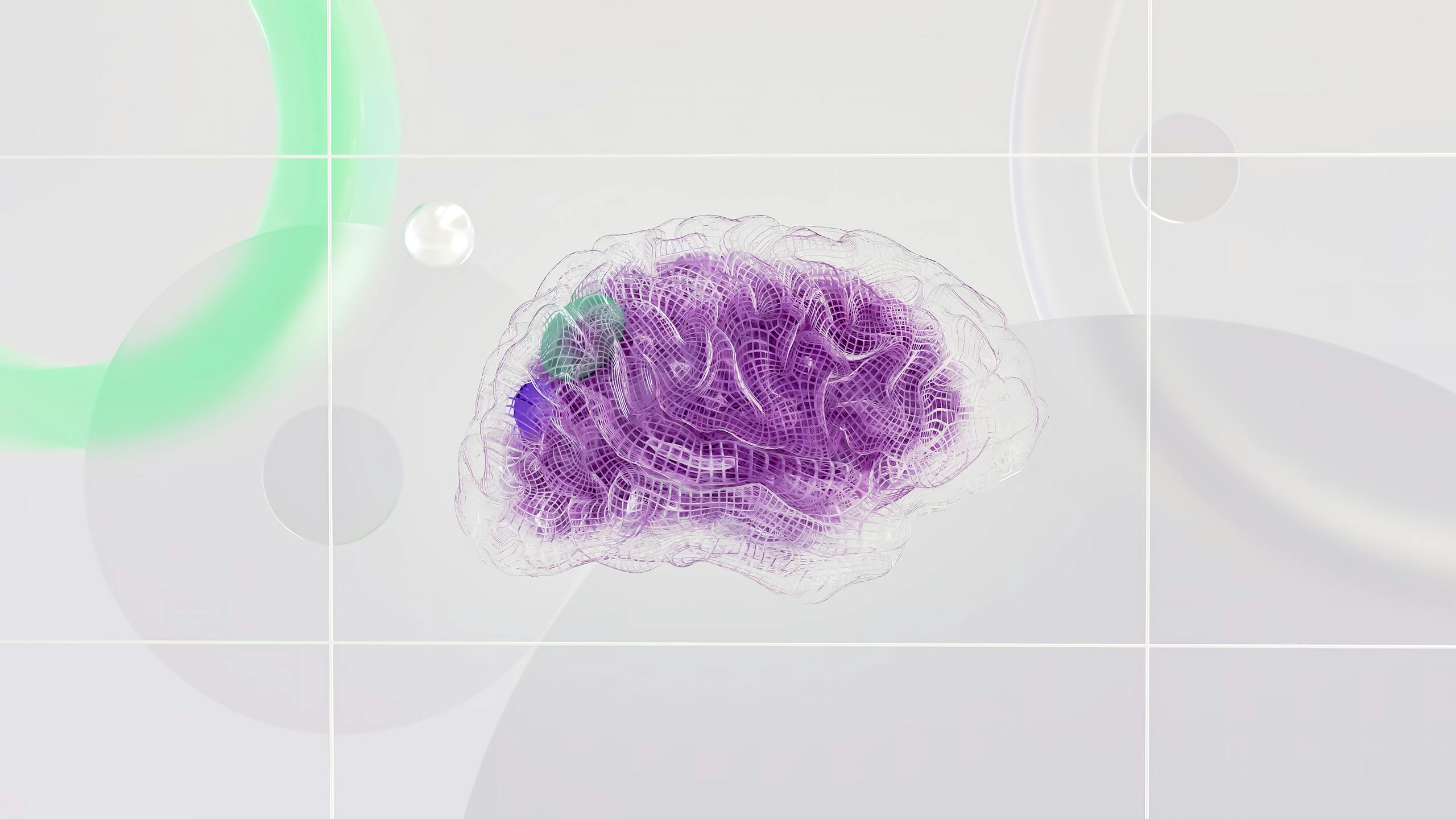
Seeing colors in meditation is more common than most people realize, and it tends to mean your mind is doing exactly what it’s supposed to do. As you settle into stillness, the visual cortex continues processing even without external input, producing flashes, gradients, and vivid hues that can feel surprising, even unsettling, the first time they appear. Far from being a distraction, these colors often signal a deepening state of inner focus.
My own introduction to this happened during a particularly brutal stretch at my agency. A client had pulled a major account without warning, my creative team was demoralized, and I had back-to-back calls scheduled for three days straight. A friend suggested I try a short guided meditation. I sat down expecting nothing and ended up watching what I can only describe as a slow pulse of deep indigo behind my closed eyelids. It startled me enough that I opened my eyes. But I also felt, for the first time in weeks, genuinely calm.
That experience sent me down a long path of understanding what the mind does when we finally go quiet. And for those of us wired toward internal processing, that path turns out to be particularly rich.
If you’re exploring meditation as part of your mental wellness practice, you’ll find a broader context for experiences like this in the Introvert Mental Health hub, which covers everything from sensory sensitivity to emotional resilience and burnout recovery.

What Is Actually Happening When You See Colors During Meditation?
Your brain doesn’t go dark when you close your eyes. The visual system keeps running, and without external light to process, it turns inward. What you’re seeing, those shifting patches of color, gentle pulses, or vivid geometric shapes, comes from a phenomenon called phosphenes. These are visual experiences generated by the nervous system itself rather than by incoming light.
Career Coaching for Introverts
One-on-one career strategy sessions with Keith Lacy. 20 years of Fortune 500 leadership as an introvert, now helping others build careers that work with their wiring.
Learn More50-minute Zoom session · $175
Phosphenes can be triggered by pressure on the eye, certain medications, or shifts in neural activity. During meditation, they arise because the brain is entering altered states of arousal, moving from the busy beta wave activity of ordinary waking life toward the slower alpha and theta rhythms associated with relaxation and deep focus. As that shift happens, the visual cortex becomes more active in a self-referential way, producing its own signals.
There’s also a layer here that connects to how sensitive nervous systems process the world. Many introverts, and particularly those who identify as highly sensitive people, tend to have a more reactive sensory system overall. The same neural wiring that makes you notice the hum of fluorescent lights or feel the texture of a fabric more acutely also means your visual cortex may produce richer internal imagery during meditation. This isn’t a clinical diagnosis, it’s simply a pattern that many meditators with sensitive temperaments report.
Understanding sensory sensitivity in a broader sense is something I’ve explored through the lens of HSP overwhelm and sensory overload, and that same heightened responsiveness shows up in meditation as a more vivid inner visual experience.
Why Do Different Colors Appear at Different Times?
Color in meditation isn’t random, even if it can feel that way. Several factors shape which hues tend to appear and when.
Depth of relaxation plays a significant role. Many meditators report that early in a session, when the mind is still buzzing with leftover thoughts, the colors they see tend to be murky, shifting, or fragmented. As the session deepens and the nervous system settles, colors often become more saturated and stable. Blues and purples are frequently described during deeper states. Yellows and oranges tend to appear earlier, often when the mind is still transitioning.
Emotional state also influences what appears. I’ve noticed this clearly in my own practice. During periods of high stress, the colors I see tend to be agitated, flickering, almost restless. After a productive creative session or a good conversation, the same meditation might produce something steadier and cooler in tone. The mind doesn’t compartmentalize as neatly as we’d like it to.
There’s a parallel here to how emotions surface in other quiet practices. The way feelings rise during meditation mirrors what happens during deep emotional processing for highly sensitive people. When the noise of daily life drops away, what was running quietly underneath becomes visible, sometimes literally.
Some meditation traditions assign specific meanings to particular colors. In certain Buddhist frameworks, white light is associated with clarity of mind, green with healing, blue with calm awareness. In yogic traditions, colors are sometimes linked to chakras or energy centers. These interpretive frameworks can be personally meaningful, but they’re cultural and symbolic rather than neurologically fixed. Your brain isn’t sending you a coded message in the same way a diagnostic machine would. Even so, paying attention to what appears and when can become a useful form of self-observation.

Is Seeing Colors a Sign That You’re Meditating Correctly?
This is probably the question I get asked most often when the topic comes up, and the honest answer is: not exactly. Seeing colors during meditation can be a sign that you’re reaching a deeper state of relaxation, but it’s not a requirement, and its absence doesn’t mean anything is wrong.
Meditation is not a performance. One of the things I had to unlearn, after two decades of running agencies where everything was measured and evaluated, was the instinct to grade my own inner experience. I’d sit down to meditate and immediately start assessing whether I was doing it well. The colors, when they appeared, felt like a metric. Proof that I was succeeding. That framing is counterproductive.
Some experienced meditators rarely see colors. Others see them consistently from the very first session. Individual variation is enormous, and it’s shaped by factors including the type of meditation you practice, your natural visual imagination, how tired you are, and yes, how sensitive your nervous system tends to be.
What matters more than whether colors appear is what you do with whatever arises. Can you observe it without chasing it or pushing it away? Can you notice the color, the shape, the quality of it, and let it shift without trying to hold it? That quality of non-attached observation is closer to the heart of meditation practice than any particular visual experience.
For those who carry HSP anxiety into their meditation practice, unexpected visual phenomena can sometimes spike worry rather than deepen calm. If seeing colors feels alarming rather than interesting, that reaction is worth noting. It often points to an underlying tension that the practice itself can help address over time.
How Does the Introvert Mind Experience Meditation Differently?
There’s something that happens when an introvert finally gives themselves permission to go inward without an agenda. The internal world, which has always been rich and detailed, suddenly has space to expand. For many introverts, meditation doesn’t feel like learning a new skill so much as finally doing what the mind has always wanted to do.
As an INTJ, my inner world has always been more vivid than my outer presentation suggested. I spent years in client-facing roles projecting confidence and decisiveness, managing teams, presenting campaign strategies to boardrooms full of skeptical executives. None of that external activity reflected how much processing was happening underneath. Meditation, when I finally committed to it, felt like opening a door I’d always known was there.
The introvert tendency toward depth over breadth translates directly into meditation. Where some people find the stillness uncomfortable and resist it, many introverts find it immediately familiar. The challenge isn’t settling in, it’s learning not to over-analyze what arises. I caught myself doing this constantly in my early practice. A color would appear and I’d immediately start building a theory about what it meant, which part of the brain was producing it, whether it correlated with my stress levels that week. The INTJ pattern of wanting to understand and systematize everything doesn’t disappear just because you close your eyes.
Over time, I’ve found that the colors themselves became less interesting than what they pointed toward. They were indicators of depth, not destinations. When I stopped treating them as data points and started treating them as companions, the quality of my meditation shifted considerably.
There’s also the dimension of empathy and emotional attunement that shapes how introverts experience inner states. HSP empathy can make the inner landscape during meditation particularly complex, because emotions absorbed from others throughout the day don’t always announce themselves clearly. They surface as sensations, images, and sometimes as unexpected colors that seem to carry emotional weight without obvious explanation.
What Does the Science Say About Inner Visual Experience During Meditation?
The neuroscience of meditation has expanded considerably over the past two decades. Researchers have documented measurable changes in brain activity during meditation practice, including shifts in the default mode network, the prefrontal cortex, and the visual processing areas of the brain.
Work published in peer-reviewed journals, including material available through PubMed Central on mindfulness and neural activity, has shown that meditation alters how the brain processes both external and internal stimuli. The visual cortex, in particular, shows increased connectivity with other brain regions during deep meditative states, which may help explain why internal visual experiences become more coherent and vivid as practice deepens.
Research on the relationship between meditation and the nervous system, explored further in this PubMed Central overview of meditation’s physiological effects, points to significant changes in autonomic arousal during practice. As the sympathetic nervous system quiets and the parasympathetic system becomes more dominant, the brain’s internal processing shifts in ways that support richer subjective experience.
Phosphenes specifically have been studied in relation to sensory deprivation and altered states of consciousness. When the brain is deprived of external visual input and enters a deeply relaxed state, the visual system doesn’t simply switch off. It generates its own activity. The patterns and colors that result are consistent enough across individuals that researchers have been able to map some of the underlying neural mechanisms.
What’s particularly relevant for introverts and highly sensitive people is the connection between sensory processing sensitivity and the richness of internal experience. Research on sensory processing consistently finds that individuals with heightened sensitivity show more pronounced responses to both external and internal stimuli. In meditation, this translates to a more active and detailed inner visual landscape.
The American Psychological Association’s work on resilience also touches on how practices like meditation build psychological flexibility over time, which is relevant here because the ability to sit with unexpected inner experiences, including vivid colors, without becoming anxious about them, is itself a form of resilience training.
Can Colors in Meditation Become a Tool for Emotional Awareness?
Once you move past the initial surprise of seeing colors during meditation, something more useful becomes possible. You can start to use them as a gentle diagnostic, a way of reading your own inner state without forcing it into words.
I developed a loose personal practice around this during a particularly demanding period when my agency was pitching a Fortune 500 automotive account. The pitch preparation was consuming, the stakes were high, and I was running on minimal sleep. I noticed that my meditations during that period were consistently producing a muddy, unsettled reddish-orange that felt almost agitated. When the pitch was over, regardless of the outcome, that color shifted almost immediately to something cooler and quieter. My nervous system was telling me something my conscious mind was trying to override.
This kind of color-as-signal approach works best when you hold it lightly. You’re not trying to decode a secret language or assign fixed meanings to specific hues. You’re simply noticing patterns over time and asking what they might reflect about your current state. It’s a form of body-based self-knowledge that complements more analytical approaches to self-understanding.
For those who struggle with HSP perfectionism, this approach can be genuinely liberating. There’s no right answer to what a color means. You can’t fail at interpreting your own inner experience. That absence of a correct answer removes the evaluation pressure that perfectionism thrives on, making meditation a rare space where the inner critic has nothing to grade.
Some meditators find it helpful to keep a brief log after sessions, not a detailed journal, just a few words noting what appeared and what they were carrying emotionally that day. Over weeks and months, patterns emerge that can be surprisingly informative. The practice becomes a long-form conversation with yourself, conducted in a language that bypasses the usual verbal filters.

What Should You Do If Colors Become Distracting or Unsettling?
Most people find the colors they see during meditation pleasant or at least neutral. But occasionally, the experience can tip into something uncomfortable. Colors that feel chaotic, intrusive, or emotionally charged can disrupt rather than deepen a session. Knowing how to work with that is worth understanding.
The first thing worth recognizing is that unsettling visual experiences during meditation are rarely a cause for medical concern. They’re more often a signal that the nervous system is releasing tension it’s been holding, or that emotions are surfacing that haven’t had space to be processed. The discomfort is part of the process, not evidence that something is wrong.
That said, if you’ve experienced significant emotional difficulty, trauma, or are managing a mental health condition, it’s worth approaching deeper meditation practices with support rather than alone. The National Institute of Mental Health’s resources on anxiety are a useful reference point for understanding when inner experiences warrant professional support rather than solo exploration.
Practically speaking, when colors feel overwhelming during meditation, the most effective response is to gently redirect attention rather than resist. Bring focus back to the breath, the physical sensation of sitting, or a simple mantra. You’re not suppressing the experience, you’re choosing where to place your attention. The colors may continue in the background, but they lose their grip when you stop feeding them with focused attention.
Shortening sessions can also help. Thirty minutes of meditation that ends in agitation is less valuable than ten minutes that ends in genuine calm. Building the practice incrementally, especially if your nervous system is sensitive, allows you to extend depth gradually without overwhelming your capacity to process what arises.
For those handling difficult emotions that surface during meditation, the framework around HSP rejection processing and healing offers useful perspective. The emotions that rise during stillness often include old wounds, and approaching them with patience rather than urgency makes a significant difference in how the experience unfolds.
How Does Regular Meditation Change What You See Over Time?
One of the more surprising aspects of developing a consistent meditation practice is how the inner visual landscape evolves. What begins as random flickers and murky patches can, over months and years, become more coherent, more vivid, and more responsive to intention.
Experienced meditators often describe a progression. Early practice is marked by scattered, unpredictable imagery. With time, the visual field during meditation becomes quieter and more stable, like a lake settling after a storm. When colors appear in that settled state, they tend to be cleaner, more distinct, and easier to observe without getting pulled into them.
There’s a neurological basis for this progression. Regular meditation practice produces measurable changes in brain structure and function over time, including increased gray matter density in areas associated with attention and sensory processing. The brain literally adapts to the practice, becoming more efficient at entering and sustaining the states where these inner experiences occur.
From a personal standpoint, I can say that my relationship with the inner visual experience of meditation has changed substantially since those early sessions in the middle of a difficult agency stretch. What once felt startling now feels like arriving somewhere familiar. The colors are still there, still shifting, still occasionally surprising. But they feel less like intrusions and more like the texture of a place I know well.
That familiarity is itself a form of resilience. The capacity to enter difficult inner territory without being destabilized by it, to sit with uncertainty, with emotion, with unexpected sensation, and remain present, is something that meditation builds gradually and reliably. Academic work on mindfulness and psychological resilience supports this, pointing to consistent relationships between meditation practice and improved emotional regulation over time.
Psychology Today’s coverage of introverted inner experience, including this piece on introvert communication and inner life, touches on how the introvert preference for depth and internal processing makes practices like meditation a natural fit, not a therapeutic intervention, but an alignment with how the introvert mind already works.

There’s much more to explore about how meditation, sensory sensitivity, emotional processing, and introvert mental health intersect. The full Introvert Mental Health hub brings these threads together in one place, covering everything from anxiety and perfectionism to resilience and emotional depth.
About the Author
Keith Lacy is an introvert who’s learned to embrace his true self later in life. After 20 years in advertising and marketing leadership, including running agencies and managing Fortune 500 accounts, Keith now channels his experience into helping fellow introverts understand their strengths and build fulfilling careers. As an INTJ, he brings analytical depth and authentic perspective to every article, drawing from both professional expertise and personal growth.
Frequently Asked Questions
Is seeing colors during meditation normal?
Yes, seeing colors during meditation is a common and well-documented experience. It results from the visual cortex generating its own activity in the absence of external light, a phenomenon known as phosphenes. As the brain transitions from active beta wave states to the slower alpha and theta rhythms associated with deep relaxation, internal visual experiences become more prominent. Many meditators report this, particularly as their practice deepens.
What do specific colors mean when you see them in meditation?
Different meditation traditions assign symbolic meanings to specific colors, with blues and purples often associated with calm and clarity, greens with healing, and yellows or oranges with earlier stages of relaxation. These interpretations are cultural and symbolic rather than neurologically fixed. Practically, many meditators find it more useful to notice their own personal patterns over time, observing which colors tend to appear during periods of stress versus periods of ease, and using that as a form of self-awareness rather than trying to decode a universal meaning.
Do introverts and highly sensitive people see colors in meditation more vividly?
Many introverts and highly sensitive people report richer inner visual experiences during meditation, which aligns with what’s known about sensory processing sensitivity. Individuals with more reactive nervous systems tend to have more pronounced responses to both external and internal stimuli. In meditation, this often translates to a more vivid and detailed inner visual landscape. It’s not universal, but the pattern is consistent enough that many HSPs and introverts describe their first meditation experiences as surprisingly visual.
Should I be concerned if the colors I see in meditation feel unsettling?
Occasional unsettling visual experiences during meditation are rarely a medical concern. They more often signal that the nervous system is releasing held tension or that emotions are surfacing that haven’t had space to be processed. The most effective response is to gently redirect attention to the breath or physical sensation rather than resisting the experience. If you’re managing a mental health condition or have experienced significant trauma, working with a trained professional alongside your meditation practice is worth considering before exploring deeper states independently.
Does the experience of seeing colors change as your meditation practice develops?
Yes, the inner visual experience of meditation tends to evolve with practice. Early sessions often produce scattered, unpredictable imagery. Over months and years, the visual field typically becomes more stable and coherent, with colors appearing more clearly and feeling easier to observe without being pulled into them. Regular meditation produces measurable changes in brain structure and function over time, including in areas related to attention and sensory processing, which supports the development of a richer and more navigable inner visual landscape.