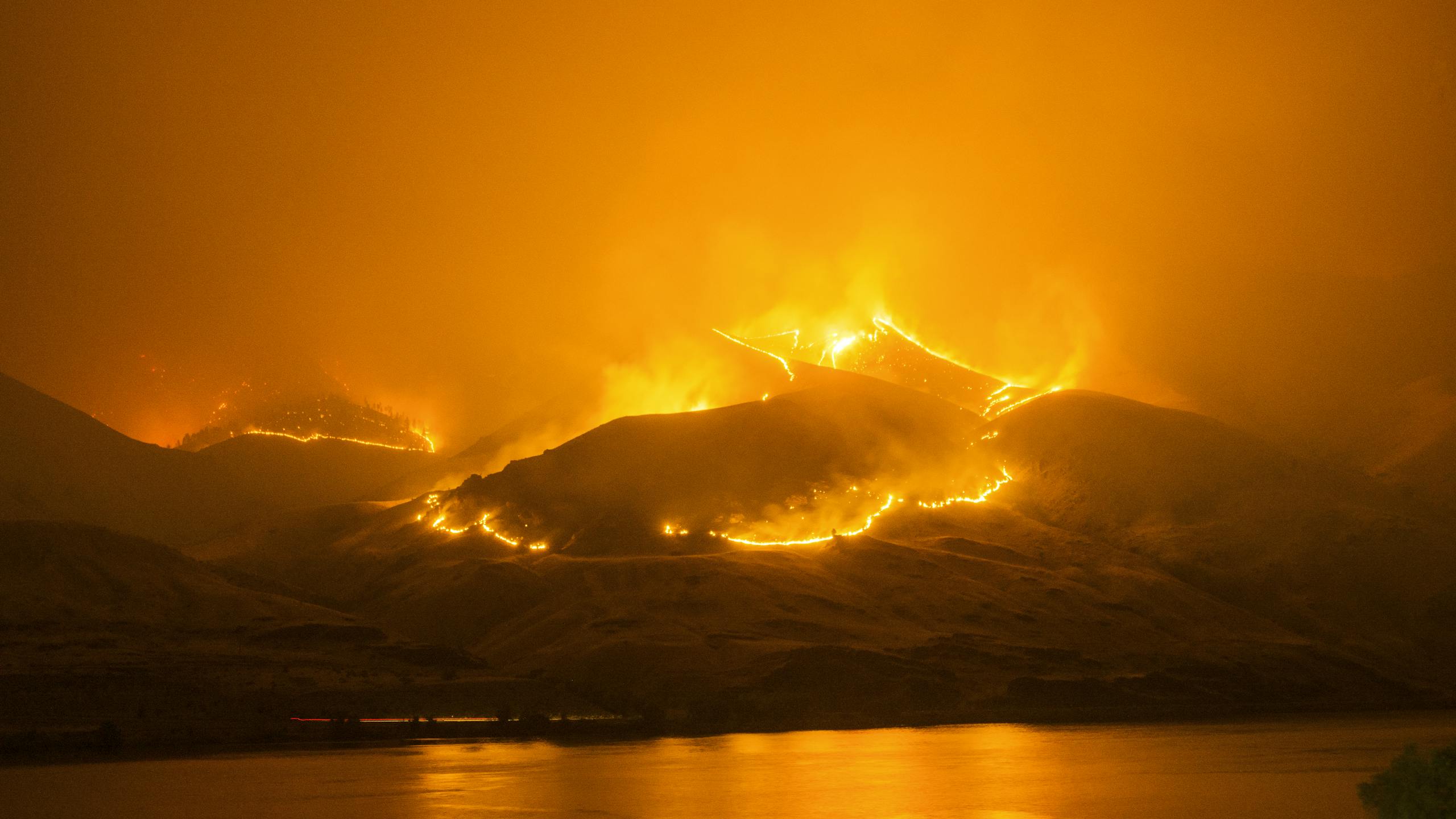
Fire meditation is the practice of using a flame as a focal point to quiet mental noise, deepen self-awareness, and access a state of calm that feels difficult to reach through conventional stillness alone. Unlike breath-focused techniques that can feel abstract or frustrating, watching a flame gives the mind something real to anchor to, which makes it surprisingly well-suited to the way many introverts actually think.
For those of us who process the world deeply and often find our minds running at full speed even when our bodies are still, fire meditation offers something genuinely different. It doesn’t ask you to think less. It asks you to think differently, and that distinction matters more than most guides on the subject acknowledge.

Mental health practices that actually work for introverts tend to share one quality: they meet us where we are instead of asking us to become someone else. Fire meditation does exactly that. If you’re exploring tools that support your emotional and psychological wellbeing as an introvert, our Introvert Mental Health hub covers the full landscape of what that can look like, from sensory sensitivity to anxiety management to the quieter dimensions of emotional resilience.
What Actually Happens to Your Mind During Fire Meditation?
My first real encounter with fire meditation wasn’t intentional. I was sitting on the back porch of my house after a particularly draining client pitch, one of those evenings where I’d performed extroversion for eight straight hours and felt hollowed out. A citronella candle was burning on the table. I wasn’t meditating. I was just staring at it, too tired to do anything else.
Career Coaching for Introverts
One-on-one career strategy sessions with Keith Lacy. 20 years of Fortune 500 leadership as an introvert, now helping others build careers that work with their wiring.
Learn More50-minute Zoom session · $175
About twenty minutes later I realized I hadn’t thought about the pitch at all. My shoulders had dropped. My jaw had unclenched. Something had shifted without me trying to make it shift.
What I stumbled into that evening has a name in contemplative traditions. Trataka, a Sanskrit term from yogic practice, refers to the technique of gazing steadily at a single point, most traditionally a flame. The practice is described in classical texts as a method for calming the nervous system, sharpening concentration, and creating a bridge between ordinary waking consciousness and deeper states of awareness.
From a neurological standpoint, what fire meditation appears to do is interrupt the default mode network, the brain’s background chatter that generates rumination, self-criticism, and future-worry. A flame is visually complex enough to hold attention but simple enough not to trigger analytical processing. It moves without being predictable. It changes color, height, and shape in ways your mind can track without needing to categorize or solve.
For introverts who carry a lot of cognitive load, that combination is genuinely restorative. You’re not suppressing thought. You’re giving your mind a different kind of input, one that doesn’t demand interpretation.
There’s also something worth acknowledging about the sensory dimension of fire. The warmth, the soft crackling if you’re using a wood fire or a larger candle, the smell of wax or smoke. For highly sensitive people who often experience HSP overwhelm from sensory overload, this can feel counterintuitive. But fire tends to be the exception rather than the rule. Its sensory qualities are gentle, rhythmic, and predictable in a way that soothes rather than overstimulates.
Why Do Introverts Respond So Well to Flame-Based Practices?
There’s a particular kind of exhaustion that comes from running an advertising agency. Not the physical kind, but the kind that builds up when you’ve been managing other people’s emotions, mediating creative conflicts, reading rooms, and performing confidence you don’t always feel. By the time I’d been leading agencies for a decade, I had developed what I can only describe as a chronic low-grade mental fatigue that conventional relaxation never quite touched.
Gym sessions helped the body. Sleep helped the body. But the mind kept running. I’d lie awake replaying conversations, second-guessing presentations, cataloguing what I should have said differently to a client who seemed dissatisfied. The introvert’s inner world, which is genuinely rich and valuable, can also become a pressure cooker when there’s no release valve.
Fire meditation works for introverts specifically because it engages the visual cortex in a way that competes with verbal-linguistic processing. Most of our internal noise is language-based. We narrate, analyze, and rehearse using words. A flame doesn’t respond to language. You can’t argue with it, plan around it, or categorize it into a strategic framework. It just burns.
That forced shift from verbal to visual processing is where the relief comes from. It’s not emptying the mind, which is both neurologically impossible and a frustrating standard to hold yourself to. It’s redirecting the mind toward something that doesn’t require your commentary.
Introverts who also identify as highly sensitive often find that fire meditation addresses something else entirely: the emotional residue that accumulates after heavy social exposure. If you recognize yourself in what’s described in the HSP emotional processing experience of feeling deeply, you’ll understand that introverts don’t just get tired from social interaction. We absorb it. We carry other people’s emotional states home with us, turning them over in our minds long after the interaction ended.
Fire has been used in ritual and ceremony across virtually every human culture precisely because it seems to facilitate a kind of emotional release. There’s something about watching something burn that helps the mind let go of what it’s been holding.

How Do You Actually Practice Fire Meditation?
The mechanics are simpler than most guides make them sound, which is part of why I think the practice gets overlooked. People assume meditation requires elaborate preparation, perfect posture, or years of training to do correctly. Fire meditation asks for almost none of that.
What you need: a single candle, a darkened room, and roughly ten to twenty minutes where you won’t be interrupted. That’s genuinely it for a basic session.
Place the candle at eye level or slightly below, about arm’s length away. Sitting on a chair is perfectly fine. You don’t need to sit on the floor or adopt any specific posture beyond what feels comfortable and alert. Slouching tends to invite sleepiness, so a reasonably upright position helps, but this doesn’t need to be rigid.
Soften your gaze rather than staring hard at the flame. There’s a difference between focused attention and tense fixation. You’re looking at the flame the way you might watch rain on a window, present and attentive, but not straining. Let your eyes rest on the flame’s center, the blue-white base where it’s hottest, or the dancing tip, whichever feels natural.
When your mind wanders, and it will, you simply return your attention to the flame. No judgment, no frustration. The wandering is not failure. Every return to the flame is the actual practice. Over time, the gaps between wandering grow longer, but even in early sessions most people notice a meaningful shift in their mental state after ten minutes.
Some practitioners close their eyes after several minutes and try to hold the afterimage of the flame in their mind’s eye, a visualization technique that extends the meditative state and builds concentration capacity. This is optional and worth experimenting with once the basic practice feels familiar.
One thing I’ve found personally valuable: ending each session with two or three minutes of sitting in the dimness after extinguishing the candle. The shift from flame to darkness creates a natural transition period, a kind of decompression that helps the calm state settle rather than evaporating the moment you stand up and re-enter normal life.
Can Fire Meditation Help With Anxiety and Chronic Overthinking?
Anxiety in introverts often has a specific texture. It’s rarely the adrenaline-spike kind. It tends to be the slow-burn variety, the persistent low-level hum of worry that runs underneath everything else. You’re not panicking. You’re just never quite not anxious either.
I managed a senior account director at one of my agencies who was one of the most talented strategists I’d ever worked with. She was also someone who struggled visibly with this kind of chronic background anxiety. She’d prepare for client meetings three times more thoroughly than anyone else on the team, not because she lacked confidence in her work, but because her mind kept generating scenarios where things went wrong. The preparation was a coping mechanism. It worked up to a point, and then it stopped working.
What she needed wasn’t more information or better strategies. She needed a way to interrupt the loop. The National Institute of Mental Health describes generalized anxiety as persistent, difficult-to-control worry that interferes with daily functioning, and what’s notable about that description is the word “control.” The more you try to control anxious thoughts, the more they resist.
Fire meditation works with anxiety not by suppressing it but by giving the nervous system a different experience to inhabit. The research published in PubMed Central on mindfulness-based approaches points to the role of attentional retraining in reducing the grip of anxious thought patterns. You’re not arguing with the anxiety. You’re training your attention to have somewhere else to go.
For those who also experience HSP anxiety and its particular complexities, fire meditation offers something that generic relaxation techniques often miss: it works at the sensory level, not just the cognitive one. You’re not trying to think your way out of an anxious state. You’re giving your entire nervous system a different kind of input.
The warmth of a candle flame activates the same sensory pathways that respond to sunlight and hearth fires, stimuli that human nervous systems evolved alongside for hundreds of thousands of years. There’s an argument that fire is one of the oldest calming signals we have, that our bodies recognize it as safety in a way that’s older than language.

What Does Fire Meditation Reveal About Your Inner Life?
One of the things that surprised me most when I began practicing fire meditation consistently was how much it functioned as a kind of mirror. Not in a dramatic way. More like a slow reveal.
When you sit with a flame for twenty minutes and your mind wanders, you start to notice what it wanders toward. Patterns emerge. You realize you’ve been carrying a particular worry for weeks without consciously acknowledging it. You notice that certain types of interactions leave a specific kind of residue. You become aware of emotional states you’d been moving through too quickly to actually feel.
As an INTJ, my natural mode is analysis. I process emotions by converting them into data, categorizing them, finding the logical explanation for why I feel what I feel. That’s not a bad approach, but it does mean I can spend a lot of time thinking about emotions without actually experiencing them. Fire meditation short-circuits that tendency. You can’t analyze a flame. You can only watch it.
What this creates is a kind of emotional honesty that’s harder to achieve through purely cognitive practices. Things surface that you didn’t know were there. Sometimes that’s uncomfortable. An unresolved tension with a colleague you’d convinced yourself was fine. A decision you made that you haven’t fully made peace with. A disappointment you filed away rather than processed.
For introverts who tend toward perfectionism, this can be particularly significant. The HSP perfectionism pattern of impossibly high standards often involves a kind of emotional suppression, keeping difficult feelings at arm’s length in order to maintain forward momentum. Fire meditation creates the conditions where those feelings can surface without demanding immediate resolution.
You don’t have to do anything with what comes up. You just have to let it be present. That, for many introverts, turns out to be the hardest and most valuable part of the practice.
How Does Fire Meditation Fit Into a Broader Self-Care Practice?
During my agency years I had a complicated relationship with the concept of self-care. It felt like something other people did, people who had figured out how to separate work from identity in a way I hadn’t managed. I was the agency. The agency’s performance was my performance. Its reputation was my reputation. There was no clean line.
What I eventually understood, too slowly and at some cost to my wellbeing, was that sustainable performance requires genuine recovery. Not just sleep and exercise, but the kind of mental and emotional recovery that actually restores the specific capacities that get depleted in demanding work. For me, those were depth of focus, quality of judgment, and the ability to be genuinely present with my team rather than just physically present.
Fire meditation fits into a self-care practice not as a replacement for other approaches but as a complement to them. It occupies a different space than physical exercise, social connection, or even other forms of meditation. Its particular gift is the combination of sensory grounding and mental stillness that’s hard to achieve any other way.
Pairing fire meditation with other practices amplifies its benefits. Many people find it works well before journaling, as the meditative state creates a kind of mental openness that makes writing more honest and less performative. Others use it after particularly heavy social days as a decompression ritual before sleep.
For introverts who carry the weight of other people’s emotions, what the HSP empathy experience describes as a double-edged sword, having a consistent practice that creates genuine separation between absorbed emotions and your own inner state is not a luxury. It’s maintenance. The same way you’d service a car that gets heavy use, your nervous system needs regular attention when it’s doing significant emotional work.
The American Psychological Association’s work on resilience emphasizes that psychological resilience isn’t a fixed trait but a capacity that can be built and maintained through consistent practice. Fire meditation is one of the quieter ways to do that building.

What Variations of Fire Meditation Are Worth Exploring?
The single candle practice I’ve described is the foundation, but fire meditation has several variations that serve different purposes and suit different temperaments.
Campfire or Fireplace Meditation
If you have access to a wood fire, the experience is qualitatively different from a candle. The scale, the sound, the smell, and the unpredictability of a larger fire engage more of the senses and tend to produce a deeper state more quickly. Many people find that twenty minutes in front of a fireplace produces a level of calm that would take forty minutes to achieve with a candle. There’s also something about the sound of burning wood that seems to carry its own meditative quality, a natural white noise that masks environmental distractions.
Guided Fire Visualization
Some practitioners use fire as the anchor for a visualization practice rather than a direct gazing technique. You light a candle, settle into stillness, and then close your eyes and visualize a fire in a specific setting: a beach at night, a forest clearing, a stone hearth in a mountain cabin. The candle’s warmth and light serve as sensory anchors that make the visualization feel more real. This approach works particularly well for introverts who have strong visual imaginations and find purely breath-focused practices too abstract.
Intentional Burning
A variation that many people find deeply satisfying involves writing something down, a worry, a resentment, a pattern you want to release, and then burning the paper in a fireproof container. This is less about meditation in the traditional sense and more about ritual, using the physical act of burning as a way to mark a psychological transition. The evidence on ritual behavior published in PubMed Central suggests that physical rituals can meaningfully influence emotional states, even when the person performing them is skeptical about their symbolic meaning.
For introverts processing rejection or difficult endings, this kind of intentional ritual can provide a concrete marker for the work of letting go. The HSP rejection experience and the healing process often requires more than cognitive reframing. Sometimes the psyche needs a physical act to register that something has genuinely ended.
Breath-Synchronized Flame Watching
A more structured approach involves synchronizing your breathing with the movement of the flame. Inhale slowly and watch the flame respond to the slight air current your breath creates. Exhale and watch it steady. This links the visual anchor of fire with the physiological benefits of slow, controlled breathing, which PubMed Central’s overview of relaxation techniques identifies as one of the most reliable methods for activating the parasympathetic nervous system. The combination is more powerful than either practice alone.
What Gets in the Way and How Do You Work Through It?
Honesty requires acknowledging that fire meditation isn’t universally easy, especially at first. There are a few specific obstacles that come up repeatedly, and they’re worth naming directly.
The most common one is restlessness. Sitting still for twenty minutes without a phone, without a task, without anything to produce or accomplish, can feel deeply uncomfortable if you’re not used to it. This is especially true for introverts who’ve learned to manage social anxiety by staying busy, by always having a reason to be somewhere or doing something. Stillness without purpose can feel like exposure.
Start with five minutes. Genuinely. Five minutes of flame watching is enough to experience the basic shift in mental state, and it’s achievable even on days when twenty minutes feels impossible. Build from there over weeks rather than trying to establish a full practice immediately.
The second obstacle is self-judgment about doing it “right.” I watched this pattern play out in myself for months. I’d sit down to meditate, my mind would wander after ninety seconds, and I’d spend the next ten minutes judging myself for not being better at meditating rather than actually meditating. The irony was that the self-judgment was itself a form of the mental noise I was trying to quiet.
Fire meditation has a natural advantage here. The flame gives you something to return to that’s completely neutral. It doesn’t care how many times your mind wandered. It’s just there, burning. That absence of judgment in the object of focus can, over time, teach you to bring a similar quality to your attention to yourself.
A third obstacle, particularly relevant for highly sensitive introverts, is that the practice sometimes surfaces emotions that feel overwhelming rather than manageable. If you sit with a flame and find yourself unexpectedly in contact with grief or anger or a sadness you didn’t know was sitting that close to the surface, that’s not the practice going wrong. That’s it working. Even so, having some awareness of what to do with strong emotions when they arise, whether that means breathing through them, ending the session and moving gently, or having a trusted person to talk to afterward, matters. The research on emotional regulation in highly sensitive individuals consistently points to the importance of having support structures in place when doing this kind of internal work.

Building a Practice That Actually Sticks
Consistency matters more than duration. A five-minute fire meditation practice that you do four times a week will do more for your mental health than an hour-long session you manage once a month. The nervous system learns through repetition. What you’re building over time is a conditioned response, a reliable pathway back to calm that becomes faster and more accessible the more you use it.
Anchoring the practice to an existing habit makes consistency significantly easier. After dinner. Before bed. On Sunday mornings before the week begins. The specific timing matters less than the consistency of the association. Your mind starts to anticipate the state before you’ve even lit the candle, which is itself a form of the practice taking root.
Creating a small ritual around the practice also helps. The same candle, placed in the same spot. A few moments of quiet before you begin. Perhaps a specific chair or cushion. These cues signal to your nervous system that what’s about to happen is different from ordinary activity. Over time, the ritual itself becomes part of the transition into the meditative state.
What I’ve come to appreciate about fire meditation, after years of trying various approaches to managing the particular demands of introvert mental health, is its honesty. It doesn’t promise transformation or dramatic results. It offers something quieter and more durable: a reliable way to come back to yourself at the end of a day that asked a lot of you. For introverts who spend significant energy handling a world built for a different kind of mind, that return to self isn’t a small thing. It’s the whole thing.
There’s a lot more to explore when it comes to the mental health practices that genuinely support introverted minds. Our complete Introvert Mental Health hub brings together the full range of topics, from managing sensory sensitivity to building emotional resilience, in one place.
About the Author
Keith Lacy is an introvert who’s learned to embrace his true self later in life. After 20 years in advertising and marketing leadership, including running agencies and managing Fortune 500 accounts, Keith now channels his experience into helping fellow introverts understand their strengths and build fulfilling careers. As an INTJ, he brings analytical depth and authentic perspective to every article, drawing from both professional expertise and personal growth.
Frequently Asked Questions
Is fire meditation the same as candle gazing or trataka?
Fire meditation is a broad term that includes candle gazing as its most accessible form. Trataka is the classical yogic name for the concentrated gazing practice, which traditionally uses a candle flame as its focal point. The two terms overlap significantly in practice, though trataka is a specific technique with defined instructions from yogic tradition, while fire meditation can also include campfire meditation, fire visualization, and intentional burning rituals. For most people beginning the practice, a single candle is the ideal starting point regardless of what you call it.
How long should a fire meditation session last for beginners?
Five to ten minutes is a realistic and effective duration for beginners. Many people notice a meaningful shift in their mental state within five minutes of focused flame watching, which means you don’t need to commit to long sessions to experience genuine benefit. As the practice becomes more familiar and comfortable, extending sessions to fifteen or twenty minutes deepens the effect. Consistency across shorter sessions is more valuable than occasional long ones, so starting small and building gradually tends to produce better long-term results than attempting extended sessions before the practice feels natural.
Can fire meditation help with sleep problems common in introverts?
Many introverts find that a brief fire meditation session in the hour before bed significantly improves sleep quality. The practice activates the parasympathetic nervous system, which counteracts the alert, activated state that makes falling asleep difficult. The dim, warm light of a candle also supports the body’s natural melatonin production in a way that screen light does not. For introverts whose minds tend to keep running long after their bodies are ready for sleep, fire meditation provides a reliable transition ritual that helps the mental processing slow down enough for genuine rest to follow.
Are there any safety considerations to keep in mind?
Basic fire safety applies to any candle-based practice. Never leave a burning candle unattended, keep it away from flammable materials, and place it on a stable, heat-resistant surface. For people who tend to enter deeply relaxed states during meditation, it’s worth positioning the candle in a way that doesn’t require you to reach over or lean toward it. A candle holder with a wide base on a solid table at a comfortable viewing distance is the safest setup. If you fall asleep during practice, which occasionally happens, having the candle in a glass container significantly reduces risk. Extinguishing the candle before you begin any visualization practice that involves closing your eyes is also a sensible precaution.
What’s the difference between fire meditation and other forms of meditation for introverts?
Different meditation approaches engage the mind in different ways, and introverts vary in which methods work best for them. Breath-focused meditation requires sustained attention to something subtle and internal, which some introverts find difficult to maintain. Body scan practices work well for those who carry physical tension but can feel disconnected for people who live primarily in their heads. Mantra-based practices use repetitive sound to anchor attention, which suits some minds and frustrates others. Fire meditation’s advantage is that the flame provides a concrete, visually engaging anchor that’s easier to return to than breath or body sensation, while still creating the mental stillness and nervous system regulation that all effective meditation practices share. It’s particularly well-suited to people who find purely internal practices too abstract to sustain.