Safe place meditation is a guided visualization practice where you mentally construct a calm, secure environment to reduce stress, anxiety, and emotional overwhelm. It works by activating the brain’s relaxation response through vivid sensory imagination, giving your nervous system a genuine rest from the demands of daily life. For introverts and highly sensitive people especially, this practice can become one of the most reliable tools in a mental health toolkit.
My mind has never been particularly good at “switching off.” Twenty years running advertising agencies meant my brain was almost always processing something, a client deadline, a pitch strategy, a team conflict I hadn’t fully resolved yet. Even after the workday ended, the mental chatter continued. Safe place meditation was one of the first practices that actually quieted that noise, not by forcing my brain to stop thinking, but by giving it somewhere better to go.

Mental health for introverts isn’t just about managing stress. It’s about understanding how a deeply internal nervous system responds to the world, and building practices that honor that wiring rather than fight it. Our Introvert Mental Health hub covers the full landscape of these challenges, and safe place meditation fits naturally into that picture as a practice built for people who live most authentically in their inner world.
What Actually Happens in Your Brain During Safe Place Meditation?
There’s a reason this practice feels so different from simply “trying to relax.” When you engage in vivid mental imagery, your brain responds in ways that closely mirror actual sensory experience. The same neural pathways involved in real perception activate during imagination. So when you picture a quiet forest or a sun-warmed beach in precise detail, your nervous system begins responding as though you are genuinely there.
Career Coaching for Introverts
One-on-one career strategy sessions with Keith Lacy. 20 years of Fortune 500 leadership as an introvert, now helping others build careers that work with their wiring.
Learn More50-minute Zoom session · $175
This matters enormously for people whose nervous systems are wired for high sensitivity. Research published in PubMed Central has examined how imagery-based interventions influence emotional regulation, showing that mental visualization engages the same cognitive and physiological processes as real experience. For introverts, who already spend significant time in their internal world, this kind of practice can feel remarkably natural.
I remember the first time a therapist walked me through a proper safe place visualization. I was skeptical. I’d spent two decades in boardrooms and pitch meetings. Sitting quietly and imagining a peaceful landscape felt almost embarrassingly soft. But within about four minutes, my shoulders had dropped two inches and my jaw had unclenched. My INTJ brain, which typically resists anything that feels unproductive, had found something it could actually use: a structured mental environment with a clear purpose.
The practice works partly because it interrupts the feedback loop between anxious thoughts and physical tension. When your body starts to relax, your mind follows. When your mind finds a calmer register, your body releases more tension. Safe place meditation creates the entry point into that loop from the inside out.
Why Do Introverts and HSPs Respond So Strongly to This Practice?
Not everyone experiences meditation the same way, and safe place visualization tends to resonate particularly deeply with people who are highly sensitive or strongly introverted. Part of that comes down to cognitive style. Introverts naturally process information through rich internal landscapes. The imagination isn’t foreign territory; it’s home base.
Highly sensitive people carry an additional layer of complexity. Their nervous systems pick up more sensory data, process it more thoroughly, and feel its weight more acutely. This makes daily life genuinely more exhausting, even on days that look calm from the outside. If you’ve ever read about HSP overwhelm and sensory overload, you’ll recognize the pattern: a busy grocery store, a loud open-plan office, or even a long social event can leave an HSP feeling depleted in ways that are hard to explain to people who don’t experience the world that way.

Safe place meditation offers something genuinely rare: a sensory environment that the practitioner controls completely. You choose the sounds, the light, the temperature, the presence or absence of other people. For someone whose nervous system is constantly negotiating with an unpredictable external world, that level of control over sensory input is profoundly restorative.
I managed several highly sensitive people during my agency years, and watching them move through a typical workday was illuminating. One of my senior copywriters, a brilliant woman who produced some of our best campaign work, would visibly wilt after long client review sessions. Not because the work was hard, but because the sensory and emotional load of the room was genuinely exhausting for her. She eventually developed a short midday practice, five minutes of quiet visualization, that she credited with allowing her to sustain her output through demanding afternoons. At the time, I didn’t have language for what she was doing. Now I recognize it as exactly this.
How Do You Actually Build a Safe Place Meditation Practice?
The mechanics are simpler than most people expect, but the depth available within those mechanics is considerable. A basic safe place meditation involves five stages: settling, arriving, building, anchoring, and returning. Each stage has a purpose, and together they create a complete experience that trains your nervous system over time.
Settling means giving your body permission to stop performing. Find a position that’s comfortable but not so horizontal that sleep becomes likely. Close your eyes. Take three or four slow breaths, not forced or theatrical, just deliberate. Notice where you’re holding tension without trying to immediately fix it.
Arriving means beginning to construct your safe place through sensory detail. Start with what you see. Is it indoors or outdoors? What’s the quality of the light? What colors are present? Don’t rush this stage. The more specific and personal the details, the more powerfully your nervous system will respond. This isn’t someone else’s peaceful beach from a stock photo. It’s a place built entirely from your own associations with safety and calm.
Building means adding layers: sound, temperature, texture, smell. What do you hear in this place? Is there wind, water, silence, distant birdsong? What does the air feel like against your skin? What does the place smell like? Each sensory detail deepens the neurological response and makes the visualization more stable over time.
Anchoring is the step most beginners skip, and it’s genuinely valuable. Once you feel settled in your safe place, create a physical anchor: a gentle pressure of thumb and forefinger, a specific word you repeat quietly, a particular breath pattern. Over time, this anchor becomes a shortcut. Your nervous system learns to associate that physical cue with the calm state, and you can access a lighter version of the relaxation response even outside formal meditation sessions.
Returning means bringing yourself back to the room with intention rather than jarring yourself awake. Count slowly from five to one. Wiggle your fingers and toes. Take a full breath. Open your eyes gradually. This transition matters because it preserves the physiological benefit and trains your brain to move between states smoothly.
The clinical literature on guided imagery notes that consistent practice over weeks and months produces more durable changes than occasional sessions, which aligns with what most people find experientially. The first few times you try this, it may feel effortful or even slightly artificial. That’s normal. The practice deepens with repetition.
What Role Does Anxiety Play, and How Does Meditation Address It?
Anxiety and introversion aren’t the same thing, but they frequently coexist, and for highly sensitive people, the overlap can be particularly pronounced. The National Institute of Mental Health describes generalized anxiety as persistent, excessive worry that’s difficult to control, often accompanied by physical symptoms like tension, fatigue, and sleep disruption. Many introverts recognize elements of this in their experience, even if they wouldn’t label it clinical anxiety.
For HSPs, anxiety often has a particular texture. It’s not always dramatic or crisis-driven. It can be a low-level hum of anticipation and vigilance, a constant background processing of potential problems. If you’ve read about HSP anxiety and coping strategies, you’ll recognize how this kind of sustained low-grade worry depletes energy over time in ways that are hard to pinpoint but very real to live with.

Safe place meditation addresses anxiety through several mechanisms simultaneously. It interrupts the rumination cycle by redirecting attention to sensory imagination. It activates the parasympathetic nervous system, which counteracts the fight-or-flight response that anxiety sustains. And it builds a felt sense of safety that, with practice, becomes more accessible even when anxiety is present.
There’s also something important about the emotional processing that happens during and after these sessions. Introverts tend to process emotion deeply and somewhat slowly, turning experiences over internally before reaching conclusions. Safe place meditation creates a protected space for that processing to happen without external interruption. The evidence on mindfulness-based interventions supports the idea that creating intentional inner space for emotional processing has measurable effects on anxiety and mood regulation over time.
My own anxiety during high-stakes agency work rarely looked like visible panic. It looked like lying awake at 2 AM mentally rehearsing a client presentation, or sitting in a meeting while a parallel track in my brain catalogued everything that could go wrong. Safe place meditation didn’t eliminate that tendency, but it gave me a way to set it down temporarily, which turned out to be enough to function better the next day.
How Does Emotional Depth Shape the Safe Place Experience?
One of the things I’ve come to appreciate about this practice is how differently it lands depending on where you are emotionally. On days when everything feels manageable, safe place meditation is pleasant and restorative. On days when something has genuinely hurt, it becomes something more significant: a container for emotions that need space before they can be processed.
Introverts and HSPs often feel things with considerable intensity, even when that intensity isn’t visible to others. The experience of HSP emotional processing involves a depth of engagement with feeling that can be both a gift and a source of exhaustion. Safe place meditation doesn’t shortcut that processing, but it creates a stable internal environment where it can happen without becoming overwhelming.
There’s a particular quality to the safe place when it’s working well: it feels inhabited rather than imagined. You’re not watching a mental movie from a distance. You’re present in it. That quality of presence is what allows genuine emotional release to happen, not through drama or catharsis, but through the quiet settling that comes when the nervous system finally feels secure enough to let its guard down.
I once had a particularly brutal client meeting where a major campaign we’d spent months developing was rejected in about twelve minutes. The client had changed direction internally, and our work, which was genuinely good, simply didn’t fit the new brief. Walking back to the office, I felt the specific combination of professional disappointment and personal deflation that creative work sometimes produces. That evening, I spent about fifteen minutes in a safe place visualization, not trying to “fix” the feelings, just giving them somewhere to exist that wasn’t my kitchen table or my phone. The next morning, I had perspective. The evening before, I had peace.
What About Empathy, Perfectionism, and the Weight We Carry?
Safe place meditation becomes even more valuable when you understand the specific burdens that introverts and HSPs often carry into their daily lives. Two of the most significant are empathy and perfectionism, and both can make it harder to ever feel genuinely at rest.
Empathy in highly sensitive people operates at a level that most people don’t fully grasp from the outside. It’s not just feeling sympathy for others’ difficulties. It’s absorbing the emotional atmosphere of a room, carrying the weight of other people’s unspoken distress, and often struggling to separate what belongs to you from what you’ve picked up from someone else. The experience of HSP empathy as a double-edged sword captures this precisely: the same sensitivity that makes HSPs extraordinary listeners and caregivers also makes them vulnerable to emotional exhaustion in ways that can be hard to communicate.

Safe place meditation offers a specific kind of relief here: it’s a space that belongs entirely to you. No one else’s emotions are present unless you choose to bring them. For someone who spends most of their waking hours absorbing and processing the emotional world around them, that boundary is genuinely restorative.
Perfectionism adds another layer. Many introverts, particularly those with high standards for their own work, carry a persistent internal critic that rarely takes a day off. The trap of HSP perfectionism is that the same depth of processing that produces excellent work also produces relentless self-evaluation. Safe place meditation doesn’t silence that critic permanently, but it creates a space where the critic isn’t invited. In your safe place, you don’t have to perform, improve, or justify anything. You simply exist there.
I ran my agencies with high standards, which is a polite way of saying I was demanding of myself and, at times, of the people around me. The internal pressure that produced good work also made genuine rest feel almost impossible. Safe place meditation was one of the few practices that could actually interrupt that pressure, not by lowering my standards, but by creating a zone where standards simply didn’t apply.
Can Safe Place Meditation Help After Rejection or Difficult Experiences?
Rejection hits differently when you process deeply. A dismissive comment in a meeting, a pitch that doesn’t land, a relationship that cools without explanation: these experiences don’t roll off introverts and HSPs the way they might for someone with a thicker emotional skin. They tend to sink in, get turned over, and resurface at inconvenient times.
The experience of HSP rejection and the healing process involves a particular kind of rumination that can be hard to interrupt through willpower alone. You can tell yourself to stop replaying the conversation, but the replay continues. Safe place meditation offers an alternative: instead of fighting the rumination, you redirect attention to a sensory environment that your nervous system associates with safety and acceptance.
This works in part because the safe place is, by design, a space where you are unconditionally welcome. There’s no rejection possible there because the environment exists to support you. Over time, regular practice builds what some therapists describe as an internal secure base, a felt sense that safety is accessible even when the external world is difficult. The American Psychological Association’s framework on resilience emphasizes that psychological resilience isn’t about being unaffected by difficulty, but about having reliable internal resources to return to. Safe place meditation is, at its core, a practice for building exactly that.
One of the hardest professional experiences I had was losing a long-term client relationship after a change in their marketing leadership. We’d worked together for six years, produced work I was genuinely proud of, and the new CMO came in and cleared the decks. It wasn’t personal, but it felt personal. Safe place meditation during that period wasn’t a cure for the disappointment. It was a place to put the feelings down for a few minutes each day, which made it possible to function, keep the team steady, and eventually move forward.
How Do You Personalize Your Safe Place for Maximum Effect?
The most common mistake people make with safe place meditation is borrowing someone else’s imagery. Guided meditations often suggest tropical beaches or mountain meadows, and while these work for some people, they’re generic by design. Your safe place will be more powerful if it’s built from your own associations with genuine safety and calm.
Some useful questions to explore: Where have you felt most at peace in your actual life? What sensory elements were present? What was the quality of the light? Was anyone else there, or were you alone? What time of day was it? What sounds were present or absent?
Your safe place doesn’t need to be a real location. Many people construct composite environments, a room that doesn’t exist anywhere but feels like home, a garden with elements drawn from several different places, an imaginary landscape built entirely from preference. What matters is that the sensory details feel genuinely safe and appealing to you specifically.
My own safe place evolved over time. It started as a fairly generic outdoor scene, then gradually became more specific: a particular quality of late afternoon light, the smell of old books and coffee, the sound of rain against glass. Those details are mine. They carry personal associations that amplify the relaxation response in ways that a stock-image beach never could.
It’s also worth knowing that your safe place can change. Some people find that their visualization shifts with seasons, life circumstances, or emotional needs. There’s no requirement for consistency. The practice is yours to adapt.
How Does Safe Place Meditation Fit Into a Broader Mental Health Practice?
Safe place meditation is genuinely useful on its own, but it’s most powerful as part of a broader approach to mental health rather than a standalone solution. For introverts and HSPs, a complete mental health toolkit might include several complementary elements: physical movement that allows mental decompression, social structures that honor the need for solitude, creative outlets for emotional processing, and professional support when needed.
Within that broader picture, safe place meditation serves a specific function: it provides reliable, accessible, on-demand relief from the particular kind of stress that comes from living in an overstimulating world with a sensitive nervous system. It doesn’t require equipment, a specific location, or another person. It scales from a five-minute midday reset to a thirty-minute deep practice depending on what’s needed.
The academic literature on visualization-based stress reduction consistently points to the importance of regular, consistent practice rather than occasional use during crisis. Building the practice into daily life, even briefly, produces more durable benefits than reaching for it only when things are difficult. This mirrors what I’ve found personally: the days when I least feel like meditating are often the days when it helps most, and having the habit already established makes those days easier to get through.
If you’re new to meditation broadly, safe place visualization is actually an excellent entry point. It gives the mind something specific to do, which suits the introvert tendency to engage deeply with mental content rather than simply trying to empty the mind. Many introverts find traditional “blank mind” meditation frustrating because their minds don’t want to be blank. Safe place meditation works with that tendency rather than against it.
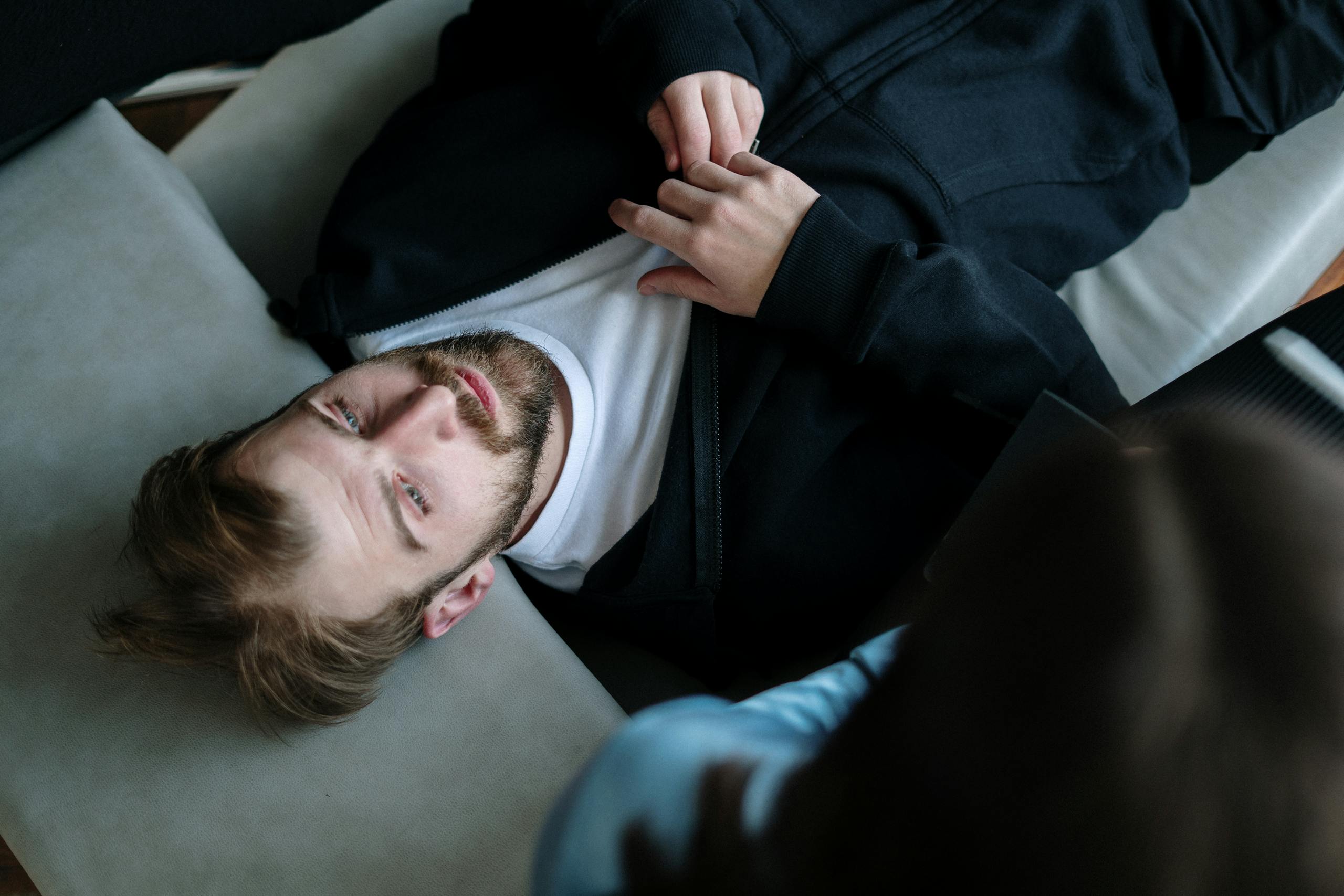
For those dealing with more significant mental health challenges, it’s worth knowing that safe place visualization is also used as a component in several evidence-based therapeutic approaches, including EMDR and trauma-focused therapies. In those contexts, it’s typically introduced by a trained therapist as a stabilization tool before processing more difficult material. If your mental health needs go beyond everyday stress management, working with a professional who can integrate these techniques thoughtfully is worth considering.
There’s a lot more to explore when it comes to mental health for introverts and highly sensitive people. Our complete Introvert Mental Health hub covers the full range of topics, from anxiety and emotional processing to sensory overwhelm and beyond.
About the Author
Keith Lacy is an introvert who’s learned to embrace his true self later in life. After 20 years in advertising and marketing leadership, including running agencies and managing Fortune 500 accounts, Keith now channels his experience into helping fellow introverts understand their strengths and build fulfilling careers. As an INTJ, he brings analytical depth and authentic perspective to every article, drawing from both professional expertise and personal growth.
Frequently Asked Questions
How long should a safe place meditation session last?
Even five minutes of focused safe place visualization produces measurable relaxation benefits for most people. Longer sessions of fifteen to thirty minutes allow for deeper nervous system recovery and more thorough emotional processing. As a starting point, ten minutes daily is a practical and sustainable commitment. The more important variable is consistency rather than duration: a short daily practice tends to produce better long-term results than occasional longer sessions.
Can safe place meditation help with panic attacks or acute anxiety?
Safe place meditation can be a helpful tool during mild to moderate anxiety, but it works best when practiced regularly rather than introduced for the first time during a panic attack. Building the practice during calmer periods trains your nervous system to access the relaxation response more quickly, which makes it more available during difficult moments. For acute panic, grounding techniques that engage the physical senses directly are often more immediately effective. Safe place meditation complements rather than replaces those approaches.
What if my mind keeps wandering during the visualization?
Mind wandering during meditation is normal and expected, particularly in the early stages of practice. When you notice your attention has drifted, simply return to a sensory detail of your safe place without judgment. The act of noticing the wandering and returning is itself the practice. Over time, your ability to sustain the visualization will improve. Introverts often find that adding more specific sensory details to their safe place helps anchor attention more effectively than trying to force focus.
Is safe place meditation the same as mindfulness meditation?
They’re related but distinct. Mindfulness meditation typically involves observing present-moment experience, including thoughts, sensations, and emotions, without judgment. Safe place meditation is a directed visualization practice where you actively construct a specific mental environment. Both cultivate a calmer relationship with your inner world, but they work through different mechanisms. Safe place meditation tends to be more accessible for beginners and particularly well-suited to people who find open-awareness practices difficult due to anxiety or a very active mind.
Does safe place meditation work for introverts who are also highly sensitive?
Safe place meditation is particularly well-suited to highly sensitive people because it addresses the specific challenges of a sensitive nervous system: sensory overload, emotional intensity, difficulty finding genuine rest in an overstimulating world. The ability to construct a completely controlled sensory environment is especially valuable for HSPs, who often have limited control over their external sensory conditions. Many HSPs report that this practice becomes one of their most reliable tools for daily recovery and emotional regulation.