Hobbies for introverts with anxiety work best when they offer quiet engagement, creative focus, or gentle physical movement without the social pressure that drains introverted energy. The right hobby can shift your nervous system out of overdrive and give your mind something meaningful to rest inside. It doesn’t need to be complicated, and it doesn’t need to look like anyone else’s version of self-care.
Anxiety and introversion often share the same nervous system. Both involve heightened internal processing, a tendency to notice more than others do, and a need for environments that don’t overwhelm. That overlap is real, and it shapes which activities actually help versus which ones just add another thing to feel anxious about.
There’s a broader conversation worth having about how introversion and mental health intersect in ways that most people don’t fully account for. Our Introvert Mental Health Hub covers that territory in depth, from sensory sensitivity to emotional processing patterns that are specific to how introverted minds work. This article focuses on one practical piece of that picture: finding hobbies that genuinely calm you down rather than quietly stress you out.
Why Do Introverts with Anxiety Need Different Hobbies?
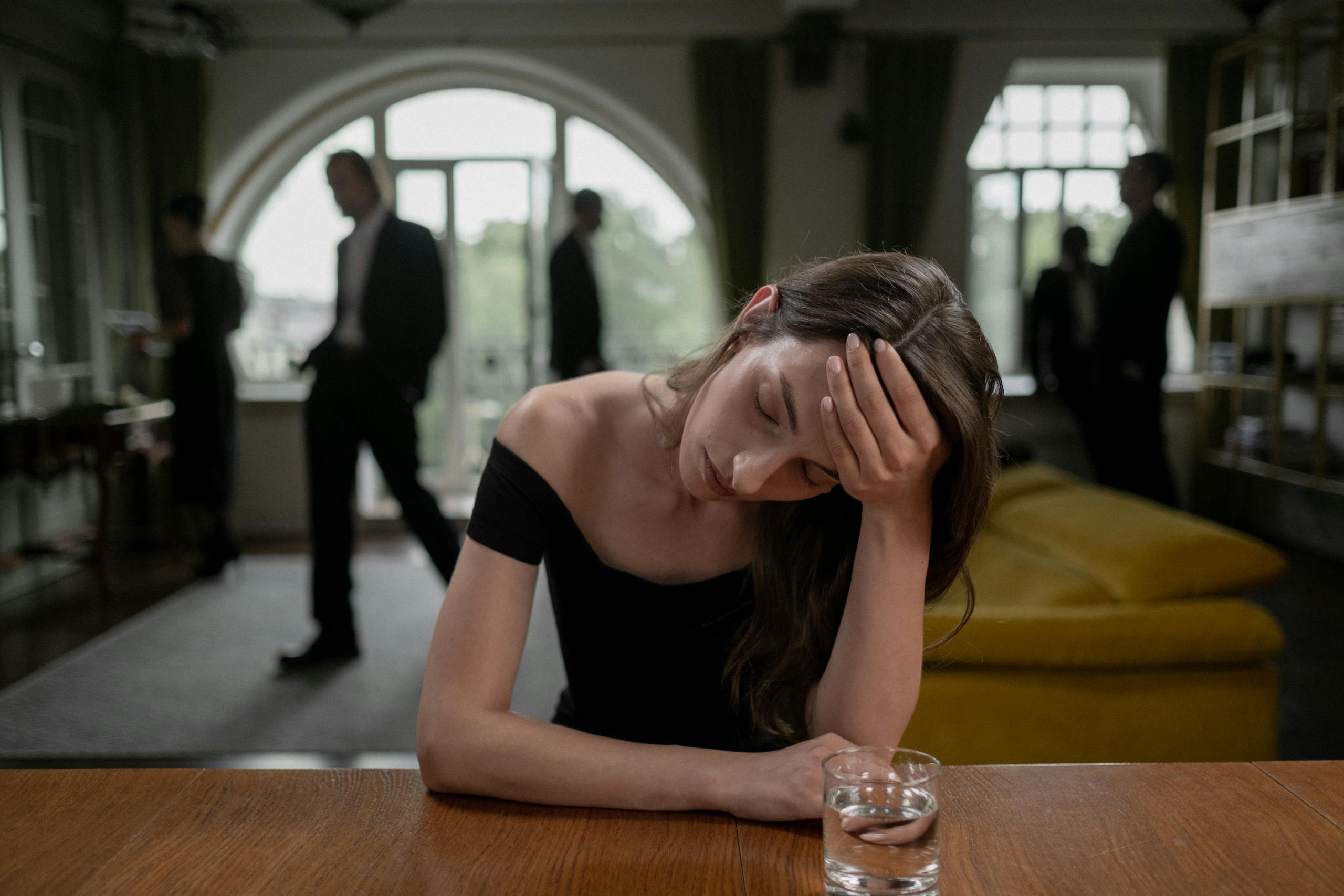
Not all hobbies are created equal, and that’s especially true when anxiety is part of your daily experience. A hobby that looks relaxing from the outside can actually be a source of low-grade stress if it involves performance, comparison, or social unpredictability. Introverts with anxiety tend to feel this mismatch more acutely than most.
Career Coaching for Introverts
One-on-one career strategy sessions with Keith Lacy. 20 years of Fortune 500 leadership as an introvert, now helping others build careers that work with their wiring.
Learn More50-minute Zoom session · $175
I spent two decades running advertising agencies, which meant my calendar was packed with client presentations, team standups, and high-stakes creative reviews. On paper, I was thriving. In reality, I was running on cortisol and willpower. My therapist at the time suggested I find a hobby. I tried a recreational tennis league, thinking physical activity would help. Within three weeks, I’d quit. The competitive format, the strangers, the small talk between points: it was another performance arena, not a reprieve from one.
What I eventually figured out is that hobbies for anxious introverts need to meet a specific set of criteria. They need to be low-stakes, meaning there’s no audience and no judgment. They need to engage the mind enough to interrupt anxious thought loops without demanding social energy. And they need to be something you can do on your own schedule, without having to coordinate with other people or explain yourself.
The National Institute of Mental Health notes that generalized anxiety disorder involves persistent worry that’s difficult to control and often interferes with daily functioning. For introverts, that interference tends to show up in social contexts first, which means activities that reduce social exposure while increasing a sense of competence and calm are particularly valuable.
Many introverts with anxiety are also highly sensitive people. If that description fits you, sensory input plays a significant role in how your nervous system regulates. Understanding HSP overwhelm and sensory overload can help you choose hobbies that soothe rather than stimulate your system past its threshold.
What Makes a Hobby Actually Calming for an Anxious Introvert?
Before listing specific activities, it’s worth understanding the mechanism. Why do some hobbies reduce anxiety while others just add a new flavor of it?
Flow state is a big part of the answer. When you’re absorbed in something that requires just enough skill to stay engaged but not so much that you’re overwhelmed, your brain’s default mode network quiets down. That network is largely responsible for rumination, the mental replay loop that anxious minds know well. Hobbies that produce flow interrupt that loop naturally.
Creative hobbies add another layer. The act of making something, whether it’s a painting, a meal, a garden bed, or a paragraph, gives your brain a concrete output to focus on. Introverts tend to process internally, which means anxiety often has no exit point. Creative work creates one. You externalize something that was spinning inside, and the spinning slows.
Physical hobbies work differently but achieve something similar. Gentle, rhythmic movement, think walking, swimming, or yoga, activates the parasympathetic nervous system. The body signals to the brain that the threat has passed, even if the threat was never physical to begin with. For anxious introverts who spend most of their time in their heads, this kind of bottom-up regulation is often more effective than trying to think your way to calm.
The research on mind-body connection in anxiety management is substantial. A study published in PubMed Central found meaningful connections between mindfulness-based activities and reduced anxiety symptoms, pointing to the value of present-moment engagement over passive distraction.
Which Creative Hobbies Work Best for Introverts with Anxiety?
Creative hobbies tend to be a natural fit because they reward solitary focus and internal depth, two things introverts already bring to the table.
Writing and Journaling
Writing is probably the most accessible creative outlet for anxious introverts, and also one of the most effective. Journaling in particular gives you a private space to process emotions without any audience, no performance pressure, no need to explain yourself to anyone. You write what you actually think, not what you’re supposed to think.
After I left my last agency, I started keeping a daily journal. Not the gratitude-list variety, though that has its place. More like a running conversation with myself about what I was noticing, what was worrying me, what I was actually feeling beneath the professional composure I’d spent years perfecting. It was uncomfortable at first. INTJs aren’t exactly trained to sit with emotional ambiguity. But over time, the act of writing things down gave my anxiety less room to operate. Named things are less frightening than unnamed ones.
Fiction writing, poetry, and personal essays can serve a similar function while adding creative distance. Sometimes it’s easier to process something difficult through a character than to face it head-on in a journal entry.
Drawing, Painting, and Visual Art
Visual art engages the hands and eyes in a way that naturally anchors attention to the present moment. You can’t ruminate effectively while you’re trying to mix the right shade of ochre or get a perspective line right. The task absorbs just enough cognitive bandwidth to quiet the background noise.
You don’t need talent to benefit from this. Adult coloring books became popular for a reason. The structured repetition of filling in a pattern is meditative without requiring any artistic skill. Sketching, watercolor, even doodling in the margins of a notebook can shift your nervous system in meaningful ways.
One of my creative directors at the agency, an INFP with a brilliant visual instinct, kept a sketchbook at her desk and would spend ten minutes drawing between client calls. She told me it was the only thing that kept her from dreading the phone. At the time I thought it was a quirk. Later I understood it was a coping strategy that actually worked.
Photography
Photography is a particularly good fit for introverts with anxiety because it gives you a structured reason to be present in the world without having to engage with it socially. The camera becomes a kind of permission slip to observe, to notice, to move through spaces at your own pace.
Many introverts are natural observers. Photography channels that instinct into something productive. And the post-processing side of it, editing images on your own, reviewing what you captured, is entirely solitary and absorbing.
Pottery and Tactile Crafts
Working with your hands in a tactile, physical way, pottery, woodworking, knitting, embroidery, has a grounding quality that’s hard to replicate with screen-based activities. The sensory feedback of the material, clay, wood grain, yarn, pulls attention into the body and away from the spinning mind. For anxious introverts who tend to live in their heads, this kind of physical anchoring can be genuinely therapeutic.
Knitting in particular has a rhythmic, repetitive quality that many people find almost hypnotic. The pattern gives the analytical mind something to track while the body stays calm. It’s no accident that knitting groups have become popular in mental health settings.
What About Physical Hobbies? Do They Help Anxious Introverts?
Physical activity is one of the most well-supported anxiety interventions available, but the format matters enormously. High-intensity group fitness classes, competitive team sports, or anything that involves being observed and evaluated tends to backfire for introverts with anxiety. The social and performance pressure cancels out the physiological benefit.
Solo or low-social physical activities are a different story entirely.
Walking and Hiking
Walking is underrated as an anxiety tool, especially walking in nature. There’s something about moving through a natural environment at a pace you control that resets the nervous system in ways that are hard to explain but easy to feel. No one is watching you. There’s no performance. The rhythm of your own footsteps is enough.
I started taking long walks during a particularly stressful agency pitch season. We were competing for a major account, the team was stretched thin, and I was absorbing everyone’s anxiety on top of my own. An hour walking alone in the morning became the one non-negotiable in my day. It didn’t solve the stress, but it gave me enough space from it to function clearly.
Hiking takes this further. The combination of physical exertion, natural scenery, and the mild problem-solving required to follow a trail produces a kind of focused calm that’s difficult to achieve any other way. Many introverts find that hiking is one of the few activities where their minds genuinely quiet down.

Yoga and Tai Chi
Both yoga and tai chi combine gentle movement with breath awareness and present-moment focus. They’re practiced at your own pace, they don’t require you to compete with anyone, and the internal focus they encourage suits the introvert’s natural orientation toward inner experience.
Home practice removes the social element entirely if that’s what you need. A yoga mat and a YouTube video is a genuinely effective anxiety management tool, not a consolation prize for people who can’t make it to a studio.
Swimming
Swimming has a particular quality that many anxious introverts find deeply calming. The sensory environment of the water muffles external sound. The rhythmic, repetitive movement creates a meditative state. And lap swimming in particular is a solitary activity even when you’re sharing a pool with others. You’re in your own lane, literally and figuratively.
The connection between anxiety and sensory sensitivity is worth understanding here. If you tend toward sensory overload in busy or loud environments, the enclosed, predictable sensory world of a pool can feel like a genuine refuge. You can read more about that experience in this piece on HSP anxiety and coping strategies, which covers how sensory sensitivity and anxiety interact in ways that standard anxiety advice often misses.
Are Intellectual Hobbies Good for Anxiety, or Do They Feed It?
This is a real tension for introverts. We tend to gravitate toward intellectual pursuits, reading, learning, researching, problem-solving. These activities align with our natural strengths and genuinely satisfy us. But for anxious minds, intellectual engagement can sometimes become another form of rumination if it isn’t chosen carefully.
Reading fiction, for example, is generally calming. You’re absorbed in someone else’s world, following a narrative that has a shape and an ending, engaging emotionally with characters who aren’t real. The anxiety has nowhere to hook in.
Reading nonfiction about anxiety, mental health, or current events, on the other hand, can feed the very thing you’re trying to calm. There’s a difference between intellectual engagement that absorbs you and intellectual engagement that activates you. Knowing which is which for your particular mind is genuinely useful self-knowledge.
Reading and Book Collecting
Fiction reading is one of the most consistently effective anxiety hobbies available to introverts. It requires no equipment, no social interaction, no performance. You can do it anywhere, at any time, for any duration. And the cognitive absorption it produces is genuine, not just passive distraction.
Many introverts find that building a personal library, curating books by theme or author or period, adds another layer of satisfaction. The curation itself is a low-stakes intellectual activity that produces a tangible, visible result.
Puzzles, Chess, and Strategy Games
Puzzles are a classic anxiety management tool because they engage the problem-solving mind completely. A jigsaw puzzle requires sustained visual attention and pattern recognition. Chess requires strategic thinking across multiple moves. Both create a state of focused engagement that crowds out rumination.
The solo versions of these activities, working a puzzle alone, playing chess against a computer, are particularly good fits. They give the analytical introvert mind something genuinely interesting to do without requiring social energy.
Learning a Language or Musical Instrument
Both of these involve skill development over time, which creates a particular kind of engagement: you’re always at the edge of your current ability, which produces flow more reliably than activities where you’ve already mastered the basics. The progress is measurable, which satisfies the introvert’s tendency toward internal benchmarking.
Playing an instrument alone is especially valuable. The combination of physical coordination, auditory feedback, and the need to hold musical patterns in working memory leaves very little room for anxious thought. Music also has direct physiological effects on the nervous system that are well-documented and genuinely meaningful.
A PubMed Central study on music and emotional regulation found that active music engagement, rather than passive listening, produced stronger effects on mood and stress response, supporting the case for learning an instrument rather than just putting on a playlist.

What Role Does Perfectionism Play When Choosing Hobbies?
Here’s something I had to learn the hard way: introverts with anxiety often abandon hobbies not because the activity is wrong for them, but because their perfectionism makes it impossible to enjoy the learning curve.
I tried watercolor painting about five years ago. I loved the idea of it. Quiet, solitary, creative. Within two sessions, I’d convinced myself I was bad at it and stopped. My INTJ brain had decided that if I couldn’t do it well, there was no point doing it at all. That’s not introversion talking. That’s perfectionism dressed up as discernment.
Many introverts with anxiety share this pattern. The hobby that should be a refuge becomes another arena for self-evaluation. The internal critic that fuels anxiety doesn’t clock out just because you’ve picked up a paintbrush.
If this resonates, it’s worth reading about HSP perfectionism and the high standards trap, which examines how perfectionism operates differently in sensitive, introverted people and what it actually takes to loosen its grip. The core insight is that hobbies are supposed to be places where the standards don’t apply, and getting there requires intentional permission-giving, not just good intentions.
Choosing hobbies with no objective standard of success helps. Journaling has no correct output. Walking has no finish line that matters. Cooking a meal for yourself has no critic except your own appetite. These low-stakes formats give the perfectionist mind fewer handholds.
How Does Emotional Sensitivity Shape Which Hobbies Feel Safe?
Many introverts with anxiety are also deeply empathic, which creates a specific challenge when choosing hobbies. Activities that involve absorbing other people’s emotional states, even vicariously through fiction or film, can tip a sensitive nervous system into overwhelm rather than calm.
I’ve watched this play out with people I’ve managed over the years. An INFJ on my team was a brilliant strategist and deeply empathic. She told me once that she’d stopped watching dramas because she couldn’t separate herself from the characters’ distress. She’d switched to nature documentaries and said it was the best mental health decision she’d made in years. She wasn’t being precious. She was being accurate about how her nervous system worked.
Understanding the depth of your own emotional processing matters here. HSP emotional processing and feeling deeply explores why some people experience emotions with unusual intensity and what that means for daily functioning. If you recognize yourself in that description, choosing hobbies that are emotionally neutral or gently positive, rather than emotionally intense, will serve you better.
Gardening is a good example of an emotionally neutral hobby with a gentle positive charge. You’re nurturing something living, which satisfies the empathic instinct, but the stakes are low and the emotional content is mild. The sensory experience of soil, sunlight, and slow growth is grounding without being stimulating.
Cooking works similarly. The process is absorbing, the sensory input is pleasant, and the outcome is immediately useful. There’s no emotional complexity to manage, just attention and craft.
The flip side of deep empathy is that it can make certain social hobbies more draining than they appear. Even low-key social activities like book clubs or community classes can leave empathic introverts more depleted than refreshed, not because they didn’t enjoy the company, but because HSP empathy means they’ve been processing everyone else’s emotional experience alongside their own the entire time. Knowing this helps you calibrate how much social contact to build into your hobby life, and how much recovery time to build in around it.
Can Hobbies Help with Social Anxiety Specifically?
Social anxiety is common among introverts, though the two aren’t the same thing. Introversion is about energy preference. Social anxiety is about fear and avoidance. Many introverts have both, and hobbies can address the social anxiety piece in a few specific ways.
First, solo hobbies build a sense of identity and competence that isn’t dependent on social validation. When you’re good at something you do alone, your self-worth has a foundation that doesn’t require other people’s approval. That’s genuinely protective against social anxiety, which often feeds on a sense of inadequacy in relation to others.
Second, some hobbies offer low-stakes social contact that can gradually reduce anxiety around interaction. Online communities around specific interests, whether that’s a subreddit about houseplants or a forum for fountain pen enthusiasts, provide the sense of connection without the physical presence that triggers anxiety. You can engage at your own pace, on your own terms, and exit whenever you need to.
Third, having a hobby gives you something concrete to talk about when social situations are unavoidable. The blank terror of small talk is significantly reduced when you have a genuine interest to share. I’ve found this to be true in my own professional life. Once I started talking about what I was actually interested in, rather than performing the expected networking script, conversations became less exhausting and occasionally even energizing.
Social anxiety also intersects with rejection sensitivity in ways that aren’t always obvious. The fear of being judged in social settings is closely tied to the fear of rejection, and hobbies that require no external validation protect against both. You can read more about how HSP rejection sensitivity operates and heals, which is relevant context if social anxiety is a significant part of your experience.
The American Psychological Association’s research on resilience consistently points to engagement and purpose as protective factors against anxiety and depression. Hobbies, especially ones pursued with genuine interest rather than obligation, are one of the most accessible ways to build both.
How Do You Actually Start When Anxiety Makes Everything Feel Like Too Much?
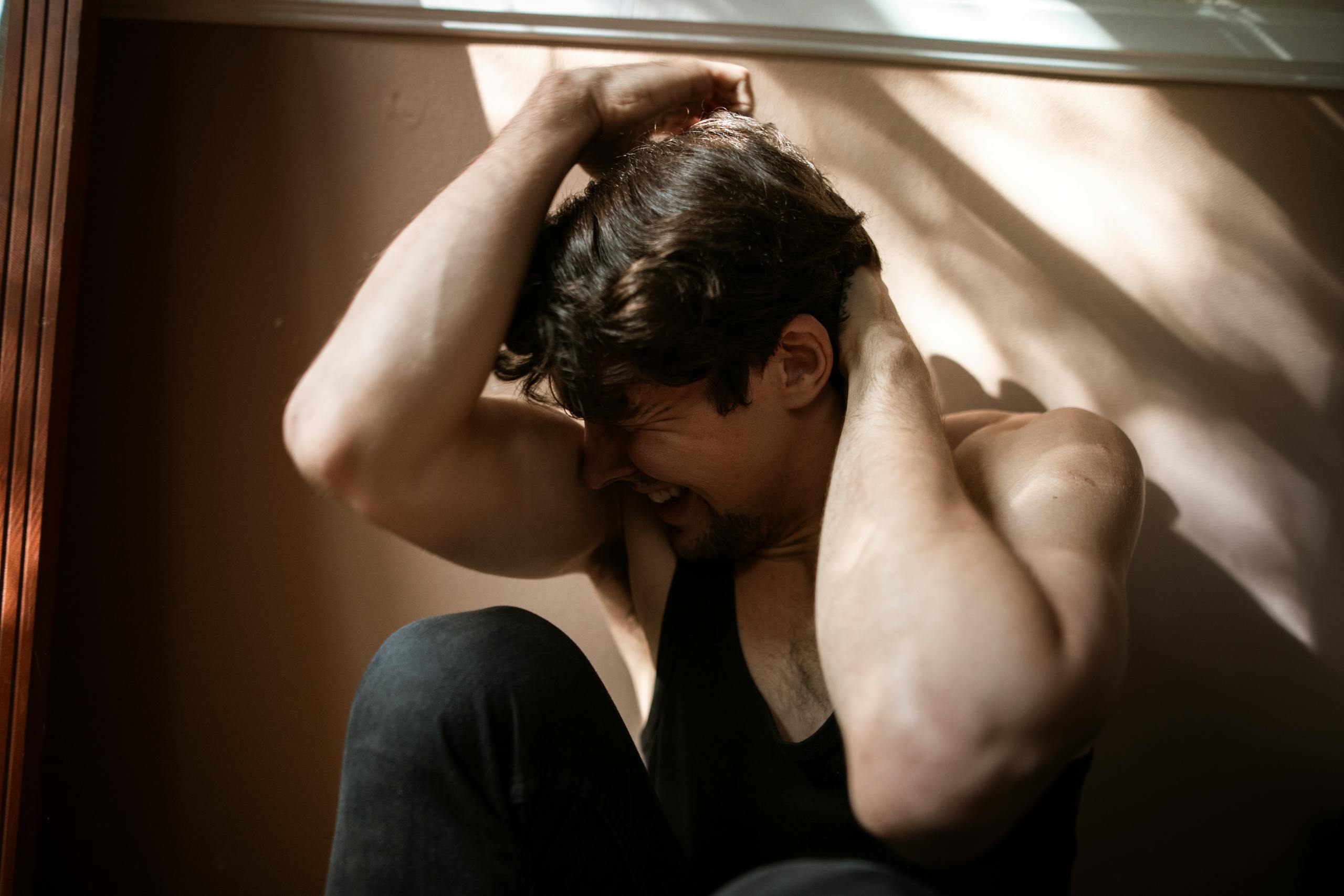
This is the practical problem that most hobby lists skip over. When anxiety is high, the activation energy required to start anything new feels enormous. You read about the benefits of watercolor or hiking and think, yes, that sounds good, and then you don’t do it. Not because you’re lazy. Because anxiety makes initiation genuinely hard.
A few things that actually help:
Make the barrier to entry absurdly low. Don’t buy supplies until you’ve tried the hobby with whatever you already have. Don’t sign up for a class until you’ve practiced at home. Don’t commit to a schedule until you’ve done the thing once. Anxiety thrives on anticipatory pressure. Remove as much of it as possible from the front end.
Time-box your first attempts. Tell yourself you’ll try it for fifteen minutes and then stop if you want to. Fifteen minutes is almost always enough to get past the initial resistance and into the absorbing middle of an activity. And if it isn’t, you’ve only lost fifteen minutes.
Choose something you’re genuinely curious about, not something you think you should be doing. Anxiety already fills your life with obligations. A hobby that feels like another obligation will never compete successfully with the couch. Genuine curiosity creates its own momentum.
Don’t try to make the hobby do too much. It doesn’t need to cure your anxiety, become a side business, or be something you’re eventually great at. It just needs to give you somewhere to put your attention that isn’t the inside of your anxious mind. That’s enough. That’s actually a lot.
A clinical review on anxiety management approaches highlights that behavioral activation, simply doing things that engage you, is one of the most effective components of anxiety treatment. You don’t need a therapist to prescribe it. You just need to start somewhere small.
There’s also something worth naming about the relationship between anxiety and the body’s threat response. Research on stress physiology points to the value of regular, gentle activation of the parasympathetic nervous system, which is exactly what calming hobbies provide when practiced consistently. The benefit compounds over time. The first session of anything rarely feels significant. The fifteenth one often does.
Finally, be honest about the difference between activities that calm you and activities that merely distract you. Scrolling your phone is distraction. It doesn’t build anything, it doesn’t produce flow, and it doesn’t leave you feeling better than when you started. Most introverts with anxiety already know this, but the pull toward passive distraction is strong when initiation feels hard. A hobby requires a little more from you, and gives considerably more back.
If you want to go deeper on the intersection of introversion and mental health, the full range of topics from sensory sensitivity to emotional regulation to anxiety management is covered in our Introvert Mental Health Hub. It’s a good place to keep exploring once you’ve found a hobby that’s starting to work for you.
About the Author
Keith Lacy is an introvert who’s learned to embrace his true self later in life. After 20 years in advertising and marketing leadership, including running agencies and managing Fortune 500 accounts, Keith now channels his experience into helping fellow introverts understand their strengths and build fulfilling careers. As an INTJ, he brings analytical depth and authentic perspective to every article, drawing from both professional expertise and personal growth.
Frequently Asked Questions
What are the best hobbies for introverts with anxiety?
The best hobbies for introverts with anxiety are ones that offer solitary focus, gentle physical engagement, or creative absorption without social pressure or performance stakes. Writing, drawing, hiking, reading fiction, playing an instrument, gardening, and swimming consistently rank well because they produce flow states that interrupt anxious rumination while requiring no social energy. The specific hobby matters less than whether it genuinely interests you and whether it can be done at your own pace, on your own terms.
Can hobbies actually reduce anxiety, or are they just distraction?
Hobbies that produce genuine flow states do more than distract. They interrupt the brain’s default mode network, which is responsible for the rumination loops that characterize anxiety. Creative hobbies give anxiety an exit point by externalizing internal experience. Physical hobbies activate the parasympathetic nervous system, signaling safety to the body. Over time, regular engagement with absorbing activities builds a sense of competence and identity that isn’t dependent on social validation, which is protective against anxiety in a meaningful, lasting way.
How do I start a hobby when my anxiety makes everything feel overwhelming?
Make the barrier to entry as small as possible. Use what you already have rather than buying supplies. Try the activity for fifteen minutes before committing to anything further. Choose something you’re genuinely curious about rather than something you think you should enjoy. Avoid putting pressure on the hobby to be therapeutic or productive. The goal at the start is simply to give your attention somewhere interesting to go. Momentum builds from there, but only if the initial friction is low enough to actually begin.
Are social hobbies ever a good idea for introverts with anxiety?
They can be, depending on the format and your current anxiety level. Low-key, interest-based social hobbies, like online communities around a specific topic, small book clubs, or classes where the activity itself is the focus rather than socializing, can provide connection without overwhelming social demands. The distinction to watch for is whether the social element energizes or depletes you after the fact. If you consistently leave feeling worse, the format isn’t right, even if the activity itself appeals to you. Solitary versions of the same hobby are always a valid alternative.
Why do introverts with anxiety sometimes quit hobbies that should be relaxing?
Perfectionism is usually the culprit. Anxious introverts often abandon hobbies not because the activity is wrong for them but because their internal critic makes the learning curve feel like failure. The same high standards that drive professional achievement make it difficult to be a genuine beginner at anything. Choosing hobbies with no objective standard of success, journaling, walking, cooking for yourself, reduces the perfectionism’s grip. Giving yourself explicit permission to be bad at something for as long as it takes is often the most important step in sustaining a hobby long enough to benefit from it.