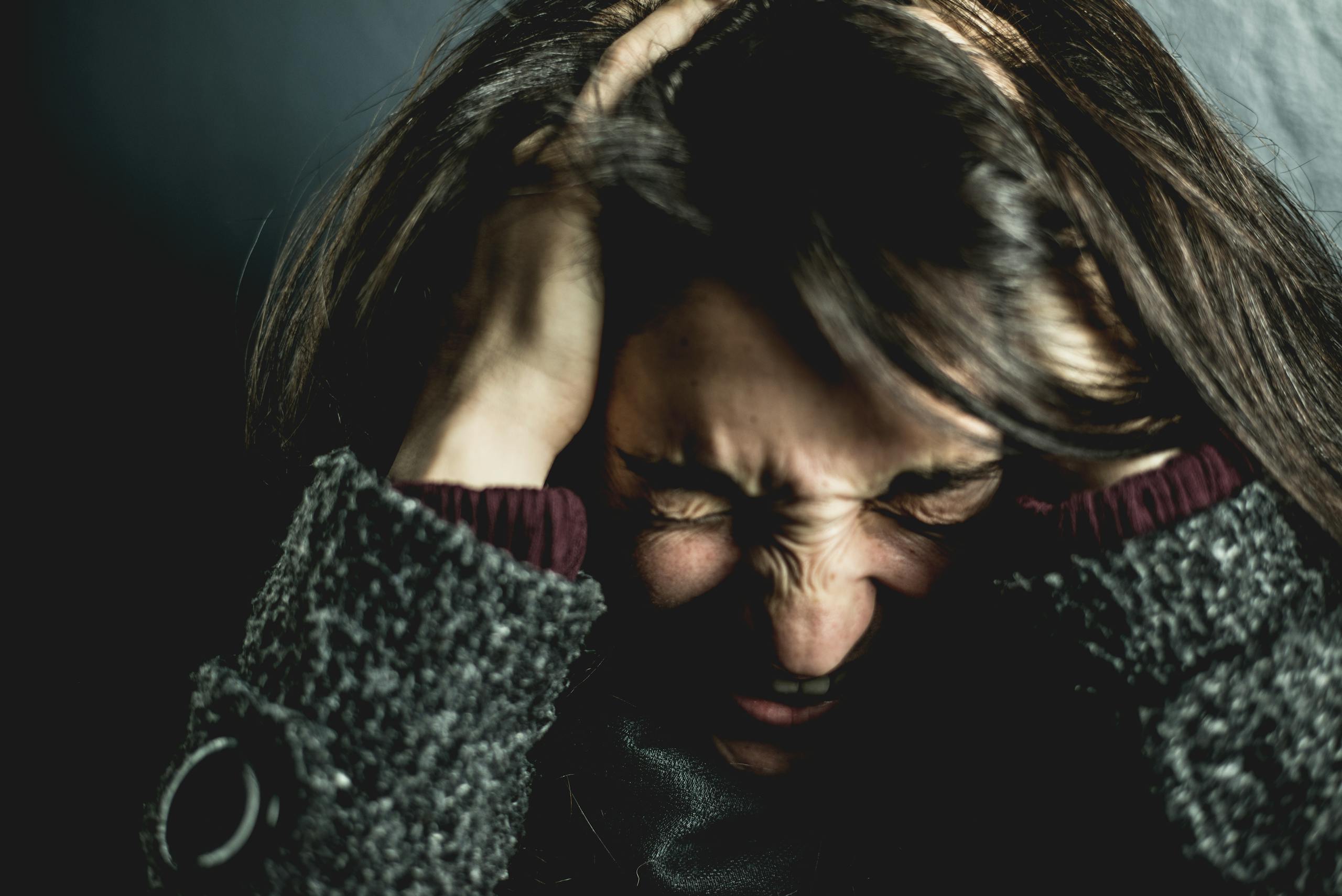
Artistic burnout happens when the creative work that once felt meaningful starts to feel hollow, exhausting, or simply impossible. It’s not a lack of talent or motivation. It’s what occurs when the internal well that feeds creative output runs dry, often after months or years of giving more than you’re able to replenish.
For introverts especially, artistic burnout carries a particular weight. Creative work is often our most honest form of self-expression, the place where we process the world on our own terms. When that space stops working, it can feel like losing something essential.
Artistic burnout sits within a broader landscape of stress and depletion that many introverts carry quietly. If you’ve been feeling this in other areas of your life too, our Burnout & Stress Management Hub covers the full range of how this shows up and what you can actually do about it.
Why Does Artistic Burnout Hit Introverts Differently?
Creative work and introversion are deeply intertwined for a lot of us. Many introverts gravitate toward artistic expression precisely because it offers what the external world rarely does: a place to be fully internal, fully honest, and fully in control of the pace.
Career Coaching for Introverts
One-on-one career strategy sessions with Keith Lacy. 20 years of Fortune 500 leadership as an introvert, now helping others build careers that work with their wiring.
Learn More50-minute Zoom session · $175
That connection is also what makes burnout so disorienting. When you lose access to your creative work, you don’t just lose a hobby or a job function. You lose the mechanism you use to process everything else.
I ran advertising agencies for over two decades, and creative output was the currency of everything we did. I managed teams of writers, designers, and art directors, and I watched a particular pattern repeat itself with the introverted creatives on my staff. They’d produce extraordinary work for long stretches, often quietly exceeding what the more vocal team members delivered. Then, without much warning, they’d go flat. Not lazy, not disengaged, just empty. The work would become technically correct but somehow lifeless.
At the time, I didn’t fully understand what I was seeing. Looking back, I recognize it clearly. Those were people whose internal creative reserves had been depleted by external demands: client feedback cycles, open-plan offices, mandatory brainstorming sessions, and the constant performance of enthusiasm that agency culture requires. They weren’t burned out on creativity itself. They were burned out on the conditions surrounding it.
That distinction matters enormously when you’re trying to recover.
What Does Artistic Burnout Actually Feel Like From the Inside?
The clinical markers of burnout, exhaustion, cynicism, reduced efficacy, were first mapped in professional contexts. But artistic burnout has its own texture that doesn’t always map cleanly onto those categories. Research published in PubMed Central examining burnout across different populations points to how the experience of depletion varies significantly depending on what kind of work a person finds most meaningful.
For creatives, burnout often shows up as a kind of interior silence where there used to be noise. Not peaceful silence. The anxious, hollow kind.
You sit down to write, paint, compose, or design, and nothing comes. Or something comes, but it feels borrowed, like a pale copy of work you used to make. You start comparing everything you produce to what you made before the burnout set in, and the comparison always feels devastating.
There’s also a grief component that often goes unacknowledged. Creative work is personal in a way that most professional work isn’t. When it stops flowing, many people experience something that genuinely resembles loss. I’ve talked to introverts who described artistic burnout as feeling like a version of themselves had gone missing.
Other signs tend to include avoidance of the creative medium entirely, a sudden inability to tolerate imperfection in your own work, irritability when others talk about their creative projects, and a creeping belief that you were never actually talented to begin with. That last one is particularly cruel and particularly common.
Worth noting: if you’re also a highly sensitive person, the emotional weight of artistic burnout can be amplified significantly. The experience of HSP burnout shares a lot of overlap with artistic burnout, and recognizing which layer you’re dealing with can help you address both more clearly.

How External Pressure Drains the Creative Well
One of the most persistent myths about artistic burnout is that it’s caused by doing too much creative work. In my experience, that’s rarely the full picture. More often, it’s caused by doing creative work under conditions that are fundamentally incompatible with how introverted, internally-driven people actually create.
Creativity for introverts is largely an inside job. It requires time in your own head, the freedom to follow a thought without interruption, and enough quiet to hear what’s actually emerging. When those conditions are consistently absent, the work suffers. Not because you’ve lost your ability, but because the environment is actively working against the process.
In the agency world, I watched this happen on a structural level. We’d bring in talented introverted creatives, put them in open offices, run them through group ideation sessions, and then wonder why their best ideas always seemed to come in late at night or on weekends. The answer was obvious in retrospect. They needed space that the workday never gave them.
The pressure to perform creativity on demand is exhausting for anyone. For people who process internally and need time to develop ideas before sharing them, it’s particularly draining. Psychology Today’s piece on introversion and the energy equation captures something important here: introverts don’t just prefer solitude, they require it to restore the cognitive and emotional resources that external engagement depletes.
Add to this the social performance demands that often accompany creative work, pitching ideas, defending concepts, networking, collaborating loudly, and you have a recipe for depletion that has nothing to do with the creative work itself. The stress accumulates in layers. Many introverts I’ve spoken with describe a kind of social exhaustion that bleeds directly into creative paralysis. If you’ve noticed this pattern in yourself, the connection between stress and social anxiety is worth examining carefully.
The Perfectionism Trap Inside Artistic Burnout
There’s a particular flavor of artistic burnout that’s driven less by exhaustion and more by the weight of your own standards. I’ve seen this in myself and in the creative professionals I’ve worked with over the years. You stop creating not because you’re tired, but because you’ve become afraid.
Perfectionism and introversion have a complicated relationship. Introverts often do their best thinking in private, which means they’re used to arriving at a finished thought before sharing it. Applied to creative work, this tendency can become a trap. Nothing feels ready. Nothing measures up to the internal vision. And so the work either never starts or never gets finished.
I went through a version of this myself in my early years running an agency. As an INTJ, I had a very clear picture in my mind of what excellent creative work looked like, and I held my own contributions to that standard relentlessly. At one point, I stopped writing entirely, telling myself I was “too busy” when the truth was I was afraid the work wouldn’t match what I knew it could be.
What broke the pattern, eventually, was separating the act of creating from the act of evaluating. Those are two different cognitive modes, and trying to run them simultaneously is one of the most reliable ways to shut down creative output. The internal critic and the internal creator cannot occupy the same space at the same time.
Frontiers in Psychology has published work examining how self-critical rumination affects creative performance, and the findings align with what many creatives report experientially: the harder you push yourself to produce perfect work, the less able you become to produce any work at all.
What Recovery From Artistic Burnout Actually Requires
Recovery from artistic burnout is not the same as taking a vacation. A week off rarely touches the deeper issue, which is that the conditions that caused the burnout are usually still waiting for you when you return.
Genuine recovery tends to happen in phases, and it’s rarely linear.
The first phase is permission. Permission to stop producing. This sounds obvious, but for people whose identity is tied to creative output, it’s genuinely difficult. Many introverted creatives I’ve known carry a quiet shame about their burnout, as if the inability to create reflects something broken in them rather than something depleted. Releasing that shame is not a small thing.
The second phase is input without output. Reading, looking, listening, absorbing, without any pressure to respond or produce. This is where the well begins to refill. The American Psychological Association’s resources on relaxation techniques touch on how deliberate, low-demand engagement can begin to restore the nervous system, and creative recovery works on a similar principle.
The third phase is low-stakes experimentation. Not producing work for anyone, not working toward a goal, just playing. This is where most introverted creatives struggle most, because play feels frivolous and unproductive. But it’s where creative instincts tend to wake back up.
I had a creative director at my agency, an INFP, who went through a severe artistic burnout after a particularly brutal campaign cycle. She stopped designing entirely for about three months. What eventually brought her back wasn’t a pep talk or a deadline. It was a sketchbook she kept entirely private, where nothing she drew was ever meant to be seen. The absence of an audience was what made it possible to create again.
That story has stayed with me. Introverts often create best when they’re not performing creativity for someone else’s approval. Recovery frequently means returning to that private, unobserved space where the work belongs only to you.
How You Structure Your Life Shapes Whether Burnout Returns
Recovering from artistic burnout once is meaningful. Building a life where it’s less likely to recur is the deeper work.
A lot of introverted creatives operate in environments that were designed by and for extroverts. Open offices, collaborative workflows, constant feedback loops, and performance metrics tied to visible output. These structures are genuinely hostile to the way many introverts create best, and no amount of personal resilience fully compensates for a structurally mismatched environment.
Part of what I had to figure out in my own career was how to shape my work conditions around my actual creative process rather than constantly adapting my process to fit the conditions. As an agency CEO, I had more control over that than most people do. But even in constrained environments, there are usually more levers available than we initially recognize.
Protecting blocks of uninterrupted time is one. Setting clearer boundaries around collaborative demands is another. Some introverted creatives have found that shifting toward more independent work structures, including freelance arrangements or solo creative projects, gives them enough autonomy to sustain their output without the constant drain. If you’re considering that kind of shift, it’s worth looking at what low-stress creative side work might look like as a starting point.
Self-care also plays a structural role here, though not in the way the word is usually used. Real self-care for introverted creatives isn’t bubble baths and productivity hacks. It’s building genuine recovery time into your regular rhythms, not as a reward for working hard enough, but as a non-negotiable condition of being able to work at all. The self-care approaches that actually work for introverts tend to be quieter and more consistent than the dramatic reset fantasies most burnout advice promotes.

The Social Dimension Nobody Talks About
Artistic burnout is often discussed as a purely individual experience, something happening inside one person’s creative process. But the social context around creative work plays a significant role that deserves more attention.
Many introverted creatives work in environments that require a lot of social performance alongside the creative work itself. Pitching ideas, attending networking events, participating in team critiques, presenting work to clients. Each of these interactions carries an energy cost that compounds over time.
There’s a specific kind of depletion that comes from having to be socially “on” in order to do work that is fundamentally private and internal. It creates a constant friction between how you actually create and what the professional context demands from you. Over time, that friction is exhausting.
I remember the particular dread I felt before large client presentations in my agency years. Not because I wasn’t prepared, I was almost always over-prepared, but because the performance of enthusiasm and accessibility that those rooms required felt genuinely costly. Psychology Today’s piece on small talk and introverts gets at something real here: the social rituals surrounding professional creative work can be as depleting as the work itself, sometimes more so.
One thing worth paying attention to is how much of your creative depletion is actually social depletion in disguise. If you notice that your burnout intensifies after high-interaction periods, that’s a signal worth taking seriously. It doesn’t mean you need to eliminate collaboration. It means you need to build in proportional recovery time afterward.
Even smaller social stressors accumulate. Mandatory team activities, forced brainstorming formats, and the kind of performative group participation that many workplaces treat as culture-building can quietly drain introverted creatives in ways that are hard to articulate. The question of whether activities like icebreakers are genuinely stressful for introverts might seem minor, but these small repeated drains add up across a workweek.
Recognizing When You Need Help Beyond Self-Recovery
Most of what I’ve described so far involves things you can work through on your own or with adjustments to your environment and habits. But artistic burnout can sometimes be a surface expression of something deeper, and it’s worth being honest with yourself about when that might be the case.
If your creative depletion is accompanied by persistent low mood, loss of interest in things beyond your creative work, difficulty sleeping, or a sense of hopelessness that doesn’t lift, those are signs worth taking to a professional. Burnout and depression share overlapping symptoms and can reinforce each other, and the distinction matters for how you address it.
PubMed Central research on burnout and its relationship to psychological health underscores that prolonged burnout can shift from a recoverable state to something that requires more structured support. Knowing when you’ve crossed that line is not weakness. It’s accurate self-assessment.
One of the things I’ve found genuinely useful is paying attention to how stress manifests before it becomes crisis. Introverts often internalize distress quietly and don’t always recognize the accumulation until they’re already deep in it. If someone in your life has been asking whether you’re feeling stressed, take that question seriously. People who know us sometimes see the signs before we do.
The grounding technique developed at the University of Rochester Medical Center, the 5-4-3-2-1 sensory method, is one practical tool that many people find helpful when anxiety or overwhelm is part of the burnout picture. It’s not a cure, but it can interrupt the spiral long enough to think more clearly.

Coming Back to Creative Work Without Recreating the Conditions That Burned You Out
There’s a particular risk in the recovery phase that I want to name directly, because it’s one I’ve seen repeatedly. Once the exhaustion lifts enough that creating feels possible again, there’s a strong pull to return to the same pace and the same conditions that caused the burnout in the first place.
This happens for a few reasons. Creative people often feel guilty about the period of non-production and try to compensate by working harder. There’s also a kind of relief at feeling creative again that can make you want to pour everything back into the work immediately. And if you’re working in a professional creative context, there’s usually external pressure waiting that doesn’t pause for your recovery.
Coming back sustainably means returning more slowly and more intentionally than feels natural. It means treating your creative capacity as a resource to be managed rather than a tap to be turned on fully the moment it starts working again.
A framework I found useful in my own work was thinking about creative energy the way I thought about financial reserves. You don’t spend everything the moment the account goes positive. You build a buffer. You protect against the conditions that depleted it before. You make structural changes, not just behavioral ones.
For introverted creatives, that often means being more deliberate about how much social and collaborative work you take on alongside the creative work. It means building in recovery time as a scheduled commitment rather than something that happens when you finally collapse. And it means being honest with yourself, and sometimes with others, about what you actually need to do your best work.
Academic work on creative burnout and recovery consistently points to autonomy and perceived control as significant factors in whether people recover and sustain their creative output over time. That finding aligns with what I’ve seen practically: introverts who have some genuine control over how and when they create tend to burn out less severely and recover more completely than those operating entirely within externally imposed structures.
You may not be able to redesign your entire work situation overnight. But identifying even one or two places where you can reclaim some control over your creative conditions is worth the effort. Those small structural shifts often matter more than any amount of motivational reframing.
Artistic burnout is one thread in a larger pattern that many introverts carry. If you want to explore more about how burnout and stress show up across different areas of life, the Burnout & Stress Management Hub brings together everything we’ve written on the subject in one place.
About the Author
Keith Lacy is an introvert who’s learned to embrace his true self later in life. After 20 years in advertising and marketing leadership, including running agencies and managing Fortune 500 accounts, Keith now channels his experience into helping fellow introverts understand their strengths and build fulfilling careers. As an INTJ, he brings analytical depth and authentic perspective to every article, drawing from both professional expertise and personal growth.
Frequently Asked Questions
What is artistic burnout and how is it different from regular burnout?
Artistic burnout is a state of creative depletion in which the work that once felt meaningful or energizing becomes hollow, difficult, or impossible to produce. It differs from general occupational burnout in that it often involves a grief component, because creative work is deeply tied to identity and self-expression. For introverts especially, losing access to creative output can feel like losing a primary way of processing the world, which adds an emotional weight that standard burnout frameworks don’t always capture.
Can you recover from artistic burnout completely?
Yes, most people recover from artistic burnout, though the timeline varies considerably and recovery is rarely linear. Complete recovery typically requires more than rest. It involves addressing the conditions that caused the depletion, whether those are environmental, relational, or internal. Many creatives report that returning to their work after burnout actually brings a different quality of engagement, often more deliberate and self-aware than before. what matters is not rushing the process or returning to the same pace and conditions that caused the burnout originally.
How do I know if I’m experiencing artistic burnout or just a creative block?
Creative blocks tend to be temporary and specific, often tied to a particular project or problem. Artistic burnout is broader and more persistent. It typically involves exhaustion, a loss of enthusiasm for creative work generally (not just one project), cynicism about your own abilities, and sometimes physical symptoms of stress. If you’ve been feeling depleted for weeks or months rather than days, if the feeling extends beyond one medium or project, and if rest doesn’t seem to touch it, burnout is the more likely explanation.
Why do introverts seem particularly vulnerable to artistic burnout?
Introverted creatives often face a structural mismatch between how they create best and the environments in which they’re expected to create. Collaborative workplaces, open offices, on-demand ideation, and constant social performance alongside creative work all drain the internal reserves that introverts rely on for creative output. Additionally, many introverts use creative work as a primary processing mechanism for emotional and cognitive experience, which means burnout in that space carries a heavier personal cost than it might for someone whose creative work is more externally oriented.
What’s the single most important thing to do when recovering from artistic burnout?
Give yourself genuine permission to stop producing without attaching shame to the pause. This is harder than it sounds for people whose identity is connected to creative output, but it’s foundational to everything else. Recovery cannot begin while you’re still running the internal narrative that the burnout is a failure. Once that pressure releases, the natural next step is filling the well through input rather than output: reading, observing, absorbing, without any requirement to respond or create. The creative impulse tends to return on its own once the conditions for it are restored.