Social anxiety disorder is not shyness with a clinical label attached. It is a persistent, often debilitating condition where the fear of social situations extends far beyond discomfort, shaping decisions, limiting careers, and quietly shrinking the world a person allows themselves to inhabit. For many introverts, the distinction between their natural temperament and something that genuinely needs attention can take years to sort out.
What makes this particularly hard to untangle is that introversion and social anxiety can look almost identical from the outside. Both involve pulling back from social situations. Both involve a preference for smaller gatherings. Yet the internal experience is entirely different, and understanding that difference is where real clarity begins.
If you’ve ever wondered whether what you feel in social situations is simply your wiring or something that deserves more attention, you’re asking exactly the right question.
Mental health sits at the center of so much of what I write about here. If this topic resonates with you, our Introvert Mental Health Hub covers the full range of emotional and psychological challenges that show up with particular intensity for people wired the way we are. It’s a good place to start if you’re trying to make sense of your inner landscape.
What Does Social Anxiety Disorder Actually Look Like in Real Life?
I want to walk through a composite case study here, built from the kinds of experiences I’ve heard described, read about, and in some ways recognized in myself over the years. I’ll call her Maya.
Career Coaching for Introverts
One-on-one career strategy sessions with Keith Lacy. 20 years of Fortune 500 leadership as an introvert, now helping others build careers that work with their wiring.
Learn More50-minute Zoom session · $175
Maya is 34, works in marketing, and by most external measures is doing fine. She has a job, a small circle of friends she trusts, and a life that functions. But for as long as she can remember, certain situations have felt almost impossible. Walking into a room where she doesn’t know anyone. Speaking up in meetings when she isn’t certain her contribution is perfect. Eating lunch in a shared kitchen at work. Making phone calls to people she doesn’t know well.
These aren’t minor inconveniences for Maya. They arrive with physical symptoms: a racing heart, shallow breathing, a flush of heat across her face. She spends hours before social events rehearsing conversations in her head, and then replays them for days afterward, cataloguing every moment she thinks she came across wrong. She has turned down promotions because they involved more public-facing responsibilities. She has canceled plans at the last minute more times than she can count, not because she didn’t want to go, but because the anticipatory dread made showing up feel impossible.
What Maya experiences aligns closely with what the American Psychological Association describes as the hallmarks of social anxiety: fear of scrutiny, avoidance behavior, and physical distress that goes well beyond ordinary nervousness. The DSM-5 criteria require that the fear be persistent, out of proportion to the actual threat, and that it meaningfully interferes with daily functioning.
Maya checks every one of those boxes. She has for years. And yet she spent most of her twenties telling herself she was simply introverted.
Why Do So Many Introverts Miss This in Themselves?
There’s a reason Maya’s story is so common. Introversion gives people a ready-made explanation for social withdrawal that feels accurate and, frankly, less frightening than a clinical diagnosis. Saying “I’m just an introvert” carries no stigma. It fits a cultural narrative about thoughtful, bookish people who prefer their own company. It’s a personality trait, not a problem.
I spent years doing exactly this. As an INTJ who ran advertising agencies for over two decades, I had built a professional identity around being decisive, strategic, and self-contained. When I felt dread before certain client presentations or avoided networking events whenever I could engineer a reason to skip them, I filed it under “introvert recharging.” It was a convenient explanation that let me sidestep a harder question.
The honest difference, as Psychology Today notes, is that introverts generally don’t want to attend large social gatherings and are fine with that. People with social anxiety want to participate, often desperately, but are blocked by fear. Maya didn’t avoid her company’s annual conference because she found it draining. She avoided it because the thought of walking into a ballroom full of colleagues made her physically ill for weeks in advance.
That distinction matters enormously, both for how you understand yourself and for what kind of support actually helps.

How Does High Sensitivity Complicate the Picture?
Maya also identifies as a highly sensitive person. She notices details others miss. She processes emotional undercurrents in rooms before anyone else names them. Loud environments exhaust her quickly, and she needs significant recovery time after intense social interactions. This layering of traits, introversion, high sensitivity, and social anxiety, is more common than most people realize, and it creates a particularly complex internal experience.
When you’re wired to pick up on everything around you, social situations carry more data than they do for most people. Maya isn’t just aware of what someone said. She’s tracking tone, micro-expressions, the slight shift in someone’s posture when she starts talking. That level of perceptual input is exhausting under the best circumstances. Add social anxiety to it, and every social encounter becomes a high-stakes performance review she’s conducting on herself in real time.
The sensory dimension of this is something I’ve written about in relation to HSP overwhelm and sensory overload. For people who process deeply, crowded or loud environments don’t just drain energy, they can trigger genuine physiological stress responses. When social anxiety is also present, those responses get amplified and then interpreted as evidence that the feared social situation is, in fact, dangerous.
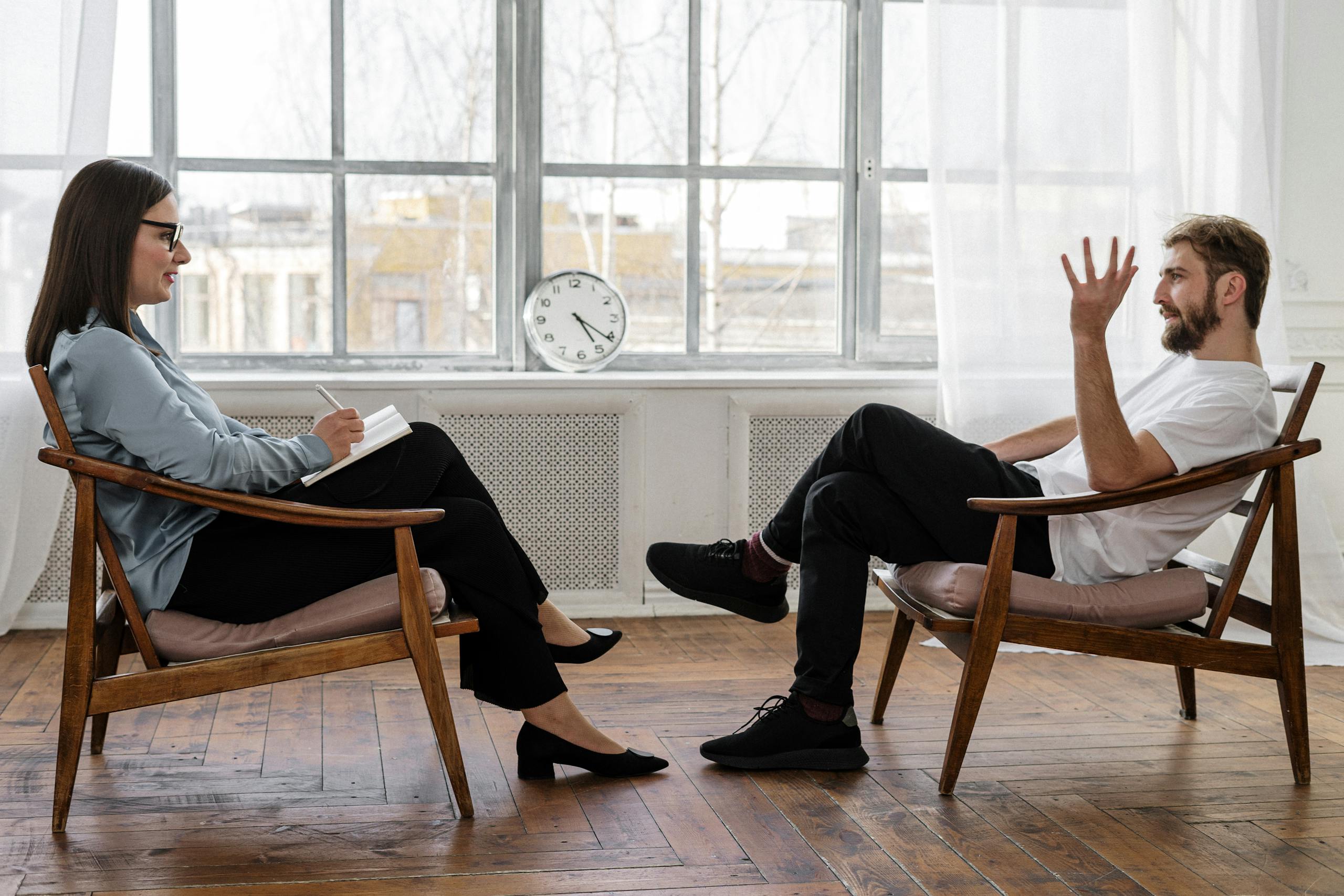
Maya described it to her therapist this way: “My body goes into alarm mode before I’ve even decided whether I’m scared. And then I look at my body going into alarm mode and I think, well, clearly something terrible is about to happen.”
That feedback loop, physical sensation confirming cognitive fear, is one of the most challenging aspects of social anxiety to interrupt. It’s also one of the reasons that HSP anxiety deserves its own careful attention, because the sensitivity that makes you perceptive also makes anxiety’s physical signals louder and harder to dismiss.
What Role Does Perfectionism Play in Keeping It Going?
One of the things that sustained Maya’s social anxiety for years without her fully recognizing it was perfectionism. Not the casual kind where you like things done well. The grinding, relentless kind where any social interaction that didn’t go flawlessly became evidence of fundamental inadequacy.
She would replay conversations from work meetings at 2 AM, convinced that a slightly awkward pause or an imprecise word choice had permanently damaged how her colleagues saw her. She set an impossible standard for social performance and then used every ordinary human stumble as confirmation that she was failing.
I recognize this pattern. In my agency years, I managed a creative director, an INFP, who was extraordinarily talented but paralyzed before client presentations. She would revise her decks until the night before, not because the work needed more polish, but because she was certain that any imperfection would expose her as a fraud. What I didn’t fully understand then was that her perfectionism wasn’t just a personality quirk. It was anxiety doing what anxiety does: raising the stakes high enough that retreat feels like the only sensible option.
The connection between perfectionism and anxiety is worth sitting with, particularly for sensitive people. HSP perfectionism tends to be rooted in a deep need to avoid criticism and the emotional pain that comes with it. When you feel everything intensely, the prospect of being judged harshly isn’t just uncomfortable. It feels genuinely threatening.
How Does the Fear of Rejection Shape Daily Decisions?
At the core of Maya’s social anxiety was something she took a long time to name directly: a profound fear of rejection. Not rejection in the dramatic, relationship-ending sense. Ordinary, everyday social rejection. Being ignored when she spoke up. Being left out of a lunch invitation. Noticing that someone seemed slightly less warm toward her than they had the week before.
These small moments carried enormous weight. She had built an elaborate system of behavioral rules designed to minimize the risk of rejection at every turn. She never initiated contact with colleagues unless she was certain they’d respond positively. She softened every opinion with so many qualifiers that her actual view became almost invisible. She stayed quiet in meetings rather than risk saying something that might invite disagreement.
The cruel irony is that these strategies, designed to protect her from rejection, were actually increasing her isolation. By making herself smaller and less visible, she was preventing the genuine connections that might have eased her anxiety over time.
Processing rejection is genuinely hard for people wired like Maya. The experience of HSP rejection goes deeper than it does for people who aren’t highly sensitive. What might roll off someone else’s shoulders can land with real force for someone who processes emotional experiences at this depth. That’s not weakness. It’s a different emotional architecture that requires different coping strategies.
What helped Maya wasn’t learning to care less about rejection. It was learning to distinguish between the fear of rejection and actual rejection, and to recognize that her nervous system was treating the former as if it were already the latter.
What Does Emotional Processing Look Like When Anxiety Is Present?
Maya’s emotional processing style added another layer to her experience. She didn’t just feel anxious in social situations and move on. She felt anxious, then analyzed the anxiety, then felt anxious about the analysis, then spent considerable time afterward processing what the whole experience meant about her as a person.
For people who feel deeply, emotions aren’t events that pass through quickly. They’re experiences that get examined from multiple angles, carried forward into subsequent situations, and woven into a larger narrative about the self. This is part of what makes HSP emotional processing so distinctive, and it’s also part of what makes anxiety particularly sticky for sensitive people.
In Maya’s case, the post-event processing that is natural to her temperament had been hijacked by anxiety. Instead of processing emotions in order to understand and integrate them, she was processing them in order to find evidence of how she had failed. Her natural depth of feeling had become a tool anxiety was using against her.
One of the shifts her therapist helped her make was recognizing that the processing itself wasn’t the problem. It was the direction the processing was pointed. Redirecting that same capacity for depth toward self-compassion rather than self-criticism turned out to be more useful than trying to process less.
How Did Empathy Make Social Situations More Exhausting?
Maya absorbed other people’s emotional states without trying to. Walking into a tense meeting, she would feel the tension in her own body before anyone said a word. When a colleague seemed upset, she carried that upset with her for the rest of the day. When a client was disappointed, she experienced the disappointment as if it were directed specifically at her, even when it wasn’t.
This is the complicated reality of HSP empathy. The same quality that made Maya genuinely attuned to the people around her, that made her good at her work and valued by people who knew her well, was also making every social environment feel like an emotional minefield. She was managing her own anxiety and absorbing everyone else’s emotional weather simultaneously.
I managed people like this throughout my agency years. Some of the most perceptive, emotionally intelligent people on my teams were also the ones who needed the most recovery time after difficult client interactions. At the time, I sometimes misread this as fragility. What I understand now is that they were doing significantly more emotional work in those rooms than anyone else, and the toll was proportional.
For Maya, learning to distinguish between her own emotional state and the emotional states she was picking up from others became a genuinely important skill. Not to become less empathetic, but to stop treating absorbed emotions as her own responsibility to fix or carry.

What Treatment Approaches Made a Difference for Maya?
Maya’s path toward managing her social anxiety wasn’t linear. She tried a few approaches before finding what worked, and the combination that helped her most was fairly specific to who she is.
Cognitive behavioral therapy was the foundation. Her therapist worked with her to identify the specific thought patterns that were sustaining her anxiety, particularly the catastrophizing around social evaluation and the post-event processing that always concluded she had failed. Harvard Health notes that CBT remains among the most well-supported approaches for social anxiety disorder, and Maya’s experience bore that out.
What made it work for her specifically was that her therapist understood the difference between introversion and anxiety and didn’t try to make her more extroverted. The goal was never to turn Maya into someone who loved networking events. It was to give her the capacity to choose whether to attend, rather than having the choice made for her by fear.
Exposure work was gradual and carefully calibrated. Maya started with situations that were mildly anxiety-provoking and worked upward, building evidence that the catastrophic outcomes she feared rarely materialized. Each successful experience, however small, chipped away at the certainty her anxiety had built around social danger.
She also found value in understanding the neurological dimension of what she was experiencing. Research published in PubMed Central has examined how the amygdala’s threat response functions in social anxiety, and understanding that her fear responses were partly automatic, not character flaws, gave her a different relationship to her own symptoms. She wasn’t weak. Her nervous system had learned a pattern that was no longer serving her, and patterns can change.
Mindfulness practices helped her interrupt the feedback loop between physical sensation and cognitive catastrophizing. Not to eliminate the physical symptoms, but to create enough space between sensation and interpretation that she could choose her response rather than simply react.
What Does Progress Actually Mean for Someone Like Maya?
Progress for Maya didn’t look like becoming a different person. It looked like having more choices.
She still prefers small gatherings to large ones. She still processes experiences deeply and needs recovery time after intense social interactions. She still feels more comfortable in one-on-one conversations than in group settings. None of that changed, and none of it needed to. Those are features of her temperament, not symptoms to be eliminated.
What changed was the anxiety layer on top of her natural introversion. She could now attend a work event without spending the preceding week in dread. She could speak up in a meeting without her heart rate spiking into panic territory. She could have an awkward interaction with a colleague and let it go by the end of the day rather than replaying it for a week.
There’s something worth naming here about the particular courage required to seek help when you’ve spent years explaining your experience to yourself as personality rather than condition. Maya had to revise a story she’d been telling herself for a long time. That’s not a small thing. It requires a kind of honesty that many people, introverts especially, find genuinely difficult.
The American Psychological Association is clear that anxiety disorders are among the most treatable mental health conditions. The gap between experiencing social anxiety and getting effective help for it tends to be wide not because treatment doesn’t work, but because people spend years not recognizing what they’re dealing with.
Maya’s story is, at its core, about that recognition. And about what becomes possible once you stop explaining away something that deserves attention.
What Should You Take From This Case Study?
If any part of Maya’s experience sounds familiar, I want to be direct with you: the overlap between introversion and social anxiety is real, and it genuinely complicates self-recognition. Findings published in PubMed Central have explored how introversion and social anxiety share surface similarities while representing fundamentally different psychological experiences, which is part of why the distinction takes so long to make in real life.
Introversion is a preference. Social anxiety is a fear response. Introversion might mean you’d rather spend Saturday evening at home with a book than at a party. Social anxiety means you want to go to the party but can’t, and the wanting and the not-going both cause significant distress.
If social situations are consistently producing fear rather than simply preference, if avoidance is narrowing your life in ways you didn’t choose, if the mental rehearsal and post-event replay are taking up significant cognitive and emotional space, those are worth taking seriously. Not as character flaws. As experiences that have effective treatments.
The INTJ in me wants to offer a framework, a clean set of distinctions that makes this easy to sort. But the honest version is messier. Most people who eventually identify social anxiety in themselves went through a period of genuine uncertainty, and that uncertainty is part of the process. What matters is staying curious about your own experience rather than defaulting to the most comfortable explanation.

There’s much more to explore on the intersection of introversion, sensitivity, and mental health. Our Introvert Mental Health Hub is a thorough resource if you want to go deeper into any of the threads this article has touched on.
About the Author
Keith Lacy is an introvert who’s learned to embrace his true self later in life. After 20 years in advertising and marketing leadership, including running agencies and managing Fortune 500 accounts, Keith now channels his experience into helping fellow introverts understand their strengths and build fulfilling careers. As an INTJ, he brings analytical depth and authentic perspective to every article, drawing from both professional expertise and personal growth.
Frequently Asked Questions
Can someone be both introverted and have social anxiety disorder at the same time?
Yes, and it’s more common than most people realize. Introversion is a personality trait characterized by a preference for less stimulating social environments. Social anxiety disorder is a clinical condition involving persistent fear of social evaluation and significant avoidance behavior. A person can be naturally introverted and also have social anxiety, which tends to make the experience more complex because the introversion provides a convenient explanation that can delay recognition of the anxiety layer underneath.
What is the most important difference between introversion and social anxiety?
The clearest distinction is the presence of fear versus preference. Introverts generally prefer less social stimulation and feel content with that preference. People with social anxiety often want to participate in social situations but are blocked by genuine fear, and the avoidance causes significant distress. An introvert who skips a party is typically fine with that choice. Someone with social anxiety who skips a party may spend days beforehand dreading it and days afterward replaying the decision.
How does high sensitivity interact with social anxiety disorder?
Highly sensitive people process sensory and emotional information more deeply than most, which means social environments carry more data and more intensity. When social anxiety is also present, the heightened awareness that comes with high sensitivity can amplify anxiety’s physical signals and make social situations feel even more overwhelming. The empathy and emotional attunement that are natural to sensitive people can also mean absorbing others’ emotional states, adding to the overall cognitive and emotional load of social interactions.
What treatment approaches tend to work well for social anxiety in introverts?
Cognitive behavioral therapy, particularly approaches that include gradual exposure to feared social situations, is among the most well-supported treatments for social anxiety disorder. For introverts, the most effective treatment typically doesn’t aim to change personality or increase extroversion. Instead, it focuses on reducing the fear response so that social choices can be made from preference rather than avoidance. Therapists who understand the difference between introversion and anxiety tend to produce better outcomes because they’re not treating introversion as a problem to solve.
How long does it typically take to see improvement with social anxiety treatment?
This varies considerably depending on the severity of the anxiety, the specific treatment approach, and individual factors. Many people working with CBT notice meaningful shifts within several months of consistent work. Progress tends to be gradual rather than sudden, with small wins accumulating over time. For highly sensitive people, treatment may need to move at a more careful pace because the exposure work can feel more intense. The goal isn’t a fixed endpoint but an ongoing expansion of what feels accessible.