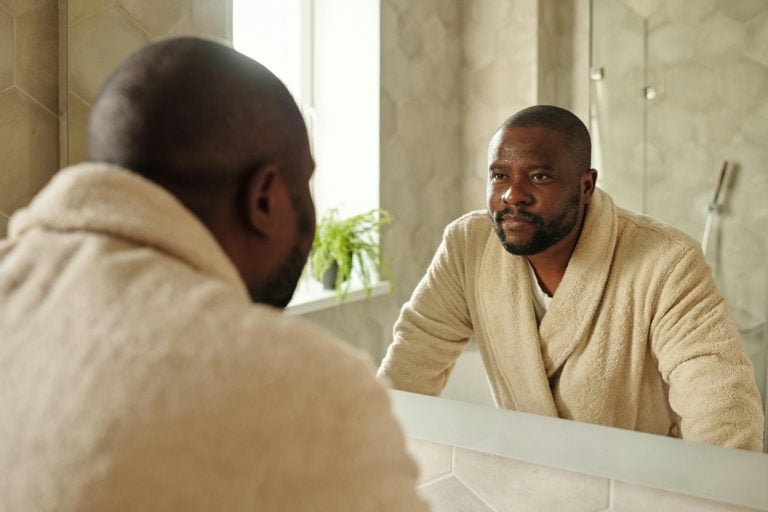
Do guys hate when girls overthink? Most men don’t hate overthinking itself, but they do find it exhausting when it pulls a relationship into repeated loops of anxiety, second-guessing, and unspoken fear. The frustration isn’t with a woman’s depth of feeling. It’s with what happens when that depth has nowhere to go.
That distinction matters more than most relationship advice acknowledges.

As an INTJ who spent two decades running advertising agencies, I processed everything internally before it ever left my mouth. Campaigns worth millions of dollars. Staffing decisions that kept me awake at 2 AM. Client relationships that could unravel in a single meeting. My mind moved constantly, turning scenarios over, anticipating failure, rehearsing conversations. I was, by any honest measure, a chronic overthinker. And I can tell you from experience that the problem was never the thinking. It was the silence around it.
If you’ve ever wondered whether your tendency to analyze, replay, and anticipate is pushing people away, you’re asking exactly the right question. But the answer is more nuanced than a simple yes or no. Our Introvert Social Skills and Human Behavior hub explores the full range of how personality shapes connection, and overthinking in relationships is one of the most misunderstood pieces of that picture.
What Men Are Actually Responding To When Overthinking Surfaces
There’s a version of overthinking that men genuinely struggle with, and it’s worth naming clearly. It’s not the internal processing. It’s when the processing spills outward in ways that feel accusatory, circular, or impossible to resolve. When a question gets asked six different ways hoping for a different answer. When a reassurance given on Monday has to be repeated by Thursday. When a minor moment from three weeks ago gets reintroduced as evidence of a pattern.
Career Coaching for Introverts
One-on-one career strategy sessions with Keith Lacy. 20 years of Fortune 500 leadership as an introvert, now helping others build careers that work with their wiring.
Learn More50-minute Zoom session · $175
That’s not a gender issue. That’s a communication issue. And it’s one that people of every personality type, every gender, and every relationship history can fall into.
What men are typically responding to isn’t the fact that a woman thinks deeply. Many men are drawn to that quality. They’re responding to the anxiety that overthinking produces when it has no outlet, no framework, and no resolution. Anxiety that leaks into conversations as interrogation. Silence that reads as distance. Reassurance-seeking that, paradoxically, erodes the security it’s trying to build.
According to the Psychology Today piece on introvert advantages, people who process deeply often bring genuine insight to complex situations. That capacity becomes a liability only when the emotional weight of the processing isn’t managed internally or expressed constructively.
Why Deep Thinkers Are More Prone to Relationship Overthinking
Not everyone overthinks at the same intensity. People who are naturally reflective, emotionally attuned, or anxiety-prone tend to run more mental simulations about social situations. They notice more. They remember more. They assign meaning to small signals that others might not even register.
For introverts especially, this is almost hardwired. The internal world is rich and detailed. A look across the dinner table, a slightly shorter text than usual, a pause before answering a question. These things get catalogued, cross-referenced, and interpreted. Sometimes accurately. Sometimes not.

I watched this dynamic play out on my own teams. One of my account directors, an INFJ, had an extraordinary ability to read client moods before anyone else in the room. She’d notice when a brand manager seemed distracted during a presentation and would adjust her pitch in real time. Remarkable skill. But in her personal life, that same sensitivity became a source of constant anxiety. She’d replay conversations, looking for evidence that a relationship was slipping. The same mind that made her exceptional at her job was making her miserable at home.
As her manager, I could see the gap clearly: her perception was often accurate, but her interpretation was filtered through fear rather than evidence. That gap between accurate perception and fear-driven interpretation is exactly where overthinking lives.
If you’re not sure whether your thinking style is rooted in introversion, anxiety, or something else, it can help to understand your personality type more clearly. Our free MBTI personality test is a good starting point for understanding how your mind naturally processes the world.
The Real Question Beneath “Do Guys Hate When Girls Overthink”
When women ask whether men hate overthinking, they’re usually asking something more personal: Am I too much? Is my mind a problem? Will my depth of feeling drive people away?
Those questions deserve a real answer, not a dismissive “just relax” or a performative “your feelings are always valid.” So consider this I’ve observed, both in relationships I’ve been part of and in the hundreds of professional relationships I’ve managed over two decades.
Depth of feeling is not the problem. Unmanaged anxiety expressed as emotional demand is the problem. And those two things are not the same.
A woman who thinks carefully about a relationship, who notices patterns, who processes meaning, is often a better partner, not a worse one. She brings awareness. She brings intentionality. She catches things early. The challenge comes when that processing gets hijacked by fear and starts producing behavior that feels controlling, suspicious, or exhausting to be around.
The Healthline breakdown of introversion versus social anxiety makes an important distinction that applies here: introversion is a personality trait, anxiety is an emotional state. They can coexist, but they’re not the same thing. Overthinking that comes from introversion looks different from overthinking that comes from anxiety. And the interventions that help are different too.
When Overthinking Becomes a Pattern Worth Addressing
There’s a meaningful difference between thinking deeply about a relationship and getting stuck in loops that produce suffering without producing insight. The first is a strength. The second is a signal worth paying attention to.
Signs that overthinking has crossed from reflection into something more disruptive include: replaying conversations looking for hidden meaning, seeking constant reassurance without feeling reassured, catastrophizing small moments into evidence of larger problems, and feeling unable to be present because your mind is always somewhere else in the relationship timeline.
These patterns are worth addressing, not because they make you unlovable, but because they make you unhappy. And there are real tools that help. Overthinking therapy is one avenue worth exploring, particularly if the pattern shows up consistently across relationships and not just in response to a specific situation or person.
I spent years managing my own version of this in professional settings. Before major client pitches, my mind would run worst-case scenarios with almost compulsive intensity. I’d rehearse every objection, every possible misunderstanding, every way the room could go wrong. Some of that was useful preparation. But past a certain point, it was just anxiety dressed up as diligence. Learning to recognize that line changed how I worked and, eventually, how I showed up in my personal life too.

How Attachment History Shapes Overthinking in Relationships
Overthinking in romantic relationships rarely comes from nowhere. It’s often shaped by earlier experiences where trust was broken, where love felt conditional, or where paying close attention to another person’s mood was a survival skill rather than a personality quirk.
People who grew up in unpredictable environments often become expert readers of subtle emotional signals. That skill protected them once. In adult relationships, it can misfire, reading threat into neutral situations, interpreting distance as rejection, and treating a partner’s need for space as evidence of something worse.
The PubMed Central literature on attachment patterns is clear on this: early relational experiences shape how we interpret ambiguity in adult relationships. When the past was unpredictable, the present feels more dangerous than it often is.
For women who’ve experienced betrayal specifically, the overthinking can intensify dramatically. A partner who was unfaithful doesn’t just damage trust in one relationship. It can rewire how you read every relationship after. If you’re working through that particular kind of overthinking, the piece on how to stop overthinking after being cheated on addresses that specific layer directly.
What Men Actually Want From Deeply Thoughtful Partners
This is where I want to push back against a narrative that does women a disservice. The framing of “do guys hate when girls overthink” implies that the solution is to think less, feel less, or process less. That’s not what most men actually want from a partner, and it’s not what creates lasting connection.
What men generally respond well to is directness. Not less depth, but more clarity about what the depth is producing. “I’ve been in my head about something and I want to talk it through” lands very differently than an hour of indirect questioning that leaves both people exhausted.
The ability to be a good conversationalist in relationships isn’t about being breezy or surface-level. It’s about translating your internal experience into something the other person can actually receive and respond to. That’s a learnable skill, and it’s one that benefits overthinkers enormously. The work on how to be a better conversationalist as an introvert covers this in practical terms that apply directly to relationship dynamics.
One of the best account managers I ever had was a woman who thought about everything. She’d come into our Monday morning meetings with pages of notes, having processed the week’s client calls from every angle. She was also the most direct communicator on my team. She’d thought everything through so thoroughly that when she spoke, she knew exactly what she wanted to say. Her depth wasn’t a liability. It was her edge. The difference was that she’d learned to translate her internal processing into clear, confident communication rather than letting it spill out as anxiety.
The Role of Self-Awareness in Breaking Overthinking Cycles
Self-awareness is the bridge between overthinking as a problem and overthinking as a strength. Without it, the mind runs its loops unchecked, producing anxiety and eroding connection. With it, you can observe the pattern, name it, and choose what to do with it.
This is easier said than practiced, which is why building self-awareness is a deliberate process rather than a passive one. Meditation and self-awareness practices are particularly useful for overthinkers because they train the mind to observe its own activity without being swept away by it. You’re not trying to stop the thoughts. You’re learning to watch them without automatically believing them.
For me, this came through years of forcing myself to pause before reacting in high-stakes professional situations. An angry client email would arrive, and my mind would immediately generate three catastrophic interpretations. I learned, slowly and imperfectly, to notice that first wave of interpretation and ask whether it was accurate or whether it was fear. That pause changed outcomes repeatedly.
The same pause works in relationships. When a partner’s message feels off, when a dinner conversation ends awkwardly, when someone goes quiet for a day, the mind wants to fill that space with meaning. Self-awareness lets you notice that impulse and ask: is this information, or is this anxiety?

Emotional Intelligence and Why It Changes Everything Here
Emotional intelligence, the ability to recognize, understand, and manage your own emotions while reading others accurately, is the single most useful capacity for overthinkers in relationships. It doesn’t eliminate the deep thinking. It directs it.
High emotional intelligence means you can recognize when your anxiety is speaking rather than your intuition. It means you can communicate a concern without it landing as an accusation. It means you can sit with uncertainty without demanding that your partner resolve it for you.
The PubMed Central research on emotional regulation consistently points to the same finding: people who can identify and name their emotional states handle relational stress significantly better than those who can’t. Naming what’s happening internally, even just to yourself, reduces its intensity and improves your ability to respond rather than react.
There’s a reason emotional intelligence has become central to how effective leaders operate. As someone who spent years on stages and in boardrooms working through the dynamics of high-stakes communication, I’ve seen how the same skills that make someone an effective emotional intelligence speaker in professional settings translate directly into healthier personal relationships. The core skill is the same: understand what’s happening emotionally before you act on it.
Building the Social Skills That Support Deeper Connection
Overthinking often creates a gap between what someone feels internally and what they’re able to express outwardly. The internal world is vivid and detailed. The external expression comes out sideways, as vague questions, as withdrawal, as behavior that confuses the people they’re closest to.
Closing that gap is partly about social skills, specifically the skills that let you translate internal experience into clear, honest communication. This isn’t about becoming someone who talks more or processes less. It’s about developing the tools to express what’s actually happening inside you in ways that invite connection rather than creating distance.
The Harvard Health guide on social engagement for introverts makes the point that introverts often communicate most effectively when they’ve had time to prepare and reflect. That’s not a weakness. It’s a different rhythm. Working with that rhythm rather than against it produces better outcomes in relationships, not worse ones.
Practical work on how to improve social skills as an introvert can be genuinely useful here, particularly around expressing needs clearly, managing conflict without shutting down, and staying present in conversations instead of retreating into your head mid-discussion.
I spent years in client-facing roles where my natural instinct was to process internally and speak only when I had something fully formed to say. That worked well in strategic contexts. In relationship contexts, it sometimes read as coldness or disinterest. Learning to narrate my process, to say “I’m thinking through this, give me a minute” rather than going silent, changed how people experienced me. It’s a small shift with a significant impact.
What Healthy Depth Looks Like in a Relationship
Depth in a relationship isn’t a problem to solve. It’s an asset to develop. success doesn’t mean become someone who thinks less or feels less. It’s to become someone whose depth enriches the relationship rather than destabilizing it.
Healthy depth looks like noticing something and naming it calmly instead of letting it build until it explodes. It looks like processing your fears before bringing them to a partner, so you’re sharing an insight rather than offloading anxiety. It looks like trusting your own perception enough to raise concerns directly, and trusting your partner enough to believe their response.
The Psychology Today exploration of introverts as relational partners notes that people who process deeply often form fewer but more meaningful connections, and that those connections tend to be characterized by unusual levels of loyalty and attentiveness. Those qualities are gifts in a relationship. The work is learning to express them in ways that land as gifts rather than as pressure.
The PubMed Central literature on personality and relational outcomes supports what many introverts experience firsthand: personality traits don’t determine relationship success. Communication patterns do. And communication patterns can be changed.
If you’ve found this exploration useful, there’s much more to work through in our complete Introvert Social Skills and Human Behavior hub, covering everything from conversation dynamics to emotional regulation to building connection on your own terms.
About the Author
Keith Lacy is an introvert who’s learned to embrace his true self later in life. After 20 years in advertising and marketing leadership, including running agencies and managing Fortune 500 accounts, Keith now channels his experience into helping fellow introverts understand their strengths and build fulfilling careers. As an INTJ, he brings analytical depth and authentic perspective to every article, drawing from both professional expertise and personal growth.
Frequently Asked Questions
Do guys actually hate it when women overthink in relationships?
Most men don’t hate overthinking itself. What tends to create friction is when overthinking produces repeated reassurance-seeking, circular conversations, or anxiety that gets directed at a partner as suspicion or emotional demand. Depth of thought and emotional attentiveness are qualities many men value. The challenge arises when those qualities are driven by unmanaged anxiety rather than genuine reflection.
Is overthinking in relationships a sign of a deeper problem?
Not always. Some people are naturally more reflective and process experiences more thoroughly than others. That’s a personality trait, not a disorder. Overthinking becomes worth addressing when it consistently produces suffering, when it interferes with your ability to be present, or when it’s rooted in anxiety or past trauma rather than the current relationship. If the pattern shows up across multiple relationships regardless of circumstances, that’s a signal worth exploring with a therapist or counselor.
How can overthinkers communicate better with their partners?
The most effective shift is learning to translate internal processing into direct communication. Rather than asking indirect questions hoping to surface a concern, name the concern clearly. Rather than seeking reassurance repeatedly, work toward building internal security that doesn’t depend entirely on a partner’s responses. Developing conversational skills around expressing needs, raising concerns calmly, and staying present in difficult moments makes a significant difference in how depth gets received by a partner.
What’s the difference between healthy reflection and harmful overthinking?
Healthy reflection produces insight and moves toward resolution. You think something through, reach a conclusion, and act on it or let it go. Harmful overthinking runs in loops without resolution, replaying the same scenarios looking for different answers, seeking reassurance that doesn’t stick, and generating anxiety rather than clarity. The key marker is whether the thinking is producing useful information or just producing more fear.
Can overthinking be managed without changing your personality?
Absolutely. Managing overthinking isn’t about becoming a different kind of thinker. It’s about developing the self-awareness to notice when your thinking is serving you and when it’s running on anxiety. Practices like mindfulness, journaling, therapy, and intentional communication skills all help without requiring you to suppress your natural depth. Many people find that addressing overthinking actually allows their genuine thoughtfulness to come through more clearly, because it’s no longer tangled up with fear.