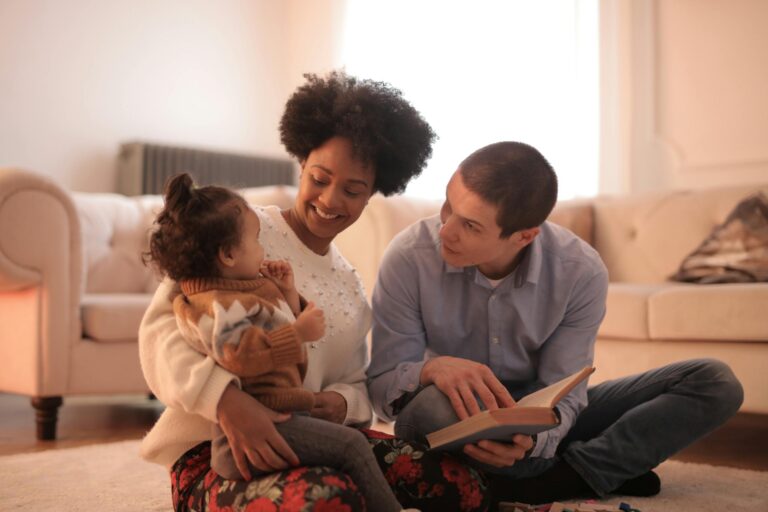

Childhood meditation gives children a structured way to process emotion, build focus, and develop self-awareness during the years when those capacities are still forming. Even a few minutes of daily practice can help a child recognize what they’re feeling before it overwhelms them. For introverted children especially, meditation isn’t a novelty. It’s a language they already speak.
My own relationship with stillness started young, though nobody called it meditation. I’d sit at the edge of the yard after school, watching clouds shift, letting the noise of the day settle before I walked inside. I didn’t know then that I was doing something useful. I just knew it helped. Decades later, running a mid-sized advertising agency with a team of thirty, I’d close my office door for ten minutes before a big client presentation and do the same thing. Same instinct, different context.
What I’ve come to understand, both through that personal experience and through watching the children of friends and colleagues grow up, is that we underestimate how much children need that kind of intentional quiet. We hand them devices, pack their schedules, and wonder why they fall apart at the end of the day. Childhood meditation offers something genuinely different, and it’s worth understanding what it actually does and how to introduce it in a way that sticks.
If you’re exploring this topic as a parent who also happens to be highly sensitive or introverted, you’ll find a lot of connected ideas in our Introvert Family Dynamics and Parenting hub, which covers the full range of how introverted and sensitive parents raise children who are wired the same way.
Why Are So Many Parents Turning to Childhood Meditation Right Now?
There’s a noticeable shift happening in how parents think about emotional wellness for their kids. It’s not just a wellness trend. It’s a response to something real. Children today are processing more ambient stress than previous generations, and the emotional tools we’ve traditionally given them, talking it out, taking a break, counting to ten, often aren’t enough.
What’s your personality type?
Take our free 40-question assessment and get a detailed personality profile with dimension breakdowns, context analysis, and personalised insights.
Discover Your Type8-12 minutes · 40 questions · Free
Meditation offers a different kind of tool. It’s not about suppressing emotion or forcing calm. It’s about building the internal capacity to observe what’s happening inside without being swept away by it. For children who are naturally introspective, that capacity can feel like finally having a name for something they’ve always done. For children who tend to externalize, it offers a path inward they might never find on their own.
The American Psychological Association has documented how chronic stress in childhood affects emotional regulation and cognitive development in lasting ways. Meditation doesn’t erase stress, but it builds a nervous system that handles stress more gracefully over time. That’s not a small thing. That’s a foundational skill.
I think about the junior account managers I hired fresh out of college over the years. The ones who struggled most weren’t the ones who lacked intelligence or ambition. They were the ones who had never developed any relationship with their own inner state. They’d hit a wall of client pressure or creative conflict and completely lose themselves in it. Watching that pattern repeat itself across years and teams made me realize how early emotional regulation is either built or neglected.
What Does Childhood Meditation Actually Look Like in Practice?
One of the biggest misconceptions about meditation for children is that it has to look like adult meditation. It doesn’t. A seven-year-old isn’t going to sit in lotus position for twenty minutes focusing on breath. And that’s fine. Effective childhood meditation meets children where they are developmentally.
For younger children, ages four through seven, guided visualization tends to work well. You might invite them to imagine a favorite place, a beach, a forest, a cozy blanket fort, and walk them through what they’d see, hear, and feel there. The goal isn’t emptying the mind. It’s giving the mind a gentle, contained space to rest in. Breath awareness can be introduced through playful cues, like asking a child to breathe in as if smelling cookies and breathe out as if blowing out birthday candles.
For older children, ages eight through twelve, body scan meditations become more accessible. You guide them through noticing different parts of their body without judgment, simply checking in. This builds the kind of interoceptive awareness that helps children recognize when they’re getting anxious or overwhelmed before it escalates. Published work in PubMed Central has explored how mindfulness-based practices in school settings support attention and emotional regulation in this age group, with meaningful effects on how children handle difficult moments.
Teenagers can handle more traditional breath-focused or open awareness practices, though they often need the rationale explained before they’ll engage. Telling a fourteen-year-old to “just breathe” rarely lands. Explaining that meditation builds the part of the brain responsible for decision-making and emotional control? That tends to get more traction.

How Does an Introverted Child Experience Meditation Differently?
Introverted children often take to meditation with surprising ease, and I think the reason is that they’re already doing a version of it. They process internally. They notice things quietly. They need time alone to recharge. Meditation formalizes something that’s already part of their natural rhythm.
What meditation adds for an introverted child is structure and intention. Instead of retreating into their inner world in a vague, unfocused way, they learn to direct that inward attention with purpose. They learn to observe their thoughts without getting lost in them, which is genuinely useful for children who tend toward overthinking or rumination.
The National Institutes of Health has noted that introversion has roots in temperament that appear early in childhood, suggesting that introverted children aren’t just going through a phase. They’re wired a particular way, and the tools we give them should honor that wiring rather than work against it.
As an INTJ, I’ve always processed the world through a quiet internal filter. My most useful thinking has never happened in meetings or brainstorms. It’s happened in the margins, in the car, in the ten minutes before sleep. What I didn’t have as a child was any framework for that kind of processing. I just knew I was “too quiet” or “too in my head.” Meditation would have given me a way to understand that tendency as a strength rather than a flaw to manage.
Parents who are themselves highly sensitive often find this dynamic especially meaningful. If you’re raising a child who shares your sensitivity and introspective nature, reading about HSP parenting and raising children as a highly sensitive parent can help you understand how to support that child without projecting your own experience onto theirs.
Can Childhood Meditation Help With Anxiety and Emotional Dysregulation?
Anxiety in children often looks different than anxiety in adults. It can show up as physical complaints, stomach aches before school, headaches on Sunday evenings. It can look like defiance, rigidity, or an inability to transition between activities. It can also look like the child who seems fine but is quietly carrying an enormous amount of internal pressure.
Meditation doesn’t cure anxiety. That’s worth saying plainly. But it builds something that helps enormously with anxiety: the ability to notice a feeling without immediately reacting to it. That tiny gap between stimulus and response is where emotional regulation lives. Children who meditate regularly tend to develop that gap more reliably than those who don’t.
There’s also a self-knowledge component. Children who meditate learn to identify what they’re feeling with more precision. “I feel bad” becomes “I feel scared about tomorrow.” That specificity matters because vague emotional discomfort is much harder to address than a named feeling. Once a child can name what’s happening, they can start to work with it.
Understanding your child’s deeper personality structure can support this process. Tools like the Big Five personality traits assessment can offer useful insight into how a child tends to process emotion, engage with the world, and respond to stress, which informs how you might tailor a meditation practice for their specific temperament.
I want to be careful here, though. If a child is showing significant signs of anxiety, emotional dysregulation, or behavioral challenges, meditation is a complement to professional support, not a replacement for it. Some emotional difficulties in children have roots that go deeper than stress management, and family dynamics themselves play a significant role in how those challenges develop and persist. A thoughtful therapist or child psychologist is worth consulting when meditation alone isn’t enough.
How Do You Actually Start a Meditation Practice With Your Child?
Starting is usually the hardest part. Parents often overthink it, waiting until they’ve found the perfect app or the right time of day or the ideal cushion setup. None of that matters nearly as much as simply beginning.
A few principles that tend to make childhood meditation stick:
Keep it short. Three minutes is enough for a young child. Five minutes is plenty for a school-age child. Duration matters far less than consistency. A three-minute practice every day for a month does more than a twenty-minute practice twice a week.
Make it a shared practice when possible. Children are more likely to engage with meditation if they see a parent doing it too. You don’t have to meditate together every time, but modeling the practice communicates that it’s a real and valued thing, not just something you’re making them do.
Anchor it to an existing routine. After school, before bed, and after breakfast are natural anchor points. Tying meditation to something that already happens removes the decision-making friction. It just becomes part of what you do at that time.
Let the child have some ownership. Ask them what kind of meditation they want to try. Let them choose a sound, a position, a visualization. Children engage more deeply with practices they feel some agency over.
Don’t grade it. Some sessions will feel distracted and restless. Some will feel genuinely settled. Neither is better or worse. The practice is the practice. Helping a child develop a non-judgmental relationship with their own meditation experience is itself a form of emotional education.
When I was building my first agency, I had a creative director who was an ISFP, deeply empathic, visually gifted, and almost allergic to structure. She resisted every system I tried to put in place, until I stopped framing systems as constraints and started framing them as containers for her creativity. The same reframe works with children and meditation. It’s not a rule. It’s a container for their inner life.
What Role Does the Parent’s Own Emotional Wellness Play?
This is the part most parenting articles skip, and I think it’s the most important piece. A child’s capacity for stillness is profoundly shaped by the emotional environment they live in. A parent who is chronically dysregulated, scattered, or emotionally unavailable will find it much harder to help their child develop a meditation practice, not because of any failure of technique, but because the nervous system is contagious.
Co-regulation comes before self-regulation. Children learn to calm themselves by first being calmed by a regulated adult. Meditation practices work best when they’re embedded in a home environment where the adults are also doing their own inner work.
That’s not a judgment. It’s an invitation. Starting a meditation practice alongside your child is one of the most genuinely useful things you can do for both of you. The research published through PubMed Central on parent-child mindfulness interventions consistently shows that shared practices produce stronger outcomes than child-only programs.
Part of knowing yourself as a parent means understanding your own personality and how it shapes your parenting style. Something like the likeable person assessment can offer a useful mirror for how you come across in close relationships, including with your children, and where your natural warmth and connection tendencies lie.
I spent years running agencies without any real practice of self-regulation. I was good at appearing calm. I was not always calm. The distinction matters. My team could feel the difference, even when I thought I was hiding it well. Children are even more attuned to that gap between performance and reality. They feel what’s actually happening in the room, regardless of what we say.

How Does Childhood Meditation Connect to Long-Term Identity Development?
Here’s something I’ve thought about a lot over the years. The adults who seem most grounded in who they are, who have a clear sense of their values, their limits, their strengths, tend to share a common thread. They know what it feels like to be with themselves. Not performing, not producing, not reacting. Just being present to their own inner experience.
Childhood meditation builds that capacity early. A child who has spent years learning to observe their thoughts and feelings without being controlled by them arrives at adolescence with something genuinely valuable: a relationship with their own inner world. That relationship doesn’t guarantee an easy adolescence, but it provides a foundation that makes identity formation less chaotic.
For introverted children, this is especially significant. Introverts tend to build identity from the inside out, through reflection rather than through social feedback. Meditation accelerates and deepens that reflective process. It gives an introverted child a structured way to access the inner clarity that is already their natural mode.
Understanding personality structure more broadly can also support this process. Many parents find that exploring frameworks like the spectrum of personality types helps them see their child’s tendencies not as problems to fix but as consistent patterns to understand and work with.
There are also situations where what looks like introversion or emotional sensitivity in a child might involve something more complex. If you’re ever wondering whether certain emotional patterns in yourself or a family member warrant closer attention, a structured tool like the borderline personality disorder screening can offer a starting point for understanding, though it’s always best followed by a conversation with a qualified professional.
What Happens When Meditation Becomes Part of a Child’s World Beyond Home?
Schools that have incorporated mindfulness programs report meaningful improvements in classroom behavior, focus, and peer relationships. That’s not surprising when you think about what meditation actually trains. Attention regulation, emotional awareness, the ability to pause before reacting. Those capacities benefit a child in every environment they inhabit.
Some children who develop a meditation practice at home become natural advocates for it in peer settings. They’ll suggest breathing exercises during a tense moment in a group project. They’ll use the language of emotions more fluently than their peers. They become, in a quiet way, a kind of emotional anchor in their social world.
That kind of social-emotional leadership doesn’t require extroversion. In fact, it often comes more naturally to introverted children, who are already attuned to the emotional undercurrents of a room. Meditation gives that attunement a practical outlet.
As children grow into adolescents and young adults, the skills built through meditation become relevant in increasingly diverse contexts. In caregiving roles, for instance, the self-awareness and emotional regulation that meditation builds are foundational. If your child is drawn toward helping professions, exploring what those roles actually require, like through a personal care assistant career assessment, can help them understand how their natural temperament aligns with the demands of the work.
Similarly, fields like fitness and wellness increasingly recognize the connection between mental and physical health. A young person who has grown up with a meditation practice and is drawn to working with others in physical health contexts might find it worth exploring whether a path like certified personal training aligns with their strengths and interests.
The point isn’t to map out a child’s career at age ten. The point is that the inner resources built through childhood meditation, self-awareness, emotional regulation, the capacity for presence, show up as genuine advantages across whatever path a person eventually chooses.
What If Your Child Resists Meditation Entirely?
Some children push back hard against anything that feels like sitting still and being quiet. That resistance is worth taking seriously rather than overriding. Forcing meditation on a child who finds it aversive can create a negative association that makes the practice harder to return to later.
A few things tend to help. First, reframe the entry point. For an active child, walking meditation, where you move slowly and notice sensations with intention, can be more accessible than seated practice. For a creative child, drawing or coloring as a meditative act can open the door. The formal structure of breath-focused meditation doesn’t have to be the starting point.
Second, examine what the resistance is actually about. Sometimes children resist meditation because they associate stillness with something uncomfortable, unresolved emotions, family tension, anxiety they don’t have language for. In those cases, the resistance is information. Family dynamics and transitions can create emotional undercurrents that make quiet introspection feel unsafe for a child. Addressing those dynamics directly is more useful than pushing harder on the meditation practice.
Third, let go of the outcome. A child who sits for two minutes and spends most of it fidgeting has still spent two minutes in a structured relationship with their own inner experience. That’s not nothing. Consistency matters more than perfection, and warmth matters more than rigor.
I managed a senior strategist at my last agency who resisted every reflective practice I tried to introduce into our team culture. He was brilliant, fast, and deeply uncomfortable with anything that required him to slow down. Years later, after he’d left to start his own firm, he reached out to tell me he’d started meditating and that it had changed how he led. Some seeds take time. The planting still matters.
There’s much more to explore on how introverted and sensitive parents approach raising children who are wired similarly. Our complete Introvert Family Dynamics and Parenting hub covers topics from emotional regulation to communication styles to how introverted parents can build homes that genuinely support their children’s inner lives.
About the Author
Keith Lacy is an introvert who’s learned to embrace his true self later in life. After 20 years in advertising and marketing leadership, including running agencies and managing Fortune 500 accounts, Keith now channels his experience into helping fellow introverts understand their strengths and build fulfilling careers. As an INTJ, he brings analytical depth and authentic perspective to every article, drawing from both professional expertise and personal growth.
Frequently Asked Questions
At what age can children start meditating?
Children as young as three or four can engage with simple meditation practices, though the approach needs to match their developmental stage. At that age, guided visualization and playful breath exercises work best. Formal breath-focused or body scan meditations become more accessible around ages eight to ten, and teenagers can handle practices closer to adult formats. The most important factor at any age is keeping sessions short, pressure-free, and consistent rather than long and infrequent.
How long should a childhood meditation session be?
Duration should match the child’s age and attention span. For children under seven, two to five minutes is plenty. School-age children between eight and twelve can typically sustain five to ten minutes. Teenagers may benefit from ten to fifteen minutes as their capacity for sustained attention grows. Starting shorter than you think necessary and building gradually tends to produce better results than beginning with ambitious session lengths that feel like a chore.
Does childhood meditation help with ADHD or attention difficulties?
Meditation can be a useful support for children with attention difficulties, though it works differently for them than for neurotypical children. Movement-based or shorter practices often work better than seated stillness. The goal isn’t forcing focus but building the child’s awareness of when their attention has wandered and their capacity to gently redirect it. Meditation should be used alongside, not instead of, professional evaluation and support for children with diagnosed attention disorders.
Can introverted children benefit more from meditation than extroverted children?
Both introverted and extroverted children benefit from meditation, but the experience tends to feel more naturally aligned for introverted children. Introverts already process the world through internal reflection, so meditation formalizes and deepens something they’re already inclined toward. Extroverted children can benefit equally in terms of emotional regulation and attention, but may need more movement-integrated or socially framed entry points to engage with the practice comfortably.
How do I know if childhood meditation is actually working?
The signs that meditation is having an effect are usually subtle and gradual. You might notice your child pausing before reacting in a frustrating situation rather than immediately escalating. They might use more specific emotional language. They might seek out quiet time more intentionally. You might see them apply a breathing technique unprompted during a stressful moment. These small shifts are meaningful indicators. Meditation doesn’t produce dramatic overnight changes, but consistent practice tends to produce steady, observable growth in emotional awareness and regulation over weeks and months.