
Meditation lying down is exactly what it sounds like: a formal practice of mindfulness, body scanning, or breath awareness done in a horizontal position rather than seated. For introverts and highly sensitive people who carry the weight of a constantly processing mind, this approach offers something seated meditation sometimes cannot, genuine physical release alongside mental stillness.
Most meditation instruction assumes you’ll sit cross-legged on a cushion, spine perfectly erect, for twenty minutes. That image alone kept me away from the practice for years. Once I stopped treating posture as a prerequisite, everything shifted.
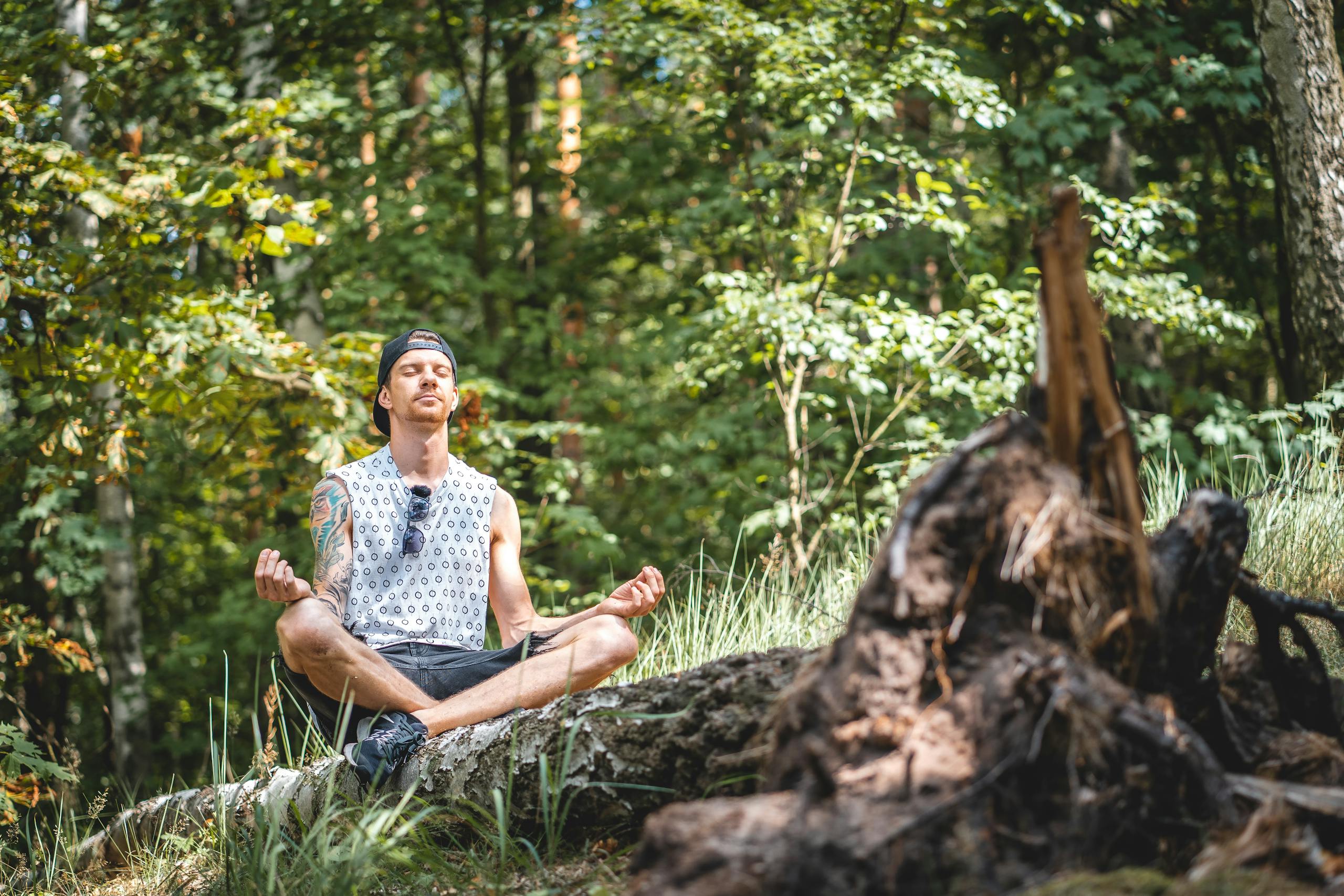
Mental health for introverts is a layered subject, and the tools that actually work tend to be the ones that meet us where we are, physically and emotionally. Our Introvert Mental Health hub covers the full terrain of what it means to care for a mind wired for depth, and lying down meditation fits squarely into that conversation.
Why Does Posture Matter So Much in Traditional Meditation?
Traditional seated meditation comes from contemplative traditions where the upright spine was considered essential for alertness and energy flow. That logic has real merit. Sitting upright does help many people stay awake and attentive. Yet the assumption that it’s the only valid posture has created an unnecessary barrier for people whose bodies or nervous systems push back against rigid structure.
Career Coaching for Introverts
One-on-one career strategy sessions with Keith Lacy. 20 years of Fortune 500 leadership as an introvert, now helping others build careers that work with their wiring.
Learn More50-minute Zoom session · $175
I ran advertising agencies for over two decades, and I can tell you that some of my clearest strategic thinking happened not in boardrooms but flat on my back in a dark office during a ten-minute break between client calls. My team thought I was napping. Occasionally I was. More often, I was doing something that I later recognized as informal lying down meditation, letting my body go still so my mind could finally sort itself out.
The truth is that posture is a tool, not a rule. What matters in any meditation practice is the quality of attention you bring to it. Lying down simply removes one more obstacle between you and that quality of attention.
For people who experience HSP overwhelm and sensory overload, the additional physical comfort of lying down can make the difference between a practice that actually happens and one that stays permanently on the to-do list. When your body is already exhausted from processing a world that feels turned up too loud, asking it to hold a formal seated posture adds one more demand to an already full system.
What Actually Happens in Your Body When You Lie Down to Meditate?
Horizontal positioning changes your physiology in ways that support deep rest. Your cardiovascular system doesn’t have to work against gravity to circulate blood. The muscles along your spine, which are almost always engaged when you sit or stand, can fully release. Your diaphragm moves more freely, which means your breath naturally deepens without any effort on your part.
There’s a specific physiological state called the relaxation response, a term coined by cardiologist Herbert Benson at Harvard Medical School in the 1970s, that describes the body’s counterpart to the stress response. Slow, deliberate breathing and reduced muscle tension are two of its primary triggers. Lying down meditation activates both simultaneously, which is part of why the practice can feel so immediately effective even for beginners.
Published research in PMC’s review of mindfulness-based interventions points to meaningful reductions in stress markers when people engage in regular meditative practice. The body’s response to stillness is well-documented, and posture turns out to be less central to those outcomes than consistency and intention.
For introverts who tend to hold tension in their bodies after extended social interaction, the physical release that comes with lying down meditation is not a side benefit. It’s often the primary one. My neck and shoulders would seize up after long client presentations. I didn’t connect that physical pattern to emotional processing for years. Once I did, lying down became a deliberate decompression tool, not just a rest break.

Is Lying Down Meditation Just Falling Asleep?
This is the question everyone asks, and it deserves an honest answer. Yes, you might fall asleep. Especially at first. Especially if you’re sleep-deprived, which many high-functioning introverts chronically are.
Falling asleep during meditation isn’t a failure. It’s information. Your body needed sleep more than it needed mindfulness in that moment, and it took what it needed. Over time, as your sleep debt clears and your practice develops, you’ll find it easier to stay in that productive middle state: deeply relaxed but awake, aware but not tense.
That middle state has a name in neuroscience: the hypnagogic state, the threshold between wakefulness and sleep. Some meditation traditions actively cultivate it. Artists and inventors throughout history have reportedly used it deliberately, allowing the loosened associations of near-sleep to surface creative insights before drifting fully under. Thomas Edison allegedly held steel balls in his hands while dozing in a chair so the clatter of dropping them would wake him at the edge of sleep. Whether or not that story is apocryphal, the underlying principle is sound.
Practically speaking, a few adjustments help you stay awake during lying down meditation. Keep your eyes slightly open rather than fully closed. Place one hand on your chest so you can feel your breath as a physical anchor. Meditate at a time of day when you’re alert rather than already depleted. And if you fall asleep anyway, set a gentle alarm and simply begin again tomorrow.
What Are the Best Lying Down Meditation Techniques for Introverts?
Several distinct approaches work particularly well in a horizontal position. Each one suits a different need, so it’s worth experimenting rather than committing to one method immediately.
Body Scan Meditation
Body scan is arguably the most natural fit for lying down practice. You move your attention systematically through different regions of the body, from the soles of your feet to the crown of your head, simply noticing sensation without trying to change anything. Tension, warmth, tingling, numbness, all of it is just information.
For people who process emotion through the body, which describes many highly sensitive people and introverts who carry stress as physical symptoms, body scan creates a structured way to check in with what’s actually happening below the neck. I used to notice that my jaw was clenched only when someone pointed it out. Body scan taught me to notice it myself, and more importantly, to notice it before it became a headache.
The practice also connects naturally to HSP emotional processing, since so much of what highly sensitive people experience emotionally registers first as physical sensation. Giving those sensations deliberate, nonjudgmental attention is itself a form of emotional regulation.
Breath Awareness Lying Down
Simple breath awareness, following the natural rise and fall of your chest or abdomen without controlling the breath, translates easily to a lying down position. In fact, many people find breath awareness more accessible horizontally because gravity assists the full expansion of the lungs.
The practice is deceptively simple. You notice the breath. Your mind wanders. You notice that it wandered. You return to the breath. That cycle, repeated hundreds of times in a single session, is the actual practice. The wandering isn’t a problem to solve. It’s the repetition of returning that builds the mental muscle you’re after.
Yoga Nidra
Yoga nidra, sometimes called yogic sleep, is a structured guided practice done entirely in savasana, the lying down position. It moves through layers of awareness, from physical sensation to emotion to visualization to pure awareness, in a way that produces a state of deep rest while maintaining consciousness.
A growing body of clinical work supports yoga nidra’s effectiveness for stress reduction and sleep quality. Research published through PubMed Central has examined its physiological effects, including shifts in autonomic nervous system activity that favor the parasympathetic, rest-and-digest state over the sympathetic, fight-or-flight response.
For introverts managing anxiety, yoga nidra offers something particularly useful: a guided structure that removes the pressure of directing your own practice. You simply follow the voice. That reduction in decision-making overhead can make the difference between actually meditating and lying there wondering if you’re doing it right.

How Does Lying Down Meditation Help with Anxiety and Rumination?
Anxiety and rumination are familiar companions for many introverts. The same depth of processing that makes us perceptive and thorough can loop back on itself, replaying conversations, anticipating problems, cataloging everything that could go wrong. It’s exhausting in a way that’s hard to explain to people who don’t experience it.
The National Institute of Mental Health’s overview of generalized anxiety disorder describes the persistent, difficult-to-control worry that characterizes anxiety as something that affects both mental and physical functioning. What meditation does, including the lying down variety, is interrupt the feedback loop between anxious thought and physical tension. When your body releases, your mind has less physical evidence that something is wrong.
For people managing HSP anxiety, that physical component is especially significant. Highly sensitive people often experience anxiety as a full-body event, not just a mental one. Lying down meditation addresses both simultaneously, which is part of why many HSPs find it more effective than seated practice.
My own experience with rumination peaked during a particularly difficult agency acquisition process. The nights were brutal, my mind cycling through worst-case scenarios while my body lay rigid in bed. A therapist suggested body scan meditation as a way to interrupt the cycle. I was skeptical. I tried it anyway. What surprised me wasn’t that it worked immediately, it didn’t, but that it gave me something to do with the anxiety rather than just enduring it. That sense of agency was itself calming.
The clinical literature on mindfulness-based stress reduction consistently points to reduced rumination as one of the practice’s most reliable outcomes. The mechanism appears to involve shifting from narrative thinking, the storytelling mode where your mind constructs elaborate scenarios about past and future, to sensory awareness, where attention is anchored to what’s actually happening in the present moment.
What About the Emotional Weight That Surfaces During Stillness?
One thing nobody warns you about when you start meditating: stillness sometimes surfaces emotions you didn’t know were waiting. You lie down, close your eyes, and suddenly you’re aware of a grief or frustration or loneliness you’d been successfully outrunning through busyness.
For introverts and highly sensitive people, this can feel alarming. But it’s actually a sign the practice is working. You’re creating enough internal quiet to hear what was already there.
The capacity for HSP empathy means many sensitive people are carrying not just their own emotional weight but the absorbed emotions of everyone around them. Lying down meditation creates a space to sort through what’s actually yours, what you’ve picked up from others, and what your body needs to release. That sorting process is valuable even when it’s uncomfortable.
The approach here matters. When difficult emotion surfaces during meditation, the practice isn’t to push it away or analyze it into submission. It’s to notice it with the same quality of attention you’d bring to a physical sensation. “There is sadness here.” Not “I am sad and here’s why and what does that mean about me and what should I do about it.” Just the bare noticing. That distinction is harder than it sounds and more powerful than it seems.
A graduate research paper from the University of Northern Iowa examining mindfulness and emotional regulation highlights how present-moment awareness reduces the intensity of emotional reactivity over time. The lying down position supports this process by reducing physical arousal, making it easier to observe emotion without being swept away by it.
Can Lying Down Meditation Help Perfectionists Slow Down?
Perfectionism and introversion often travel together, particularly among INTJs and other analytical types. The same high standards that produce excellent work can make rest feel unproductive and stillness feel like failure. If you’re lying down, you’re not doing anything. And if you’re not doing anything, you’re falling behind.
That logic is seductive and completely wrong.
What lying down meditation does for perfectionists is reframe rest as practice. You’re not doing nothing. You’re actively training your attention, your nervous system, your capacity to tolerate the discomfort of not being productive. That reframe matters because perfectionists need a reason to rest, not just permission.
The HSP perfectionism trap is particularly relevant here. Highly sensitive perfectionists often hold themselves to standards that would exhaust anyone, and then feel guilty for being exhausted. Lying down meditation, practiced regularly, begins to loosen that grip. Not because it changes your standards, but because it builds a felt sense that stillness is not the enemy of excellence. Often it’s the prerequisite.
I managed a creative director at one of my agencies who was a textbook perfectionist. She would revise copy seventeen times and still feel it wasn’t ready. I watched her burn out spectacularly on a major campaign. What she needed wasn’t more discipline. It was a practice that interrupted the loop. She eventually found yoga nidra, and the difference in her work quality, paradoxically, improved once she stopped trying so hard.

How Does Lying Down Meditation Support Recovery After Difficult Experiences?
Recovery from emotional injury, whether that’s a professional setback, a relationship rupture, or the accumulated weight of feeling misunderstood, requires the same conditions as physical recovery: rest, reduced stimulation, and time. Lying down meditation provides all three in a single practice.
For introverts who have experienced social rejection or professional dismissal, the wound often runs deeper than it would for someone with a thicker emotional skin. The processing takes longer. The replaying happens more. HSP rejection processing describes this in detail, including why sensitive people need more deliberate support structures to move through painful experiences without getting stuck in them.
Lying down meditation creates a contained space for that processing. You’re not avoiding the pain. You’re giving it a specific time and place, and you’re doing so in a posture that signals safety to your nervous system. The body lying flat, muscles released, breath slow, is the body at its most fundamentally unthreatened. That physiological signal can interrupt the threat-detection loop that keeps painful experiences alive long after they’ve ended.
The American Psychological Association’s framework for resilience emphasizes that recovery isn’t passive, it involves active coping strategies and deliberate self-care. Lying down meditation fits that description precisely. It’s not giving up. It’s doing the specific internal work that recovery requires.
How Do You Set Up a Lying Down Meditation Practice That Lasts?
Consistency matters more than duration. Ten minutes of lying down meditation practiced daily will produce more meaningful results than an hour-long session done twice a month when you remember. The nervous system responds to repetition, and the benefits of meditative practice compound over time in ways that occasional sessions simply can’t replicate.
A few practical elements make consistency easier:
Choose a consistent time. Morning before the day’s demands begin, or evening as a deliberate transition out of work mode, both work well. What matters is that the time is protected and predictable. Your nervous system will begin to anticipate the practice and start unwinding before you even lie down.
Designate a specific location. It doesn’t have to be elaborate. A yoga mat in the corner of your bedroom, a specific spot on your living room floor, even a firm couch. The location itself becomes a cue. Over time, simply arriving there begins to shift your physiological state.
Start shorter than you think you need. Five minutes of genuine presence is worth more than twenty minutes of fighting yourself. Build duration gradually as the practice becomes familiar rather than forcing a longer session from the start.
Use guidance when you need it. There are excellent free yoga nidra and body scan recordings available through apps and online platforms. Guidance removes the cognitive overhead of directing your own practice, which is particularly valuable when you’re tired or emotionally depleted.
Some practitioners find it useful to read about the broader psychological dimensions of introversion and mental health as a complement to their practice. The Introvert’s Corner column at Psychology Today has long explored the internal landscape of introverted experience in ways that can help contextualize what surfaces during meditation.
What If You Have a Highly Active Mind That Won’t Settle?
A common misconception about meditation is that the goal is a blank mind. It isn’t. The goal is a mind that can observe its own activity without being controlled by it. That distinction changes everything about how you approach a practice when your thoughts won’t slow down.
INTJs and other introverted intuitive types often have minds that generate connections and scenarios constantly. My own mind, left to its own devices, will spend a meditation session planning three future projects, analyzing a conversation from last week, and drafting a response to an email I haven’t received yet. That’s not a meditation failure. That’s an INTJ mind doing what INTJ minds do.
The practice is simply to notice that thinking is happening, without following the thought wherever it wants to go, and return attention to the breath or the body. Every return is a repetition of the core skill. A session with fifty returns is not worse than a session with five. It’s more practice.
For particularly active minds, a technique called noting can help. You mentally label what’s arising, “planning,” “remembering,” “worrying,” and then return to your anchor. The label creates a small distance between you and the thought. You’re not the planning. You’re the one noticing the planning. That gap is where the practice lives.

When Is Lying Down Meditation the Wrong Choice?
Honesty requires acknowledging that lying down meditation isn’t always the right tool. A few situations call for a different approach.
If you’re in an acute anxiety episode, lying down can sometimes intensify the physical sensations of anxiety rather than soothing them. In those moments, movement-based practices or grounding techniques that engage the body actively, like walking meditation or cold water on the wrists, may be more effective at interrupting the physiological response.
If sleep deprivation is severe, lying down meditation may consistently become sleep, which is fine occasionally but not as a substitute for a formal practice. Addressing sleep quality directly, through sleep hygiene and where necessary professional support, creates a better foundation for meditation.
And if you find that lying down consistently triggers dissociation or emotional flooding rather than gentle processing, that’s worth discussing with a therapist. Meditation is a powerful tool, and like any powerful tool, it works best with appropriate guidance when underlying trauma is present. Clinical research on mindfulness and trauma-sensitive practice has grown significantly in recent years, and trauma-informed meditation teachers and therapists can help adapt the practice safely.
Most introverts, though, will find that lying down meditation is not too much but rather exactly enough. It meets the body where it is, asks nothing of the ego, and creates space for the kind of internal processing that introverted minds do naturally, just with more intention and less noise.
If you want to keep building your mental health toolkit as an introvert, there’s much more waiting for you in the Introvert Mental Health hub, covering everything from emotional processing to anxiety to the unique challenges sensitive people face in a loud world.
About the Author
Keith Lacy is an introvert who’s learned to embrace his true self later in life. After 20 years in advertising and marketing leadership, including running agencies and managing Fortune 500 accounts, Keith now channels his experience into helping fellow introverts understand their strengths and build fulfilling careers. As an INTJ, he brings analytical depth and authentic perspective to every article, drawing from both professional expertise and personal growth.
Frequently Asked Questions
Is it okay to meditate lying down, or is sitting always better?
Lying down meditation is completely valid. Seated posture is traditional in many practices because it helps maintain alertness, but it’s not inherently superior. For people with chronic pain, high tension in the body, or nervous systems that need physical release alongside mental stillness, lying down often produces better results. The posture that allows you to be consistently present is the right posture for your practice.
How do I stay awake during lying down meditation?
Keeping your eyes slightly open, placing one hand on your chest as a physical anchor, meditating earlier in the day rather than when already depleted, and using guided audio rather than silence all help maintain wakefulness. If you fall asleep occasionally, that’s acceptable. If it happens every time, addressing underlying sleep debt and adjusting the time of your practice will help.
What is the best lying down meditation technique for anxiety?
Body scan meditation and yoga nidra both work well for anxiety because they engage the body directly rather than trying to reason with anxious thoughts. Body scan moves attention systematically through physical sensations, interrupting the mental loop. Yoga nidra uses guided instruction to move through layers of awareness, reducing the cognitive load of directing your own practice. Both activate the parasympathetic nervous system, which counteracts the physiological stress response associated with anxiety.
How long should a lying down meditation session be?
Start with five to ten minutes and build from there. Consistency matters more than duration, so a ten-minute daily practice will produce more meaningful results over time than an occasional forty-five-minute session. Most yoga nidra recordings run between twenty and forty-five minutes, which is a natural target once you’ve established a regular shorter practice. Listen to your body rather than forcing a specific duration.
Can lying down meditation replace sleep?
No. Meditation and sleep serve different neurological functions. Sleep involves specific cycles of brain activity, including deep slow-wave sleep and REM sleep, that are essential for memory consolidation, immune function, and emotional regulation. Meditation produces a deeply restful state but does not replicate those cycles. Yoga nidra is sometimes described as equivalent to several hours of sleep, but that claim is not supported by the current clinical literature. Meditation complements good sleep rather than replacing it.