
Self-worth exercises are practical, repeatable practices that help you build a stable internal sense of value, separate from external validation, performance, or other people’s approval. For introverts, who often do their deepest processing internally, these exercises tend to work best when they create space for reflection rather than demanding social performance or loud affirmation.
What I’ve noticed, both in my own life and in watching people around me, is that the standard advice on self-worth rarely fits how introverts are actually wired. We’re told to speak up more, put ourselves out there, collect praise from others. But for many of us, worth built on external feedback is fragile. It collapses the moment the room goes quiet.

Solid self-worth, the kind that doesn’t crumble under pressure, gets built differently. And for those of us who are wired for depth and quiet, there’s actually a significant advantage in this work, if we approach it on our own terms. This article is about how to do exactly that.
If you’re exploring the broader emotional landscape that shapes introvert mental health, including anxiety, sensitivity, and the way we process the world, the Introvert Mental Health Hub covers that territory in depth. Self-worth is one piece of a larger picture, and it’s worth understanding how all those pieces connect.
Why Do Introverts Struggle With Self-Worth in the First Place?
There’s a particular kind of damage that happens when you spend years in environments that reward extroversion. I know it well. Running advertising agencies for over two decades meant I was constantly surrounded by people who seemed to generate energy from the room itself. Loud pitches, brainstorming sessions that felt more like performance competitions, after-work socializing that was practically mandatory. I showed up to all of it. And I got good at performing the extroverted version of leadership.
Career Coaching for Introverts
One-on-one career strategy sessions with Keith Lacy. 20 years of Fortune 500 leadership as an introvert, now helping others build careers that work with their wiring.
Learn More50-minute Zoom session · $175
What I didn’t realize until much later was that performing a version of yourself that doesn’t fit is slow erosion. Every time I pushed through a networking event by pretending I loved it, every time I dismissed my preference for written communication as a weakness, I was quietly chipping away at my sense of legitimate worth. Not dramatically. Just steadily.
Many introverts carry this. The message, absorbed over years of school, work, and social life, is that the way you naturally operate is somehow deficient. You’re too quiet, too reserved, too slow to respond in the moment. That message becomes internalized. And once it’s inside, it starts to feel like truth rather than opinion.
For highly sensitive introverts, this problem compounds. Processing rejection as an HSP involves a depth of emotional response that can make each piece of negative feedback feel like confirmation of a deeper unworthiness. The nervous system doesn’t just note the criticism. It files it, cross-references it with every previous criticism, and builds a case.
Understanding why self-worth erodes for introverts matters because the exercises that rebuild it need to address the actual mechanism of damage. Generic confidence advice doesn’t touch this. What works is more specific, and more internal.
What Does Genuine Self-Worth Actually Feel Like?
Before getting into specific exercises, it’s worth distinguishing between self-worth and its common imposters. Self-esteem that depends on performance, on doing well at work or getting approval from someone you respect, is contingent. It rises and falls with circumstances. Genuine self-worth is more like a floor than a ceiling. It doesn’t spike when things go well. It holds steady when things don’t.
Psychologists sometimes describe this as unconditional positive self-regard, the sense that your value as a person isn’t earned through achievement or lost through failure. Research on self-concept and psychological well-being consistently points to this kind of stable self-worth as a foundation for resilience, healthier relationships, and lower rates of anxiety and depression.
For introverts, genuine self-worth often feels less like confidence in the social sense and more like a quiet certainty. It’s knowing you have something to contribute even when you haven’t said anything yet. It’s being able to sit in a room where you’re not performing and not feel diminished by the silence. It’s a settled quality rather than an energized one.
That distinction matters for how we build it. Exercises that pump you up with affirmations or push you toward social performance may create a temporary lift, but they’re not building the floor. The exercises that actually work for introverts tend to be quieter, more reflective, and more honest.

Which Self-Worth Exercises Work Best for Introverted Minds?
Over the years, I’ve tried a lot of approaches. Some came from therapy. Some from books. Some I stumbled into by accident and only recognized their value in retrospect. What follows are the ones that consistently made a difference, and the ones I’ve seen make a difference for others wired similarly to me.
Values Mapping
One of the most powerful exercises I’ve encountered is deceptively simple: write down what you actually value, not what you think you should value, not what your industry or family or culture has told you to value, but what genuinely matters to you when you’re being honest.
For me, this exercise surfaced something uncomfortable. I had spent years building an identity around being a successful agency owner, and when I sat down to map my actual values, “status” and “external recognition” barely appeared. What came up repeatedly was depth, honesty, craft, and quiet influence. The gap between my stated identity and my actual values was a significant source of the low-grade worthlessness I’d been carrying.
Values mapping works for introverts because it bypasses social comparison entirely. You’re not measuring yourself against anyone else. You’re measuring yourself against your own internal compass, which is where introverts tend to be most honest and most accurate.
The exercise: Set aside thirty minutes. Write freely on the question, “What do I care about most, and why?” Don’t edit. Don’t perform. After you’ve written, look for patterns. Circle the words that appear more than once. Those clusters are your actual values. Then ask yourself honestly: is the life I’m living aligned with these?
Misalignment between values and daily behavior is one of the quietest sources of low self-worth. Closing that gap, even incrementally, builds something solid.
Evidence Journaling
Most of us are far better at collecting evidence against ourselves than for ourselves. The critical inner voice has been gathering material for decades. Evidence journaling is a deliberate counterweight.
The practice is straightforward: each day, write down one to three specific pieces of evidence that you are capable, worthy, or valuable. Not vague affirmations. Actual evidence. “I listened carefully when my colleague was struggling today.” “I solved a problem at work that nobody else had thought to approach that way.” “I showed up even when I didn’t want to.”
Specificity is everything here. The brain dismisses generic affirmations because it knows they’re not grounded. Specific evidence is harder to argue with. Over time, you’re building a documented case for your own worth that your critical mind can actually examine.
This connects to something I’ve observed about how introverts process emotion. Because we tend to feel things deeply and process them thoroughly, the negative evidence we’ve collected over the years has been filed with great care. Rebuilding requires equal care in the opposite direction. You can read more about that depth of emotional processing in this piece on HSP emotional processing, which captures the way sensitive introverts engage with their inner world.
The Compassionate Observer Practice
Many introverts are extraordinarily compassionate toward others and extraordinarily harsh toward themselves. The compassionate observer practice asks you to apply the same lens to yourself that you’d apply to someone you genuinely care about.
When you notice a moment of self-criticism, pause and ask: if a close friend described this exact situation to me, what would I say to them? Most people find that the answer is significantly kinder than what they’re saying to themselves. The practice is to offer yourself that same response.
This isn’t about bypassing accountability. It’s about recognizing that harshness doesn’t improve performance or character. Self-compassion research suggests that people who treat themselves with kindness after failures are more likely to try again, learn from mistakes, and maintain emotional stability over time. The self-critical approach, which many introverts default to, tends to produce paralysis rather than growth.
Strength Archaeology
There’s a version of strength-finding that feels performative and hollow, the kind where you’re supposed to list your top five skills for a job interview. Strength archaeology is different. It goes looking for evidence of your strengths in places you’ve dismissed or overlooked.
The exercise: Look back over the last six months and identify three to five moments when you handled something well, even if nobody noticed, even if you didn’t get credit, even if it felt small at the time. Write them down in detail. What did you actually do? What did it require of you? What does it say about who you are?
I did this exercise a few years ago and kept returning to quiet moments I’d completely discounted: the time I stayed late to help a junior copywriter restructure her pitch, not because it was my job but because I saw what she was trying to do and believed in it. The time I pushed back on a client’s request because I knew it would harm their brand long-term, even though saying yes would have been easier. These weren’t the moments I was putting in my bio. But they were the moments that actually reflected my values.
Strength archaeology works particularly well for introverts because we tend to operate quietly. Our contributions often aren’t the visible, loud ones. This exercise specifically looks for the contributions that don’t announce themselves.
The Enough List
Many introverts, especially those with perfectionist tendencies, operate from a persistent sense that they haven’t done enough, achieved enough, or become enough. The Enough List is a direct challenge to that narrative.
Once a week, write a list of things that are already enough about your life, your work, and yourself. Not aspirational. Not comparative. Just what is genuinely sufficient right now. “My ability to listen carefully is enough to make me valuable in a conversation.” “What I’ve built so far is enough to be proud of.” “Who I am today is enough, even as I continue to grow.”
This exercise is particularly useful for highly sensitive people who struggle with perfectionism and impossibly high standards. The trap of perfectionism is that the standard keeps moving. The Enough List plants a flag and says: here, at this point, there is already something real and sufficient.
How Does Anxiety Interfere With Building Self-Worth?
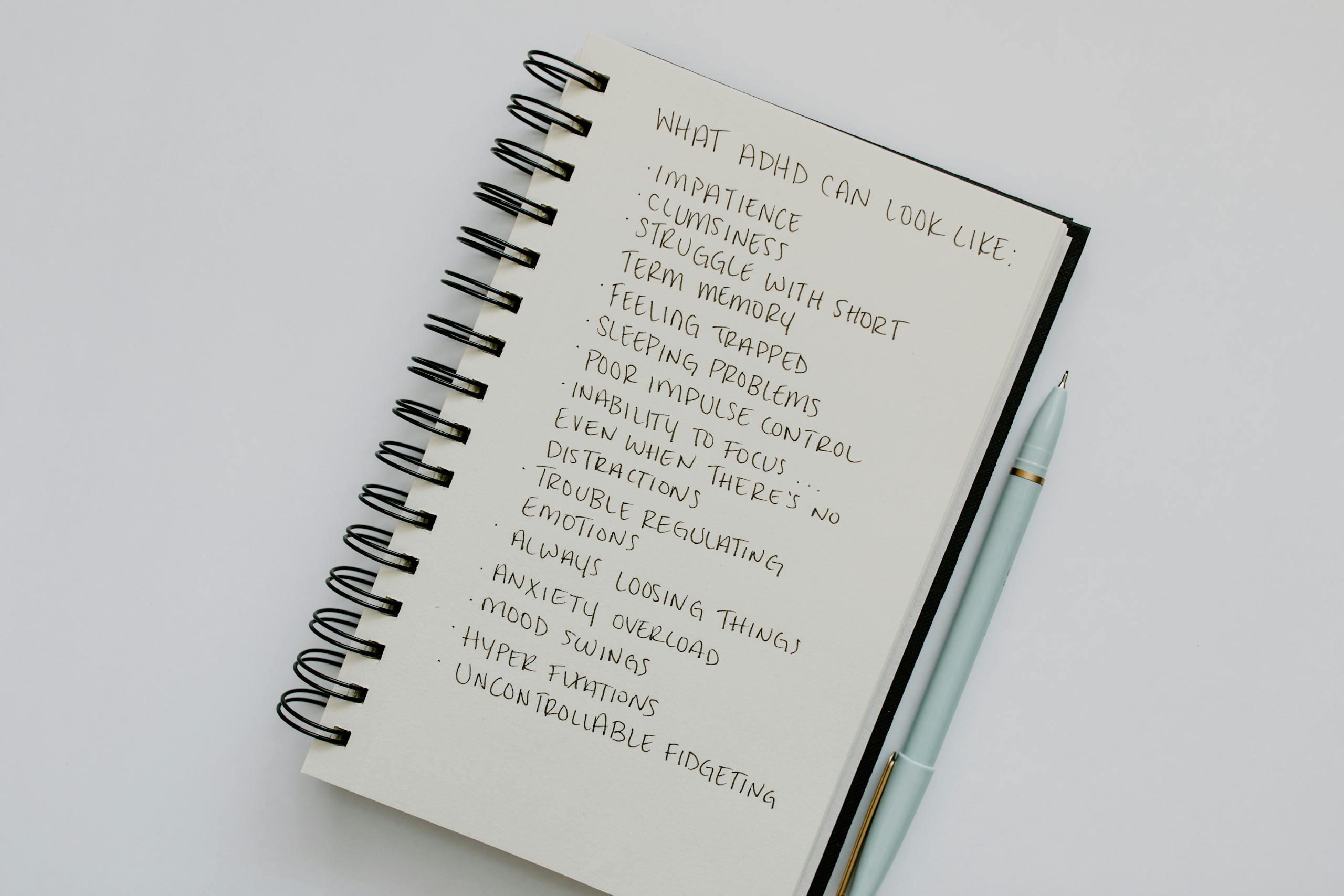
Self-worth and anxiety are deeply entangled. When your nervous system is frequently in a state of low-grade threat, it becomes very difficult to access the calm, grounded place from which genuine self-worth is built. Anxiety keeps the mind scanning for danger, which means it’s also scanning for evidence of inadequacy.
For introverts who are also highly sensitive, this loop can be particularly persistent. The National Institute of Mental Health describes generalized anxiety as involving excessive worry that’s difficult to control and often disproportionate to the actual situation. Many introverts recognize this pattern: the worry doesn’t require a big trigger. It finds material in ordinary situations and amplifies it.
When anxiety is running high, self-worth exercises can feel futile or even irritating. You write down evidence of your competence and the anxious mind immediately counters with three reasons it doesn’t count. This is why managing anxiety is often a prerequisite, or at least a parallel track, to building self-worth. The two have to be worked on together.
For highly sensitive people specifically, HSP anxiety has its own texture, often rooted in overstimulation, deep processing of perceived threats, and a nervous system that registers subtle cues others miss entirely. Addressing that layer is part of the work.
Practically, this means that self-worth exercises work best when done in a regulated state. After a walk. After some time alone to decompress. After a genuinely restful night. Trying to do reflective inner work while your system is flooded rarely produces insight. It produces more noise.
What Role Does Sensory Environment Play in This Work?
Something I didn’t fully appreciate until I started paying attention was how much my environment affected my capacity for honest self-reflection. In the middle of a busy agency, surrounded by open-plan offices and constant interruption, I simply couldn’t access the quiet interior space where real self-examination happens. I was too busy managing the surface.
For introverts, and especially for highly sensitive ones, the environment in which you do inner work matters enormously. Sensory overload doesn’t just make you tired. It actively impairs the kind of deep processing that self-worth exercises require. When your senses are overwhelmed, your cognitive and emotional resources are consumed by managing input, leaving very little available for genuine reflection.
Creating the right conditions for this work isn’t self-indulgence. It’s practical necessity. That might mean doing your evidence journaling in the morning before the household wakes up. It might mean finding a corner of a library or a quiet room at work. It might mean a walk without headphones, where the only input is the physical environment around you.
The point is that self-worth exercises aren’t just mental exercises. They’re practices that require a particular quality of attention, and that quality of attention requires conditions that support it. Treating your environment as part of the practice, rather than irrelevant to it, makes a real difference.
Can Relationships Help Build Self-Worth Without Draining You?
There’s a version of self-worth work that’s entirely solitary, and for introverts, that can feel like a relief. But the reality is that some of our self-worth wounds were created in relationship, and some of the healing happens there too.
The question is how to engage with relationships in ways that build rather than deplete. For introverts, this usually means a small number of deep connections rather than broad social exposure. One person who genuinely sees you and reflects your worth back to you accurately is worth more than a hundred acquaintances who are vaguely positive.
I’ve noticed this in my own life. Some of the most significant shifts in my sense of self-worth came from one or two relationships where I felt genuinely known. Not performed at, not managed, but actually seen. Those relationships were rare, and I didn’t always recognize their value in the moment. But looking back, they were load-bearing.
For highly sensitive introverts, this relational dimension has another layer. HSP empathy can make relationships both deeply nourishing and deeply costly. The same capacity that allows for profound connection also makes you vulnerable to absorbing others’ emotional states, losing yourself in their needs, and walking away from interactions feeling emptied rather than filled. Choosing relationships carefully, and maintaining the boundaries that let you stay present without disappearing, is part of protecting your capacity for this work.
A practical exercise here: identify one person in your life who consistently makes you feel more like yourself after spending time with them. Make that relationship a priority. Then identify one relationship that consistently leaves you feeling diminished or confused about your own worth. Consider what, if anything, needs to change there.

How Do You Keep Self-Worth Stable When the World Pushes Back?
Building self-worth in calm conditions is one thing. Maintaining it when you’re under pressure, when a project fails, when someone criticizes you publicly, when you’re in a room full of people who seem more confident, is the real test.
There’s a concept in psychology called psychological resilience, which the American Psychological Association describes as the process of adapting well in the face of adversity, trauma, or significant stress. Resilience isn’t the absence of difficulty. It’s the capacity to move through difficulty without losing your fundamental sense of self.
For introverts, resilience often looks quieter than it does for extroverts. It’s not the bounce-back-louder response. It’s more like a return to center. After a hard day, after a difficult interaction, after a failure that stings, the question is whether you can find your way back to that stable floor.
Several practices support this kind of stability. One is what I think of as a recovery ritual: a specific sequence of activities you do after depleting experiences that reliably returns you to yourself. For me, that’s been a combination of physical movement, time alone, and some form of writing. Not journaling in the therapeutic sense, just capturing what happened and what I think about it. The act of translating experience into language creates distance and perspective.
Another practice is maintaining what some call a “stable base” of self-knowledge. Research on identity and well-being points consistently to self-clarity, knowing who you are and what you value, as a buffer against external threat. When you know yourself clearly, other people’s assessments of you have less power to destabilize you. They’re just opinions. Sometimes useful, sometimes not. But not the final word.
I spent years in agency life where client feedback could be brutal and public. A presentation that took weeks to prepare dismissed in fifteen minutes. A campaign you believed in killed by a single executive’s preference. Early in my career, each of those moments felt like a verdict on my worth. Later, after doing enough of this internal work, they felt more like data. Useful, sometimes painful, but not definitive.
That shift didn’t happen automatically. It came from building a clearer sense of who I was and what I stood for, separate from any single outcome. The exercises above are how that kind of clarity gets built.
What Happens When Self-Worth Work Surfaces Difficult Emotions?
Sometimes this work stirs things up. You start doing evidence journaling and instead of finding evidence of your worth, you find grief about years you spent not believing in it. You do the compassionate observer practice and realize how relentlessly unkind you’ve been to yourself. That can be disorienting.
This is normal, and it’s actually a sign the work is reaching something real. Introverts tend to process emotion thoroughly, which means that when a feeling surfaces, it often brings layers with it. Academic work on emotional processing suggests that the capacity to sit with and work through difficult emotions, rather than suppressing or avoiding them, is associated with better long-term psychological outcomes.
Still, there’s a difference between productive difficulty and being overwhelmed. If self-worth exercises are consistently leaving you in a worse state than when you started, that’s worth paying attention to. It may mean slowing down, working with a therapist, or adjusting the approach. The goal is a gradual expansion of your capacity to be with yourself, not a flood that sweeps you under.
Highly sensitive people in particular may find that this work surfaces strong emotional responses. The same depth of processing that makes introverts good at self-reflection also means the feelings that come up are felt fully. Pacing matters. So does having support, whether that’s a trusted person in your life or a professional.
One thing that helps is keeping the exercises time-bounded. Set a timer for twenty minutes. When it goes off, you’re done for the day. This creates a container for the work and prevents it from expanding into every available hour of your attention.

How Do You Build a Consistent Practice Without Burning Out?
Consistency is where most self-improvement efforts collapse, and self-worth work is no exception. The challenge for introverts is that we often approach inner work with the same thoroughness we bring to everything else, which can mean trying to do too much too quickly and then exhausting ourselves.
What actually works, in my experience, is smaller and more sustainable than most people expect. Fifteen minutes of evidence journaling three times a week is more effective than an intensive two-hour session once a month. The frequency matters more than the duration. You’re building a habit of attention, and habits are built through repetition, not intensity.
Choose one exercise from this article and commit to it for thirty days before adding anything else. Not because the others aren’t valuable, but because doing one thing consistently will teach you more about yourself than doing five things sporadically. At the end of thirty days, assess honestly: is something shifting? Is the floor feeling more solid? If yes, continue and consider adding a second practice. If not, try a different exercise. This isn’t failure. It’s information.
The broader work of introvert mental health, including understanding how sensitivity, anxiety, and emotional depth all interact with self-worth, is something worth exploring over time. There’s a lot of ground to cover, and the Introvert Mental Health Hub is a good place to continue that exploration when you’re ready to go deeper.
Self-worth isn’t a destination you arrive at. It’s a quality of relationship with yourself that you tend over time. Some weeks it feels solid. Others it feels fragile. That’s not failure either. It’s just the nature of being human, and doing the work anyway, in the quiet, consistent way that introverts do things best, is what makes it real.
About the Author
Keith Lacy is an introvert who’s learned to embrace his true self later in life. After 20 years in advertising and marketing leadership, including running agencies and managing Fortune 500 accounts, Keith now channels his experience into helping fellow introverts understand their strengths and build fulfilling careers. As an INTJ, he brings analytical depth and authentic perspective to every article, drawing from both professional expertise and personal growth.
Frequently Asked Questions
What are the most effective self-worth exercises for introverts?
The most effective self-worth exercises for introverts tend to be reflective and internal rather than performance-based. Values mapping, evidence journaling, strength archaeology, the compassionate observer practice, and the Enough List are all well-suited to how introverts process experience. They work because they build worth from the inside out, through honest self-examination rather than external validation or social performance.
How long does it take to build genuine self-worth?
There’s no fixed timeline, and anyone who gives you one is oversimplifying. What most people find is that consistent practice over weeks and months produces gradual, real change. A single exercise done daily for thirty days can shift the quality of your internal conversation noticeably. Deeper change, the kind that holds under pressure, typically takes longer and often involves working through layers of accumulated self-criticism that built up over years.
Can self-worth exercises help with anxiety?
Yes, though the relationship is bidirectional. Building self-worth can reduce the anxious need for external validation and lower the stakes of social judgment. At the same time, high anxiety can interfere with self-worth exercises by flooding the mind with counterarguments to any positive evidence you find. Working on both simultaneously, managing anxiety while building self-worth, tends to produce better results than addressing only one.
Is it normal to feel worse before feeling better when doing self-worth work?
Yes, and it’s actually quite common. When you begin honest self-examination, you sometimes surface feelings of grief, anger, or sadness about time spent not valuing yourself. This is a sign the work is reaching something real rather than staying at the surface. That said, if the exercises are consistently leaving you in a significantly worse emotional state, it’s worth slowing down, adjusting your approach, or working with a therapist who can provide support.
How is self-worth different from self-esteem?
Self-esteem often refers to how positively you evaluate yourself, and it tends to fluctuate with circumstances, rising when things go well and falling when they don’t. Self-worth, as used in this article, refers to a more stable sense of inherent value that doesn’t depend on performance or outcomes. Building self-worth means developing a floor that holds steady even when self-esteem takes a hit. For introverts, who often work in environments that don’t always reward their natural style, this distinction matters a great deal.