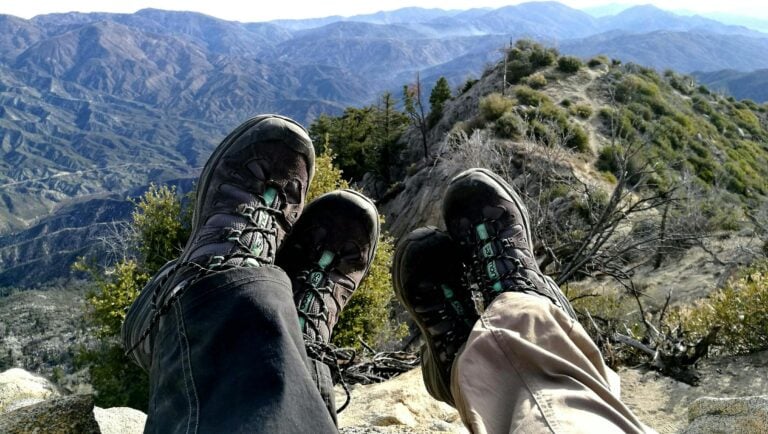
The right meditation position is one that allows your body to stay still and your mind to settle without fighting physical discomfort. For most people, that means a seated posture with a straight spine, relaxed shoulders, and hands resting comfortably, whether on a cushion, a chair, or the floor. There is no single correct position, and the one that works best for you depends on your body, your practice, and what helps you actually show up consistently.
Somewhere around year fifteen of running agencies, I started meditating out of something close to desperation. Not the calm, intentional kind of beginning you read about in wellness books. I was burning through energy I didn’t have, managing teams that needed more from me than I could give, and trying to perform an extroverted version of leadership that felt like wearing someone else’s clothes. A colleague suggested meditation. I nodded politely and ignored her for six months. When I finally tried it, I sat on the floor in my home office, cross-legged, back aching within four minutes, convinced I was doing it wrong. I almost quit before I started.
What nobody told me was that the position itself matters, and that getting it wrong is one of the most common reasons people abandon meditation before it has a chance to work.
If you’ve been exploring meditation as part of your broader mental health practice, you might already be spending time in our Introvert Mental Health Hub, where we cover the full range of tools introverts use to process, recover, and build resilience. Meditation sits squarely at the center of that conversation, and the physical foundation of your practice, your position, shapes everything that follows.
Why Does Your Meditation Position Actually Matter?
Position matters because your body and mind are not separate systems. When your body is uncomfortable, tense, or straining to hold itself upright, your nervous system registers that as a low-level stressor. You’re asking your mind to quiet down while your body is quietly shouting. That’s a losing battle from the start.
Career Coaching for Introverts
One-on-one career strategy sessions with Keith Lacy. 20 years of Fortune 500 leadership as an introvert, now helping others build careers that work with their wiring.
Learn More50-minute Zoom session · $175
For introverts and highly sensitive people especially, physical discomfort during meditation isn’t just annoying. It can trigger the kind of internal noise that makes the whole practice feel counterproductive. Many of the people I hear from who say “meditation doesn’t work for me” are actually describing a position problem, not a meditation problem. They’re spending the session managing a sore lower back or numb feet rather than settling into any kind of stillness.
The spine alignment piece is particularly important. A straight spine, not rigid or military-stiff, but naturally elongated, allows the breath to move freely and keeps you alert rather than drowsy. When you slouch, the diaphragm compresses, breathing becomes shallow, and the body sends signals to the brain that register as fatigue or low-grade anxiety. A study published in PubMed Central examining body posture and affect found that upright posture was associated with higher self-esteem, better mood, and greater persistence under stress, which aligns with what many meditation teachers have said for centuries about the relationship between physical alignment and mental state.
For those who experience what I’d describe as a baseline sensitivity to physical sensation, the kind that shows up as noticing every tag in a shirt or every sound in a room, getting the position right isn’t a luxury. It’s a prerequisite. People who experience HSP overwhelm and sensory overload often find that physical discomfort during meditation amplifies rather than quiets their nervous system. Starting with a position that minimizes friction is the difference between a practice that builds and one that stalls.
What Are the Main Meditation Positions, and Who Are They Actually For?
There are five positions most practitioners use regularly. Each has genuine advantages, and none is universally superior. The one that serves you is the one you can sustain.
Seated on the Floor (Cross-Legged or Lotus)
This is the image most people have when they think of meditation, and it works beautifully for people whose hips are flexible enough to sit comfortably without strain. The full lotus position, where each foot rests on the opposite thigh, is a demanding posture that requires significant hip flexibility. Most beginners have no business attempting it, and forcing it creates exactly the kind of tension you’re trying to release.
A simple cross-legged seat, sometimes called Sukhasana in yoga traditions, is far more accessible. Elevating your hips on a firm meditation cushion (called a zafu) or even a folded blanket makes an enormous difference. When your hips are slightly higher than your knees, the pelvis tilts forward naturally, the lumbar spine finds its curve, and the whole upper body can stack without effort. That small adjustment transformed my practice. Those first four agonizing minutes on the flat floor became twenty sustainable minutes once I put a folded blanket under my seat.
Seated in a Chair
Chair meditation is legitimate, effective, and wildly underrated. Sitting toward the front edge of a chair, feet flat on the floor, thighs roughly parallel to the ground, and spine upright without leaning against the backrest creates excellent conditions for meditation. It’s the position I use most often now, partly because it’s available anywhere and partly because my lower back doesn’t forgive long floor sessions the way it did at thirty-five.
One important detail: don’t let the chair become an invitation to slouch. The backrest is there, but using it tends to round the shoulders and compress the chest. Sitting away from it keeps you alert and engaged rather than drifting toward sleep.
Kneeling (Seiza Position)
Kneeling with the shins on the floor and the seat resting either on the heels or on a meditation bench (called a seiza bench) distributes weight differently than cross-legged sitting and often works well for people who have tight hips but flexible knees and ankles. The spine tends to find a natural upright position easily in this posture. A seiza bench, which is a small angled wooden bench that takes the weight off the ankles, makes this position significantly more sustainable for longer sessions.
Lying Down (Savasana)
Lying flat on your back is the most physically comfortable position, which is also its biggest liability. Most people fall asleep. That’s not inherently wrong, especially if sleep is what you need, but if your goal is alert, present-moment awareness, lying down works against you unless you have significant experience maintaining wakefulness in that position. Some traditions use it deliberately for body scan practices or yoga nidra. For general meditation, it’s a fallback rather than a foundation.
Walking Meditation
Walking meditation is a legitimate and often overlooked option, particularly for people whose minds resist stillness in the early stages of practice. Slow, deliberate walking with attention on each footfall, the sensation of movement, the rhythm of breath, can produce genuine meditative states. I’ve had some of my clearest thinking during slow walks in the neighborhood early in the morning, long before I knew there was a name for what I was doing. For introverts who process through movement, this can be an entry point that seated practice alone never provides.
How Do You Handle the Anxiety That Comes Up When You Sit Still?
This is the part nobody warns you about adequately. When you sit down and remove external stimulation, your mind doesn’t automatically go quiet. For many people, it gets louder. Anxious thoughts surface. Physical sensations amplify. The mental chatter that was drowned out by busyness suddenly has the floor.
For introverts who already carry a significant internal life, this can feel alarming at first. The National Institute of Mental Health notes that anxiety involves persistent worry and physical tension that can be difficult to control. Sitting still in meditation can initially feel like it’s intensifying that experience rather than relieving it, especially in the first few weeks of practice.
What helped me was understanding that this isn’t meditation failing. It’s meditation working. The thoughts and sensations were always there. The practice is making them visible, which is the first step toward having some relationship with them beyond being controlled by them. People who carry the kind of deep emotional sensitivity described in HSP anxiety research often find that the first weeks of meditation feel counterintuitive precisely because they’re finally sitting with what was always present.
The position matters here too. When anxiety surfaces during meditation, the body’s instinct is to contract: shoulders curl forward, chest closes, breath shortens. Maintaining an open, upright posture is a physical counterargument to that contraction. It’s not suppression. It’s a gentle insistence that the body can stay open even when the mind is uncomfortable.

What Should You Do With Your Hands and Eyes?
Hand position and eye position are smaller details that carry more weight than they seem to.
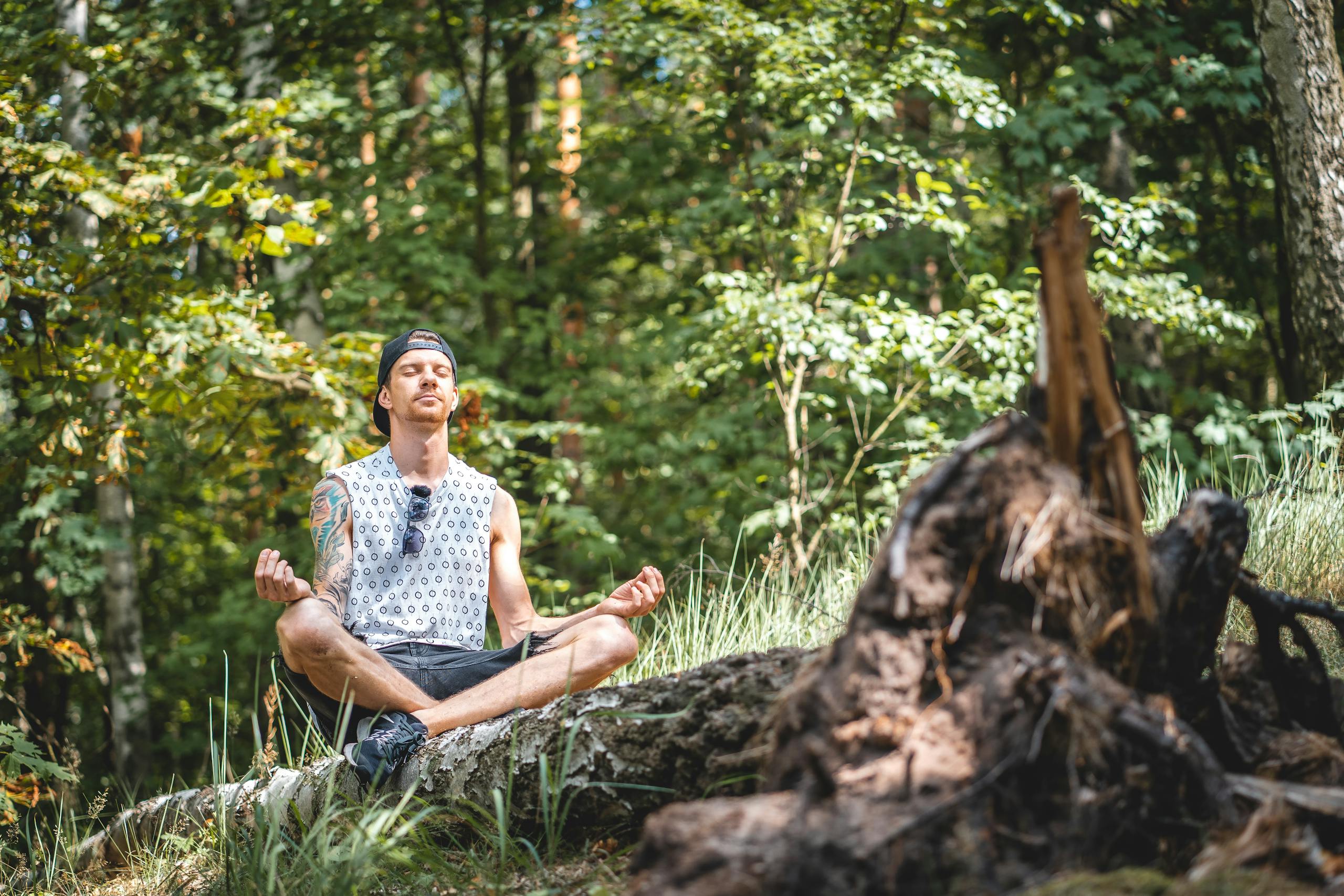
For hands, the simplest option is resting them palm-down on your thighs. This is grounding, comfortable, and requires no special knowledge. Many traditions use specific hand positions called mudras, the most common being the cosmic mudra (one hand cradled in the other, thumbs lightly touching) or simply placing the hands palm-up. Palm-up tends to feel more receptive and open; palm-down tends to feel more grounded and stable. Neither is wrong. Try both and notice which feels more natural for where you are in a given session.
Eye position is a genuine variable. Fully closed eyes can deepen inward focus but also invite drowsiness and, for some people, a feeling of being unmoored that increases anxiety. A soft downward gaze, eyes partially open and unfocused, directed toward the floor about two feet in front of you, is the approach used in many Zen traditions and works well for people who find closed eyes destabilizing. It keeps you connected to the physical space while still allowing internal attention.
I spent years meditating with eyes fully closed before discovering that a soft downward gaze kept me more alert and, interestingly, more present. It’s a small adjustment that made a noticeable difference. The kind of detail-noticing that introverts tend to bring to internal experience, that same quality that makes us good observers, can be applied productively to refining these small elements of practice.
How Does Meditation Position Connect to Emotional Processing?
There’s a dimension to meditation that goes beyond stress reduction, and it’s one that resonates particularly with introverts who already spend significant time in internal reflection. The position you hold during meditation isn’t just a physical container. It’s a signal to your nervous system about what mode you’re in.
An upright, open posture communicates safety and readiness without urgency. It creates the conditions for what researchers sometimes call the window of tolerance, the range of nervous system activation where genuine processing can happen. Too activated and you’re flooded; too shut down and nothing moves. The right posture helps hold that middle space.
For people who do deep emotional processing, meditation in a stable, grounded position can become a container for feelings that are otherwise hard to hold. The body’s stillness gives the emotional experience somewhere to land without immediately triggering the need to act, fix, or escape. That’s a skill, and like any skill, it develops with practice and with getting the physical foundation right.
One of the more surprising things I noticed after about three months of consistent practice was that I started processing difficult client conversations differently. Not during the meditation itself necessarily, but in the hours afterward. Something about the daily practice of sitting with discomfort in a contained way seemed to build a kind of tolerance for sitting with professional discomfort too. I’d come out of a tense agency presentation and instead of immediately spinning into analysis mode, I could stay with the feeling a bit longer before moving to response. That’s not a small thing when you’re managing twenty people and fielding calls from CMOs who want answers on the spot.
What About Meditating When You’re Highly Sensitive to Your Environment?
Environment and position interact in ways that matter for sensitive practitioners. The physical space you choose for meditation affects how easily you can settle, and for people with heightened sensitivity to sound, light, temperature, or texture, getting the environment right is as important as getting the position right.
The surface you sit on matters. A hard floor without cushioning creates pressure points that become impossible to ignore after a few minutes. A cushion that’s too soft doesn’t provide enough support and lets the pelvis sink backward, which rounds the lower back. Medium-firm support, enough to feel stable but with some give, tends to work best for most people.
Temperature is often overlooked. Sitting still lowers body temperature, and being cold during meditation creates a low-level physical stress that competes with the practice. Having a light blanket available, particularly for morning sessions, is a practical detail that makes a real difference.
For people who carry the kind of empathic sensitivity described in writing about HSP empathy, meditating in a space that feels emotionally neutral, not charged with other people’s energy or the residue of difficult conversations, can make settling significantly easier. I noticed early on that meditating in my home office, where work stress lived, was harder than meditating in a different room. The associations were physical, not just mental. Moving to a neutral space changed the quality of the sessions noticeably.
How Do You Build a Position That Supports Long-Term Practice?
Consistency matters more than perfection in meditation, and your position needs to be one you can return to daily without dreading the physical experience. That means being honest about your body’s actual current state rather than the state you think it should be in.
Tight hips from years of desk work are not a character flaw. They’re a physical reality that requires a physical solution, usually a higher seat. Knee issues rule out certain floor positions. Back problems may make chair sitting the only sustainable option. None of these are compromises. They’re intelligent adaptations.
One pattern I’ve seen in introverts who struggle to maintain a meditation practice has a perfectionism thread running through it. There’s a sense that if you can’t do the “real” version, the full lotus on a cushion for thirty minutes, then what you’re doing doesn’t count. That’s the kind of thinking that HSP perfectionism can generate, where high standards become a barrier to starting rather than a guide for improving. Five minutes in a chair with a straight spine and genuine attention counts. It counts more than thirty minutes of self-critical fidgeting on the floor.
A review published in PubMed Central examining mindfulness-based interventions found that even brief, consistent practice produces measurable benefits for stress, anxiety, and emotional regulation. The duration and the perfect posture matter less than the regularity and the quality of attention you bring.
Start with whatever position allows you to sit for ten minutes without fighting your body. Refine from there. Add time gradually. Experiment with different positions as your flexibility and familiarity with the practice develop. The position is a tool, not a destination.
What Happens When You’ve Been Hurt and Sitting Still Feels Unsafe?
This is a conversation that doesn’t come up often enough in mainstream meditation writing, and it matters. For some people, sitting still and turning attention inward doesn’t produce calm. It produces distress, because what’s inside is painful material that hasn’t been processed.
The American Psychological Association’s work on resilience acknowledges that building psychological strength sometimes requires support, not just solo practice. Meditation can be a powerful tool, and it can also stir things up in ways that benefit from professional guidance alongside the practice.
For introverts who have experienced significant rejection or relational wounds, the kind of pain explored in writing about HSP rejection and healing, meditation can sometimes feel threatening rather than restorative, at least initially. That’s not a reason to avoid it. It’s a reason to approach it carefully, perhaps with shorter sessions, eyes partially open, in a position that feels physically grounded and safe, and potentially with support from a therapist who understands contemplative practice.
The body holds history. A meditation position that emphasizes physical stability, feet on the ground, spine supported, hands resting, can provide a kind of somatic anchoring that makes the internal exploration feel safer over time. It’s worth moving slowly and paying attention to what the body is communicating, not just what the mind is doing.
Research on mindfulness and trauma, including work referenced in this clinical overview on mindfulness-based stress reduction, increasingly emphasizes the importance of body-based approaches that work with physical sensation rather than bypassing it. Your position during meditation is part of that body-based foundation.
How Do You Know When Your Position Is Working?
You know a position is working when it disappears. When the body stops being the loudest thing in the room and becomes a quiet background, stable and present without demanding constant adjustment, that’s the signal. It doesn’t mean you feel nothing. It means what you feel isn’t competing with your attention.
Early in practice, you’ll likely spend the first few minutes of every session making small adjustments, shifting weight, softening the jaw, releasing tension in the shoulders. That’s normal and appropriate. Over time, the body learns the position and settles into it more quickly. What took five minutes of adjustment eventually takes thirty seconds.
Some practitioners find it helpful to do a brief body scan at the start of each session, moving attention from the feet upward and making adjustments before beginning the main practice. A graduate research paper examining mindfulness practices noted that body awareness exercises prior to meditation can improve the quality of sustained attention during the session itself. It’s a small investment that pays forward.
Pain is a signal to adjust, not to endure. Discomfort that builds over the course of a session and becomes sharp or persistent is the body asking for a change, not a test of your commitment. Meditation is not supposed to hurt. Adjusting your position mid-session is not failure. It’s intelligent practice.
After years of treating meditation as something I had to get right before it could help me, I eventually understood that the practice and the refinement happen simultaneously. You don’t perfect the position and then meditate. You meditate, and the position gradually becomes more natural. That shift in perspective, from prerequisite to process, made everything easier.
Meditation is one piece of a larger mental health picture for introverts. If you want to explore more of that picture, our Introvert Mental Health Hub brings together the full range of topics we cover, from sensory sensitivity to emotional resilience to the specific ways introverts process and recover.
About the Author
Keith Lacy is an introvert who’s learned to embrace his true self later in life. After 20 years in advertising and marketing leadership, including running agencies and managing Fortune 500 accounts, Keith now channels his experience into helping fellow introverts understand their strengths and build fulfilling careers. As an INTJ, he brings analytical depth and authentic perspective to every article, drawing from both professional expertise and personal growth.
Frequently Asked Questions
What is the best meditation position for beginners?
For most beginners, sitting in a chair with feet flat on the floor and spine upright, away from the backrest, is the most accessible and sustainable starting position. It requires no special flexibility, is available anywhere, and makes it easy to maintain the alert, open posture that supports genuine meditation. If you prefer the floor, sitting cross-legged on a firm cushion or folded blanket that elevates your hips above your knees will reduce strain significantly. The best position is the one you can hold comfortably for your target session length without fighting physical discomfort.
Can you meditate lying down?
Yes, you can meditate lying down, and some practices like body scan meditation and yoga nidra are specifically designed for supine positions. The main challenge is that lying flat makes it significantly easier to fall asleep, which can work against the goal of alert, present-moment awareness. If sleep is what you need, that’s not a problem. For active meditation practice, most people find that seated positions maintain better wakefulness. If you do meditate lying down, keeping the knees bent with feet flat on the floor can help sustain alertness.
How long should you sit in one meditation position?
Start with whatever duration allows you to sit without significant physical discomfort, even if that’s only five or ten minutes. There’s no minimum time requirement for meditation to be beneficial. As your practice develops and your body adapts to the position, you can extend sessions gradually. Many experienced practitioners sit for twenty to forty-five minutes. What matters more than duration is consistency. Ten minutes daily produces more benefit over time than an occasional hour-long session. Adjust your position if pain becomes sharp or persistent. Enduring pain is not part of the practice.
Does meditation position affect how well meditation works?
Yes, meaningfully. Physical discomfort during meditation competes directly with the quality of attention you can bring to the practice. When the body is uncomfortable, the nervous system registers low-level stress, which works against the settling and stillness meditation aims to cultivate. An upright, open posture also supports fuller breathing and helps maintain the alert state that distinguishes meditation from rest or sleep. Getting the position right doesn’t guarantee a good meditation session, but getting it wrong creates a consistent obstacle that prevents the practice from developing.
What should you do with your hands during meditation?
The simplest and most universally applicable hand position is resting both hands palm-down on your thighs. This is grounding, comfortable, and requires no specific training. Many practitioners use the cosmic mudra, where one hand is cradled in the other with thumbs lightly touching, resting in the lap. Hands palm-up tends to feel more open and receptive; palm-down tends to feel more stable and grounded. Any of these work well. The most important thing is that your hands are resting somewhere comfortable so they don’t create tension in the arms, shoulders, or neck.