
A 30 minute guided meditation for sleep and anxiety works by systematically slowing your nervous system, releasing accumulated mental tension, and creating the internal conditions your body needs to move from alert to rest. For people whose minds process deeply and continuously, this length hits a particular sweet spot: long enough to genuinely shift your physiological state, short enough to feel manageable on difficult nights.
Most sleep advice assumes the problem is behavioral. Go to bed earlier. Put your phone down. Stop drinking coffee after noon. But the real obstacle, at least for those of us wired to process everything at depth, isn’t the behavior. It’s the mind that won’t stop working once the external world goes quiet.
What I’ve found, after years of chasing better sleep through productivity systems and rigid schedules, is that the issue was never discipline. It was the absence of a deliberate off-ramp.
If you’re exploring meditation as part of a broader approach to your mental wellbeing, our Introvert Mental Health Hub covers the full landscape of anxiety, emotional processing, sensory sensitivity, and the particular inner challenges that come with being wired for depth. This article focuses specifically on what a 30 minute guided meditation practice can do when sleep and anxiety are the primary concerns, and how to actually use it.
Why Does 30 Minutes Feel Different Than 10?
There’s a reason quick meditation apps often feel like they don’t touch the real problem. Ten minutes is enough to catch your breath. It isn’t enough to genuinely change your internal state when that state has been accumulating stress for eight, ten, or twelve hours.
Career Coaching for Introverts
One-on-one career strategy sessions with Keith Lacy. 20 years of Fortune 500 leadership as an introvert, now helping others build careers that work with their wiring.
Learn More50-minute Zoom session · $175
My agency days were structured around compression. Compressed timelines, compressed budgets, compressed attention spans. I brought that same compression to everything, including attempts at self-care. I’d do a seven-minute meditation, feel marginally calmer, and call it done. The anxiety would return within the hour because I hadn’t actually processed anything. I’d just paused it.
The physiological reality is that your nervous system needs time to complete a full cycle from activation to recovery. According to the National Institute of Mental Health, anxiety involves sustained activation of the body’s stress response systems. Reversing that activation isn’t instantaneous. The body needs to move through stages: initial relaxation, deeper muscle release, breath regulation, and finally the kind of mental quiet that actually precedes sleep.
Thirty minutes allows all of those stages to happen in sequence rather than rushing past them. It’s the difference between skimming a document and actually reading it.
For those of us who are highly sensitive, the recovery window tends to be longer anyway. HSP overwhelm from sensory overload doesn’t dissolve the moment you close the door to your bedroom. The nervous system is still processing what it absorbed throughout the day, and that processing needs space and time to complete.
What Actually Happens Inside a 30 Minute Guided Session?
Understanding the structure of a well-designed 30 minute session helps you stop judging your experience midway through and start trusting the process. Most quality sessions follow a recognizable arc, even if the specific language and imagery vary.
The first five to eight minutes are typically grounding. A guide will direct your attention to physical sensation, breath, or sound. This isn’t the meaningful part yet. It’s calibration. Your mind is still carrying momentum from the day, and this phase is simply asking it to slow down enough to be guided at all.
Minutes eight through fifteen usually involve progressive relaxation of some kind. Body scan techniques, breath counting, or visualization of tension leaving specific muscle groups. This is where the physical component of anxiety begins to release. Published research through PubMed Central has documented how mindfulness-based practices create measurable changes in both physiological arousal and subjective anxiety experience. The body and mind are not separate systems here. Releasing one affects the other.
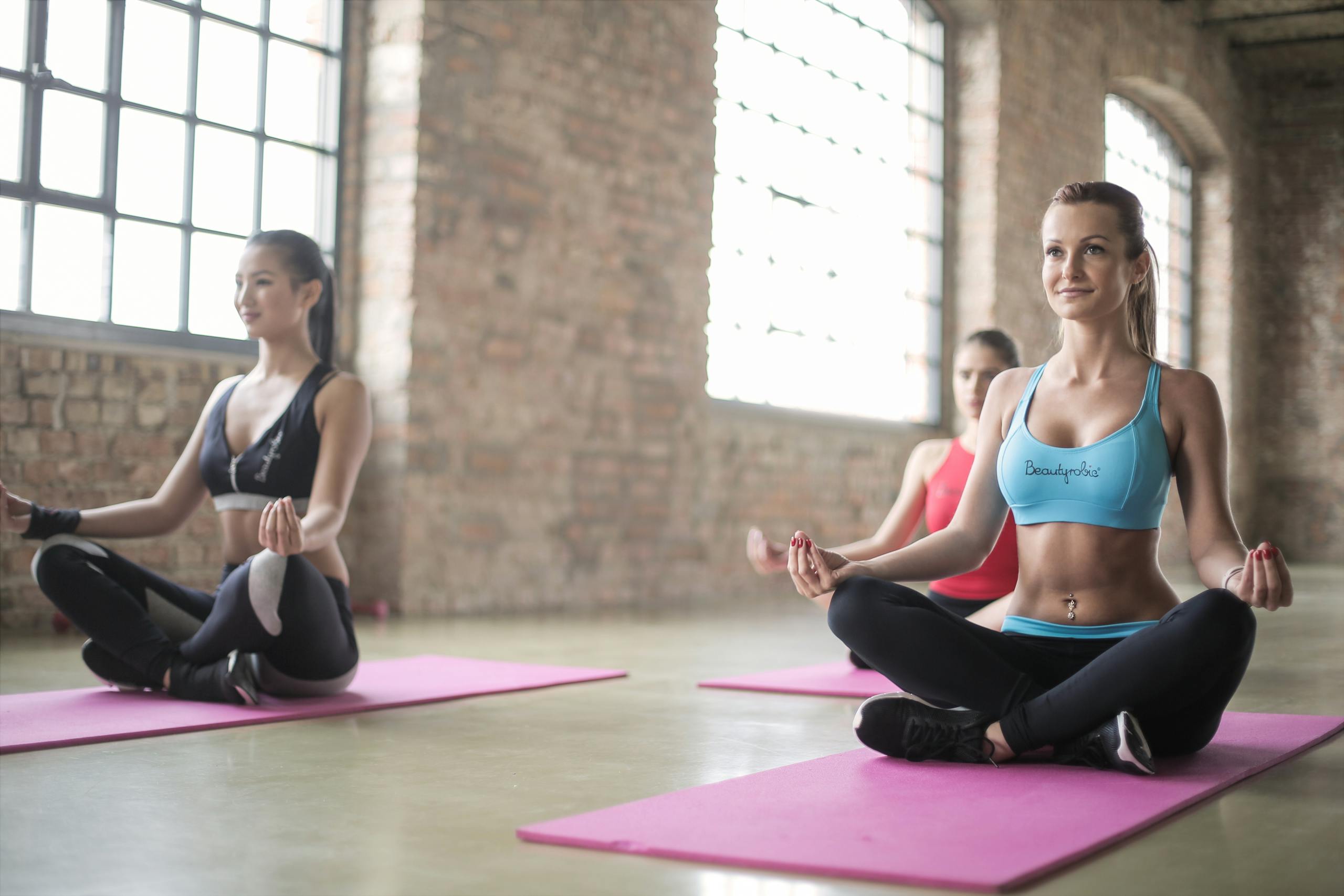
The middle section, roughly minutes fifteen through twenty-two, is where guided meditation earns its name. A skilled guide uses imagery, breath pacing, and language designed to occupy the analytical mind just enough to prevent it from hijacking the session, without demanding so much cognitive effort that you can’t relax. This is the zone where many deep thinkers finally stop fighting the process.
The final stretch moves toward sleep induction or deep rest. Voices slow. Pauses lengthen. The guide is essentially mimicking the rhythm of a mind moving toward sleep, and your nervous system tends to follow. By minute twenty-eight or twenty-nine, most people are either asleep or in the kind of deeply relaxed state that makes sleep feel genuinely close.
How Do You Choose the Right Guide When You’re Skeptical?
Skepticism about guided meditation is reasonable. I held it for years. My INTJ tendency is to want to understand mechanisms before committing to practices, and the meditation space has more than its share of vague promises and spiritual language that doesn’t land for analytically oriented people.
What I eventually realized is that the guide’s voice and style matters enormously, and finding the right one isn’t a sign of being picky. It’s a sign of self-knowledge. Some voices trigger the very alertness you’re trying to release. Others feel patronizing or overly theatrical. A few, when you find them, feel like someone who genuinely understands how an active mind works.
When evaluating a guide, pay attention to pacing over content. A voice that speaks at a natural conversational pace in the first two minutes will likely rush you. A voice that already has space between phrases, that allows silence without filling it immediately, is more likely to actually slow your nervous system rather than just narrate relaxation at you.
Content-wise, look for sessions that acknowledge the mind’s tendency to wander rather than treating it as a failure. The best guides for analytical personalities don’t demand mental blankness. They offer the mind something gentle to do, a breath to follow, a color to imagine, a sensation to notice, so that the mental chatter naturally quiets rather than being forcibly suppressed.
This matters particularly for those who deal with HSP anxiety, where the internal experience of anxiety is already layered and complex. A guide who treats anxiety as something to push away often makes the experience worse. A guide who treats it as something to observe and allow tends to create genuine relief.
What Do You Do When Your Mind Keeps Interrupting?
Every deeply analytical person I know has had the same experience with meditation: you’re five minutes in, something the guide says triggers an unrelated thought, and suddenly you’re mentally drafting a response to an email from three days ago or reconstructing a conversation you wish had gone differently.
This is not a failure. It’s the mind doing exactly what it’s built to do. The question is what you do with it.
The most effective approach I’ve found is what I’d call a soft redirect rather than a hard reset. When you notice your mind has wandered, don’t mentally reprimand yourself and try to snap back to the guide’s voice. That kind of internal correction actually increases arousal. Instead, simply notice that your attention drifted, and without judgment, let the guide’s voice become the foreground again. It takes practice, but the noticing itself becomes part of the meditation.
There’s something worth understanding here about how deeply feeling people process. HSP emotional processing happens continuously and often below the level of conscious awareness. When your mind wanders during meditation, it’s frequently processing something that hasn’t finished resolving. Forcing it back too harshly interrupts that processing. Gently redirecting it allows the processing to continue at a quieter register while your conscious attention returns to the meditation.
I had a creative director at one of my agencies, an INFJ, who described her mind as a room where multiple conversations were always happening simultaneously. She’d learned to let the background conversations continue while directing her primary attention where it was needed. That’s essentially what good meditation teaches: not silence, but selective attention.

How Does the 30 Minute Format Address Anxiety Specifically?
Anxiety and sleep problems are deeply connected, but they’re not identical, and a well-designed 30 minute session addresses both in different ways within the same practice.
For anxiety specifically, the mechanism is largely about interrupting the feedback loop between thought and physical sensation. Anxious thoughts produce physical tension. Physical tension reinforces anxious thoughts. That loop can run indefinitely when there’s nothing to interrupt it. A guided meditation interrupts it by directing attention to something neutral, breath, sensation, imagery, and doing so consistently enough that the loop loses momentum.
Additional research published through PubMed Central has examined how sustained mindfulness practice affects the relationship between rumination and emotional distress. The consistent finding is that the practice doesn’t eliminate anxious thoughts but changes your relationship to them. You stop being inside the thought and start observing it. That shift in perspective is often enough to reduce the physiological anxiety response significantly.
For people who carry a lot of others’ emotional weight, this shift is particularly valuable. HSP empathy can function like a double-edged sword, giving you remarkable insight into others while leaving you depleted and anxious from absorbing what they’re feeling. A 30 minute guided session before sleep creates a deliberate boundary between what you took in during the day and what you carry into the night.
I spent years absorbing the anxiety of entire agency teams without realizing it. Pitches, account losses, personnel conflicts, all of it accumulated. By the time I’d get home, I wasn’t just tired. I was carrying the collective stress of thirty people. It took me an embarrassingly long time to understand that I needed an active decompression practice, not just distance from the office.
Can This Practice Help With the Thoughts That Won’t Resolve?
There’s a particular kind of nighttime thought pattern that I suspect many deep thinkers know well. It’s not quite worry and not quite planning. It’s more like an open loop, a situation that hasn’t reached resolution, a relationship that feels uncertain, a decision that hasn’t been made. The mind returns to it repeatedly not because it’s catastrophizing but because it genuinely hasn’t finished processing.
Guided meditation doesn’t resolve these loops by forcing closure. What it does is reduce the urgency around them. When your nervous system is in a calmer state, the unresolved situation feels less like an emergency and more like something that can wait until morning. That shift in perceived urgency is often enough to allow sleep.
This is especially relevant for those who struggle with HSP perfectionism and the trap of impossibly high standards. Perfectionist thinking at night is particularly corrosive because there’s no action available. You can’t fix the presentation at 1 AM. You can’t redo the conversation. The mind keeps returning to these things not because revisiting them is useful but because the underlying anxiety hasn’t been addressed. Thirty minutes of guided meditation addresses that underlying state rather than trying to reason your way out of the thoughts themselves.
I used to lie awake reconstructing client presentations I’d already delivered, mentally revising slides that had already been approved and shown. My team thought I was confident. Inside, I was relitigating every decision. What finally shifted wasn’t telling myself to stop. It was creating a consistent pre-sleep practice that gave my nervous system a genuine off-ramp before the lights went out.
How Do You Set Up the Environment to Make It Actually Work?
The environment you meditate in matters more than most guides acknowledge. This isn’t about ritual for its own sake. It’s about reducing the sensory triggers that keep your nervous system alert.
Temperature is often overlooked. A slightly cool room, somewhere around 65 to 68 degrees Fahrenheit, supports the natural drop in core body temperature that accompanies sleep onset. Trying to meditate into sleep in a warm room works against your body’s own biology.
Lighting matters more than most people realize. Overhead lighting signals daytime to your nervous system regardless of the hour. Switching to a single low lamp or no light at all in the twenty minutes before you begin a sleep meditation creates a visual cue that reinforces what the meditation is trying to accomplish.
Audio delivery is worth thinking about carefully. Earbuds or headphones create a more immersive experience and reduce the chance that ambient sounds will pull you out of the session. That said, some people find earbuds physically uncomfortable when lying down. A low-volume speaker positioned close to the bed can work equally well if the room is otherwise quiet.
For those who experience the particular pain of HSP rejection sensitivity, the pre-sleep environment is especially important. Rejection-related thoughts tend to surface when the external world goes quiet, and they carry a disproportionate emotional charge at night. Creating an environment that signals safety and calm before the session begins gives you a slight physiological head start before the difficult thoughts have a chance to surface.

What Separates a Practice That Lasts From One That Fades?
Consistency is the variable that determines whether meditation becomes genuinely useful or remains something you do occasionally when things get bad enough. And consistency, for most people, comes down to removing friction rather than adding motivation.
Motivation is unreliable. On the nights you most need a meditation practice, you’re also the most likely to feel too tired, too frustrated, or too wired to start one. A practice that depends on feeling motivated will fail precisely when it’s most needed.
What works better is anchoring the practice to something that already happens every night. Not “I’ll meditate when I feel anxious” but “after I brush my teeth, I start the session.” The specificity of the trigger matters. Vague intentions produce vague behavior. A concrete behavioral anchor, something you already do without thinking, transfers some of that automaticity to the new practice.
The PubMed Central overview of habit formation mechanisms points to this same principle: behaviors attached to existing routines show significantly higher persistence than those treated as standalone additions to the day. The meditation doesn’t need its own motivational infrastructure if it’s grafted onto something that already has one.
At my agency, I watched countless well-intentioned wellness initiatives fail because they asked people to add something new to already-compressed schedules. The ones that stuck were always the ones that replaced something rather than adding to it. The same logic applies here. Thirty minutes of guided meditation replacing thirty minutes of scrolling before bed isn’t an addition. It’s a substitution that requires less willpower over time, not more.
There’s also something to be said for lowering your standard of success in the early weeks. A session where you fell asleep at minute twelve counts. A session where your mind wandered constantly but you stayed with it counts. A session where you felt nothing particularly profound counts. The practice builds through repetition, not through peak experiences. The American Psychological Association’s work on resilience consistently points to the value of small, repeated acts of self-regulation over dramatic interventions. Meditation works the same way.
Are There Times When Guided Meditation Isn’t Enough?
Honesty matters here. A 30 minute guided meditation practice is a genuinely powerful tool for sleep and anxiety management. It is not a replacement for professional support when anxiety has reached clinical levels, when sleep deprivation is severe, or when underlying conditions haven’t been addressed.
The University of Northern Iowa research on mindfulness and anxiety frames meditation appropriately: as a complementary practice that supports wellbeing rather than a standalone treatment for clinical anxiety disorders. That framing is useful. It takes the pressure off the practice to be everything while still honoring what it genuinely offers.
If you’re using meditation as one element of a broader approach to your mental health, that’s exactly right. If you’re using it to avoid addressing something that needs professional attention, that’s worth examining honestly.
The same applies to the specific anxiety patterns that come with deep sensitivity. Managing sensory overload, processing difficult emotions, and working through the particular weight that comes with feeling everything more intensely than most people, these are areas where meditation helps but where deeper support often makes the difference. A practice that runs alongside therapy or coaching tends to amplify the benefits of both.
Sleep and anxiety don’t exist in isolation from the rest of what it means to be a deeply wired, internally focused person. If you want to go further with any of the themes in this article, the Introvert Mental Health Hub brings together everything we’ve written on emotional processing, sensory sensitivity, anxiety, and the inner life of people who feel and think at depth.
About the Author
Keith Lacy is an introvert who’s learned to embrace his true self later in life. After 20 years in advertising and marketing leadership, including running agencies and managing Fortune 500 accounts, Keith now channels his experience into helping fellow introverts understand their strengths and build fulfilling careers. As an INTJ, he brings analytical depth and authentic perspective to every article, drawing from both professional expertise and personal growth.
Frequently Asked Questions
Is 30 minutes too long if I’ve never meditated before?
Not necessarily, though it depends on how you approach it. The goal with a sleep-focused session isn’t to maintain perfect concentration for 30 minutes. Many people fall asleep partway through, which is actually the intended outcome. If the length feels daunting, start by simply pressing play and giving yourself permission to drift off whenever it happens. You’re not being tested on how long you stay conscious through it.
What should I do if the guide’s voice makes me more anxious instead of calmer?
Switch guides without guilt. Voice compatibility is real and significant. Some voices trigger alertness rather than calm, and that response is physiological, not a character flaw. Try several different guides across different sessions before drawing conclusions about whether guided meditation works for you. The practice itself is sound. Finding the right delivery for your nervous system is part of the process.
Can I use the same session recording every night or should I vary it?
Using the same session repeatedly is actually advantageous for sleep purposes. Familiarity reduces the cognitive engagement required to follow the guide, which allows your nervous system to relax more quickly. Over time, your body begins to associate that specific voice and structure with the transition to sleep, which accelerates the relaxation response. Novelty is useful for daytime mindfulness practice. For sleep, consistency tends to work better.
What if I feel more awake after a session than before I started?
This can happen, particularly in the first few sessions, and it’s usually a sign that the practice is surfacing tension that was being suppressed rather than genuinely relaxed. Some people experience a brief window of heightened awareness before the deeper relaxation sets in. If this pattern continues beyond the first week or two, examine the session itself. Sessions that include visualization requiring active imagination, or guides whose voices carry urgency, can inadvertently increase arousal rather than reduce it. Try a simpler body scan or breath-focused session instead.
How long before I should expect to notice a real difference in my sleep or anxiety?
Most people notice some difference within the first week of consistent use, though the change is often subtle at first. The more significant shifts, reduced time to fall asleep, less anxiety upon waking, and fewer middle-of-the-night thought spirals, tend to emerge after two to four weeks of regular practice. The practice compounds over time. Each session doesn’t just produce an isolated effect. It gradually recalibrates your baseline nervous system state, which is why the benefits tend to grow rather than plateau with continued use.