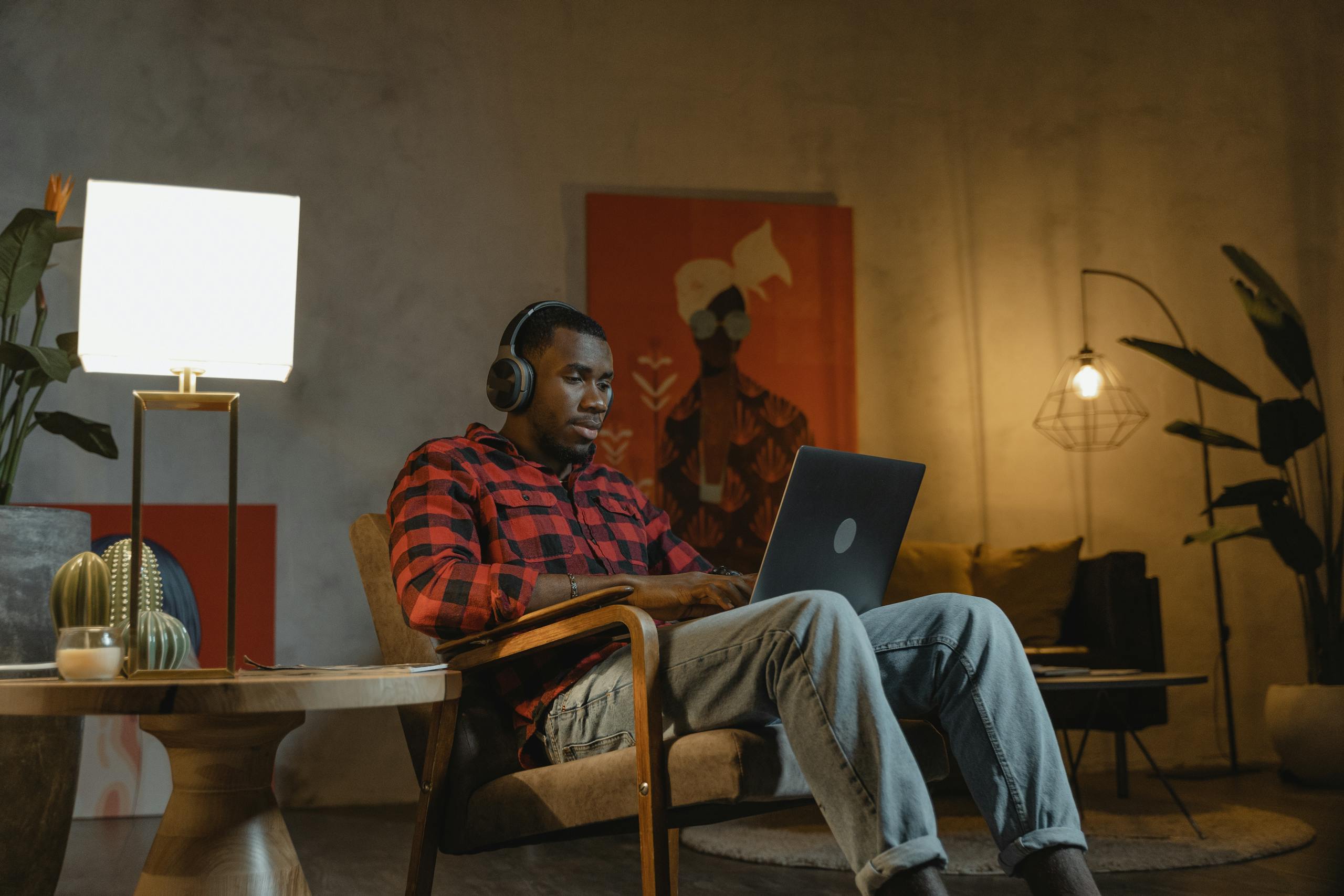
Neoopism remote work psychology explores how introverts and highly sensitive people experience remote and hybrid work environments differently from their extroverted peers, and why those differences are neurological, not just preferential. People wired for deep internal processing tend to perform at a higher level when they control their sensory environment, manage their own energy, and communicate through channels that reward precision over performance. Remote work, when structured thoughtfully, aligns naturally with how introverted minds actually function.
What surprised me, after two decades running advertising agencies with open-plan offices and always-on culture, was how long it took me to recognize that the exhaustion I carried home every evening was environmental, not personal. My brain wasn’t broken. It was just being asked to operate in conditions that worked against it, every single day.

If you’ve ever felt that pull toward working from home, not out of laziness but out of something deeper and harder to name, you’re picking up on something real. The psychology behind that pull has a name, and understanding it can change how you structure your career, your boundaries, and your relationship with work itself. Our Career Skills and Professional Development hub covers the full range of workplace strategies for introverts, and this piece adds a specific lens: what happens inside the introvert brain when remote work finally removes the friction.
What Does Neoopism Actually Mean in a Work Context?
Neoopism, as a psychological framework, centers on the idea that individuals process their environment through fundamentally different neurological pathways, and that those differences shape everything from how they handle feedback to how they recover from a demanding week. In a work context, neoopism acknowledges that introverts and highly sensitive people aren’t simply “less social.” They’re processing more information per stimulus, filtering meaning through a deeper internal layer, and expending more cognitive energy in high-stimulation environments.
Career Coaching for Introverts
One-on-one career strategy sessions with Keith Lacy. 20 years of Fortune 500 leadership as an introvert, now helping others build careers that work with their wiring.
Learn More50-minute Zoom session · $175
Think about what a standard open-plan office actually asks of an introverted brain. There’s ambient noise, unpredictable interruptions, social performance pressure, fluorescent lighting, and the constant low-grade awareness of being observed. For someone wired toward depth and internal reflection, that environment isn’t neutral. It’s a continuous drain on the exact cognitive resources needed for high-quality work.
Remote work removes most of those drains simultaneously. That’s not a small thing. It’s a structural shift in how much energy is available for actual thinking.
I remember a particular pitch season at my agency, maybe twelve years ago, when we were competing for a major pharmaceutical account. My team was brilliant, genuinely some of the sharpest strategists I’d worked with. Yet our preparation sessions in the open bullpen were consistently chaotic. Ideas got talked over. The loudest voices dominated. One of my senior strategists, a deeply analytical thinker who I later came to understand was a highly sensitive person, would go nearly silent in those group sessions and then send me a detailed, incisive email at 11 PM with the actual insight we needed. She was doing her best work at home, after hours, when the noise stopped. I didn’t fully understand why at the time. Now I do.
How Does the Introvert Brain Respond to Remote Work Conditions?
The introvert brain, as described across research into how introverts think, tends toward longer, more complex processing pathways. Where extroverts often think by talking, introverts tend to think before speaking, running ideas through internal analysis before externalizing them. That difference has profound implications for how remote work either supports or undermines performance.
In a remote environment, the introvert’s natural processing style gets room to operate. Asynchronous communication means you can receive information, think it through fully, and respond with precision rather than reflexive speed. Written channels reward the kind of careful, considered expression that introverted minds produce naturally. Meetings become intentional rather than ambient.

There’s also the question of sensory load. Highly sensitive people, a population that overlaps significantly with introverts, experience sensory input more intensely than average. Noise, visual clutter, the physical proximity of colleagues, even temperature, all register more acutely. Neurological research on sensory processing sensitivity points to measurable differences in how the brain responds to environmental stimuli in this population. Remote work, particularly in a home environment the person controls, dramatically reduces that sensory load and frees up processing capacity for the work itself.
What I’ve noticed in my own work since shifting to a primarily remote model is that my decision-making improved. Not because I became smarter, but because I stopped spending half my cognitive bandwidth managing the environment. As an INTJ, I’d always been capable of deep strategic analysis. What I hadn’t realized was how much energy I was burning just keeping myself regulated in a busy office. Once that drain disappeared, the analysis got sharper.
If you’re a highly sensitive professional wondering how your sensitivity intersects with productivity, the piece on HSP productivity and working with your sensitivity offers a practical framework for structuring your work around your nervous system rather than against it.
Why Do Introverts Often Struggle to Advocate for Remote Work?
Here’s where the psychology gets complicated. Many introverts understand intuitively that they work better from home. They’ve experienced it. Yet they often struggle to make that case to employers, managers, or even themselves without framing it as a weakness or a preference for avoidance.
Part of that struggle comes from decades of workplace culture that equated visibility with value. If you weren’t seen at your desk, in the meeting, at the happy hour, you weren’t committed. That narrative hit introverts disproportionately hard because the visibility game was never one we were built to win. We were always going to lose on optics while quietly doing some of the best substantive work in the building.
I spent years in that trap. As an agency CEO, I felt pressure to be present, energetic, and socially available at all times. I hosted client dinners, attended industry events, kept my office door open even when every instinct told me to close it and think. I thought that was what leadership looked like. What it actually looked like was a man slowly depleting himself to perform an extroverted version of competence he didn’t actually possess.
The advocacy problem also shows up in job interviews. Many introverts undersell themselves precisely because they’re honest about their working style preferences, framing them as limitations rather than structural requirements for optimal performance. If that resonates, the resource on HSP job interviews and showcasing sensitive strengths reframes how to present those preferences as professional assets rather than apologies.
Advocating for remote work isn’t about avoiding people. It’s about creating the conditions where your actual capabilities can show up fully. That’s a legitimate professional need, and framing it that way changes the conversation entirely.
What Are the Psychological Benefits of Remote Work for Introverts?
The benefits aren’t just about comfort. They’re about cognitive function, emotional regulation, and long-term career sustainability.
Control over the environment is the most immediate benefit. When you can choose your background noise level, your lighting, your seating, and your interruption schedule, you’re not just more comfortable. You’re protecting the conditions that allow deep work to happen. Introverts tend to do their best thinking in sustained, uninterrupted blocks. Remote work makes those blocks possible in a way that most offices simply don’t.

Energy management is the second major benefit. The concept of introvert energy, the way social interaction and overstimulation deplete rather than replenish an introvert’s reserves, is well-documented across psychology literature on introvert strengths. Remote work allows introverts to manage that energy proactively. You can schedule your most demanding cognitive work during peak focus periods, take brief recovery breaks without social obligation, and end the day with something left in reserve.
The third benefit is communication quality. Introverts are often more effective communicators in writing than in real-time verbal exchanges. Remote work shifts the communication balance toward written channels, which plays directly to that strength. Emails, Slack messages, and documented project updates all favor the kind of thoughtful, precise expression that introverts produce naturally when given time to process.
There’s also a boundary-setting dimension that matters enormously. In an office, the boundaries between work and social performance are blurry. You’re expected to be “on” in ways that have nothing to do with your actual job. Remote work creates natural structural boundaries. Your home is yours. The workday has edges. That clarity is psychologically protective, particularly for people who tend to absorb the emotional weight of their surroundings.
Interestingly, some psychology perspectives suggest that introverts’ tendency toward careful preparation and deliberate communication can make them particularly effective in written negotiation contexts, which remote work environments increasingly rely on for salary discussions, project scoping, and contract work.
How Does Burnout Show Up Differently for Remote Introverts?
Remote work reduces certain burnout triggers for introverts, but it doesn’t eliminate burnout. It just changes its shape.
The classic introvert burnout pattern in an office involves a slow accumulation of overstimulation and social depletion until the person hits a wall. Remote work largely removes that pathway. Yet a different pattern can emerge: the tendency to overwork because the boundaries between “work mode” and “recovery mode” become invisible. When your home is also your office, the psychological cue to stop working disappears.
I went through a version of this during the first year I ran a fully remote team. Without the physical act of leaving the building, I found myself checking email at 10 PM, taking calls on Sunday mornings, and losing the recovery rhythms that had kept me functional. My INTJ tendency to optimize and problem-solve didn’t have an “off” switch when the office was always three steps away. Burnout arrived differently than it had in the agency days, but it arrived just the same.
For highly sensitive introverts especially, the blurred boundaries of remote work can trigger a different kind of exhaustion: the kind that comes from never fully transitioning out of alert mode. The article on HSP procrastination and understanding the block touches on how this kind of low-grade overwhelm can manifest as avoidance and paralysis, which often gets misread as laziness rather than nervous system overload.
Sustainable remote work for introverts requires deliberate structure. Not the rigid, performative structure of an office, but personal rituals that signal transitions: a morning routine that marks the start of work, a physical close-of-day habit that marks the end, and protected recovery time that doesn’t get traded away for one more task.
Does Remote Work Suit All Introverts Equally?
No, and it’s worth being honest about that.
Introversion exists on a spectrum, and the specific way it manifests varies by personality type, life circumstance, and individual neurology. An INTJ working in strategy or analysis may find remote work almost perfectly suited to their cognitive style. An INFP in a creative role might thrive in solitude but find the lack of in-person collaboration leaves them feeling disconnected from the meaning in their work. An introvert with social anxiety may find remote work amplifies avoidance patterns rather than simply reducing overstimulation.
Career context also matters. Some roles that attract introverts, certain medical and clinical positions, for example, require physical presence by definition. The piece on medical careers for introverts explores how introverts in those fields find ways to manage their energy and create psychological space even when remote work isn’t an option.

What matters isn’t remote work as a universal prescription. What matters is understanding your own psychological needs well enough to advocate for the conditions that support your best work, wherever that turns out to be. An employee personality profile assessment can be a useful starting point for that kind of self-understanding, particularly if you’re trying to articulate your needs to an employer in concrete, professional terms.
For some introverts, a hybrid model works better than full remote. The social connection of two or three days in an office, balanced with the deep work days at home, can provide both the relational grounding and the cognitive space they need. The goal is fit, not formula.
How Can Introverts Handle Feedback and Criticism in Remote Settings?
One area where remote work creates both opportunity and complexity for introverts is feedback. Written feedback, delivered asynchronously, gives introverts time to process before responding, which tends to produce more thoughtful, less reactive exchanges. That’s a genuine advantage.
Yet the same sensitivity that makes many introverts excellent observers and deep thinkers can make written criticism land harder than intended. Without the softening cues of tone of voice and facial expression, a blunt email can feel more severe than the sender meant it to be. Introverts who already tend toward self-criticism may amplify the message further in their own internal processing.
Managing that dynamic well is a real skill. The resource on HSP criticism and handling feedback sensitively offers specific strategies for processing critical feedback without letting it spiral into self-doubt or avoidance. In remote environments, where feedback often arrives in writing and without immediate context, those strategies become particularly valuable.
From my own experience managing remote teams, I found that the introverts on my team responded far better to feedback that was specific, written, and given with some processing time built in. A quick video call to say “I have some thoughts on the proposal, I’ll send them over and we can talk tomorrow” worked dramatically better than a surprise critique in a group Slack channel. The structure honored how their minds worked. The results reflected it.
What Practical Strategies Support Introvert Psychology in Remote Work?
After years of observing this in myself and in the people I’ve worked with, a few strategies consistently make the difference between remote work that depletes and remote work that sustains.
Protect your deep work blocks fiercely. Identify the hours when your cognitive energy peaks and guard them against meetings, notifications, and reactive tasks. For most introverts, that window is morning. Scheduling your most demanding work there and batching communication into afternoon blocks is a simple structural change with significant impact.
Create physical transition rituals. Without a commute, the brain doesn’t get a natural buffer between home-self and work-self. Build one deliberately. A short walk before starting work, a specific playlist, a cup of coffee made the same way each morning. These cues signal to your nervous system that it’s time to shift modes. The same applies at the end of the day.
Be intentional about connection. Remote work removes the accidental social contact of office life, and even introverts need some human connection to stay engaged and motivated. The difference is that introverts tend to prefer quality over quantity. One meaningful one-on-one conversation per day does more for an introvert’s sense of connection than three group calls.
Set communication expectations explicitly. Let colleagues know when you’re in deep work mode and unavailable for immediate responses. Most remote environments support this, and being clear about it prevents the low-grade anxiety of feeling like you’re always behind on messages. Asynchronous communication works best when everyone understands the norms.
Finally, build financial resilience into your remote career. Whether you’re a freelancer, a remote employee, or building a business, the flexibility that makes remote work attractive can also mean income variability. Having a solid financial buffer, as outlined in resources like the Consumer Financial Protection Bureau’s emergency fund guide, removes a significant source of background anxiety that can undermine the psychological benefits of remote work.

What Does the Future of Remote Work Look Like for Introverted Professionals?
The workplace conversation has shifted considerably in recent years, and introverted professionals are in a stronger position than they’ve been in a long time. Remote and hybrid work arrangements have moved from exception to expectation in many industries, and the skills that introverts naturally bring, written communication, independent focus, careful analysis, and thoughtful preparation, are increasingly valued in distributed team environments.
The challenge ahead is ensuring that visibility doesn’t become the new barrier. Remote work can inadvertently create a different version of the old presence-equals-value problem, where the loudest voices in video calls or the most active Slack participants get the most attention. Introverts who do their best work quietly and asynchronously need to be deliberate about documenting their contributions and communicating their value in ways that translate across digital channels.
That’s a learnable skill. Academic work on introvert communication styles suggests that introverts who develop fluency in both their natural written depth and strategic visibility tend to outperform in remote environments over the long term. success doesn’t mean become someone you’re not. It’s to ensure that who you actually are gets seen.
What excites me about where this is heading is that the psychological case for introvert-friendly work structures is getting harder to dismiss. Organizations that design for cognitive diversity, that build in asynchronous communication, deep work protection, and written-first collaboration, tend to retain their best introverted talent and get better output from them. That’s not a soft argument. It’s a business case.
Neuroscience continues to shed light on how different brains process their environments, and publications like Frontiers in Human Neuroscience regularly publish work relevant to understanding cognitive diversity in professional settings. The science is catching up to what introverts have known experientially for years: environment isn’t a backdrop to performance. It’s a determinant of it.
More resources on building a career that works with your personality rather than against it are available throughout our Career Skills and Professional Development hub, including strategies for salary discussions, workplace communication, and long-term career planning as an introvert.
About the Author
Keith Lacy is an introvert who’s learned to embrace his true self later in life. After 20 years in advertising and marketing leadership, including running agencies and managing Fortune 500 accounts, Keith now channels his experience into helping fellow introverts understand their strengths and build fulfilling careers. As an INTJ, he brings analytical depth and authentic perspective to every article, drawing from both professional expertise and personal growth.
Frequently Asked Questions
What is neoopism remote work psychology?
Neoopism remote work psychology examines how introverts and highly sensitive people experience remote work environments through the lens of their neurological wiring. It recognizes that people with deeper sensory processing and internal reflection tendencies perform differently depending on their environment, and that remote work often removes the stimulation overload that drains cognitive resources in traditional office settings. Understanding this framework helps introverts articulate their working style needs as professional requirements rather than personal preferences.
Why do introverts tend to perform better when working remotely?
Introverts tend to perform better in remote settings because those environments align with how their brains naturally process information. Remote work reduces sensory overload, allows for asynchronous communication that rewards careful thought over reflexive speed, protects sustained focus blocks, and removes the energy drain of continuous social performance. When introverts aren’t spending cognitive resources managing their environment, more of that capacity is available for the actual work.
Can introverts experience burnout even in remote work settings?
Yes. Remote work changes the shape of burnout for introverts rather than eliminating it. The overstimulation and social depletion burnout common in offices gives way to a different pattern: overwork enabled by invisible boundaries, the absence of recovery rituals, and the difficulty of switching out of alert mode when your home and office occupy the same space. Introverts working remotely need deliberate structures, transition rituals, and protected recovery time to avoid this quieter form of exhaustion.
How should introverts handle critical feedback in remote work environments?
Written feedback in remote settings gives introverts the processing time they need before responding, which is an advantage. Yet it also removes tone and facial expression cues, which can make criticism feel harsher than intended. Introverts benefit from building in a deliberate pause before responding to critical feedback, seeking clarification when the intent is unclear, and developing internal practices for processing self-critical reactions without letting them spiral. Requesting feedback in writing with a built-in response window, rather than in surprise real-time exchanges, also helps significantly.
Is remote work the right choice for every introvert?
Remote work suits many introverts well, but it isn’t a universal answer. The benefits depend on individual neurology, personality type, role requirements, and life circumstances. Some introverts find that full remote work creates isolation that undermines motivation, while a hybrid model provides better balance. Others in fields requiring physical presence need different strategies entirely. What matters most is understanding your specific psychological needs clearly enough to advocate for working conditions that support your best performance, whether that means fully remote, hybrid, or a thoughtfully structured in-person environment.