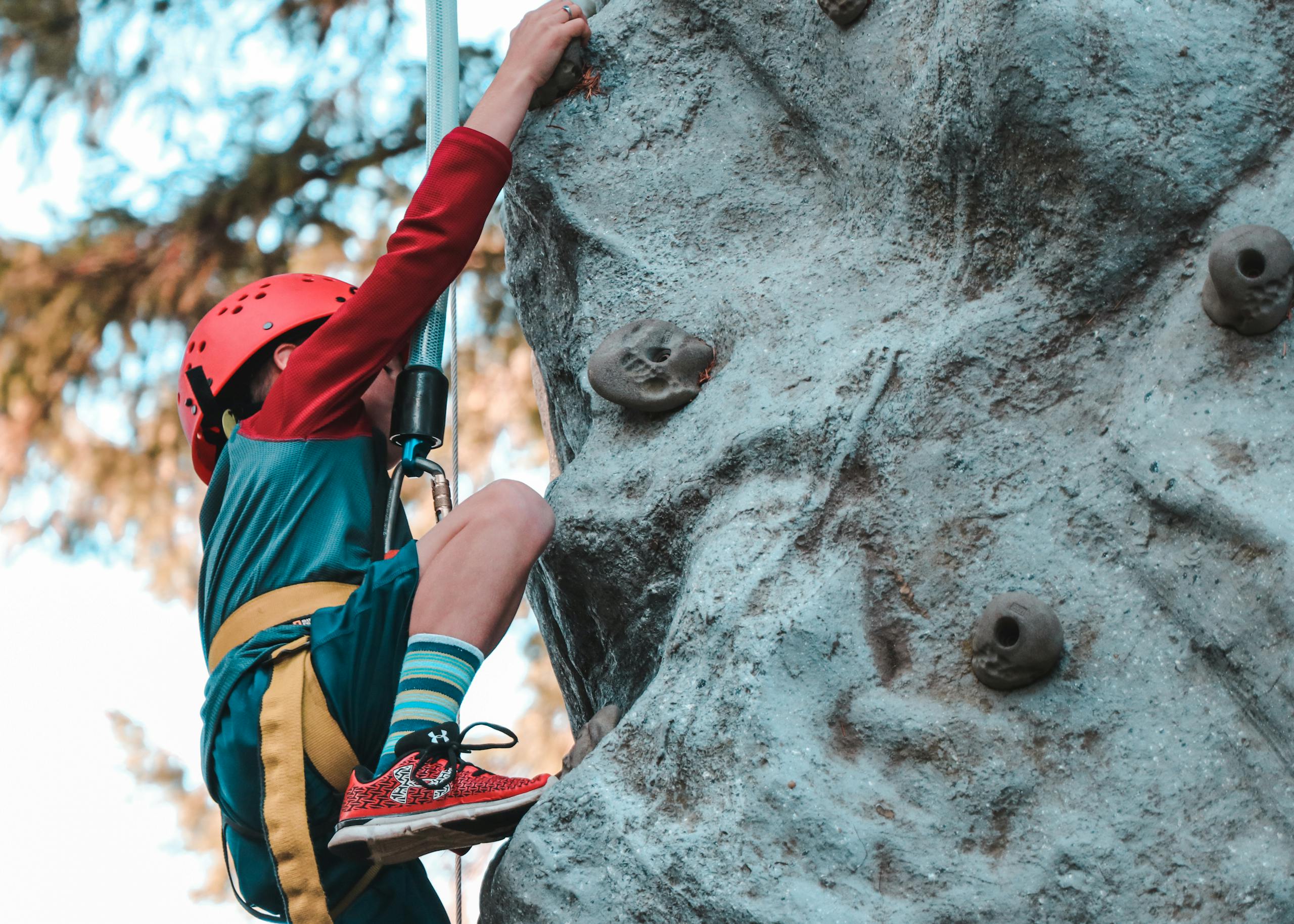
A psychological perspective that emphasizes personal growth and potential treats human beings not as fixed personalities but as evolving people, capable of meaningful change at any stage of life. Within family dynamics, this lens reshapes how parents understand themselves and their children, moving away from rigid labels and toward a more generous view of who everyone is still becoming.
For introverted parents especially, this framework carries real weight. When you’re wired for deep internal processing and you’re also responsible for shaping another person’s emotional world, the question of your own growth stops being abstract. It becomes something you feel every day, in the quiet moments after bedtime and the loud ones at the dinner table.
What I’ve found, both in my own life and in conversations with introverts across many different family situations, is that embracing a growth-oriented perspective doesn’t require becoming someone you’re not. It requires understanding more fully who you already are, and what you’re genuinely capable of.
If you’re working through the particular challenges that come with being an introverted parent, our Introvert Family Dynamics & Parenting hub brings together a wide range of perspectives on how introverts can build stronger, more authentic connections at home without losing themselves in the process.

Why Do Introverts Struggle to Prioritize Their Own Growth?
There’s a particular kind of guilt that settles over introverted parents when they think about their own development. It feels indulgent. It feels like a distraction from the real work of keeping children fed, emotionally regulated, and pointed in a decent direction.
Career Coaching for Introverts
One-on-one career strategy sessions with Keith Lacy. 20 years of Fortune 500 leadership as an introvert, now helping others build careers that work with their wiring.
Learn More50-minute Zoom session · $175
I ran advertising agencies for over two decades. During that time, I was managing teams, pitching Fortune 500 clients, and trying to project a kind of confident, outward-facing energy that didn’t come naturally to me. I was so focused on performing the role that I stopped asking whether I was actually growing inside it. My identity was wrapped up in output, in deliverables, in what I could show other people. My own interior development was something I’d get to later.
Later never quite arrived on its own. It had to be chosen.
Parenting creates the same trap. You’re so absorbed in meeting your children’s needs that your own psychological development gets quietly shelved. And for introverts, who tend to process everything deeply and feel the weight of responsibility acutely, this shelving can go on for years before it registers as a problem.
What makes this especially complicated is that introverts often do their growing invisibly. We reflect, we reframe, we work things out in our heads over long stretches of time. From the outside, it can look like nothing is happening. But something is always happening, if we’re paying attention to it. The question is whether we’re giving that internal process the space and legitimacy it deserves, or whether we’re treating it as a luxury we can’t afford right now.
A growth-oriented psychological perspective says that your development is not a luxury. It’s the foundation from which everything else in your family gets built. Family dynamics, as psychologists frame them, are shaped by the emotional and psychological health of every person in the system. When you grow, the whole system feels it.
What Does a Growth-Oriented Perspective Actually Look Like in Practice?
Humanistic psychology, particularly the tradition associated with Abraham Maslow and Carl Rogers, places personal growth and the realization of potential at the center of psychological health. The core idea is that people have an innate drive toward growth, and that the right conditions, primarily safety, acceptance, and authenticity, allow that drive to flourish.
For introverted parents, translating this into daily life means a few concrete things.
First, it means recognizing that your introversion is not a deficiency to be managed. It’s a genuine personality orientation with its own strengths. The National Institutes of Health has noted that temperament, including the tendencies associated with introversion, appears to have roots in early development and remains relatively stable across a lifetime. You’re not going to think your way into becoming an extrovert, and you shouldn’t want to. What you can do is understand your introversion more clearly and work with it rather than against it.
Second, a growth-oriented perspective means staying curious about yourself. Not in a navel-gazing way, but in the way that a good leader stays curious about their team. When I finally started paying attention to my INTJ patterns at work, specifically the way I could see strategic patterns clearly but struggled to communicate them in emotionally resonant ways, I became a better manager. Not because I changed who I was, but because I understood myself well enough to compensate deliberately and to build teams whose strengths filled in my gaps.
Third, it means applying that same curiosity to your children. A growth-oriented parent doesn’t try to produce a particular kind of child. They try to understand the child in front of them and create conditions where that specific person can develop toward their own potential.
If you’re trying to understand your own personality profile more precisely, tools like the Big Five Personality Traits Test can give you a structured way to examine where you fall on dimensions like openness, conscientiousness, and agreeableness. Understanding your profile doesn’t box you in. It gives you a more honest starting point.

How Does Your Own Psychological History Shape What You Model for Your Children?
One of the harder truths that a growth-oriented perspective asks you to sit with is this: you are always modeling something for your children. Even when you think you’re just surviving the day, they are watching how you handle frustration, how you respond to failure, how you treat yourself when things go wrong.
For introverts who grew up in families or cultures that treated quietness as a problem, this modeling question gets complicated fast. Many of us absorbed messages early on that our natural way of being was somehow insufficient. We learned to perform extroversion in social situations, to apologize for needing time alone, to feel vaguely ashamed of the depth and intensity with which we experience things.
Those old messages don’t disappear when you become a parent. They resurface in how you respond when your introverted child says they don’t want to go to the party. They show up in the small, almost invisible ways you communicate what’s acceptable and what isn’t.
I remember a period in my agency years when I had a team member who was extraordinarily talented but visibly struggled in large group settings. She’d go quiet in brainstorms, defer to louder voices even when her ideas were better, and then send me a detailed follow-up email at 10 PM with every thought she hadn’t voiced in the room. I started scheduling one-on-one time specifically to draw out her thinking, and her contributions became some of the most valuable the agency produced. What I was doing, without fully naming it at the time, was creating conditions for her growth rather than expecting her to adapt to conditions that didn’t suit her.
The parallel at home is real. When you’ve done enough of your own psychological work to understand where your patterns come from, you’re much better positioned to avoid passing them on unconsciously. The American Psychological Association has written extensively about how unaddressed psychological experiences, including the quieter, more chronic ones like years of feeling out of place, can shape behavior in ways we don’t always recognize. Growth-oriented parenting starts with that kind of honest self-examination.
For parents who identify as highly sensitive, this self-examination has an additional layer of complexity. The experience of HSP parenting involves processing not just your own emotional world but absorbing the emotional texture of your children’s experiences with unusual intensity. Understanding how that sensitivity intersects with your growth process is worth examining carefully.
Can Introverts Actually Change, or Are We Just Accepting What We Are?
This is a question I’ve wrestled with for a long time, and I think the honest answer is: both, and the distinction matters.
There are aspects of personality that are genuinely stable. Your fundamental orientation toward the inner world rather than the outer one, your preference for depth over breadth in relationships, your need for solitude to restore your energy: these don’t change in any meaningful way, and trying to change them creates more suffering than growth.
Yet there is enormous room for development within those stable traits. You can become more emotionally articulate. You can build skills in areas where introversion creates natural friction, like conflict resolution or asking for help. You can develop greater self-compassion. You can learn to recognize when your introversion is serving you and when it’s being used as an excuse to avoid something uncomfortable.
Growth-oriented psychology makes this distinction carefully. It isn’t asking you to become someone else. It’s asking you to become more fully yourself, which means developing your capacities, healing old wounds, and expanding what you’re able to offer the people you love.
In my own experience, the growth that’s mattered most hasn’t been about becoming more extroverted. It’s been about becoming more honest. More willing to say what I actually think. More able to ask for what I need without framing it as a weakness. That kind of growth doesn’t require changing your personality. It requires trusting it.
Something worth noting here: personality growth isn’t always straightforward, and sometimes what looks like a growth challenge is actually something more specific. If you’re finding that certain patterns in your relationships feel particularly difficult to shift, it can be worth examining whether other factors are at play. A starting point like the Borderline Personality Disorder Test isn’t a diagnosis, but it can prompt useful self-reflection about emotional patterns that might benefit from professional support.

How Do You Build Authentic Connection With Your Children When You’re Naturally Reserved?
Connection for introverts rarely happens through volume or performance. It happens through presence, through genuine attention, through the kind of unhurried engagement that our wiring actually supports rather than fights against.
The challenge is that children, particularly younger ones, often communicate in ways that don’t naturally suit introverted parents. They’re loud, repetitive, emotionally unpredictable, and they don’t always respond well to the quiet, considered pace that introverts prefer. There’s a real mismatch there, and pretending it doesn’t exist doesn’t help anyone.
What does help is understanding that authentic connection doesn’t require matching your child’s energy at every moment. It requires showing up consistently, paying close attention, and communicating in ways that feel real to you. An introverted parent who sits quietly with a child and asks one genuinely curious question can create more connection than an extroverted performance of enthusiasm that doesn’t ring true.
There’s also something worth saying about the role that genuine warmth plays in these moments. Being likeable, in the deepest sense of that word, isn’t about charm or social ease. It’s about making people feel seen and valued. If you’ve ever wondered how others experience your presence, the Likeable Person Test can offer some useful perspective on the qualities you’re already bringing to your relationships.
One of the things I’ve noticed in my own relationships, both at work and at home, is that the moments of real connection almost always happen in small, unscripted exchanges rather than planned ones. A brief conversation on the way somewhere. A quiet observation about something neither of you was expecting. These moments don’t require extroverted energy. They require presence, which introverts can absolutely offer.
Personality research, including work published in PubMed Central, has explored how different personality orientations shape the quality and style of close relationships. What consistently emerges is that depth of engagement matters more than frequency of interaction. Introverts often bring exactly that kind of depth, when they give themselves permission to trust it.
What Role Does Caring for Others Play in Your Own Growth?
There’s a version of personal growth that treats it as a solo project, something you pursue in therapy or through books or in the quiet hours before everyone else wakes up. That version isn’t wrong, but it’s incomplete.
Much of the most meaningful psychological growth happens in relationship. In the friction of being truly known by another person. In the stretch of caring for someone whose needs are different from your own. In the long, slow work of showing up consistently for people who depend on you.
Parenting is one of the most demanding growth environments most people ever enter. Not because it’s the only path to maturity, but because it makes your patterns visible in ways that are hard to ignore. Your child will find every unresolved corner of your psychology and shine a light on it, not maliciously, but simply by being a person who needs things from you.
I’ve thought about this a lot in the context of the people I’ve managed over the years. Some of my most significant growth as a leader came from working with people who needed things I wasn’t naturally equipped to provide. I had a creative director early in my career who needed consistent emotional reassurance to do his best work. As an INTJ, that wasn’t my first instinct. I was more comfortable with clear expectations and direct feedback. Learning to provide what he needed without abandoning what worked for me was one of the more genuinely developmental experiences of my professional life.
Parenting offers that same kind of relational growth, compressed and intensified. Your children are not asking you to be perfect. They’re asking you to be present and to keep trying. A growth-oriented perspective says that the trying itself is where the development happens.
For parents who are also working in caregiving roles professionally, the overlap between personal and professional growth can become particularly rich. If you’re exploring whether a structured caregiving path might suit your temperament, tools like the Personal Care Assistant Test Online can help clarify whether that kind of work aligns with your strengths and values.
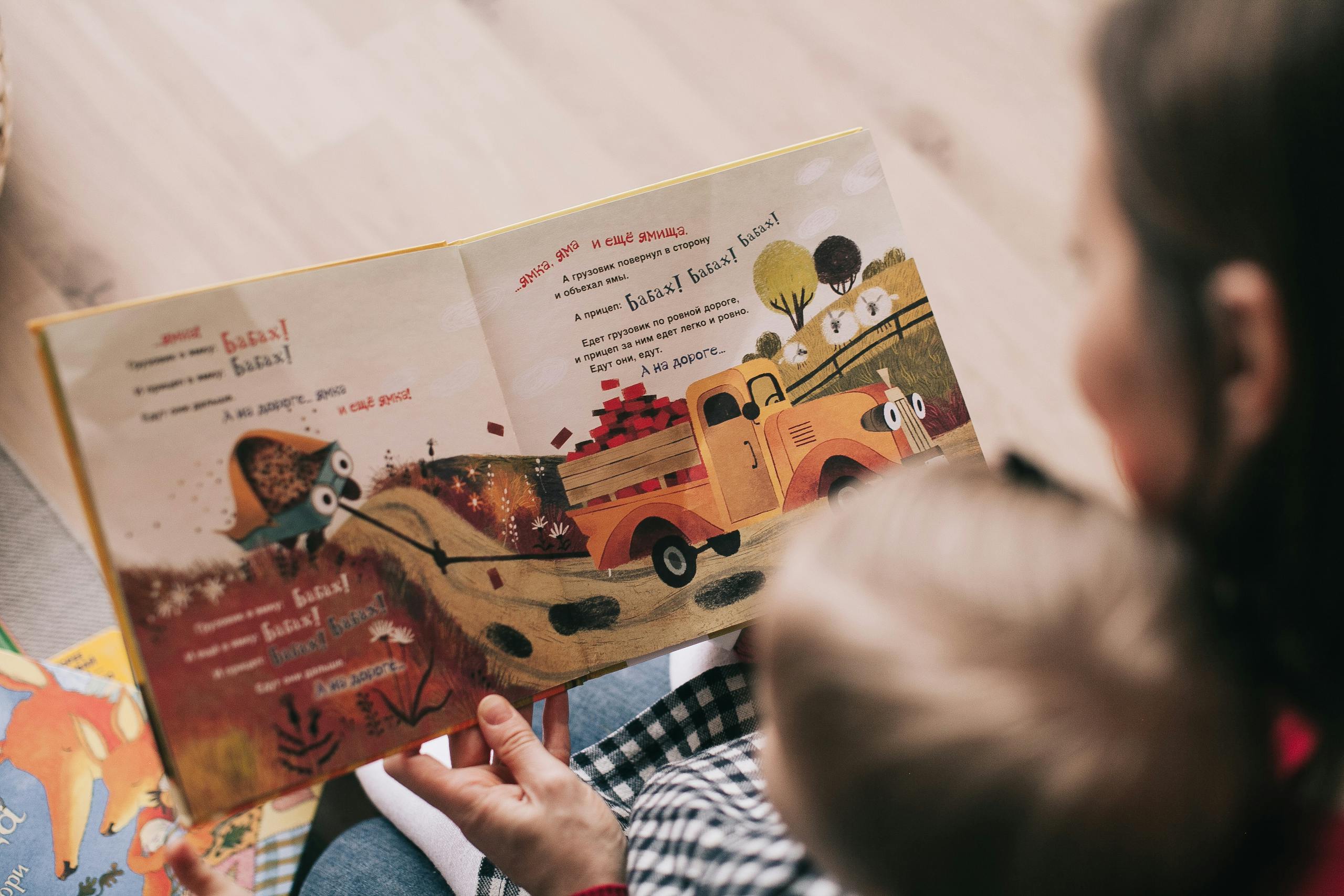
How Do You Model Growth Without Performing It?
One of the traps that growth-oriented frameworks can fall into is the pressure to perform growth, to demonstrate visibly that you’re working on yourself, that you’re evolving, that you’re doing the work. For introverts, this pressure can be particularly uncomfortable, because our actual growth tends to happen internally, over time, in ways that aren’t easily displayed.
Children don’t need to see you performing growth. They need to see you practicing it. There’s a real difference.
Practicing growth looks like admitting when you got something wrong. It looks like changing your mind in front of your children when you encounter new information. It looks like naming your own emotional states honestly, not as a therapeutic exercise but as a natural part of conversation. “I’m feeling overstimulated right now and I need a few minutes” is a more valuable lesson than any lecture about the importance of knowing yourself.
It also looks like pursuing your own interests and development with genuine commitment. When your children see you working toward something that matters to you, reading, writing, developing a skill, building toward a goal, they absorb the message that adults are still becoming. That growth doesn’t stop at some arbitrary point in life. That the process of becoming more fully yourself is a lifelong one, worth taking seriously at every stage.
Some of the most growth-oriented people I’ve known professionally have been those in disciplines that require continuous learning and self-development. People in health and fitness, for instance, often model this well. If you’re drawn to that kind of structured growth path yourself, something like the Certified Personal Trainer Test might be worth exploring as a way to formalize and build on strengths you’re already developing.
The broader point is that modeling growth authentically means letting your children see the actual process, not a curated version of it. That requires a kind of vulnerability that introverts sometimes resist, because we’re more comfortable processing internally before sharing. Yet some of the most powerful modeling happens in the messy middle, before you’ve figured it all out.
What Does the Research Suggest About Personality and Parenting Outcomes?
Personality and parenting have a complicated relationship in the psychological literature. What’s reasonably clear is that parental warmth, consistency, and emotional availability matter significantly for child development, and that these qualities can be expressed across a wide range of personality types.
Introverted parents are not at a disadvantage here. The qualities that introverts bring, depth of attention, thoughtful responses, the ability to sit with complexity without rushing to resolve it, are genuinely valuable in a parenting context. Published research on parenting and child outcomes consistently points to responsiveness and emotional attunement as key factors, not energy level or social ease.
What does matter is self-awareness. Parents who understand their own patterns, including the ways their personality creates strengths and the ways it creates friction, are better positioned to make intentional choices rather than reactive ones. A growth-oriented perspective supports exactly this kind of self-awareness, not as a form of self-criticism but as a tool for becoming more effective and more present.
The distribution of personality types in the general population means that introverted parents are raising children who may be quite different from them, and also children who share their wiring. Both situations call for the same underlying orientation: genuine curiosity about who your child is, and a commitment to creating conditions where that person can grow toward their own potential.
Understanding how different personality configurations interact within families can also shed light on dynamics that might otherwise feel puzzling. Complex family structures add additional layers to these dynamics, as personalities that might not have chosen each other are brought into close relationship and asked to build something functional together.

Bringing It Together: Growth as a Family Practice
A psychological perspective that emphasizes personal growth and potential isn’t a self-help slogan. It’s a genuine framework for understanding human beings as works in progress, capable of meaningful development across the full span of their lives.
For introverted parents, this framework offers something particularly valuable: permission. Permission to take your own development seriously. Permission to trust that your natural way of being has genuine strengths worth building on. Permission to grow at the pace and in the direction that makes sense for who you actually are, rather than who you think you should be.
When I look back at the years I spent trying to perform extroversion in leadership roles, what strikes me most is how much energy I wasted on the performance itself. Energy that could have gone into the actual work, into the relationships that mattered, into the kind of quiet, strategic thinking that I was genuinely good at. The growth that came from finally accepting my INTJ wiring wasn’t about becoming more comfortable with who I was. It was about becoming more effective because of it.
That same shift is available to you as a parent. Not a shift away from the challenges of being an introverted parent in a world that often favors extroverted styles, but a shift toward a clearer, more honest relationship with your own potential and what you’re genuinely capable of offering the people you love most.
There’s more to explore on this theme across our full collection of resources. The Introvert Family Dynamics & Parenting hub covers everything from daily routines to emotional boundaries, all through the lens of what actually works for introverted parents rather than what the conventional parenting advice assumes.
About the Author
Keith Lacy is an introvert who’s learned to embrace his true self later in life. After 20 years in advertising and marketing leadership, including running agencies and managing Fortune 500 accounts, Keith now channels his experience into helping fellow introverts understand their strengths and build fulfilling careers. As an INTJ, he brings analytical depth and authentic perspective to every article, drawing from both professional expertise and personal growth.
Frequently Asked Questions
What is a psychological perspective that emphasizes personal growth and potential?
A psychological perspective that emphasizes personal growth and potential, most closely associated with humanistic psychology, treats people as inherently capable of development and change. Rather than focusing primarily on pathology or fixed traits, this approach centers on the conditions that allow individuals to move toward their fullest expression. For parents, it means viewing both yourself and your children as ongoing works in progress rather than finished products.
Can introverted parents genuinely thrive without changing their personality?
Yes. The most meaningful growth for introverted parents doesn’t come from becoming more extroverted. It comes from understanding your introversion clearly enough to work with it intentionally. Qualities like depth of attention, thoughtful responsiveness, and the ability to create calm, focused environments are genuine parenting strengths. Growth means developing those strengths further and building skills in areas where your natural wiring creates friction, not abandoning who you are.
How does a parent’s psychological growth affect their children?
Family systems are interconnected, which means that when one person in the system grows, the whole system is affected. When parents develop greater self-awareness, emotional honesty, and the ability to respond rather than react, children experience a more stable and emotionally available environment. They also absorb the implicit message that growth is a lifelong process worth taking seriously, which is one of the most valuable things a parent can model.
What’s the difference between accepting your introversion and using it as an excuse?
Accepting your introversion means recognizing your genuine needs and working with your natural strengths rather than against them. Using it as an excuse means avoiding discomfort or connection under the cover of personality. A growth-oriented perspective asks you to tell the difference honestly. Needing solitude to recharge is real and worth protecting. Avoiding difficult conversations because they feel overstimulating is a pattern worth examining. Self-awareness is what separates the two.
How can introverted parents model growth authentically for their children?
Authentic modeling doesn’t require performing growth or narrating your self-improvement experience. It means letting children see the real process: admitting mistakes, changing your mind, naming your emotional states honestly, and pursuing your own interests with genuine commitment. When children observe a parent who is still curious, still developing, and still willing to be honest about the process, they absorb a more valuable lesson than any deliberate teaching could provide.