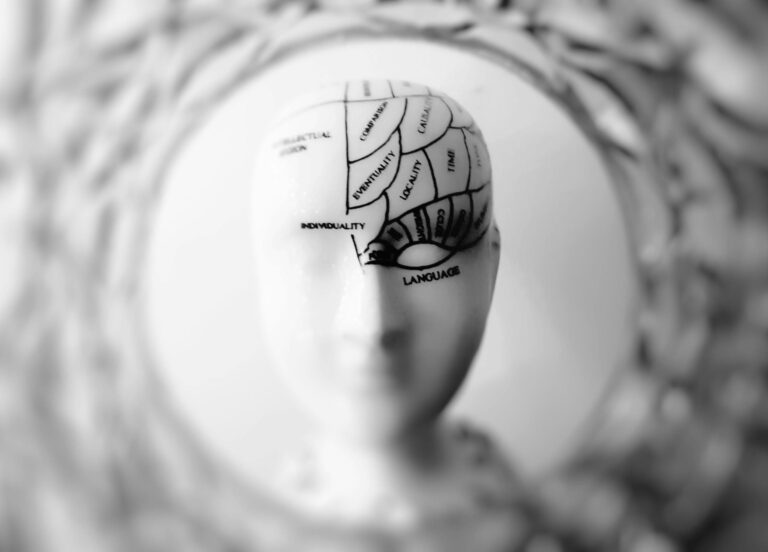
A word for a deep thinker is someone who processes ideas, emotions, and experiences at a level beyond surface observation, often described by terms like “reflective,” “contemplative,” “philosophical,” or “analytical.” These words point to a quality of mind that doesn’t just receive information but turns it over, examines it from multiple angles, and sits with it long enough to extract genuine meaning.
What’s interesting is how many people who fit this description spend years not knowing what to call themselves. They know they think differently. They know conversations feel shallow unless there’s real substance underneath. They just don’t always have the vocabulary to name it, and that absence of language can make the whole experience feel more isolating than it needs to be.
If you’ve ever felt that your mind operates on a frequency most people around you aren’t tuned into, this is for you. Let’s put some words to that experience.

Before we get into the vocabulary itself, it’s worth noting that deep thinking doesn’t exist in isolation. It shapes how you connect with people, how you handle conflict, how you show up in conversations. That’s why I’ve written extensively about this territory in the Introvert Social Skills and Human Behavior hub, where the relationship between your inner world and your outer interactions gets the attention it deserves.
What Does It Actually Mean to Be a Deep Thinker?
Before we can talk about the right words, we need to be honest about what we mean by “deep thinking.” It’s not just intelligence. Plenty of highly intelligent people are remarkably surface-level in how they engage with ideas. And plenty of people who wouldn’t describe themselves as especially smart are profound thinkers who process life with extraordinary care.
Career Coaching for Introverts
One-on-one career strategy sessions with Keith Lacy. 20 years of Fortune 500 leadership as an introvert, now helping others build careers that work with their wiring.
Learn More50-minute Zoom session · $175
Deep thinking is about the quality of attention you bring to an idea, not the speed at which you process it. It’s the tendency to ask “why” when others are satisfied with “what.” It’s the discomfort with easy answers. It’s the pull toward meaning rather than just information.
I noticed this in myself long before I had a framework for it. Running an advertising agency, I’d sit in client briefings and find my mind already three layers underneath the stated problem. The client would say they needed a new campaign for a product launch, and I’d be quietly turning over questions about why the product existed, what emotional need it was actually meeting, whether the brand story was even coherent. My team sometimes found this exhausting. I found it impossible to turn off.
That quality, that compulsion to go deeper, is what all the words we’re about to explore have in common.
The Core Words for a Deep Thinker and What Each One Captures
Language matters here, because different words for a deep thinker emphasize different aspects of the same underlying quality. Choosing the right one depends on what dimension of deep thinking you’re trying to name.
Reflective
This is probably the most accessible word. A reflective person turns experiences inward, examining what happened, what it meant, and what it says about them or the world. Reflection implies a kind of internal mirror, a willingness to look back before from here. It’s the quality that makes someone a good learner from experience, because they don’t just move on from events. They process them.
Reflective people often find that meditation and self-awareness practices feel natural rather than forced, because they’re already doing a version of that internal examination in daily life. Sitting quietly with your own thoughts isn’t a foreign concept when your mind gravitates there anyway.
Contemplative
Contemplative goes a step further. Where reflective suggests looking back, contemplative suggests dwelling in a state of sustained attention. A contemplative person doesn’t just think about things. They inhabit the thinking. There’s a meditative quality to it, a willingness to sit with a question without rushing toward resolution.
This word has roots in religious and philosophical traditions, where contemplation was considered a distinct and valuable mode of engagement with truth. That heritage is worth noting, because it signals that this kind of thinking has always been recognized as meaningful, even if modern culture tends to reward speed and output over depth and patience.
Philosophical
To call someone philosophical is to say they’re drawn to fundamental questions. Not just “how does this work” but “what does this mean, why does it matter, what assumptions are we making.” Philosophical thinkers are often the ones in a conversation who slow things down by asking the question everyone else skipped over.
In agency life, I had a copywriter who was genuinely philosophical in this way. Every creative brief became an opportunity to question the underlying premise. Clients occasionally found him difficult. I found him invaluable, because he caught the conceptual problems before they became expensive production problems. His philosophical instinct was a professional asset, even if it looked like obstruction from the outside.
Analytical
Analytical thinking is deep thinking with a structural quality. An analytical person doesn’t just go deep, they go deep in an organized way, breaking things into components, examining relationships between parts, looking for patterns. The American Psychological Association notes that introversion is often associated with this kind of careful, internally-directed cognitive processing.
As an INTJ, analytical is probably the word that fits me most precisely. My natural move when confronted with a problem is to decompose it. What are the variables? What are the dependencies? What would have to be true for this solution to work? That instinct served me well in client strategy work, even when it made me seem cold or overly systematic in creative environments.
Introspective
Introspective specifically points the lens inward. An introspective person doesn’t just think deeply about the world. They think deeply about themselves, their motivations, their reactions, their patterns. This is the word that most directly captures the self-examining quality that many introverts recognize in themselves.
Introspection has real value, but it also has a shadow side. When it turns into rumination, when the inward gaze becomes a loop rather than an exploration, it can work against you. That’s something I’ve had to learn to manage. There’s a meaningful difference between introspection that generates insight and introspection that generates anxiety, and the line between them isn’t always obvious in the moment.

Pensive
Pensive carries an emotional weight that some of the other words don’t. A pensive person is thoughtful, yes, but there’s often a quality of concern or melancholy in it. Pensive thinking tends to be triggered by something that matters emotionally, a loss, a decision, a relationship, a question about meaning. It’s deep thinking with feeling woven through it.
This is a word worth knowing because it names something real. Not all deep thinking is neutral and analytical. Some of it is emotionally saturated, and that’s not a weakness. It’s often where the most honest insights come from.
Cerebral
Cerebral suggests a person whose primary orientation is intellectual. They live largely in the realm of ideas. Cerebral thinkers are often most comfortable in abstract territory, and may find purely practical or social environments draining because they don’t offer enough conceptual substance to engage with.
The word can sometimes carry a slightly detached connotation, as if the cerebral person is more comfortable with ideas than people. That’s not always accurate, but it points to a real tendency worth being aware of.
Meditative
Meditative thinking is slow, deliberate, and unhurried. A meditative thinker isn’t rushing toward conclusions. They’re comfortable in the space of not-yet-knowing, sitting with a question long enough for something genuine to emerge. This quality is increasingly rare in a culture that rewards rapid response, which is part of why it’s so valuable when you encounter it.
Why Introverts Are So Often the Deep Thinkers in the Room
There’s a meaningful overlap between introversion and deep thinking, though they’re not the same thing. Introversion, as the APA defines it, refers to a preference for internal rather than external stimulation. Deep thinking is a cognitive style. The two tend to travel together because the internal orientation of introversion creates natural conditions for sustained, layered thinking.
When you’re not constantly seeking external stimulation, your mind has room to work. It can follow a thread of thought without interruption. It can return to the same question from different angles over days or weeks. It can hold complexity without immediately needing to resolve it into something simple and shareable.
This is something I’ve come to understand about myself gradually. In my agency years, I interpreted my need for quiet processing time as a professional liability. I’d watch extroverted colleagues generate ideas out loud in brainstorms, seemingly pulling insights from nowhere, and feel inadequate by comparison. What I didn’t recognize was that my best thinking was happening somewhere else, in the quiet hours before a meeting, in the drive home, in the early morning before anyone else was in the office. My ideas were just as good. They arrived through a different door.
A Psychology Today article on the introvert advantage makes a similar point, noting that introverted leaders often bring a quality of depth and preparation to their work that more externally-oriented thinkers don’t always match.

When Deep Thinking Becomes a Problem You Need to Address
Being a deep thinker is genuinely valuable. It’s also genuinely exhausting, and it can tip into territory that works against you.
The most common version of this is overthinking. There’s a difference between deep thinking and overthinking, even though they can look identical from the outside. Deep thinking moves toward insight. Overthinking circles the same territory without arriving anywhere. It’s the cognitive equivalent of spinning wheels.
I’ve been in that loop more times than I’d like to admit. After a difficult client presentation, after a leadership decision that didn’t land the way I intended, after a conversation that felt off in ways I couldn’t immediately name. The mind keeps returning, keeps reprocessing, keeps looking for the thing it missed. At some point that stops being useful and starts being punishing.
If you recognize that pattern in yourself, overthinking therapy is worth exploring as a practical resource. There are real, evidence-based approaches to working with an overactive analytical mind rather than being worked over by it.
Overthinking can also be triggered by specific painful experiences. Betrayal in particular has a way of activating the deep thinker’s mind in destructive ways. If you’ve been through something like that, the piece on how to stop overthinking after being cheated on addresses that specific kind of mental spiral with real care.
How Deep Thinkers Show Up in Conversation (And Where It Gets Complicated)
One of the recurring challenges for deep thinkers is the gap between how they process and how most conversations actually work. Social interaction tends to run on a faster clock than deep thinking does. There’s an expectation of quick response, easy transitions, light topics that don’t require much internal excavation before you can engage.
For someone whose natural mode is to consider something from multiple angles before speaking, this can create real friction. You’re still processing the last thing someone said when they’ve already moved on to something new. You want to go deeper on a topic that everyone else has already moved past. You find small talk genuinely difficult not because you’re antisocial, but because it doesn’t give your mind anything to actually work with.
This is something I’ve had to work on deliberately. My natural conversational instinct is to wait until I have something substantive to say, which in fast-moving social contexts can read as disengagement or even coldness. Learning to be a better conversationalist as an introvert meant understanding that conversation has its own rhythms, and that participating in those rhythms doesn’t require abandoning depth. It requires developing a different kind of fluency.
Some of that development also comes through building social skills more broadly. The work of improving social skills as an introvert isn’t about becoming someone you’re not. It’s about learning to translate what’s happening in your rich inner world into forms that connect with other people.

Deep Thinking and Emotional Intelligence: A Relationship Worth Understanding
There’s a common assumption that deep thinking is primarily intellectual, a matter of ideas and analysis. But in my experience, the most powerful deep thinkers are also emotionally perceptive. They don’t just think deeply about concepts. They think deeply about people, about what’s being communicated beneath the surface of words, about what someone’s behavior reveals about their inner state.
This is where emotional intelligence and deep thinking intersect in ways that are genuinely meaningful. An emotional intelligence speaker will often make the point that self-awareness, one of the core components of emotional intelligence, requires exactly the kind of inward attention that deep thinkers naturally bring. You can’t understand your own emotional patterns without the willingness to look carefully at yourself.
What I’ve noticed in myself is that my analytical tendency, when I turn it toward people rather than problems, can be genuinely useful in leadership contexts. I’d watch dynamics in a room and notice things that others seemed to miss. Who was holding back. Where the tension was actually coming from. What the stated disagreement was really about. That kind of perception isn’t separate from deep thinking. It’s an expression of it.
The research on self-reflection and psychological wellbeing suggests that people who engage in genuine self-examination, as opposed to rumination, tend to have better emotional regulation and more satisfying relationships. The distinction matters: genuine self-reflection generates understanding, while rumination generates anxiety. Deep thinkers need to know which mode they’re in.
MBTI Types Most Associated With Deep Thinking
If you want to understand your own cognitive style more precisely, personality frameworks like MBTI can be genuinely useful. Not as a box to put yourself in, but as a vocabulary for understanding tendencies that you’ve probably already noticed in yourself.
The types most commonly associated with deep thinking include INTJs (my own type), INFJs, INTPs, and INFPs. What these types share is a dominant introverted function, which means their primary mode of processing is internal. They also tend to be intuitive rather than sensing in their perception, which means they’re naturally drawn to patterns, meanings, and possibilities rather than concrete facts and immediate details.
That said, deep thinking isn’t exclusive to introverted intuitive types. An ISTJ who methodically examines every angle of a problem before acting is a deep thinker. An INFP who sits with the emotional complexity of a situation until they understand it fully is a deep thinker. The style varies. The depth is the constant.
If you’re curious where you fall on this spectrum, take our free MBTI personality test and see what it reveals about your cognitive style. Understanding your type won’t tell you everything, but it can give you a useful starting framework for understanding why your mind works the way it does.
The National Institutes of Health has documented how individual differences in cognitive processing styles are associated with measurable differences in how people engage with complex information, which is part of why frameworks like MBTI, whatever their limitations, capture something real about how minds differ.
What Deep Thinkers Bring to the World That Can’t Be Replicated
I want to be direct about something, because I think deep thinkers often undersell what they bring to the table.
In a culture that rewards speed, volume, and visibility, the qualities of depth, patience, and careful attention can feel like disadvantages. They’re not. They’re increasingly rare, and rarity has value.
The problems worth solving, in business, in relationships, in society, are almost never the ones that yield to quick, surface-level analysis. They’re the ones that require someone willing to sit with complexity long enough to actually understand it. That’s what deep thinkers do. That’s what they’ve always done.
In my agency years, the work I’m most proud of came from exactly this quality. The campaigns that actually moved the needle for clients weren’t the ones that came out of loud brainstorms. They came from the quieter process of really understanding what was going on beneath the surface of a brand’s relationship with its audience. That took depth. It took patience. It took the willingness to keep asking questions after everyone else was ready to move on.
The Harvard Health blog on introvert social engagement makes a point that resonates with me: introverts often bring a quality of presence and attention to interactions that creates genuine connection, precisely because they’re not performing or filling space. They’re actually there.

How to Work With Your Deep Thinking Mind Rather Than Against It
Knowing the words for what you are is a starting point. Actually working well with that nature takes something more.
A few things have genuinely helped me over the years. The first is giving myself permission to process on my own timeline. Not every decision needs to be made in the room. Not every response needs to be immediate. Communicating that to colleagues, clients, and collaborators, explaining that my best thinking happens after I’ve had time to sit with something, changed how I operated professionally. People respected it more than I expected.
The second is learning to distinguish between productive depth and unproductive loops. Deep thinking generates movement, even if slowly. Rumination generates stasis. When I notice I’m covering the same ground for the third time without arriving anywhere new, that’s a signal to change something, whether that’s taking a walk, writing things out, or deliberately setting the question aside.
The third is finding contexts that actually value what you bring. Not every environment rewards depth. Some organizations run on speed and volume, and deep thinkers in those environments will always feel out of place. Finding the right fit matters enormously. The NIH’s work on personality and occupational fit supports what most deep thinkers discover through experience: alignment between cognitive style and environment isn’t a luxury. It’s a meaningful factor in both performance and wellbeing.
And finally, don’t underestimate the value of connecting with other deep thinkers. Finding people who operate at a similar level of depth, who want to actually talk about things rather than skim across them, changes the experience of being someone wired this way. It makes the whole thing feel less like a burden and more like what it actually is: a genuine way of being in the world.
There’s much more to explore about how deep thinking intersects with introvert social dynamics, communication, and self-understanding. The full Introvert Social Skills and Human Behavior hub covers all of it, and I’d encourage you to spend time there if this territory resonates with you.
About the Author
Keith Lacy is an introvert who’s learned to embrace his true self later in life. After 20 years in advertising and marketing leadership, including running agencies and managing Fortune 500 accounts, Keith now channels his experience into helping fellow introverts understand their strengths and build fulfilling careers. As an INTJ, he brings analytical depth and authentic perspective to every article, drawing from both professional expertise and personal growth.
Frequently Asked Questions
What is the best single word for a deep thinker?
The best word depends on what aspect of deep thinking you want to emphasize. “Reflective” works well as a general descriptor. “Contemplative” captures the sustained, unhurried quality of deep thought. “Introspective” points specifically to inward self-examination. “Analytical” emphasizes structured, methodical depth. “Philosophical” suggests a focus on fundamental questions and meaning. Most deep thinkers will recognize themselves in several of these words simultaneously.
Are deep thinkers usually introverts?
There’s a strong overlap between introversion and deep thinking, but they’re not the same thing. Introversion refers to a preference for internal stimulation and a tendency to recharge through solitude. Deep thinking is a cognitive style characterized by sustained, layered engagement with ideas. Because introverts naturally orient inward, they often have more practice and comfort with the kind of sustained internal processing that deep thinking requires. That said, extroverts can absolutely be deep thinkers, and some introverts prefer breadth over depth in their thinking. The correlation is real but not absolute.
Is being a deep thinker a strength or a weakness?
Deep thinking is genuinely a strength in contexts that reward careful analysis, nuanced understanding, and the ability to work with complexity. It becomes a liability when it tips into overthinking, when the analytical mind keeps circling without generating new insight, or when the pace of deep processing creates friction in environments that demand rapid response. The difference between deep thinking as an asset and overthinking as a burden often comes down to self-awareness: knowing when to keep going deeper and when to make a decision and move.
What MBTI types are most associated with deep thinking?
MBTI types with dominant introverted functions, particularly INTJ, INFJ, INTP, and INFP, are most commonly associated with deep thinking. These types share a natural orientation toward internal processing and a preference for intuition, which draws them toward patterns, meanings, and abstract ideas rather than immediate concrete details. That said, deep thinking appears across all types. An ISTJ who examines every angle before acting, or an ISFP who sits with emotional complexity until they genuinely understand it, is also a deep thinker. The style varies by type, but the capacity for depth is not limited to any particular group.
How can a deep thinker communicate more effectively with people who think differently?
The most effective approach is learning to translate, rather than simplify. Deep thinkers often hold complex, layered perspectives that need to be communicated in a more linear, accessible form for people who process differently. This means being willing to share conclusions before all the supporting reasoning, to engage with the social rhythms of conversation even when the topic doesn’t feel fully processed, and to recognize that other people’s faster processing style isn’t shallowness. It’s a different mode. Building conversational fluency as an introvert, and developing the emotional intelligence to read what kind of engagement someone is looking for, goes a long way toward bridging that gap.