
Stress and burnout are not the same thing, even though they can feel identical in the moment. Stress is a temporary state of pressure that eases when the demand passes, while burnout is a deeper depletion that persists even after the pressure lifts. Knowing which one you’re dealing with changes everything about how you respond to it.
That distinction took me an embarrassingly long time to figure out. I spent years in advertising, running agencies, managing dozens of people, and chasing deadlines that felt like they were designed to break you. There were stretches where I thought I was just tired. Stressed, sure. But tired was something sleep could fix. What I eventually realized was that I had crossed a line somewhere, and sleep wasn’t touching it anymore.
If you’ve been wondering whether you’re dealing with ordinary pressure or something that’s gone deeper, you’re asking exactly the right question. And it’s worth taking seriously, especially if you’re an introvert who tends to internalize rather than sound the alarm.
Our Burnout & Stress Management hub covers the full landscape of these experiences for introverts, from early warning signs to recovery strategies. This article focuses on one of the most important pieces: understanding what you’re actually dealing with before you try to fix it.

What Does Stress Actually Feel Like Versus Burnout?
Stress has a certain energy to it, even when that energy feels terrible. You’re anxious, wound up, maybe irritable. Your mind races. You feel overwhelmed by how much is on your plate, but somewhere underneath the overwhelm, there’s still a part of you that believes you can get through it. That belief is important. Stress, at its core, is your system responding to a demand that feels larger than your current resources.
Career Coaching for Introverts
One-on-one career strategy sessions with Keith Lacy. 20 years of Fortune 500 leadership as an introvert, now helping others build careers that work with their wiring.
Learn More50-minute Zoom session · $175
Burnout feels different. The racing stops. What replaces it is a kind of flatness, a hollowness that makes even small tasks feel pointless. You’re not anxious about the pile of work. You’re indifferent to it, and that indifference scares you more than the anxiety ever did. Frontiers in Psychology has published work examining how burnout operates as a distinct psychological state, separate from general stress, characterized by emotional exhaustion, depersonalization, and a reduced sense of personal accomplishment.
I remember a specific period running one of my agencies when we were pitching three major accounts simultaneously. The stress during that stretch was real and relentless. I was working late, second-guessing every deck, fielding calls I didn’t want to take. But I was still engaged. I still cared whether we won. That was stress. A year later, after we’d won two of those accounts and the real work had begun, I noticed something different. I’d sit in a client meeting and feel nothing. Not tired. Not anxious. Just absent. That was burnout.
The emotional texture matters. Stress feels like too much. Burnout feels like nothing left.
Why Do Introverts Often Confuse the Two?
Part of the confusion comes from how introverts process experience. We tend to internalize rather than externalize. When something is wrong, we’re more likely to sit with it quietly than to announce it, which means we can spend a long time in a deteriorating state before we’ve named it clearly, even to ourselves.
There’s also the way introversion shapes our baseline. We’re accustomed to needing more recovery time than others. We know what it feels like to be socially drained after a long day of meetings. That familiarity can make it harder to notice when the depletion has shifted from something normal into something chronic. When you’ve always needed quiet time to recharge, it’s easy to assume you just need more of it, rather than recognizing that no amount of quiet is touching what’s actually wrong.
As Psychology Today’s exploration of introversion and the energy equation points out, introverts draw energy from internal sources and lose it through external demands. That’s a normal feature of how we’re wired. Burnout hijacks that system entirely, so that even the internal sources stop refilling.
Something worth noting: if you’re also a highly sensitive person, the line between stress and burnout can blur even faster. The same intensity that makes you perceptive and empathetic also means you absorb more from your environment, which accelerates depletion. If that resonates, the piece on HSP burnout recognition and recovery is worth reading alongside this one.

What Are the Physical Signs That Separate Stress from Burnout?
Your body keeps score, as the saying goes, and it tends to score differently depending on which state you’re in.
With stress, the physical symptoms are typically activation-based. Tension headaches, tight shoulders, disrupted sleep where your mind won’t quiet down, a racing heart before a big presentation. These are signs of a nervous system that’s been pushed into high gear. They’re uncomfortable, but they have a certain logic to them. Your body is preparing you for a threat.
Burnout symptoms tend to be more depletion-based. Chronic fatigue that doesn’t respond to rest. Frequent illness, because your immune function has taken a hit. Digestive problems. A heaviness in your limbs. Sleep that doesn’t restore you, even when you get enough of it. Research published in PubMed Central points to the physiological mechanisms through which chronic occupational stress can progress into burnout, including measurable changes in cortisol patterns and inflammatory markers.
The practical distinction matters because it changes what helps. If you’re stressed, a long weekend might genuinely reset you. If you’re burned out, a long weekend will feel inadequate, and you’ll return on Monday feeling almost exactly as depleted as when you left. That gap between what should help and what actually helps is one of the clearest diagnostic signals available to you.
I’ve had both experiences. After a brutal pitch season, a week away from the office used to do real work. I’d come back with something resembling energy. But there was a period in my mid-forties when I took a two-week vacation and came back feeling like I’d never left. That was when I had to admit something structural had broken down, not just accumulated.
How Does Your Relationship With Work Change During Burnout?
One of the clearest markers of burnout is what happens to your sense of meaning and engagement at work. Stress doesn’t typically destroy your investment in what you’re doing. You might resent the pressure, wish the workload were lighter, fantasize about a different pace. But you still care about the outcome. You still feel something when a project goes well or poorly.
Burnout erodes that caring. Psychologists call it depersonalization or cynicism, a kind of emotional distancing from your work and the people connected to it. You stop seeing clients as people and start seeing them as problems. You stop feeling pride in good work and start feeling only relief that it’s finished. You count down to the end of the day not because you’re looking forward to something, but because you’re desperate for the day to stop.
As an INTJ who spent decades in a client-facing industry, I can tell you that this shift was deeply disorienting for me. My work had always been where I found my sharpest sense of competence and purpose. When burnout set in, I’d sit across from clients I’d worked with for years and feel a kind of detachment that frightened me. I didn’t dislike them. I just couldn’t access anything that felt like genuine engagement. It was like watching myself through glass.
That detachment can also affect how you interact with colleagues. If you manage people, it shows up in your patience, your presence, your ability to give a damn about their development. I noticed it when I stopped asking follow-up questions in one-on-ones. I was going through the motions of leadership without any of the substance.
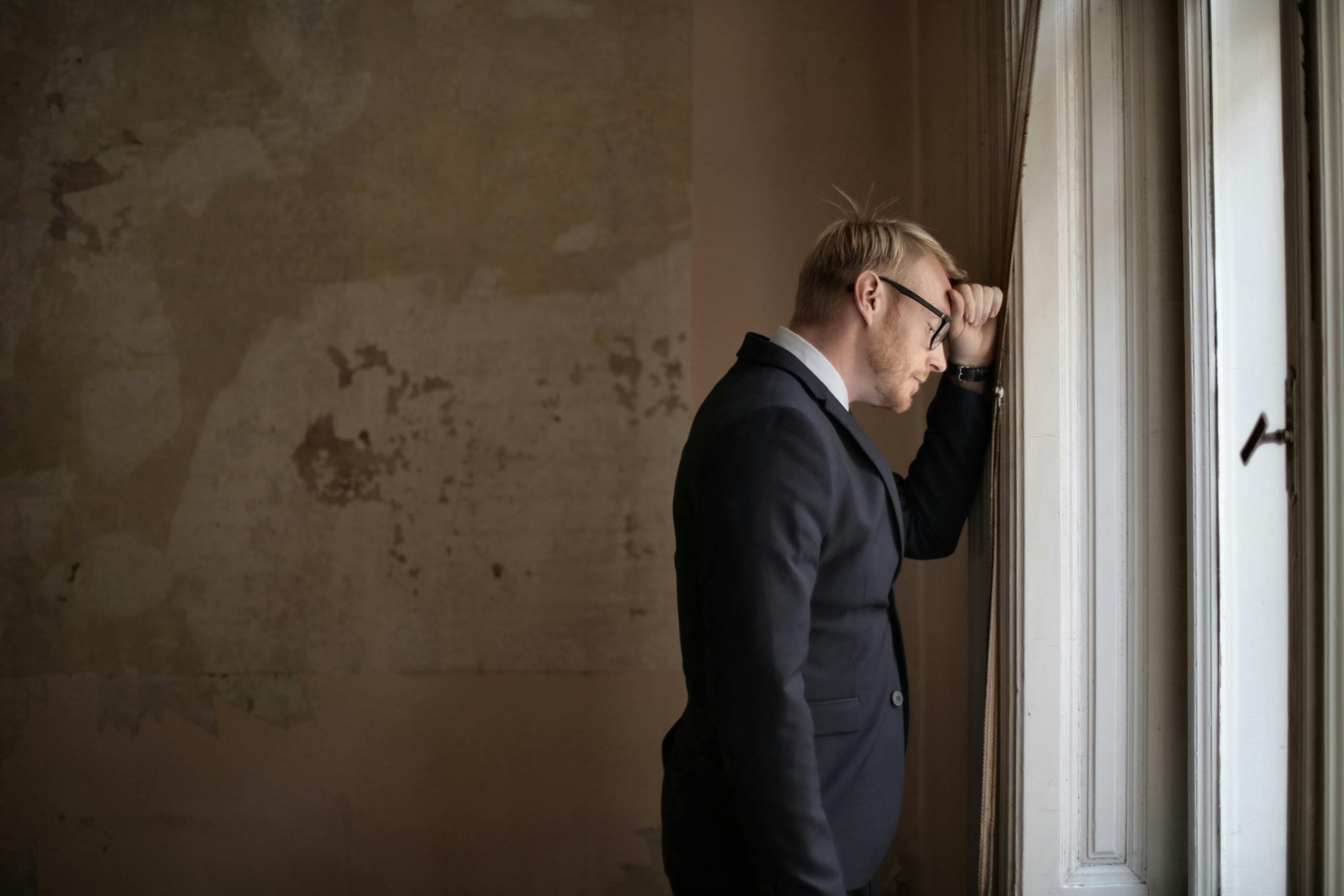
Are There Social Patterns That Signal Burnout Rather Than Stress?
Introverts already tend toward selective social engagement. We’re not the ones who thrive on constant connection, and that’s fine. But burnout can take that preference and turn it into something more extreme and more painful.
With ordinary stress, you might be less patient with social demands. Networking events feel harder. Small talk feels more draining. If you’ve ever wondered whether icebreakers are stressful for introverts, the answer in a stressed state is almost certainly yes, more than usual. But you can still show up. You can still function socially when it matters.
Burnout tends to produce a deeper withdrawal. You start canceling plans with people you actually like. You stop returning messages from friends who matter to you. Even the relationships that normally feel restorative start to feel like obligations. That’s a meaningful shift. When connection with people you genuinely care about stops feeling nourishing and starts feeling like one more demand, something significant has changed.
There’s also a connection worth noting between burnout and social anxiety. Chronic depletion can amplify social fears, making interactions feel more threatening and less manageable. If you’re already working through social anxiety, the stress reduction skills for social anxiety covered on this site can be a useful starting point, though they work best when the underlying burnout is also being addressed.
The 5-4-3-2-1 grounding technique from the University of Rochester Medical Center is one practical tool for managing the anxiety that often accompanies burnout. It’s not a cure, but it can interrupt a spiral when your nervous system has gone into overdrive.
What Role Does Chronic Overextension Play in Burning Out?
Burnout rarely arrives suddenly. It accumulates. And for introverts in demanding professional environments, the accumulation often happens through a specific pattern: we push past our limits, recover partially, push again, recover less, and repeat until the recovery stops happening at all.
In my agency years, the culture rewarded availability. Being reachable at all hours, jumping on calls without warning, attending every optional meeting as though it were mandatory. None of that came naturally to me as an INTJ. I needed thinking time. I needed stretches of uninterrupted work. I needed to process decisions internally before being expected to respond. But I spent years overriding those needs because the environment demanded it, and because I hadn’t yet developed a clear enough sense of where my limits actually were.
Overextension isn’t just about working too many hours. It’s about consistently operating in modes that drain you without building in the recovery your system requires. For introverts, that often means too much reactive work, too many interruptions, too much performance of extroverted behaviors, and not enough protected time for the internal processing that keeps us functional.
One thing that helped me recalibrate was getting honest about what I actually found draining versus what I’d just assumed was draining because everyone else seemed to find it hard. Some of what exhausted me was genuinely introvert-specific. Some of it was burnout amplifying everything. Separating those threads took time and some uncomfortable self-examination.
If you’re looking at your work situation and wondering whether a structural change might reduce the chronic overextension, the list of stress-free side hustles suited to introverts is worth a look. Sometimes the path forward involves building something on your own terms, not just managing the existing demands better.
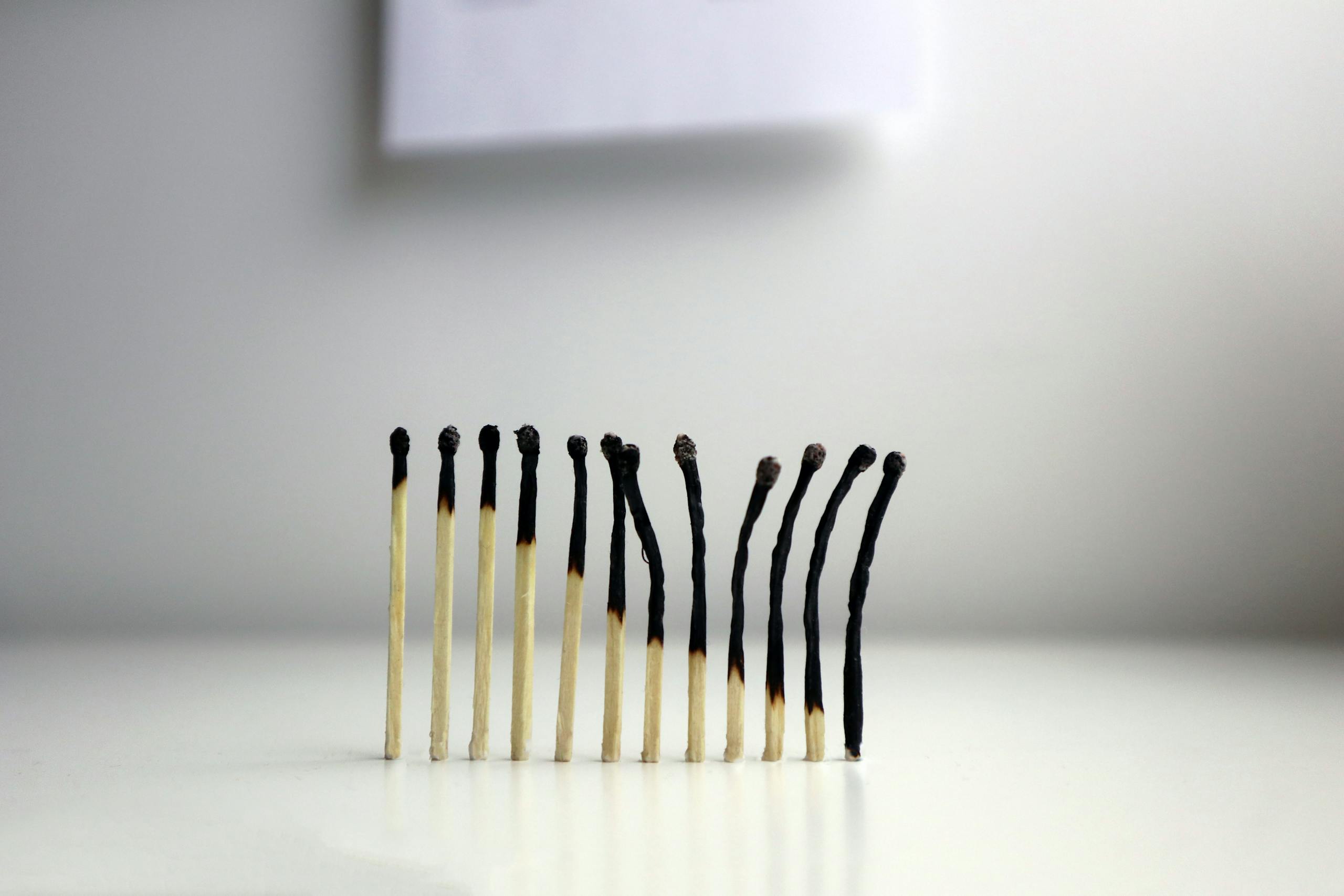
How Do You Recover Differently Depending on Which One You Have?
Getting the diagnosis right matters because the recovery strategies are different. Applying stress-recovery tactics to burnout doesn’t just fail to help. It can sometimes make things worse, because it adds the weight of “this should be working and it isn’t” to an already depleted system.
For stress, the approach is about reducing the load and restoring balance. Rest helps. Exercise helps. Setting clearer boundaries on your time helps. The American Psychological Association’s overview of relaxation techniques offers solid grounding in approaches that actually work for stress reduction, including progressive muscle relaxation and controlled breathing. These tools are genuinely effective when stress is what you’re dealing with.
Burnout recovery requires something more foundational. You’re not just restoring depleted resources. You’re often rebuilding your relationship with meaning, with work, with your own sense of capability. That takes longer and requires a different kind of attention. It typically involves examining what drove the burnout in the first place, which means looking at systemic patterns, not just individual habits.
Self-care is part of the equation, but it has to be the right kind of self-care. The article on how introverts can practice better self-care without added stress makes an important point: self-care that adds obligation and performance pressure to your life isn’t actually restorative. Recovery has to feel like relief, not like another item on the list.
For me, the most effective burnout recovery involved two things I hadn’t expected. The first was radical reduction in decision-making. I’d been making hundreds of decisions a day for years, and my capacity for it had collapsed. Temporarily simplifying everything I could, meals, schedule, social commitments, gave my prefrontal cortex something it desperately needed: rest from choosing. The second was reconnecting with work that felt genuinely mine. Not client work, not work that existed to serve someone else’s goals, but thinking and creating that came from my own curiosity. That took months to feel real again, but it was the thing that eventually turned the corner.
When Should You Take Burnout More Seriously Than You Think You Should?
There’s a particular kind of minimization that introverts are prone to. We’re accustomed to managing our inner lives quietly, and we can be slow to acknowledge when something has moved beyond our capacity to manage alone. Add to that the cultural messaging that equates pushing through with strength, and you have a recipe for ignoring burnout well past the point where it’s doing real damage.
Some signs that warrant more serious attention: persistent hopelessness that doesn’t lift even in moments that should feel good. A sense that you’ve lost access to the version of yourself that used to care about things. Physical symptoms that have gone on long enough to affect your health in measurable ways. Difficulty concentrating that’s affecting your ability to do basic work. These aren’t just stress. They’re signals that your system has been running on empty long enough to need professional support.
Published research in PubMed Central examining occupational burnout has found associations between prolonged burnout and increased risk for depression and anxiety disorders. That’s not meant to alarm you. It’s meant to underscore that burnout isn’t a productivity problem to be optimized away. It’s a health issue that deserves the same seriousness you’d give any other health issue.
One thing that helped me was having someone in my life who would ask directly. Not “how are you doing” in passing, but a real check-in. If you have someone like that, let them ask. And if you’re not sure how to answer honestly, the piece on how to ask an introvert if they’re feeling stressed offers some useful framing for those conversations, whether you’re the one being asked or the one trying to ask someone you care about.
There’s also something worth saying about the relationship between burnout and the kind of high-stakes social performance that many introverts are expected to sustain in professional environments. Psychology Today’s examination of small talk as an introvert captures something real about the cumulative cost of social performances that feel unnatural. When that cost is never accounted for, it compounds.
Academic work on the relationship between personality and occupational stress, including this examination from the University of Northern Iowa, points to how individual differences in how people process demands can shape their vulnerability to burnout over time. Knowing your own wiring isn’t a luxury. It’s a practical tool for protecting your capacity over the long term.

If you want to go deeper on any of the themes covered here, the full collection of articles in our Burnout & Stress Management hub covers everything from early recognition to sustainable recovery strategies, with an eye toward how introverts specifically experience and move through these states.
About the Author
Keith Lacy is an introvert who’s learned to embrace his true self later in life. After 20 years in advertising and marketing leadership, including running agencies and managing Fortune 500 accounts, Keith now channels his experience into helping fellow introverts understand their strengths and build fulfilling careers. As an INTJ, he brings analytical depth and authentic perspective to every article, drawing from both professional expertise and personal growth.
Frequently Asked Questions
What is the main difference between stress and burnout?
Stress is a temporary state of pressure that typically eases once the demand passes. Burnout is a deeper, more chronic depletion that persists even after the immediate pressure is gone. With stress, you still feel engaged and believe you can get through it. With burnout, that engagement and belief have eroded, replaced by emotional flatness, cynicism, and exhaustion that rest alone does not fix.
Can you have both stress and burnout at the same time?
Yes, and it’s more common than people realize. You can be experiencing active stress from current demands while also carrying the underlying depletion of burnout. In that case, managing the stress may provide some temporary relief, but the burnout will remain until it’s addressed at a deeper level. The two states can coexist and often reinforce each other.
Why are introverts particularly vulnerable to burnout?
Introverts tend to internalize experience rather than externalize it, which means they can spend a long time in a deteriorating state before naming it clearly. They’re also accustomed to needing recovery time, which can make it harder to notice when depletion has shifted from normal to chronic. Many professional environments also require sustained social performance that drains introverts at a higher rate than their extroverted colleagues, and that cumulative cost, when unaccounted for, accelerates burnout.
How long does burnout recovery typically take?
Burnout recovery varies significantly depending on how long the burnout has been building, what caused it, and what changes are made. Mild burnout with structural changes and consistent self-care might improve over weeks to a few months. More severe or long-standing burnout can take considerably longer, sometimes a year or more. The key indicator is not a timeline but whether you’re genuinely reconnecting with meaning, energy, and engagement, not just managing symptoms.
What’s the most important first step when you suspect burnout rather than stress?
Naming it accurately is the most important first step. Many people apply stress-management tactics to burnout and then feel worse when those tactics don’t work. Recognizing that you’re dealing with burnout rather than ordinary pressure changes what you do next. From there, reducing non-essential demands, seeking support from someone you trust, and examining the structural patterns that led to the burnout are all more effective starting points than simply trying to push through or take a short break.