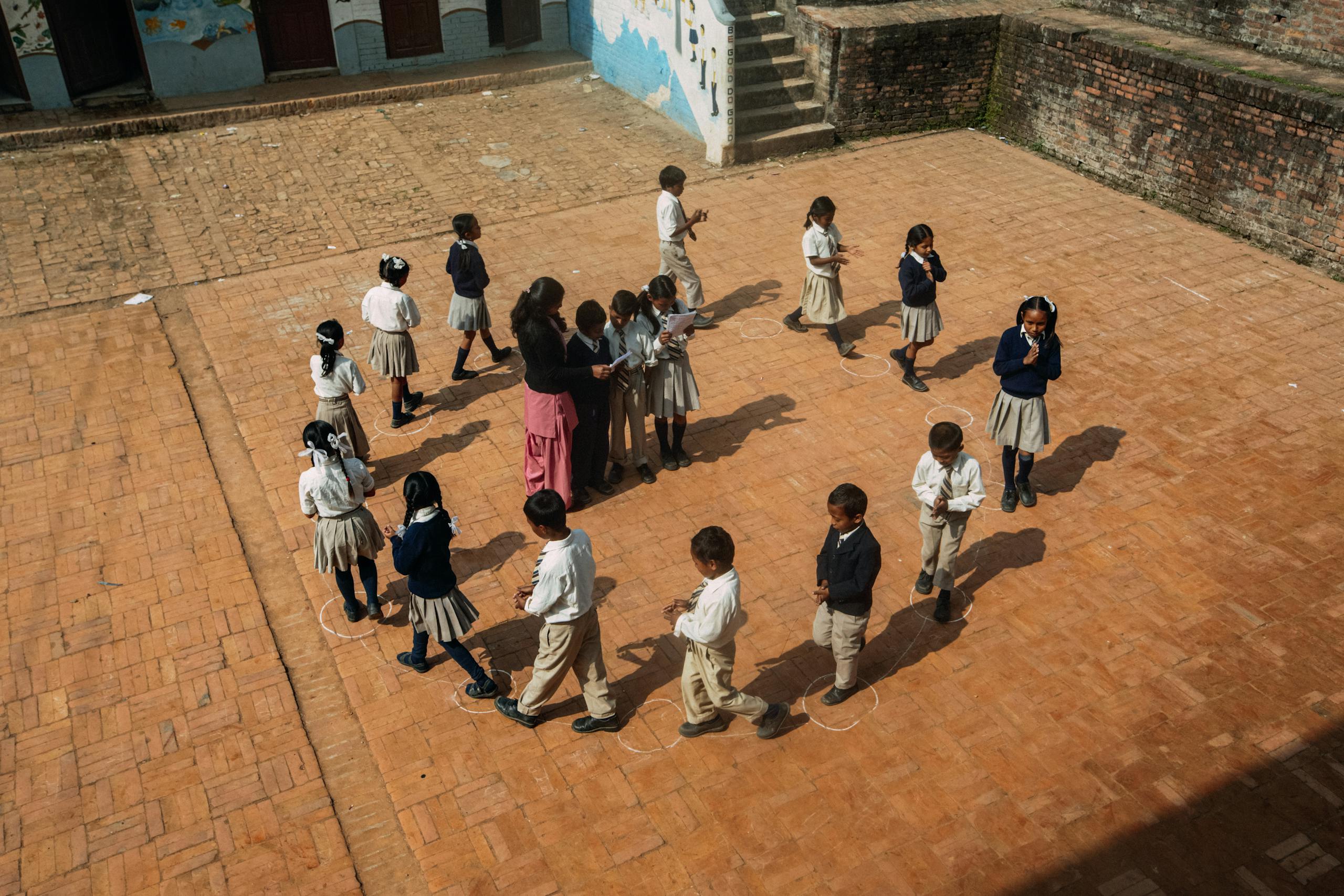
Helping a child with social anxiety at school means more than just encouraging them to “try harder” or “be brave.” It means understanding the specific ways anxiety shows up in classroom settings, recess, lunch tables, and group projects, and then building a practical support system that works with your child’s nervous system rather than against it. The most effective approaches combine honest communication, school-based accommodations, and steady parental presence.
Social anxiety in children is not shyness. It’s not a phase. And it’s definitely not something a child can simply decide to stop feeling. What it is, for many kids, is an exhausting internal experience that turns every ordinary school interaction into something that requires enormous courage to get through.
I think about this often as someone who spent decades managing my own version of social overwhelm in professional settings. As an INTJ running advertising agencies, I had every tool available to me. I could prepare, strategize, and control my environment to some degree. Children at school have none of that. They’re dropped into a highly stimulating, socially complex environment every single day, and expected to perform.

If your child is struggling, you’re not failing them by searching for answers. You’re doing exactly what a thoughtful parent does. Our Introvert Family Dynamics and Parenting hub covers the full range of challenges introverted and sensitive families face, and social anxiety at school is one of the most common threads running through all of it.
What Does Social Anxiety Actually Look Like in a School Setting?
Before you can help, you need to see clearly what you’re dealing with. Social anxiety in children doesn’t always look like a child crying in the hallway. Often it’s quieter and harder to identify, which is part of why it goes unaddressed for so long.
Career Coaching for Introverts
One-on-one career strategy sessions with Keith Lacy. 20 years of Fortune 500 leadership as an introvert, now helping others build careers that work with their wiring.
Learn More50-minute Zoom session · $175
Watch for a child who consistently avoids raising their hand even when they clearly know the answer. Notice whether your child dreads group projects or eats lunch alone not because they prefer it, but because the alternative feels unbearable. Pay attention to physical complaints on Sunday evenings or Monday mornings, stomachaches, headaches, sudden fatigue, that seem to disappear on weekends.
One of the clearest signs is what happens after school. A child with social anxiety often unravels at home in ways that seem disproportionate to the day. That’s because they’ve been holding it together for seven or eight hours, suppressing their anxiety responses, performing normalcy. By the time they walk through your door, the pressure has to go somewhere.
I recognize this pattern from my own experience. During my agency years, I’d sit through back-to-back client presentations, team meetings, and new business pitches without showing a crack. I processed everything internally, held my composure, and then came home completely depleted. What I experienced as an adult professional, many anxious children experience every single school day.
It’s also worth understanding that social anxiety and introversion overlap but aren’t the same thing. Many introverted children are perfectly content socially, they just prefer smaller interactions and need recovery time. Social anxiety involves genuine fear, avoidance, and distress. The National Institute of Mental Health distinguishes social anxiety disorder as a persistent fear of social situations where one might be scrutinized or judged, and it’s one of the more common anxiety conditions in children and adolescents.
How Does a Parent’s Own Sensitivity Shape This Experience?
Something I’ve noticed in the families I hear from is that the most attuned parents often carry their own version of social sensitivity. They notice everything their child is feeling because they feel things deeply themselves. That attunement is a gift, but it can also complicate things.
When you’re a highly sensitive parent watching your child suffer socially, the impulse to protect them can tip into over-accommodation. You start calling ahead to arrange playdates so your child never has to initiate. You make excuses to skip birthday parties. You soften every hard social moment before your child has a chance to build any tolerance for discomfort. These instincts come from love, but they can quietly reinforce the message that social situations are genuinely dangerous.
If you identify as a highly sensitive parent yourself, the article on HSP parenting: raising children as a highly sensitive parent speaks directly to this tension. There’s real nuance in learning how to hold space for your child’s feelings without amplifying their fear.
The balance I’ve had to find in my own life, and that I’ve watched parents wrestle with, is between validating the feeling and challenging the avoidance. You can say “I understand that feels really scary” and also say “and I believe you can do it anyway.” Both things are true at once.

What Can You Actually Do at Home to Help?
The home environment is where the most important work happens, because it’s where your child feels safe enough to actually process what’s going on. School is the arena. Home is the training ground.
Start by creating a decompression ritual after school. Not an interrogation about the day, but a genuine buffer zone. Some kids need fifteen minutes of complete quiet. Some need a snack and a favorite show. Some need to talk immediately. Figuring out which one your child is, and honoring it consistently, signals to their nervous system that home is safe.
Once they’ve had that buffer, open-ended questions work better than direct ones. “What was one interesting thing that happened today?” tends to get more than “Did you talk to anyone at lunch?” Direct questions about social performance can feel like an evaluation, which is exactly what your child is trying to escape.
Role-playing social scenarios at home is another tool that gets underused because it feels awkward for parents. But practicing what to say when someone asks to join a game, or how to respond when a teacher calls on you unexpectedly, builds genuine neural pathways. It’s rehearsal, not pretending. I used to run my team through presentation rehearsals before major client pitches, not because I doubted their abilities, but because familiarity reduces the fear response. The same principle applies to children facing social situations that feel threatening.
Cognitive behavioral approaches have strong support for treating social anxiety. Healthline’s overview of CBT for social anxiety explains how these techniques help people identify and reframe the thought patterns that drive avoidance. Many of these same techniques can be adapted for children in age-appropriate ways, often with the guidance of a therapist.
Reading about personality and temperament can also help older children understand themselves better. Something like the Big Five personality traits test is designed for adults, but exploring the concept of neuroticism (which maps to emotional sensitivity and anxiety) with a curious teenager can open up meaningful conversations about why their brain works the way it does. Naming it often reduces the shame around it.
How Do You Work With the School Effectively?
Parents sometimes hesitate to approach schools about social anxiety because they worry about labeling their child or being dismissed. Both concerns are legitimate. But in my experience, the parents who advocate clearly and specifically get far better results than those who hope teachers will notice on their own.
When you talk to a teacher or school counselor, be specific. Don’t just say your child is shy or anxious. Describe what you observe: “She won’t raise her hand even when she knows the answer,” or “He spends recess walking the perimeter of the playground alone and comes home in tears.” Specific observations give educators something concrete to work with.
Ask about accommodations that don’t require formal diagnosis. Many teachers will allow a child to answer questions in writing rather than aloud, or to present to a small group rather than the whole class. These small modifications can dramatically reduce the daily anxiety load without singling your child out.
School counselors are an underutilized resource. Many are trained in exactly the kind of social-emotional support anxious children need, and they can serve as a safe adult anchor within the school environment. Having one trusted adult at school who knows what your child is dealing with can change everything.
If the anxiety is severe enough to interfere with attendance or academic performance, a formal evaluation may be worth pursuing. A PubMed Central review on anxiety disorders in children notes that early identification and intervention significantly improve outcomes. Don’t wait for things to get worse before asking for help.

What Role Does Gradual Exposure Play?
Avoidance is the engine that keeps social anxiety running. Every time a child avoids a feared situation and feels relief, their brain files that information as confirmation that the situation was genuinely dangerous. Over time, the anxiety expands to cover more and more territory.
Gradual exposure works in the opposite direction. It involves deliberately and incrementally approaching feared situations, starting with the least threatening version and working up. For a child afraid of speaking in class, that might look like: whispering an answer to a neighbor, then answering a yes/no question aloud, then giving a short answer to a direct question, then volunteering a response.
The critical piece is that each step has to be uncomfortable enough to matter but manageable enough to survive. Too easy and there’s no growth. Too hard and you reinforce the fear. Calibrating that is genuinely difficult, and it’s one reason working with a therapist who specializes in childhood anxiety is worth considering.
Recent clinical work published through Springer’s journal on cognitive therapy continues to refine how exposure-based approaches are applied to social anxiety, including how to sequence exposures for maximum effectiveness. The field has moved well beyond simply telling anxious children to “face their fears.”
What I’ve come to appreciate, both from my own experience and from watching others, is that exposure isn’t about eliminating the fear. It’s about building evidence against it. Every time your child gets through a feared situation, even imperfectly, they collect a data point that contradicts the story their anxiety is telling them. Enough data points, and the story starts to change.
When Should You Consider Professional Support?
There’s a version of social anxiety that responds well to parental support, school accommodations, and gradual exposure at home. And there’s a version that has dug in deeper and needs professional intervention to shift. Knowing the difference matters.
Consider seeking professional support when your child’s anxiety is causing them to miss school regularly, when it’s significantly disrupting friendships or family life, when physical symptoms are frequent and severe, or when your child is expressing hopelessness or shame about who they are. These are signals that the anxiety has moved beyond the range of what home strategies alone can address.
A child psychologist or therapist trained in CBT or acceptance-based approaches is the most direct route. Pediatricians can also be a starting point for referrals and to rule out any physical contributors to anxiety symptoms.
One thing I want to name directly: getting professional help for your child’s mental health is not a sign that you’ve failed as a parent. It’s the same decision as taking them to a specialist for any other condition that’s affecting their quality of life. I spent years in my agency career believing that asking for help was weakness. That belief cost me. Don’t let it cost your child.
It’s also worth noting that some presentations of anxiety overlap with other conditions. Certain traits associated with social anxiety can resemble features of other diagnoses. If you’re trying to get a clearer picture of what you’re dealing with, resources like the borderline personality disorder test on this site aren’t diagnostic tools, but they can help adults reflect on patterns and open up more informed conversations with mental health professionals.

How Do You Build Your Child’s Social Confidence Over Time?
Social confidence isn’t a personality trait some children are born with and others aren’t. It’s a skill set that gets built through repeated low-stakes practice and honest feedback. That reframe matters enormously for how you approach this with your child.
One of the most effective things you can do is help your child find one area of genuine competence and use it as a social bridge. A child who loves drawing might connect with another child over art. A child obsessed with a particular video game might find their footing in that shared interest before branching into other social territory. Competence creates confidence, and confidence is transferable.
Structured activities with clear roles tend to work better for anxious children than open-ended social situations. Drama club, chess team, robotics, martial arts, these environments provide a script of sorts. Everyone knows why they’re there and what they’re doing. That structure reduces the ambiguity that fuels anxiety.
Likeability, in the truest sense, isn’t about being the loudest or most outgoing person in the room. It’s about being genuinely present, curious, and kind. If you want to explore what that looks like in practice, the likeable person test offers some interesting reflection points. Helping your child understand that connection comes from authentic presence rather than performance can shift how they see social situations entirely.
Also worth considering: the adults in your child’s life model social behavior constantly. When I became more honest about my own introversion and social limits with the people around me, something shifted in how I carried myself. I stopped performing extroversion and started showing up as myself. Children pick up on that. When you model authentic social engagement rather than anxious performance, you give them a different template to work from.
Some research suggests that social reward processing differs between people based on neurological factors. Cornell’s research on brain chemistry and extroversion points to how dopamine systems influence social motivation. Understanding that your child’s brain may genuinely process social situations differently, not defectively, can help you approach their anxiety with more patience and less pressure.
What Do Anxious Children Need Most From Their Parents?
Above everything else, anxious children need to feel understood before they feel pushed. That sequence matters. A child who feels genuinely seen and accepted is far more likely to take risks than one who feels like their anxiety is a problem to be fixed.
Validation doesn’t mean agreement. You can say “I hear that this feels really scary” without also saying “so we’ll skip the birthday party.” You’re acknowledging the emotional reality while still holding the expectation that your child can handle more than they think they can.
Consistency is the other thing. Anxious children are often hypervigilant about their environment. When home is predictable and emotionally steady, it becomes a genuine refuge rather than another source of unpredictability. That steadiness is hard to maintain when you’re worried about your child, but it’s one of the most valuable things you can offer.
Celebrate small wins specifically and honestly. Not “you were so brave today!” in a vague, performative way, but “I noticed you answered the teacher’s question even though you looked nervous. That took real courage.” Specific feedback lands differently than general praise. It tells your child that you’re actually watching, and that the effort they’re making is being registered.
Some of the most meaningful moments in my agency career came when a senior leader noticed something specific I’d done well and named it precisely. Not “good job on the presentation,” but “the way you reframed that client objection in the third section changed the whole room.” Specificity communicates that someone is genuinely paying attention. Children need that from their parents more than anyone else.
Supporting an anxious child also requires parents to manage their own anxiety about the situation. Published work in PubMed Central on parental anxiety and child outcomes points to how a parent’s own stress response can influence a child’s anxiety levels. Taking care of your own nervous system isn’t selfish. It’s part of the job.
If you’re in a caregiving role more broadly, whether as a parent, a family member, or someone who supports children professionally, it may be worth exploring what kind of support role fits your own strengths. The personal care assistant test online is one way to reflect on whether your natural tendencies align with the kind of sustained emotional and practical support that anxious children need.
And for parents who are also deeply invested in their child’s physical and emotional wellbeing, thinking about how you model healthy habits matters too. The certified personal trainer test might seem like an unexpected reference here, but the principle connects: when parents prioritize their own health and resilience, they’re better equipped to show up consistently for anxious children who need steady, grounded support.

What Does Progress Actually Look Like?
Progress with social anxiety rarely looks like a straight line. It looks like your child answering a question in class for the first time in weeks, then going silent again for three days, then answering again. It looks like agreeing to attend a birthday party and spending most of it near you, but going. It looks like a child who used to cry every Sunday night now just getting quiet.
What you’re looking for over months, not days, is a gradual widening of what feels manageable. More situations your child can get through without shutting down. More recovery time after hard social moments. More willingness to try again after a difficult experience.
That progression also shows up in recent clinical literature on anxiety treatment outcomes in youth, which highlights that sustained improvement comes from consistent, supported exposure over time rather than any single intervention.
There will be setbacks. A new school year, a change in teachers, a social conflict, any of these can temporarily knock your child back. That’s not failure. That’s how anxiety works. What matters is that you’ve built enough foundation together that the setback doesn’t become a collapse.
As an INTJ, my natural mode is to solve problems efficiently and move on. Watching someone I care about struggle with something that resists efficient solutions has been its own education. Social anxiety in children doesn’t get fixed. It gets managed, outgrown in parts, worked around, and gradually reduced. That slower timeline requires a kind of sustained patience that doesn’t come naturally to me, but I’ve come to respect it deeply.
Your child’s social anxiety at school is not the whole story of who they are. It’s one chapter. And the way you show up for them during this chapter shapes how they’ll carry themselves through every chapter that follows.
There’s much more to explore on the full range of challenges and strengths that show up in introverted and sensitive families. The complete Introvert Family Dynamics and Parenting hub covers topics from communication patterns to parenting styles, all through the lens of what it actually means to raise children as an introverted or sensitive parent.
About the Author
Keith Lacy is an introvert who’s learned to embrace his true self later in life. After 20 years in advertising and marketing leadership, including running agencies and managing Fortune 500 accounts, Keith now channels his experience into helping fellow introverts understand their strengths and build fulfilling careers. As an INTJ, he brings analytical depth and authentic perspective to every article, drawing from both professional expertise and personal growth.
Frequently Asked Questions
Is social anxiety in children the same as being introverted?
No, they’re distinct experiences that sometimes overlap. Introversion is a personality trait involving a preference for quieter, less stimulating social environments and a need for solitude to recharge. Social anxiety is a fear-based condition involving dread of social situations where one might be judged or embarrassed. An introverted child may be perfectly content socially within their preferred context. A child with social anxiety experiences genuine distress across a range of social situations, regardless of personality type.
At what age can social anxiety in children be identified?
Social anxiety can appear as early as preschool age, though it often becomes more visible when children enter structured school environments with greater social demands. The middle school years tend to intensify it as peer relationships become more complex. That said, some degree of social nervousness is developmentally normal in young children. What distinguishes social anxiety is its persistence, its intensity, and the degree to which it interferes with daily functioning over time.
Should you push an anxious child to participate socially or let them opt out?
Consistent avoidance tends to strengthen anxiety over time, so complete opt-outs are generally not helpful in the long run. That said, forcing a child into overwhelming situations without support can backfire and deepen the fear. The most effective approach is gradual, supported exposure: encouraging small, manageable steps toward feared situations while validating the child’s feelings throughout. The goal is building tolerance and evidence against the anxiety, not eliminating the discomfort entirely.
How do you talk to a child about their social anxiety without making it worse?
Lead with curiosity and validation rather than problem-solving. Open-ended questions about their day, their feelings, and their experiences tend to work better than direct questions about social performance. Avoid framing their anxiety as something wrong with them. Instead, help them understand that their brain is working hard to protect them, and that you can work together to help their brain feel safer over time. Normalizing the experience without minimizing it creates the kind of safety that allows children to open up.
When does social anxiety in children require professional treatment?
Professional support is worth pursuing when social anxiety is causing your child to miss school regularly, significantly disrupting friendships or family life, producing frequent physical symptoms like stomachaches or headaches, or leading to expressions of shame or hopelessness about who they are. A child psychologist or therapist trained in cognitive behavioral approaches is the most direct route. Early intervention tends to produce better outcomes, so erring on the side of seeking an evaluation sooner rather than later is generally the right call.