

“Introvertido” is the Spanish word for introvert, describing a person whose energy, attention, and inner life turn inward rather than outward toward the social world. At its core, the word captures something real and specific: a personality orientation defined by depth of focus, a preference for solitude, and the way quiet environments restore rather than drain.
Across languages, the concept points to the same human truth. Whether you encounter it in Spanish, English, Portuguese, or French, “introvertido” and its cousins describe people who process the world from the inside out, finding meaning in reflection before they reach for connection.

My own relationship with this word, in any language, took years to feel honest. I ran advertising agencies for more than two decades, managing creative teams, pitching Fortune 500 brands, and sitting in rooms where the loudest voice usually won. Nobody handed me a label that felt like a gift. “Introvertido” would have sounded like a limitation back then. Now it sounds like an explanation, and a good one.
If you want to go deeper into what introversion means in everyday life, our General Introvert Life hub covers the full range of topics, from energy management to building spaces where you can actually think. This article focuses on something more specific: what the word “introvertido” actually means, where it lives in the broader conversation about personality, and why getting clear on the definition changes how you see yourself.
What Does “Introvertido” Actually Mean in Practice?
The definition of introvertido goes beyond shyness, though the two get confused constantly. Shyness is rooted in social anxiety, a fear of judgment or rejection that makes social situations feel threatening. Being introvertido is something different entirely. It describes where your energy comes from and where it goes after it’s spent.
Career Coaching for Introverts
One-on-one career strategy sessions with Keith Lacy. 20 years of Fortune 500 leadership as an introvert, now helping others build careers that work with their wiring.
Learn More50-minute Zoom session · $175
An introvertido person tends to feel most alive and clear-headed after time spent alone. Crowds, long social events, and constant external stimulation don’t energize them. Those things drain them. Give them quiet, a few hours of uninterrupted thought, and a problem worth solving, and they come back to themselves. That’s the pattern, and it’s remarkably consistent across cultures, which is part of why the concept translates so directly between languages.
I’ve watched this play out in my own life hundreds of times. After a full day of client presentations at the agency, I’d come home and need at least an hour of complete silence before I could hold a real conversation with anyone. My extroverted business partner thought something was wrong with me. He’d leave those same meetings buzzing, already planning the next one. We were wired differently, and for years neither of us had good language for it. “Introvertido” would have helped.
The word also carries a positive charge that “introvert” doesn’t always get in English-speaking contexts. In Spanish-speaking communities, describing someone as introvertido often implies thoughtfulness, seriousness, and depth. It’s not always a criticism. That framing matters, because the way a culture names something shapes how people feel about carrying that name.
How Does the Spanish Language Frame Introversion Differently?
Language shapes perception in ways we don’t always notice. Spanish carries certain emotional textures that English doesn’t quite replicate. “Introvertido” sounds more clinical in some ways, more precise, less loaded with the cultural baggage that “introvert” has accumulated in American pop psychology over the past few decades.
In many Latin American and Spanish cultures, the introvertido person is often described with words like “reservado” (reserved), “tranquilo” (calm), or “reflexivo” (reflective). These aren’t insults. They’re observations, sometimes even compliments. A reservado person is someone you can trust with important things. A reflexivo person thinks before they speak. The cultural context around introversion in Spanish-speaking communities tends to hold more room for quiet people than the relentlessly extroverted professional cultures I spent most of my career inside.

That said, the word still carries complexity. Some Spanish speakers use “introvertido” interchangeably with “tímido” (shy) or “antisocial,” which blurs the same distinctions that cause confusion in English. The conflation of introversion with social anxiety or social avoidance isn’t unique to any one language. It shows up wherever people are trying to describe something they haven’t fully examined.
What’s worth noting is that the psychological definition, the one rooted in Carl Jung’s work on personality typology, carries across languages without distortion. Whether you’re reading about personality in Spanish or English, the clinical definition of introvertido points to the same internal orientation: attention directed inward, energy restored by solitude, processing that happens quietly before it becomes visible.
A piece published in Psychology Today on introvert communication patterns captures something I’ve felt my whole career: introverted people don’t avoid conversation, they avoid shallow conversation. The distinction matters enormously when you’re trying to understand what “introvertido” actually describes.
Is Being Introvertido a Personality Type or a Personality Trait?
This question comes up more than you’d expect, and the answer has real implications for how you understand yourself.
In popular culture, introversion gets treated as a binary: you either are one or you aren’t. In psychological research, the picture is more nuanced. Introversion sits on a spectrum, and most people land somewhere between the extremes rather than at either pole. The technical term for people who fall near the middle is “ambivert,” though that word has been overused to the point of losing some of its meaning.
Within the Big Five personality model, one of the most widely used frameworks in personality psychology, introversion is the low end of the extraversion dimension. It’s treated as a trait rather than a fixed category. Traits exist on continuums and can vary somewhat across contexts, though they tend to remain relatively stable across a person’s lifetime.
In the MBTI framework, which I’ve used extensively in my own self-understanding as an INTJ, introversion is one of four preference dichotomies. Being an INTJ means I prefer introversion over extraversion, intuition over sensing, thinking over feeling, and judging over perceiving. The “I” in that type code is what makes someone introvertido in the MBTI sense: a preference for the inner world of ideas, reflection, and focused attention.
What I’ve found in practice, after years of leading teams and watching people work, is that the trait framing is more useful than the type framing for most everyday purposes. Calling yourself introvertido doesn’t mean you can’t be sociable, warm, or even charismatic in the right setting. It means your baseline orientation runs inward, and that has predictable effects on your energy, your communication style, and the environments where you do your best work.
Published findings in PubMed Central examining personality and cognitive processing suggest that introverted individuals tend to show different patterns of internal arousal and information processing than extroverted individuals. This isn’t a value judgment. It’s a description of how different nervous systems engage with stimulation.
What Are the Real-World Signs That Someone Is Introvertido?
Definitions are useful. Lived experience is more useful. Here are the patterns I’ve observed most consistently, in myself and in the many introverted people I’ve worked alongside over twenty-plus years in advertising and marketing.
An introvertido person tends to think before speaking rather than thinking out loud. In agency meetings, I watched this create real friction. My extroverted colleagues would throw ideas into the room and refine them through the reaction they got. My introverted team members would stay quiet during brainstorming, then send me a thoughtful email two hours later with the best idea in the bunch. Same cognitive process, completely different timing.
Introvertido people also tend to prefer depth over breadth in relationships. They’d rather have three conversations that matter than thirty that don’t. At industry conferences, I noticed this in myself constantly. I’d spend the whole cocktail hour talking to two people about something real, while others worked the room touching every surface. Neither approach is wrong. They reflect different orientations toward connection.
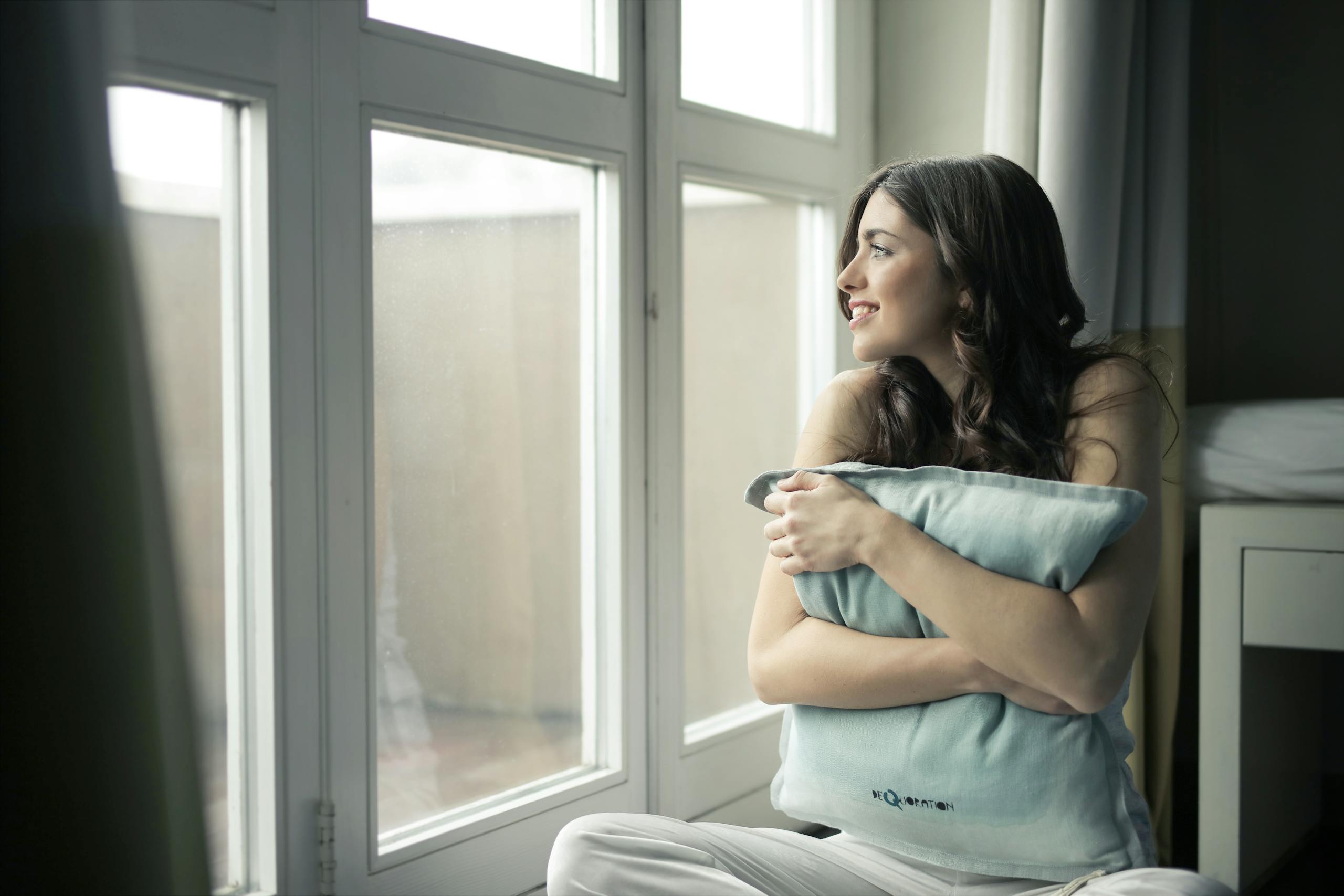
Another consistent sign: introvertido people are often highly attuned to their physical environment. Noise, clutter, and constant interruption don’t just annoy them. Those things genuinely impair their ability to think. This is one reason so many introverts invest seriously in their workspace. A good pair of noise cancelling headphones isn’t a luxury for an introvertido person working in a busy office. It’s a functional tool for preserving cognitive clarity.
The same logic applies to the physical setup of a workspace. Introvertido people who work from home or have control over their environment tend to create spaces that support sustained focus. That might mean a standing desk that lets them shift positions during long thinking sessions, or an ergonomic chair that makes hours of deep work physically sustainable. These aren’t trivial preferences. They reflect how seriously introverted people take the conditions required for their best thinking.
There’s also a pattern around recovery. After intense social or professional demands, introvertido people need genuine downtime to return to baseline. Not a short break. Real solitude. I learned this about myself the hard way during a period when I was running two agency offices simultaneously and traveling almost every week. I kept pushing through without recovery time, and my thinking got slower, my patience got shorter, and my best ideas stopped coming. What I needed wasn’t a vacation. I needed to stop treating solitude as wasted time.
How Does Being Introvertido Show Up in Professional Life?
One of the most persistent myths about introvertido people is that they’re poorly suited for leadership, client-facing roles, or high-stakes professional environments. I spent twenty years proving that wrong, though it took me a while to stop apologizing for how I operated.
Introvertido professionals bring specific strengths to their work that often go unrecognized because they don’t announce themselves loudly. Deep preparation is one. Before any major pitch at the agency, I would spend more time in research and strategic thinking than almost anyone else in the room. That preparation showed up in the quality of the work, even when it didn’t show up as visible confidence during the meeting itself.
Listening is another. Introvertido people tend to be genuinely good listeners because they’re not spending mental energy planning what to say next while someone else is talking. In client relationships, that quality builds trust faster than almost anything else. Clients feel heard. They come back.
An article from Rasmussen University on introverts in marketing makes the point that introverted professionals often excel at the analytical and strategic dimensions of business communication, areas where depth of thinking matters more than volume of output. That tracks with my experience completely.
Even in negotiation, where extroverted energy is often assumed to be an advantage, introvertido professionals hold their own. An analysis from Harvard’s Program on Negotiation explores whether introverts are actually at a disadvantage in negotiation settings, and the findings are more nuanced than the stereotype suggests. Patience, careful listening, and strategic restraint, all qualities associated with introversion, can be significant assets in negotiation contexts.
The workspace dimension matters here too. Introvertido professionals who can control their environment tend to produce better work. A well-positioned monitor arm that reduces physical strain during long analytical sessions, or a mechanical keyboard with a tactile feel that makes extended writing feel less like a chore, these are the kinds of details that introvertido professionals notice and care about. The environment isn’t separate from the work. For people wired this way, the environment is part of the work.

What Does Psychology Say About the Introvertido Personality?
The psychological literature on introversion is richer than most people realize, and it goes well beyond pop psychology’s simplified version of the concept.
Carl Jung introduced the terms introvert and extravert in the early twentieth century as part of his broader theory of psychological types. For Jung, introversion wasn’t a social preference. It was a fundamental orientation of psychic energy: whether your attention and vitality moved primarily inward toward the subjective world of ideas and reflection, or outward toward the objective world of people and events. That framing holds up remarkably well more than a century later.
More recent work in personality psychology has added biological and neurological dimensions to the picture. There’s meaningful evidence that introverted and extroverted people differ in baseline levels of cortical arousal and in how they respond to dopamine, a neurotransmitter associated with reward and stimulation. Introvertido people may already operate near their optimal arousal level in quiet environments, which is why additional stimulation feels overwhelming rather than energizing.
Research published in PubMed Central on personality neuroscience examines how personality traits like introversion and extraversion connect to underlying biological systems. The picture that emerges is one of genuine neurological difference, not preference or habit.
A piece from Frontiers in Psychology published in 2024 explores how personality dimensions including introversion relate to cognitive and emotional processing patterns. What the research consistently points toward is that introversion is a stable, meaningful dimension of personality with real effects on how people think, communicate, and recover from stress.
For those wondering whether introvertido people can thrive in emotionally demanding professional roles, the answer is clearly yes. A resource from Point Loma Nazarene University on introverts in counseling and therapy addresses this directly, noting that many qualities associated with introversion, including careful listening, comfort with silence, and depth of empathy, are genuine assets in therapeutic work. The same applies across many helping and leadership professions.
How Do Introvertido People Handle Conflict and Social Tension?
Conflict is uncomfortable for most people. For introvertido people, it carries an additional layer of complexity because conflict tends to be socially intense, emotionally loud, and difficult to process in real time.
My default in conflict situations, especially early in my career, was to withdraw and think. I’d go quiet, process internally, and come back with a considered response later. That’s not avoidance, though it got read that way sometimes. It’s the introvertido processing style applied to an emotionally charged situation. The problem is that people who need immediate verbal engagement can experience that quiet as stonewalling or indifference.
Over time, I learned to name what I was doing. “I need to think about this before I respond” is a sentence that changed a lot of difficult conversations for me. It set expectations without shutting the other person out. It was honest about how I work without making the other person feel dismissed.
A framework published in Psychology Today on introvert-extrovert conflict resolution outlines a structured approach that respects the different processing styles on both sides of that dynamic. The core insight is that the timing of conflict resolution matters as much as the content of it, and introvertido people need space to think before they can engage productively.
A wireless mouse might seem like an odd thing to mention in a section about conflict, but there’s a connection worth making. Introvertido people who work in shared or open-plan offices often find that controlling their physical environment is one of the few ways they can manage stimulation and stress. A clean, quiet, well-organized workspace, down to details like a wireless mouse that eliminates desk clutter, helps maintain the baseline calm that makes thoughtful conflict resolution possible. Environment and emotional regulation are more connected than they might appear.

What’s the Difference Between Introvertido and Antisocial?
This confusion causes real harm, and it’s worth addressing directly.
“Antisocial” in everyday language gets used to mean someone who doesn’t like people or avoids social situations. In clinical psychology, antisocial personality disorder is something entirely different: a serious condition characterized by disregard for others, lack of empathy, and patterns of manipulation or harm. Neither definition describes introvertido people.
Introvertido people enjoy connection. They value relationships deeply, often more deeply than their extroverted counterparts, precisely because they invest so much in the connections they do form. What they need is for those connections to have substance. Small talk for its own sake feels hollow. Genuine conversation feels nourishing.
At one agency I ran, we had an annual holiday party that I dreaded every year. Not because I disliked my colleagues. I genuinely cared about most of them. But two hours of loud music, surface-level conversation, and constant social performance left me exhausted in a way that a difficult client meeting never did. The difference wasn’t the people. It was the depth of engagement available in each setting.
Introvertido people are also not necessarily introverted in every domain of their lives. Some introvertido individuals are highly expressive in creative work, deeply engaged in their communities, or remarkably present in one-on-one conversations. The introvertido orientation is about energy and attention, not about capability or desire for human connection.
Why Does Having a Word Like Introvertido Actually Matter?
There’s something powerful about having a word for what you are. Not because labels define you completely, but because they give you a starting point for understanding yourself and explaining yourself to others.
Growing up, I didn’t have the word “introvertido” or “introvert” in any meaningful way. I had “quiet,” which felt like a criticism. I had “serious,” which felt like a limitation. I had “you need to come out of your shell,” which felt like an instruction to become someone else. None of those framings helped me understand what was actually happening inside me or why I worked the way I did.
When I finally encountered introversion as a legitimate psychological concept in my late thirties, something settled. Not because it excused anything or explained everything, but because it gave me a framework for making sense of patterns I’d been living with for decades. The way I recharged. The way I prepared. The way I formed relationships. The way I led. All of it made more sense once I had the word.
For Spanish-speaking introverts, “introvertido” does the same work. It says: this is a real thing, it has a name, and it describes something meaningful about how you engage with the world. That’s not a small gift. For people who’ve spent years wondering why they don’t fit the extroverted mold that so many professional and social environments seem to assume, having a precise word is often the beginning of something better.
If any of this resonates and you want to keep reading, the General Introvert Life hub has more on the full spectrum of introvert experience, from managing energy to building careers that fit who you actually are.
About the Author
Keith Lacy is an introvert who’s learned to embrace his true self later in life. After 20 years in advertising and marketing leadership, including running agencies and managing Fortune 500 accounts, Keith now channels his experience into helping fellow introverts understand their strengths and build fulfilling careers. As an INTJ, he brings analytical depth and authentic perspective to every article, drawing from both professional expertise and personal growth.
Frequently Asked Questions
What does “introvertido” mean in English?
“Introvertido” is the Spanish word for “introvert,” describing a person whose energy and attention are oriented primarily inward. An introvertido person tends to recharge through solitude, prefers depth over breadth in social interaction, and processes information internally before expressing it outward. The word carries the same psychological meaning as “introvert” in English, rooted in the same Latin origins and the same personality science.
Is “introvertido” the same as being shy?
No. Shyness and being introvertido are different things, though they sometimes appear together. Shyness involves anxiety or fear around social situations. Being introvertido is about where your energy comes from and how you process the world. Many introvertido people are not shy at all. They can be confident, warm, and highly effective in social settings. They simply need solitude afterward to restore their energy in a way that extroverted people typically don’t.
Can an introvertido person be a good leader?
Absolutely. Introvertido leaders bring distinct strengths to leadership roles: deep preparation, genuine listening, strategic patience, and the ability to create space for others to contribute. Many effective leaders across business, politics, and culture have been introverted. The assumption that leadership requires extroversion is a cultural bias, not a psychological reality. Introvertido leaders often lead differently than extroverted leaders, and that difference can be a significant asset in the right context.
How is “introvertido” used in Spanish-speaking cultures?
In many Spanish-speaking cultures, “introvertido” is often used alongside related terms like “reservado” (reserved) or “reflexivo” (reflective), which can carry neutral or even positive connotations. Someone described as introvertido is often seen as thoughtful and serious. That said, the word can also be conflated with “tímido” (shy) or “antisocial” in casual conversation, which blurs important distinctions. The clinical meaning, rooted in personality psychology, is consistent across languages.
Is being introvertido something that can change over time?
Introversion as a personality trait tends to remain relatively stable across a person’s lifetime, though how it expresses itself can shift with experience, age, and circumstance. An introvertido person may become more skilled at managing social demands or more comfortable in extroverted environments without fundamentally changing their underlying orientation. What often changes is self-acceptance: many introvertido people find that as they better understand their own wiring, they stop trying to override it and start working with it instead.