
Negative body language includes physical signals that communicate discomfort, disengagement, defensiveness, or dishonesty without a single word being spoken. Five of the most recognizable examples are crossed arms, avoiding eye contact, turning the body away, fidgeting, and forced or absent smiling. These signals often contradict what someone is saying out loud, and that gap between words and body is where real communication lives.
Most of us send these signals without realizing it. I spent over twenty years running advertising agencies, sitting across from clients, managing creative teams, and presenting campaigns to Fortune 500 brands. Body language was never something I studied formally. It was something I absorbed, slowly and sometimes painfully, as I watched how the room shifted when someone felt unheard, dismissed, or cornered. Those lessons came from observation, not from a textbook.
As an INTJ, I process social environments differently than most people expect a leader to. I notice patterns. I read subtle shifts in posture before I register tone of voice. What I didn’t always understand was that my own body was broadcasting signals I never consciously chose to send, and those signals were shaping how people experienced me long before I opened my mouth.
Body language is one piece of a much larger picture when it comes to how introverts connect with others. Our Introvert Social Skills and Human Behavior hub explores that full picture, from reading social cues to managing energy in high-demand environments. This article focuses specifically on the physical signals that quietly undermine connection, and what to do about them.
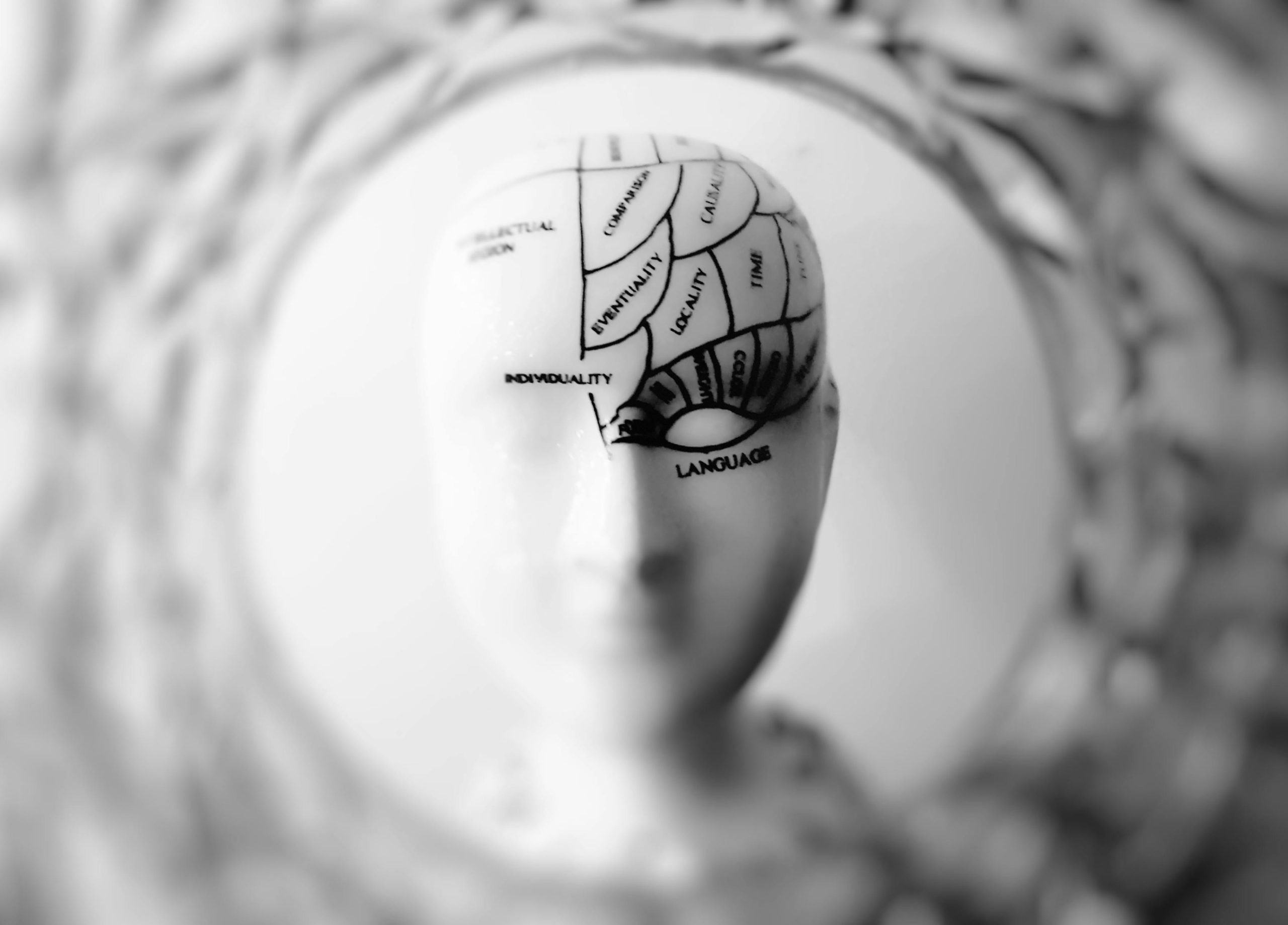
Why Does Body Language Matter So Much in Social Interactions?
Before we get into the specific examples, it’s worth pausing on why any of this matters. We live in a culture that prizes verbal communication. We prepare what we’re going to say. We rehearse conversations in our heads. We choose our words carefully. Yet the body is always communicating in parallel, and for many people in a room, it’s the body they’re actually paying attention to.
Career Coaching for Introverts
One-on-one career strategy sessions with Keith Lacy. 20 years of Fortune 500 leadership as an introvert, now helping others build careers that work with their wiring.
Learn More50-minute Zoom session · $175
Nonverbal communication includes facial expressions, gestures, posture, eye contact, and the physical distance we maintain from others. According to research published through the National Institutes of Health, nonverbal cues carry significant weight in how people interpret emotional states and intentions during face-to-face interaction. What we signal physically often carries more persuasive weight than what we say.
For introverts, this creates a specific kind of tension. We tend to process internally. We think before we speak. We may appear quieter or more reserved in group settings, not because we’re disengaged, but because that’s how we think. The problem is that reserved internal processing can look, from the outside, like disinterest, coldness, or even hostility. Our natural state can read as negative body language even when we’re fully present and engaged.
That gap between internal experience and external perception is something I’ve spent years working to close, both in myself and in the people I’ve managed. One of the most practical starting points is simply knowing which signals are most likely to be misread, so you can make more conscious choices about what your body communicates.
If you’re working on your broader social presence as an introvert, the piece on how to improve social skills as an introvert is a solid companion to what we’re covering here. Body language is one layer; the full skill set goes deeper.
What Are the 5 Most Common Examples of Negative Body Language?
These five signals come up again and again in professional settings, personal relationships, and everyday social encounters. Each one carries a specific message, often unintentional, and each one can be addressed once you understand what’s driving it.
1. Crossed Arms
Crossed arms are probably the most universally recognized signal of defensiveness or resistance. When someone crosses their arms during a conversation, it often reads as a physical barrier, a way of closing off or protecting the self from what’s being said or who’s saying it.
I caught myself doing this constantly in client meetings early in my career. I’m tall, and I tend to fold inward when I’m thinking hard or feeling uncertain. It wasn’t defensiveness, it was concentration. But more than once, a client would soften their pitch or ask if I had concerns, because my arms had told them I was skeptical before I’d formed an actual opinion. My body was editorializing without my permission.
The context matters enormously here. Crossed arms in a cold room often just mean someone is cold. Crossed arms paired with a tense jaw, a turned body, and minimal eye contact tell a different story. Body language is most accurately read as a cluster of signals, not as individual gestures in isolation. Still, uncrossing your arms and allowing your posture to open up is one of the simplest physical shifts you can make to signal receptivity.

2. Avoiding Eye Contact
Eye contact is one of the most powerful tools in human connection, and avoiding it is one of the most misread signals in social interaction. When someone consistently looks away, down at their phone, or past you during a conversation, it tends to register as disinterest, dishonesty, or anxiety.
For introverts, avoiding eye contact is often a concentration strategy, not a social rejection. Many introverts find that looking directly at someone while processing complex thoughts is actually harder, not easier. The cognitive load of maintaining eye contact competes with the cognitive load of thinking. So we look away to think more clearly, and the other person reads it as evasion.
The Harvard Health guide on introvert social engagement touches on this dynamic, noting that introverts often need to manage sensory input differently in social settings. Eye contact is a form of sensory input, and it can feel genuinely overwhelming in high-stakes or high-stimulation environments.
A practical middle ground is the triangle technique, where you alternate your gaze between the eyes and the mouth or forehead of the person you’re speaking with. It creates the impression of sustained eye contact without the intensity of a locked stare, and it gives your processing brain a small amount of relief.
3. Turning the Body Away
Where your body points matters. When we’re genuinely engaged with someone, we tend to orient toward them, feet, torso, and shoulders all angled in their direction. When we’re uncomfortable, ready to leave, or disengaged, the body often begins to angle away, toward the door, toward an exit, or simply away from the person we’re speaking with.
This is one of the subtler signals on this list, but it registers powerfully at a subconscious level. I’ve watched it happen in team meetings where someone was physically present but emotionally checked out. Their chair would slowly rotate. Their feet would point toward the door. Their shoulders would angle away from the speaker. By the time the meeting ended, their body had already left the room.
The fix is simple but requires awareness. Consciously orient your body toward the person you’re speaking with. Plant your feet. Square your shoulders. This physical act of turning toward someone signals presence and respect, even when your internal experience is more complicated. Neurological research on social behavior suggests that physical orientation toward another person activates the same neural pathways associated with attention and positive social engagement.
4. Fidgeting and Restless Movement
Fidgeting, tapping fingers, bouncing a leg, clicking a pen, checking a phone repeatedly, all of these signal anxiety, impatience, or distraction. They pull attention away from the conversation and communicate that the person fidgeting is not fully present.
Anxiety and restless movement often go hand in hand, and for introverts who struggle with social anxiety, the body can become a kind of pressure release valve. The fidgeting isn’t intentional, it’s a physical response to internal discomfort. The challenge is that it reads externally as disrespect or indifference, when the internal reality is closer to overwhelm.
There’s an important distinction between social anxiety and introversion, and Healthline’s breakdown of introversion versus social anxiety does a good job of clarifying where they overlap and where they diverge. Fidgeting that stems from anxiety may need a different kind of attention than fidgeting that’s simply a habit. Either way, grounding techniques, pressing your feet flat on the floor, slowing your breath, placing your hands deliberately in your lap, can interrupt the pattern and help your body signal calm even when you don’t feel it yet.
Practices that build self-awareness over time, like meditation and self-awareness work, can help you notice these physical patterns before they take over in social situations. I’ve found that even five minutes of quiet before a high-stakes meeting changes how my body carries itself in the room.

5. A Forced or Absent Smile
Smiling is one of the most socially powerful signals a human face can produce. A genuine smile, what psychologists call a Duchenne smile, involves the muscles around the eyes as well as the mouth. A forced smile typically involves only the mouth, and people detect the difference even when they can’t articulate why someone’s expression feels off.
An absent smile, meaning a flat or neutral expression during moments when warmth would be expected, can read as coldness, disapproval, or arrogance. This is something I’ve had direct feedback on. Early in my career, I was told by a colleague that I “looked annoyed in meetings even when I wasn’t.” My resting expression, which felt neutral to me, read as critical to the people around me. That feedback was uncomfortable, but it was valuable.
The solution isn’t to plaster on a performance smile. That reads as false and creates its own kind of unease. It’s more about softening the expression intentionally, relaxing the jaw, allowing a slight upward curve at the corners of the mouth, and letting warmth show in the eyes when you genuinely feel it. Authenticity matters here. A smile that doesn’t reach the eyes often does more damage than no smile at all.
The American Psychological Association’s definition of introversion describes it as a preference for less stimulating environments and a tendency toward internal focus, not a lack of warmth or social interest. Yet the flat expression that can accompany internal focus often gets read as exactly that. Bridging that gap is one of the quieter social challenges many introverts face.
How Does Overthinking Make Negative Body Language Worse?
There’s a particular trap that introverts fall into when they become aware of their body language: they start overthinking it. And overthinking, ironically, makes the problem worse. When you’re monitoring your arms, your eyes, your posture, and your expression simultaneously, you stop being present in the conversation. The very act of trying to fix your body language can make it stiffer, more self-conscious, and less natural.
I’ve been in that loop. After getting feedback about my expression in meetings, I spent several months hyper-aware of my face in every professional interaction. I’d be mid-conversation with a client and suddenly become acutely conscious of whether I was smiling enough, making eye contact, keeping my arms uncrossed. My attention split between the conversation and my own monitoring, and the quality of both suffered.
Chronic overthinking in social situations is something worth addressing directly, not just as a body language issue but as a broader pattern. Exploring overthinking therapy approaches can help interrupt the cycle at its root rather than just managing the symptoms. When the mental noise quiets, the body tends to follow.
The goal is awareness without obsession. You want to develop enough body awareness that you can make intentional adjustments, without turning every conversation into a self-monitoring exercise. That balance takes practice, and it doesn’t happen overnight.
Can Your MBTI Type Influence How You Send or Read These Signals?
Personality type shapes how we process social environments, and that absolutely influences body language, both what we broadcast and what we pick up on.
As an INTJ, I tend to be highly attuned to patterns and inconsistencies. I notice when someone’s words and body are out of sync. I’ll catch the micro-expression that flickers across a face before the person speaks. I’ll notice the subtle shift in posture when a conversation topic makes someone uncomfortable. That pattern recognition is a genuine strength in reading a room.
What I’m less naturally attuned to is the impression my own body creates in real time. INTJs can be so focused on the internal analytical process that external self-presentation becomes an afterthought. That’s where conscious effort has to compensate for what doesn’t come naturally.
Feeling types, particularly INFJs and INFPs, often have a different relationship with body language. I managed an INFJ account director at my agency for several years who was extraordinarily sensitive to the emotional undercurrents in any room. She could walk into a client meeting and immediately sense tension that hadn’t been verbalized. Her body language was naturally warm and open, but she sometimes absorbed others’ stress physically, tightening up in ways that mirrored the room’s anxiety rather than grounding it.
Sensing types often have a more natural awareness of their physical environment, which can translate into more deliberate body language management. Intuitive types may need to work harder to stay grounded in the physical present rather than the conceptual future.
If you haven’t yet identified your type, our free MBTI personality test is a useful starting point. Understanding your type gives you a framework for recognizing which social patterns come naturally and which ones require more deliberate attention.
The Psychology Today piece on the introvert advantage in leadership makes a compelling case that introverts’ tendency toward careful observation gives them a distinct edge in reading social dynamics, including body language. The challenge is channeling that observational strength inward, toward our own signals, as well as outward.

How Do Negative Body Language Signals Affect Relationships Over Time?
Single instances of crossed arms or avoided eye contact rarely damage a relationship. The cumulative pattern is what creates real problems. When someone consistently reads your body as closed, distant, or disinterested, they begin to build a story about who you are and how you feel about them. That story can calcify into assumptions that become very hard to reverse.
I’ve seen this play out in professional settings more times than I can count. A talented team member whose natural introversion read as aloofness would slowly find themselves excluded from informal conversations, overlooked for collaborative projects, and quietly marginalized, not through any deliberate act of exclusion, but through the accumulated interpretation of their body language. The tragedy was that the person was often deeply engaged and committed. Their body just hadn’t communicated that.
In personal relationships, the stakes can be even higher. Persistent negative body language in intimate relationships can erode trust and create emotional distance that’s genuinely painful to repair. If you’ve been through a period of emotional rupture in a relationship, you may find that your body carries that history in ways that complicate new connections. The work of rebuilding trust after betrayal often includes rebuilding openness in the body, not just in the mind.
The good news, and there is genuine good news here, is that body language is learnable. It’s not a fixed trait. It’s a set of habits, some of them deeply ingrained, but habits nonetheless. With awareness and practice, they shift.
What Practical Steps Help You Send More Positive Signals?
Changing body language isn’t about performing a version of yourself that doesn’t exist. It’s about closing the gap between who you actually are and what your body is communicating. These steps are practical, not theatrical.
Start with your baseline. Before you can change anything, you need to know what you’re actually doing. Ask someone you trust for honest feedback about your default physical presence. Video yourself in a low-stakes conversation if you can. The gap between how you think you look and how you actually appear is often significant, and seeing it directly is more useful than any amount of abstract advice.
Work on one signal at a time. Trying to overhaul your entire physical presence simultaneously creates the overthinking spiral we discussed earlier. Pick the signal that’s most likely to be misread in your specific context and focus there first. For most introverts in professional settings, that’s either eye contact or facial expression.
Connect body awareness to conversational presence. Much of what reads as negative body language is actually a symptom of being somewhere other than the present conversation. When you’re genuinely curious about the person you’re speaking with, your body tends to orient naturally toward them. Developing your skills as a listener and conversationalist builds body language from the inside out. The guide on being a better conversationalist as an introvert addresses this directly.
Build emotional intelligence as a foundation. Body language is in the end an expression of emotional state, and the more clearly you can read and regulate your own emotional experience, the more intentional your physical communication becomes. Exploring resources around emotional intelligence development can provide a framework for this kind of inside-out change.
The PMC research on nonverbal communication and social bonding supports the idea that physical openness and emotional attunement are deeply connected. When we feel emotionally safe and present, our bodies reflect that. Building emotional intelligence isn’t just an internal exercise, it shows up in the room.

What’s the Difference Between Negative Body Language and Simply Being Introverted?
This is a question worth sitting with carefully, because conflating the two does a disservice to introverts.
Introversion, as defined by the American Psychological Association, is an orientation toward internal experience rather than external stimulation. It’s not antisocial behavior, and it’s not negative body language. Introversion is a cognitive and energetic preference, not a physical posture.
That said, some patterns associated with introversion, the quieter presence, the internal focus, the tendency to observe before engaging, can manifest in physical behaviors that read as negative body language to others. A thoughtful, inward-focused expression can look like a scowl. A preference for physical space can look like standoffishness. A tendency to pause before speaking can look like disinterest.
The distinction matters because the solution is different. Genuine negative body language, signals of defensiveness, anxiety, or disengagement, needs to be addressed directly. Natural introvert presence, which is simply quieter and more internally oriented, doesn’t need to be “fixed.” It may benefit from some translation, some bridging of the gap between internal experience and external perception, but that’s different from correction.
Knowing which category you’re in requires honest self-reflection. Are you closed off because you’re genuinely uncomfortable, or because you’re thinking hard? Are you avoiding eye contact because you’re being evasive, or because you’re processing? The answer changes what you do next.
Understanding your own patterns, physical, emotional, and cognitive, is ongoing work. There’s much more to explore across the range of introvert social skills and behaviors in our Introvert Social Skills and Human Behavior hub, which covers everything from conversation dynamics to reading emotional cues in complex social environments.
About the Author
Keith Lacy is an introvert who’s learned to embrace his true self later in life. After 20 years in advertising and marketing leadership, including running agencies and managing Fortune 500 accounts, Keith now channels his experience into helping fellow introverts understand their strengths and build fulfilling careers. As an INTJ, he brings analytical depth and authentic perspective to every article, drawing from both professional expertise and personal growth.
Frequently Asked Questions
What are 5 examples of negative body language?
The five most commonly recognized examples of negative body language are crossed arms, which signals defensiveness or resistance; avoiding eye contact, which reads as disinterest or evasion; turning the body away from someone, which communicates disengagement; fidgeting or restless movement, which signals anxiety or impatience; and a forced or absent smile, which can read as coldness or disapproval. These signals are most accurately interpreted in clusters rather than in isolation, and context always matters.
Can introverts naturally display more negative body language than extroverts?
Introverts can appear to display more negative body language in social settings, not because they feel negatively toward others, but because their natural physical presence tends to be quieter, more reserved, and more internally focused. A thoughtful expression can read as a scowl. Physical stillness can read as standoffishness. The challenge for many introverts is bridging the gap between their genuine internal engagement and the external signals their body is sending. Awareness is the starting point for that bridge.
How does overthinking affect body language in social situations?
Overthinking about body language while in a social interaction tends to make it worse. When you’re simultaneously monitoring your arms, your eyes, your expression, and your posture, your attention splits between the conversation and the self-monitoring, and both suffer. The body becomes stiffer and more self-conscious rather than more natural. Addressing the overthinking pattern itself, through practices like mindfulness, therapy, or self-awareness work, is often more effective than trying to manually manage each physical signal in the moment.
Is body language the same across all cultures?
No. While some signals, like a genuine smile, appear to be broadly consistent across cultures, many body language norms are culturally specific. Eye contact, for example, signals respect and engagement in many Western contexts but can be considered aggressive or disrespectful in others. Physical distance norms vary significantly across cultures, as do gestures and touch. When reading or adjusting body language in cross-cultural settings, cultural context is as important as the signals themselves.
Can you change negative body language habits, or are they fixed?
Body language habits are not fixed. They are patterns, often deeply ingrained ones, but patterns that can shift with awareness and deliberate practice. The most effective approach is to start with honest self-assessment, identify the one or two signals most likely to be misread in your specific context, and work on those incrementally. Building emotional intelligence and conversational presence supports body language change from the inside out, rather than requiring constant conscious management of each physical signal.