A procrastination types test helps you identify the specific pattern behind your delay, whether that’s fear of failure, perfectionism, overwhelm, or something else entirely, so you can address the real cause instead of just pushing harder. Most people assume procrastination is a willpower problem. It’s not. It’s a pattern problem, and different patterns need different solutions.
What surprised me most when I first started examining my own avoidance habits wasn’t that I procrastinated. It was how I procrastinated. I didn’t scroll mindlessly or nap. I reorganized files. I drafted outlines for projects I wasn’t ready to start. I stayed busy with things that felt productive but kept me safely away from the work that actually mattered. That’s a specific procrastination type, and recognizing it changed everything about how I approached my days.
If you’ve ever wondered why the same productivity tips never seem to stick for you, this is probably why. You’ve been solving the wrong problem.
Procrastination sits at an interesting intersection with introvert mental health, and it’s a topic I return to often. Our Introvert Mental Health hub covers the full emotional landscape that introverts move through, from anxiety and sensory overload to perfectionism and deep feeling, and procrastination threads through nearly all of it. Understanding your type is one of the most practical entry points into that broader conversation.

What Are the Main Procrastination Types?
Psychologists and behavioral researchers have identified several distinct patterns of procrastination, each with its own emotional driver. While different frameworks use slightly different labels, most converge on a handful of recognizable types. consider this the core ones actually look like in practice.
Career Coaching for Introverts
One-on-one career strategy sessions with Keith Lacy. 20 years of Fortune 500 leadership as an introvert, now helping others build careers that work with their wiring.
Learn More50-minute Zoom session · $175
The Perfectionist Procrastinator delays because starting means risking an imperfect result. The work never begins, or never finishes, because the internal standard is impossibly high. I watched this play out constantly in my agency years. Some of the most talented copywriters on my teams would sit on a draft for days, refining internally, terrified to show something that wasn’t already exceptional. The avoidance looked like diligence from the outside. Inside, it was paralysis. If you recognize this in yourself, the piece on HSP perfectionism and breaking the high standards trap speaks directly to that internal pressure.
The Overwhelmed Procrastinator delays because the task feels too large, too complex, or too emotionally charged to approach. This type often affects highly sensitive people who process stimulation more deeply. When a project carries too many variables, the nervous system responds by shutting down rather than starting up. The HSP overwhelm and sensory overload article explores why this happens and how to work with it rather than against it.
The Fear-of-Failure Procrastinator avoids beginning because not starting feels safer than starting and falling short. There’s a certain logic to it, even if it’s destructive logic. If you never submit the proposal, you can never be rejected. If you never finish the project, no one can judge it. According to the American Psychological Association’s work on resilience, avoidance as a coping mechanism tends to amplify anxiety over time rather than reduce it, which is exactly why this type of procrastination tends to compound.
The Thrill-Seeker Procrastinator delays deliberately, consciously or not, because the pressure of a deadline creates a focus that normal conditions don’t provide. Some people genuinely do their best work under pressure. The problem is when this becomes the only way they can work, and when the adrenaline eventually stops being enough.
The Resentful Procrastinator avoids tasks that feel imposed, unfair, or misaligned with their values. This type is less about fear and more about resistance. The delay is a form of quiet protest. I’ve seen this show up in introverted employees who were handed projects they had no input on and no genuine investment in. The procrastination wasn’t laziness. It was a signal that something about the assignment felt wrong.
The Anxious Procrastinator avoids because the task triggers worry, dread, or rumination that makes starting feel unbearable. This type overlaps significantly with anxiety disorders. The National Institute of Mental Health’s overview of generalized anxiety disorder describes how pervasive worry can interfere with daily functioning, and task avoidance is one of the most common ways that interference shows up.
How Does the Procrastination Types Test Actually Work?
A procrastination types test works by presenting you with scenarios, behavioral prompts, or emotional responses and mapping your answers to one of the recognized patterns. The better versions of these assessments don’t just ask whether you procrastinate. They ask how you feel before you avoid, what kinds of tasks trigger the most delay, and what thoughts run through your mind when you’re supposed to be starting.
The most useful question sets I’ve encountered focus on the emotional experience of avoidance rather than just the behavior. Because two people can both delay the same task for completely different reasons. One might be avoiding because they’re afraid of judgment. Another might be avoiding because the task feels meaningless. The behavior looks identical. The solution is entirely different.
When you take a procrastination types test, you’re essentially building a map of your own avoidance patterns. That map becomes useful when you start noticing which types of work consistently trigger delay, which emotional states precede the avoidance, and whether there are environmental factors that make certain patterns worse.
One thing worth noting: most people land on more than one type. I’m primarily a perfectionist procrastinator with a strong secondary pattern of overwhelm. When a project is both high-stakes and complex, those two patterns reinforce each other in ways that can be genuinely disabling. Knowing that combination helps me build in specific countermeasures rather than generic “just start” advice that never worked anyway.
Why Do Introverts Experience Procrastination Differently?
Introverts process internally. We filter experience through layers of reflection before acting, which is one of our genuine strengths. The same wiring that makes us thoughtful, careful, and deep in our analysis can also make us prone to extended internal processing loops that delay action.
Running an agency for two decades meant I was constantly in situations that required fast, visible output. Presenting to clients, responding in real time, making calls on incomplete information. My introverted processing style wanted more time, more depth, more certainty before committing. When the environment didn’t allow for that, I sometimes responded by delaying the parts of the work I could control, which was usually the internal creative and strategic work that only I could see.
There’s also the emotional dimension. Many introverts, particularly those who are highly sensitive, carry a significant amount of emotional weight into their work. A task that seems straightforward on the surface might carry layers of meaning, memory, or relational complexity that make it feel heavier than it looks. That emotional depth is part of what makes introverts excellent at nuanced work. It’s also part of what makes certain tasks feel disproportionately difficult to start.
The connection between deep emotional processing and procrastination is worth examining carefully. The way highly sensitive people experience and process emotions, as explored in the article on HSP emotional processing and feeling deeply, explains why some tasks carry an emotional charge that makes starting them feel like a significant act rather than a routine one. When a project matters deeply, the stakes of doing it poorly feel enormous. That’s not irrational. It’s the natural consequence of caring.
There’s also a social dimension that’s easy to overlook. Many introverts procrastinate specifically on tasks that require social exposure: sending an email to someone they don’t know well, making a phone call, presenting work for feedback. The delay isn’t about the task itself. It’s about the interaction the task requires. Recognizing that distinction is important because the solution involves addressing the social anxiety component, not just the task management piece.
What Does Perfectionism Have to Do With Procrastination?
Perfectionism is one of the most common drivers of procrastination among introverts, and it’s one of the most misunderstood. People tend to think of perfectionists as people who finish things obsessively well. In reality, perfectionism often prevents finishing at all.
The mechanism is straightforward: if your internal standard is higher than what you believe you can currently produce, starting the task means beginning a process that will end in disappointment. Avoiding the task preserves the possibility that you could do it perfectly if you just had more time, better conditions, or a clearer head. That possibility feels better than the certainty of falling short.
I managed a creative director once who was genuinely one of the most talented people I’d worked with in twenty years of agency life. She could conceptualize campaigns that stopped you cold. She also missed more deadlines than anyone else on my team, not because she was disorganized, but because she couldn’t submit work she felt wasn’t ready. We had a long conversation once where she told me she’d rather miss a deadline than deliver something mediocre. That was her perfectionism talking, and it was costing her professionally in ways she couldn’t fully see from inside it.
What I’ve come to understand, both from watching that pattern in others and recognizing versions of it in myself, is that perfectionism isn’t really about standards. It’s about self-protection. High standards are the cover story. The actual driver is fear of being seen as inadequate. Research from Ohio State University examining perfectionism in high-pressure contexts found that the self-critical dimension of perfectionism, rather than the standards-setting dimension, is what most reliably predicts avoidance behavior. That distinction matters enormously when you’re trying to work through it.

How Do Anxiety and Procrastination Reinforce Each Other?
Anxiety and procrastination form a feedback loop that’s genuinely difficult to interrupt once it’s running. Anxiety about a task leads to avoidance. Avoidance provides temporary relief. That relief reinforces the avoidance. Meanwhile, the task doesn’t go away, and the anxiety about it grows. By the time you finally have to engage with the task, the anxiety is significantly worse than it would have been if you’d started earlier.
For highly sensitive people, this loop can be particularly intense. The same nervous system that makes HSPs attuned, empathetic, and perceptive also responds more strongly to perceived threats, including the social and evaluative threats that many tasks carry. The article on HSP anxiety and coping strategies goes into the specific ways anxiety presents differently for sensitive people, which is worth understanding if you suspect anxiety is driving your procrastination.
One pattern I noticed in myself during the more stressful periods of running my agency was that my procrastination intensified whenever I felt socially exposed. Pitching new business to a Fortune 500 client I hadn’t worked with before would trigger weeks of productive-looking avoidance. I’d research the company extensively, prepare detailed analyses, draft multiple versions of the proposal structure, all of which were genuinely useful, but also all of which were ways of delaying the moment when I had to commit to a specific direction and defend it in front of people who might disagree.
What I eventually recognized was that my anxiety wasn’t about the work. It was about the judgment. And once I separated those two things, I could address the anxiety more directly rather than letting it masquerade as thoroughness.
There’s also the role of empathy in this dynamic. Introverts who are highly empathetic sometimes procrastinate on communications or decisions because they’re running through how every possible recipient or stakeholder might respond. That’s not overthinking for its own sake. It’s a genuine attempt to care for the people involved. But it can become a form of avoidance when the emotional modeling becomes more consuming than the actual task. The piece on HSP empathy as a double-edged sword captures this tension well.
What Role Does Fear of Rejection Play in Task Avoidance?
Fear of rejection is one of the most underacknowledged drivers of procrastination, particularly for introverts who already feel more exposed when their work enters the world. Sending something out means opening yourself to evaluation. And for people who process deeply and care intensely about the quality of their output, that evaluation can feel like a verdict on more than just the work.
Some tasks carry an implicit social risk that makes them feel categorically different from other work. Asking for a raise, submitting creative work for review, reaching out to a potential collaborator, publishing something publicly, these all involve putting something of yourself forward and waiting to see how it lands. For many introverts, that waiting period is genuinely painful, and the anticipation of it is enough to trigger significant delay.
Understanding how rejection registers emotionally, and how to move through it rather than around it, is part of what the article on HSP rejection processing and healing addresses. Recognizing that your sensitivity to rejection is real and valid, rather than a weakness to be ashamed of, changes the relationship you have with tasks that carry that risk.
One practical shift that helped me was learning to separate the act of submission from the outcome of submission. Sending the proposal is a task I can control. How the client responds is not. When I was able to locate my sense of accomplishment in the completion of the work rather than in the reception of it, the fear of rejection lost some of its grip on the starting process.

What Strategies Actually Work for Each Procrastination Type?
Generic productivity advice fails most procrastinators because it treats avoidance as a time management problem. It isn’t. Telling a perfectionist procrastinator to “just break the task into smaller steps” doesn’t address the fear that any version of the work will be inadequate. Telling an overwhelmed procrastinator to “use a timer” doesn’t reduce the emotional weight of the task. The strategy has to match the type.
For perfectionist procrastinators: The most effective shift is reframing what “done” means at each stage. A first draft is not supposed to be good. It’s supposed to exist. Giving yourself explicit permission to produce something imperfect, and treating that imperfect version as the necessary raw material for something better, removes the impossible standard from the starting gate. A study published in PubMed Central examining self-compassion and procrastination found that people who were able to treat their own failures and imperfections with kindness were significantly more likely to re-engage with tasks after setbacks than those who responded with self-criticism.
For overwhelmed procrastinators: Environmental reduction matters more than task decomposition. Before you break the work into smaller pieces, reduce the stimulation around you. A quieter space, fewer open tabs, a defined time boundary, these aren’t luxuries. They’re prerequisites for a nervous system that’s already at capacity. Starting with the smallest possible version of the task, not just a smaller task, but a smaller version of the actual thing you’re avoiding, can create enough momentum to continue.
For fear-of-failure procrastinators: The most useful practice is separating effort from outcome in your own internal accounting. Many introverts tie their sense of competence entirely to results, which makes any task with an uncertain outcome feel like a potential indictment. Deliberately tracking what you attempted, rather than what you achieved, shifts the internal metric toward something you can actually control.
For anxious procrastinators: Addressing the anxiety directly, rather than managing around it, tends to be more durable. That might mean therapy, it might mean somatic practices that regulate the nervous system before you sit down to work, or it might mean building in transition rituals that signal to your body that the task is safe to begin. Clinical guidance from the National Library of Medicine on behavioral approaches to anxiety emphasizes that gradual exposure to avoided situations, rather than continued avoidance, is what reduces the anxiety response over time.
For resentful procrastinators: The most honest question to ask is whether the task genuinely needs to be done by you, and if so, whether there’s any way to reshape your relationship to it. Sometimes resentment-driven procrastination is a signal worth listening to. Other times, the task is necessary and the resentment is about something adjacent to it, a relationship dynamic, a feeling of being undervalued, a mismatch between the work and your actual strengths. Identifying which of those is true changes what you do next.
How Can Self-Awareness Help You Stop Repeating the Same Patterns?
Self-awareness is the mechanism that makes any procrastination intervention actually work. Without it, you’re applying solutions randomly and wondering why they don’t stick. With it, you can recognize the pattern as it’s forming rather than after it’s already cost you two weeks.
One of the things I’ve found most useful over the years is keeping a very simple log of what I avoided and what was happening emotionally when I avoided it. Not a detailed journal, just a note: what was the task, what was the feeling, what did I do instead. After a few weeks, patterns become visible that were previously invisible. You start to see that you always delay a specific type of task, or that avoidance spikes when you’re in certain emotional states, or that particular people or contexts reliably trigger the pattern.
That kind of pattern recognition is something introverts are genuinely good at when we turn it inward. We notice things. We process deeply. The challenge is that we sometimes apply that observational capacity everywhere except to our own behavior, because looking at our own patterns honestly can be uncomfortable. It requires the same willingness to sit with imperfection that we struggle with in our work.
There’s also value in understanding how your procrastination type interacts with your broader emotional landscape. Research published in PubMed Central examining the relationship between emotion regulation and procrastination found that people with greater capacity to manage negative emotions were less likely to engage in avoidance behavior. That’s not about suppressing feelings. It’s about developing enough emotional flexibility to feel the discomfort of a difficult task without letting that discomfort become the reason not to start.
For introverts, that emotional flexibility often develops through reflection rather than action. We work things out internally before we can act on them externally. Honoring that process, while also setting a boundary on how long the internal processing can run before it becomes avoidance, is one of the more nuanced skills this work requires.

Is Procrastination Ever a Sign of Something More?
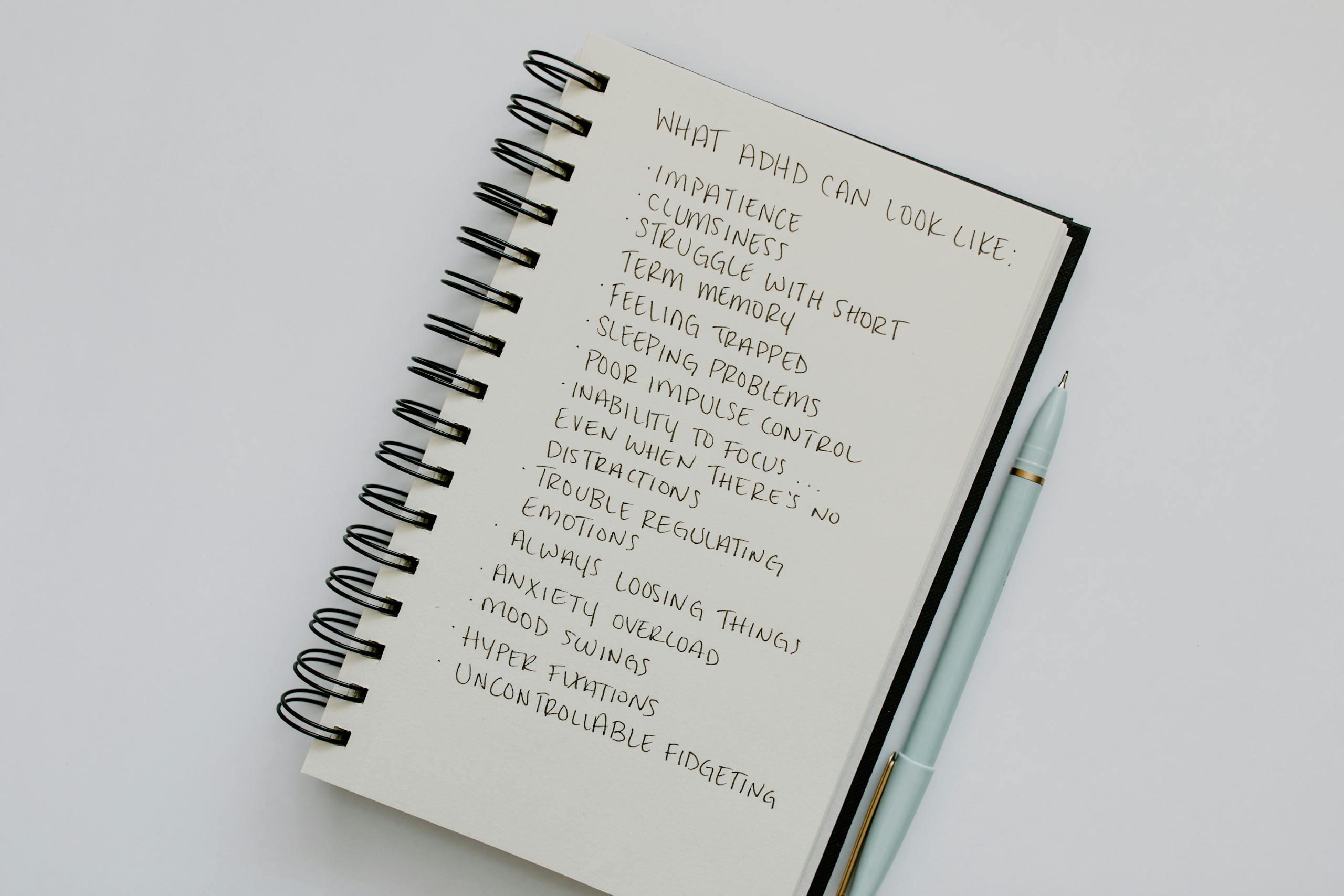
Sometimes, yes. Persistent, severe procrastination that significantly disrupts your work, relationships, or wellbeing can be a symptom of something that deserves more direct attention. ADHD, depression, and anxiety disorders all have procrastination as a common feature, and in those cases, addressing the underlying condition is more effective than any productivity strategy.
For introverts, there’s sometimes a tendency to pathologize normal variation in our processing style, and also a tendency to normalize things that actually warrant attention. Finding that balance requires some honest self-assessment. If your procrastination is situational, showing up around specific types of tasks or during particular emotional states, it’s likely a pattern you can work with directly. If it’s pervasive, affecting nearly everything regardless of context, and accompanied by significant distress, that’s worth discussing with a professional.
There’s also the question of burnout. Introverts who have been operating in high-demand extroverted environments for extended periods sometimes experience a kind of motivational shutdown that looks like procrastination but is actually depletion. The avoidance isn’t fear-based or perfectionism-based. It’s the nervous system refusing to engage because it has nothing left. That requires rest and recovery, not productivity techniques.
I went through a version of this about twelve years into running my agency. I had been performing at a high level for a long time in an environment that required constant external engagement, and somewhere around year twelve, I hit a wall. I wasn’t afraid of the work. I wasn’t perfectionistic about it. I just couldn’t make myself do it. Everything felt distant and effortful in a way that was qualitatively different from ordinary procrastination. What I needed wasn’t a better system. I needed to stop and recover. Academic work examining procrastination and self-regulation from the University of Northern Iowa supports the distinction between avoidance driven by emotional threat and avoidance driven by resource depletion, and treating them the same way produces poor results.
Procrastination connects to so many dimensions of introvert wellbeing that it’s hard to examine it in isolation. If you want to explore the broader emotional terrain that shapes how we work, rest, and function, the Introvert Mental Health hub brings together everything from anxiety and overwhelm to perfectionism and deep emotional processing in one place.
About the Author
Keith Lacy is an introvert who’s learned to embrace his true self later in life. After 20 years in advertising and marketing leadership, including running agencies and managing Fortune 500 accounts, Keith now channels his experience into helping fellow introverts understand their strengths and build fulfilling careers. As an INTJ, he brings analytical depth and authentic perspective to every article, drawing from both professional expertise and personal growth.
Frequently Asked Questions
What is a procrastination types test and how does it help?
A procrastination types test identifies which specific pattern of avoidance you tend toward, such as perfectionism, fear of failure, overwhelm, or anxiety-driven delay. Rather than treating all procrastination as a single problem, the test helps you understand the emotional driver behind your particular pattern so you can apply strategies that address the actual cause. Most people find that knowing their type makes the difference between advice that finally works and advice that sounds good but changes nothing.
Can you be more than one type of procrastinator?
Yes, and most people are. The types aren’t mutually exclusive. Many introverts find they have a primary pattern, such as perfectionism, and a secondary one, such as overwhelm, that activates under certain conditions. The combination of types matters because it shapes how the avoidance presents and what interventions will be most effective. A procrastination types test often reveals both a dominant type and contributing patterns.
Why do introverts tend to procrastinate differently than extroverts?
Introverts process internally and deeply, which means tasks carry more emotional and cognitive weight before they’re even started. The same reflective capacity that makes introverts thoughtful and thorough can also extend the internal processing phase well past the point of usefulness. Additionally, many introverts are highly sensitive, which means tasks with social exposure or evaluative risk trigger a stronger avoidance response. The pattern of avoidance tends to look more internal and less visible than the external distraction-seeking that extroverts might show.
How is perfectionism-driven procrastination different from other types?
Perfectionism-driven procrastination is distinctive because the delay is about the quality of the output rather than the difficulty of the task. A perfectionist procrastinator might be entirely capable of completing the work and still avoid it because the internal standard feels unreachable. The avoidance preserves the possibility of doing it perfectly, while actually starting would reveal the gap between the ideal and the achievable. The solution involves addressing the self-protective function of the perfectionism, not just managing time better.
When should persistent procrastination be taken seriously as a mental health concern?
Procrastination warrants closer attention when it’s pervasive across most areas of life, when it causes significant distress or functional impairment, or when it’s accompanied by other symptoms like persistent low mood, difficulty concentrating, or intense anxiety. ADHD, depression, and anxiety disorders all commonly include task avoidance as a feature. If productivity strategies consistently fail to make a dent in the pattern, and if the avoidance is affecting relationships or career in serious ways, speaking with a mental health professional is a reasonable and worthwhile step.