
Meeting fatigue is the cumulative exhaustion that builds when back-to-back meetings leave you with no time to think, process, or recover. For introverts, this isn’t just tiredness. It’s a specific kind of depletion that comes from sustained social performance, constant context-switching, and the pressure to respond in real time when your brain is wired to process quietly and deeply.
You can leave a three-hour meeting having said all the right things and still feel completely hollowed out. That’s not weakness. That’s your nervous system telling you something important about how you work best.

Much of what I write about here connects to a broader conversation about how introverts communicate and lead in professional spaces. If this topic resonates with you, our Communication and Quiet Leadership hub covers the full range of challenges introverts face when the workplace expects them to perform extroversion by default.
Why Do Meetings Hit Introverts So Much Harder?
Somewhere around year twelve of running my agency, I started tracking something informally. On days I had five or more meetings, I would come home and sit in my car in the driveway for fifteen minutes before going inside. Not because anything had gone wrong. Just because I had nothing left.
Career Coaching for Introverts
One-on-one career strategy sessions with Keith Lacy. 20 years of Fortune 500 leadership as an introvert, now helping others build careers that work with their wiring.
Learn More50-minute Zoom session · $175
My extroverted colleagues seemed energized by those same days. They’d be texting about grabbing drinks afterward while I was calculating the shortest route to silence. I spent a long time thinking something was wrong with me before I understood what was actually happening.
Meetings demand a particular kind of energy expenditure that extroverts often find stimulating and introverts find costly. Every meeting requires you to monitor the room, manage your expression, formulate responses on the spot, track multiple conversations at once, and perform engagement even when you’re still processing the last thing someone said. For someone wired to think before speaking, that’s not just tiring. It’s working against your own grain for hours at a time.
There’s also the matter of recovery time. Extroverts tend to recharge through social interaction. Introverts recharge through solitude and internal reflection. A packed meeting schedule doesn’t just deplete introvert energy. It actively prevents the recovery that would make the next meeting tolerable. You end up running a deficit that compounds across the week.
Worth noting: Wharton research on leadership effectiveness has found that extroverted leaders aren’t automatically more successful than their introverted counterparts. The assumption that high-energy, meeting-heavy leadership is superior simply doesn’t hold up. Yet workplaces are still largely designed around that assumption, which means introverts are constantly adapting to an environment that wasn’t built with their processing style in mind.
What Does Meeting Fatigue Actually Feel Like?
People sometimes confuse meeting fatigue with general tiredness or even burnout, and while those can overlap, the experience has its own distinct texture.
There’s a mental fog that sets in after too many consecutive meetings. Your thoughts feel slower, less precise. You find yourself nodding at things you’d normally push back on because forming a counterargument feels like too much effort. You start speaking in shorter sentences, giving vaguer answers, agreeing more readily. Not because you’ve changed your mind, but because your brain has run out of bandwidth for nuance.
There’s also an emotional flatness. I notice it most in the late afternoon on heavy meeting days. Someone will ask a genuinely interesting question and I’ll feel nothing. No curiosity, no engagement, no spark. That absence is unsettling when you’re someone who cares deeply about ideas. It feels like a kind of temporary numbness.
Physically, meeting fatigue often shows up as tension in the shoulders and jaw, eye strain from video calls, and a kind of restless exhaustion where you’re too tired to focus but too wired to rest. Harvard Health has documented how screen exposure affects alertness and sleep quality, and for people spending six or more hours a day on video calls, that physiological layer adds up fast.
For highly sensitive introverts, the experience can be even more pronounced. People who process sensory and emotional information at greater depth pick up on every undercurrent in a meeting, every flicker of tension, every unspoken frustration. If you recognize yourself in that description, the strategies in this piece on HSP meetings and effective participation offer some practical grounding specifically for that experience.
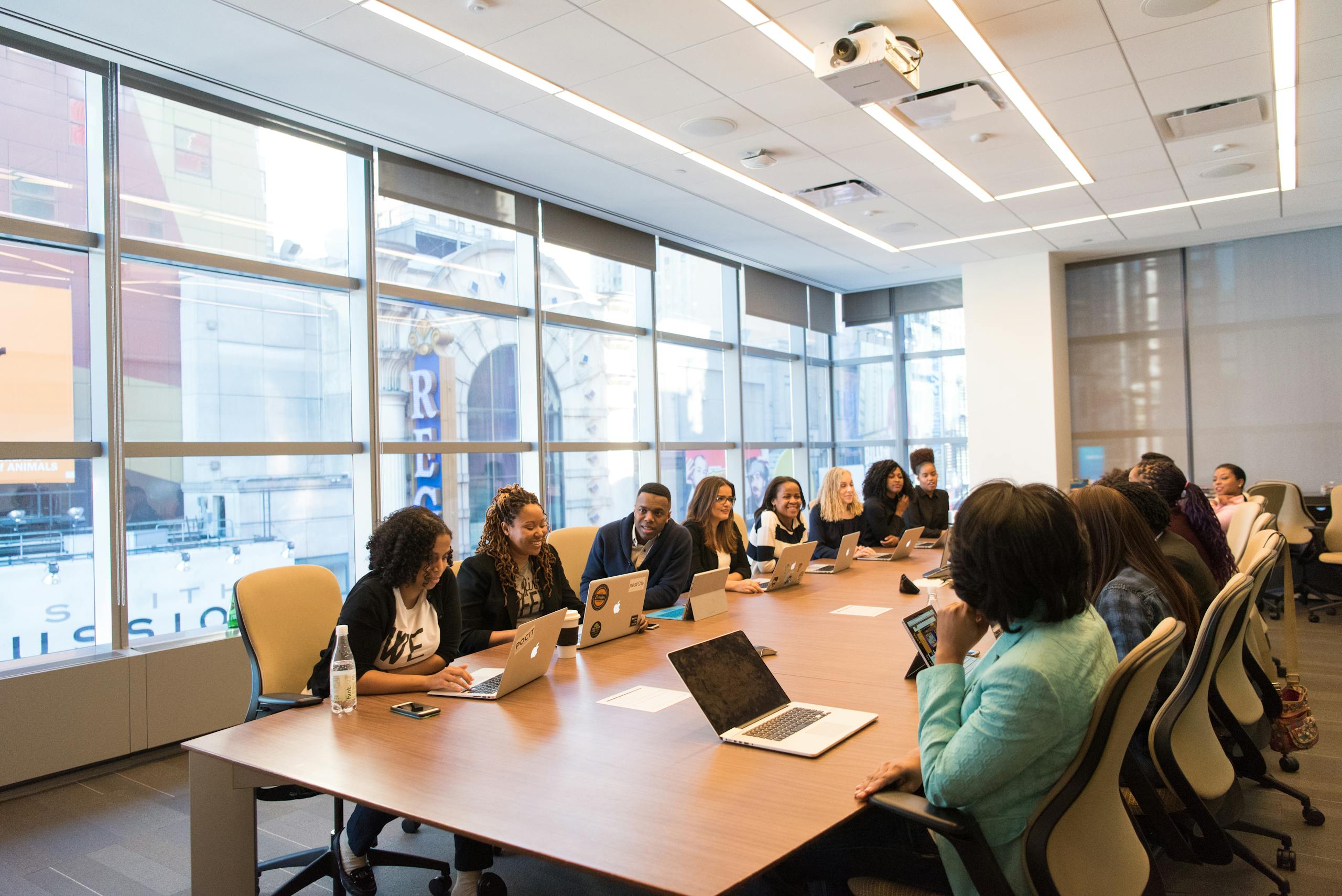
How Did Meeting Culture Get So Out of Hand?
There’s a particular dynamic I watched play out repeatedly in agency life. A client would express anxiety about a campaign. Rather than addressing the anxiety directly, someone would schedule a meeting. The meeting would produce a follow-up meeting. That meeting would surface three more concerns, each of which required its own meeting. By the end of the week, we’d spent more time talking about the work than doing it.
Meetings became a proxy for progress. If a lot of people were in a room talking about something, it felt like something was happening. The appearance of collaboration substituted for actual output. And because extroverted communication styles tend to dominate meeting culture, the people most comfortable performing in those rooms were the ones who kept scheduling them.
The shift to remote work accelerated this problem significantly. Without the natural friction of physically gathering people in a room, scheduling became frictionless. Back-to-back video calls replaced hallway conversations, quick check-ins, and the informal exchanges that used to carry a lot of organizational information without requiring anyone to formally convene. The result was more meetings, longer meetings, and far less unstructured time for actual thinking.
There’s a behavioral economics angle to this worth acknowledging. The University of Chicago’s overview of behavioral economics explains how people systematically overvalue visible activity and undervalue invisible cognitive work. Thinking, synthesizing, planning, all of the work that introverts do exceptionally well, tends to happen quietly and produce no visible output until it’s done. Meetings produce visible output constantly, even when that output is mostly noise. Organizations reward what they can see.
Are Some Meetings Actually Worth Your Energy?
Yes. And making that distinction is one of the most useful things you can do for yourself.
Not all meetings are created equal. Some meetings produce genuine alignment that would take days of email chains to approximate. Some create the kind of real-time collaborative problem-solving that actually benefits from multiple minds working simultaneously. Some build the relational trust that makes everything else in an organization run more smoothly.
The problem isn’t meetings. The problem is treating every conversation as if it requires a meeting, and treating every meeting as if it requires your full, performing presence for its entire duration.
When I started being more selective about which meetings I actually attended versus which ones I could receive a summary from, my energy management improved dramatically. Some of that required positional authority. As an agency CEO, I had more latitude than most people to decline or restructure meetings. But even before I had that authority, I could ask better questions: What decision does this meeting need to produce? What would make this meeting unnecessary? Do I need to be in the room for the whole thing, or just for a specific portion?
Those questions aren’t about avoiding work. They’re about protecting the cognitive space where your best work actually happens. A Harvard Business Review piece on introvert visibility in the workplace makes a similar point: being present and being visible aren’t the same thing, and introverts often do their most valuable work in ways that aren’t immediately legible to meeting-centric organizations.

What Strategies Actually Help Manage Meeting Fatigue?
I want to be honest about something before sharing strategies. Most advice about meeting fatigue assumes you have significant control over your schedule. Many people don’t. If you’re in an entry-level role, or working in an organization with a very rigid meeting culture, some of what follows will require adaptation. Start with what you can control, and work outward from there.
Build Transition Buffers Into Your Calendar
The single most effective change I made to my own schedule was blocking fifteen minutes between every meeting. Not to prepare for the next one. Just to decompress from the last one. To write down what I actually thought about what was said, rather than what I performed thinking in the room. To let my brain catch up.
Those buffers felt like a luxury at first. They weren’t. They were the difference between showing up to the next meeting with something genuine to contribute versus showing up depleted and performing engagement I didn’t feel.
Prepare Specifically, Not Generally
Introverts tend to perform better in meetings when they’ve had time to think beforehand. This isn’t a limitation. It’s a processing style that produces better outcomes when honored. Before any significant meeting, I’d spend twenty minutes writing out my actual position on the key questions, not talking points, but genuine thinking. That preparation meant I wasn’t formulating thoughts in real time under social pressure. My best contributions were already formed. I was just finding the right moment to surface them.
This connects directly to what I’d call the introvert’s communication advantage: the depth that comes from thinking before speaking. For a more detailed look at how that plays out in professional settings, the piece on HSP communication and finding your voice explores the specific challenges and strengths of processing-before-speaking communication styles.
Request Agendas in Advance
A meeting without an agenda is a meeting designed for extroverts. It rewards whoever speaks first and most confidently, regardless of whether their contributions are the most considered. Asking for an agenda isn’t pedantic. It’s advocating for a meeting structure that produces better outcomes for everyone, including the people who organized it.
When I started requiring agendas for all agency meetings, two things happened. The meetings got shorter because people had to think in advance about what actually needed to be discussed. And the quality of contributions improved because everyone had time to prepare. My introverted team members, who had often been quiet in meetings, suddenly had things to say because they’d had time to think.
Protect Recovery Time Like It’s Non-Negotiable
Lunch breaks, end-of-day wind-downs, and mid-afternoon blocks of unscheduled time aren’t indulgences. They’re maintenance. For introverts, recovery isn’t passive. It’s the active process of returning to baseline so that the next period of social engagement draws from a full tank rather than an empty one.
Block that time on your calendar. Label it “focused work” if you need to make it look productive to others. Guard it. The version of you that shows up to the 4 PM meeting having had thirty minutes alone is dramatically more effective than the version running on fumes from a meeting-packed afternoon.
Contribute Asynchronously When Possible
Some of the most valuable contributions I’ve made in my career never happened in a meeting room. They happened in written memos, detailed email responses, and structured documents that gave people something concrete to react to. Asynchronous communication plays to introvert strengths: depth, precision, careful framing, and the ability to revise before sharing.
When you have the option to contribute in writing rather than in real time, take it. Not as avoidance, but as a deliberate choice to do your best thinking in the format where your best thinking actually happens.
How Does Meeting Fatigue Affect Introvert Leadership Specifically?
There’s a particular pressure that comes with being an introverted leader in a meeting-heavy culture. You’re expected to model engagement, project energy, and set the tone for the room. All of that requires a kind of sustained social performance that runs directly counter to how you naturally operate.
I watched this play out in myself most clearly during client presentations. The preparation phase was where I was genuinely at my best: thinking through every angle, anticipating objections, building arguments with precision. But the presentation itself required me to perform confidence and enthusiasm in real time, often for hours, often with clients who wanted to talk rather than listen. By the time we got to the debrief, I was operating at maybe sixty percent capacity.
What helped was reframing what leadership presence actually means. There’s a persistent cultural myth that great leaders are always “on,” always energized, always performing. The reality, as explored in Jim Collins’ research on Level 5 Leadership, is that the most effective leaders often combine fierce professional will with personal humility, qualities that align far more naturally with introvert tendencies than with high-octane extroversion.
Some of the most powerful leadership moments I’ve witnessed happened in quiet. A team member who said almost nothing in a meeting but sent a single precise email afterward that reframed the entire problem. A creative director who rarely spoke in brainstorms but whose written briefs were so clear they made the work almost inevitable. Those people weren’t failing at leadership. They were doing it differently, and often better.
The piece I wrote on introverted leadership and what makes a great manager gets into the specific strengths that quiet leaders bring to teams, many of which are most visible precisely when you stop trying to lead like an extrovert.

What About When You Can’t Change the Meeting Culture?
Sometimes the organization you’re in has a deeply entrenched meeting culture and you don’t have the leverage to change it. That’s a real constraint, and I don’t want to gloss over it with advice that assumes more autonomy than most people have.
In those situations, the work shifts from changing the system to managing your experience within it.
One thing that genuinely helped me in the earlier years of my career, before I had any authority to restructure how we worked, was becoming very intentional about what I was doing with my energy between meetings. Even a ten-minute walk outside, a few minutes of writing in a notebook, or five minutes of complete quiet in a bathroom stall (I’m not too proud to admit that) could provide enough recovery to make the next hour functional rather than depleted.
There’s also value in finding the people in your organization who share your communication preferences. In almost every agency I worked in, there were clusters of people who preferred written communication, who found back-to-back meetings as draining as I did, who did their best thinking away from the group. Building relationships with those people created informal support structures that made the meeting-heavy culture more bearable.
For introverts who also identify as highly sensitive, that relational piece can be especially important. The strategies in HSP networking and building authentic professional connections offer a framework for building those relationships in ways that feel genuine rather than performative.
And if you’re in a leadership role and feeling the weight of being expected to perform extroversion constantly, the work on HSP leadership and leading with sensitivity reframes what effective leadership can look like when you stop trying to match a style that was never yours to begin with.
Is Meeting Fatigue a Sign You’re in the Wrong Job?
Not necessarily. Though it’s worth asking the question honestly.
Some roles are genuinely incompatible with introvert energy needs. If your job requires eight hours of back-to-back client-facing meetings with no flexibility, no recovery time, and no possibility of contributing in any format other than real-time group discussion, that’s a structural mismatch worth taking seriously. No amount of personal strategy will fully compensate for an environment that is fundamentally at odds with how you work.
That said, most roles have more flexibility than they appear to at first. The meeting culture in many organizations is more habitual than necessary. People schedule meetings because that’s what people do, not because the meeting is the only way to accomplish the goal. When you start asking what the meeting is actually for, you often find that a significant portion of your meeting load could be replaced with asynchronous communication, shorter check-ins, or simply trusting people to do their work without constant group alignment.
There’s also a longer-term career design question worth sitting with. As introverts advance in their careers and gain more control over their schedules, they often find they can reshape their roles to align better with their working style. That’s not immediate relief, but it’s a real trajectory. Knowing it’s possible can make the current constraints feel less permanent.
There’s a version of this I find genuinely funny, in a rueful way. The introvert boss and leader meme captures something true about how absurd it can feel to be a deeply introverted person in a role that seems to require you to be in a meeting about every single thing. Sometimes you have to laugh at the gap between who you are and what the job seems to expect.
The clinical literature on stress and cognitive function is clear that chronic cognitive overload impairs decision-making, memory, and emotional regulation. Meeting fatigue isn’t just uncomfortable. Left unaddressed, it erodes the very capacities that make you effective at your work. That’s not a personal failing. It’s physiology.

What Does Sustainable Meeting Participation Look Like Long-Term?
Sustainable participation isn’t about minimizing your presence. It’s about showing up in ways that are actually you, rather than a depleted performance of someone else.
For me, that eventually meant being honest with my team about how I worked best. Not as a confession, but as practical information. I told people I processed better in writing than in real time. I told them I needed agendas to contribute meaningfully. I told them my best thinking happened before or after meetings, not during them, and that if they wanted my best thinking, they needed to give me the conditions for it.
That honesty changed the dynamic. People stopped interpreting my quietness in meetings as disengagement. They understood it as processing. And when I did speak, they paid attention, because they knew I’d thought about it.
Long-term sustainability also means building in regular assessment. How are you actually doing? Not in a general sense, but specifically: how many meetings did you have this week, how many were necessary, and how much recovery time did you actually get? Treating your energy as a resource that requires active management, rather than something that should just be available on demand, is one of the most practical shifts an introvert can make in a meeting-heavy work environment.
There’s more to explore on this topic and related ones in our Communication and Quiet Leadership hub, which brings together everything we’ve written about how introverts can work effectively in environments that weren’t always designed with them in mind.
About the Author
Keith Lacy is an introvert who’s learned to embrace his true self later in life. After 20 years in advertising and marketing leadership, including running agencies and managing Fortune 500 accounts, Keith now channels his experience into helping fellow introverts understand their strengths and build fulfilling careers. As an INTJ, he brings analytical depth and authentic perspective to every article, drawing from both professional expertise and personal growth.
Frequently Asked Questions
Why do introverts experience meeting fatigue more intensely than extroverts?
Introverts recharge through solitude and internal reflection, while extroverts tend to gain energy from social interaction. Meetings require sustained social performance, real-time response, and constant engagement, all of which draw on introvert energy rather than replenishing it. When meetings are back-to-back with no recovery time, introverts run an energy deficit that compounds throughout the day, producing a specific kind of exhaustion that goes beyond ordinary tiredness.
What are the most effective strategies for managing meeting fatigue?
The most effective strategies include building transition buffers between meetings, preparing thoroughly before significant discussions, requesting agendas in advance, protecting dedicated recovery time during the workday, and contributing asynchronously through written communication when possible. Over time, advocating for a meeting culture that includes clear objectives and defined outcomes also reduces the volume of unnecessary meetings that contribute to fatigue.
Can introverts be effective leaders in meeting-heavy organizations?
Absolutely. Introverted leaders often bring qualities that make them exceptionally effective: careful preparation, thoughtful listening, precise communication, and the ability to synthesize complex information. The challenge isn’t capability but cultural fit. Introverted leaders who can reshape meeting culture to value depth over volume, and who communicate their working style clearly to their teams, often find that their leadership becomes more effective, not less, when they stop trying to perform extroversion.
How do I know if my meeting fatigue is a sign of burnout?
Meeting fatigue and burnout can overlap but aren’t the same thing. Meeting fatigue tends to be situational and recoverable with adequate rest and reduced meeting load. Burnout is more pervasive, affecting motivation, sense of purpose, and emotional resilience across all areas of work, not just after heavy meeting days. If your exhaustion persists even after time off, if you feel disconnected from work you used to find meaningful, or if recovery no longer restores your baseline, those are signs worth discussing with a healthcare professional.
What can I do when I have no control over my meeting schedule?
When you can’t change the schedule itself, focus on managing your experience within it. Use micro-recovery strategies between meetings: brief walks, a few minutes of writing, or simply five minutes of quiet. Prepare thoroughly before meetings so you’re not formulating thoughts under pressure in real time. Build relationships with colleagues who share your communication preferences. And look for small opportunities to contribute in writing rather than exclusively in real time, even within a heavily scheduled environment. Even modest adjustments can meaningfully reduce the cumulative drain.