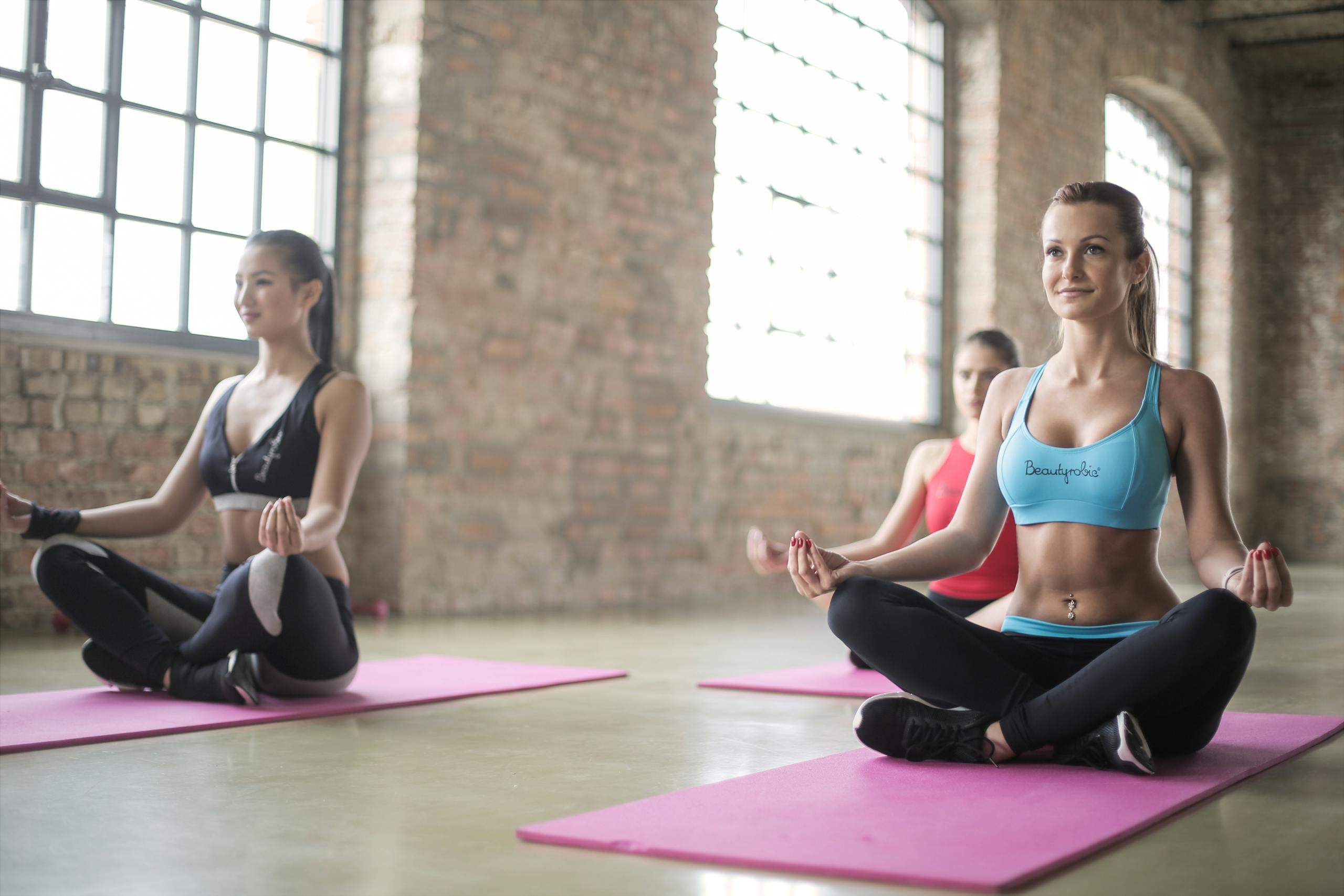
Meditation for beginners often feels more complicated than it needs to be. At its core, meditation is simply the practice of directing your attention on purpose, usually to your breath, a word, or a sensation, and gently returning when your mind wanders. That’s it. No special equipment, no perfect posture required, and no years of practice before you see results.
What surprises most people is how much they already have going for them before they ever sit down to meditate. Introverts, in particular, tend to have a natural relationship with stillness and internal reflection that makes this practice feel less foreign than they expect. The hard part isn’t the sitting. It’s giving yourself permission to stop doing and simply be.
Meditation changed something fundamental for me, not dramatically or overnight, but in the quiet, cumulative way that meaningful things tend to shift. After two decades running advertising agencies, managing large teams, and fielding calls from Fortune 500 clients who needed answers yesterday, my nervous system had learned one speed: fast. Learning to slow it down took practice, patience, and more than a few false starts.
If you’re exploring meditation as part of a broader commitment to your mental health, our Introvert Mental Health Hub covers the full spectrum of emotional wellbeing for introverts, from anxiety and sensory overload to deeper self-understanding. Meditation fits naturally into that larger picture.

Why Do Introverts Take to Meditation So Naturally?
There’s something worth naming here before we get into technique. Many introverts I’ve spoken with assume meditation will be difficult for them because their minds are “too busy.” And yes, the introvert mind tends to run deep, processing events long after they’ve passed, replaying conversations, connecting dots that others don’t notice. That depth can feel like a liability when you’re trying to sit still.
Career Coaching for Introverts
One-on-one career strategy sessions with Keith Lacy. 20 years of Fortune 500 leadership as an introvert, now helping others build careers that work with their wiring.
Learn More50-minute Zoom session · $175
But that same depth is actually an asset. Introverts are often already practiced at turning inward. We notice subtle shifts in our own emotional states. We pay attention to what’s happening inside a room even when we’re not speaking. That capacity for internal observation is exactly what meditation asks you to develop.
At one of my agencies, I had a creative director who was deeply introverted, an INFJ who processed everything through layers of meaning and feeling. She told me once that she’d tried meditation three times and quit each time because she couldn’t stop thinking. What she didn’t realize was that noticing you’re thinking is the practice. The goal was never to empty the mind. It was to observe the mind without being controlled by it. Once that clicked for her, she meditated daily for years.
Introverts who also identify as highly sensitive people often find meditation especially meaningful. If you’ve ever experienced the kind of HSP overwhelm that comes from sensory overload, meditation offers a genuine refuge, a way to reduce the volume of the world and return to yourself.
What Actually Happens in Your Brain When You Meditate?
You don’t need to understand the neuroscience to meditate effectively, but knowing a little of what’s happening can help you trust the process when it feels like nothing is working.
When you sit quietly and focus your attention, you’re exercising a part of your brain’s executive function, the ability to choose where your attention goes rather than letting it be pulled around by every thought or stimulus. Over time, this strengthens. The mental muscle you’re building isn’t emptiness. It’s agency over your own attention.
A body of research published through PubMed Central has examined how mindfulness-based practices affect stress regulation, emotional processing, and overall psychological wellbeing. The findings point consistently toward reduced reactivity and improved emotional resilience with regular practice. For those of us who spent years in high-pressure environments, that reduction in reactivity isn’t a small thing. It’s the difference between responding thoughtfully and reacting from exhaustion.
For people who struggle with anxiety, the connection between meditation and nervous system regulation is particularly relevant. The National Institute of Mental Health recognizes mindfulness as one component of a broader approach to managing anxiety disorders. Meditation won’t replace professional support when that’s needed, but it builds a daily foundation that makes everything else more effective.
If anxiety is something you’re working through, the article on HSP anxiety and coping strategies explores how high sensitivity intersects with anxious thinking in ways that meditation can specifically address.

How Do You Actually Start Meditating?
My first real attempt at meditation happened on a Sunday morning in my home office. I’d been running an agency for about seven years at that point, and I was burning out in slow motion. A colleague had mentioned meditation almost in passing, the way people mention things they assume you already know about. I sat down, set a timer for ten minutes, closed my eyes, and within about forty seconds I was mentally drafting a client proposal.
That’s not failure. That’s a beginner meditating.
Starting a meditation practice doesn’t require a cushion, an app, a teacher, or a dedicated room. What it does require is consistency and a willingness to start smaller than feels meaningful. consider this actually works for most beginners.
Start With Two Minutes, Not Twenty
Every meditation resource you’ll find will suggest starting small, and they’re right, though not for the reason you might think. Two minutes isn’t about being gentle with yourself. It’s about removing the psychological resistance that makes you avoid doing it at all. A twenty-minute session sounds like a commitment. Two minutes sounds like nothing. And “nothing” is easy to do every day.
Sit comfortably. You don’t need to be on the floor. A chair works perfectly. Close your eyes or soften your gaze downward. Take a few slow breaths and simply notice the sensation of breathing. Notice the air entering. Notice your chest or belly rising. When a thought appears, and it will, you don’t need to fight it. Just notice it, let it pass without following it, and return your attention to your breath.
That return, that gentle redirection of attention, is the actual practice. Every time you do it, you’re building something real.
Choose a Consistent Time and Place
Habits attach to context. The same way you probably drink coffee in the same spot most mornings, meditation becomes easier when it’s tied to a specific time and location. Morning tends to work well because the day hasn’t accumulated yet. Your nervous system is relatively clear, and you’re setting a tone rather than trying to recover from one.
That said, some people find evening meditation more natural, a way to process the day before sleep. Either works. What matters is that you choose a time you can actually protect, even briefly, rather than an ideal time you’ll keep postponing.
Use Guided Meditation to Build the Habit
There’s nothing wrong with using a guided meditation when you’re starting out. Apps like Insight Timer offer free options that range from two minutes to an hour. Having a voice to follow removes the cognitive load of wondering what you’re supposed to be doing, which is exactly the kind of mental overhead that can derail a beginner.
Over time, many people find they prefer unguided silence. But guided meditation is a legitimate tool, not a shortcut. Some experienced practitioners use it indefinitely.
What Types of Meditation Work Best for Beginners?
There are dozens of meditation styles, and the variety can be overwhelming when you’re just starting. Most beginners do best with one of three approaches, and the differences between them are worth understanding before you choose.
Breath-Focused Mindfulness
This is the most widely taught form and the one most supported by psychological research. You focus on the physical sensation of breathing, and when your mind wanders, you return. Simple, accessible, and effective. Most of the clinical work on meditation’s effects on anxiety and stress has been done using mindfulness-based approaches.
A review published through PubMed Central examined mindfulness-based interventions across multiple populations and found consistent benefits for emotional regulation and stress reduction. For introverts who process emotion deeply, that kind of regulation isn’t about suppressing feeling. It’s about having a stable enough internal environment to actually feel things without being overwhelmed by them.
That distinction matters enormously for people who identify as highly sensitive. The article on HSP emotional processing and feeling deeply explores how that depth of feeling can be a genuine strength rather than something to manage away.
Body Scan Meditation
A body scan involves moving your attention slowly through different parts of your body, noticing sensation without trying to change anything. It’s particularly useful for people who carry tension physically, and for those who find breath-focused meditation frustrating because their thoughts are too active.
Many introverts find the body scan more accessible at first because it gives the mind something concrete to do. You’re not trying to stop thinking. You’re redirecting attention to physical sensation, which tends to anchor you in the present moment more reliably than breath alone.
Loving-Kindness Meditation
Also called metta meditation, this practice involves directing goodwill toward yourself and others, typically by silently repeating phrases like “may I be well, may I be at peace” and extending that same wish outward to others. It sounds simple, and it is, but the emotional effects can be surprisingly powerful.
For introverts who tend toward self-criticism or who carry the weight of empathy heavily, loving-kindness meditation can shift the internal tone in meaningful ways. Many highly sensitive people find that their capacity for deep empathy, which can feel like a double-edged sword, becomes more sustainable when they’ve also learned to direct that same care toward themselves.

What Gets in the Way, and How Do You Work Through It?
Most beginners quit meditation not because it doesn’t work, but because they misread what’s happening when they sit down. Understanding the most common obstacles makes them far easier to move through.
The Busy Mind Problem
At the height of my agency years, I managed accounts for several major brands simultaneously. My mind was a constant stream of deadlines, personnel issues, creative briefs, and budget conversations. Sitting still felt not just unproductive but almost dangerous, like letting my guard down at the wrong moment.
What I eventually understood was that the busy mind isn’t the enemy of meditation. It’s the raw material. You’re not trying to achieve a quiet mind. You’re practicing noticing the busy mind without being swept away by it. That shift in framing changed everything for me. I stopped evaluating my sessions by how few thoughts I had and started measuring them by whether I showed up at all.
Perfectionism as a Barrier
Perfectionism is a particularly common obstacle for introverts and highly sensitive people. The same high standards that make you thorough and detail-oriented can make you feel like you’re failing at meditation because you’re not doing it “correctly.” There is no correct. There is only consistent.
The HSP perfectionism article on breaking the high standards trap addresses this pattern directly. Meditation is actually one of the most effective tools for loosening perfectionism’s grip, because it asks you to practice non-judgment repeatedly, session after session, until it starts to become a default mode rather than an effort.
A study examined through Ohio State University’s nursing research found that perfectionist tendencies often stem from a fear of negative evaluation, a fear that mindfulness practice can meaningfully reduce over time by creating distance between the self and self-critical thought patterns.
Emotional Discomfort That Surfaces
Sometimes when you sit quietly, things come up. Feelings you’ve been too busy to notice, old memories, a low-grade sadness you couldn’t name. This is normal and, in many ways, a sign that the practice is working. Stillness creates space, and space lets what’s been compressed finally breathe.
That said, if what surfaces feels overwhelming or connected to unresolved trauma, working with a therapist alongside your meditation practice is genuinely wise. The clinical literature on mindfulness-based interventions consistently notes that meditation is most effective when it’s part of a broader approach to mental health, not a replacement for professional support.
For those who carry deep emotional sensitivity, the process of sitting with difficult feelings in meditation can also stir up old wounds around rejection or criticism. If that resonates, the piece on HSP rejection and the process of healing offers a thoughtful framework for working through that kind of pain.
How Do You Build a Practice That Actually Lasts?
The difference between people who meditate occasionally and people who meditate consistently isn’t willpower. It’s structure. Willpower is a finite resource, and relying on it to maintain any habit means you’ll eventually run out at the wrong moment. Structure removes the daily decision entirely.
There’s a useful framework from behavioral psychology around “habit stacking,” attaching a new behavior to an existing one. You don’t need a new morning routine. You need to attach meditation to something you already do. Coffee finishes brewing, you sit and meditate for five minutes. You close your laptop at the end of the workday, you sit and meditate for five minutes. The cue already exists. You’re just adding the behavior.
The American Psychological Association’s research on resilience points to consistent daily practices, including mindfulness, as foundational to psychological resilience over time. Not dramatic interventions. Not occasional retreats. Daily, modest, consistent practice.
Tracking your sessions also helps, not to judge yourself, but to build identity. When you can look at a calendar and see seventeen days in a row, something shifts. You stop thinking of yourself as someone who’s trying meditation and start thinking of yourself as someone who meditates. That identity shift is more durable than any motivational reason you could give yourself.
What a Realistic First Month Looks Like
Week one: Two to three minutes, once a day. Guided or unguided, whichever removes more friction. Focus entirely on just showing up.
Week two: Extend to five minutes. Notice what time of day feels most natural. You’re still building the habit, not optimizing the practice.
Week three: Try a body scan once to compare the experience to breath-focused work. Start noticing which approach feels more grounding for you personally.
Week four: Ten minutes, daily. You’ll likely notice something has shifted. Not dramatically, but in the way a room looks different after you’ve cleaned it. Clearer. More spacious.
After a month, you’ll have enough experience to know what works for you and enough momentum to keep going. The research on habit formation, including work referenced in University of Northern Iowa academic literature on behavioral change, suggests that consistency over the first four to six weeks is the single strongest predictor of long-term habit maintenance.
Does Meditation Look Different for Introverts Than for Extroverts?
Honestly, the core practice is the same. But the relationship to it tends to differ.
Many extroverts find meditation genuinely challenging at first because the inward turn feels unfamiliar or even uncomfortable. Silence can feel like deprivation when you’re wired for external stimulation. Introverts, by contrast, often find that meditation feels like coming home to a place they already knew existed but hadn’t learned to visit intentionally.
What introverts sometimes struggle with is the permission to stop. We’re often excellent at internal processing but less practiced at processing nothing. The mind wants to work on something. Meditation asks you to sit with the absence of a task, which can trigger a quiet but persistent anxiety in people who’ve built their sense of competence around thinking and producing.
I felt that acutely in my agency years. My value, in my own mind and in the culture I’d built, was tied to output. Sitting still felt like falling behind. What meditation slowly taught me was that the stillness wasn’t absence. It was a different kind of presence, one that actually made me sharper, more patient, and more capable of the deep thinking that was my actual strength as an INTJ leader.
Psychologist Laurie Helgoe’s work on introversion, referenced in Psychology Today’s Introvert’s Corner, has long argued that introverts’ natural orientation toward inner life is a genuine cognitive asset, not a social deficit. Meditation, in many ways, is the formal training of that asset.

What Should You Expect After a Few Months of Regular Practice?
Meditation doesn’t announce itself. You won’t have a morning where you wake up and think, “I’ve achieved inner peace.” What you’ll notice instead are small, accumulating changes in how you move through difficult moments.
You’ll catch yourself about to react and pause instead. You’ll notice a feeling of stress or irritation and have a split second of space before it takes over. You’ll find that the internal noise that used to feel constant has a volume knob now, one you can actually reach.
After about six months of consistent practice, I noticed something specific: I stopped dreading certain kinds of silence. In client meetings, I’d always felt pressure to fill quiet moments, a habit born from years of managing rooms full of people who expected energy and decisiveness. Meditation had given me a different relationship with silence. It wasn’t absence. It was information. And sitting in it, even briefly, often produced better responses than rushing to fill it.
For introverts who’ve spent years accommodating extroverted norms, that comfort with silence can be quietly significant. It’s not a dramatic shift. But it compounds.
Meditation also tends to improve sleep quality, reduce physical tension, and create a more stable emotional baseline over time. None of these are guaranteed or universal, but they’re commonly reported, and the mechanisms are well understood. A nervous system that gets daily practice at downregulating becomes more capable of downregulating when it matters.
If you’re looking to go deeper into the mental health dimensions of introvert life, the full range of topics in our Introvert Mental Health Hub covers everything from emotional processing to sensory sensitivity to building resilience as someone wired for depth rather than breadth.
About the Author
Keith Lacy is an introvert who’s learned to embrace his true self later in life. After 20 years in advertising and marketing leadership, including running agencies and managing Fortune 500 accounts, Keith now channels his experience into helping fellow introverts understand their strengths and build fulfilling careers. As an INTJ, he brings analytical depth and authentic perspective to every article, drawing from both professional expertise and personal growth.
Frequently Asked Questions
How long should a beginner meditate each day?
Start with two to five minutes daily. Consistency matters far more than duration when you’re building the habit. A two-minute session every day for a month is more valuable than occasional thirty-minute sessions. Once you’ve established the daily routine, extend gradually to ten or fifteen minutes as it feels natural.
Is it normal for your mind to wander constantly during meditation?
Completely normal, and not a sign that you’re doing it wrong. The mind wanders. That’s what minds do. The practice is in noticing that it’s wandered and gently returning your attention to your breath or chosen focus. Every return is a repetition of the mental skill you’re building. A session with many wandering thoughts and many returns is not a failed session. It’s an active one.
Do introverts have an advantage when learning to meditate?
Many introverts find the inward turn of meditation more intuitive than extroverts do, largely because they’re already oriented toward internal experience. That said, introverts can also struggle with giving themselves permission to stop being productive, which can create resistance to sitting still. The advantage is real but not automatic. It still requires practice and patience.
What’s the difference between mindfulness and meditation?
Meditation is a formal practice you do at a set time, sitting quietly and directing your attention deliberately. Mindfulness is the quality of present-moment awareness that meditation trains, and it can be applied throughout daily life while eating, walking, or working. Meditation builds the capacity for mindfulness. Mindfulness is what you carry into the rest of your day.
Can meditation help with anxiety and emotional overwhelm?
Regular meditation practice supports the nervous system’s ability to regulate stress responses, which can meaningfully reduce anxiety over time. It’s not a replacement for therapy or medical support when those are needed, but it builds a daily foundation of emotional stability that makes other approaches more effective. Many people find that consistent practice reduces both the frequency and intensity of anxious episodes.